BIRN Kosovo Produces Debates for Kosovo’s Runoff Elections

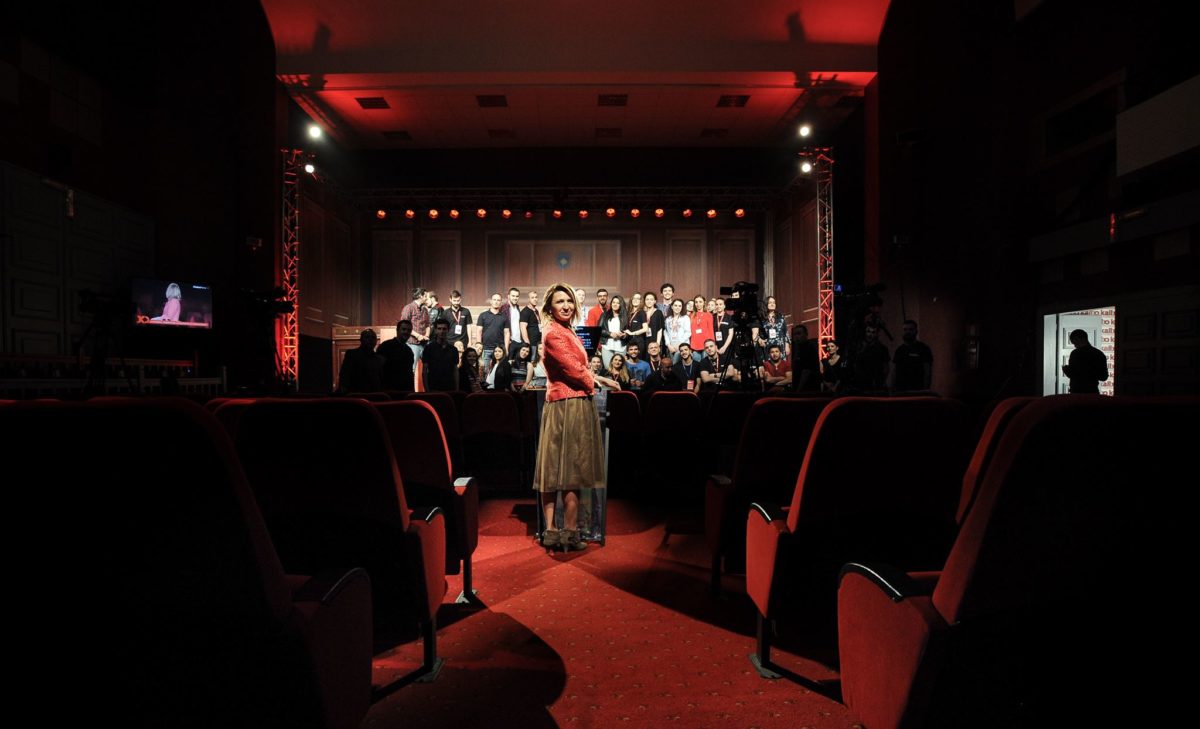
Today, on November 13, 2017, BIRN Kosovo, in collaboration with Internews Kosova, has started the production of pre-electoral debates for Kosovo’s local run-off elections, to be held on November 19th.


The debates, which will be broadcasted live on RTV 21, aim to bring the audience face-to-face with the two runoff mayoral candidates, giving people a chance to hear their political platforms, promises, and how they plan to implement their agendas.

BIRN’s debate model #DebatPernime (#RealDebate) aims to raise citizen awareness about the candidates, and also to serve as a platform for revisiting promises after mayors are elected. BIRN will conduct a mid-mandate fact-check of the assurances made during the debates so that the public can know the extent to which their representatives are keeping their promises.

The run-off debates, which are being filmed at BIRN Kosovo’s premises, will host the two mayoral candidates from all runoff parties within 19 municipalities across Kosovo. Citizens all over Kosovo are also encouraged to submit debate questions and concerns through BIRN’s anti-corruption platform KALLXO.com, and on KALLXO.com’s Facebook channel.

BIRN Kosovo’s local runoff election will be broadcasted from November 13 -17, 2017.

BIRN Kosovo Journalist Threatened at a Protest in Gjilan

On November 11, Taulant Osmani, a BIRN Kosovo Journalist, was verbally abused and threatened with physical attack during a protest in Gjilan against the relocation of a monument dedicated to the fallen of the 1941-1945 Anti-Fascist War.

Osmani was covering the protest, following his earlier reporting on the tense debate between Gjilan’s residents, governance, and civil society regarding the monument’s relocation. A statue of early-twentieth-century Albanian military leader Idriz Seferi is being erected in its original place.

Osmani was recording a heated discussion among individuals debating the differing sides when one of the discussants asked him why was he filming, while two others tried to attack him and take his phone.

“As a journalist, in order to portray how polarized citizens are regarding this issue, I started filming their debate. The person reacted aggressively with words, he verbally attacked me asking why I’m filming. In that moment, two other individuals intervened by shoving me, cursing at me and grabbing my phone,” Osmani explained.

Osmani said he does not know what would have happened if other residents would not have intervened.

BIRN journalist Taulant Osmani reported the case to the police, and the Kosovo Association of Journalists, AGK, condemned the attempted attack.

UK Minister of State for Europe and the Americas Visits BIRN and Internews Kosova

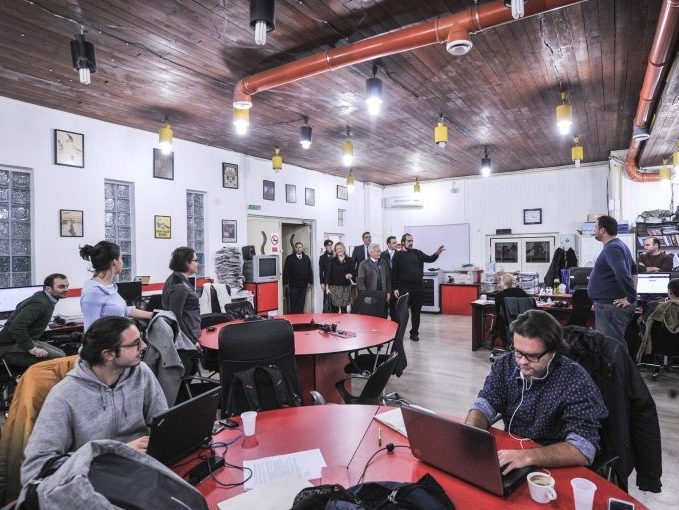
On November 8, 2017, BIRN Kosovo and Internews Kosova had the opportunity to welcome UK Minister of State for Europe and the Americas, Alan Duncan, to the their offices. The Minister, along with his delegation and the British Ambassador to Kosovo, Ruairi O’Connell, were on an official visit to Kosovo, meeting with Kosovo President Hashim Thaçi, Prime Minister Ramush Haradinaj, and other Kosovo Government representatives.

During Minister Duncan’s visit to BIRN and Internews Kosova, he and his delegation were given a tour by Internews Kosova director, Faik Ispahiu, and introduced to the staff working in the fields of reporting, investigation, IT, administration, and the legal team. The Minister was also introduced to the work and production of the online anti-corruption platform KALLXO.com, a platform for civic engagement in the fight against corruption and misuse of public positions and money.

During the meeting, guests discussed the rule of law, Kosovo’s political atmosphere, and other challenges that the country is facing. Ispahiu also presented the 12-year work and cooperation between BIRN and Internews Kosova, as well as the projects they have implemented in media development and monitoring. Challenges such as fake news and threats against journalists were also discussed.

BIRN Kosovo Hosts a Debate with Law Students at the Gjilan Basic Court

On October 27, BIRN Kosovo, held its second debate within the “Promoting Transparency in Kosovo’s Judicial System” project, supported by USAID’s programme, Justice System Strengthening Programme, JSSP; this time, the debate took place at the Gjilan Basic Court.

The discussion was moderated by BIRN Kosovo’s Chief Editor Kreshnik Gashi and hosted Afrim Shala, the Acting Head of the given court, Sabit Shkodra, the court spokesperson, and law students.

During the debate, panelists were granted the opportunity to brief the students on delivering court decisions to the public by using media and social networks. As such, the law students, currently enrolled at the Faculty of Law in the University of Gjilan “Kadri Zeka”, were informed on the role of social media and how it impacts the courts, including the judiciary’s response to the use and abuse of social media by judges, spokespersons, and other court staff.

The panelists also spoke about the importance of ensuring that judges and spokespersons comply with courtroom rules when publishing on social networks. The judges briefed the students regarding the audio and video recording devices in court hearings. Panelists argued that states should impose rational restrictions on the use of cameras and recording equipment in order to maintain the integrity of its proceedings and operate in favor of justice.

The panelists advocated for appropriate and effective use of social media to promote their work, activities, and services. Students were further provided with information on the risks associated with courts’ use of social media networks, such as the lack of court personnel expertise in social media on delivering court orders and decisions to the wider public, including the poor maintenance of updated court information.

BIRN Kosovo, under the “Increasing Transparecy in Kosovo’s Judicial System” Project, supported by USAID’s JSSP, will continue to conduct debates of similar nature in the coming months.


BIRN Kosovo Holds a Debate with Students at the Prishtina Basic Court

On October 26, BIRN Kosovo, as part of the “Promoting Transparency in Kosovo’s Judicial System”, supported by USAID’s Justice System Strengthening Program, JSSP, organized a discussion at the Basic Court of Prishtina. The discussion, moderated by BIRN Kosovo’s Chief Editor Kreshnik Gashi, hosted judges and administrators, including the head of the Basic Court of Prishtina, Afërdita Bytyçi.

During the debate, the panelists were granted the opportunity to talk about public and student access to court archives for educational purposes. All panelists encouraged the students in the audience to attend cases at all levels of the court, as well as a wide variety of forums, so they can experience law in action.

The students, currently enrolled at the Faculty of Law at the University of Prishtina “Hasan Prishtina”, were briefed on the public right to attend court hearings.  Panelists emphasized that the students should attend court proceedings in order to truly experience the practical side of law, and thus become equipped with well-rounded arguments about statuses and legal patterns.

The discussion also touched visiting the court as an opportunity to learn about and better understand charges and legal processes, and can also help to stimulate ideas about their future legal career options. Students also had a chance to share their requests and ideas with the panelists.


BIRN Kosovo, under the “Increasing Transparecy in Kosovo’s Judicial System” Project, supported by USAID’s JSSP, will continue to conduct debates of similar nature in the coming months.


BIRN Wins 2017 Kosovo Journalism Poverty Prize

A story about women raped during the Kosovo war and their struggle for justice has been awarded the 2017 Journalism Poverty Prize in Kosovo.

Pristina-based journalist Serbeze Haxhiaj was awarded on Friday for her story ‘The Enduring Agony of Wartime Rape in Kosovo’, published on BIRN’s flagship website Balkan Insight.

The story explores how women who have been raped and tortured during the Kosovo war are not applying for reparation schemes due to the stigma of rape that is still persistent in Kosovo society almost 20 years after the war.

The article was published as part of BIRN’s Transitional Justice Programme, which has been covering stories daily since 2012 related to dealing with the past in the former Yugoslavia, with focus on criminal justice efforts, victims’ rights, memorialisation and institutional reform.

The Kosovo Journalism Poverty Prize was awarded for the 12th time by the United Nations Kosovo Team and the Association of Kosovo Journalists to mark the International Day for the Eradication of Poverty and promote and increase the debate around the issues and causes of poverty in Kosovo.

Elections Complaint Panel Approves 27 Complaints by BIRN and Internews Kosova

BIRN and Internews Kosova monitors closely monitored political entities during the campaigning period for the upcoming local elections on October 22.  So far, BIRN and Internews Kosova have collected evidence regarding 56 potential cases of attempted violations of Kosovo’s election campaign rules; so far, 27 have been approved by the Election Complaint and Appeal Panel (ECAP).

ECAP has fined political entities running in the local elections a total of 66,900 euros based on the written complaints of BIRN and Internews Kosova.

The fines include the following:


  1. The Democratic League of Kosovo (LDK) was fined 18,850 euros regarding eight approved complaints
  2. The Democratic Party of Kosovo (PDK) was fined 14,850 euros regarding six approved complaints.
  3. Alternativa was fined 11,300 euros regarding four approved complaints.
  4. The Alliance for the Future of Kosovo (AAK) was fined 8,500 euros based on three approved complaints.
  5. The New Kosovo Alliance (AKR) was fined 8,100 euros regarding three approved complaints.
  6. Vetëvendosje was fined 3,500 euros regarding two approved complaints.
  7. NISMA was fined 1,800 euros regarding one approved complaint.


The vast majority of these violations were for the involvement of minors under age 18 in campaign activities; violations of this nature resulted in a total of 18 approved complaints and 47,850 euros in fines. It is worth mentioning that this is the first time that ECAP has punished political entities for using children for their political campaigns, based on complaints submitted by BIRN and Internews Kosova.

Due to the involvement of persons under the age of 18, LDK has fines worth 17,350 euros. Podujeva’s mayoral candidate from LDK, Agim Veliu, was fined twice for the same violation worth 6,200 euros. Due to this violation, ECAP punished four other LDK candidates for mayoral positions. Among them, Muharrem Svarqa was fined 3,100 euros, Lutfi Haziri was fined 3,050 euros, and Bajrush Ymeri was fined 3,000 euros.

In four cases regarding the involvement of children in electoral campaigns, PDK was also fined 11,000 euros. As a result of posting a video on Facebook in which children were present, Kadri Veseli from PDK was fined 3,000 euros. Lirak Çelaj, PDK’s mayoral candidate for Prishtina, was fined 3,500 euros for publishing a video that included children. PDK’s branch in Ferizaj was also fined 2,500 euros for publishing pictures of children wearing symbols representing PDK.

AAK was fined twice for the involvement of children in their electoral campaign with the amount of 6,500 euros. A promotional AAK video that included the presence of minors, which was shared on social networks, cost this political party a fine worth 3,000 euros. A promotional video for NISMA’s mayoral candidate for Prizren, Zafir Berisha, also included minors and resulted in a 1,800 euro fine.

BIRN and Internews Kosova will continue to monitor the final day of the campaign, the day of election silence, as well as the electoral process, including the submission of complaints for potential violations on election day.


The Windy Municipality

What do the citizens of Istog expect from their new mayor?

There are five candidates running for the position of mayor of the Municipality of Istog.

With around 40 thousand residents, the municipality, which has an annual budget of 9.3 million euros, is obliged to spend 62 per cent of it on wages and salaries, while the remaining portion is for solving problems concerning the citizens.

But these problems cost more than what the budget can cover.

After the elections, the new mayor of Istog will face many responsibilities.

A typical trip to Istog starts with a visit to the water fountain located above the city, which pours water non-stop, from summer to winter.

However, the residents of this municipality, where there are plenty of water sources, expect that they should therefore also receive water non-stop. They also want the next mayor to work to widen the canal network and the sewage treatment system, as currently, sewage is contaminating the city’s river as well as the agricultural lands in villages.

The students of villages such as Uça and Llukavc i Begut expect to have new school buildings during the future mandate. Whereas the sport lovers hope that they will finally have their sports hall, which started to be built more than a decade ago.

The removal of illegal waste disposals will also be a request for the future mayor of Istog.

During BIRN Kosovo’s mayoral debate series #DebatPernime (#RealDebates), mayoral candidates for Istog presented their programs.

Water supply and irrigation

The water supply network is not spread throughout the territories of village Kovraga, Veriq, Kosh, Kerrnina, Shushica, Mojstir, Bellopoja, Uça and Rakosh.

Seventy per cent of these villages is not connected to the water supply system. However, even the places that are connected have issues with water supply.

In some of these village, the residents had to find their own solutions, while in the majority of cases, they have to transport drinkable water from different places.

Additionally, the villages that are connected to the water supply system have problems with water supply. The Dubrava village, which is not too far from the center of Istog, despite being connected to the water supply system, faces severe water cuts.

An irrigation network is absent in the majority of villages of this municipality.

Sewage treatment

The canalization network in the municipality of Istog is also connected to three of the biggest villages of this municipality, which are Vrella, Banja, and Gurrakoc.

However, sewage from the city is poured into the river that splits Istog into two, which is not treated at all.

The sewage network is absent in other parts of this municipality. The residents of some villages have tried to find solutions through septic holes, whereas in the majority of villages, sewage is poured in agricultural lands.

Education

Tre Deshmoret Elementary School in the Uça village has an old building, broken windows, and a weak infrastructure for sports activities. The students of this school attend classes in bad conditions due to damage to the building. Not even the school bathrooms are in good condition. Also, the students of Fan Noli School in the village of Llukavc i Begut face the same situation.

This topic was discussed also during the Life in Municipality debate in 2015 in Istog. The mayor of the municipality, Haki Rugova, had promised that until the end of his mandate, he would intervene in renovating two buildings, but this hasn’t been done.

The sports hall

The sports hall had started to be built in 2003. However, the constructions have not been finished since then. This project, which is financed by the Ministry of Culture, does not seem to come an end after more than a decade since it started being built.

The rough work was finished but there have been stagnations for 14 years. The building is being damaged on a daily basis, while there is grass growing around it and the place has remained in ruins.

The work has been interrupted due to trouble with irresponsible operators and the negligence of institutions. The absence of the sports hall impacts the the sportsmen of this municipality the most, as well as the sport lovers.

Infrastructure and tourism

The municipality of Istog has decided to build a memorial to the late President Ibrahim Rugova in the location where the city park used to be. Until now, around 300 thousand euros have been spent on this project, and the work that was supposed to be finished by now has stagnated due to problems with economic operators chosen to do the work.

Even the little work that has been done for this memorial has started to get damaged because of the low quality of work.

Istog has a lot of potential for tourism, thanks to the mountains that surround it. However, unfortunately, the woods of this municipality are being illegally cut every day.

Damages from natural disasters

Istog is known for the heavy winds that blow during the seasons of autumn and winter. Several times, the winds have caused huge trouble to private houses, agricultural greenhouses, as well as public buildings.

In 2012, the damages caused were worth one million euros according to the assessments, while in 2017 the damages reached the sum of thousands of euros in this municipality.

Until now, the recent damages have not been compensated for the citizens or for the farmers, despite the assessments done by municipal commissions.

Public services

The illegal waste disposals are apparent in villages Kaliqan, Rakosh, Llukavc i Begut, Dubrave, and Lubozhde. These illegal waste disposals have not been removed for a long time. According to the GAP Institute, not even the waste disposal in the Tupec village fulfills the criteria.


The Problems of the Serbian Majority Municipalities after October 22

As part of the #RealDebates, the candidates for the municipalities with Serbian majority have presented their plans and have discussed the problems that the citizens face in these municipalities.

The Municipality of Zvecan

The candidate for mayor of Zvecan, Dragisha Milloviq, from Gi Zvecan says that his priority is to ensure safety for the residents of Zvecan, since as he claims, crime is present in the South. For this, he has asked for help from the Kosovo Police, KFOR, and from EULEX.

Alike the other candidates in the municipalities with Serbian majority populations, says that his top priority is to ensure youth employment and development of infrastructure.

Zvecan, like many other municipalities, either Albanian or Serbian ones, has problems with drinkable water supply.

The illegal dump waste are also a big problem in the municipality of Zvecan. The candidate, Dragisha Milloviq, during #RealDebates, said that this issue will be fixed in cooperation with all northern municipalities.

The Municipality of Zubin Potok

The municipality of Zubin Potok faces the problem of having youth leave the municipality. Apart from youth leave, the unemployment is at stake in Zubin Potok.

The mayoral candidate of Zubin Potok, Sllavisha Bishevac from GI Zubin Potok, said for #RealDebates, that one of his top priority is to prevent population leave from this municipality, as well as lowering the unemployment rate.

Also Zubin Potok faces lack of drinkable water. Despite the fact that the water supply system started in 2013; however, this process hasn’t been finished yet. Bishevac says that he will fix this problem through funds and the municipal budget. He added, that he will employ youth through functionalizing enterprises that haven’t been active in a long time.

The Municipality of Gracanica

The municipality of Gracanica has approximately 10,500 residents, and it has many problems. Gracanica which is only 10 minutes far from the capital city, has many problems.

The candidate of Gi Novi Pcetak for the mayor of municipality of Gracanica, Aleksandar Çoliq, has said during #RealDebates, that one of his top priorities, if elected as mayor of Gracanica, is to develop agriculture. Headed that special attention will be paid to youth of Gracanica.

The problem with water is evident also in the municipality of Gracanica, while the municipality faces the problem of illegal waste disposals.

The Municipality of Leposaviq

The municipality of Leposaviq, alike many other municipalities in the north, suffers from corruption and nepotism. The problem of water continues to be evident since 2008. Despite the fact that 5 million euros were given for building a water basin, this problem still concerns the citizens of Leposaviq. Another problem in this municipality are the waste. The waste disposal is being built for many years now, where the EU has spent about 10 million euros, but the project has not been finished yet.

The latest mayor of Leposaviq, Dragan Jabllanoviq, in the interview given for the show “Life in Municipality”, has presented some of his main priorities for another mandate. He says that he will continue working in infrastructure, where his goal is to pave all roads with asphalt. He says that another priority for him will be the development of agriculture.

The Gi Narodna Pravda candidate, Nenad Radosavleviq has presented three of his main projects, which he says are youth employment, since this appears to be the biggest problem in this municipality. Another priority for him will be, if he leads the municipality of Raillug, is the strengthening of the economy, as well as returning of citizens in rural areas, since there are villages with zero residents in that area.

Also the citizens of Leposaviq suffer from unemployment and the leave of youth from this municipality.


The Municipality of North Mitrovica

The Municipality of North Mitrovica, in which mostly Serbian live, has many problems. The investigation conducted by KALLXO.com tells that the Municipality of North Mitrovica has problems with municipal transparency. In this municipality, unemployment is high and nepotism is a big problem.

Another problem in North Mitrovica is the lack of water supply,

The illegal constructions in this municipality are also an issue. Insecurity and criminality in this municipality is on a high level.

There also two Albanian candidates running for mayor in these elections, Gonxhe Çaysgu and Betim Osmani from AKR.

The Albanian candidates as priorities, have safety and the return of Albanians in their homelands.

The candidate of SDP for North Mitrovica, Oliver Ivanoviq, says that one of his priorities is to fight organized crime in this municipality.

The three interviewed candidates from #RealDebates have stated that part of their priorities, are also the youth.

The candidates have stated that they will fight nepotism in this municipality. The candidate of AKR, Betim Osmani, said that he will announce a vacancy for the positions of directors of directorates in this municipality.

The candidates have stated that they will be transparent when it comes to projects that will be implemented in North Mitrovica.

The Municipality of Kllokot

The municipality of Kllokot has problems with lack of drinkable water, despite the fact that they have sufficient water resources. They have a water supply network, but it does not function.

According to the Nisma candidate for Kosovo, Mervan Rexhepi, the emergency clinic does not function in Kllokot. One of his promises, if elected as mayor, is to functionalize it.

Also education in Kosovo is not in a better level. According to the candidates in this municipality, what needs to be done in this municipality is to increase the level of education.

The municipality of Kllokot, based on the last registration, has 2,556 residents, but it does not have a kindergarten. The Nisma candidate, Rexhepi, has promised that he will functionalize the kindergarten during the Life in Municipality show.

Within the second year of governance, he promised that he will also functionalize the kindergarten, as well as the emergency clinic. He says that the treatment of Serbian community and Albanian residents will be equal.

The candidate of Civil Initiative for Kllokot, Nexhat Rexhepi, said that he will work in developing tourism in the municipality of Kllokot.

According to him, sports and culture are not developed at all in this municipality. During his interview for Life in Municipality, he said that he will work for these two branches to be better developed in this municipality.

According to the PDK candidate in this municipality, Naser Shabani, the lack of sidewalks and public lighting, will no longer be a problem after two years of governance.

Kllokot has also problems with illegal waste disposals. The candidates have promised that during their mandates, the disposals will no longer be an issue.

The current mayor of municipality of Kllokot was sentenced on condition for misuse of official duty. This decision was proven by the Court of Appeal.

KALLXO.com had written about the protest of the Albanian community in this municipality last year, since they have not agreed to name the streets with Serbian names.

The Municipality of Ranillug

The municipality of Ranillug faces unemployment and leave of citizens from this municipality. The candidates for mayor of municipality of Ranillug, during the Life in Municipality show, have promised that they will work in the wellbeing of citizens of this small municipality, wehre 3,886 residents live.

Whereas the other candidate in this municipality, Bojan Arsiq, from PDS, says that his main goal is to work in reconciliation of citizens, since according to him, there are cases in this municipality where even brothers do not talk to one another, because of politics.

Arsiq says that his priority will be economic development in this municipality. He says he will do this in cooperation with central government, by asking from them to help in agricultural development in this municipality.

The candidate Ivan Dimiq from NSK says that the biggest problem is the leave of citizens from Ranillug, and nepotism.

He says there is lack of drinkable water during summer. Another problem is the cutting of trees in this municipality. Dimiq says that Ranillug has problems with illegal constructions as well.

The municipality of Partesh

There are 1.787 residents in the municipality of Partesj. Another problem in this municipality is employment, especially of youth.

About 65% of citizens of Partesh live dependent on agriculture.

The candidate for mayor of municipality of Partesh from Gi Narodna Sloga, Nenad Cvetkoviq, in the interview given during #RealDebates has promised that he will work in agriculture, by subsidizing equipment for farmers. According to him, in the future mandate, every house will have its own container, and there will be no longer problems with illegal waste disposals.

He promised that during his future mandate, there will be no road without asphalt, in the municipality of Partesh. He also promised that in the future mandate, the municipality of Partesh will be equipped with public lighting and sidewalks.

Skenderaj Dreams of Development

What are the problems that the next mayor of Skenderaj will face after October 22?

Waste, drinking water, traffic jams, social welfare, and violent extremism are issues that the next mayor of Skenderaj will have to face.

The next mayor of Skenderaj, with a budget smaller than that of Lipjan and Fushe Kosove, will have difficulties to solve the municipality’s large problems. The data collected during #DebatPernime’s (#RealDebates) research for the 2017 mayoral debates reveals that 23 villages of the municipality have drinking water issues.

KALLXO.com research shows that villages of Murgë, Abri, Pluzhinë, Likoc, Ticë, Rezallë, Makermal, Rakinicë, Qubrel, Vitak, Leqinë, Kryshec, Kotorr, Prelloc, Radishevë, Kopiliq i Poshtëm dhe i Epër, Izbicë, Klodernicë, Kosterc, Qirez, Dashec and Polac are not connected to a water network, which causes serious problems with drinking water supply.

Skenderaj’s city and villages have serious problems with waste collection. There over 70 waste deposits located across the whole municipality.

In the education sector, 14 of the municipality’s schools work in two shifts, while only one kindergarten is functional.

In 14 schools in Skenderaj, the lectures continue to be delivered in two shifts, while only 4 out of 27 schools are equipped with physical education halls.  Improving school infrastructure remains to be a must.


Social welfare


Statistical data shows that Skenderaj is one of the municipalities where the terrorist organization ISIS has managed to recruit several citizens.  Three persons from Skenderaj are currently in prison, and at least three others were killed in Syria and Iraq. The municipality has numerous competences in de-radicalization and extremism treatment. The municipality should ensure that the Center for Social Work, the Directorate of Education and that of Health, the municipality’s psychologists, and the Youth and Sports Directorate deal with these former fighters and their problems in the aftermath of their return from foreign wars.

In regards to social welfare, the municipality also has enormous issues with providing shelter to the families with poor living conditions.

Official data shows that 154 families have difficulties to ensure a place to live for themselves.

Skenderaj aims to improve access to sports, especially football and handball, however, a sports hall – supported by the Ministry of Sports –is not completed yet, even though the project started the implementation process in 2009.

As such, two successful women and men volleyball clubs were forced to finish their exercises within the schools’ physical education halls.

Skenderaj is faced with huge traffic issues, especially in the Ilaz Kodra and 18 Qershori Streets, as well as 28 Nentori, Fehmi and Xhevë Lladrovci, and Sala and Hamit Jashari Streets.  The lack of sidewalks in villages, the lack of public lighting in the streets of Skenderaj, and the lack of sidewalks in villages, especially around the schools, remains to be a problem.

Inhabited by 53 thousand residents, Skenderaj has revenues of 816 thousand euros, which is very little compared to municipalities such as Lipjan or Fushë Kosova.

In regards to the municipality’s economic development, in 2010, it was decided that Skenderaj should be equipped with a technology park. However, such park has not been constructed yet.

Skenderaj has forgiven debts worth 8,520 euros, while in 2015, it had forgiven debts worth 106 thousand euros. These debts were paid to businesses that did not pay the taxes imposed on businesses. Skenderaj has referred to the law on debt forgiveness; however, the auditor, in the 2016 report, stated that the municipality had no clear legal basis in regards to these cases of debt forgiveness, considering that these debt categories are not included in the Law on Debt Forgiveness.

In the 2016 report, the auditor states that Skenderaj used five municipal properties for an unidentified period of time and with no public auction.  This violates the Law on the Use and Exchange of Public Property, which states that “the deadline for providing short-term use of the municipal real estate property is granted from (1) up to 15 years, and it should be done with a public auction”.