This Year, for the Third Time in a Row, BIRN Kosovo and Internews Kosova’s Complaints Result in Fines for Political Entities

On October 20th, 2017, Kosovo’s Elections Complaints and Appeals Panel, ECAP, imposed  fines worth a total of 20,150 thousand euros to five political entities as a result of BIRN Kosovo and Internews Kosova’s written complaints regarding alleged violations of the Law on Elections during the local election campaign.

As a result of the panel’s decision, The Democratic Party of Kosovo, PDK, received a fine worth 3 thousand euros; The New Kosovo Alliance, AKR, was fined 5,100 euros; The Democratic League of Kosovo, LDK, has received three fines adding up to 6,450 euros; the new Kosovo political party Alternativa has received a fine for 3,600 euros; and finally, the Alliance for the Future of Kosovo, AAK, was fined 2,000 euros.

This decision follows several previous decisions by ECAP to reprimand political parties for violating Kosovo’s Law on Elections following complaints from BIRN Kosovo and Internews Kosova.

KALLXO.com will report on each decision individually in the coming days.


BIRN’s Weapons Investigation Wins Online Poll

The Balkan Investigative Reporting Network’s investigative story The Pentagon’s $2.2 Billion Soviet Arms Pipeline Flooding Syria has been selected as the best article by voters in a Forum on the Arms Trade online poll recognising exemplary reporting in articles published from July 1 to September 30, the organisers announced on Wednesday.

The authors of the investigation are Ivan Angelovski and Lawrence Marzouk, and the story is a part of wider research by BIRN and the Organized Crime and Corruption Reporting Project, OCCRP on the arms trade.

“The type of deep dive investigative reporting that Ivan Angelovski and Lawrence Marzouk have done here is difficult and extremely valuable. Drawing attention to how the arms trade is conducted, with specific identification of international actors who often bend if not outright skirt the rules, reminds us that diligence is needed at all levels,” said Jeff Abramson, an arms trade expert and senior fellow at the Arms Control Association.

“As the Trump administration moves forward with new arms sales and security assistance, their findings serve as examples of how to examine whether it proceeds responsibly,” Abramson added.

Eleven articles were nominated by experts chosen by the Forum on the Arms Trade for being examples of exemplary journalism that uncovers new information and/or expertly explains issues related to the arms trade, security assistance and weapons use that were published in the fourth quarter of 2017.

Angelovski and Marzouk’s story traced programmes to arm Syrian rebels, aided by questionable use of end-user certificates and what they called “misleading” legal documents.

They identified the supply of AK-47s, rocket-propelled grenades and other weapons, often from the Balkans, eastern Europe and former Soviet Union factories and inventories, as being led by the US military’s Special Operations Command, SOCOM, as well as the Picatinny Arsenal in New Jersey.

When asked about why they felt it important to report on apparent abuses within the system for conducting arms transfers, Angelovski and Marzouk told the Forum on the Arms Trade: “The rules are supposed to prevent weapons ending up with terrorists, criminals and rogue states. Countries which have signed up to these rules should abide by them. Breaches of these rules presents a real, current risk to the world, but more troubling is the long-term impact if the whole system is undermined.”

“There’s actually a lot of quality reporting on arms trade, security assistance and weapons use. All the articles that were nominated for exemplary reporting, as well as previous winners and nominees, are great examples of quality reporting,” Angelovski and Marzouk added.

“However, there is not enough media awareness of the issue, partly as it requires some specialist knowledge to begin to find interesting stories and understand their importance. Few journalists have this know-how or the time to learn,” they said.

Novo Brdo, A Municipality with Tourist Potential but Few Investments

Will the future mayor of Novo Brdo manage to solve all of its problems?

The Municipality of Novo Brdo is one of the smallest municipalities in Kosovo. It has less than 10 thousand residents, around 60 per cent of which are Serb. It has a budget that is barely above two million euros, which is insufficient to solve the problems that have remained since the Kosovo War.

One of the oldest residencies of Kosovo, almost 18 years after the war, still faces problems such as a lack of water, a lack of basic health services, unemployment, the lack of development, and economic weakness to provide citizens with basic infrastructure.

Currently, Novo Brdo is led by Mayor Svetislav Ivanoviq, who is running for his second mandate, and is challenged by four other candidates representing the political parties the Democratic League of Kosovo, LDK, the Democratic Party of Kosovo, PDK, the Alliance for the Future of Kosovo, AAK and the New Kosovo Alliance, AKR.

BIRN Kosovo’s mayoral debate series #DebatPernime (#RealDebates) is presenting research on the issues in Kosovo’s municipalities and offering citizens a chance to hear the mayors’ platforms and solutions.

One major problem citizens bring up is the lack of water. The majority of water system supplied to the municipality is dysfunctional due to the interruption of electricity by KEDS, due to the debt that is over 80 thousand euros.

The water supply is located in the village of Llabjan, which supplies water to the neighborhoods Mustafa, Abaza, Talaj, Haxhaj, Zeqiraj, and Stojkovic. This water supply is out of function due to property issues.

Other non-functioning water supply systems are found also in the villages of Makresh and Kufca.

In 2015, the Municipality of Novo Brdo signed a memorandum with the regional water supply company Hidromorava in an attempt to bring its residents drinking water. However, even two years after the signing of this memorandum, the citizens continue to use wells that they’ve opened on their own.

The poor health of Novo Brdo

The residents of Novo Brdo, apart from lack of water supply systems, have to be careful about consuming the water from their wells, since the doctor in Novo Brdo is only available until four in the afternoon, and only on certain days of the week. There is no gynecologist or care. For health issues, residents must otherwise travel to Prishtina or Gjilan.


The lack of professional medical staff is not the only health problem in Novo Brdo; apart from the terrible infrastructural conditions, residents also face a lack of various medications, especially materials that are spent, which make the commitment of basic medical services impossible in family medicine centers.

Infrastructure

Despite the fact that there have been some investments, with only 370 thousand euros available for the municipality of Novo Brdo, the infrastructure of this may continue to disappoint residents.

The lack of a sewage systems in the majority of villages in the Municipality of Novo Brdo is one of the main problems. Also, the lack of roads paved with asphalt in Makresh, Kosaqë, and partly in Pasjak and Llabjan, is an additional problem.

Another problem is the issue of sidewalks and public lighting, both of which are rarely found in Novo Brdo.

Economic development

From almost 10 thousand residents in Novo Brdo, around 1,700 of them are unemployed and are registered with the employment office, while there are 648 cases of residents who receive social assistance due to their essential needs.

For the citizens of Novo Brdo, one primary source of income is mining work. Despite the fact that this municipality has a suitable environment to develop farming, the lack of infrastructure and basic services discourage investors.

The Municipality of Novo Brdo has not managed to enhance the tourist potential of the medieval castle, despite the fact that it is widely visited by citizens from Kosovo and foreign tourists.

Junik residents still rely on Deçan

What are the problems and challenges the next mayor of Junik will face?

The municipality that preserves the ancient history of governance from the Dukagjin towers towards its path of development faces major challenges. The investment budget does not exceed the annual budget of an average business, despite a dire need for investments.

Junik is inhabited by 6,200 people. The mayor of the municipality manages an annual budget of 1.6 million euros, out of which only 330 thousand are allocated for capital investments.

The most challenging problem of the next mayor will be the ‘independence from Deçan,’ considering that citizens of Junik should travel to Deçan to receive most of the services they were supposed to initially get in Junik.

KALLXO.com’s investigation shows that Junik has no center for vehicle registration, although this municipality was established in 2005. Also, Junik citizens must travel to Deçan in order to apply for both vehicle registration and national identification cards.

The KALLXO.com team has also identified problems in the education sector. The only High School in the municipality has no sports center. Although Junik has high hopes for tourism, there are no catering and tourism departments within the school.

The establishment of the court branch in Junik, the establishment of the water supply company, and construction of the bus stations are further problems this municipality continuously faces.

Although Junik has a high tourism potential, and bearing in mind that the previous leaders of the municipality promised to provide the interested students with a catering and tourism department, the high school lacks such a department.

The kindergarten of Junik, where children ages three to six are enrolled, has only two rooms. The pictures of this kindergarten show that bathrooms are not only dirty, but also have damaged sanitary nodes, which pose a risk for the children health.

In regards with infrastructure, Junik has struggled to repair the road in the village of Gjonaj – the last inhabited village along the road that leads to the highest peak in Kosovo, Gjeravica.
The road rehabilitated by the municipality may only be crossed by vehicles produced for mountainous zones, and it remains unpaved.

KALLXO.com’s investigation shows that the urban zone of the municipality also has issues with infrastructure.

The Agim Ramadani neighborhodd, the biggest neighborhood in Junik, has no sidewalks or public lightning.  The Goqaj neighborhood and the second part of the Cestaj neighborhood remain in the same situation too.

There is a lack of maintenance of the cemetery zone, co-financed by the Swiss Cooperation organization and the municipality. Although the investment has been made, the cemetery zone has in the meantime covered in shears, and as such, no one has been buried in these cemeteries.

Waste and Sewage

The municipality that aims to develop tourism on the ancient towers and mountains of Gjeravica has a huge problem with waste treatment.

The citizens are complaining that waste is not collected regularly, and thus, creating waste landfills. The KALLXO.com team found piles of waste thrown along touristic zones, the river of Erenick, and other areas. Junik has an implantation, but is not functional yet.

The green market and bus station

Junik does not have a green market or a proper bus station.  Merchants, especially small-capacity producers, are using the sidewalks and roads to sell their products.

Junik’s citizens are forced to wait for the bus in an open-air environment during rainy and snowy days as well. The bus station is not compliant with any of the relevant standards: there is no building, there is no bathroom, and no water taps.

The Project regarding the construction of the green market started in 2013. The municipality has identified the area for the construction of the given market, and has managed to secure a cooperation agreement, but the land of the municipality allocated for the construction of the market has ownership disputes.


Gjilan’s Paradox – Empty Schools, Overcrowded Schools

Will the future Mayor of Gjilan manage to solve all of these problems?

The municipality of Gjilan, which has 90 thousand residents, is expected to be governed by one of the candidates vying for the position of Mayor of the given municipality. Issues with schools operating in three shifts, waste and deposits of sewage, within and outside of the city, lack of sidewalks is expected to be one of the challenges the next Mayor of Gjilan will be faced with.

Radha e problemeve në qendrën e Anamoravës nuk përfundon këtu, pasi në qendrën për punë sociale janë të regjistruar 5 mijë njerëz të papunë  e në rrugën “Abdullah Presheva” në Gjilan, komuniteti rom po rrezikohet nga shtëpitë gjysmë të rrënuara e të mbushura me bërllok.

The number of problems within the center of Anamorava is not over yet, considering that 5 thousand people are registered as unemployed at the center of social wqrk, while the Roma community

As shëndetësia nuk është fushë me lule, pasi që mungesa e barnave esenciale është evidente edhe në Gjilan. E nga ana tjetër, 60 punonjës të angazhuar si mjek dhe teknik medicinal në projektin e Caritas-it qe pesë muaj nuk i kanë marrë rrogat.

Mësimi me tre ndërrime sfidë për Gjilanin


Në Gjilan ndodh diçka jo e zakonshme. Shkollat në qytet punojnë me nga tri ndërrime ndërsa komuna nuk e shfrytëzon një objekt modern të shkollës bujqësore në lagjen “Arbëria”, përurimi i së cilës është bërë në shtator të vitit 2013. Investimi prej 1.1 milion euro i realizuar në bashkëpunim me DANIDA-n ka mbetur i pashfrytëzuar pasi Drejtoria e Arsimit nuk ka arritur t’i inkurajojë nxënësit që të zgjedhin këto drejtime profesionale.

Në anën tjetër, Shkolla e Mesme e Ekonomisë dhe ajo e Mjekësisë vijojnë mësimin në të njëjtin objekt, si rrjedhojë e kësaj ata zhvillojnë mësimin në tre ndërrime dhe mbajnë orën nga 30 minuta.

Shkolla ka të zbrazëta, por jo edhe salla të edukatës fizike. Nga 29 shkolla sa janë në komunën e Gjilanit, 19 prej tyre nuk kanë salla të edukatës fizike, kështu që nxënësit në stinën e dimrit detyrohen të mbajnë orën mësimore në klasë.

Kutërbimi nga mbeturinat dhe ujërat e zeza

Trajtimi i ujërave të zeza dhe deponive ilegale janë vazhdimësi e problemeve nga qeverisja e kaluar. Në qendër të Gjilanit ka kutërbim, ndërsa gjendja edhe më e keqe është nëpër fshatra. Gjilani hiç më mirë nuk qëndron edhe me mbeturinat, të cilat janë të hedhura në disa pjesë të qytetit dhe nëpër fshatra.

Deponi të mbeturinave ka përballë shkollës së mesme të Bujqësisë në lagjen Arbëria. Mbeturina ka edhe jashtë deponisë kryesore të qytetit në fshatin Velekincë ku kompania për pastrimin e mbeturinave i grumbullon ato.  Rreth 250 metra rrugë para hyrjes së saj, në të dyja anët është e mbushur me mbeturina të lloj llojshme.


Parkingjet, problem në zonën urbane

Qyteti i Gjilanit ka lëshuar 60 leje ndërtimore për pesë vjet dhe ka arkëtuar nga këto leje mbi 3 milionë euro. Por, në qytet ende ka telashe me mungesë të trotuareve dhe parkingjeve, madje edhe në afërsi të qytetit ka rrugë shumë të dëmtuara.

Rruga prej 1.5 kilometra që kalon në mes të fshatit Livoq, tek lagjja e Muhaxherëve e cila e lidh edhe fshatin Cernicë me Gjilanin është e shtruar me asfalt në vitet 1980 dhe tash e sa vjet asfalti është shumë i dëmtuar. Nga dëmtimi i kësaj rruge preken shumë familje, por edhe disa biznese prodhuese që gjenden në këtë anë.

Shtrimi i rrugës që e lidhë fshatin Dobërçan me atë Bukovik sipas banorëve është premtuar që nga viti 2002, por nuk është përfunduar asnjëherë. Banorët thonë se kjo është njëra ndër arsyet pse njerëzit janë shpërngulur nga fshati Bukovik. Vit pas viti është duke u zvogëluar numri i nxënësve të fshatit Bukovik të cilët zhvillojnë mësimin si paralele e ndarë në shkollën fillore në fshatin Dobërçan.


Problemi i parkingjeve është jashtëzakonisht i madh sidomos në pjesën urbane. Pasojë e kësaj dukurie është numri i madh i automjeteve, mungesa e hapësirave publike, korridoreve të ngushta të rrugëve ku pamundësohet ndërtimi i tyre, zhvillime të pakontrolluara përgjatë rrugës ku pamundësojnë zgjerimin e tyre edhe pse është shumë e nevojshme.

Në fshatin Livoq të Epërm është një urë e ngushtë në të cilën mund të kalojë vetëm një veturë por që nuk ka as mbrojtëse. Kjo paraqet rrezik më së shumti për fëmijët që duhet të kalojnë çdo ditë sipër saj por edhe për veturat që janë në lëvizje.

Gjilani që krehnohet me derbin lokal në futboll, që prej shumë sportdashësve cilësohet ndeshja më e rëndësishme në futbollin kosovar, nuk ka një stadium që i përmbush kushtet e nevojshme për organizmin e një ndeshje. Në shkallët e stadiumit, nuk është investuar që nga paslufta. E as në dyert e stadiumit të cilat janë të rrezikshme, sidomos kur numri i tifozëve është i madh.


Shëndetësia dhe Mirëqenia Sociale

Me 90 mijë banorë qyteti i Gjilanit ka të regjistruar mbi 5 mijë njerëz të cilët kanë kërkuar punë në qendrën për punë sociale. Në rrugën “Abdullah Presheva” të Gjilanit komuniteti rom po rrezikohet nga shtëpitë gjysmë të rrënuara e të mbushura me bërllok. Ekipi i KALLXO.com e ka vizituar këtë lagje dhe ka parë shtëpitë që janë gjysmë të rrëzuara, të pabanuara dhe të mbushura me bërllok. Banorët e kësaj lagje të cilët nuk e paguajnë bërllokun te kompania e pastrimit “EcoHigjiena” në Gjilan e hedhin bërllokun nëpër këto shtëpi.


Mungesa e barnave esenciale është problem me të cilin përballen qytetarët, sa herë që kanë nevojë për trajtim nëpër Qendrat e Mjekësisë Familjare të qytetit të Gjilanit.

Problem i theksuar në sektorin e shëndetësisë në Gjilan është edhe fati i 60 punonjësve të angazhuar si mjek dhe teknik medicinal në projektin e Caritas-it, të cilët për të gjashtin muaj me radhë nuk janë paguar.

Vjetërsia 50 vjeçare e gypave të ujit

Gjilani ka sistem të ujësjellësit por ai nuk garanton që të gjithë qytetarët të furnizohen me ujë. Probleme me furnizim të rregullt të ujit kanë banorët e lagjes “Arbëria” dhe “Kodra e Dëshmorëve” në Gjilan. Një ndër arsyet që qytetarët e Gjilanit kanë problem për furnizim të rregullt me ujë të pijshëm janë gypat me kapacitet të ulët të cilët e transportojnë ujin nga fabrika e ujit në Përlepnicë deri në Gjilan. Poashtu gypat e amortizuar për shkak edhe të vjetërsisë afër 50 vjeçare dhe ndërtimi i tyre nga materiali i azbest cimentos.


Gypave të ujit që janë paraparë për t’i furnizuar me ujë të pijshëm banorët e fshatit Livoq i Epërm u është ndërruar kahja në pranverën e këtij viti. Tashmë ata janë dërguar në Qendrën e Paraburgimit të Gjilanit i cili është ndërtuar në Pasjak, fshat i cili është në territorin e komunës së Novobërdës.

Projekti i Ujësjellësit në fshatin Livoq të Epërm ka kushtuar rreth 200 mijë euro. Ai ka përfunduar në vitin 2003 me bashkëfinancim të OXFAM 50%, komunës së Gjilanit 25% dhe banorëve të fshatit të cilët kanë kontribuar me 25%. Edhe përkundër këtij kontributi banorët e Livoqit të Epërm vazhdojnë të mos furnizohen me ujë.


Tourism Potential, Ruined by Waste and Unemployment

Dragash, also known as Sharri, is a municipality associated with natural beauty that could be used for mountainous tourism development. Thus far, the municipality has invested very little in this sector.

This municipality, with a budget worth 6.2 million euros, invests most of its budget on salaries, goods, and services, while only 1.3 million euros are allocated for capital investments.

In 2016, the municipality realized revenues generated worth 131 thousand euros, which is very low compared to other municipalities.

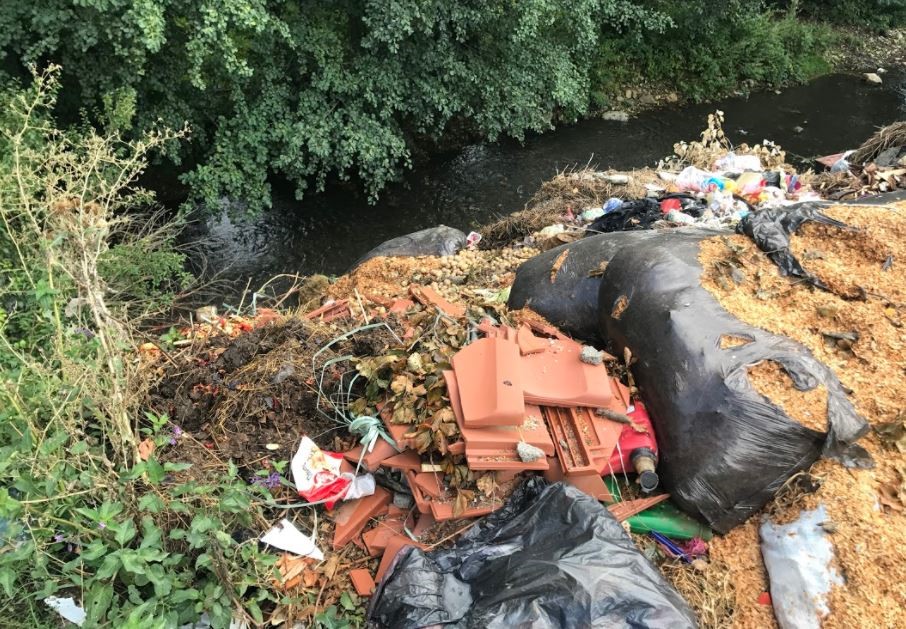
The first thing that catches your eye when you enter the municipality is the waste landfills close to rivers. An investigation by KALLXO.com reveals that there is a severe environmental situation in the mountainous zone in Dragash, considering that both waste and sewage are actually poured into rivers.

Rivers that pass through the villages of Bellobrad, Rapçë, and Bresanë are transformed into waste deposits.

According to the residents of the abovementioned villages, some of the residents throw the waste themselves, and they call on the municipality to engage inspectors to punish irresponsible citizens.

In the village of Brezne, the sewage ends up in the middle of the village, in the private trash collectors built by the families themselves. Sewage is the main problem within the town, considering that during the rainy days, the sewage flows into the middle of the road.

Water


Dragash has water supply issues, although the municipality has plenty of water resources across the Sharri Mountains. Most of the villages are equipped with a water supply network, but are supplied with water for only two to three hours during the day. Many villages do not even use the water for drinking due to its dirtiness, and are forced to get water from different resources.

The Auditor has revealed that only 78 per cent of the budget for capital investments is spent, considering that the project of the main Supplier, initially projected to be worth 500,000 euros, was not realized due to the Procurement Review Body’s complaints.

Education


The municipality of Dragash is located at the border between the two Opoja and Gora villages. Different languages are spoken in these areas, as Opoja has an Albanian majority and Gora has a Gorani majority.

There are political and infrastructural issues in the education sector.

Based on KALLXO.com’s investigation, there are schools within this municipality that use parallel curriculums.

Serbian parallel structures continue to be present within the Municipality of Dragash, where the lectures are delivered in Serbian, and in accordance with the Serbian government’s curriculum.

Additionally, in several villages, lessons are conducted up to the fifth year, and as such, students from their sixth year up to their ninth year are forced to walk up to six kilometers per day in order to attend classes in the closest school.

These problems were identified by KALLXO.com in the villages of Zaplluxhë, Zym and Brezne, where children walk on roads with no sidewalks; these mountainous zones are even more dangerous due the presence of vehicles and stray dogs.

On the other hand, in Dragash, the students attend classes in the old Ruzhdi Berisha gymnasium, since the new school building is not functional, eight years after construction works began.

Infrastructure and urbanization


Road reparation in Dragash remains another issue of the municipality, considering that roads are not repaired in a timely manner.

KALLXO.com has reported on the pine trees planted by the residents in asphalt pits as a creative way to convey messages to the relevant authorities to close the dangerous pits.

Social health


The only gynecologist who was working in Dragash has now retired.

Meanwhile, this municipality has a high level of unemployment, and residents of the villages are leaving.

Out of 1,530 inhabitants, only 300 reside currently in the village of Rapçë, which has a Gorani majority. According to the residents, the village’s youth travelled to European Union countries to find jobs due the poverty within their hometown. In this village, there are also residents who live in severe living conditions.

The current mayor of the country is Selim Jonuzaj, from PDK, while mayoral candidates for the October 22 municipal elections are Admir Šola from Jedinstvena Goranska, Fatmir Halili from Nisma, Samidin Dauti from Vetevendosje, Selami Saiti from AAK, Šerif Aga from Koalicija Vakat, Selim Kryeziu from LDK, and Shaban Shabani from PDK.


Apart from not having communication officials, this municipality also has no women directors and no women mayoral candidates.

The Lawless Municipality

For years, Prishtina has lacked a Law on the Capital. As a consequence, the city for years now has had a smaller budget than a capital city is supposed to have. Prishtina receives a budget for 205,000 residents, when in fact there are many other families that live in Prishtina but are registered as residents of other municipalities. There are also many commuters who travel to Prishtina on a daily basis. They create expenses for Prishtina, but the municipality does not get anything in return.

Prishtina is faced with many problems that require a solution. The usurped public spaces and sidewalks, the damaged streets, the absence of parking lots, the absence of green spaces, air pollution, waste and illegal disposals, the illegality of many apartments and houses, the absence of a decent market for fruit and vegetables, the absence of a stadium that fulfills FIFA criteria, and the absence of a sports hall that fulfills FIBA conditions are some of the problems of the largest city in Kosovo.

Urban chaos, the absence of sidewalks and parking lots

The usurped public spaces and sidewalks make the life of every pedestrian in the city of Prishtina difficult. An investigation conducted by BIRN has identified around 200 public spaces and sidewalks that are usurped, only in the radius of the center of Prishtina.

Titled The Map of Usurpers, the map characterizes a variety of sidewalk usurpations. Areas where pedestrians cannot walk on the sidewalk have been identified, along with places where only carriages cannot pass through sidewalks, usurpers that have dominated the sidewalks permanently, barriers on the sidewalks, as well as “public barriers,” such as electric pegs and traffic signs.

During the last mandate, a lot of work was done to relieve sidewalks from parked cars through the placement of barriers. Despite the fact that some sort of poles were created during the previous governance, many sidewalks are better than they were during the previous mandate.

However, Prishtina continues to have a serious problem with the absence of parking lots. In the survey “The Index of Citizen Satisfaction with Municipal Services in Prishtina” conducted by INPO, which was published in August 2017, it turns out that among the dissatisfactions of citizens of Prishtina, what dominates is the absence of parking lots and the inability of pedestrians to walk freely. 81.51 per cent of the persons who responded to the survey had expressed their dissatisfaction with the absence of parking lots.

The finding of a solution for parking lots has been one of the main promises of Mayor Ahmeti. Projects for underground parking lots have been initiated with the aim of being implemented in partnership with the private sector. However, these have not been implemented yet. There were clashes between the heads of Prishtina and the Kosovo Government due to the stagnation of such projects. The municipality accuses the Committee for Public-Private Partnership (compiled of five Ministers, with the head being the former Minister of Finance, Avdullah Hoti) for blockading the project for underground parking lots near the Faculty of Philology, whereas the Ministry of Finance says that the municipality has not finished its obligation to get a license from the University of Prishtina.

The underground parking lot near the University of Prishtina, which has been promised for years now, is again a promise of candidates during this campaign.

The environment

Prishtina also has issues with waste, especially sewage and polluted air. In the report published by the GAP institute, it is said that there is a non-management of the space at the area “Field of Reconciliation,” on Kolovica Street on the way to the village of Llukar: this area has 17 acres of land which is mainly used for dumping waste. In 2015 the municipality of Prishtina started making his place greener, but it was interrupted in the middle of the process with the excuse that the space belongs to the Prishtina Regional Company for Water. The municipality has removed hundreds of waste with trucks from this space in 2014. However, two years later, citizens dumped waste again, returning the area to its previous state. There is also trouble with collecting waste in the city as well as in villages.

Another problem is the Mirash Disposal, which is the place where the waste of Prishtina ends up. An investigation conducted by Life in Kosovo has revealed that the dumping of waste there is causing a great danger that could cause an ecological catastrophe. Also, the majority of suburban neighborhoods are not equipped with bins for dumping trash.

Air remains a serious concern of the citizens of the capital. The air pollution is caused by the work of KEK’s power plants, Teromokos, individual houses, and cars. In December 2016, based on the measurements conducted by the American Embassy, the numbers were alarming. The air was once announced as “damaging” and in some days also as “almost dangerous.” This air pollution mainly comes from motor vehicles, power plants where coal is burnt, wood and lignite burning by citizens, fires in mountains, agricultural burning, and industrial buildings.

Also, the capital city has problems with municipal spaces, which continue to be usurped. The Municipality of Prishtina has identified a list of usurped properties.

Booming constructions

Prishtina has stopped illegal constructions, but it has distributed 500 other licenses within one mandate. The capital city has entered an interesting phase of discussions for making changes in urban planning, while there are many other municipal spaces that are still usurped.

Due to the non-legalization of buildings that have been built, a huge economic potential has been stuck. The citizens have bought apartments, but due to the technical decline and the legalization, they cannot use the real estate as bank mortgages; or they cannot sell, which is something that limits the circulation of assets and the opportunity of generating profits for citizens.

There are still villages of the capital that are not linked to the water supply system. The villages Sharbani, Koliqi, Dabishevci, Marevci, Keqekolla, Mramori, Mareci, Slivova, Grashtica and Siqeva are still unlinked to the water supply system. And according to the Water Supply Company, it is a responsibility of the municipality to do research for drinkable water supply systems, as well as to invest, since the Water Supply Company deals only with managing and operating in rural systems.

One of the most successful projects has been the heating provision from power plants of KEK. According to an investigation by GAP institute, it was concluded that the project of co-generation has increased the well-being of citizens through the increase of quality in heating systems, and it has also decreased the cost of producing thermal energy. The expansion of the network has three advantages: it brings cheaper bills for customers (because they currently use electricity or coal for heating), which as a consequence results in less energy consumption and less coal burning, leading to less pollution to the environment.

However, the project of heating the city currently covers only 5 per cent of the potential customers in the capital city (according to GAP), which means that there are only 12 citizens who are customers of Termokos.

Illegal taxi drivers and noise

During recent years, there have oftentimes been protests of public transport companies for the increase of illegal taxi drivers, which bring competition to them. According to GAP, the municipality of Prishtina has not managed to stop the circulation of illegal taxi drivers. This form of operation has severely damaged the urban traffic company, which finds it difficult to have a high number of passengers due their ability to use illegal taxi drivers. Apart from damaging the Urban Traffic company, it also damages companies that operate privately but are licensed for transporting citizens.

During 2014-2017, the municipality took seven actions to punish illegal taxi-drivers with the aim of removing them. The results of these actions lasted only a few days and the illegal taxi drivers have returned to the different routes. They are mainly seen in the line Prishtina-Fushe-Kosova, Prishtina-Podujeva, and within the city of Prishtina, especially in the Sunny Hill Street and in the relation toward the Germia Park.

Also, another problem for the municipality is the noise coming from bars during the night. According to GAP, the hotel premises in Prishtina are allowed to play music outside of their bar only until midnight. This is not respected, causing dissatisfaction especially for the citizens who live in the center of the city. This problem is especially seen on the streets Rexhep Luci, Fehmi Agani, Tringe Smajli, and nearby Street B.

Prishtina’s bill that did not manage to become a law

The majority of problems of Prishtina derive from the absence of a special law for the capital city. The bill on Prishtina, which now is subject to procedures in the assembly, would bring a few benefits to the capital city. Among others, this bill foresees the following, the additional budget worth 4 per cent of the general grant for municipalities; the right to establishing public municipal enterprises without extra approvals from the government; the secondary health or the City Hospital as well as the Directorate of Municipal Police within the Kosovo Police which would deal with Prishtina.

Blame has circulated from party to party for the blocking of this law.

The Law on Prishtina foresees that the capital city should have a budget up to 4 per cent of the total budget. In numbers, this means that Prishtina will have 14.4 million euros more in the budget.

Prishtina will a higher budget if the law is approved, but how is it going to spend that money remains a question, as Prishtina has had a budget surplus year after year.

The General Audit Office has stated that the scale of capital projects implementation and the spending of own source means from the municipality of Prishtina was not at a satisfactory level. According to the National Audit Office, weak budget implementation results in a non-efficient use of funds available, while it reduces the efficiency of plans for spending according to programs.

The final budget of Prishtina for the year 2016 was planned to be 73 million euros. However, it was implemented with only 58 million euros, or 80 per cent. In 2016, according to the Audit of Prishtina, capital investments worth 20 million euros were implemented.

The General Audit Office has stated that the scale of capital project implementation and the spending of own source entries by the municipality of Prishtina was not at a satisfactory level.

The audit says that the municipality of Prishtina finances all its capital projects based on its own source entries, which is why it has had a low implementation of capital projects, where only 58 per cent of the capital investments have been implemented. According to the audit, with an increase of performance, the implementation of the budget for capital investments can increase by 20 per cent. In the report published this year, the audit has listed the amount of means that remained as surplus by the municipality of Prishtina. In 2014, 5.9 million euros were transferred; in 2015, 16.3 million euros were transferred; in 2016, 6.3 million euros were transferred, and in 2017, 7.2 million euros were transferred.

The final population census shows that the capital city has 204,721 residents, but approximately double this amount commute for work to the capital city.


The City of Unemployment, Terrorism, and Politicization of Education

As part of its unsolved priorities, Mitrovica is faced with unemployment and politicization of education.

Apart from poverty, the municipality inhabited by 71 thousand residents, has water issues, problems with sewage, roads, including youth radicalization. These topics were all tackled during the debate for Municipal Elections.

Mitrovica, the municipality that cultivated the education of famous rockers and athletes in Kosovo, has become one of the main hotspots for recruiting ISIS fighters for the Syria and Iraq war.

Recent research shows that 10% of convicted persons for indoctrination and participation in terrorist groups come from the given municipality. Municipal government has a major role in preventing extremism by guaranteeing education and social care for its citizens.

Candidates vying for the position of the mayor during the debate on municipal elections 2017, did not provided any solution to their plans regarding deradicalization , by shifting their focus to preventing violence in politically driven schools.

Our investigation shows that in Mitrovica’s education sector, not less than 17 directors and deputy school directors are chairmen or heads of political party entities.


“Nga 32 shkollat, 17 prej tyre udhëhiqen nga drejtorë që kanë angazhime në parti politike”, shkruhet në njërën nga përgjigjet e komunës
“Of the 32 schools, 17 are led by directors who are involved in political parties”, is written in one of the municipal responses Apart from the school directors, the municipality has failed to free the occupied areas around the schools, which hinder the teaching process, and in one specific case, they caused the  burning of a high school.

Mitrovica has only one public kindergarten, and no private ones. A kindergarten was recently built with a public-private partnership. The municipality has explained that there is a need for at least two new kindergartens, whose construction is limited due to the lack of budget for investment.

Public services

In regards with essential problems, the municipality has problems with the environment and usurpation of public spaces. The road to the market is occupied during the whole week. The market works only on Saturday considering that other days no customers visit it; cars are parked on sidewalks and on the street.

Many of Mitrovica’s sidewalks continue to serve for parking cars and the promotion of various goods to be sold. Although sidewalks were promised to be freed by cars, Mitrovica continues to be faced with such issue.

The traffic during the summer, especially on the streets: “Queen Teuta” and “Shemsi Ahmeti”, as well as unattended parking lots, continue to stir the city. Villages have issues with sidewalks, while the city continues to lack public transport.

The municipality has a problem with sewerage and river pollution. The lack of organized public transport is one of the problems highlighted by the citizens of Mitrovica. At the beginning of Agim Bahtiri’s mandate, a number of buses, financially supported by the Finnish, was provided to the Municipality of Mitrovica in order to organize the public transport.

This was not completed during the mandate, and later on these buses were given away for free to sports clubs in Mitrovica. Transport in Mitrovica is managed by private vans, which operate in the city, while villages function with private buses.

Mitrovica’s roads are barely cleaned from the roadside dust, which causes dirtiness on roads, and consequently leads to environment pollution by dust.

There are still landfills/ waste from prewar period when the factory “Trepça” was still operating with all its units, within the mining town. Such waste because particularly problems with water contamination in the areas around them, but also during strong winds, which disperse further the given waste.


Challenge on Development

During the communist power of the 1980s, Mitrovica was synonymous with employment and economic development. The struggle and the transition from the communist system to the public and the private sector have put of the system most of “Trepça” industry. Lead processing lines, crushers and accumulator factories are out of order, while the enterprise works only in mining zone, with non-satisfactory capacities.

In order to boost to the economy development in this area, Thaci -Pacolli had declared three free economic zones cities: Mitrovica, Gjakova and Prizren. These areas have never been implemented. The decision was taken during the  electoral campaign in 2014, which was not implemented by the next government led by Isa Mustafa.


Lack of development and mismanagement have also reflected on the reduction of the Municipality’s budget.

Based on the data of the General Audiotr, the Municipality of Mitrovica has experienced continuous stagnation regarding the collection of own generated revenues.. The auditor stated that the municipality had planned 2.3 million revenues in 2014, but only 1.3 million were collected.

The situation remains the same in 2015 too, where according to the auditor, there are only 1.2 million euros collected from the initially planned 2.1 million. The data reveals that the situation improved in 2016, considering that the municipality managed to collect 1.9 million euros from the planned 2.2 million.

Lipjan: A municipality of contaminated waters

Will the future mayor of Lipjan address the residents’ grievances?

In the population assessment conducted in 2012, the municipality of Lipjan has 58 thousand residents and a budget of 13.1 million euros.

Almost half of the neighborhoods in Lipjan do not have a water supply system at all: 29 neighborhoods out of the 62 do not have a water supply system.

The KALLXO.com team, after conducting research in the field, has noted that the villages that are linked to the water supply system, such as the villages of Magura and Janjeva, experience severe water cuts.

The villages that do not have a water supply system at all include: Toplican, Gracka e Vgel, Kraishta, Zllakuqani, Krojmiri, and Rusinovci.

The lack of water is one of the many struggles the future mayor will be asked to address after the upcoming local elections, for which there are five candidates running for mayor.

Out of these five men, three already have political positions in this municipality. No women are running for mayor of Lipjan. In the population assessment, conducted in 2012, Lipjan has 58 thousand residents and a budget of 13.1 million euros.

Lipjan also has problems with the sewage systems. Fourteen neighborhoods do not have a sewage system. The remaining areas, 48 villages, have a sewage system, but the sewage ends up in the Sitnica River. The field investigation conducted by KALLXO.com shows that the condition of rivers in the Municipality of Lipjan is dire: waste is being thrown into the waters, the surface waters are dirty, sewage pours into the rivers.

The citizens have reported to KALLXO.com that in Lipjan’s Janjevka River, near the Ulpiana High School, the city sewage system passes through and the residents of that neighborhood cannot stay in their houses due to the terrible odor.

According to GAP Institute, despite the fact that during this mandate, the municipality built two collectors for the treatment of sewage (collector 1: the treatment of sewage systems in the villages of Kraishta, Ribar i Madh, Ribar i Vogel, Poturovc, Torina, Dobraje e Madhe, and the main collector in Lluga, with a length of 6,600 meters; and collector 2: the treatment of sewage systems in villages Bujari, with the overall collector for sewage systems of Smallusha, Qollapek, Marec, Gllavice, Llugaxhi and Kojska, with a length of 8,000 meters), because there is a lack of sewage treatment/collection plants, the sewage is pouted in the the Sitnica River.

Lipjan also has issues with illegal waste disposals. Our team has shown that the rivers are contaminated, especially because of the waste that is thrown into the waters by the citizens themselves. In the village of Gadime, despite the fact that protective walls for the river have been built, there is still a presence of waste. One part of the river is completely covered by grass, while the other is covered in waste.

Whereas in the Sitnica River, protective walls for the river have been built. According to the GAP Institute, the municipality and the Ministry of Environment and Spatial Planning have signed an agreement for cooperation on financing the project for building the surface of Sitnica River for the amount of 170,000 euros.

Education

The Municipality of Lipjan, despite the investments in schools, continues to have problems in the education sector. The KALLXO.com team has found that in the school Ibrahim Krasniqi school, located in village of Smallusha, students must use the bathrooms outside the buildings, because the bathrooms inside the school building do not have sufficient water to be kept cleaned.

Also, life in the village New Topliqan, the Vellezerit Frasheri Elementary School, where children attend classes from preschool to fifth grade, is a very poor condition. The school’s bathrooms are basically destroyed, and the school does not have a sports hall.

According to data from the Municipality of Lipjan, “8 schools have sports halls, while the majority of schools have open sport spaces.”

Lipjan has only one kindergarden, and no kindergardens have been built during the past four years, not even the multi-ethnic kindergarten, which was an agreement of cooperation with the organization “Rrugetimi” under UNICEF.

Infrastructure

In New Topliqan, apart from the problem with the school building, there are also problems with asphalt. The Muse Meta Street is completely unpaved, which causes the road to become muddy. Also in this village, on Rexhep Stublla Street, which leads to the Vellezerit Frasheri Elementary School, the road is unpaved.

The municipality of Lipjan has mainly invested in infrastructure, but what is noticeable is that villages such as Kraishtë, Ribar, Smallushë and Magurë have only partial sidewalks and public lighting. The general audit has given a remark that the Municipality of Lipjan has given a tender worth 28 thousand euros without having a project for building sidewalks in the village Llugaxhi.

Apart from these problems, Lipjan faces also damages to asphalt in the village of New Rifc, where there are cracks on the roads and some potholes.

Health

Lipjan does have gynecologists, but there is a lack of citizen trust in the institution. There are two gynecologists-obstetricians to help mothers give birth to their children. However, in the period January-September, in the maternity department of the center for medicine in Lipjan, according to the director of the main center for family medicine, Agim Krasniqi, there were only 5 births. In the same period, there were 134 cases which included removal of stiches of mothers who gave birth outside of the main family centers in Lipjan. Hence, the number of births given can be even bigger, but the citizens do not believe that there are proper conditions to give birth in the main center for family medicine of Lipjan

The director himself admits that in order to increase the number of births given in this center, a complete team is needed.

“In order to increase the number of births given, we must have a complete team which would include at least two anesthesiologists and gynecologists, as well as serviced for warm meals for maternity. These are conditions offered at the secondary care (hospitals), so it escalates the concept of primary care, respectively the concept of family medicine,” Krasniqi said.

Our investigation shows that also the dentistry building is in a bad condition, and often lacks dentistry supplies.

While the emergency clinic, which was built recently in the village Smallusha, is functionalized, there is no doctor or equipment.

the municipality officials themselves have admitted that there are complaints that main centers of family medicines, centers of family medicines, and other centers of medicine are out of basic supplies.

“Supply from the Ministry of Health with medications and supplies from the essential medicine list is up to 50 per cent, and around 25 per cent is filled from the revenues of the municipality for basic supplies, labs, and dentistry supplies, which is entirely covered by the municipal budget. However, the fulfillment of citizens needs remain difficult to be finished,” the municipality said in a statement.

Also, Lipjan has trouble with money surplus which it has not been able to spend within the year. The audit says that a cumulative surplus worth 757 thousand euros from its own source entries since year 2016 and earlier has been transferred to the year 2017.

“The financial statements of funds, compared to other categories, reveals that there is a lower level of budget spending when it comes to capital investments (86 per cent). This is because of the failures to finish implementing capital projects in accordance with dynamic plans,” stated the audit report for financial statements of Lipjan in 2016.

The own source entries of Lipjan completed during 2016 totaled 1.1 million euros. If the transferred revenues from the previous years are taken into account, according to the audit, Lipjan collected 1.6 million euros in 2016.

The GAP Institute says that Lipjan has the biggest number of economic zones. The municipality has these announced economic zones: the Economic Industrial Zone- QMI with a surface of 87 acres, the Economic Zone “Industrial Park” in Kerqeva with a surface of 139 acres, the Mixed Zone with 120 acres, and the Airport Zone (ZE – A), with 190 acres.


Millionaire mayoral candidates race for Viti

Will the next Mayor of Viti manage to solve its problems?

Four men are vying for the position of mayor of the Municipality of Viti.

The three candidates running against current mayor Sokol Haliti are millionaires. The candidate from the Alliance for the Future of Kosovo, AAK, Nura, is a businessman.  A slightly less wealthy candidate is Besim Halimi from the Democratic Party of Kosovo, PDK, who claims that his wealth exceeds millions.

Salih Salihu, from Vetevendosje, has real estate worth 2.2 million euros and is also running.

In the meantime, the current mayor, Sokol Haliti, for this year, declared inheritance from his father worth of 125 thousand euros, house worth 70 thousand euros, and about 33 thousand euros cash in the bank.

Although Viti, inhabited by around 47 thousand people, has a department of gynecology, women in this municipality give birth in other cities, considering that is impossible within the municipality of Viti.

KALLXO.com’s research reveals that Viti has enourmous problems with illegal landfills, drinking water and sewage. The education system is not good either. The municipality of Viti has only one public kindergarten, and only one physical education hall.

The municipality of Viti has a budget of about 10 million euros per year.

Health

The GAP Institute states that Viti has issues in providing healthcare. According to GAP’s data, a doctor in Viti serves 308 residents, unlike the average of other municipalities, where a doctor serves 288 residents.

Apart from insufficient staff, Viti also does not have enough space to take care after those in need. KALLXO.com’s investigation shows that those who must be on dialysis have to travel to Gjilan or Ferizaj in order to receive hemodialysis services, considering there is no department dealing with the treatment of these persons.

Although there is a gynecology department in Viti, there are no births taking place there, only check-ups.

Women of Viti must travel more than 21 kilometers to the Gjilan’s hospital or that of Ferizaj in order to give birth.

On the other hand, the Pozhoran village has more than four thousand residents; there are health centers that were built during the current mandate, but there is no dentist. The residents of this village told KALLXO.com that they are in need of a team of dentists. Even though the municipality has not provided the health centers with any dentists, three private clinics are currently functioning in this village.

Sports and culture

For the first time in Viti’s history, a football club has managed to play in the local football superleauge. Pozhoran’s KF Vllaznia is playing this year  in the Kosovo football elite; however, the matches are not taking place at its stadium. This is due to the poor infrastructure of the stadium. KF Vllaznia is forced to play matches at the stadium of Gjilan, and Viti’s residents are not able to watch their home team matches.

NSERT PHOTO 1 – Pozheran Stadium

In addition to not being able to watch the KF Vllaznia matches at their own stadium, Viti residents are also not able to attend theater events, since the Municipality lacks a theater. Viti was a grantee for a 3D cinema donation, but it has not been functionalized.


Viti also has an Olympic sports player. Last year, Urata Rama was one of the eight Olympians who presented Kosovo at the Olympics in Rio, Brazil. However, Urata lacked institutional support. In 2016, the municipality provided her with an amount of 959 euros in subsidies during her stay in Rio, which translates into about 80 euros per day.

Illegal waste landfills

Although the center of the city creates the impression of a completely clean municipality with no landfills, this, this changes when one visits other areas across the city.

KALLXO.com has found that there are over 20 illegal landfills in the Municipality of Viti. This was also admitted by the municipal officials themselves.

According to municipal officials, they have gotten rid of some illegal landfills, but they haven’t managed to completely eradicate them yet.

Education

Only one school in Viti has a physical education hall. Other schools own sporting structures, however, it is impossible to provide physical education classes during the winter season and rainy weather within these structures.

The General Auditor has stated that although the Municipality of Viti has allocated student scholarship funds, it has decided not to allocate the money to the students, but to keep them for itself instead. KALLXO.com found that the scholarships planned for the academic year 2016/2017 were only distributed in July 2017. Therefore, 135 students were granted their scholarships late. According to the municipal officials, the scholarships were provided within the academic year; however, the students already finished their exams in June.

There is only one public kindergarten and one other private kindergarten in the municipality of Viti. According to municipal officials, they have the space for kindergarten buildings, considering that they may use a part of a school for it, but they also state that they lack funds to pay the staff.


Sewage and water supply

The Municipality of Viti has also issues with drinking water and sewage. The inhabitants of the villages of Sllatinë e Epërme and Lower, Trestenik, Sadovinë e Çerfeldit and Sadovinë of Jerlive are not yet connected to the water supply network, although the municipality states that it has invested in the water supply system. Four other villages in the municipality, Goshica, Gërmova, Vërbani and Smira, are not connected to the water supply network either.

KALLXO.com’s investigation shows that in other villages of the municipality, there are problems with water supply systems, which are not managed by Hidromorava. According to the data provided, areas that remain connected to water supply, and are not managed by any company are: Letnicë, Shashare, Skifteraj, Begunce, Kabash, Binqe, Shusht, Terpeze, Budrike and Zhiti.
The village of Tërpezë is already contracted but there is no sewerage network; in the village of Begunce, Ramnishtë and in the eastern part of Viti, the sewage network is only 50 per cent completed. Villages that do not have septic tanks, and consequently, have issues with sewage are Devaja, New Village, Upper Budrika, Goshica, Verbani, Sodovina and Ceret, Tresteniku, Lubishte and Kabashi.