Reporters Without Borders, BIRN Serbia Visit Media Houses

Representatives of the Reporters Without Borders – Germany and BIRN Serbia visited the Adria Media Group publishing house as part of the Media Ownership Monitor project. 

During the visit, the participants discussed freedom of expression, competition and media ownership in Serbia.

Representatives of the German branch of Reporters Without Borders came to Serbia in order to learn about media scene in the country as part of the project they are implementing with BIRN Serbia.

Apart from Adria Media Group, representatives of the two organisations will visit various relevant media and journalists’ associations and talk with reporters and editors about the conditions in which media operate in Serbia.

The Media Ownership Monitor project is intended to reveal the trends towards concentration of media ownership, enabling the public to make more educated choices as media consumers. Ideally, greater awareness will result in regulatory countermeasures in the medium term.

BIRN Serbia will conduct the media ownership monitoring in Serbia using Reporters Without Borders’ methodology.

The results will be presented after the completion of the monitoring, which is planned for June 2017.

BIRN Serbia Starts Three-Year Media Project

In cooperation with the Independent Association of Journalists of Serbia and Slavko Curuvija Foundation, BIRN Serbia is implementing a project aimed at creating the conditions for the development of free and diverse media that work in the public interest.

The new project, entitled Public Money for the Public Interest – Supporting a Civil Society Initiative for the Public Interest, was created as a response to the problem of the insufficient involvement of civil society in public dialogue about media policy, as well as the downward trend in media freedom which directly affects the development of a democratic society.

The project is intended to help strengthen civil society organisations so they can influence the creation, implementation and evaluation of media policy.

A systematic approach to the impact of the legal framework is planned, as well as the improvement of media practice in the field of public interest representation, while advocating public support for the proposed changes.

The project will be implemented in Belgrade and other Serbian cities until December 2019 with the support of the European Union.

More information about the project, activities and goals can be found here.

“Strengthening multi-ethnic dialogue among journalists in Kosovo” Final Conference

On February 21st, 2017, a final conference was organized in Prishtina in order to reflect on the work and results of the “Strengthening multi-ethnic dialogue among journalists in Kosovo” project. The final conference focused on promoting the improvement of inter-ethnic relations and conflict resolution by altering the way media organizations in Kosovo operate.

The conference gathered 40 participants, including journalists, editors, journalism academics, media-related institutions and so forth. It revealed that there is readiness from all communities to collaborate and cooperatively report on issues of common interest.

As a result of several tasks that took place before the final conference, reflections were gathered on what had been done to improve cooperation between journalists from different communities in Kosovo. For instance, all journalists representing the partners of the project, such as BIRN Kosovo, the Press Council, Mreza TV, the Association of Journalists in Kosovo, and other journalists from Serbian-majority municipalities were divided into groups to write about common issues concerning different regions in Kosovo.

The results were achieved as part of the activities that were attended by journalists from the different communities, which made it easier for them to commonly discuss what to work on. As the project was supported by the European Union Special Representative, they visited EU-funded projects and factories being implemented in the north in order to get a better idea of how the EU contributed to improving the lives of people in certain areas of Kosovo.

The targets of the project were productive in a way that they identified the issues that the journalists from Kosovo-Albanian and Kosovo-Serbian regions face. In the future, the outcomes of this project will serve as a fruitful means to pay attention to the lessons learned, and realize that only through strengthened teamwork can the media landscape in Kosovo be improved.

Cooperation between Journalists from the South and the North on Issues and Problems Concerning the Communities

On January 25th, 2017, another debate as part of the “Strengthening multi-ethnic dialogue among journalists in Kosovo” project was organized in the municipality of Gjilan. It gathered 34 journalists and editors from Albanian and Serbian media organizations that operate in Kosovo. 

This activity was an initiative to concretely identify the issues between journalists from Kosovo Albanian and Kosovo Serb communities. This debate was named “Cooperation between journalists from the South and North on issues and problems concerning the communities,” and resulted in potential ideas about future solutions for the media landscape around Kosovo. For instance, this debate revealed that Kosovo Serb journalists coming from Gjilan were not receiving adequate information from the municipality. As a result, the participants kindly showed willingness to improve this level of cooperation with their colleagues from other communities.

Another aspect of this project was to organize a retreat in another region of Kosovo, which took place in the municipalities of Prizren and Gracanica. This retreat took place on January 27th and 28th and it gathered 30 journalists. The retreat lasted for two days, with tasks such as visiting different significant parts of the municipalities and exchanging ideas about cultural perspectives on how to contribute to better integration and collaboration between different communities in Kosovo.

The main task of this retreat was to identify the topics that the journalists could collaborate on. As a result, the group was divided into three teams after being combined from different backgrounds. The issues identified to write about included accommodation of returnees in Roma Mahalla (Mitrovica South), pollution of the Ibar River, the treatment of stray dogs in different municipalities, social and medical care for elderly people from non-majority municipalities, and joint Kosovo-Albanian and Kosovo-Serbian markets. Journalists who were a part of this discussion represented Albanian, Serb, Bosnjak and Roma communities.

These two activities contributed to teambuilding between journalists from various communities, to be of future use for tackling issues of common interest and reaching the targets of the project as a whole.

Enhancing Inter-Ethnic Dialogue between Journalists in Kosovo

On January 16th, 2017, a debate was organized in North Mitrovica at the EU Information and Cultural Centre, which gathered 30 participants including journalists, editors, and media experts. The participants represented different parts of Kosovo, including the capital Prishtina, other municipalities, Mitrovica North and South, and other Serb-majority municipalities. 

Following the objectives of the “Strengthening multi-ethnic dialogue among journalists in Kosovo” project—whose main goal was to strengthen the collaboration between Kosovo journalists from a variety of backgrounds—several activities were organized in order to identify the needs and come up with solutions, including this debate.

The discussion “Enhancing inter-ethnic dialogue and collaboration between journalists in Kosovo” was headed to tackle issues that participants found necessary to find solutions for. It would further lead to enhancing cooperation and understanding between Serb and Albanian communities in Kosovo, so that any responsible association would better represent the voice of all journalism groups in Kosovo, regardless of background. The debate thoroughly included talks on improving the cooperation between journalists so that any activity to take place in the future would receive equal contribution from all sides.

This activity was part of a collaborative project between BIRN Kosovo, the Association of Journalists of Kosovo, the Press Council and Mreza TV, a Serbian language media outlet in Kosovo. Representatives from these partners were also invited to the debate, along with representatives from EUSR, the Kosovo Media Commission, and so forth.

This debate brought positive results to the objectives of the project, as it helped identify future proposed activities to be implemented, and led to close cooperation between Kosovo Albanian and Kosovo Serb communities. Despite the identification of issues that could hinder the implementation of the project, such as language barriers and permission of journalists from their superiors to take part in certain endeavors, the activities revealed that there is a strong willingness from journalists from both sides to socialize and exchange ideas for a good cause.

BIRN Kosovo holds a discussion between British Ambassador and Law students

At the Faculty of Law in Prishtina, British Ambassador to Kosovo, Ruairi O’Connell discussed the current state of affairs and justice in Kosovo with future lawyers and judges.

On Tuesday, the British diplomat opened the discussion with students from the Faculty of Law – future judges, prosecutors and lawyers – with a single, straight-forward proposal: “Do not become corrupted.”

For the last two years, O’Connell served as an ambassador of Great Britain to a country that is listed by international reports as one of the most corrupt, especially regarding the judicial system.

“Kosovo needs a new generation of lawyers. It is disturbing to witness the level of corruption operating in Kosovo. It is almost unbelievable,” he said. “Do not place a price on yourself with which you can be bought.”

O’Connell also commented on the roles and power of foreign diplomats, including himself, saying it was limited in terms of reforming the current political class.

“I haven’t done anything to remove Kosovo’s corrupted class. I am not responsible for deciding who will be a prime minister or an MP in Kosovo. You, on the other hand, have the power to vote. You have more power than I do here. I don’t have a drop of power, I can only speak for Great Britain,” said the British ambassador.

In many court cases, he recalled, the outcome favoured the political class, such as in the case of Sami Lushtaku, the mayor of Skenderaj.

“Let’s discuss the case of Mr. Lushtaku, who unfortunately was released from the correctional facility and did not stay in prison. He was allowed to go to the hospital, to stay there for a bit and then go home. When we talk about principles it is easy, but when we discuss specific cases, it’s not always the same,” he said.

“Judges need to act according to the law, impartial to the very end,” added O’Connell.

Although nepotism is an apparent problem in Kosovo, he also added that it does not mean that Kosovars are more susceptible to corruption than others.

“The problem lies with the system that was created shortly after the war. As such, Kosovo has not fought for its independence to only then be ruled by others,” he said.

Eleventh Balkan Fellowship for Journalistic Excellence

Call for applications for the 11th edition of the Balkan Fellowship for Journalistic Excellence (BFJE) closed recently and the results will be announced on March 31. The 2017 topic is “Change”. A total of 130 journalists from 10 countries applied for this year’s programme. 

The evaluation of BFJE programme on the occasion of its tenth anniversary, carried by Brankica Petkovic, Researcher and Project Manager at the Peace Institute, Institute for Contemporary Social and Political Studies in Ljubljana, concluded that the programme had been of high value to the journalists who had been given the opportunity to participate in it up to now.

“For almost all individual fellows interviewed within our review, participation in the BFJE has been a milestone in their professional growth and careers. It has crucially influenced the way they work in and perceive their own profession,” the review said.

“They speak of the emancipatory influence of the programme on them, about expanded horizons and skills, a changed mind-set and spirit, greater openness for cross-border journalism and their own positioning among journalists of the world,” the review added.

The evaluation included semi-structured interviews with 26 relevant stakeholders, including 14 former fellows, but also with members of the Fellowship implementing structure, as well as external observers, such as editors and media experts.

It stressed the considerable evidence of the impact of these stories on society, in terms of increased public awareness, public debates or even policy changes.

“In some cases, stories have even directly affected people’s lives, enabling them, for instance, to initiate legal battles for justice. Some stories led to follow-ups, either by the same journalist after the Fellowship program, or by other journalists in the region but also in international media,” the evaluation said.

Al Jazeera Balkans Shows BIRN Film Seven Times

Al Jazeera Balkans broadcast BIRN’s documentary ‘The Unidentified’, about the Serbian fighters responsible for some of the worst atrocities of the Kosovo war, seven times in December 2016.

The Unidentified’ was screened for viewers in former Yugoslav countries as part of Al Jazeera Balkans’ ‘Regioskop’ slot, which usually reaches over 500,000 viewers. 

The film was put on the channel’s website immediately after the broadcast and has recorded 33,800 views to date. 

‘The Unidentified’ investigates attacks on Kosovo villages in 1999 and names those involved in an attempted cover-up operation to conceal the crimes. 

It takes viewers back to the villages of Ljubenic, Cuska, Pavljan and Zahac, near Pec/Peja in Kosovo, in the spring of 1999, when Serbian forces killed more than 118 Albanian civilians.

 The victims’ bodies were burned or removed, and some of them were subsequently found in a mass grave at a police training centre in Batajnica, near Belgrade, in 2001. 

The trial of the fighters alleged to have been involved in the killings – ten of them accused of being direct perpetrators – is still ongoing in Belgrade, but the police and army generals who gave the orders have never been prosecuted in Serbia. 

The documentary had its international premiere at 2015 Sarajevo Film Festival and has been screened at various other festivals and institutes, in Paris, New York, Washington DC, Zagreb, Belgrade, Tirana, Maribor and Los Angeles where it won the best short documentary award at the South East European Film Festival.

The next screening of the film on Al Jazeera Balkans is scheduled for May.

Internet Offers Income Perspectives, BIRN Serbia Debate Hears

People in Serbia are willing to pay for good content on the Internet but there are major issues with clickbait articles, badly-produced news and commercially-led content, a BIRN Serbia debate heard.

A BIRN Serbia debate about the future of media financing entitled ‘How Much Money, So Much Information’ was held on December 22 at the Startit Center in Novi Sad.

Public broadcasting shouldn’t be market-oriented, because that reduces its objectivity, Tatjana Vehovec, executive director of the Center for New Media LIBER, told the debate.

“We need to have services like media research centres. Mass media content begins with headlines like ‘You will not believe what happened’, and a lot of them are clickbait, while BIRN will not achieve anything if it becomes like that,” Vehovec pointed out.

Srdja Andjelic, the creator of the radio programme ‘Mjehur na mrezi’, expressed concern that a lot of people feel they don’t need to get correct information and said that few of them are interested in what will happen to the media.

He also said that people who try to improve the content that Serbian media provides often run into trouble.

“A few of us have always had a problem when we tried to change it,” he explained.

Dasko Milinovic, one of the creators of the online radio show ‘Dasko i Mladja’, said however that the internet offers new possibilities for content creators.

“People are running away from traditional media to the Internet and there is room for everyone,” Milinovic said.

“Mladja and I decided that, since we didn’t have anywhere to broadcast our programme, the best thing was to do something for ourselves. Our goal is to have as many people as possible who will pay to listen to us, so that individual payments don’t have to be huge,” he added.

“We were surprised when we were able to buy equipment and start work using the first payments. We should be thankful for the Internet which provides us with all that space,” said Mladen Urdarevic, the other member of the duo.

Jelena Vasic of the Crime and Corruption Reporting Network (KRIK) said that her outlet gets most of its donations from the diaspora, but a lot of people from Serbia are ready to pay for its content.

“We have a fully developed system of communication with our readers, and from the very beginning, our idea was that if we work for the citizens, then they should be our donors,” said Vasic.

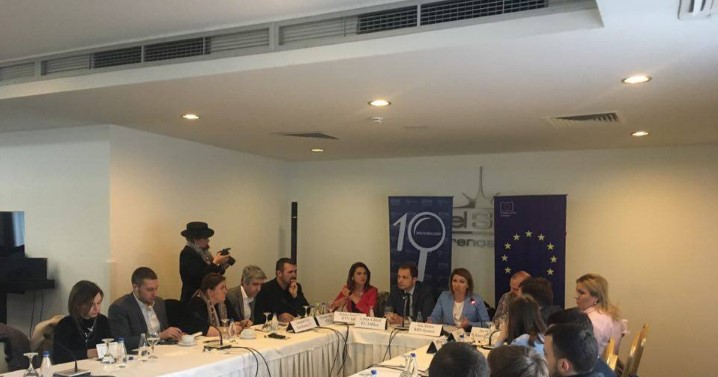
 

BIRN, CIN Begin Montenegro Investigative Journalism Project

Strengthening investigative reporting and the capacities of investigative journalists in Montenegro, as well as the quality of media content related to EU negotiation chapters, are the focus of the new EU-supported project.

The project, entitled ‘Investigate for ME and EU’, which is being implemented by the Center for Investigative Journalism of Montenegro (CIN-CG) and BIRN, began in February.

“CIN and BIRN jointly won this grant in the first-ever EC media call to be organized in Montenegro, and this collaboration is of particular importance for us. Through the partnership with BIRN, CIN-CG – established just three years ago – will strengthen its capacities, both in terms of supporting journalistic investigations and in managing an EU project,” said Milka Tadic Mijovic, president of CIN-CG.

“Investigative stories about the process of EU integration will be produced by the members of our team and journalists from other Montenegrin media – those that win in the call for the best investigative proposals, which is already open. They will deal with the biggest challenges in the country’s negotiations with the EU, including corruption, the rule of law, and environmental issues,” Tadic Mijovic explained.