BIRN BiH Participates in Information Law Consultations

Representatives of the Balkan Investigative Reporting Network in Bosnia and Herzegovina participated in a public debate on a draft revision of the Law on Free Access to Information, held in Sarajevo on February 23. 

The debate was organized by Transparency International and the Ministry of Justice of Bosnia and Herzegovina, and involved representatives of the authorities, non-governmental organizations and the media.

A several-hour session during which the participants discussed all the changes in the new draft law resulted in a joint conclusion that the existing law was a better platform for revisions than the draft law.

NGO representatives objected to the draft law’s insistence on the obligation to indicate the purpose of any access to information

Media representatives said they considered the existing deadline for submission of information requests, 15 days, too long, adding that they thought the proposal to extend the deadline by an additional 15 days was unacceptable.

PR officers employed with state institutions said that the law should define who could deal with requests related to this specific legislation.

Following the receipt of written proposals, which the debate’s participants submitted to the Ministry of Justice later on, the ministry will inform the public of its final decisions.

Balkan Insight Cited in Council of Europe Commission Report

The latest European Commission against Racism and Intolerance country report on Bosnia and Herzegovina quotes articles from BIRN’s flagship publication Balkan Insight.

The recently-published report by the ECRI, the human rights monitoring body of the Council of Europe, repeatedly cites articles from Balkan Insight published between 2013-2016.

The articles include pieces dealing with hate speech, elections, the schooling system, incidents that sparked ethnic tensions, attacks on the LGBT community in Bosnia and Herzegovina, and problems related to releasing census data due to political disputes.

The ECRI report concluded that politicians in the country were still resistant to ehthic integration.

“While welcoming the quick reaction by the politicians to the attacks against returnees, and measures taken to resolve problems of discrimination faced by the Roma community in Bosnia and Herzegovina, the anti-racism commission denounced a persistent lack of political will to build an inclusive society in Bosnia and Herzegovina”, the report said.

“Ethnically segregated education systems are still in place and the political elites of the three main ethnic groups show no willingness to embrace integrated schools. Inter-ethnic tensions remain dangerously high and hate speech is still frequently used in the public discourse,” it added.

Smear Campaign Targets BIRN Journalists in Macedonia

BIRN journalists in Macedonia are being subjected to an incendiary campaign on social networks by supporters of the rightist VMRO DPMNE party.

BIRN journalists have been targeted on social networks in Macedonia in connection to Tuesday’s attacks on journalist and cameraman in Skopje who were beaten up while covering a pro-VMRO DPMNE rally.

After BIRN Macedonia journalists published news and tweeted about the attack some Twitter users with generic nicknames accused BIRN journalists of being traitors and mercenaries.

Twitter users with hidden identity took to social networks to defend the VMRO-DPMNE supporters rally claiming that reports of the apparently unprovoked attack were media spin and to blame the victims of the attack for having provoked the crowd.

One user without a name went further, however, and – in what looked like an incitement to violence – published the home address of one of the BIRN journalists with a map.

The case has been reported to Twitter and to the country’s Helsinki Committee for Human Rights who are filing a report with the Ministry of Interior’s department for computer crime. The Association of Macedonian Journalists, ZNM, has also been notified.

“We are closely following and documenting all attacks and smear campaign and will accordingly alert relevant institutions and journalists’ associations,” Ana Petruseva, director of BIRN Macedonia, said.

“Regardless of attacks and threats, BIRN will continue with its investigative reporting and work in the public interest. This campaign further proves the significance of BIRN’s work,” she added.

Civil society groups in Macedonia have faced increasing pressure, from smear campaigns to raids by tax inspectors, ever since the ruling VMRO-DPMNE party in December vowed to rid Macedonia of the influence of NGOs linked to billionaire George Soros, a process it has called “De-Soros-ization”.

Tensions have escalated in the polarized country since December’s tight elections failed to produce an outright winner and since VMRO DPME was unable to form a new government.

BIRN Macedonia has been included in campaigns portraying all independent NGOs as traitors and mercenaries working for Western intelligence services to destroy the country.

A group called Stop Operation Soros in mid-February published a report that claimed USAID money was funneled into organisations affiliated to Soros’s Open Society Foundations.

The report by three authors, all VMRO-DPMNE supporters, named BIRN as “a Soros proxy” and gave inaccurate information about the funds BIRN Macedonia has received from USAID.

It also labelled BIRN’s online publication Prizma as linked to Soros and to the main opposition Social Democratic Union, SDSM.

On February 12, TV show host Vasko Eftov on air claimed BIRN and Balkan Insight belonged to a media network run by the British intelligence service MI6 in the Balkans, and named BIRN’s investigative editor Lawrence Marzouk in person.

The report has been picked up and republished by other pro-government websites in both Macedonian and English.

Macedonia holds the worst rank in the Balkans when it comes to press freedom, with attacks and death threats to journalists in the past.

BIRN Macedonia’s Vlado Apostolov Awarded for Investigative Reporting

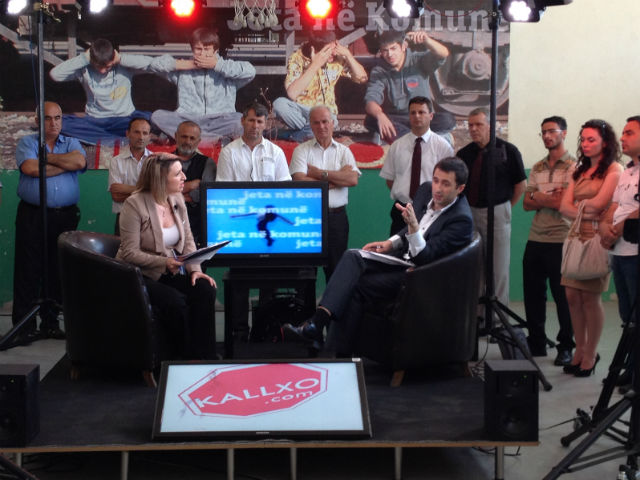
The Association of Journalists of Macedonia gave its annual investigative reporting award for 2016 to BIRN journalist Vlado Apostolov on February 22 for his series of articles on properties connected to a Macedonian official, Vladimir Zdravev.

Apostolov received the “Yasar Erebara” award for three investigative articles on properties linked to the former chairman of the Council in the Skopje Municipality of Centre, published on BIRN Macedonia’s website Prizma.

Zdravev is also former director of the state company for electricity transfer and on the board of directors of Macedonian Telecom, in which the state owns a third of the shares.

Photographer Gjorgji Licovski from SDK web portal was awarded a Lifetime Achievement Award at the same event.

Thirrje për artikuj investigativë në fushën e institucioneve financiare

Thirrja organizohet nga Rrjeti Ballkanik për Gazetarinë Investigative në Shqipëri (BIRN Albania), si pjesë e projektit të saj “Zbardhja e korrupsionit në Shqipëri”, të mbështetur nga Open Society Foundation in Albania dhe National Endowment for Democracy.

Nëpërmjet këtij konkursi tre (3) gazetarë investigativë do të përzgjidhen për të prodhuar artikuj investigativë në fushën e industrisisë dhe institucioneve financiare, në bashkëpunim me shoqërinë civile. Fituesit do të përzgjidhen nga një juri e pavarur e përbërë nga gazetarë me eksperiencë dhe ekspertë në fushën e financave. Këto grante investigative do të mbështeten nga National Endowment for Democracy.

Aplikantët e përzgjedhur, të cilët do marrin një bursë prej 1,200 USD (minus taksën të ardhurave personale), do kenë në dispozicion një periudhë tre mujore për të përfunduar investigimin e tyre dhe përgatitjen e artikullit për publikim.

Kandidatët fitues pritet që të angazhohen dhe të përmbushin të gjitha detyrimet në lidhje me investigimin, siç janë: takimet e shpeshta me redaktorin, publikimin e tekstit në faqen e BIRN Albania www.Reporter.al, si dhe respektimin e standardeve të gazetarisë investigative dhe etikës profesionale.

Kandidatët duhet të formulojnë një propozim të detajuar për konkursin. Propozimet duhet të kenë për qëllim ekspozimin e rasteve konkrete të korrupsionit, pandëshkueshmërisë dhe mungesës së zbatimit të ligjit në sektorin financiar.

Prioritet në përzgjedhje do i kushtohet propozimeve të cilat përfshijnë një nga temat e mëposhtme, të sygjeruara si prioritare gjatë një tryeze të rrumbullakët midis gazetarëve dhe përfaqësuesve të shoqërisë civile të organizuar nga BIRN Albania:

  • Raste korrupsioni ose mashtrimi në sistemin bankar;
  • Transparenca e fondeve të investimeve;
  • Rreziqet e lidhura me kompanitë e investimeve online;
  • Mbikëqyrja dhe transparenca e sektorit financiar nga institucionet shtetërore;
  • Abuzime me klientët në sistemin bankar dhe shoqëritë e kursim kreditit;
  • Abuzime me kreditë nga bankat, kompanitë apo individët;
  • Korrupsion nga punonjësit e sistemit bankar apo ata të institucioneve mbikëqyrëse 

Aplikantët mund të dërgojnë më shumë se një aplikim, por vetëm një propozim për kandidat do të përzgjidhet.

Të drejtën për të aplikuar e kanë të gjithë gazetarët në Shqipëri, të punësuar pranë mediave të tjera apo në profesion të lirë.

Kandidatëve u kërkohet të dërgojnë propozimet e tyre në formularin e aplikimeve (Kliko këtu për formularin), një CV dhe tre shembuj të punës së tyre me email në:

[email protected]

Afati i Aplikimit: 28 Shkurt, 2017

Kandidatët e përzgjedhur do të njoftohen deri më datë: 5 Mars, 2017

BIRN Albania Seeks Investigations on Financial Industry

Grants offered for three journalists to uncover corruption and abuse of power stories in the financial industry as well as mentoring by experienced editors.

The Balkan Investigative Reporting Network in Albania launched a call for investigative stories on local government on February 9th.

The call is part of the project “Exposing Corruption in Albania”, while the grants are supported by the National Endowment for Democracy.

Three journalists will be awarded grants to cover their expenses while conducting investigations and writing their stories on the financial industry.

The journalists will have some three months to dig deeper and research their ideas, having the opportunity to work with experienced editors as mentors to guide them through the process of writing in accordance with BIRN standards.

The call only applies to journalists from Albania and closes on February 28th.

Click for more information about the application procedure, with details in Albanian.

BIRN Staff Trained in Project Cycle Management

Twenty BIRN Programme and Project Managers have been trained to build their capacities in the field of project cycle management.

The training sessions from January 31 to February 3 in Vrsac had the overall aim to improve BIRB staff’s effectiveness in the preparation and implementation of projects and programmes.

The College of Europe from Bruges designed and implemented the training programme and participants from Romania, Macedonia, Kosovo, Albania, Bosnia and Herzegovina and Serbia took part.

Project cycle management (PCM) is the process of planning, organizing, coordinating, and controlling a project effectively and efficiently throughout its phases, from planning through execution then completion and review, in order to achieve pre-defined objectives or satisfy the project stakeholders by producing the right deliverables at the right time, cost and quality.

New Investigative Journalism Project Launched

The Balkan Investigative Reporting Network, BIRN, is carrying out a three-year investigative journalism programme thanks to support from the Austrian Development Agency, ADA. BIRN Kosovo director Jeta Xharra and Gunther Zimmer, ADA’s Kosovo director, signed an agreement in Pristina this week, marking the start of the project.

The programme is a continuation of BIRN’s award-winning “Paper Trail to Better Governance”, which produced a series of innovative and hard-hitting investigations between October 2013 andJuly 2016.

Journalists from Albania, Bosnia and Herzegovina, Kosovo, Macedonia, Moldova, Montenegro and Serbia worked together to produce more than 30 pieces of watchdog journalism,www.balkaninsight.com/en/page/paper-trail, with many of the stories published alongside major international outlets such as The Guardian.

Reporters were provided with training in investigative journalism and given subject-specific briefings related to their stories.  

The investigations used public documents, often obtained through Freedom of Information laws, to shine a light on corruption in the private and public sector. The findings have sparked a number of official investigations which are ongoing.

The new, three-year programme will continue to use public documents and FOI laws to uncover wrongdoing, while integrating new, computer-assisted techniques.

Xharra said: “We’re pleased that ADA continues to support BIRN’s work building a cohort of talented investigative journalist who have the skills, means and passion to hold the powerful to account. “

BIRN’s Social Media Pages Grow in Popularity

BIRN’s social media pages have increased their numbers of followers significantly, boosting the reach of the stories that BIRN is publishing and heightening public engagement.

The Facebook page of Balkan Insight, BIRN’s regional publication, had five times more followers in January 2017 than in November 2014, when the latest grant from the Norwegian Ministry of Foreign Affairs supporting this digital outlet began.

Balkan Insight’s Twitter page currently has 23,441 followers, while in November 2014 it had a total of 7,556 – an increase of 330 per cent.

Balkan Transitional Justice (BTJ), another BIRN regional programme, has also recorded an important increase in its social media following.

Its Facebook page counts 20,611 followers in total, while at beginning of that period it had 13,000 – an increase of 159 per cent.

BTJ’s followers on Twitter also increased by 314 per cent, from an initial 1,250 to a current total of 3,926 from November 2014.

Balkan Insight’s social media followers come from around the region and from further afield – mostly the United States and Britain.

Emma Krstic, BIRN’s social media editor, said the organisation had been working to develop and deepen its engagement on social networks.

“In the past 12 months we have introduced more live coverage of events, namely elections and protests, which we covered on social media and through live blogs, and started to produce more video content,” said Krstic.

“Additionally, over the past year, numerous milestones and historic events across the region such as the war crimes verdict against former Bosnian Serb political leader Radovan Karadzic and Kosovo winning its first-ever Olympic gold medal and its first-ever Oscar nomination for a foreign film, have helped us to grow our audience organically,” she added.

“Our content inspires a steady stream of comment and debate, which at times becomes quite heated among our social media community. We aim to facilitate interesting and healthy debate, but covering a region with such a turbulent recent history can evoke a very passionate reaction from our followers on social media which requires a lot of moderation,” she said.

BIRN Albania Holds Roundtable on Financial Industry

The Balkan Investigative Reporting Network in Albania held a roundtable on the financial industry, bringing together journalists, civil society organizations and experts. 

BIRN Albania’s roundtable on the financial industry held on February 1st  in Tirana was part of a programme called “Exposing Corruption in Albania”, which is financed by the National Endowment for Democracy, NED.

The project aims to expose corruption in the financial industry by bridging the gap between civil society and investigative journalists, in order to uncover abuses of power, abuse of client trust and abuse of regulations.

About 20 representatives of non-governmental organisations and journalists discussed the topics to be investigated, which ranged from transparency of the financial sector, investment funds’ disclosures with clients and the ability of regulatory institutions to monitor their activities.

Participants at the roundtable also listed questionable loan practices from banks and debt collection services as topics of concern.

The topics highlighted by the NGOs will be listed in BIRN Albania’s upcoming call for investigative stories in the field of financial industry.