BIRN Macedonia Launches Tenth Call for Investigative Reports

BIRN Macedonia, together with the Centre for Civil Communications, launched the tenth call for investigative stories on February 29th.

The call is part of the ‘Project for Investigative Journalism and Cooperation Between Media and Civil Society’, and is part of a USAID programme for strengthening independent media in Macedonia.

Selected journalists will be awarded a grant covering their expenses during the investigation and writing phases of their stories. This call ends on October 28th.

Journalists will have approximately three months to dig deeper and research investigative story ideas. Grantees will be mentored by experienced editors who will guide them through the process of writing investigative stories according to BIRN standards.

Topics for investigations include: health; cultural policy; education and youth; human rights; EU integration; good governance; inter-ethnic relations; environment issues; marginalised groups; quality of life.

The call only applies to journalists from Macedonia.

The final call for investigative reports within this project will be launched at the end of 2016.

Click for more information about the application procedure, with details in Macedonian. 

BIRN Albania Holds Roundtable on Organized Crime

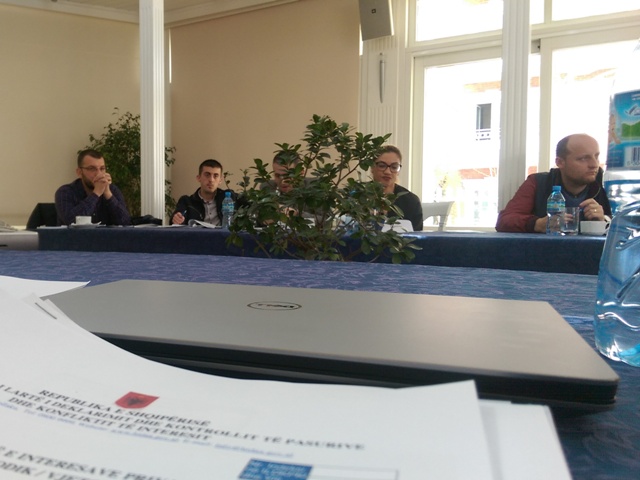
The Balkan Investigative Reporting Network in Albania held on February 25th a roundtable on organized crime in Tirana, bringing together representatives of civil society, experts and journalists. 

It was the sixth in a series of seven roundtables, part of a programme called ‘Exposing Corruption in Albania’, which is financed by the Open Society Foundation in Albania (OSFA), the Swedish International Development Cooperation Agency (SIDA), National Endowment for Democracy (NED) and the Balkan Trust for Democracy (BTD).

The project aims to expose corruption cases in seven different sectors: the environment, education, the judiciary, healthcare, public administration, local government and organized crime, by bridging the gap between journalists and CSOs, and by providing a solid basis for collaboration in exposing abuses of power.

About 19 representatives of non-governmental organizations and journalists discussed on the nature of organized crime in Albania and its links to the political and economic elite.

The participants to the roundtable listed a number of topics of concern, ranging from the infiltration of law enforcement agencies by organized crime, racketeering, drug trafficking and human trafficking. 

The topics highlighted by the NGOs will be listed in BIRN Albania’s upcoming call for investigative stories in the field of organized crime.


‘Soft Censorship’ Rife in Serbian Media, BIRN Report

Government pressure, state funding for favoured outlets and self-censorship have all contributed to a worsening in Serbia’s media landscape, a BIRN media report says.

State funding for favoured media outlets, a generally poor economic situation and self-censorship among journalists pose a real threat to objective public information and make the outlook for the Serbian media worse year by year, a BIRN Serbia report entitled “Soft censorship, Changes in media sector – from bad to worst”, issued on Thursday, writes.

Tanja Maksic, BIRN Serbia’s main researcher in the project, defines “soft censorship” as “hidden control”, and says it arises mainly from non-transparent and selective state funding of certain media accompanied by punishment of those that defy government control.

“The authorities use official state funding to reward obedient media and punish those that are critical,” Maksic said, adding that the phenomenon feeds “clientelistic relationships” in which the media become addicted to and dependent on state-sourced finance.

According to the report, “soft censorship” runs from misuse of public funds to abuse of regulatory and inspection powers and various tax incentives granted arbitrarily by the state.

The long-awaited privatization of the media in Serbia has not brought freedom to the press, since only 34 of an initial 70 state-owned media outlets found new owners, the report says.

“Out of that [34], almost half are in direct or indirect connection to the ruling parties,” the report says.

The government’s separate treatment of “suitable” and unsuitable media and journalists, plus precarious working conditions and low pay all contribute to the phenomenon of self-censorship.

The BIRN report refers to a recent survey of the sociologist Srecko Mihailovic “From Journalists to Labourers, Precarious Work and Life”, in which 70 per cent of questioned journalists said self-censorship among journalists was widespread. Only 5 per cent disagreed.

The BIRN Serbia press conference for the report was attended by colleagues and partners from the region, including Aleksandar Trifunovic, editor of BUKA magazine from Bosnia and Herzegovina, Daliborka Uljarevic from the Montenegrin Civil Education Center and Sasa Lekovic, president of Croatian Journalists Association.

Comparing the “soft censorship” experiences of the four countries, they agreed that political influence on the media remained strong and that self-censorship was a serious problem.

Lekovic said the media in Croatia had much the same problems as in Serbia, stressing that there is no real difference between “soft” censorship and censorship.

“It is all censorship. You cannot be half-dead,” Lekovic said, adding that despite EU membership, media freedom in the country had not truly progressed.

“The EU deals with media freedoms only declaratively. Everything is down to the national government,” Lekovic said, adding that Croatia’s new government appeared hostile toward media freedoms.

All the panelists agreed that the media in Serbia are facing the strongest pressure of all four countries.

“Only Macedonia is in a worse situation in the region,” Slobodan Georgiev, BIRN Serbia journalist, added.

This debate has been organized with the financial assistance of the project South East European Media Observatory, supported by the European Union. The contents of this event are the sole responsibility of BIRN and can in no way be taken to reflect the views of the European Union.


BIRN Albania Holds Roundtable on Energy

The Balkan Investigative Reporting Network in Albania held a roundtable on energy on February 22 in Tirana, bringing together civil society organizations, environmental activists, experts and journalists working in the field of energy.

The roundtable was supported by the Rockefeller Brothers Fund, and aimed to create bridges between civil society organizations, experts and the media in order to enhance public debate on the future of a sustainable energy model in Albania, clean energy sources, transparency and corruption in the energy sector.

About 25 experts, representatives of civil society organizations and journalists were present at the meeting, highlighting the need for greater cooperation between civil society groups and the media in order to highlight for the general public important issues on the energy sector.    

The participants discussed the wildcat development in Albania’s hydropower sector, the use of green taxes by the government, the construction of hydropower plants in protected areas without proper environmental assessments, the lack of transparency and proper corporate governance of state-owned energy companies and the illegal sale of substandard fuels.

The experts and activists agreed that there is a need for greater cooperation between civil society groups in order to strengthen the public consultation process for energy projects, which is often formal and does not treat the public as a stakeholder.

The topics highlighted during the roundtable will help inform BIRN Albania’s upcoming call for investigative stories in the field of energy. 

Fellowship Journalist Commended for Trafficking Investigation

Lindita Cela, a 2015 alumni of the Balkan Fellowship for Journalistic Excellence, has received a commendation from the United Nations Entity for Gender Equality and the Empowerment of Women in Albania, UN Women, for the “creation of a professional model of investigative journalism for the reporting on trafficking of women and girls.”    

The commendation was issued to Cela by David Sander, representative of UN Women in Albania, during a roundtable held in Tirana by UN Women and the Interior Ministry entitled “Reporting in the Media of the Phenomenon of Trafficking of Women and Girls: Problems and Recommendations”.

Cela was recognized for her story Vicious Circle: Albanian Victims Struggle to Escape Shadow of Sex Trade, published as part of the 2015 Balkan Fellowship for Journalistic Excellence programme.

The investigation highlighted the plight of Albanian women and girls trafficked and exploited as sex slaves and their struggle to rebuild their lives with little help from the state and a society that often refuses to treat them as victims. 

Every year the Balkan Fellowship for Journalistic Excellence awards ten journalists from Albania, Bosnia-Herzegovina, Bulgaria, Croatia, Kosovo, Republic of Macedonia, Montenegro, Romania, Greece, financial and professional support to conduct in-depth research into a topic of regional and EU significance.

The project, which is supported by ERSTE Foundation and the Open Society Foundations, in cooperation with the Balkan Investigative Reporting Network, BIRN,  aims to encourage regional networking among journalists and advance balanced coverage on topics that are central to the region as well as to the European Union.

BIRN Celebrated the 200th Anniversary Issue of Belgrade Insight

Over 150 guests joined BIRN in marking the 200th issue of Belgrade Insight at a commemorative party on top of the USCE Tower in Belgrade on Thursday, February 18th

BIRN founder and Regional Director Gordana Igrić welcomed partygoers with a speech that recalled Belgrade Insight’s challenges and successes over the last eight years.

“The timing for our own celebration could have been worse, but it does highlight just how remarkable it is to launch a newspaper in today’s chaotic media world and to reach a milestone like 200th issue we are now celebrating. It’s an achievement that has to be seen in the context of the political landscape in which we publish… Despite all this we have found a core group of devoted readers who are willing to struggle quite literally to find us. Week after week they seek out our newspaper even if it means coming to our office building to grab the latest copy” said Igric while welcoming the guests.

Throughout its history, Belgrade Insight has been an invaluable resource for readers seeking news and information about life in Belgrade.

Guests included diplomatic notables, journalists and prominent local tastemakers.  The Nada Pavlovic Band provided the entertainment.

The bi-weekly newspaper is a publication of the Balkan Investigative Reporting Network (BIRN) and focuses on news, culture and happenings in Belgrade.  First published in May 2008, then-editor Mark R. Pullen described Belgrade Insight as a “brave new English-language newspaper, destined to become a ‘must-read’… for opinion-makers, expatriates, and everyone else who has a need to know.”


BIRN Documentary ‘The Unidentified’ Showing in US

BIRN’s documentary about Kosovo war massacres and their subsequent attempted cover-up, ‘The Unidentified’, will be screened in New York and Williamsburg, Virginia.

The first US screening of the film is being staged on Monday at Columbia University in New York, organised by the Harriman Institute.

The screening will be followed by a panel discussion with the film’s director/producer Marija Ristic, author and human rights advocate Fred C. Abrahams, and sociologist, journalist and policy analyst Anna Di Lellio.

The film will then be screened a week later on February 29 at the College of William & Mary in Williamsburg, Virginia, which will also be followed by a discussion with Marija Ristic. 

‘The Unidentified’ is a feature-length documentary which follows two story lines that focus on large-scale state-sponsored wrongdoing – war crimes in four Kosovo villages and the subsequent cover-up operation.

Both victims and perpetrators recall gruesome memories of the attacks, when scores of ethnic Albanian civilians were killed by Serbian forces in the course of a few days in the spring of 1999.

The result of a two-year-long investigation, the documentary names the officers who ordered attacks on villages and those who were involved in the removal of victims’ bodies to mass graves at the Batajnica police centre near Belgrade in Serbia.

Beside disturbing testimonies never seen before, the documentary also features exclusive images and documents from the war.

Life in Kosovo Debates Language Usage

This Thursday, Life in Kosovo will host a debate on language usage in Kosovo at the local and central levels.

Image 1500

Kosovo has two official languages at the central level – Albanian and
Serbian – while at the local level, the Turkish language is in official
use in Prizren district. The show will point out the level of
implementation of language usage in practice. What are the
practical barriers to fully implementing the law on language usage? How
does the Governmental Commission for Languages function in monitoring
the implementation of this law? How content are the non-Albanian
communities with the situation of their native language usage in
Kosovo?

The following panellists will be in the studio:

Dragisa Krstovic – Serb List for Kosovo and member of the Commissions
for Judicial Issues, Legislation and Constitutional Framework; Gender
Equality; and Petitions and Public Request of the Kosovo Assembly
Mahir Yagcilar – from Turkish Community, representative of the Parliamentary Group 6 +
Ismet Caka – Chairman of the Commission for Languages in the Prime Minister’s Office/Legal Office;
Veton Vula – Ombudsperson’s office;
Gjyzel Shaljani – Roma Activist,
Sazan Ibrahimi – Executive Director-Kosovo Association of Municipalities, AKK


Life in Kosovo is a co-production between Kosovo Public Television, RTK
and the Balkan Investigative Reporting Network, BIRN. It is broadcast
every Thursday, starting from 20:15.

The 10th Balkan Fellowship for Journalistic Excellence Competition Still Open for Applications

Become a BFJE fellow this year! To download and fill in the application to participate, please go to http://fellowship.birn.eu.com/en/page/home.

You have still two weeks to think about the topic you’d like to cover.

Journalists from Albania, Bosnia-Herzegovina, Bulgaria, Croatia, Kosovo, Republic of Macedonia, Montenegro, Romania, Greece and Serbia are eligible to apply for a bursary until March 1st.

Also this year, ten journalists from across the region will be chosen through open competition to receive funding and professional support to conduct in-depth research into a topic of regional and EU significance.

Send us your application with your proposal for a story based on this year’s theme of Trust by March 1st.

Applicants selected by an independent committee to take part in the fellowship will receive a €2,000 bursary and up to another €2,000 for travel and research expenses. They will also attend international seminars and receive continuous one-to-one mentoring for their stories.

Completed articles will be published in English and local languages by leading regional and international media. In addition, the top three articles will receive awards of €4,000, €3,000 and €1,000.

The closing date for applications is March 1st, 2016. The application form, guidelines and further information about the fellowship are available online: fellowship.birn.eu.com.

In order to foster quality reporting, initiate regional networking among journalists and advance balanced coverage on topics that are central to the region as well as to the EU, the Balkan Fellowship for Journalistic Excellence programme  is supported by the ERSTE Foundation and the Open Society Foundations, in cooperation with the Balkan Investigative Reporting Network, BIRN.


For more information contact:

Fellowship programme manager, BIRN

Kolarceva 7/V

11 000 Belgrade, Serbia

Email: [email protected] 

BIRN Kosovo publishes assessment report on Kosovo’s privatisation process

Balkan Investigative Reporting Network (BIRN) Kosovo and Group for Legal and Political Studies (GLPS) published the report titled “Panic Selling: Assessing the main challenges and deficiencies of Kosovo’s privatization”.

The analysis provides an overview of the main challenges and problems encountered during the privatization process in Kosovo.

More precisely, it highlights problems such as institutional dualism, ownership disputes, Kosovo’s unresolved international status, methods of privatization, the negative impact on employment, highly under-priced sale of SOEs, corruption, undervalued agricultural land, non-utilization of privatization funds, and the exclusion of citizens from the privatization process.

In addition, this policy analysis offers a range of policy recommendations, which if seriously taken into consideration by relevant institutions, would result in the improvement of the privatization process.

Click to download report in English