Trust Slipping in Balkan Police, TV Show Says

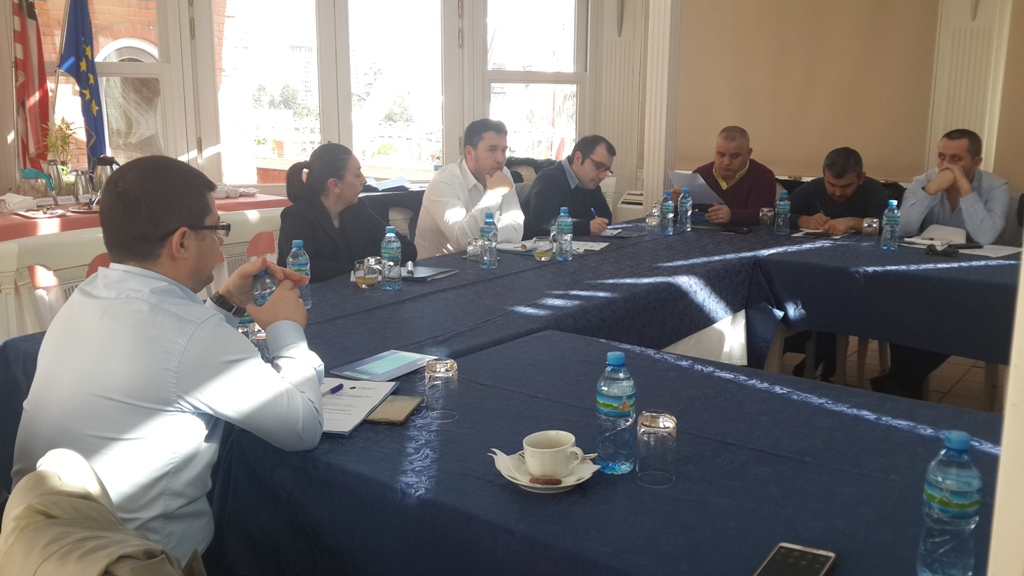
People are losing trust in the police in the Western Balkans, a special TV show broadcast by the regional television network N1 Info channel in cooperation with BIRN Serbia, Bosnia and Herzegovina, Montenegro and Kosovo concluded.

The TV show was based on research conducted within the framework of “Western Balkans Pulse for Police Integrity and Trust,” a project of which BIRN Serbia is part.

According to the research results, a majority of citizens think their police forces are corrupt. In their communications with BIRN Serbia, experts said people’s negative perception of the police was based on their everyday contact with police officers. Many people perceive them as uneducated, arrogant and inconsiderate.

Other factors in Serbia include a number of affairs and scandals that surfaced involving the Ministry of Interior. These include last year’s dismissal of five heads of police directorates with no explanation provided as to the reasons for this action.

More information find at http://pointpulse.net/activities/affairs-are-decreasing-the-citizens-trust-in-police/

Belgrade Insight to publish 200th Issue

Belgrade’s only English-language newspaper is marking anniversary with special issue and party.

Belgrade Insight is set to publish its 200th issue on February 18th, a milestone of survival through a landscape of dramatically shifting newspaper economics, volatile political climates and clear intimidation, censorship and assaults on press freedom in Serbia. 

“Since its establishment, Belgrade Insight had endured many challenges – from 2008 financial crisis when we saw businesses cutting off their advertisements, followed by disregard of advertisement agencies that were reluctant to associate with a paper not in favour with the governments to a censorship campaign that has raged against BIRN in the last few years,” says Gordana Andric, Belgrade Insight’s editor.   

Throughout its history, Belgrade Insight has been an invaluable resource for readers seeking news and information about life in Belgrade. 

The bi-weekly newspaper is a publication of the Balkan Investigative Reporting Network (BIRN) and focuses on news, culture and happenings in Belgrade.  First published in May 2008, then-editor Mark R. Pullen described Belgrade Insight as a “brave new English-language newspaper, destined to become a ‘must-read’… for opinion-makers, expatriates, and everyone else who has a need to know.”

That ambition has threatened Belgrade Insight’s existence more than once.  After BIRN published damaging investigative reports into his administration, Prime Minister Vucic’s government kicked out Belgrade Insight from key distribution points at Tourist Organisation of Belgrade centres, and Nikola Tesla Airport.  Belgrade Insight has moved to a subscription model to make up for the lost circulation.  But no matter how the paper is distributed, Andric has high hoped for Belgrade Insight’s future. 

“In today’s Serbian media scene, where censorship rules almost everyone, we see Belgrade Insight’s role ever more important and we hope to continue to bring our readers relevant and balanced journalism for many more issues to come,” says Andric. 


BFJE and Alumni Initiative Investigations Reach Big Audiences

Stories by reporters on the Balkan Fellowship for Journalistic Excellence and alumni of the programme have reached large international audiences in recent months.

An investigation into women from Kosovo who join ISIS, “Few but fanatical” by BFJE alumna Arbana Xharra, had a big impact in online media. The article was published in English, Serbian and Albanian — and the Albanian version alone has been read by more than 20,000 people and republished by most Albanian-language media in Kosovo and Albania. The article was also picked up by international outlets such as the EU Observer, Daily Mail, Al Jazeera Balkans and many others. Arbana spent six months last year working on her investigation. Previously she has reported on religious extremism and its links with non-governmental organisations and terrorist groups, which resulted in her receiving death threats. In 2015, the US Department of State honoured her with a Women of Courage Award.

Mariya Petkova, a BFJE fellow in 2015, investigated the use of Bulgarian arms in the war in Syria for her fellowship story. Her article was highlighted by Wikileaks and reached more than 40,000 readers. Mariya’s research involved extensive travel in Bulgaria and Turkey, taking her as far as the border with Syria. The story was also republished by Middle East Eye. Now a BFJE alumna, Mariya is a freelance journalist covering eastern Europe and the Middle East.

Other 2015 fellowship stories also reached broad audiences, with versions published by The Guardian, the New Statesman, Politico, programme media partners such as Austria’s Der Standard and other international outlets

“Hearts and Minds: The battle for Montenegro’s Mamula Fortress” by Nela Lazarevic was another story from the alumni programme to attract a lot of international attention. The article focused on plans to convert an island fortress used as a prison camp during World War Two into a tourist resort. The story was picked up by CNN, the New Statesman, the Daily Mail, the Independent and other international and local media. Following the attention generated by Nela’s story, state authorities and the project investor pledged that Mamula’s heritage would be respected as part of the development.

In all, thanks to the support of the Erste Foundation and Open Society Foundations, BIRN produced 17 in-depth stories as part of the Balkan Fellowship for Journalistic Excellence and the Alumni Initiative in 2015. Assisted by a team of local and international editors, 19 journalists tackled sensitive, complex and under-reported topics of regional and international importance.

Serbian Media Cover Fight against Corruption Poorly

Two years ago, when an action plan for the implementation of the country’s anti-corruption strategy was adopted in Serbia, media reported on this topic superficially, without deeper analysis and uncritically, according to a newly-published media content analysis by Tanja Maksic from BIRN Serbia.

At the presentation of the Alternative Report on the Implementation of the National Strategy for Combating Corruption, Maksic presented her analysis of articles devoted to this topic.

The average report published in the print media was short and factual, relying on officials and their agenda, and mostly positive when it came to anti-corruption measures, she said.

“There were no actors from civil society in the articles who could contribute to a more complete presentation of the theme to the public, especially because critical notes are coming from this part of society,” explained Maksic.

The Alternative Report was prepared by BIRN Serbia, the Belgrade Center for Security Policy and the Association of Prosecutors of Serbia as part of the project “Strengthening of External Oversight in the Implementation of the Anti-Corruption Strategy”.

Call for Balkan Fellowship for Journalistic Excellence 2016

Do you have an idea for a big story? Do you want to write and report it to the highest standards, with quality editorial support and a generous expenses budget that lets you explore your subject in depth? Would you like that story to be published across southeast Europe and perhaps make international impact?

If the answer to these questions is ‘yes’, now is the time to apply for the Balkan Fellowship for Journalistic Excellence.

Each year, ten journalists are chosen through open competition to receive funding and professional support to conduct in-depth research into a topic of regional and EU significance – for 2016 the subject is Trust.

It is a chance to advance your career and work on a story you can be proud of. You will be supported by experienced editors and journalists from around the region. Stories from the programme will be published by BIRN and by prominent regional and international media outlets. The top three stories, as selected by an independent jury, will also receive cash awards.

Experienced journalists from Albania, Bosnia-Herzegovina, Bulgaria, Croatia, Kosovo, Republic of Macedonia, Montenegro, Romania, Greece and Serbia are eligible to apply.

Send us your application with your proposal for a story based on the theme of Trust by March 01.

Applicants selected by an independent committee to take part in the fellowship will receive a €2,000 bursary and up to another €2,000 for travel and research expenses. They will also attend international seminars and receive continuous one-to-one mentoring for their stories.

For more information contact:

Dragana Žarković Obradović

Fellowship programme manager, BIRN

Kolarceva 7/V

11 000 Belgrade, Serbia

Tel: +381 11 4030 317

Email: [email protected]

BIRN Macedonia Issues Another Call for an Investigative Story: Domestic and Other Forms of Violence Against Women

Following a workshop on Domestic and Other Forms of Violence in December 2015, held as part of an integrated awareness campaign, BIRN is pleased to announce its call for an investigative story on the same subject.

BIRN urges interested journalists to submit their applications, biographies and other required documentation by no later than February 2, 2016. The final draft of the story is to be submitted two months after the successful candidate is notified of the award.

The selected journalist will receive $500 in monetary value and will be offered mentorship and editorial support from BIRN staff members.

All journalists in Macedonia are eligible to submit applications for this call, only one of whom will be selected to develop the story.

This call is published in cooperation with the missions of the United Nations and the European Union in Macedonia.

BIRN remains committed to highest standards of journalistic endeavours, and grants for other topics and specific fields will follow in the coming months. 

BIRN Kosovo Reports Win Media Awards

Journalists from BIRN Kosovo’s ‘Justice in Kosovo’ and Gazeta Jeta ne Kosove were awarded top prizes at the Annual Journalistic Awards in Pristina on January 15.

Justice in Kosovo’s televised report “Cannabis Made in Kosova”, by Valdet Salihu, was awarded the prize for the best TV report of 2015. A TV report on loan sharks by cameraman Durim Shala of ‘Justice in Kosovo’ received the award for best video filming. 

The article “Prizren Run by Powerful Hoteliers” published in Gazeta Jeta ne Kosove, by Petrit Kryeziu, was awarded best culture story of 2015.

BIRN Albania Self-Censorship Study Discussed in Parliament

The media commission in Albania’s parliament held a hearing on January 25 dedicated to BIRN Albania’s study, A Blind Eye on News: Self-Censorship in the Albanian Media.

The key findings of the study on the frequency, roots and causes of self-censorship in the local media were presented to the commission by BIRN Albania’s editor Besar Likmeta, who underlined that data collected through the survey of 121 journalists and 22 in-depth interviews with key sources suggests that self-censorship is widespread in the Albanian media. 

 “Self-censorship is not a free choice for a journalist and neither represents their natural approach toward news, but rather the result of the influence of a series of interconnected social, economic and political factors that affect the daily practice of news reporting and the quality of the media in general,” Likmeta told the MPs.

The hearing was called by the media commission in order to assess the working conditions, job security and safety of journalists in Albania – issues that are also reflected in the study.

The MPs praised the quality of the report and discussed ways in which the parliamentary commission could be more active in order to improve the working conditions of Albanian journalists. 

They discussed the recommendations produced by the report, centring on ways to improve the implementation of the labour code by media outlets as well as methods to increase transparency and fairness in the distribution of government-sponsored advertising.  

BFJE Alumni Network Expands in 2015

Each year after the Balkan Fellowship for Journalistic Excellence programme ends, the BFJE Alumni Network grows, and in 2015 it produced seven in-depth articles.

This year’s seven in-depth articles were researched and written by nine BFJE Alumni Network journalists from across the region.

Juliana Koleva and Kostas Kallergis investigated Greek and Bulgarian baby-selling routes, Lina Vdovii wrote about Romanian international adoptees who try to find their biological families via social media, Lavdim Hamidi covered the problems of privatization in Kosovo, and Nela Lazarevic wrote a story about Mamula Island in Montenegro, whose future is causing much controversy between locals and the government.

After New Year, more BFJE Alumni Network will be published on Balkan Insight.

Arbana Xharra will publish a story about women from Kosovo who join ISIS, there will be a cross-border investigation by Aleksandar Manasiev and Mirko Rudic about police from Macedonia and Serbia suing their states, and an investigation by Erjona Rusi about children in Albania and Kosovo exposed to porn via social media.

The Alumni Initiative is designed to encourage and support continued cooperation between fellows who have participated in the Balkan Fellowship for Journalistic Excellence, which was established in 2007.

The Alumni Initiative is supported by Open Society Foundation and ERSTE Foundation in cooperation with the Balkan Investigative Reporting Network.

Citizens Choose Favourite Projects in Participatory Budgeting

After proposing and voting on projects, ordinary people in ten participating municipalities have selected the ones that they want to see financed from their municipal budgets.

Ten municipalities taking part in the Participatory Budgeting project have assigned part of their 2016 budget for financing projects that were chosen as the best among the many proposed.

Local people had a chance to nominate projects that they thought would best advance their community, after which the Commission in each municipality selected the best.

Voting took place from November 9 to December 15 2015, after which it was decided which projects would be put into practice.

Each municipality selected one or more projects to finance from their budgets. Some will be setting up gyms in the open air, others constructing lakes, erecting fountains in public places, building playgrounds and much more.

Prior to the adoption of the budget, all the municipalities also held local budget forums where local residents, representatives of the business community and the media, as well as citizens’ associations discussed the 2016 budget.

The project includes ten municipalities – Sombor, Knjazevac, Trstenik, Pancevo, Zrenjanin, Pirot, Ruma, Sabac, Sremska Mitrovica and Vracar.

The aim of the Participatory Budgeting project in the 10 local communities is to introduce the practice of public participation in the decision-making process on local budgets.