BIRN Macedonia Holds Debate on Quality of Life

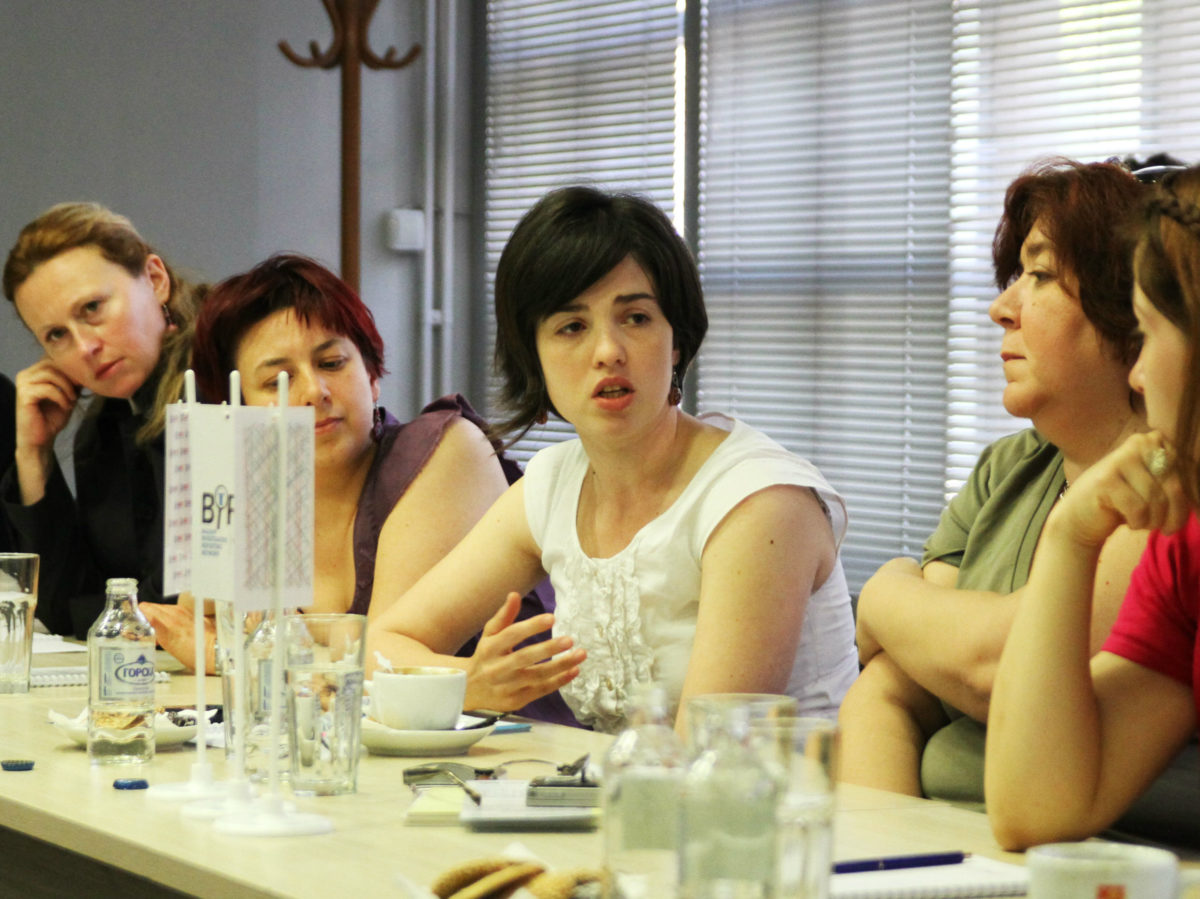
Quality of life was the subject of a debate in Skopje on May 15 organised by the Balkan Investigative Reporting Network Macedonia in partnership with the Centre for Civil Communications, part of the USAID programme for strengthening independent media in Macedonia.

BIRN Macedonia debate on quality of life

Journalists and NGO representatives spoke openly about problems in Macedonian society – highlighting high poverty and unemployment rates, misuse of the minimum wage, living conditions in rural areas, demographics and disproportional regional development. Both the NGO representatives and journalists agreed that there is a state strategy to address these quality of life issues but that it mostly stays on paper without serious implementation. The journalists also questioned the NGOs on their data and about the possibilities of future cooperation on specific topics.

The debate was third in a series of 10 which are being organised as part of a project for investigative journalism and cooperation between media and civil society, funded by USAID to strengthen independent media in Macedonia. The subjects were selected at a meeting between journalists and NGOs in mid-April. Other debates topics include health; cultural policy; education and youth; human rights; EU integration; good governance; inter-ethnic relations; environment issues; and marginalised groups.

BIRN Fellowship journalist takes European award

The 2013 Reporting Europe Prize has been handed to Sorana Stanescu for her story about the exploitation of migrant workers in the UK, produced under the Balkan Fellowship for Journalistic Excellence.

Sorana award

The annual award is organised by UACES, the world’s largest European studies association. Previous winners include journalists from the BBC, The Economist and the International Herald Tribune.

Stanescu, a TV journalist based in Romania, received the prize at a ceremony in Westminster, central London, on 13 May.

The chair of UACES, Helen Drake, also conducted a short discussion with Stanescu and her editor at the Fellowship, Neil Arun. They spoke about the background to the story and about some of the issues it had raised.

Handing over the award, Dr Martyn Bond, a jury member and deputy chair of the London press club, praised the winning story as “particularly apposite” and “well-written”.

“The whole question of migrant labour in a highly developed economy… is illustrated through this,” he said. “But it doesn’t do it in a preachy didactic manner. It does it through a human story. And that’s the best sort of journalism.”

“It gives us facts behind the fictions… that we hear trotted out daily in the political ding-dong that passes for serious debate here on the immigration issue.”

Stanescu’s story, Cheap and Far from Free, revealed how the UK’s labour restrictions had left Romanian and Bulgarian construction workers underpaid and vulnerable to exploitation. It was published by Balkan Insight, and by the New Statesman magazine.

The report was the result of several months’ research, sponsored by the Balkan Fellowship for Journalistic Excellence.

The Fellowship’s annual bursary promotes investigative and long-form reporting of complex reform issues in the Balkans.

It was established in 2007 by the Erste Foundation and the Robert Bosch Stiftung, in co-operation with the Balkan Investigative Reporting Network.


Kosovo Judicial Council Elections

On Sunday “Justice in Kosovo” discussed the elections of the Kosovo Judicial Council, KJC.

Among the questions discussed were: Why has the appointment of Enver Peci as a head of KJC been contested? Why did Sali Mekaj make false accusations about irregularities in the election process? Why were his claims rejected by members of the KJC? With how many votes has Peci become the head of KJC? Will Peci resign if he does not fulfill his election promises?

Recognized as one of the most important events for Kosovo’s judiciary, the KJC elections saw Enver Peci re-elected as the head of the institution.

Problems emerged when one of the members of the council – respectively the head of the Appeal Court, Sali Mekaj voiced problems about the process.

Mekaj said his rights as a candidate were denied. He outlined his grievances in a letter to KJC members.

“The irregularities make the process non-transparent, irregular and unlawful. In my case, it resulted in the violation of my right to be a candidate for the head of KJC and to participate equally in this competition,” Meka wrote.

In addition, two candidates, Valdete Daka and Enver Peci, presented their platforms for justice reforms. Peci won, getting six voters more than Daka. After Peci get a new mandate for the next three years, he vowed that if he does not succeed in implementing his platform, he will resign.

Also, “Justice in Kosovo” broadcast a report about a trial at the Economic Court in Prishtina. The trial concerned a libel lawsuit by businessman Bejtush Zhugolli against Zeri newspaper for an article titled “Godfathers of tenders in Kosovo” written by journalist Arbana Xharra. The lawsuit was filed last year.

After three court hearings, the judge in Economic Court in Prishtina, Fetije Sadiku announced the verdict, rejecting the lawsuit, arguing that the article of journalist Xharra was based on official documents.

Regarding with this verdict, “Justice in Kosovo” asked Sadiku for a statement, but she refused to speak in front the camera – reasoning that the case is still in process at a higher court.

In its decision, the court reasoned that the respondent, Arbana Xharra only quoted her sources of information and did not use her opinion. Xharra had, in fact, revealed the sources of her information and adhered to the code of ethics of print media in Kosovo.

Finally the judgment of the court said that the plaintiff, Zhugolli, did not give sufficient reasons to the court that publication of his name has influenced the damage of his prestige and reputation. Furthermore, he did not offer sufficient evidence to support his suit, either.

Also during the program, BIRN aired a report that showed how KJC deals with cases in which a judge violates the rules. It showed that within KJC there exists a Disciplinary Commission that takes disciplinary action against those judges who do not respect the ethics code.

If Kosovo citizens have any dissatisfaction with any judge, they can complain to the Office of Disciplinary Council or to the Disciplinary Committee. The most frequent cases involve negligence and misconduct. Sanctions can include a warning, final warning, written warning and dismissal, said the “Justice in Kosovo” report.

The third report talked about a case in which the prosecution and court investigated and convinced two policemen in the region of Mitrovica. They were convinced of misuse of official position and bribery. The judgment was made possible by a cooperative witness. 

The case utilized covert monitoring of conversations, which the court authorized. 

One of the policeman was sentenced to five months imprisonment while the other to 14 months.

BIRN Macedonia Holds Debate on Marginalised Groups

The Balkan Investigative Reporting Network Macedonia in partnership with the Centre for Civic Communications organised a debate on May 13 in Skopje entitled ‘Detecting common issues as a basis for cooperation between journalists and non-governmental organisations about the inclusion of marginalised groups in society’.

Marginalised debate MAcedonia

The debate about marginalised groups and the problems they are facing in Macedonia was the second in a series of nine held as part of the ‘Project for investigative journalism and cooperation between media and civil society’, which is part of a USAID programme for strengthening independent media in Macedonia.

Debates are being organised on topics selected at a large meeting between journalists and NGOs in mid-April. They include: quality of life; health; cultural policy; education and youth; human rights; EU integration; good governance; inter-ethnic relations.

About 20 journalists and representatives of non-governmental organisations took part in the latest debate, talking about possibilities and ways of cooperation.

The NGO representatives concluded that media often publish negative reports about marginalised groups, and emphasised that sometimes positive examples can be useful for tackling certain problems.

They listed dozens of topics concerning marginalised groups that are a priority for society and need to be tackled.

The journalists showed interest in most of the topics, asking for more details about some of them, but adding that cooperation with the NGOs should be intensified because writing about marginalised groups is sensitive and needs serious preparation.

BIRN Serbia Journalist Wins Investigative Journalism Award

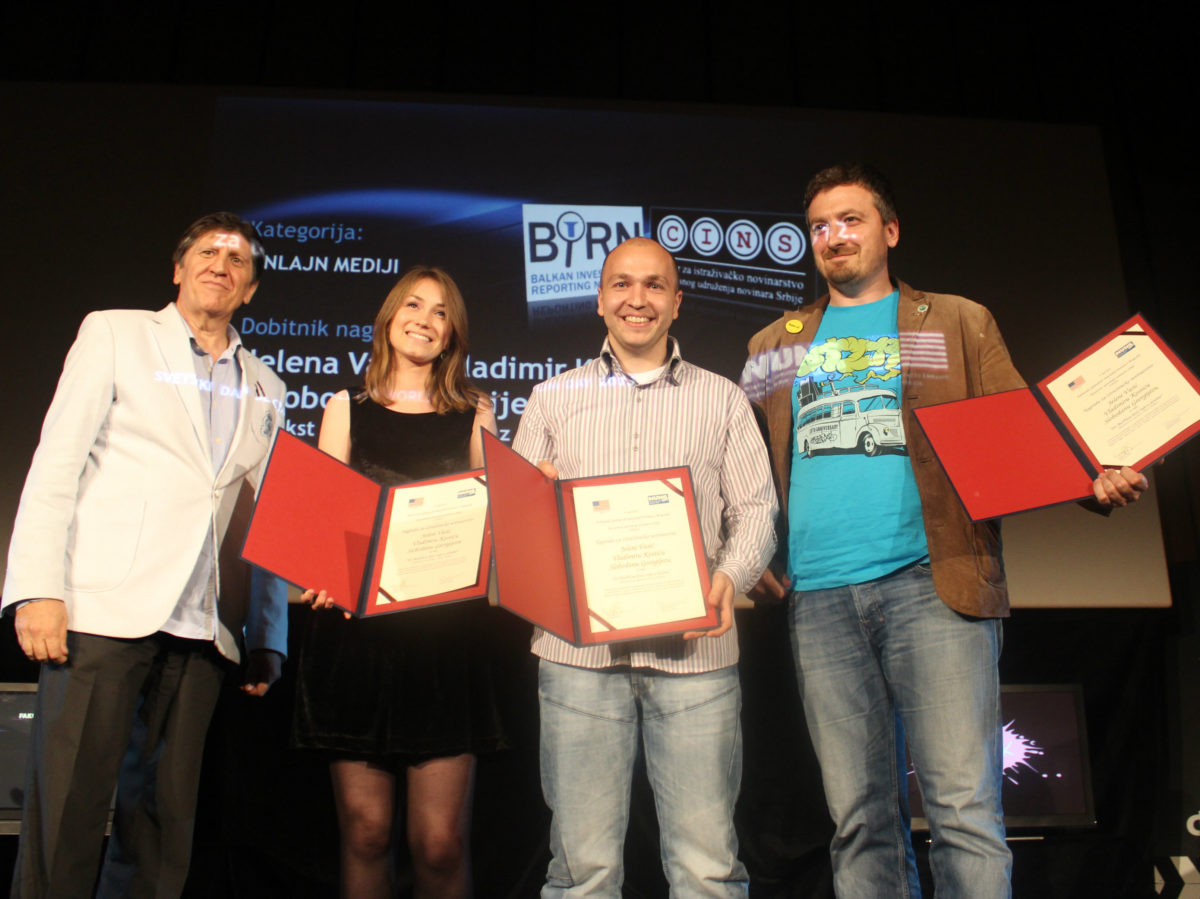
BIRN Serbia journalist Slobodan Georgiev has won the 2013 National Investigative Journalism Award, a prize given by the Independent Association of Journalists in Serbia.

NUNS investigative award

Georgiev, together with Jelena Vasic and Vladimir Kostic from the Centre for Investigative Journalism in Serbia, won in the online media category with their investigation into irregularities in Belgrade’s BusPlus system.

The award in the print media category was given to Sandra Petrusic for her series of articles entitled ‘Hospital Files – Money for Decay’, which was published in the weekly NIN.

In the electronic media category, the award went to Dragan Stankovic and Zorana Jovicic from RTV Belle Amie for their story ‘How 19 Million Was Spent on Konsantin’.

Two more BIRN Serbia journalists, Aleksandar Djordjevic and Ana Novakovic, were nominated in the online media category for their series of articles about Belgrade’s expenditure on promotion. 

Aleksandar Djordjevic was also nominated in this category for his story ‘The Electric Power Industry of Serbia Sends Incorrect Bills’.

The members of the jury were Brankica Stankovic, Milorad Ivanovic, Sasa Lekovic and Branko Cecen.

Each award is accompanied by a prize of 1,200 dollars, and this year 51 journalists entered the competition, submitting 101 articles or contributions.

The annual awards are organised by the Independent Association of Journalists in Serbia and supported by the US Embassy in Belgrade.

Tender Abuses

On December 28, 2012, the municipality of Prizren had published a contract notice for “supply of food items to the members of Parliament and civil servants of the municipal administration of the city of Prizren”, according to which the interested economic operators should have submitted their documents until January 7, 2013, at 15:00. The tender, according to the laws in power, was open until January 8, 2013. Moreover, the notice for contract to Ben-Af company was issued on January 23, 2013 and the total value of 43.600 euros or 100 euros per person. Surprisingly, the entire administration and Ramadan Buja, the head of Prizren, were caught shopping on the New Year’s Eve in the shopping center Ben-af. This allows concluding that the tender was done against the judicial frames.

Abdullah Limani, KRPP expert, said that this procedure was against the law for tenders. “What happened to tender for the supply of food items in Prizren is against any procurement standard,” Limani said. “Supplies, works or services must not be performed once, and then the procedure”.

Fatmir Kastrati, AAK, claims that he used his 100 euros to buy in Ben-af. “The decision of assembly was lawful, but then the procurement law was violated and this is not the problem of municipal councilors,” Kastrati said.

The LDK informing department in Prizren reacted with a statement, according to which, without even meeting the legal terms of procurement, the municipality prejudiced the tender winner; therefore, eliminating real competition and violating the law.

Abdullah Thaci, the information department of the LDK, said that “the municipality identified the winners themselves and just then formally announced tenders”.

Naim Cahan, an official of the organization KDI, said that based on the calculation of this organization, the sum of 43 600 euros would have been sufficient to give 80 euros to 45 families with social cases per month annually.

Legal Officer of Ben-af, Besnik Kuqi, claimed that the firm had fulfilled “all the conditions required for the competition” and that it had won the tender. It is the duty of the municipality of Prizren to reason the documentation given to Ben-af.

Acting chief of the procurement office in Prizren, Alban Susuri, said that the contract has not been signed because the municipality has no means. And he added that he has no clue why these groceries were bought in Ben-Af by the administration.

He noted that although Ben-Af wondered the tender, the contract has yet to take effect because the municipality doesn’t have the money to pay for it.

However, the municipal spokesman Ymer Berisha said the decision was taken in accordance with the municipal assembly procedures.

“Some officials, including the mayor, have not withdrawn the funds,” said Berisha. “I would like to confirm the citizens that we are within the practices of decision-making”.

There are also other problems with the same content in Prizren. Opposition parties which were interviewed have criticized the municipality that since 2009 has invested about 900 thousand euros for the construction of the cultural center in Zhur, but it is not finished. The construction of this object, according to the contract between the Municipality of Prizren and firm “Elshani”, should have been finished within a period of 150 days. So far, they have spent about 800 days.

Florin Beqiri, director of local government audit in the Office General of the Auditor in Pristina, said the facility had been audited and found that its construction had not been foreseen at the procurement plan.

Revelations of the legally suspect contract come as Prizren faces a corruption scandal.

In February, a prosecutor from the EU rule of law mission, EULEX, indicted the mayor, Ramadan Muja, and five other municipal officials for corruption involving the illegal use of municipal land. Muja has dismissed the allegations as politically motivated.

The Investigations on Massacre of Krusha e Vogel

Krusha e Vogel is the place where one of the most horrible massacre took place during the war of 1999. 113 civilians were killed; 86 of the bodies are not found yet and the assumptions are that they were cremated or thrown in the river Drini i Bardhe. One of the survivors claims that the entire village ran to the mountains since they were surrounded by the Serbian forces. Kosovars were separated in men, women and children where all men were killed, even if they were thirteen years old.

Prosecutor Michalczuk, when asked about the start and proceedings of investigations towards Krusha e Vogel answered “We have officially launched investigations in late May of last year. Exactly 31 May 2012. At least, the number of suspects reaches number 56, for now.” Also he claimed that they cooperate with Serbia and ICTY in The Hague.

Michalczuk is optimistic towards finding evidence, even though fourteen years have passed since the massacre. “Once completed the process of gathering evidence, we will, first, talk to the perpetrators individually accountable for their individual actions, and then issue the arrest at a proper time, if we collect enough evidence”, says Michalczuk.

According to Michalczuk UNMIK have not done any kind of investigation regarding this massacre. However, Mr. Salgado – UNMIK, through a letter towards “Justice in Kosovo” wrote that there were some findings from UNMIK but all was handled to ICTY in The Hague.

Eduard Gold, head of unit for war crimes in EULEX, claims that the investigations have started from 2008 by EULEX.

“The case of Krusha e Vogel actually began when EULEX received mandate in 2008. The difficulties we had in this case been, at first, of course, the period of transition from UNMIK to EULEX, for a while”, said Gold.

When asked about the time that these investigations could take, Gold added: “There is a lot of information about the suspects, even for witnesses. The time needed to check all this information is too long. Once we see that there is sufficient evidence to proceed further, of course we will continue the investigation. I will not give timeline, but of course we do not want to take too much time.”

There is a huge disappointment in between people in Krusha e Vogel. One of the survivors claim that the investigations are done unprofessionally and feel skeptic whether the aggressors will pay for their crimes.

“For two days Krusha e Vogel lost 102 people. First Day on March 25 has lost nine people, while a second day another 102 people missing, “says Agron Limani, director of the association “26 March 1999”. Moreover, the distrust among the population became even higher when UNMIK promised that the aggressors will be imprisoned but did nothing.

In summation, apart from the massacre in Krusha e Vogel, many massacres took place in Kosovo during the war of 1999 and are waiting for the attackers to pay for the damages.

The work of EULEX Prosecutors

“Justice in Kosovo” interviewed three EULEX prosecutors to acknowledge their work and prosperities achieved related to fighting the serious crimes in Kosovo.

The prosecutor Cezary Michalczuk has worked in Poland as a prosecutor for fifteen years. He claims that his main reasons for coming in Kosovo are his idealism and his desire to share his knowledge for the greater good.

Asked why he decided to come in Kosovo and leave his decent job in Poland he said “I could give you my personal reasons. When I was in Poland, I was a specialist in certain areas of criminal law, and since many of my colleagues did not know about the European criminal law, I believe that it is my duty to transmit my knowledge.” This logic applies about his coming in Kosovo.

Also, Nita Amin who has worked in UK for twenty eight years has a decent background as a prosecutor since she had dealt with various crimes in the United Kingdom.

The third prosecutor, Philip, was a defense counselor, depute judge, and a public prosecutors for eighteen years. His main reason for coming in Kosovo is because of the so called “seconded” – a temporarily transfer from his own country.

 “In Kosovo, in terms of the crime I deal with similar criminal acts [as in the United Kingdom]: murderers, aggravated murderers, unlawful possession of weapons, human trafficking etc.” added Amin when asked about the types of crimes that are under her department.

In regard to the collection of evidences towards the attacks that happened on 14-17 March 2008, Amin added “Well, as you know, the events took place 14th – 17th of March 2008; therefore, the investigation was conducted by the former UNMIK police officers and they launched a Task Force investigation and all the evidence was collected by UNMIK.”

“Justice in Kosovo” implied that there were a lot of records where more than six attackers were identified, and Amin added that one of her tasks is to find out more suspects since the investigations are still open.

The Task Force was created by UNMIK since the attacks against KFOR soldiers happened in Mitrovica from 14-17 March, 2008 and its mission is to investigate, arrest and prosecute serious crimes.

An international officer was killed during this crime event in Mitrovica, where according to Amin that issue is still open and the murderer is not found yet.

“Justice in Kosovo” emphasized that there were 10 Kosovars killed in 2000 in Mitrovica and asked whether there are any investigations done towards it. Amin answered “I am aware of the incident. As for the investigation I cannot answer because that’s not one of the cases that it is in within my office, and since it happened during the UNMIK times I am not sure whether they handed the investigation to EULEX or not.” The same answer was in regard to the question about the crimes that happened during 2004.

Referring to the case of the murder of Selver Haradinaj, Amin implies: “That investigation is still open. It is a joint investigation between EULEX, the local prosecution office, the local police and the police of EULEX. The investigation continues.”

In conclusion, Task Force mainly deals only with the incidents that happened towards the KFOR soldiers and there are six suspects. Regarding the incidents that happened in 2000 and 2004 this is not under their department and these cases are not solved yet.

BIRN Fellowship 2013 gets off to flying start

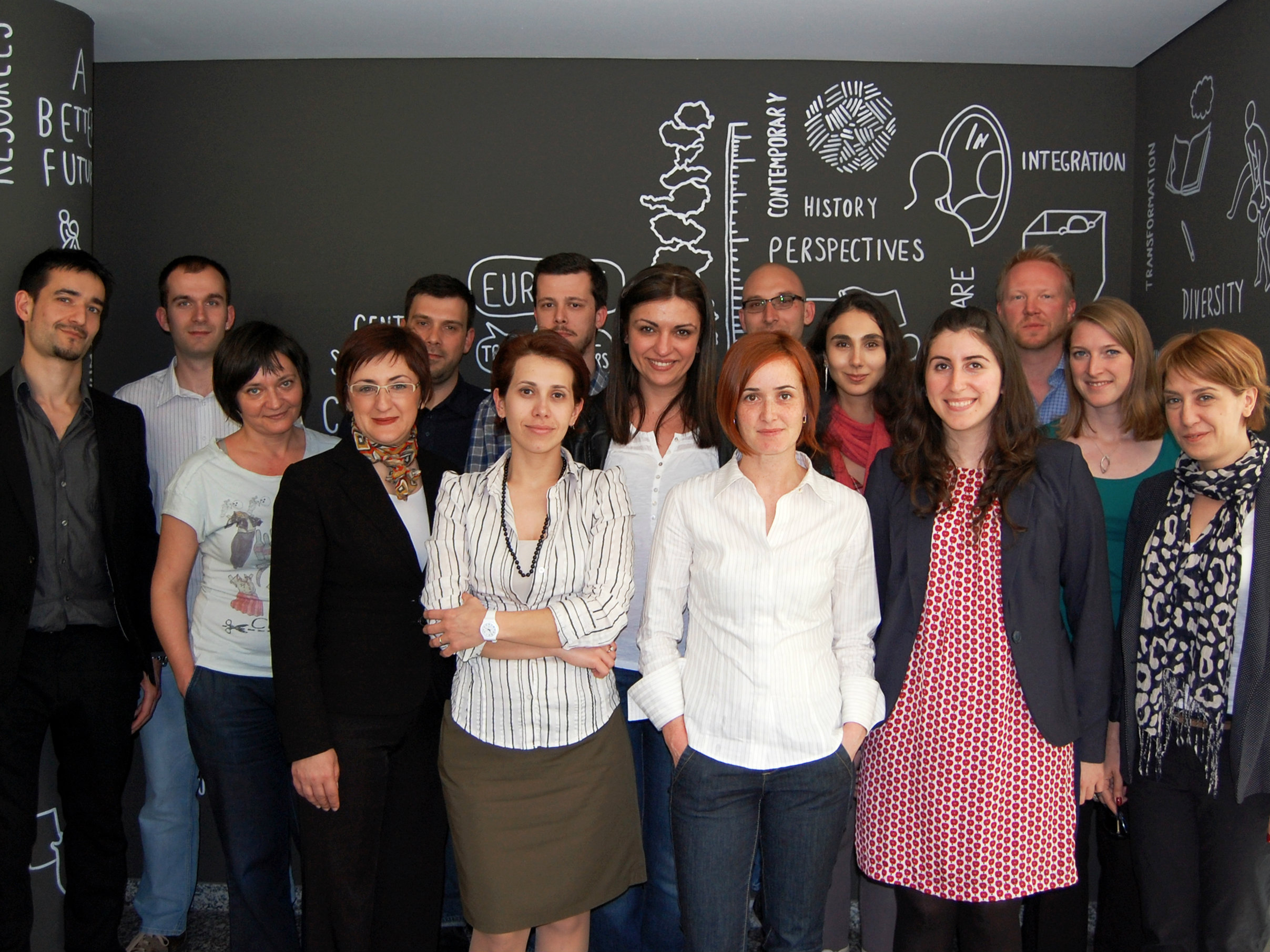
The ten reporters chosen for this year’s Balkan Fellowship of Journalistic Excellence have planned their assignments over the course of an intensive three-day seminar in Vienna.

Fellowship group 2013

The reporters – drawn from seven Balkan countries – will cover issues ranging from corruption to media and the legacy of the conflicts in the region.

They will supplement information gathered in their own countries with material from trips to at least two other European countries.

The seminar kicked off on April 23 with a crash course in cross-border reporting techniques.

Each fellow received instructions from a team of BIRN editors, including Ana Petruseva, Gordana Igric and Neil Arun.

The fellows also spent a morning at the offices of the Fellowship’s media partner, Austrian newspaper Der Standard. Journalists from the newspaper later joined the fellows for a networking dinner at a Viennese restaurant.

The 2013 Fellowship stories are being developed under the umbrella of the this year’s annual topic, integrity.

The fellows were selected through open competition to receive funding and professional support that will help them conduct cross-border research into a topic of regional and EU significance.

The fellowship programme was established in 2007 by the Robert Bosch Stiftung and ERSTE Foundation in cooperation with the Balkan Investigative Reporting Network.

BIRN Macedonia Holds Debate on Environment

The Balkan Investigative Reporting Network – Macedonia in partnership with the Center for Civic Communications, CCC, organized a debate on April 29 in Skopje entitled “Detecting common issues as a basis for cooperation between journalists and non-governmental organizations about environmental issues”.

Macedonia debate april 3

It was the first in a series of nine debates in the “Project for investigative journalism and cooperation between media and civil society”, which is part of the USAID Program for strengthening the independent media in Macedonia.

The debates will be organized on the topics concluded at a large debate between journalists and NGOs in mid-April. These include: quality of life; health; cultural policy; education and youth; human rights; EU integration; good governance; inter-ethnic relations; social inclusion.

About 20 representatives of non-governmental organizations and journalists debated the possibilities of working together on important issues for the environment but also for citizens.

NGO representatives said that it was problematic that the media lack specialized journalists on these topics, and that the media tend only to show interest in their work if there is something sensational to report.

Macedonia debate april

They listed dozens of topics that are priorities for the environment in Macedonia and answered more detailed questions about the options for research on those topics.

Journalists said that they were interested in writing investigative stories on the topics that the NGOs are working on but they needed a more direct and individual approach while issues were ongoing. They also suggested that analysis done by NGOs be written in more understandable and accessible language.