“Life in the Municipality” run-off debates: Novoberda

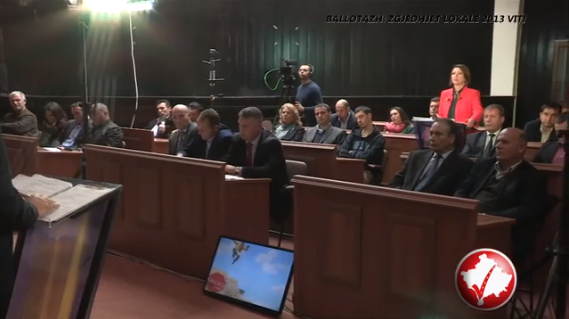
The LDK candidate Bajrush Ymeri, the mayor of the municipality of Novoberda, said during a “Life in the Municipality” run-off debate in November 2013 that he was surprised with the high level of voter turnout compared to the previous elections.

Novoberde

What was disturbing, according to him, was that people came from Serbia to vote. “Mainly, the highest level of participation was from the Serbian community,” he said. He said that the municipality has been working for the past six years to build a water plant. The municipality has continuously asked the Hidro Morava company to implement this, he said.

“Life in the Municipality” run-off debates: Ranillug

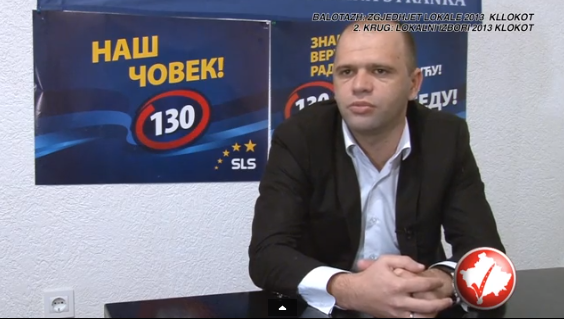
 Milan Aritonovic, the SNPK candidate for the mayor of Ranilug, encouraged citizens to stay united during a “Life in the Municipality” run-off debate in November 2013.

Ranillug

“We are minority. Very few Serbs are left in this area. That’s why people should be united,” he said. “I guarantee that not even a single person will be left without income from the republic of Serbia,” he said. 

He characterized the electoral process as tense.

“Life in the Municipality” run-off debates: Shterpce

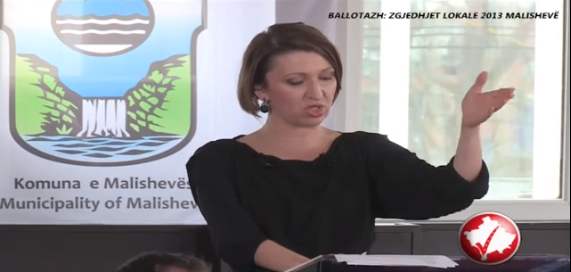
The CIS candidate for mayor of Strpce, Ivan Redzic, declared during a “Life in the Municipality” run-off debate in November 2013 that the election was full of pressure.

Candidate for Shterpce

In this municipality the sewage is discharged directly into the Lepenc River. Redzic blamed the municipal government for permitting the pollution of the river. He said that he has already a strategic plan to clean this river.

BIRN Kosovo director discusses fellowship programme on Klan Kosova

Jeta Xharra, country director of BIRN Kosovo, was invited to the morning programme of Klan Kosova on Feb. 25 to discuss the 2014 programme for the Balkan Fellowship for Journalistic Excellence. 

Jeta Xharra on Klan Kosova.

Xharra described the programme and encouraged journalists to apply for it. This year the programme’s theme is “Generations”.

“The journalists that apply for this fellowship are privileged because their articles will be published in different international media, and they will be guided and mentored by a group of experienced local and international journalists and editors”, Xharra said.

“The ones who win the fellowship will investigate and write about this particular topic for the whole year. Journalists will not only write and investigate the topic within Balkans; they will have the possibility to go to EU countries and investigate the topic there”, Xharra continued.

Journalists will be provided with 2,000 euro for trips to EU countries and 2,000 euro for the story. The individual who wins first place will receive a prize of 4000 Euro.

Find more at: http://klankosova.tv

Managing Editor of BIRN Kosovo Discusses Fellowship Programme on RTK

Muhamet Hajrullahu, managing editor of BIRN Kosovo, was invited to the morning programme of the national broadcaster, RTK, on February 27 to talk about the 2014 Balkan Fellowship for Journalistic Excellence.

This is the eighth time that BIRN in cooperation with the ERSTE Foundation and the Open Society Foundation is providing 10 journalism fellowships in Balkans. The annual theme for this year’s programme is “Generations”.

Hajrullahu said this is a great opportunity for journalists to apply for this fellowship and to create new contacts in the region and beyond. Hajrullahu also explained this year’s fellowship has expanded to include journalists from Greece – in addition to those from other Balkan countries.

“Every journalist from different Balkan countries has the possibility to present their work/proposals and in the end they will be selected by professionals on a board of experienced journalist and editors”, Hajrullahu said.

Investment Insecurities

Bab Club is one of the most frequented clubs in Prishtina, but it is built in an occupied property.

This object which was privatized by Xhevat Sadriaj, who operates in the business of real estate and insurance in Swizerland, now is occupied from Rrustem Rukolli, owner of Bab Club.

This property is located infront of New Born Obelisque and beaneth Grand Hotel. Sadriaj’s property is now a business area owned by the company “R and Rukolli” that won more than 5 million euro bid from the municipality of Skenderaj and around 15 million euro from other public authorities.

Rukolli is also coordinator of the security team of the mayor of Skenderaj, Sami Lushtaku, which is detention for war crimes, from EULEX.

Sadriaj who is partial owner of the company COEB which bought the place in 2011 from Property Privatization Agency, has no access to his property.

Property Privatization Agency and Mr. Rukolli had a deal which gave right Mr.Rukolli to use this property till the moment that it is privatized. From the moment this property was privatized AKP informed the holder that the property was sold, said Mr. Ylli Kaloshi, spokesperson of AKP. From that moment we have no obligation toward investors to liberate the properties, he added.

If the investors have problems with the properties they can present the case to the court, says Kaloshi.

Sadriaj paid 147 thousand euro to buy this place. The whole history began at the platform of Grand that used to be public property.

The documents of AKP showed that the 3 places where Bab Club was build used to be property of the public enterprise Rilindja.

Sadriaj bought this property in 2011 through a bid with the cost of 147 thousand euro. After getting the papers that show him as the owner, he went to visit the place. There he realized that the place was being used from Rrustem Rukolli owner of “R and Rukolli.

According to Sadriaj, Rukolli offered him to buy the place with the same price but he refused. After this Rukolli told Sadriaj that he will have to deal with God. He also said that Rukolli refused to pay the rent for using the property for 2 years.  

“I told him that my Swiss partners doesn’t want to sell the property, thats why you have to pay the rent, but after this he didn’t answer the phone anymore”, said Sadriaj.

The lawyer of Rukolli Arianit Koci does not deny the possibility that Rukolli offered to buy the place from Sadrijaj.

“It’s possible; there is nothing bad in offering to buy the place. In fact with this offer he recognizes that the property belongs to Sadriaj” said Koci, juridical representative of Rrustem Rukolli.

Justice in Kosovo talked with Mr.Rukolli, but he recommended that for this case they should talk with his lawyer Mr.Arianit Koci.

Koci said that his client does not know which part of the place is owned by Sadriaj, that’s why he is waiting for a court decision.

According to the officials of AKP, Rukolli knew precisely where the borders of Rilindja were.

The biggest problem is that Sadriaj’s Swiss Partners started to feel insecure for their investments in Kosovo.

Justice in Kosovo also prepared a short report on legislative changes in Kosovo Chamber of Advocates. From December, 2013, every citizen that chooses a lawyer to protect him/her will know if the lawyer has a criminal background. The Kosovo Chamber of Advocates decided to publish all the disciplinary decisions for advocates/lawyers.

From  the moment that a citizen needs a lawyers, they can look in the Kosovo Chamber of Advocates if they want to find out if there is any open disciplinary file for that particular lawyer/advocate.

The court ordered raids

On January 20 and 26, 2013, Justice in Kosovo broadcast, in the segment “Police”, the court ordered raids.

Kosovo Police, ordered by court, organized and action called the court ordered raids. During this operation many cafeterias and bars were controlled. This operation was initiated because the number of penal acts in near these bars increased. The police also was searching for illegal drugs and weapons. Around 80 police officers were engaged in this operation.

In the first part of the programme were raided 7 bars, whereas in the second part 2 bars were raided. During this operation police found many small bags of marihuana and some cold weapons such as knives and iron sticks. 

The Kosovo Police operation went well and there was no complication during the operation.

Drug trafficking in Kosovo

On November 22, Justice in Kosovo broadcast the second part of drug trafficking in Kosovo.

The second programme is mainly about the domestic drug users and the amount of drugs that is consumed in Kosovo and also the destruction of narcotics/drugs.

Based on the Kosovo Police analysis, there are around 3000 heroin users in Kosovo. 75 % of persons that use heroin did not start using it in Kosovo; they started consuming heroin while they were living abroad. Whereas, the other drugs such as cocaine, marihuana, and others are becoming very problematic because the number of users is increasing every day.

Moreover, it is estimated that a heroin user uses 1 gram heroin/per day and 356 gram per year.  When the amount of 356 kilograms is multiplied with the number of consumers (3000) results that in Kosovo are consumed approximately 1000 kg of heroin per one year. 1000 kilograms of heroin is equal to 16 million Euros.

Furthermore, Prishtina is the city where drugs are mostly consumed. A prove of drug consumption in Prishtina are the remaining of drugs that are left in the abandoned houses of Prishtina.  Justice in Kosovo together with the Kosovo Police recorded many abandoned houses. Almost all of them were full of needles and syringes.

Also during the programme, the police stopped some random cars just to control if they posses any kind of drugs. The cars that were stopped by police, mainly driven by young boys, possessed marihuana and as soon as they saw police, they tried to hide it.

Finally, according to the Kosovo Police, drugs are also consumed and hidden in the school yards. Police thinks that consuming drugs near schools is very dangerous because kids sometimes play with the needles and the syringes left by drug users.

International Drug Trafficking in Kosovo

On November 17, 2013, Justice in Kosovo broadcast a programme on international drug trafficking in Kosovo.  This clip was recorded in cooperation with the Kosovo Police anti-drugs unit.

This programme was conducted with the cooperation of Kosovo Police anti-drug unit. The programme brings exclusive footage on how it has destroyed the trafficking networks of heroin, cocaine, and marihuana, which are thought to have trafficked approximately 300 kilograms of narcotics.

Kosovo is one of the transit roads where many narcotic substances/drugs are transported. The narcotics are transported through Kosovo to the EU countries.  Justice in Kosovo team has cooperated with Kosovo Police for 9 months in order to see the activities of the Kosovo Police anti- drug unit.

The Kosovo Police data show that heroin trafficking starts in Afghanistan, then continue through Turkey and Kosovo and it ends up in EU countries, whereas marihuana is brought from Albania to Kosovo and then continues to EU countries.

The analysis of Kosovo Police show that a portion of drugs remains in Kosovo and it is consumed by the domestic (Kosovo) drug users.

During the first six months of the action, Kosovo Police confiscated 15 kilograms of heroin, 295 kg of marihuana, 3.5kg of cocaine, 264 plants of cannabis, 26 kg of ecstasy, and 34 grams of other drugs.

In addition, there is an exclusive footage of high-risk police operations conducted while confiscating 120 kilograms of marihuana in Pejë, 7 kilograms of heroin in the village Shkabaj, 12 kilogram of marihuana in Gjakovë, and 5 kilograms of heroin in Ferizaj.

One of the most important operations was during September 2013 where Kosovo Police confiscated approximately 7 kg of heroin.

According to the police information, this drug came from Turkey to the village Shkabaj, near Prishtina. The drug was mixed with other drugs and packaged in the village Shkabaj.  The drug dealers were headed to Albania, but the Kosovo Police stopped them near Prishtina. The drug and the vehicles were confiscated immediately. There were many operations similar to this one. During the clip the audience had the chance to see many of the places where drugs are consumed.

Moreover, the programme addresses the ways of hiding narcotic and the international connections of the trafficking networks that operate in Kosovo.


Corruptions in the Commission for Mines and Minerals

On December 22, 2013, Life in Kosovo discussed bribe taking in the Commission for Mines and Minerals.

In 2011, Kosovo Government through a decision has banned the grit exploitation from the domestic rivers. “The law will be valid for three years counting from the day that the law starts to be implemented”, was said in the decision of the Government on November 2nd, 2013. 

The decision signed by the Prime Minister Hashim Thaci assigned the Commission for Mines and Minerals, Kosovo Police and other institutions to implement this law.

Moreover, in 2013 the owner of company “Elezaj”, Bedri Elezaj, from Klina, told Justice in Kosovo that some officials asked him to give them money in order to help him.

A part of Mr. Elezaj’s company was closed in the end of 2011 because of the decision that was released from the government. Mr. Elezaj started to build a concrete mixer near his company, but in order to put the concrete mixer in function he needed the permission from the Commission for Mines and Minerals.

Mr. Elezaj was warned by the inspectors that he was not allowed to put the concrete mixer in function if he exploits grit illegally. He said that the inspectors never found him exploiting grit, but the inspectors flattered him and offered him to sign a document which he did not understand.

In addition, Mr. Elezaj realized too late what he signed and called the head inspector Nuredin Bislimi who told Mr. Elezaj that the fee can be from 5 thousand Euros to 50 thousand and that he should be careful.

Moreover, Mr. Elezaj decided to meet with the head inspector in Prishtinë and they agreed to give him 1000 Euros bribe in order to cancel the fee.

Meanwhile Elezaj decided to notify the police about this case because he was tired of being pressured.

Two days after the meeting, the head inspector Bislimi and the inspector Lulzim Çitaku visit the “Elezaj” company. Mr. Elezaj, in cooperation with Kosovo Police, gave Nuredin Bislimii 1000 Euros and a few meters away the police immediately arrested the head inspector Bislimi and the inspector Citaku for the penal act of bribe taking.

In addition, the evidences of Mr. Elezaj are being used as main proofs against two inspectors. The case prosecutor of for this case, Shpresa Gashi, told Justice in Kosovo that she made an agreement with Nuredin Bislimi. Mr. Bislimi declared himself as guilty therefore he will receive a lower punishment of 6 months – 1 year in prison.

The lawyer of Nuredin Bislimi, Bajram Tmava, said that her client admitted guilt for bribe taking and during the whole process he was defended in silence.

The other inspector, Lulzim Çitaku, declared himself as not guilty on the ground that he did not know that his chief was asking for bribe. This was confirmed by Çitaku’s lawyer, Mahmut Halimi; whereas, the prosecutor Gashi, who dealt with this case, said that according to the evidence, Çitaku knew about the bribe. She said that the prosecution is investigating also for other inspectors who took bribes. 

As usually, Justice in Kosovo also broadcasted the clips recorded in cooperation with the Kosovo Police. Security in Traffic was the action of the police in this clip. The Kosovo Police officer talked about the number of accidents. 32 accidents happened during 2013 and 37 people died during these accidents. The number of accidents is higher during winter; therefore Kosovo Police did an operative plan where the police will control the citizens if they have all the winter equipment for their vehicle. During the clip Kosovo Police controls a few vehicles where some of the drivers found driving faster than they were supposed to drive and some did not have the winter equipments for their vehicle.