Empowering Women to Seek Their Inheritance Rights

BIRN Kosovo

The project aims to educate, raise awareness and empower women about their property rights. Through TV, online publishing and social media, BIRN will reach out to women and men of all ages and ethnic backgrounds throughout Kosovo.

Summary

In addition to raising awareness, the activities also address the unsatisfactory level of implementation of the law, and the prolonged judicial procedures that discourage women from seeking their rights.

Information Sheet

Donor:

Funded by United States Agency for International Development (USAID), managed by Advocacy Training and Resource Center (ATRC)

Main Objective:

Enhance awareness among women and men in Kosovo regarding property rights.

Specific Objectives: 

Increasing the public’s awareness of women’s property rights through impartial and objective reporting on women’s inheritance rights through televised and online reporting;
Monitoring the implementation of the legal obligation to register property in the names of both spouses by political representatives and policymakers;
Contributing to positively influencing policies related to women’s inheritance rights by initiating public discussion and providing concrete policy recommendations.

Main Activities:

A series of 10 articles on the current state of affairs in the implementation of the legal framework pertaining to women’s inheritance rights;

Producing two televised analyses to be broadcast on the television programme Justice in Kosovo;

Publishing 4 extensive research papers in Gazeta Jeta ne Kosove;

Organising 2 roundtables to discuss the legislation pertaining to women’s inheritance;

Publishing five extensive legal analyses in Gazeta Jeta ne Kosove;

Drafting proposals for amendments to laws.

Target Groups:

The main target group for the programme ‘Engagement for Equity’ is women from ages 18-65. BIRN will target the stakeholders involved in judicial cases, while an extended target group will be the general public.


BIRN Holds Debate on Audit Reports in Peja/Pec

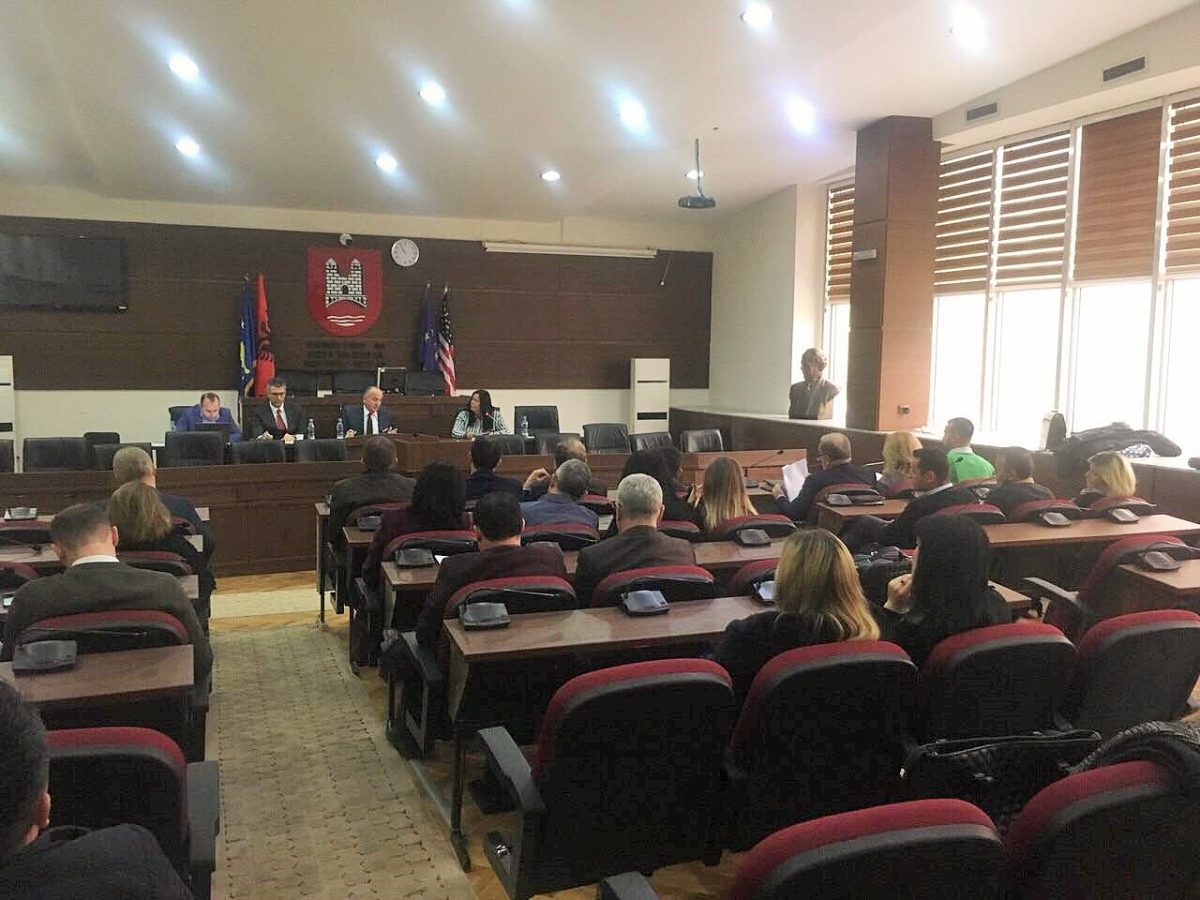
BIRN Kosovo held a debate on November 19, presenting findings from its analysis of the Auditor General’s reports for the municipality of Peja/Pec.

The debate at the municipal assembly was attended by more than 30 participants including representatives of the municipality, the Auditor General and civil society.

Visar Prebreza, editor at BIRN Kosovo, gave a brief presentation about the project and introduced the findings of the analysis.

The mayor of the municipality, Gazmend Muhaxheri, discussed the audit situation and crucial issues in Peja/Pec. Muhaxheri called on BIRN Kosovo to monitor all auditing processes in the future.

The third speaker was a representative of the Auditor General, Ilir Salihu, who discussed in detail the achievements and obstacles to auditing in the municipality of Peja/Pec.

Salihu said that municipalities should sit down with the auditors and discuss the recommendations they are given.

“It is crucial that complex recommendations are followed by a dialogue between the auditor and municipal officials in order to prevent uncertainties that can be reflected in the implementation and measurement of recommendations,” Salihu said.

Following a discussion of BIRN Kosovo’s analysis, audience members asked questions and expressed criticism of the work of the municipality in implementing the audit recommendations.

BIRN Kosovo journalists recorded the promises made by the General Audit and the municipality to be followed up and fact-checked by Krypometer, BIRN Kosovo’s fact-checking site.

This debate was organised within the framework of the project ‘Support civil society to increase public oversight and accountability of Kosovo public institutions’, funded by the British Embassy in Pristina. This part of the project looks at compliance by institutions with recommendations in the Auditor General’s reports.

Similar debates will be held in other municipalities to present the findings of BIRN Kosovo’s analysis of the implementation of audit recommendations. Each debate will be held at municipal assemblies and will be livestreamed by BIRN Kosovo.

Rockefeller Brothers Fund

DONOR
Founded in 1940, the Rockefeller Brothers Fund advances social change that contributes to a more just, sustainable, and peaceful world.

In the Western Balkans, the Rockefeller Brothers Fund (RBF) has worked since 2001 to achieve restorative justice after the devastating conflicts of the 1990s, to build civil society institutions, and to increase government accountability, especially on matters of environmental concern. It makes numerous grants to organisations working to prepare the Balkan nations to meet the requirements for membership of the European Union.
The Fund focuses on Serbia, Montenegro, Kosovo, and Bosnia and Herzegovina to help them complete the process of integration into the EU. The interdependence among the countries, common challenges they face, and the potential they possess together as a subregion of the European Union present a unique opportunity for successful integration. The Fund supports civil society initiatives that advance collaboration and enhance the capacity for sustainable development and enduring peace in the region.

BIRN Hub

The Rockefeller Brothers Fund has been an institutional donor to BIRN Hub since 2009.

BIRN Kosovo

The RBF currently provides general support to BIRN Kosovo, in backing efforts to improve practices, performance, transparency, and accountability in governance. It has supported the organisation though projects and general support for a decade.

Webhttps://www.rbf.org/

BIRN to Help Boost Public Oversight of Kosovo Institutions

BIRN Kosovo has signed a cooperation agreement with a local think tank and the tax authority to increase public oversight and accountability of Kosovo’s public institutions.

BIRN Kosovo signed a memorandum of understanding with Pristina-based think tank Democracy Plus and the Tax Administration of Kosovo, TAK, on Wednesday as part of a project funded by the British embassy in Kosovo to boost public oversight and accountability of public institutions.

Through the cooperation agreement, BIRN, Democracy Plus and TAK aim to increase the overview that the civil society has of tax administration processes, in order to increase the compliance of public institutions.

In its 2018 Country Report on Kosovo, the EU highlighted the ongoing issues of the informal economy and tax evasion in Kosovo, urging for these to be dealt with.

In light of this, the UK-funded project is intended to help tackle these issues and bolster the fight against corruption in Kosovo.

Over the next three years, BIRN and its project partners will seek to establish policies and practices crucial to good governance and address them to compatible authorities.

BIRN Kosovo Holds Prevention of Violent Extremism Training

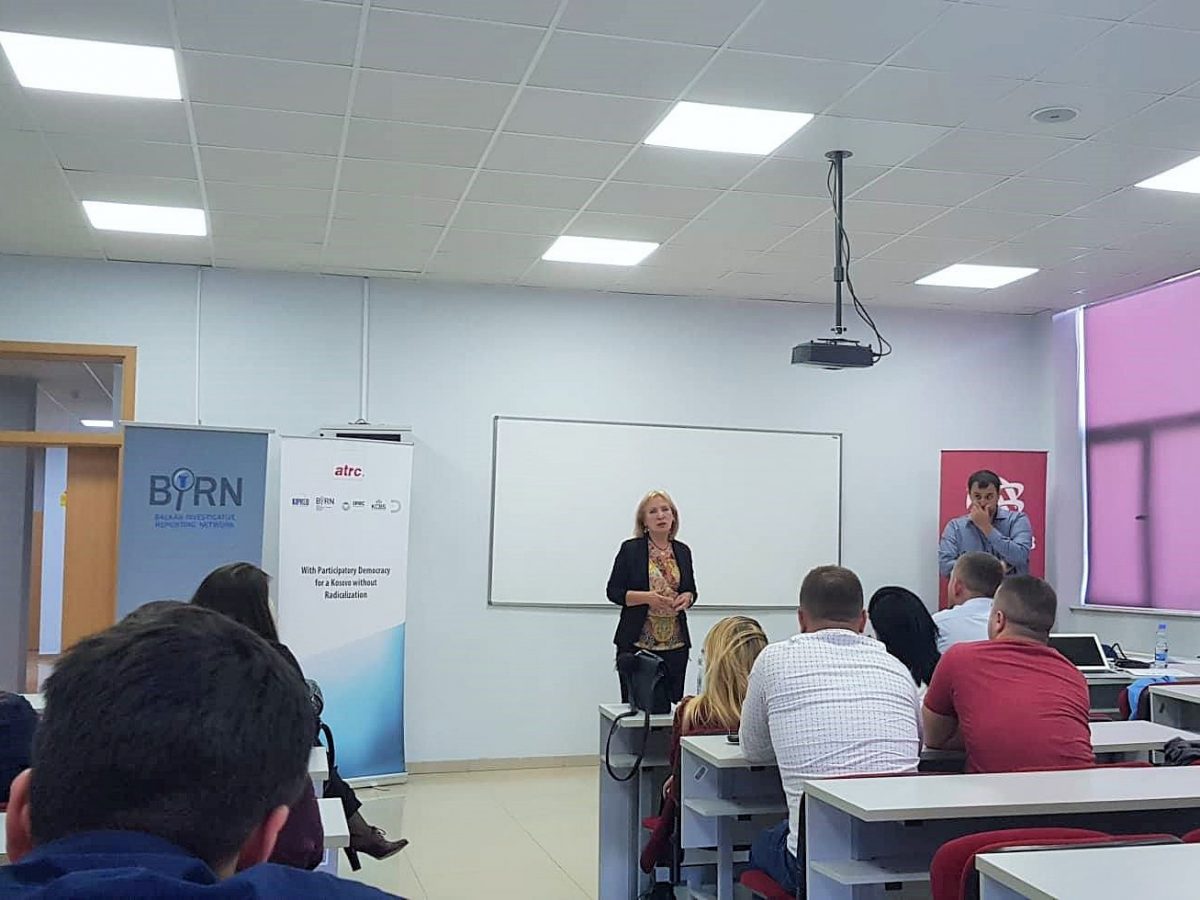
BIRN Kosovo held a training course for law students in Ferizaj, Kosovo, on October 5 entitled ‘Forms of Violent Extremism and Reporting on Terrorism Cases’.

Key speakers were Drita Hajdari, prosecutor at the Kosovo Special Prosecution, and Kreshnik Gashi, editor of the TV programme, Justice in Kosovo. It was held at AAB College in Ferizaj.

The course aimed to give students the opportunity to discuss cases in which young people from Kosovo were involved in terrorism and terrorist groups, as well as to find out how to prevent radicalisation.

Hajdari and Gashi engaged in an in-depth conversation with the participants and addressed questions on terrorism in Kosovo and methods of reporting cases of terrorism.

Hajdari said that the prosecution, within the framework of the national strategy on the prevention of violent extremism and radicalisation that leads to terrorism, is doing a lot of work on countering terrorism.

She called for a greater cooperation from young people in reporting suspected cases of radicalisaton.

Gashi said that the media in Kosovo is doing its best in reporting cases through investigations. He also noted that the impact of media in combating terrorism is crucial, so outlets must take care not to publish unreliable or false news that misinforms the population.

This course was organised as part of the project ‘With Participatory Democracy for a Kosovo without Radicalization’, funded by the Global Community Engagement and Resilience Fund, GCERF.

BIRN Kosovo is planning to organise similar events in Pristina, Mitrovica, Gjilan and Kacanik.


BIRN Kosovo’s Human Rights Awards Announced

On October 4, the Balkan Investigative Reporting Network Kosovo, in cooperation with The Advocacy Center for Democratic Culture (ACDC), presented awards for three best journalistic pieces on TV, print or online media as part of its Human Rights Reporting Award Competition.

The initiative is intended to boost the coverage of human rights issues and help to set new standards for media reporting in the sphere.

Venera Cocaj and Matko Bulent won the first prize for a story that dealt with one of the least discussed topics in the country and concerned one of the most marginalised groups, the LGBT community, in a documentary “The Sky is Turning” produced by Kosovo 2.0.

Adriana Thaci-Mehmeti from KTV won second prize for a story about the rights of elderly people within the family and in retirement homes.

Besa Kalaja from PreportR and Kaltrina Rexhepi from RTK shared the third prize. Kalaja’s story dealt with the lack of institutional care for the elderly, while Rexhepi created a documentary that looks into the issue of early marriages.

BIRN Kosovo Holds Discussion on Ombudsperson’s Role

The Balkan Investigative Reporting Network Kosovo and the Centre for Advocacy Democracy and Culture, ACDC, organised a discussion in Peja/Pec on October 2 about the role of the Ombudsperson with regards to issues of public interest.

This discussion was held as a part of the OmbudsWatch project, which aims to educate the public about the role and responsibilities of the Ombudsperson, as well as about their right to contact the Ombudsperson’s office about matters of public importance.

The discussion, which took place at the Jusuf Gërvalla cinema in Peja/Pec, was attended by students, journalists and civil society activists.

The key speakers were Kreshnik Gashi, editor and moderator of the TV programme Justice in Kosovo, and Meral Tejeci, senior legal advisor at the Ombudsperson’s office.

Both Gashi and Tejeci, addressed the legal obligations of the Ombudsperson to respond to citizens’ requests, the functions of the Ombudsperson’s office, people’s legal rights to submit complaints, and access to public documents, among other issues.

The discussion was the last to take place in the framework of the OmbudsWatch project, and participants were given pamphlets as a guide to making enquiries at the Ombudsperson’s office.

BIRN Announces Funding for Monitoring Public Finances in Kosovo

The Balkan Investigative Reporting Network, in the framework of Balkan Monitoring Public Finance Project, has announced a public call for the submission of project proposals within the European Commission’s Civil Society Facility and Media Programme 2014-2015: Support to Regional Thematic Networks of Civil Society Organisations, ‘CSOs as Equal Partners in Monitoring Public Finances’.

The proposed projects should fulfill one or more of several priorities:

  1. Empower the CSOs to strengthen their knowledge in the area of public finance, monitor public finance, provide policy proposals and participate in policy processes, raise public awareness, facilitate discussion with political actors and other relevant stakeholders, communicate and advocate for better accountability and transparency in the area of public finance.
  2. Support media to communicate and inform the public on the issues or policy processes related to public finance.
  3. Encourage experts to conduct research and baseline studies on specific topics related to public finance.
  4. Create cooperation platforms or support networking among stakeholders to create transparent and accountable policy and decision-making processes in the area of public finances.

The call for proposals focuses on four general topics of public finances including public debt, public-private partnerships, tax justice and public infrastructure, transparency, rule of law, good governance, anti-corruption, economic growth, including citizens and CSOs in the budgeting process, public finance education and the monitoring and oversight of public institutions and tax reforms.

Funds will be allocated to those civil society organisations whose projects contribute to resolving one or more of the above priorities and meet quality criteria and other conditions.

Relevant information as well as an electronic version of the application package can be obtained from: http://wings-of-hope.ba/balkan-monitoring-public-finance/ public-call-for-csosngos-inthe-field-of-public-finances.

Applicants can submit their applications in Albanian, Serbian and English.

Completed applications with the necessary documentation must be send via email to [email protected].

The deadline for submitting applications is November 1 at noon.

Read more here.

Kosovo Fellowship for Journalistic Excellence Grants Bursaries

Ten applicants have been granted a fellowship bursary within the framework of the Kosovo Fellowship for Journalistic Excellence Programme.

The Fellowship is a six-month opportunity for journalists to advance their skills. The programme is supported by the European Union Office in Kosovo and implemented by Balkan Investigative Reporting Network and the Association of Kosovo Journalists.

The recipients of the bursaries will conduct research on issues such as public spending, local governance, public procurement, environment, energy, healthcare, culture, education, media financing, human rights and inter-ethnic cooperation and write an in-depth story based on their findings.

The Kosovo Fellowship for Journalistic Excellence Programme is based on the Balkan Fellowship for Journalistic Excellence, which has been running since 2007.

Click here to read more.

BIRN Holds Discussion with Kosovo Ombudsperson

The Balkan Investigative Reporting Network and the Centre for Advocacy Democracy and Culture, ACDC organised a discussion in Prizren, Kosovo on September 21 about the role of the Ombudsperson in dealing with issues of public interest.

The discussion’s focus was on the possibility of cooperation between the Ombudsman, civil society and the media in addressing issues of public interest, especially human rights.

The discussion was held with the support of the Dutch Embassy as part of the project ‘OmbudsWatch’, which aims to promote the role of the Ombudsperson.

Panellists and participants had the opportunity to put questions to Ombudsman Hilmi Jashari and the Dutch Ambassador, Gerrie Willems.

Willems said that this project aims to increase people’s awareness about the role of the Ombudsperson as well as increasing the interest of civil society and the media in monitoring the work of the Ombudsperson.

She added that through the implementation of the project, she hopes to improve the situation as regards human rights in Kosovo.

Hilmi Jashari said that according to a report issued by the Ombudsperson, 117,000 court cases have not yet been brought to a conclusion.

Jashari also cited delays in court proceedings for which mean that some poeple have wait eight or nine years for a court ruling.

He further criticised the way in which laws are drafted in Kosovo, citing the short period of time in which they are drafted by experts who he said did not have enough experience in the area.