BIRN Albania Holds Roundtables on Local Government

Eleven roundtables held across the country discussed ways to empower actors for change and increase transparency at municipal level.

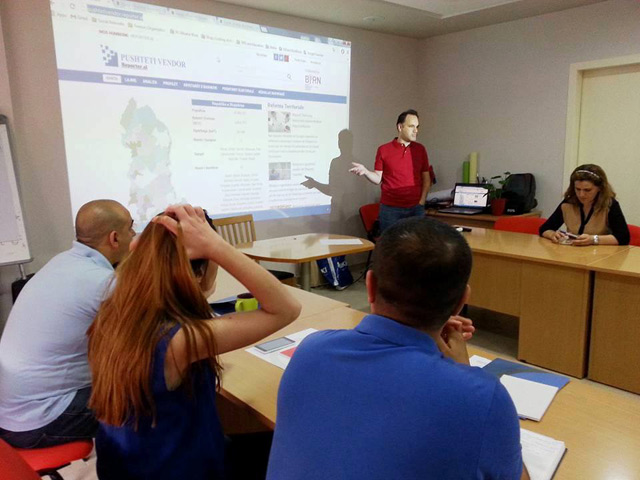
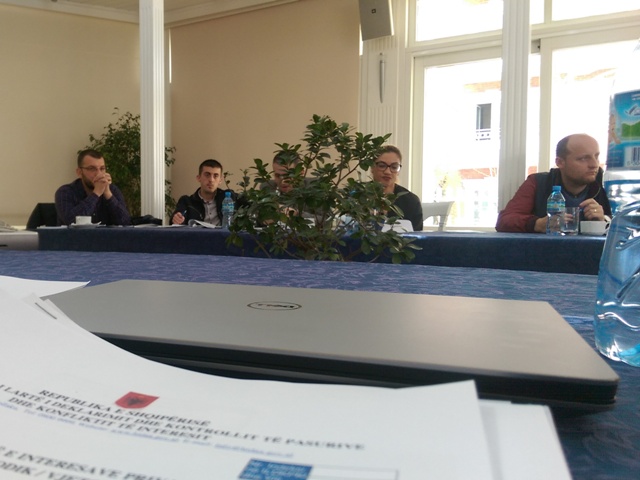
During June BIRN Albania held a series of 11 regional roundtables across the country with civil society activists and community leaders, addressing key issues for local government and discussing ways to empower actors for change in local communities
The regional roundtables were held in the towns and cities of Elbasan, Korce, Berat, Fier, Vlore, Gjirokaster, Kukes, Burrel, Lezhe, Shkoder and Tirana, as part of BIRN Albania’s project, Strengthening the Local Partnership between Media and Civil Society.

The project, funded by Leviz Albania and the Rockefeller Brothers Fund, aims to strengthen the pressure mechanisms of the public on local government institutions and increase transparency, by strengthening cooperation between journalists, civil society groups and grassroots organizations.

The roundtables aimed to identify problems crucial to local communities. They will be used by a network of journalists – trained by BIRN Albania across the country – in order to draw up a list of interview questions for the mayors of Albania’s 61 municipalities.

Apart from carrying out interviews with mayors on issues important to their communities, the journalists will also produce a series of features on actors for change in local communities – in order to empower them through media exposure.

The features and interviews produced as part of the project will be published on BIRN Albania’s special focus page pushtetivendor.reporter.al, which is part of its award winning local publication Reporter.al.

The project, which apart from the BIRN team also involves 11 local journalists, will also produce two monitoring reports on the implementation of the requirements of the Freedom of Information Law by Albania’s local government institutions.

BIRN Albania Seeks Investigations Into Local Government

Three journalists can get grants to cover local government corruption and abuse of power while being mentored by experienced editors.

The Balkan Investigative Reporting Network in Albania launched a call for investigative stories on local government on June 27th.

The call is part of the program “Exposing Corruption in Albania”, while the grants are supported by the Open Society Foundation in Albania.

Three journalists will be awarded grants to cover their expenses while conducting investigations and writing their stories on local government.

The journalists will have some three months to dig deeper and research their ideas, and will also have the opportunity to work with experienced editors as mentors to guide them through the process of writing in accordance with BIRN standards.

The call only applies to journalists from Albania and closes on July 15th.

Click for more information about the application procedure, with details in Albanian.

BIRN Regional Board Meeting Held in Skopje

Directors, board members, partners and donors of the Balkan Investigative Reporting Network, BIRN, met in the Macedonian capital Skopje on June 18-20 for the network’s latest regional Board meeting.

Attendees convened for the three-day meeting, held every 18 months, to highlight BIRN’s recent achievements, review its internal policy and discuss its future role in the region.

BIRN’s Steering Board also met to review internal policy, current training plans, anticorruption policy, obstacles faced by individual country, and a potential change in financial software.

A number of new policies were agreed upon and voted into effect by the BIRN Assembly.

During the meeting, BIRN directors also led special presentations on key topics currently affecting the political and media landscape in the Western Balkans, which included press freedom and the rule of law.

BIRN Regional Network Director Gordana Igric said that in the current regional political landscape “organisations such as BIRN working on promoting responsible journalism are more important than ever.”

The regional Board meeting was attended by Board members Stefan Lehne, visiting scholar at Carnegie Europe, Per Byman, Secretary-General of Radiohjälpen, Wolfgang Petritsch, Chair, Board of the European Cultural Foundation, Steve Crawshaw, Secretary General of Amnesty International, and Ana Petruseva, BIRN Maceodnia director.

Some of BIRN’s long-term donors, such as representatives from ERSTE Foundation, as well as ambassadors and representatives from Swedish, Norwegian and UK embassies, also attended the meeting.

Alongside Igric, BIRN’s regional country directors, including Mirna Buljugic from Bosnia and Herzegovina, Jeta Xharra from Kosovo, Kristina Voko from Albania, Dragana Zarkovic Obradovic from Serbia and Marian Chiriac from Romania, attended the event as well.

On Monday, 20 June, Igric, Lehne, and Petritsch, hosted a public panel on the ‘EU Prospects for the Region’, moderated by BIRN Macedonia Director Ana Petruseva.

BIRN Wins Seven Prestigous Awards in May

BIRN’s investigative journalists and teams in Macedonia, Serbia, Albania and Kosovo have been given seven different awards in the course of one month for the quality of their reporting.

The most recent BIRN journalist to receive an award in May for his work was Boris Georgievski, author of the series of investigations called ‘Dossier Telecom’, produced for BIRN Macedonia online publication Prizma, who won the first prize in the European Union awards for investigative journalism for 2015.

The BIRN Macedonia team also won the second prize for its investigation and database, ‘Skopje 2014 Uncovered’.

BIRN Serbia journalist Aleksandar Djordjevic win first prize in the EU awards for investigative journalism in Serbia for his report entitled ‘Pumping Out the Pit and the Budget’ which was named the best investigative story in 2015.

Third prize went to Ivan Angelovski, Jelena Cosic, Petrit Colaku and Kreshnik Gashi for a story revealing how a multi-million-dollar road construction contract was quietly handed to a consortium with little highway-building experience and linked to controversial Serbian businessman Zvonko Veselinovic.

The story was produced as part of the ‘A Paper Trail for Better Governance’ programme, which is funded by Austrian Development Agency.

BIRN’s Albania investigation Albania’s Judges Wealth Escapes Scrutiny, by journalist Leonard Bakillari, meanwhile won the first prize in the EU Investigative Journalism Awards 2015 for Albania

BIRN’s film The Unidentified, investigating the commanders responsible for brutal attacks during the Kosovo war, was given the best short documentary award at the South East European Film Festival in Los Angeles. 

And finally, BIRN Serbia journalist Aleksandar Dordjevic scooped one more first prize for the best investigative journalism story in Serbia’s print media.

The award was given by the Independent Journalists Association of Serbia, NUNS, and the US Embassy to Belgrade. The investigation, produced by BIRN Serbia and published in the magazine Vreme, revealed how the Belgrade Business School, under pressure from government officials, unlawfully lent seven million euros to heavily indebted companies that were unlikely to repay the money. 

BIRN Albania Investigation Wins EU Award

The investigation Albania’s Judges Wealth Escapes Scrutiny, by journalist Leonard Bakillari has won the first prize in the EU Investigative Journalism Award 2015 for Albania.

Bakillari was awarded first prize for his article on corruption in the judiciary system, published in reporter.al and BalkanInsight.com – BIRN online publications.

Second prize went to Ornela Liperi of economic magazine “Monitor” for her article on the financial crisis and debt situation of business companies in Albania. The award for best article by young investigative journalist was given to Habjon Hasani for his TV report on the petroleum concession and its effects on economy,

“Freedom of expression and freedom of the media implies a commitment to democracy, good governance and political accountability. These are some of prerequisites for a country to become part of the EU and one of the reasons why each of you play such an important role in creating EU standards,” said Jan Rudolph, Head of Political, Economic and Information Section announcing the EU Investigative Journalism Awards.

Bakillari’s investigation was published as part of BIRN Albania’s program on Exposing Corruption in Albania, which is financed by the Open Society Foundation in Albania (OSFA), the Balkan Trust for Democracy (BTD) and the National Endowment for Democracy (NED). 

BIRN Albania Holds Training on Local Gov. and FOI Law

The Balkan Investigative Reporting Network in Albania held a three day training for local journalists from across the country from April 16th to April 19th in the coastal city of Durres. 

In the training 12 journalists working as reporters and editors for local news media outlets participated. The training aimed to improve their pitching and reporting skills as well as their understanding of Albania’s Freedom of Information Law.
During the training the journalists were introduced to BIRN Network’s ethical and professional standards.

The training was held as part of BIRN Albania’s initiative to monitor and report on the 61 new municipalities that emerged from the country’s territorial-administrative reform in 2015, as well as key actors of change from civil society and grassroots organization.

The training for local journalist was supported by the Rockefeller Brothers Fund.

In the next 12-months BIRN Albania in cooperation with the journalists that participated in the training will produce two monitoring reports on the implementation of the Freedom of Information Law from municipalities as well as features, news analysis, and investigations targeting the work of local government elected and appointed officials.

With the help of BIRN editors/trainers the journalists will also produce a series of 36 features on actors of change –individuals, NGOs or grassroots organization – which play a pivotal rule to enhance democracy and civic participation on the local level, empowering communities to hold those in power accountable.

MEPs ‘Deplore’ Defamation Threat Against BIRN Albania

In an amendment to the draft-resolution on Albania’s reform progress in 2015, two members of the European Parliament have expressed strong worded condemnation of a defamation threat issues against BIRN Albania from local officials, on the heels of investigation that exposed the criminal background of a number of mayor candidates in the June 2015 local elections.

The European Parliament “deplores that the Balkan Investigative Regional Network, an independent and investigative media outlet, has been threatened with a defamation case, following its investigations into the criminal past of a mayoral candidate during the local elections in 2015,”reads the amendment proposed MEPs Marietje Schaake and Ilhan Kyuchyuk, from the Group of the Alliance of Liberals and Democrats for Europe.

On the eve of the local elections BIRN Albania published an investigation exposing evidence that three mayor candidates running in the local elections had a criminal background.

Evidence obtained by BIRN showed that two candidates running for the Socialist-led ruling coalition, Artur Bushi and Elvis Rroshi, standing for the posts of mayor of Kruja and Kavaja , had been arrested for drug trafficking.

A candidate for the opposition Democratic Party in the municipality in Kelcyra, Gentian Muhameti, was meanwhile convicted of drug trafficking.

After the publication of the story the mayor of Kavaja Elvis Rroshi issued a statement threatening to sue BIRN for defamation in the amount of €100,000. The threat articulated by Rroshi, which included a three-day ultimatum for BIRN to withdraw the story, was repeated several times by Prime Minister Edi Rama in prime-time interviews.

BIRN Albania stood by its report and the threat of a lawsuit issued by Rroshi never materialized.  

In the draft-resolution prepared by the Rapporteur for Albania, Knut Fleckenstein, the European Parliament also expressed concern about the widespread censorship in the local media.

The concerns expressed by the MEPs come on the heels of a land-mark study published by BIRN Albania in October 2015 on the roots and causes of self-censorship among local journalists.

The report not only offers a complete overview of the roots and causes of self-censorship in the Albanian media as well as the forms in which it appears, but also proposes a series of recommendations on the necessary means and mechanisms that should be raised to combat it.

BIRN Albania Holds Training on Asset Declarations of Judges

The Balkan Investigative Reporting Network in Albania held a training session on March 9th in Tirana on the investigative techniques used to expose the illicit wealth of officials in the justice system.  

About 15 mid-career journalists from local and national media participated in the training, which provided p a guide to the basic methods and techniques of investigative journalism as well as an overview of the asset declaration system and procedures in Albania.

The training aimed to strengthen the skills of journalists to look closely at systemic issues of illicit wealth and conflict of interest, with a special focus on the red flags raised by the audit of asset disclosures by judges and officials of the justice system.

During the training key aspects of the asset declaration system in Albania were discussed as well as ongoing investigations by law-enforcement agencies and methods investigative journalist can employee to unearth the hidden assets of corrupt public officials.   

The training is part of the project ‘Exposing Illicit Wealth in the Albanian Justice System’ supported by the Democracy Commission Small Grants Programme of the US Embassy in Albania.

The journalists who take part in the training will participate in a competition from which BIRN Albania through an independent jury will select story ideas for five investigations and five in-depth analyses related to judges’ asset declarations that will be funded from the project and published with the help of BIRN editors via the online publications BalkanInsight.com and Reporter.al. 

BIRN Bolsters Social Media Expertise

Communication officers from across the BIRN Network gathered in Serbia’s capital on February 23-24 for an intensive training session focused on social media.

BIRN Hub organised the two-day training programme for its six communications officers as part of its focus on staff capacity building, as well as improving the overall output of BIRN’s publications for its international audiences.

Developments in social media and technology were on the agenda, alongside ways to maximize the use of advertising tools, audience targeting strategies, community building and improving the overall digital experience for BIRN’s audiences.

The training was also an opportunity for the country-specific communications officers to share information and experiences face-to-face, rather than via online portals as is common in a Network spanning multiple countries.

Attendees were also able to discuss the Network’s future growth and how they plan to adapt their social media and digital strategies for the future.

BIRN Hub, as a secretariat of the Network, is tasked with offering assistance to its members, including by developing editorial, digital and other relevant skills. The Network has identified a need to support its members by building their capacities and management skills in order to ensure long-term sustainability.

As part of its investment in social media skill development, BIRN Hub will be organising monthly training sessions for its communication officers, aimed at fostering a cohesive approach across all five regions in the Network – Albania, Bosnia and Herzegovina, Kosovo, Macedonia and Serbia.


BIRN Albania Seeks Organized Crime Investigations

Grants offered for three journalists to cover organized crime stories as well as mentoring by experienced editors.

The Balkan Investigative Reporting Network in Albania launched a call for investigative stories on organized crime themes on February 29.

The call is part of the program “Exposing Corruption in Albania,” supported by the Open Society Foundation in Albania, the Balkan Trust for Democracy and the National Endowment for Democracy.

Three journalists will be awarded grants to cover their expenses while conducting investigations and writing their stories on organized crime.

The journalists will have some three months to dig deeper and research their ideas, and will also have the opportunity to work with experienced editors as mentors to guide them through the process of writing in accordance with BIRN standards.

The call only applies to journalists from Albania and closes on March 15

Click for more information about the application procedure, with details in Albanian.