Call for Expression of Interest

Exposing Illicit Wealth through Investigative Journalism


Tirana, March 9, 2016

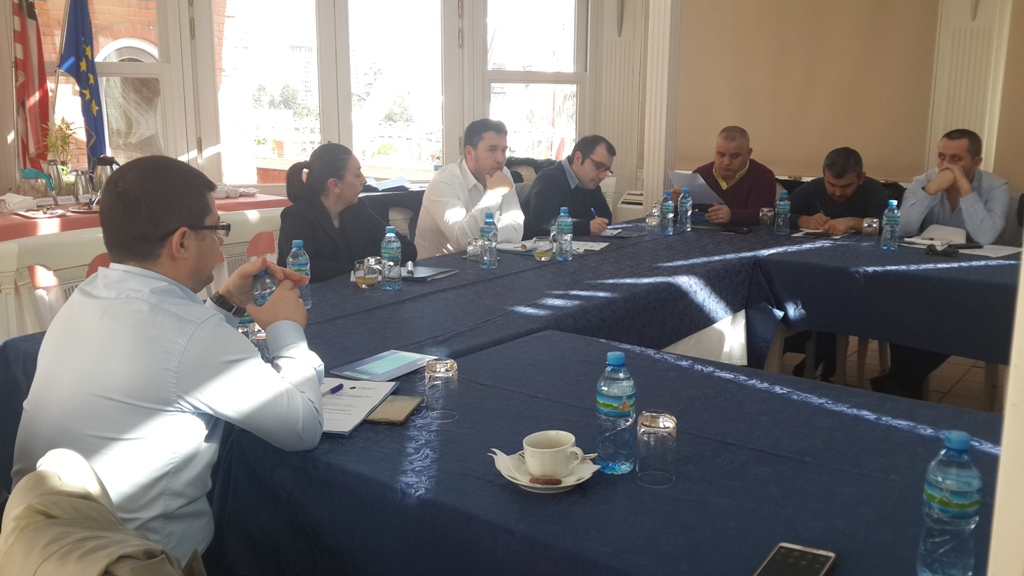
Balkan Investigative Reporting Network, Albania (BIRN Albania), as part of the project ‘Exposing Illicit Wealth in the Albanian Justice System’ supported by the Democracy Commission Small Grants Programme of the US Embassy in Albania, will organize one training session in investigative journalism techniques in the field of assets declaration in the country.

BIRN Albania is seeking 10-12 mid-career journalists from all the regions of Albania to attend the investigative journalism training workshop on March 9th 2016, in Tirana.


Introduction to the training:

The training serves to provide a guide to the basic methods and techniques of investigative journalism as well as an overview of the asset declaration system and procedures in Albania. It aims to strengthen the skills and training of mid-career journalists to look closely at systemic issues of illicit wealth and conflict of interest, with a special focus on the red flags raised by the audit of asset disclosures by judges and officials of the justice system.


Who should attend:

The training targets mid-career journalists in Albania who are interested to deepen their knowledge of investigative journalism techniques and asset declaration procedures. Journalists from other regions outside Tirana are encouraged to apply. BIRN Albania will cover travel costs for journalists outside Tirana.


Training objectives:

The outcome for participants will be:

1. Improved understanding of Albania’s asset declaration system;

2. Improved applied methods and techniques of investigative journalism.


Application procedure:

Interested candidates must send a CV and letter of interest to [email protected]. Applications for this training close on Sunday, March 6. Successful candidates will be informed shortly thereafter.


Bursaries:

The journalists who take part in the training will participate in a competition from which BIRN Albania through an independent jury will select story ideas for five investigations and five in-depth analyses related to judges’ asset declarations that will be funded from the project and published with the help of BIRN editors via the online publications BalkanInsight.com and Reporter.al.

BIRN Albania Launches Call for Investigative Reports on Energy

The Balkan Investigative Reporting Network in Albania launched a call for investigative stories on energy themes on February 25.

The call is part of the programme on the transparency of the energy sector in Albania, supported by the Rockefeller Brothers Fund.

Five journalists will be awarded grants to cover their expenses while doing their investigations and writing their stories on corruption and wrongdoing in the energy sector, with a particular focus on the impact of energy projects on the environment.

The journalists will have about two months to dig deeper and research their ideas, and will also have the opportunity to work with experienced editors as their mentors to guide them through the process of writing to BIRN standards.

The call only applies to journalists from Albania. It closes on March 15.

Click for more information about the application procedure, with details in Albanian.

BIRN Albania Holds Roundtable on Organized Crime

The Balkan Investigative Reporting Network in Albania held on February 25th a roundtable on organized crime in Tirana, bringing together representatives of civil society, experts and journalists. 

It was the sixth in a series of seven roundtables, part of a programme called ‘Exposing Corruption in Albania’, which is financed by the Open Society Foundation in Albania (OSFA), the Swedish International Development Cooperation Agency (SIDA), National Endowment for Democracy (NED) and the Balkan Trust for Democracy (BTD).

The project aims to expose corruption cases in seven different sectors: the environment, education, the judiciary, healthcare, public administration, local government and organized crime, by bridging the gap between journalists and CSOs, and by providing a solid basis for collaboration in exposing abuses of power.

About 19 representatives of non-governmental organizations and journalists discussed on the nature of organized crime in Albania and its links to the political and economic elite.

The participants to the roundtable listed a number of topics of concern, ranging from the infiltration of law enforcement agencies by organized crime, racketeering, drug trafficking and human trafficking. 

The topics highlighted by the NGOs will be listed in BIRN Albania’s upcoming call for investigative stories in the field of organized crime.


BIRN Albania Holds Roundtable on Energy

The Balkan Investigative Reporting Network in Albania held a roundtable on energy on February 22 in Tirana, bringing together civil society organizations, environmental activists, experts and journalists working in the field of energy.

The roundtable was supported by the Rockefeller Brothers Fund, and aimed to create bridges between civil society organizations, experts and the media in order to enhance public debate on the future of a sustainable energy model in Albania, clean energy sources, transparency and corruption in the energy sector.

About 25 experts, representatives of civil society organizations and journalists were present at the meeting, highlighting the need for greater cooperation between civil society groups and the media in order to highlight for the general public important issues on the energy sector.    

The participants discussed the wildcat development in Albania’s hydropower sector, the use of green taxes by the government, the construction of hydropower plants in protected areas without proper environmental assessments, the lack of transparency and proper corporate governance of state-owned energy companies and the illegal sale of substandard fuels.

The experts and activists agreed that there is a need for greater cooperation between civil society groups in order to strengthen the public consultation process for energy projects, which is often formal and does not treat the public as a stakeholder.

The topics highlighted during the roundtable will help inform BIRN Albania’s upcoming call for investigative stories in the field of energy. 

Fellowship Journalist Commended for Trafficking Investigation

Lindita Cela, a 2015 alumni of the Balkan Fellowship for Journalistic Excellence, has received a commendation from the United Nations Entity for Gender Equality and the Empowerment of Women in Albania, UN Women, for the “creation of a professional model of investigative journalism for the reporting on trafficking of women and girls.”    

The commendation was issued to Cela by David Sander, representative of UN Women in Albania, during a roundtable held in Tirana by UN Women and the Interior Ministry entitled “Reporting in the Media of the Phenomenon of Trafficking of Women and Girls: Problems and Recommendations”.

Cela was recognized for her story Vicious Circle: Albanian Victims Struggle to Escape Shadow of Sex Trade, published as part of the 2015 Balkan Fellowship for Journalistic Excellence programme.

The investigation highlighted the plight of Albanian women and girls trafficked and exploited as sex slaves and their struggle to rebuild their lives with little help from the state and a society that often refuses to treat them as victims. 

Every year the Balkan Fellowship for Journalistic Excellence awards ten journalists from Albania, Bosnia-Herzegovina, Bulgaria, Croatia, Kosovo, Republic of Macedonia, Montenegro, Romania, Greece, financial and professional support to conduct in-depth research into a topic of regional and EU significance.

The project, which is supported by ERSTE Foundation and the Open Society Foundations, in cooperation with the Balkan Investigative Reporting Network, BIRN,  aims to encourage regional networking among journalists and advance balanced coverage on topics that are central to the region as well as to the European Union.

BIRN Albania Self-Censorship Study Discussed in Parliament

The media commission in Albania’s parliament held a hearing on January 25 dedicated to BIRN Albania’s study, A Blind Eye on News: Self-Censorship in the Albanian Media.

The key findings of the study on the frequency, roots and causes of self-censorship in the local media were presented to the commission by BIRN Albania’s editor Besar Likmeta, who underlined that data collected through the survey of 121 journalists and 22 in-depth interviews with key sources suggests that self-censorship is widespread in the Albanian media. 

 “Self-censorship is not a free choice for a journalist and neither represents their natural approach toward news, but rather the result of the influence of a series of interconnected social, economic and political factors that affect the daily practice of news reporting and the quality of the media in general,” Likmeta told the MPs.

The hearing was called by the media commission in order to assess the working conditions, job security and safety of journalists in Albania – issues that are also reflected in the study.

The MPs praised the quality of the report and discussed ways in which the parliamentary commission could be more active in order to improve the working conditions of Albanian journalists. 

They discussed the recommendations produced by the report, centring on ways to improve the implementation of the labour code by media outlets as well as methods to increase transparency and fairness in the distribution of government-sponsored advertising.  

BIRN Albania Launches Video against Self-Censorship

The Balkan Investigative Reporting Network in Albania has released a two-minute video, seeking to raise awareness among the public, media professionals and decision-makers about widespread self-censorship in the media.

The animation, the work of Albanian multimedia artist Gentian Shkurti, is based on BIRN’s recent report “A Blind Eye on News: Self-Censorship in the Albanian Media”, which highlights the frequency, roots and causes of self-censorship. 

The report provides an overview of self-censorship in the Albanian media, based on interviews with media professionals.

This is the first survey of this phenomenon in Albania and the findings aim to raise awareness of the presence and influence of self-censorship on freedom of expression.

The video presents the key findings of the study in an easily digestible format to reach a wider audience.

During the short clip, the public is urged not “turn a blind eye on news” and support journalists and freedom of expression in Albania.

Production of the video was supported by the Swedish International Development Agency, SIDA. 

Report on Self-Censorship in the Albanian Media

A Blind Eye on News: Self-Censorship in the Albanian Media is a study published by the Balkan Investigative Reporting Network in Albania, on the frequency, roots and causes of self-censorship in the Albanian media.

This report aims to offer a complete overview of the roots and causes of self-censorship in the Albanian media as well as the forms in which it appears, based on the perceptions of media professionals.

In view of the absence of previous studies of this phenomenon in the Albanian media, the findings of this study aim to raise awareness of the presence and influence of self- censorship on freedom of expression and the quality of professional media, with the goal of providing the public with balanced and objective information.

This study also offers a series of recommendations on the necessary means and mechanisms that should be employed to fight self-censorship in Albania, based on the suggestions of the media professionals involved.

To download a copy of the report in English click here.
To download a copy of the report in Albanian click here.

To download a shorter summary of the report in English click here.

Exposing the Truth: A Guide to Investigative Reporting in Albania

Exposing the Truth: A Guide to Investigative Reporting in Albania, is a manual about online and offline investigative reporting techniques, produced by BIRN Albania with the support of the OSCE Presence in Albania.

The manual, which was authored by BIRN editor and media trainer Lawrence Marzouk, explores all the steps that a journalist should follow and the resources he/she should use to produce in-depth investigative reports.
The manuals is divided into seven chapters, which start with the necessary preparatory work that reporters should carry out before they begin an investigation, online research techniques using search engines and databases, access to public documents through the freedom of information law, how to organize the research data and overcome legal hurdles before publication.
The guide aims to provide reporters with the necessary skills to tackle complex stories of corruption and wrongdoing that stretch across borders and involve both local and international actors.
To download a copy of the manual click in English here
To download a copy of the manual click in Albanian here

BIRN Albania Launches Call for Investigative Reports on Public Administration

The Balkan Investigative Reporting Network in Albania launched a call for investigative stories on November 10th.

The call is part of the program ‘Exposing Corruption in Albania,’ supported by the Open Society Foundation in Albania, Balkan Trust for Democracy and National Endowment for Democracy.

In this call that closes on November 20th, three journalists will be awarded a grant to cover their expenses while doing the investigation and writing the story on corruption and impunity related to public administration.

Journalists will have about two months to dig deeper and research their ideas, but also will have the opportunity to work with experienced editors as their mentors to guide them through the process of writing to BIRN standards.

Until December 2016, other two more calls for investigations will be launched, covering topics on Organized Crime and Local Government.  

The call only applies to journalists from Albania.

Click for more information about the application procedure, with details in Albanian.