Fellowship Closing Seminar To Be Held in Tirana

Ten talented journalists from across the region will reunite in Tirana after eight months of hard work to discuss their cross-border stories, produced as part of the Balkan Fellowship for Journalistic Excellence.

The fellows taking part in the ninth year of the programme have travelled across the region and far beyond to gather material for in-depth articles based on the theme of ‘Values’. They have also attended editing sessions in Belgrade and Skopje with BFJE editor Andrew Gray to finalise their texts.

On Friday, December 4th, the fellows will present their stories to members of the programme’s selection committee, who will then vote for the three best articles. The winners will be awarded a cash prize of 4,000 euros for first place, 3,000 euros for second place and 1,000 euros for third place.

The winners will be announced at the Balkan Fellowship for Journalistic Excellence closing event and award ceremony in Tirana on the evening of December 4th.

The Fellowship programme is supported by ERSTE Foundation and Open Society Foundations. It was created to enable journalists to work on projects of their own choice with editorial and professional support to produce in-depth, cross-border stories on topics of importance both inside and outside the region.

BIRN Launches Balkan Extremism Reporting Project

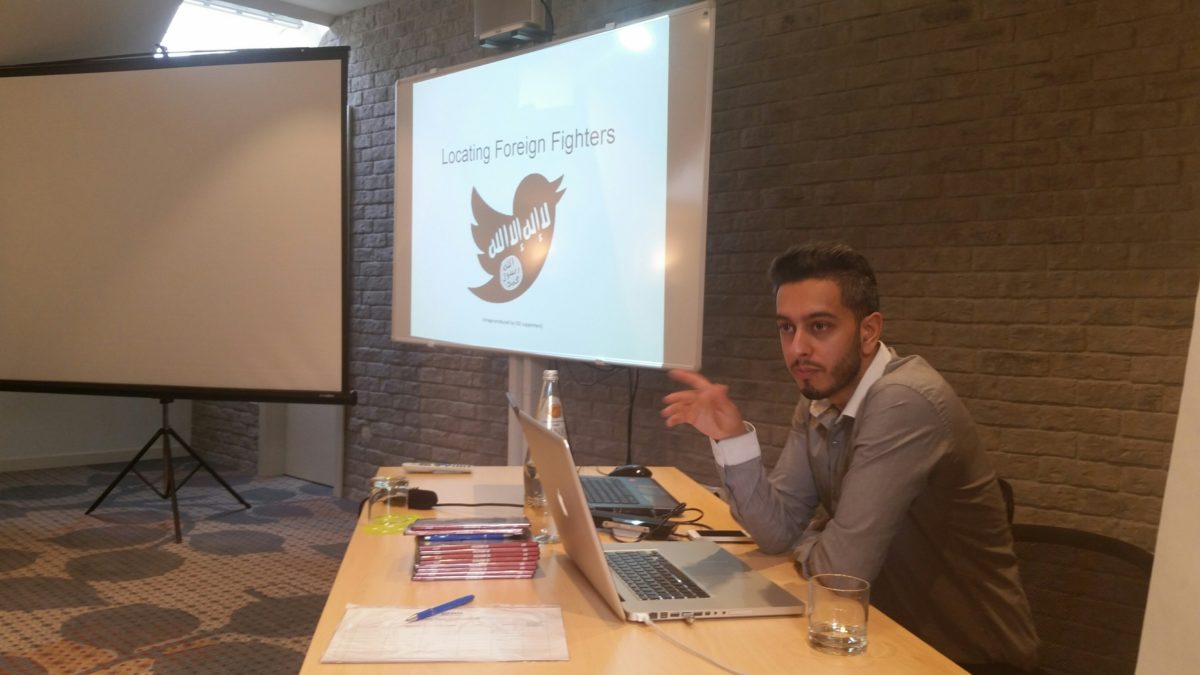
BIRN Hub began a new project focused on online reporting on extremism in the Balkans with two days of training for journalists from across the region.

The two-day training session for 11 journalists from Albania, Bosnia and Herzegovina, Kosovo, Macedonia, Montenegro and Serbia was held in Belgrade from November 21-22 as part of Balkan Investigative Reporting Network’s new project, ‘Strengthening Media Reporting and Public Understanding of Extremism in the Western Balkans’.

The journalists heard lectures from Secunder Kermani, a BBC Newsnight reporter and producer, and Shpend Kursani, a researcher at the Kosovo Centre for Security Policy.

Kermani lectured on various aspects of Islamic theology, and presented an overview of different groups fighting in Syria and Iraq. He also provided journalists with tips on how to avoid the ISIS propaganda machine and how to locate foreign fighters.

Kursani meanwhile presented a report about the causes and consequences of Kosovo citizens’ involvement as foreign fighters in Syria and Iraq.

On the second day, the journalists work on story proposals with head of the project, Marija Ristic, editor Anita Rice and BIRN regional director Gordana Igric.

Besides training, the project involves the continuous production of news, interviews and analysis on a special focus page on the Balkan Insight website entitled ISIS in the Balkans.

The selected 11 journalists will also have continuous on-the-job training and mentoring as a regional journalistic team.

As part of the project, the journalists will produce six in-depth country-based analysis articles and one cross-regional research paper. 

At the end of the project, BIRN will organize a conference with key stakeholders at which they will debate the issue of violent extremism in the Balkans.

BIG DEAL: Kosovo-Serbia Dialogue ‘Split Asunder’

Only four of 16 agreements between Belgrade and Prishtina reached in Brussels since 2011 have been fully implemented, shows the most recent report by BIG DEAL, a civic oversight initiative on the Kosovo-Serbia negotiations. It is the same number as observed in the previous report six months ago.

“BIG DEAL: Split Asunder” is a joint report produced by BIRN Kosovo, Internews Kosova and the Advocacy Center for Democratic Culture (ACDC) of North Mitrovica. The report finds that this six month period has been a time of division within Kosovo society over dialogue, as well as time of growth of negative feelings between the two capitals.

BIG DEAL calls on Prishtina, Belgrade and the European Union to prioritize the so-called ‘normalisation’ process, as most of the accords reached between the sides have not been fully implemented so far.

“It is unfortunate that, similar to six months ago when we presented our first report, only four of 16 reached agreements have been fully implemented,” said Jeta Xharra, Executive Director of BIRN Kosovo.  “Four and a half years after the Kosovo-Serbia dialogue began, Kosovo and Serbia are refusing to recognize one another’s diplomas. The draft law on cadastre has been blocked for two years with no progress, and Kosovars can still use the operating codes of other countries to make telephone calls.

Dusan Radakovic of ACDC said the agreement on justice is lagging behind in implementation at a real cost to citizens.

“We need the court so northern Kosovo can finally stop being a rule of law vacuum. The judiciary is the cornerstone of any society, he said:.  Once this agreement is fully implemented, it will make it easier for the others to also be implemented.”  

The report is the result of more than 100 interviews with negotiators, local politicians, journalists and ordinary citizens in one and a half years of intensive research done across Kosovo and Serbia. With an in-depth view of the current state of play in implementation, BIG DEAL aims to make the process of normalising relations a more transparent one.

“Lack of accountability in the process, where politicians are using the smallest opportunity to accuse other side for not implementing what was agreed, bring them trivial political points,” said Tanja Maksic, program coordinator at BIRN Serbia. “This pushes the prospect of normalisation further away.”

Big Deal’s third report examines the dynamics of the implementation, which has been seriously hindered by the political deadlock in Kosovo, decisions by the Serbian Constitutional Court and crises that have shifted the attention of the European Union.

“The primary progress in the last six months was in reaching agreements in August unblocking the path to implementing agreements on telecom and energy,” said Valerie Hopkins, primary researcher of the report. “There have also been agreements on the future of the Mitrovica bridge and the main elements of the Association of Serb-majority municipalities, but progress on the latter remains blocked until mid-January when the Constitutional Court will decide if the agreement is in harmony with Kosovo’s constitution.”

Big Deal is supported by the UK Foreign and Commonwealth Office in Prishtina, and the Rockefeller Brothers Fund. This is the third report in a series.

Click to download BIG DEAL ‘Split Asunder’ in English.

Click to download BIG DEAL ‘Split Asunder’ in Albanian.

Click to download BIG DEAL ‘Split Asunder’ in Serbian.

Serbian Telecoms Company Pays Bank Chief’s Debt

In its latest investigation, BIRN Serbia has revealed that state-owned Serbian telecommunications company, Telekom Srbija, paid off almost 78,000 euros of debt for Serbian National Bank governor Jorgovanka Tabakovic which she owed for her four-bedroom flat in Novi Sad.

Tabakovic signed a contract for the purchase of part of the apartment, measuring 144 square metres, with the state-owned Public Enterprise of PTT ‘Srbija’ on May 30, 2000, when she was serving as Minister for Economic and Ownership Transformation under the Socialist government of Mirko Marjanovic.

According to the documentation that BIRN Serbia obtained, that agreement gave Tabakovic ownership of 94 square meters (65 per cent) of the apartment, for which she paid 8,822.60 Deutschmarks (DM) at the time.

Tabakovic was supposed to pay off 92,170 DM for the remaining 35 per cent of the apartment over the following 40 years, plus interest.

However, she has not made a single monthly payment, and the contractual obligations to pay off the debt plus interest were taken over by Telekom Srbija three months after she took office as governor of the Serbian National Bank.

Entire article written on Serbian language can be found at http://javno.rs/istrazivanja/telekom-otplatio-guvernerkin-dug-za-stan

Austrian Bank Denies Releasing BIRN Statements

The Austrian Raiffeisen Bank has denied releasing financial statements relating to an account held by the Balkan Investigative Reporting Network, BIRN, to the Serbian daily tabloid newspaper Informer.

“It has been confirmed with certainty that the information on the influx [of money] on your account, published in Informer daily, has not come out of the bank. The published document is not the document from Raiffeisen bank,” the bank said in a statement given to BIRN on Tuesday.

“We don’t know on what way Informer daily came into the possession of the information,” the statement added.

The document in question – which is not legally obtainable – was published in the controversial tabloid on Monday and purports to be a BIRN financial statement from Raiffeisen Bank. The document was published as part of an Informer article claiming that the European Commission is “directly funding attempts to bring Vucic down and instigate chaos in Serbia.”

The story claimed that the European Commission has paid a total of €86, 870, 12 to BIRN “for spitting on Vucic”.

“The donation from the EU commission is just one of the payments made from abroad to news networks, who’s only purpose is launching false affairs and instigating chaos,” the Informer story alleged.

The bank has not commented on whether the document published by Informer was a forgery or if it was released by another source. In addition, the bank did not elaborate on why they are sure the document is not authentic.

Journalists ‘can’t obtain financial statements’

Miodrag Vukovic, a lawyer and former Interior Ministry officer, said that obtaining financial statements is only possible for the authorities under very specific regulations and procedures. They can use the obtained documents in criminal procedures, “but if they are not used, they have to be destroyed”.

“No journalist in the regular procedure would be approved by a bank to get access to such information. It simply is not possible, because there is no basis on which you can call to get such information,” Vukovic said.

Informer published another article on Tuesday denouncing BIRN and two other independent media organizations, KRIK and CINS, claiming that foreign grants were given to all three on dates that coincide with the publication of “false affairs against people close to the government”.

The latest story has followed a series of defamatory allegations by Informer – which has links to Prime Minister Aleksandar Vucic – accusing BIRN, KRIK and CINS of acting as “foreign mercenaries” and trying to “bring down our government”.

The latest allegations appear on this occasion to be wrapped up in a tabloid feud between Informer and its Belgrade-based rival newspaper Kurir.

The situation escalated on November 8, when Informer’s editor in chief, Dragan Vucicevic, appeared in a special programme on the TV Pink channel called Bringing down Vucic. In the four-hour show he accused Kurir’s owner, Aleksandar Rodic, of being a racketeer, and BIRN, CINS and KRIK of “receiving money from abroad to bring down Vucic and to have a Serbia without a prime minister”.

BIRN Albania Launches Call for Investigative Reports on Public Administration

The Balkan Investigative Reporting Network in Albania launched a call for investigative stories on November 10th.

The call is part of the program ‘Exposing Corruption in Albania,’ supported by the Open Society Foundation in Albania, Balkan Trust for Democracy and National Endowment for Democracy.

In this call that closes on November 20th, three journalists will be awarded a grant to cover their expenses while doing the investigation and writing the story on corruption and impunity related to public administration.

Journalists will have about two months to dig deeper and research their ideas, but also will have the opportunity to work with experienced editors as their mentors to guide them through the process of writing to BIRN standards.

Until December 2016, other two more calls for investigations will be launched, covering topics on Organized Crime and Local Government.  

The call only applies to journalists from Albania.

Click for more information about the application procedure, with details in Albanian.

Thirrje për artikuj investigativë në fushën e administratës publike

Thirrja organizohet nga Rrjeti Ballkanik për Gazetarinë Investigative në Shqipëri (BIRN Albania), me mbështetjen e Fondacionit Shoqëria e Hapur për Shqipërinë, OSFA.

Nëpërmjet këtij konkursi tre (3) gazetarë investigativë do të përzgjidhen për të prodhuar artikuj investigativë lidhur me sektorin e administratës publike, në bashkëpunim me shoqërinë civile. Fituesit do të përzgjidhen nga një juri e pavarur e përbërë nga gazetarë me eksperiencë dhe ekspertë në këtë fushë.

Aplikantët e përzgjedhur, të cilët do marrin një bursë prej 1,200 USD (minus taksën të ardhurave personale), do kenë në dispozicion një periudhë dy mujore për të përfunduar investigimin e tyre dhe përgatitjen e artikullit për publikim.

Kandidatët fitues pritet që të angazhohen dhe të përmbushin të gjitha detyrimet në lidhje me investigimin, siç janë: takimet e shpeshta (javore) me redaktorin, publikimin e tekstit në faqen e BIRN Albania www.reporter.al dhe gjithashtu në www.balkanInsight.com, si dhe respektimin e standardeve të gazetarisë investigative dhe etikës profesionale.

Prioritet në përzgjedhje do i kushtohet propozimeve të cilat përfshijnë një nga temat e mëposhtme, të sygjeruara si prioritare gjatë një tryeze të rrumbullakët midis gazetarëve dhe përfaqësuesve të shoqërisë civile që mbulojnë sektorin e administratës publike të organizuar nga BIRN Albania:

  1. Politizimi i administratës publike

–        Procesi i rekrutimit në administratën publike/ si vendosen kriteret e përzgjedhjes, si zbatohen ato, si realizohen konkurset.

–        Punësimi i militantëve në poste të larta drejtuese të institucioneve kryesore publike me ose pa konkurs.

–        Pushimi i punonjësve të administratës publike nga puna/ kostoja financiare që shoqëron këtë proces/ mungesa e marrjes së përgjegjësive nga drejtorët e institucioneve që kryejnë këto pushime nga puna.

–        Ndryshimet e shpeshta të stafit të administratës publike të lidhura me zgjedhjet pralamentare ose/dhe lokale, jo në përputhje me ligjin e nëpunësit civil.

  1. Eficenca e administratës publike në mënyrën e funksionimit dhe të koordinimit mes institucioneve publike të pavarura.

–        Sa dhe si zbatohen funksionet e enteve rregullatore dhe organeve të tjera përgjegjëse për mbikëqyrjen dhe monitorimin e institucioneve publike.

  1. Transparenca e institucioneve publike në lidhje me informacionin e detyrueshëm publik dhe zbatueshmërinë e ligjeve në përgjithësi.

–        Ligji për të drejtën e informimit / funksionet e koordinatorit të informimit/ publikimi i organogramës së institucionit/ publikimi i akteve ligjore nga institucionet ligjbërëse pëpara miratimit të tyre.  

–        Njohja, trajtimi dhe keqpërdorimi i argumentimit ligjor të konfliktit të interesit privat me detyrat publike në favor të funksionarit në konflikt interesi.

–        Aplikantët mund të dërgojnë më shumë se një aplikim, por vetëm një propozim për kandidat do të përzgjidhet.

Të drejtën për të aplikuar e kanë të gjithë gazetarët në Shqipëri, të punësuar apo në profesion të lirë.

Kandidatëve u kërkohet të dërgojnë propozimet e tyre në formularin e aplikimeve (Kliko këtu për formularin), një CV dhe tre shembuj të punës së tyre me email në: [email protected]

Afati i Aplikimit: 20 Nëntor, 2015

Kandidatët e përzgjedhur do të njoftohen deri më datë: 25 Nëntor, 2015

Serbian Minister Questions BIRN Credibility Due to Foreign Funding

Serbian interior minister questioned credibility of BIRN as the funding of organization comes only from abroad, after a week of campaign against independent investigative journalism organizations in tabloid media.

In an unprecedented live four hours long program on one of the most popular pro government national TV stations PINK, Balkan Investigative Reporting Network, BIRN, KRIK – Network for Investigating Crime and Corruption, CINS – Serbia’s Centre for Investigative Journalism, were one more time labelled as “foreign mercenaries” who are participating with other actors in what the station called attack on Serbian Prime Minister Aleksansader Vucic.

Serbian interior minister Nebojsa Stefanovic questioned the good intentions of BIRN investigations “as it is strange that all the funding comes from foreign donations” and that no domestic money was ever given to the organisation.

He also argued that investigations done by BIRN and other investigative organisations in Serbia should not be taken for granted.

Dragana Zarkovic, director of BIRN Serbia, says however her organization did reserve funding from Serbian instutitions.

“Office for cooperation with civil sector, which is body of Serbian government , is one of our funders. In 2015 they were supporting our Participative budgeting programme, which enables public consultations in local budgets drafting,” Zarkovic said.

  Owner and editor of pro-government tabloid Informer, Dragan Vucicevic, who was also part of the special program, said that BIRN is “financed to overthrow Vucic’s government, in order to fulfil their campaign to have a Serbia without a Prime Minister”.

“They (BIRN, CINS and KRIK) use lies to destabilize the country, I have proof of everything,” Vucicevic said on Sunday.

He also said that all investigations produced by BIRN and others are “invented affairs”, aimed to cause unrests like in the countries of the region, citing examples of Montenegro, Kosovo and Macedonia.

As a ‘prof’ Vucicevic took out financial records of BIRN, arguing that “direct payoff of the EU came in February”, just after the article BIRN published on alleged corruption in Tamnava mine.

Vucicevic was referring to a grant BIRN got through a fair competition at the EU tender for investigations as part of the program for Serbia, Media Freedom.

BIRN Albania Holds Roundtable on Public Administration

The Balkan Investigative Reporting Network in Albania organized a roundtable on November 6 in Tirana, bringing together civil society organisations working in the field of public administration and journalists.

It was the fifth in a series of seven roundtables, part of a programme called ‘Exposing Corruption in Albania’, which is financed by the Open Society Foundation in Albania (OSFA), the Swedish International Development Cooperation Agency (SIDA), National Endowment for Democracy (NED) and the Balkan Trust for Democracy (BTD).

The project aims to expose corruption cases in seven different sectors: the environment, education, the judiciary, healthcare, public administration, local government and organised crime, by bridging the gap between journalists and CSOs, and by providing a solid basis for collaboration in exposing abuses of power.

About ten representatives of non-governmental organisations and ten journalists discussed different topics of concern regarding the public administration in Albania, with a special focus on corruption and impunity in the system.

The representatives of the NGOs listed a number of topics, ranging from the role that politics play in the recruitment process in the public administration to issues of public transparency and illegal-decision making by collegial bodies and independent government agencies.

The topics highlighted by the NGOs will be listed in BIRN Albania’s upcoming call for investigative stories in the field of public administration.

BIRN Serbia Journalist Addresses Media Financing Seminar

Tanja Maksic of BIRN Serbia spoke at a seminar entitled ‘Public Interest for Citizens and Media and a New Way of Financing Media Content’ on September 17.

At the seminar, Maksic presented recommendations for improving practices in competitive funding for local governments, which play a major role in the implementation of media reforms, as well as the findings of monitoring by BIRN Serbia.

For the fourth year in a row, BIRN Serbia has been collecting data and recording models of budget spending in the media sector.

The data showed that nearly three billion dinars was spent in the media sector by 33 local governments in the period from 2011 to 2013.

The seminar was organized by Standing Conference of Towns and Municipalities, in cooperation with Independent Journalists’ Association of Serbia, the Ministry of Culture and Information, the EU Delegation and the OSCE Mission in Serbia, with the support of the Open Society Foundation.