Serbia Media Report Says ‘Soft Censorship’ Persists

Soft censorship continues to be a major threat to press freedom in the country, concludes the ‘Media Reform Stalled in the Slow Lane: Soft Censorship in Serbia 2015 Update’ report.

The Serbian government appears unwilling to follow recommendations that would guarantee a non-discriminatory allocation of public funds and government advertising across the media, the report says.

Biased subsidies to media outlets, selective government advertising contracts, and manipulation regarding licensing persists in the country, it suggests. The lack of transparency and record keeping is still a severe challenge in assessing the full extent and impact of soft censorship in Serbia.

The report registers small improvements to the media-related legal framework in Serbia, such as thenew Law on Public Information and Media which regulates financial relations between the state and media outlets.

It concludes that state spending in Serbia’s media sector requires fundamental and urgent reform to ensure that taxpayers’ money is no longer used to impose soft censorship, and instead to offer public information through free, independent and pluralistic media that facilitates informed democratic participation.

The report, prepared by Tanja Maksic in cooperation with the BIRN Serbia team, is one of a series in an ongoing project on soft censorship around the world led by the World Association of Newspapers and News Publishers (WAN-IFRA) and the Center for International Media Assistance (CIMA).

The research covers government entities at national and local level, as well as public companies (companies owned or controlled by the state). It’s an update of the January 2014 report, ‘Soft Censorship: Strangling Serbia’s Media’.

Get the report here:

Media Reform Stalled in the Slow Lane: Soft Censorship in Serbia 2015 Update.

BIRN Wins Legal Case Against Kosovo PM’s Office

A Pristina court rules the prime minister’s office must make travel expense documents public after three-year legal battle for access.

The Balkan Investigative Reporting Network, BIRN, has been awarded a legal victory over the Kosovo Prime Minister’s office by a court in Pristina, following a three-year battle to gain access to government travel expense documents.

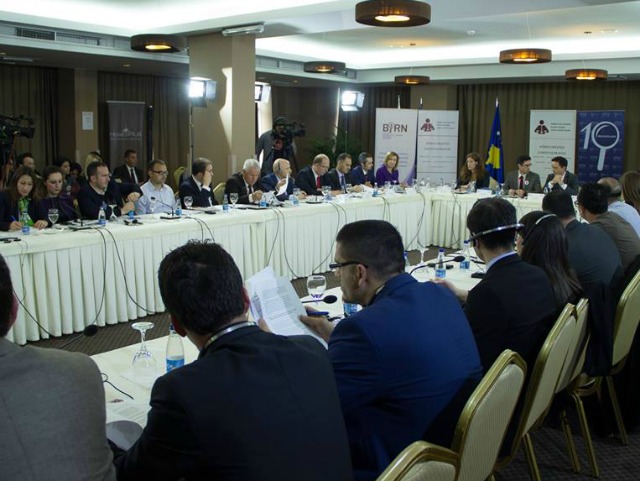
The court victory was announced on Thursday during a conference on public transparency and access to official documents, organised by the Justice and Citizens Campaign and BIRN.

Jeta Xharra, executive director of BIRN in Kosovo, noted that the process of reaching a conclusion to the case was a lengthy one but, in the end, the court established an important precedent for future requests of a similarkind.

“I want to encourage every citizen of Kosovo to knock on the doors of public institutions and demand accountability on the way their taxes are spent and use this court decision as an argument that the authorities must open this data,” Xharra said.

BIRN had requested access to documented foreign travel expenses of the former Kosovo PM Hashim Thaci, who now serves as vice-prime minister and foreign affairs minister, and the same information from the current Isa Mustafa government.

BIRN also requested the same information from six deputy prime ministers of the Thaci government and four deputy ministers of the current Mustafa government.

The PM’s office had denied access to such information, arguing that it could infringe the privacy rights of public officials because invoices for food and drinks could reveal religious and dietary information about individuals.

BIRN argued this line of defence was not relevant and could not be used to circumvent legal obligations to grant access to official documents, and the court decided in BIRN’s favour.

The court considered the PM’s office claim to be unfounded because public officials’ expenses, especially those of senior officials of state, are funded with money collected from taxes and fees paid by the citizens of the Republic of Kosovo.

Therefore, the court ruled that citizens have a reasonable interest in being directly informed about every penny spent and in knowing how entrusted public officials are spending public money, so that officials may be held accountable for their expenses.

The PM’s office failed to follow all procedures in appealing the case, and therefore the original verdict became conclusive.

At the same venue and hall where BIRN shared its legal victories, the PM’s office had scheduled a conference on transparency and access to official documents.

The government’s conference, which took place immediately after BIRN’s, was organised in cooperation with the Kosovo National Agency for Personal Data Protection.


“Filmi” Trevjeçar për Menynë e Kryeministrit dhe Zëvendësve të…

Padia e BIRN-it kundër Zyrës së Kryeministrit të Kosovës për shpenzimet e Kryeministrit dhe Zëvendës Kryeministrave në dreka e darka zyrtare jashtë shtetit tashmë ka marrë fund me një vendim të gjykatës se publiku ka të drejtë t’i ketë në dorë këto dokumente

Posted by Gazeta Jeta në Kosovë on Friday, October 30, 2015


BIRN Albania Journalist Wins Award

BIRN Albania journalist Aleksandra Bogdani has been awarded the 2015 CEI SEEMO Award for Outstanding Merits in Investigative Journalism in the professional journalist category.

The Central European Initiative (CEI) and the South East Europe Media Organisation (SEEMO), in special partnership with the Media Program South East Europe of the Konrad Adenauer Stiftung (KAS), announced on Monday thatBogdani won the award.

“Bogdani has been awarded for her overall professional achievements as an intrepid reporter covering complex stories of human trafficking, organised crime and child abuse, corruption and national security,” the Central European Initiative said in a statement.

“Bogdani has particularly impressed the jury by the courage shown as a woman producing an in-depth series of six investigations on the network of recruiters who send hundreds of Albanian Muslims off to fight in the Syrian civil war as jihadists for the Islam State of Iraq and Levant, ISIS and the al-Nusra front,” it added.

With more than a decade of experience working as a reporter, editor and deputy editor in chief at different media outlets in Albania, including the dailies Mapo, Shekulli and Top News TV, Bogdani joined BIRN Albania’s office in 2014.

In the category of young professional journalist, the 2015 CEI-SEEMO award went to Ukrainian journalist Nadia Burdey. Burdey was recognized as a promising young journalist who follows high professional standards in a difficult environment in which these standards are not widespread

Bogdani and Burdey will officially receive their awards offered by the CEI (4,000 euro and 1,000 euro respectively) at the South East Europe Media Forum in Bucharest, Romania on November 5-6.

BIRN Macedonia Launches Ninth Call for Investigative Reports

BIRN Macedonia, together with the Centre for Civil Communications launched the ninth call for investigative stories on October 14th.

The call is part of the ‘Project for Investigative Journalism and Cooperation Between Media and Civil Society’, part of a USAID programme for strengthening independent media in Macedonia.

In this call that closes on October 28th, selected journalists will be awarded a grant to cover their expenses while doing the investigation and writing the story.

Journalists will have about three months to dig deeper and research their ideas, but also will have the opportunity to work with experienced editors as their mentors to guide them through the process of writing to BIRN standards.

Topics for investigations include: health; cultural policy; education and youth; human rights; EU integration; good governance; inter-ethnic relations; environment issues; marginalised groups; quality of life.

The call only applies to journalists from Macedonia. More calls for investigative grants will follow.

Click for more information about the application procedure, with details in Macedonian.

BIRN Albania Launches Monthly Publication

On September 30th, the Balkan Investigative Reporting Network in Albania launched the first issue of its monthly bi-lingual print publication Reporter.al, which features investigative reports, features, analysis and news from Albania and the region.

The print publication will be distributed for free through mail to more than 300 stakeholders in government institutions, foreign diplomatic missions in Tirana, international organizations, CSOs, and local media.

Together with the inaugural issue of Reporter.al, BIRN Albania has also published an accompanying special edition, which includes 25 investigations published by its reporters during the past year through its online portal.

The special edition includes investigations on abuse of power, organized crime, national security and terrorism, environment and human rights.

The print publication will be published at the beginning of each month and aims to bring BIRN Albania’s award-winning investigative reports and analysis directly to decision-makers in the country in order to stimulate action and debate on the issues of good governance, corruption and impunity.

The publication in print of Reporter.al comes with the generous support of the National Endowment for Democracy and the Balkan Trust for Democracy.

To download a copy of the first issue of Reporter.al click here.

To download a copy of the special edition of Reporter.al click here.   

BIRN Serbia Holds ‘Participatory Budgeting’ Workshops

The workshops at the Kopaonik mountain resort were attended by representatives of the finance and PR departments of ten Serbian municipalities.

How to involve the public in decisions about budgets for 2016? How to improve communication with citizens? These were just some of the questions that 18 local government representatives had the opportunity to get answers to at the workshops that were held from August 28 to 30.

The workshops looked at the weaknesses and strengths of the concept of participatory budgeting also, as well as activity plans for the future implementation of the participatory budgeting project.

Financial consultant Jovanka Manic gave advice for improving budgeting and Tatjana Vojtehovski spoke about communications, while the participants raised questions about both issues during discussions that followed.

The project includes nine municipalities – Sombor, Knjazevac, Trstenik, Pancevo, Zrenjanin, Pirot, Ruma, Sabac and Sremska Mitrovica.

BIRN Serbia Issues Data Journalism Handbook

BIRN Serbia has published the first handbook on data journalism in Serbia featuring tips, tricks and tutorials all in one place. The handbook offers all the basic knowledge for how to work with data and to conduct journalistic research from start to finish.

In this handbook is systematic knowledge and experience gained through various research projects. It contains answers to the question of what data journalism is, which are the most important tools to collect, analyse, organise and present information, how to get data in Serbia, as well as advice and practical examples from those who are already proficient in this new form of journalism .

The handbook is available in electronic formats: PDF, ePub and Mobi.

To read e-books in .epub and .mobi format, you need to install an electronic reader on your cellphone or tablet. One popular free applications for Android is Moon Reader.

To reading e-books on the iPhone or iPad, we recommend TotalReader.

BIRN Serbia Journalist Joins Newsweek Conference Panel

Slobodan Georgiev, a journalist from BIRN Serbia, was a panel member at the ‘Challenges of Investigative Journalism in the Contemporary World’ discussion on September 3.

The panel was part of a conference on media freedom organized by Newsweek magazine in Belgrade which brought together more than 200 participants including journalists, editors and media experts.

Georgiev pointed out that investigative reporters can face problems if they publish stories that the authorities find uncomfortable.

“The government shaped the media environment in the country and if you do some kind of monitoring or research what the government does and what the people who sit in government do, you find yourself in trouble,” Georgiev told the conference.

He said that after BIRN Serbia published a report on a government contract for pumping flood water from the Serbia’s Tamava mine – which was criticised by the authorities – other media took the government’s line.

“When the Prime Minister had a problem with us, fellow journalists didn’t address the issue about our story, but about who pays us,” he said.

At the conference, BIRN Regional Network Director Gordana Igrić moderated a conversation about crime and organ trafficking in Kosovo with Michael Montgomery from the Center for Investigative Reporting in the United States.

Civil Activists Seek Expanded Role in Balkans’ Future

Civil sector groups from six Western Balkans countres urged their political leaders to secure freedom of expression and media independence, also calling for more of a role in their countries’ EU integration processes.

As leaders from the Western Balkans and the EU gathered in Vienna for the second leg of the Berlin Process, about 200 civil society activists and members of think tanks and the media discussed their proposals and concerns for the region.

In joint recommendations presented by BIRN’s Macedonia Country Director and Balkan Insight’s managing editor, Ana Petruseva, on Thursday, activicts urged the Western Balkan states to continue their modernization process both in their own states and in the wider region.

The recomentations were presented to the Western Balkans leaders and EU officials and tackled three main topics – regional cooperation, freedom of expression and creating jobs and prosperity.

Civil society representatives voiced their concerns and put forward concrete demands, saying that greater civil society involvement could help push forward  EU integration and reforms.

“Governments of Western Balkans should accept the civil society sector as an equal partner in the EU integration process and commit to funding civil society initiatives and networks that delivered tangible results,” the recomendations read. 

Civil society actors say they can contribute toward policies and strategies for enhancing regional cooperation in the area of social development and help improve the institutional and legal environment for civil society regionally.

The recommendations said that improving mutual understanding, exploring and discussing difficult episodes in their common history remain important aspects of regional cooperation in which civil society can and should play an active role.

The recomendations emphasize the role and potential of civil society for EU integration,  regional cooperation and energy or infrastructure projects. 

The recomendations also urge Balkan leaders to secure freedom of expression, the independence of the media and greater legal protection and working conditions for journalists.  

“The  legal protection of journalists needs to be increased as well as their working conditions, improved through the social dialogue with employers, which would overall diminish their precariousness in working relations. Media owners should adhere to existing laws in regard to employment and working conditions”, the documents reads, adding that public broadcasters must be independent and regulatory bodies need to become free from direct or indirect government influence.  

In the third discussed area – job creation and the labour market, civil activists urged the region’s governments to focus on re-starting production, modernising and supporting the agricultural sector and improve consumer protection.

The Civil Society Forum of the Western Balkans Summit Vienna 2015 is a joint initiative of ERSTE Foundation, Friedrich-Ebert-Stiftung, and Karl Renner Institute, in close cooperation with the Austrian Ministry for Europe, Integration and Foreign Affairs.

Sixth BIRN Summer School opens in Albania

BIRN’s summer school for investigative reporting opened in Durres, Albania, with a plea to journalists to channel their curiosity.

Blake Morrison, investigative projects editor at Reuters in New York and the school’s lead trainer, kicked off a packed programme urging journalists to “use our skills of observation, be curious”. 

Morrison detailed how journalist can pinpoint sources and find key information during their investigations.

“People(Sources) will believe you if you really try to understand what the problem is,” he added.

Morrison also explained the importance of careful planning in complex stories.

BIRN journalist and investigations’ editor Lawrence Marzouk presented the school’s investigative fund, which provides grants to promising story ideas.

He said that participants will be split into groups and develop investigative proposals to present to a panel of judges on the final day. Two or three stories will receive funding from a pot of around 6,000 euro so that participants can carry out their investigation.

“I will help you to develop the story,” Lawrence added.

Mar Cabra, who heads ICIJ’s Data & Research Unit, outlined how journalists can find data and the importance of data journalism. She revealed how she had used official statistics to expose the worrying use of psychotropic drugs among children in the US.

“I decided to check how many drugs children in foster care in the state of Texas are prescribed and their use of psychotropic drugs,” Cabra said.

She presented a selection of groundbreaking data stories and emphasized that we need to think about data in every story, because “data is everywhere”.

“Try to do data as much as possible, and not only for clicks, use it for investigation,” she said.

In the afternoon, Philipp Grüll’s documentary “Tito’s Murder Squads – The Killing of Yugoslav Exiles in Germany” was screened.

The first day’s working sessions concluded with a discussion about the use of confidential files with Philipp Grüll, Anuska Delic, investigative and data journalist from Slovenian daily newspaper Delo, Besar Likmeta, BIRN Albanian editor, and Marija Ristic, Balkan Transitional Justice assistant editor.

The sixth BIRN Summer School brings together young journalists from Serbia, Croatia, Bosnia and Herzegovina, Albania, Macedonia, Bulgaria, Austria, Kosovo, Palestine, Germany and Georgia to learn from leading media experts how to use social media to uncover crimes, skills for cracking open offshore companies and how to make reluctant sources talk.

The Summer School of Investigative Reporting 2015 is organised by the Balkan Investigative Reporting Network, BIRN, in cooperation with the Media Program South East Europe of the Konrad-Adenauer-Stiftung  and with support of the Austrian Development Agency (ADA), Open Society Foundations and USAID Macedonia.