BIRN’s Kosovo War Crimes Film Screened in Pristina

BIRN’s new documentary, which investigates the Serbian commanders responsible for some of the worst attacks of the Kosovo war, was screened for the first time in Pristina.

The new documentary, The Unidentified, which names the Serbian officers who ordered attacks on Kosovo villages around the town of Pec/Peja in 1999 and those involved in the cover-up operation to hide the victims’ bodies, was screened for the first time in Kosovo on Thursday evening at the Architecture Faculty in Pristina.

Marija Ristic, the director of the documentary, which was the result of a two-year investigation, told the Pristina audience that the hardest moments during the making of the documentary were when she was trying to secure interviews with Serbian police officers.

“They started to inform each other. They were trying to prevent other people from speaking out. At one point, we were afraid that we would not manage to prove anything because we could not get police officers to speak about this,” Ristic said.

Kosovo’s Ombudsman, Sami Kurteshi, said he was touched by the story in the documentary, in which both victims and perpetrators are interviewed, but said that for him, it was just one small part of the war.

Kurteshi said that despite the fact that there is little political will to tackle war crimes, such efforts should continue.

“The strengthening of justice is very important. Justice should not be dependent on political will,” he said.

Chief prosecutor at Kosovo’s Special Prosecution, Sevdije Morina, praised the documentary for getting both victims and perpetrators to talk about the crimes.

Morina also said that the Kosovo’s prosecutors are ready to take over war crime cases after the mandate of the EU rule-of-law mission, EULEX, was changed.

“Local prosecutors will soon take over the big cases, like the big massacre at Meja, from the EULEX prosecutor that was responsible until now for the war crimes [cases],” said Morina.

‘The Unidentified’ takes viewers back to 1999, to the villages of Ljubenic, Cuska, Pavljan and Zahac near Pec/Peja in Kosovo, where Serbian fighters killed more than 118 Albanian civilians. Their bodies were either burned or removed, and some of them were later found in mass graves at the Batajnica police training centre near Belgrade in 2001.

The trial of 11 fighters alleged to have been involved in the killings – 10 of them accused of being direct perpetrators – is still ongoing in Belgrade, but the police and army generals who gave the orders have never been prosecuted in Serbia.

BIRN Albania Holds Public Procurement Training Session

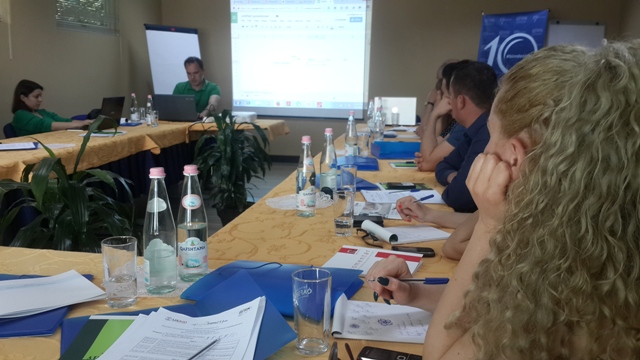
The Balkan Investigative Reporting Network in Albania held a two-day training session for journalists in Tirana on May 8-9, focusing on Albania’s public procurement system and the ways reporters can dig up stories on conflicts of interest, abuse of office, corruption and procurement fraud.

Around 15 journalists and editors from local and national media in Albania participated in the training, part of the project ‘Fostering Democracy Through Investigative Reporting’, which is supported by USAID through Assist Impact. 

The two-day training session served as a guide to reporters on the basic methods and techniques of investigative journalism as well as an overview of public procurement procedures in Albania.

The training was aimed at strengthening the skills of journalists to help them to look closely at systemic issues of conflict of interest, to uncover facts and produce compelling journalism by carrying out data gathering, analysis and document mining.

The journalists who took part in the training will participate in a competition, from which BIRN Albania, through an independent jury, will select six story ideas for investigations on public procurement that will be funded and published with the help of BIRN editors in BIRN’s online publications BalkanInsight.com and Reporter.al.

New BIRN War Crimes Film Premieres in Belgrade

BIRN’s latest feature-length documentary, which investigates the commanders responsible for some of the most brutal attacks of the Kosovo war, was screened for the first time in Belgrade.

The new documentary, The Unidentified, which names the Serbian officers who ordered attacks on Kosovo villages around the town of Pec/Peja in 1999 and those involved in the cover-up operation to hide the victims’ bodies, was premiered at the Centre for Cultural Decontamination in Belgrade on Monday evening.

Marija Ristic, the director of the documentary, said the film was the result of a two-year investigation, during which one of the biggest challenges was to get witnesses to speak out about what they saw.

“War crimes are taboo in Serbia and because of that it was very hard to find everyone involved in these events, and to urge them to appear in the film which includes both victims and perpetrators,” Ristic said after the screening.

‘The Unidentified’ takes viewers back to 1999, to the villages of Ljubenic, Cuska, Pavljan and Zahac near Pec/Peja in Kosovo, where Serbian fighters killed more than 118 Albanian civilians. Their bodies were either burned or removed, and some of them were later found in mass graves at the Batajnica police training centre near Belgrade in 2001.

The trial of 11 fighters alleged to have been involved in the killings – 10 of them accused of being direct perpetrators – is still ongoing in Belgrade, but the police and army generals who gave the orders have never been prosecuted in Serbia.

Ristic, who followed the trial for three years, said she didn’t just want to make a film about the Serbian fighters on trial, but about all those responsible for the attacks and those who ordered the subsequent cover-up attempt.

“We were most interested in the removal of the bodies, because the cover-up is not in the indictment [of the 11 ex-fighters]. And we looked for those who gave the orders,” she said.

Geoffrey Nice, the former prosecutor at the International Criminal Tribunal for the Former Yugoslavia in the case of Slobodan Milosevic, said that both crimes detailed in the film were the state’s responsibility.

One of the key pieces of prosecution evidence at the Milosevic trial was the wartime diary of Obrad Stevanovic, a former assistant interior minister, in which he wrote the words “no body, no crime” in a reference to the cover-up plan.

“Stevanovic’s diary contains a reference to the state office. Through it, [the Serbian prosecution] could trace it to the top. The cover-up was the most powerful evidence of the unlawfulness of what Slobodan Milosevic was doing during the war,” said Nice, who took part in a panel discussion at the Belgrade premiere.

Nice said that the others responsible for the crimes and the cover-up should also be prosecuted in Serbia.

“This is an extremely powerful and important film, and the court should be more open to the evidence presented here,” he said.

Ivan Jovanovic, a transitional justice expert and former head of the OSCE department for war crimes and organised crime in Serbia, said that the biggest problem in war crimes prosecution in Serbia is dealing with the commanders.

“Command responsibility is not easy to prove – it depends on the willingness and courage of the war crimes prosecutors and their persistence in requesting the necessary documents from the archives of Serbian Aamed forces,” Jovanovic said.

Vladimir Vukcevic, Serbia’s chief war crimes prosecutor, said that the prosecution plans to continue investigating the chain of command, referring to the ongoing investigation of General Dragan Zivanovic. Zivanovic is a former commander of the 125th motorised brigade of the Yugoslav Army, and was in charge of 177th intervention squad, whose members are currently on trial for the crimes in the villages around Pec/Peja.

“The War Crimes Prosecution Office is in a very delicate situation as this is an ongoing case. Accusing and proving is not easy,” Vukcevic said at Monday’s debate.

Dragoljub Stankovic, the deputy war crimes prosecutor, argued however that the International Criminal Tribunal for the Former Yugoslavia dealt with the removal of the bodies during the trial of Vlastimir Djordjevic, former Serbian assistant interior minister.

“We [the War Crimes Prosecution Office] cannot find the legal means to prosecute people who ordered and participated in the body removal,” said Stankovic.

He said that these crimes should be dealt with by regular prosecutors and not his office because they were not war crimes.

But Ristic argued that war crimes prosecutors did have legal grounds to get involved.

“The removal of the bodies is not a war crime, but it is a crime against humanity and as such can be tackled by the War Crimes Prosecution Office,” she said.

Faik Ispahiu, head of court monitoring for Internews Kosovo, told the debate that people in Kosovo closely followed war crimes trials in Serbia, but a lot of anger still exists because they do not believe that justice has been served yet.

“Sixteen years after the war, nothing in particular has been done. Those crimes were committed on the orders of state officials and police and army generals, so they were not done individually,” Ispahiu said.

After its Belgrade premiere, ‘The Unidentified’ will be screened next in Pristina on May 7.

BIRN Albania Holds Roundtable on Elections

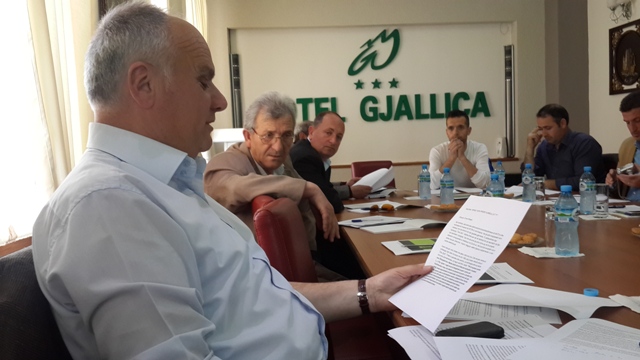
The Balkan Investigative Reporting Network in Albania held a roundtable in the city of Kukes on Monday April 27th, where the priorities for local candidates for the June 21st local elections in four municipalities were discussed.

Eleven representatives from civil society organizations, activists and grassroots groups participated in the event, where they were invited to share their opinion on a list of questions to be posed to local mayor candidates in the municipality of Kukes, Tropoja, Has and Mirdita ahead of the polls.

The questions were generated by in-depth interviews BIRN Albania held in the above mentioned municipalities in the last two months, in order to identify citizens’ concerns about the problems and challenges their area faces.

A shortlisted number of questions will be used to conduct interviews with mayor candidates ahead of the polls. The interviews will be published in a special page of BIRN Albania’s online publication Reporter.al

BIRN Albania will hold in total ten regional roundtables during the months of April, covering the 61 municipalities that emerged from the July 2014 administrative reform.     

The roundtables are part of the project on ‘Accountability in Local Governance through Citizen Participation and Civic Journalism,’ supported by the US Embassy in Albania Democracy Small Grants Program.

This project aims to bridge the gap between local voters and mayoral candidates ahead of the 2015 local elections, by strengthening the capacities of CSOs, grassroots organizations, activists and the media in order to identify and stimulate public debate on the key issues facing local communities.

Thirrje për Shprehje Interesi

Forcimi i Transparencës në Procedurat e Prokurimit Publik përmes Gazetarisë Investigative

Tiranë, Maj 8-9, 2015

Rrjeti Ballkanik për Gazetarinë Investigative në Shqipëri (BIRN Albania), në kuadër të projektit ‘Forcimi i Transparencës në Procedurat e Prokurimit Publik përmes Gazetarisë Investigative’ të mbështetur nga USAID përmes Assist Impact, do të organizojë një trajnim dy-ditor mbi teknikat e gazetarisë investigative në fushën e prokurimeve publike.
Përmes kësaj thirrjeje për shprehje interesi, BIRN Albania kërkon të angazhojë 12-15 gazetarë nga të gjitha rajonet e vendit që të marrin pjesë në këtë trajnimin mbi gazetarinë investigative që do të zhvillohet më datat 8-9 Maj 2015 në Tiranë.

Prezantimi i trajnimit:

Ky trajnim dy-ditor ka për qëllim të ofrojë një guidë të metodave dhe teknikave bazë të gazetarisë investigative, si dhe njohuri më të thelluara mbi procedurat e prokurimit publik në Shqipëri. Ai synon të ngrejë njohuritë dhe aftësitë e gazetarëve për të ndjekur në mënyrë më sistemike çështjet e konfliktit të interesit, për të zbuluar fakte dhe për të prodhuar gazetari cilësore bazuar në mbledhjen dhe analizimin e fakteve dhe publikimin e dokumenteve.

Kujt i drejtohet ky trajnim:

Trajnimi i drejtohet gazetarëve shqiptarë të cilët janë të interesuar për të thelluar njohuritë e tyre mbi teknikat e gazetarisë investigative dhe procedurat e prokurimit publik. Gazetarët që punojnë në zonat jashtë Tiranës janë të inkurajuar të aplikojnë. BIRN Albania do të mbulojë kostot e udhëtimit për të gjithë pjesëmarrësit nga rrethet.

Objektivat e trajnimit:

Objektivat e trajnimit janë që pjesëmarrësit:

  1. Të thellojnë njohuritë e tyre mbi konceptet dhe parimet e gazetarisë investigative;
  2. Të përmirësojnë aplikimin e teknikave dhe metodave të gazetarisë investigative;
  3. Të thellojnë njohuritë mbi procedurat e prokurimit publik në Shqipëri.

Përmbajtja e trajnimit:

Komponentët bazë të trajnimit mbi raportimin investigativ do të jenë:

  • Artikuj investigativë bazuar në të dhëna;
  • Investigimi i individëve dhe kompanive/institucioneve;
  • Vënia në zbatim e Ligjit për të Drejtën e Informimit;
  • Teknikat e intervistimit;
  • Thellimi i njohurive mbi procedurat e prokurimit publik në Shqipëri.

Procedura e aplikimit:

Kandidatët e interesuar duhet të dërgojnë një CV dhe një letër shprehje interesi në adresën e e-mailit [email protected]. Aplikimet për këtë trajnim përfundojnë të martën, datë 5 Maj. Kandidatët e përzgjedhur do të njoftohen menjëherë pas kësaj date.

Mbështetje e pjesëmarrësve:

Gazetarët pjesëmarrës në këtë trajnim do të marrin pjesë në një konkurs, me anë të të cilit BIRN Albania përmes një jurie të pavarur do të përzgjedhë 6 propozime për investigime në fushën e prokurimeve publike. Këto investigime do të mbështeten financiarisht nga BIRN Albania dhe përmes mbështetjes teknike të stafit të saj do të botohen në dy mediat online: BalkanInsight.com dhe Reporter.al.

Call for Expression of Interest

Fostering Transparency in Procurement Procedures Through Investigative Journalism

Tirana, May 8-9, 2015

Introduction:

The 2-day training serves to provide a guide of basic methods and techniques of investigative journalism as well as an overview of the public procurement procedures in Albania. It aims to strengthen the skills and training of mid-level journalists to look closely at systemic issues of conflict of interest, uncover facts and produce compelling journalism by performing data gathering and analysis, document mining.

Who should attend?

The training targets mid-career journalists in Albania.

Workshop objective:

The outcome for participants will be:

  1. Improved understanding of the concept and principles of investigative journalism;
  2. Improved applied methods and techniques of investigative journalism
  3. Improved understanding of Albania’s public procurement process

 Workshop content

Key content for the Investigative Reporting workshop will include: 

  • Data-Driven Investigative Stories;
  • Computer-Assisted Reporting;
  • Investigating Individuals, and organizations;
  • Navigating Albania’s FOI Law
  • The art of interviewing.
  • Understanding the public procurement procedures in Albania

Selection Process

BIRN Albania is seeking 15 successful candidates to attend the investigative journalism training workshop on May 8th-9th 2015.

Bursaries:

The journalist part of the training will participate in a competition, from which BIRN Albania through and independent jury will select six story ideas for investigations on public procurement that will be funded and published with the help of BIRN Editors in its online publications BalkanInsight.com and Reporter.al. BIRN Albania will cover travel costs for journalists outside Tirana.

Applications

Applications for this training close on Tuesday, May 5th. Interested candidates must sent a CV and motivation letter to [email protected] . Successful candidates will be informed shortly thereafter.

BIRN Albania launches Media Monitoring Study on Corruption

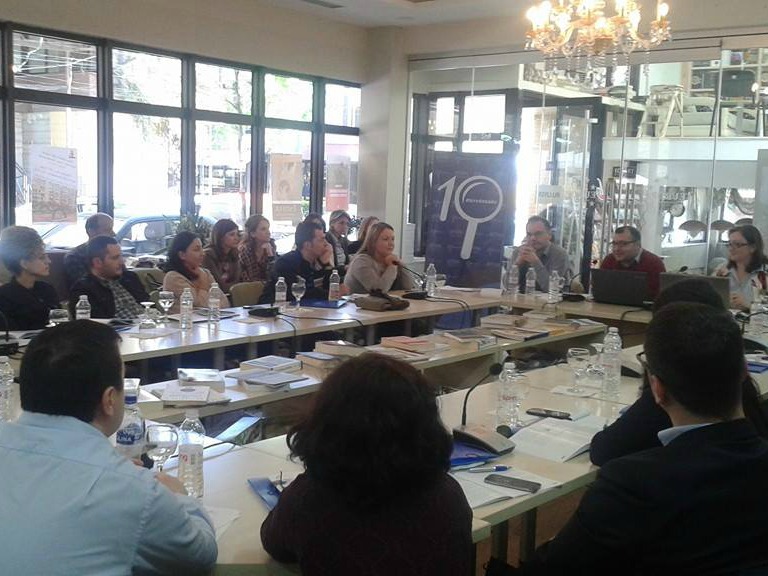
The Balkan Investigative Reporting Network in Albania launched a media monitoring study, ‘Reporting Corruption on Broadcast and Print Media: The Case of Albania’, at a workshop in Tirana on Thursday April 16.

About 25 representatives of civil society organizations and journalists participated in the event at which the findings of the study were presented and debated.

The study is part of BIRN Albania’s programme called ‘Exposing Corruption in Albania’, which is financed by the Open Society Foundation in Albania (OSFA).

The report assessed Albanian media reporting on corruption, as well as its adherence to the guiding principles of journalism which make it possible for news organizations to be an effective tool against corruption.

The objective of the study is to present and interpret a summary of the general characteristics as well as the quality and reliability of the reporting of Albanian media on issues and cases of corruption, based on a set of quantitative indicators, in order to identify possible problems and shortfalls in the implementation of journalistic standards.

The findings of this monitoring initiative are intended to be used as reference material to assist the various local and international actors involved in media development in Albania, local journalists’ unions, as well as reporters and editors, in undertaking projects and activities that could eventually increase both the quantity and the quality of reporting on corruption, impunity and efficiency of anti-corruption initiatives.

To download a copy of the report in Albanian click here.

To download a copy of the report in English click here.

Fellows for 2015 Selected

The 10 participants for this year’s Balkan Fellowship for Journalistic Excellence have been chosen.

The programme received more than 150 applications and many were of a very high standard, making the final choice extremely difficult.

Members of the programme’s independent selection committee evaluate applications based on the relevance, feasibility and originality of the proposals, as well as the applicants’ professional qualifications, motivation and journalistic approach. The committee is comprised of seven senior media figures from the Balkans and around Europe.

BIRN and its partners in the fellowship programme thank all the applicants and encourage those who were not successful to consider applying again next year.

Here are the fellows for 2015, listed alphabetically by surname:

Fotini Barka (Greece)

Lindita Cela (Albania)

Vladimir Karaj (Albania)

Konstantinos Koukoumakas (Greece)

Jasmina Lazic (Serbia)

Jeton Mehmeti (Kosovo)

Mariya Petkova (Bulgaria)

Damir Pilic (Croatia)

Laura Stefanut (Romania)

Zornitsa Stoilova (Bulgaria)

The Fellows’ topics will be published in due course. They include the effects of the war in Syria, religious tension, human trafficking, education, culture and labour conditions.

The word cloud above gives a flavour of the topics covered in previous years, drawing on the headlines and introductions of Fellowship stories.

BIRN Serbia Holds Heathcare Financing Debate

The debate on Tuesday heard how the Law on Public Procurement is causing problems for the healthcare system and needs to be changed.

Berislav Vekić, state secretary at the Ministry of Health, told the reminded that the ministry had launched an initiative to change the law.

“We cannot, as a ministry, change the law by ourselves, it is up to the government,” he said, adding that although he expects changes, he cannot promise anything.

Vekić noted that health minister Zlatibor Loncar has already taken the initiative and raised the public procurement problem in the Serbian assembly.

He said that there were problem not only with acquiring linear accelerators, but also magnets, scanners, large appliances for diagnostic procedures, ultrasound and X-ray machines.

“We are the first ministry that acknowledged the data that we have 65 per cent of total health personnel – doctors – who are aged between 55 and 65 years. I wonder what has been done in previous years regarding the rejuvenation of staff and why nobody made sure that we didn’t get into a situation of shortage of specialist personnel in certain areas,” Vekić said.

He said that nearly a third of staff employed in health institutions are actually non-medical staff. “The previous administration employed drivers, porters, stokers and administrative staff, so every third person is a non-medical worker,” said Vekić.

He added that last year about 1,000 health workers were employed – 400 doctors and 600 nurses and medical technicians.

Opposition Democratic Party MP and member of the parliamentary committee for Health and Family, Dušan Milisavljević said that politics should not be the deciding factor in the health sector, noting that many previous governments, including his own, hadn’t considered health and the health sector a priority.

“The health sector is outdated and does not reflect the needs of the citizens of Serbia at the present time,” he said, naming the Law on Public Procurement as one of the major problems.

“Because of this law we are waiting for a radiation therapy appliance for 2.5 years, so patients suffering from severe malignant diseases are waiting in line for radiation therapy for several months, although it has to be done after two, not more than three weeks after surgery,” Milisavljevic explained.  

He said that the law is generally not bad since it centralizes the procurement process and thus decreases the possibility for corruption, but it needs to be changed and adjusted to actual needs.  

Director of legal affairs of the Republic Fund for Health Insurance (RFZO) Petar Stajković said that it was impossible for two or three regulations to solve all problems.

Stajković said there are two crucial laws that even do not recognize the system of health insurance and health care – the Public Procurements Law and the Law on the Budget System.   

“The Law on public procurement of medical equipment and medicines is implemented in the same way one procures chemicals for household maintenance,” warned Stajkovic.

He said that the Law on the Budget System does not recognize health issues in a proper way, as health institutions aren’t budgetary institutions but direct users of public funds through contracts, and rigid application of the law very often leads healthcare institutions into problems.

At the debate, participants also got acquainted with the results of the analysis of the sources of finance for healthcare institutions, implemented by CSO Legal Scanner, and its main finding that some regulations govern the area of finance in a direct way, while others require specific legal interpretation and so have to be changed and unified with other legislative documents in this area.

This debate and the report on sources of financing of health care institutions were produced with the financial assistance of the European Union, within the programme “Strengthening Media Freedom”. The views expressed at the debate and the contents of the document are the sole responsibility of BIRN Serbia and other event participants and can under no circumstances be regarded as reflecting the position of the European Union.

BIRN Stories Win Awards in Macedonia

The Macedonian Media Institute on Thursday presented the awards for best investigative stories for 2014. First prize went to Ljubisa Arsic of the weekly Fokus for a series of stories named “Secret manufacturing plant for passports”.


Second prize went to Sonja Kolevska–Delevska, of the daily Vest, for a series of stories on rapes of minors at the Educational Correctional Center in Tetovo.

Third prize went to BIRN’s story, by Vlado Apostolov, Saska Cvetkovska and Nela Lazarevic, called “Skopje Landfill Tender Winner: No experience, no investment,” which was written with the support of BIRN’s Summer School of Investigative Reporting Fund.

Journalist Marija Mitevska won an honorable mention for a story named “Dream of Luxury Hotels Vanishes in Macedonia,” supported by BIRN Macedonia’s project for investigative journalism, funded By USAID.

Vladimir Kalinski also got an honorable mention for BIRN’s story “The pollution in Skopje – crime without culprits”.

Honorable mentions went also to journalists Valentina Stojanchevska, Vlatko Stojanovski and Zhaklina Hadzi–Zafirova.

The Macedonian Media Institute awards have been given since 2001 with a view to improving and promoting investigative journalism. Since 2013, theawards have been named after the late owner and editor of weekly “Fokus”, Nikola Mladenov, who died in a car accident.