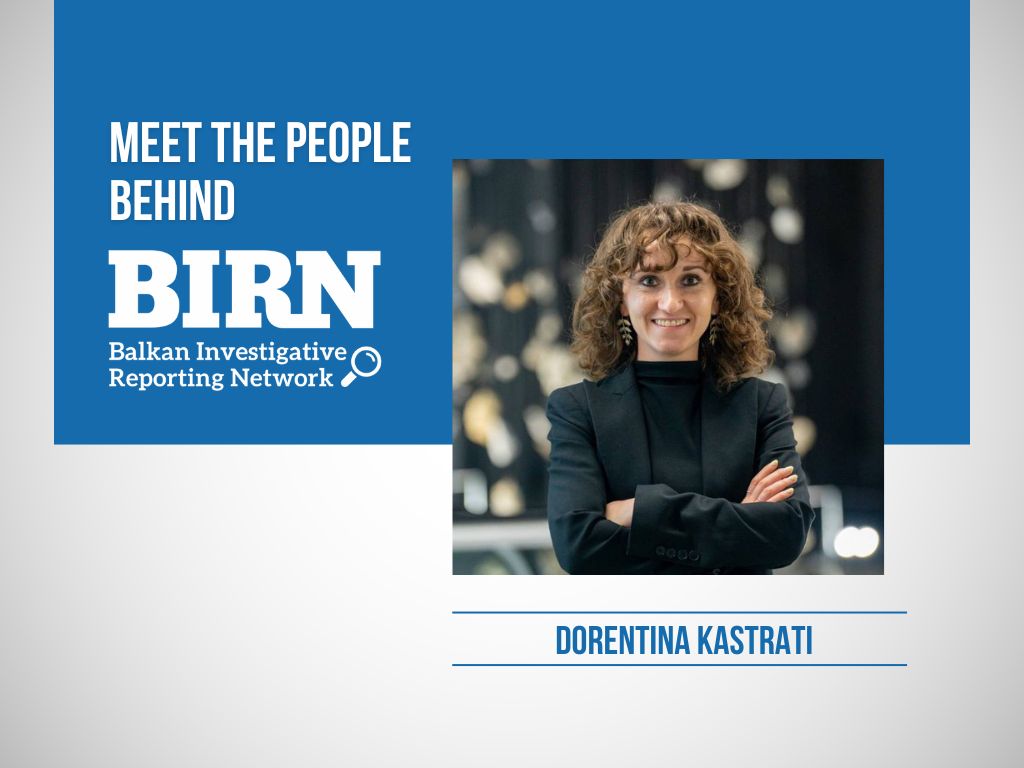
But, away from her job, Dorentina knows how to disconnect from the fast pace of daily work. Let’s meet her.
She first learned about BIRN during her journalism studies, while she analyzed reporting from various media outlets in Kosovo.
“What consistently stood out to me was the professionalism and courage of the BIRN Kosovo team.
As a result, I began following the work of the BIRN team closely, even outside of university, and whenever I thought about where I would like to work in the future, BIRN was always my goal,” Dorentina explains.
Another detail is that at the beginning of her studies, she lived in the student dormitories, which were located very close to BIRN’s offices.
“Every day, on my way to university lectures, I would pass by their offices. In a way, I feel I manifested it until I eventually became part of the team in 2016 as an intern,” she adds.
BIRN Kosovo has evolved significantly over the 10 years since she started working there, both editorially and organisationally.
“The organisation has expanded its investigative work, strengthened its multimedia and digital capacities, and is increasingly focused on combating disinformation and promoting media literacy. At the same time, BIRN has remained committed to its core mission of public-interest journalism and accountability, which I believe is one of its greatest strengths,” Dorentina notes.
What stands out to her most over this period is not only the growth in capacity but also the ability of BIRN Kosovo to adapt to a rapidly changing media environment.
“We have moved from more traditional reporting formats to more dynamic storytelling and audience engagement, while maintaining editorial independence and credibility. From my perspective, this evolution has also meant continuous learning and professional growth, as the organisation has encouraged innovation while staying grounded in its mission,” she says.
Working through these changes has allowed Dorentina to grow professionally.
“Seeing how BIRN Kosovo has adapted to new challenges while preserving its values has been one of the most rewarding aspects of being part of the organisation,” she stresses.
When she first joined BIRN in 2016, she expected to grow professionally and contribute to meaningful journalism. She did not necessarily imagine that she would still be here ten years later, let alone that she would also become involved in project-related work.
“Over time, however, BIRN became a place where I continuously learned, challenged myself, and felt motivated by the work we do.
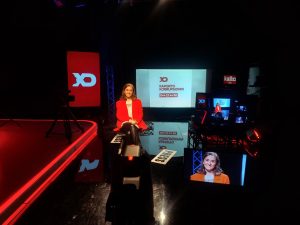
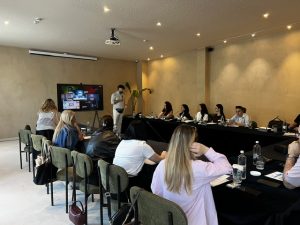
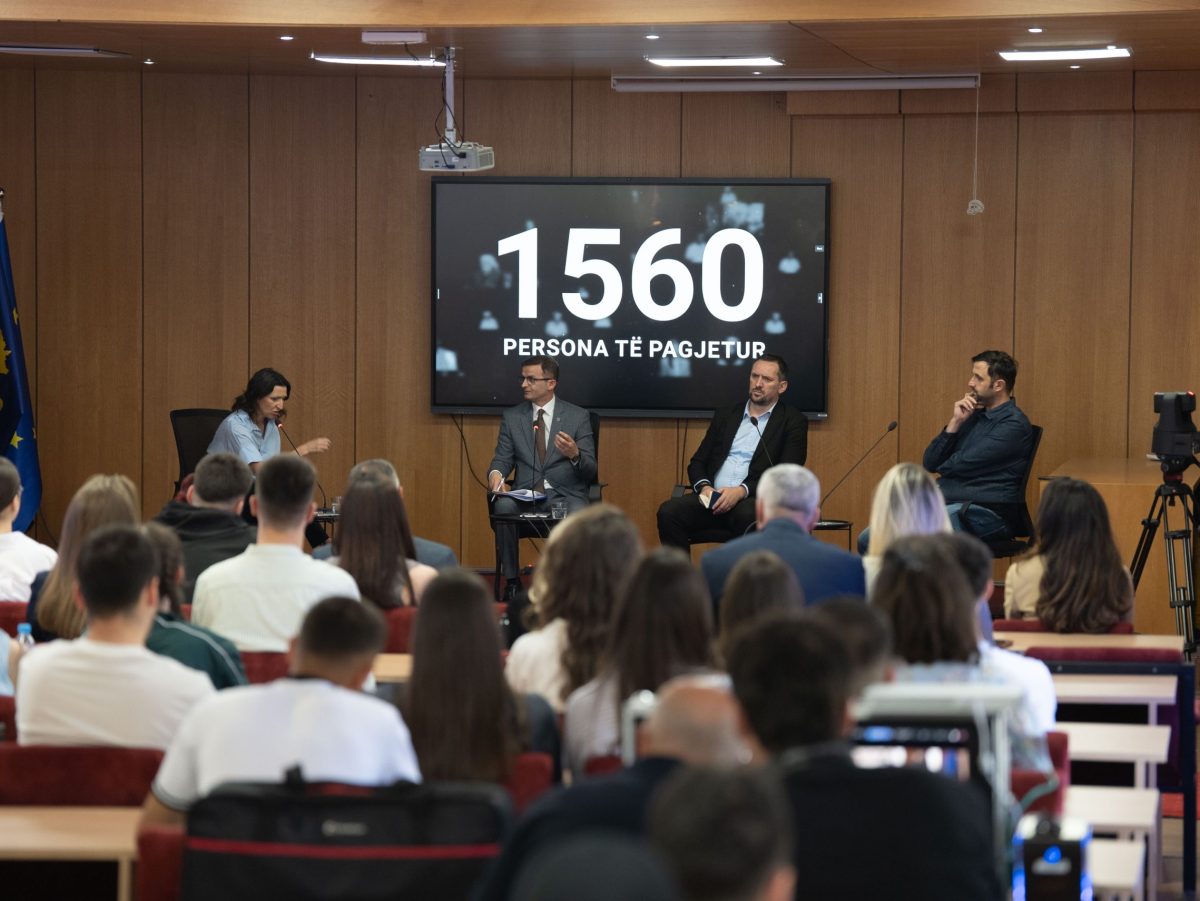
The dynamic environment, the diversity of projects, and the variety of work – from news reporting and investigative articles to investigative TV stories, writing project proposals, implementing projects, organising trainings, conferences, and roundtables, publishing important reports, and producing documentaries – has kept the work engaging and meaningful. The impact of our work is what made me stay and grow with the organisation,” she explains.
What also kept her here was the opportunity to work with dedicated colleagues, adapt to new challenges, and contribute to projects that have real impact.
“Looking back, I can say that these ten years have brought not only professional growth but also a strong sense of purpose and belonging,” she says.
She says both aspects of her work – project-related and journalism – complement each other.
“Journalism provides the opportunity to tell important stories, investigate issues that affect citizens, and contribute to public accountability,” she says.
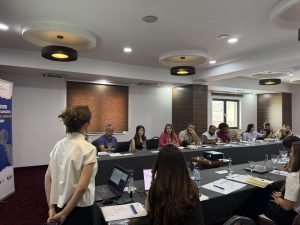
Project-related work, on the other hand, allows me to work strategically, develop initiatives with long-term impact, and collaborate with different stakeholders. I also value the fact that, through projects, journalistic work can often be planned and implemented, which in a way represents another form of contribution to journalism itself.
“Through projects, important media initiatives, investigative work, public awareness campaigns, and capacity-building activities can be supported and realized, creating a broader and more sustainable impact,” Dorentina explains.
She values the combination of both, as it gives her both creative and organisational fulfillment while also allowing her to contribute to journalism from different angles.
“Shortly after I began my internship, my editor recognised that I had the potential to become a journalist covering areas such as economics, public procurement, energy and auditing. Before I even realised it, I found myself enthusiastically working on investigations involving tenders with hundreds of pages of documentation to review and analyze.
Over time, I realised that I genuinely enjoyed this type of work. These were fields with relatively few specialized journalists, and I found great satisfaction in writing about complex and demanding topics that required more in-depth analysis, patience, and a strong commitment to investigative work,” Dorentina recalls.
There are several stories she worked on that she’s especially proud of.
“The investigation I am most proud of is “The Suspicious Tender for the Minister’s Family,” which earned me the award for Best Investigation in Public Procurement in 2021. The investigation uncovered issues involving conflicts of interest, family connections, and political ties intertwined within the procurement process.
I am also particularly proud of the investigations published during the COVID-19 pandemic, which exposed manipulation and misconduct related to the pricing of masks and other products purchased by various public institutions. These investigations highlighted abuses and irregularities in public spending during a time of crisis,” she explains.
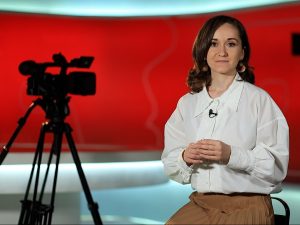
However, she encounters some obstacles in her everyday work, such as the rapidly evolving nature of disinformation and the speed at which false narratives spread online.
“In today’s digital environment, misinformation can spread much faster than verified information, which makes it increasingly important to ensure accuracy, fact-checking, and responsible reporting. This requires continuous adaptation to new communication trends, digital platforms, and methods of verifying information in order to maintain credibility and provide the public with reliable content,” Dorentina says.
Another challenge is maintaining public trust in the media in an increasingly polarized information environment.
“Audiences are often exposed to conflicting narratives, political influence, and information overload, which can lead to skepticism toward media institutions. For this reason, transparency, ethical standards, and professional integrity become essential in strengthening credibility and building long-term trust with audiences.
However, these challenges also create opportunities for innovation, stronger partnerships, and more effective approaches to delivering meaningful, credible, and socially impactful work,” she adds.
When it comes to BIRN Kosovo, there are some things Dorentina would like to see.
“I would like to see continued investment in professional development, innovation, and staff well-being. As the media landscape changes rapidly, it is important to continuously adapt, strengthen digital capacities, and create more opportunities for creative and investigative work,” she notes.
At the end of her working day, outside work, she enjoys reading, spending time in nature, listening to music, and traveling whenever possible.
“I also enjoy Pilates and moments that help me disconnect from the fast pace of daily work. I value meaningful conversations, quiet moments by the sea, and spending time with friends and family,” Dorentina concludes.