BIRN Kosovo Holds Discussion on Ombudsperson’s Role

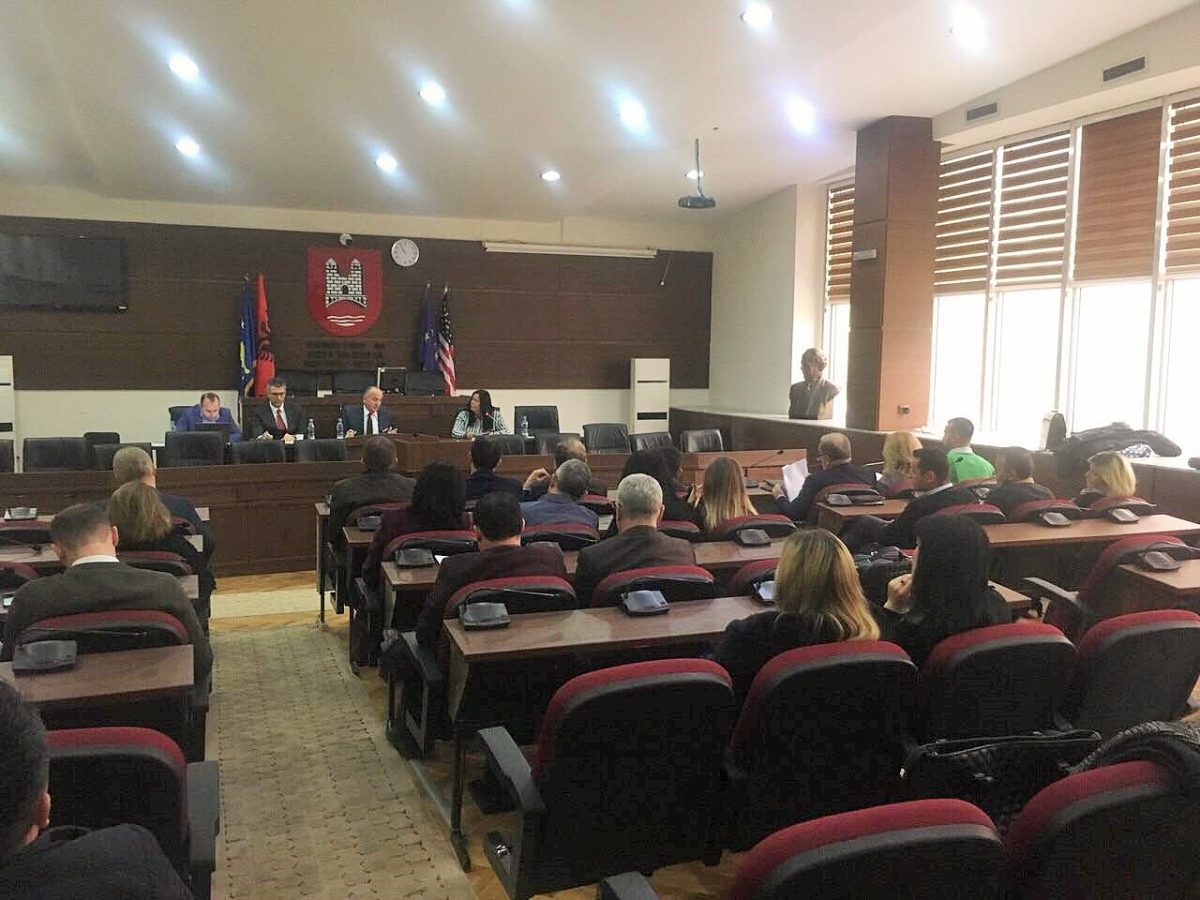
The Balkan Investigative Reporting Network Kosovo and the Centre for Advocacy Democracy and Culture, ACDC, organised a discussion in Peja/Pec on October 2 about the role of the Ombudsperson with regards to issues of public interest.

This discussion was held as a part of the OmbudsWatch project, which aims to educate the public about the role and responsibilities of the Ombudsperson, as well as about their right to contact the Ombudsperson’s office about matters of public importance.

The discussion, which took place at the Jusuf Gërvalla cinema in Peja/Pec, was attended by students, journalists and civil society activists.

The key speakers were Kreshnik Gashi, editor and moderator of the TV programme Justice in Kosovo, and Meral Tejeci, senior legal advisor at the Ombudsperson’s office.

Both Gashi and Tejeci, addressed the legal obligations of the Ombudsperson to respond to citizens’ requests, the functions of the Ombudsperson’s office, people’s legal rights to submit complaints, and access to public documents, among other issues.

The discussion was the last to take place in the framework of the OmbudsWatch project, and participants were given pamphlets as a guide to making enquiries at the Ombudsperson’s office.

BIRN Announces Funding for Monitoring Public Finances in Kosovo

The Balkan Investigative Reporting Network, in the framework of Balkan Monitoring Public Finance Project, has announced a public call for the submission of project proposals within the European Commission’s Civil Society Facility and Media Programme 2014-2015: Support to Regional Thematic Networks of Civil Society Organisations, ‘CSOs as Equal Partners in Monitoring Public Finances’.

The proposed projects should fulfill one or more of several priorities:

  1. Empower the CSOs to strengthen their knowledge in the area of public finance, monitor public finance, provide policy proposals and participate in policy processes, raise public awareness, facilitate discussion with political actors and other relevant stakeholders, communicate and advocate for better accountability and transparency in the area of public finance.
  2. Support media to communicate and inform the public on the issues or policy processes related to public finance.
  3. Encourage experts to conduct research and baseline studies on specific topics related to public finance.
  4. Create cooperation platforms or support networking among stakeholders to create transparent and accountable policy and decision-making processes in the area of public finances.

The call for proposals focuses on four general topics of public finances including public debt, public-private partnerships, tax justice and public infrastructure, transparency, rule of law, good governance, anti-corruption, economic growth, including citizens and CSOs in the budgeting process, public finance education and the monitoring and oversight of public institutions and tax reforms.

Funds will be allocated to those civil society organisations whose projects contribute to resolving one or more of the above priorities and meet quality criteria and other conditions.

Relevant information as well as an electronic version of the application package can be obtained from: http://wings-of-hope.ba/balkan-monitoring-public-finance/ public-call-for-csosngos-inthe-field-of-public-finances.

Applicants can submit their applications in Albanian, Serbian and English.

Completed applications with the necessary documentation must be send via email to [email protected].

The deadline for submitting applications is November 1 at noon.

Read more here.

Kosovo Fellowship for Journalistic Excellence Grants Bursaries

Ten applicants have been granted a fellowship bursary within the framework of the Kosovo Fellowship for Journalistic Excellence Programme.

The Fellowship is a six-month opportunity for journalists to advance their skills. The programme is supported by the European Union Office in Kosovo and implemented by Balkan Investigative Reporting Network and the Association of Kosovo Journalists.

The recipients of the bursaries will conduct research on issues such as public spending, local governance, public procurement, environment, energy, healthcare, culture, education, media financing, human rights and inter-ethnic cooperation and write an in-depth story based on their findings.

The Kosovo Fellowship for Journalistic Excellence Programme is based on the Balkan Fellowship for Journalistic Excellence, which has been running since 2007.

Click here to read more.

Facebook Removes Pages of Rightists Investigated by BIRN, BBC

Facebook has taken down at least 14 pages identified in a BIRN and BBC collaboration as linked to the Knights Templar International, a ‘Christian militant’ organisation active in the Balkans.

The social media giant has removed a network of pages, whose followers total millions, tied to the Knights Templar International, KTI, BIRN reported on Thursday.

KTI – which calls itself “a living shield and sword for the defence of Christian communities and the upholding of Christian principles” – has boasted about how its vast network of social media pages helped to elect Donald Trump as US President and swing the UK referendum on leaving the European Union.

The organisation has attracted controversy for its hard-line views on Muslim immigration to Europe and donation of equipment to so-called “migrant hunters” in Bulgaria and to Kosovo Serbs preparing for confrontation with Kosovo’s mainly Muslim Albanian majority.

In May this year, BIRN and the BBC published the fruits of their collaboration into the British nationalists operating in the Balkans.

BIRN’s investigation highlighted the links between British anti-immigration hardliner Jim Dowson and a web of patriotic sites, including the KTI, which are becoming increasingly active in Serbia.

The BBC produced television and radio documentaries focusing on Dowson, “the invisible man of Britain’s far right”, and his activities in Hungary, Bulgaria, Serbia and Kosovo. Read it here: Is this Britain’s most influential far-right activist?

These collaborations are part of BIRN’s Paper Trail to Better Governance programme, funded by the Austrian Development Agency.

BIRN Conference Highlights War Crimes Cooperation Problems

Cooperation on war crimes cases between prosecutors’ offices in former Yugoslav countries happens rarely despite agreements between the states, said participants at a major regional conference organised by BIRN.

Regional cooperation between prosecutors’ offices in former Yugoslav countries is beset by problems, despite the protocols that states have signed agreeing to collaborate on war crimes cases, said speakers at a conference organised by the Balkan Investigative Reporting Network in Sarajevo on Wednesday.

“The cooperation exists in theory, but it is non-existent in practice,” Aleksandar Kontic, legal officer at the Mechanism for International Criminal Tribunals in The Hague, told the conference entitled ‘After the ICTY: Regional Cooperation, Accountability, Truth and Justice in the Former Yugoslavia’.

Kontic said that the chief prosecutor at the Hague court, Serge Brammertz, has reported countries in the region to UN Security Council on several occasions due to their non-cooperation on war crime cases.

He also suggested that part of the problem was that all countries in the region still divide suspects into two categories – “our heroes and their criminals”.

The acting chief prosecutor at the Bosnian state prosecution, Gordana Tadic, said her institution wants to improve regional cooperation because some of the suspects being sought for prosecution in Bosnia and Herzegovina are living in Serbia and Croatia.

“It is important for war crime perpetrators not to remain unpunished no matter where they are,” Tadic said.

In 2013, the prosecutor’s offices of Bosnia and Herzegovina, Croatia and Serbia signed protocols enabling the free exchange of war crime cases, investigations and case documents. Despite the fact that several cases have been exchanged and processed, very few against high-ranking suspects have been successfully transferred to neighbouring countries’ jurisdictions, while numerous suspects have never been arrested or had cases brought against them.

Jurica Ilic of the County Prosecution in Zagreb pointed out that Croatia has certain legal differences that complicate cooperation with other former Yugoslav states.

“There is a problem related to existence of different standards in individual countries, which makes it impossible to take over complete cases,” Ilic said.

Croatian law does not recognise the concept of a ‘joint criminal enterprise’, and the Croatian government has ordered the country’s Justice Ministry, when reviewing cooperation requests from Bosnia, to refuse to act on any which “violate state interests” – meaning those in which Croatia is named as a participant in a joint criminal enterprise during the Bosnian conflict.

Paul Flynn, prosecution manager at the EU’s rule-of-law mission in Kosovo, EULEX, said meanwhile that cooperation between Pristina and Belgrade on war crimes cases was almost non-existent.

“Without that, I think we shall have no justice at all,” Flynn warned.

Merita Gashi, an adviser to the Kosovo chief state prosecutor, said that Pristina and Belgrade have no legal cooperation at all because of Serbia’s refusal to recognise Kosovo’s independence.

“There are around 13,000 victims of the military conflict in Kosovo. Victims are tired of waiting. They are beginning to lose confidence,” Gashi said.

Ivan Jovanovic, an expert in international law, told the conference that former Yugoslav countries had to accelerate cooperation because as the years pass, suspects, victims and witnesses are all getting older.

“We are witnessing that victims are dying and many suspects are dying,” Jovanovic warned.

The conference continues on Thursday.

Read more:

Poor Cooperation Leaves Balkan War Crime Suspects at Large

Srebrenica Suspects Find Safe Haven in Serbia

Serbia-Kosovo Stalemate Allows Fugitives to Stay Free

BIRN Albania Holds Workshop on Organised Crime

The Balkan Investigative Reporting Network, BIRN, in Albania held a workshop between civil society and journalists on the topic of organised crime on Tuesday.

Around 17 journalists, experts and civil society representatives, from the fields of security and organised crime, gathered in Tirana on October 2 for a workshop organised by BIRN Albania to discuss topics and strategies that investigative reporters can use in order to better report on organised crime and its role in society.

The event was part of a project called ‘Strengthening Media’s Role in the Fight Against Corruption,” financed by the Open Society Foundation in Albania. The project’s aim is to strengthen journalist’s reporting on corruption in the country through cooperation with civil society, in order to contribute to a more informed citizenry that is engaged in the democratic process.

Dalina Jashari from the Institute of Democracy and Mediation facilitated the workshop, in which participants suggested a series of key topics centred on organised crime, including the nexus between it and politics, the poor record of the justice system in enforcing extradition of drug pins wanted in the EU and money laundering, among others.

The goal of the workshop was to inform the upcoming call for investigative reporting grants on the topic of organised crime, which will be launched in the coming week by BIRN Albania. Through the call, three journalists will be selected by an independent jury and will be mentored by BIRN editors for a period of three months to produce hard-hitting investigative reports on the topic of organised crime.

After the ICTY: Regional Cooperation, Accountability, Truth and Justice in the Former Yugoslavia

Twenty years after the conflicts in the former Yugoslavia and a year after the International Criminal Tribunal for the Former Yugoslavia closed down, accountability, truth and justice still seem more like an ideal than a reality.

The conference, organised under the umbrella of BIRN’s Transitional Justice Initiative, will discuss regional cooperation in war crimes prosecution and missing persons, victims’ participation, and the role of archives, art, media and museums in dealing with the past.

Participants from civil society, the expert community, institutions, academia and the media will try to answer the overarching questions – how far we are from reconciliation, and what more we could do to combat impunity and increase intercultural dialogue?

The conference aims to have a results-oriented approach that will be reflected in a policy paper that will be used to further influence policies on both the national and EU levels with the goal of making transitional justice one of the key areas within the framework of EU negotiations.

The working languages of the conference are English, Albanian and BCS. Simultaneous translation will be provided during the whole event.

For more information about the conference, click here.

BIRN Holds Discussion with Kosovo Ombudsperson

The Balkan Investigative Reporting Network and the Centre for Advocacy Democracy and Culture, ACDC organised a discussion in Prizren, Kosovo on September 21 about the role of the Ombudsperson in dealing with issues of public interest.

The discussion’s focus was on the possibility of cooperation between the Ombudsman, civil society and the media in addressing issues of public interest, especially human rights.

The discussion was held with the support of the Dutch Embassy as part of the project ‘OmbudsWatch’, which aims to promote the role of the Ombudsperson.

Panellists and participants had the opportunity to put questions to Ombudsman Hilmi Jashari and the Dutch Ambassador, Gerrie Willems.

Willems said that this project aims to increase people’s awareness about the role of the Ombudsperson as well as increasing the interest of civil society and the media in monitoring the work of the Ombudsperson.

She added that through the implementation of the project, she hopes to improve the situation as regards human rights in Kosovo.

Hilmi Jashari said that according to a report issued by the Ombudsperson, 117,000 court cases have not yet been brought to a conclusion.

Jashari also cited delays in court proceedings for which mean that some poeple have wait eight or nine years for a court ruling.

He further criticised the way in which laws are drafted in Kosovo, citing the short period of time in which they are drafted by experts who he said did not have enough experience in the area.

Study on Rising Public Debt in Western Balkans Launched

A regional study of public debt in the Western Balkans was launched at an event in Podgorica, Montenegro on September 19.

The study is part of the Balkan Monitoring Public Finance project, a joint effort involving BIRN and nine other civil society organisations from EU accession countries in the Western Balkans (Bosnia and Herzegovina, Macedonia, Montenegro, and Serbia) and EU member states (Slovenia and Bulgaria).

It is designed to improve the accountability and transparency of public finances in the targeted countries and strengthen civil society’s role and voice in monitoring countries’ performance in this area.

The study shows that rising public debt has raised concerns about the long-term sustainability of public finances, particularly given that debt tolerance level is lower for lower-income economies.

The event in Podgorica included a discussion with representatives of the World Bank, the Montenegrin parliament, Western Balkan civil society organisations and prominent media from the region about how to jointly tackle the unsustainable levels of public debt in Western Balkans.

“Debt management activities should be audited annually by external auditors and audits of government financial statements should be conducted regularly and publicly disclosed,” argued of the authors of the study, Andreja Zivkovic from Wings of Hope in Bosnia and Herzegovina.

“The State Audit Office should have a legal obligation to inform and educate citizens in finance issues, about the fiscal performance of governments and state institutions and about the work of the Audit Office itself,” Zivkovic added.

Ajda Pistotnik from EnaBanda in Slovenia, another one of the authors of the study, argued that the public should be involved in discussions on the issue.

“Greater participation by citizens in affairs that directly concern them is in itself a public benefit and is a stimulus to greater transparency and accountability in public finance,” Pistotnik said.

BIRN Holds Meeting on Regional War Crimes Cooperation

After previous meetings in Zagreb and Sarajevo, BIRN organised a meeting of transitional justice stakeholders in Belgrade on September 11 to develop recommendations for improving regional cooperation in prosecuting crimes committed during the 1990s wars.

The meetings are being held as a part of BIRN’s Balkan Transitional Justice programme, bringing together representatives of war victims’ associations and the courts, as well as NGO members, humanitarian law experts and representatives of international organisations.

At the meeting in Belgrade, the participants raised various issues concerning regional cooperation in prosecuting war crimes committed during the 1990s conflicts, such as trials of defendants in their absence, the lack of cooperation between countries’ prosecutor’s offices and the lack of political will for states to fully cooperate.

As well as raising their concerns about such problems, the participants suggested possible solutions.

This input, along with input from the meetings in Zagreb and Sarajevo and the upcoming one in Pristina in September, will be formulated into recommendations.

After all four meetings with stakeholders, one final conference will be held at the regional level in Sarajevo on October 3-4.

The recommendations from the stakeholders’ meetings and the conference will be used to create a policy paper for improving regional cooperation between states in prosecuting war crimes.