Bosnia Journalists Condemn HJPC ‘Gestapo’ Slur About BIRN

The Steering Board of the BH Journalists Association has sent a strong letter of protest to Bosnia’s High Judicial and Prosecutorial Council, HJPC, after its Vice-President on social media likened the work of BIRN BiH to “the Gestapo”.

The association accused Ruzica Jukic of “unprofessional and institutionally unacceptable communication with journalists and the media in BiH, including personal comments from HJPC members via social networks on journalistic questions about events of public concern”.

After BIRN BiH reported that Jukic had attacked foreign embassies and institutions on her Facebook profile without presenting any evidence for her claims, Jukic commented on BIRN BiH’s work on her profile with the headline “When Journalists do Gestapo work,” in which she singled out the work of the journalist Admir Muslimovic.

Following Wednesday’s session of the HJPC, she also told reporters that she would no longer make press statements but would only communicate via social networks.

The BH Journalists’ Steering Board said it was “inadmissible to withhold information from journalists after yesterday’s session of the HJPC, at which two deputy chief prosecutors were appointed and decisions of public interest were reached”.

It said such conduct was “a direct violation of social and legal norms on the transparent operation of the HJPC and timely informing the public about the work of this institution”.

It added that, “withholding information from the media is an inadmissible demonstration of institutional and judicial power undertaken to restrict the right to freedom of expression and impede access to public information held by the HJPC”.

The Steering Board also said its members “remain caught up by the vocabulary, qualifications and insults that Ruzica Jukic, Vice President, and Milan Tegeltija, President of the HJPC, have spoken about journalists and media through social networks”, adding that “BIRN journalists have recently been targeted by key HJPC officials, as earlier were journalists of Zurnal and Oslobodjenje, FTV, as well as numerous other media”.

The letter urged the HJPC to maintain professional and decent communication with the media in order to “keep the public informed on issues relevant to the work of the HJPC in a timely manner”, asking it also to avoid “the language of the street that has no place in serious public communication”.

“You, members of the HJPC, and above all Vice President Jukic and President Tegeltija, are urged to remove such content, and to resolve your own misunderstandings or professional objections to the media through the legitimate legal means at your disposal,” the letter concluded.
BIRN Albania Holds Roundtable on Education

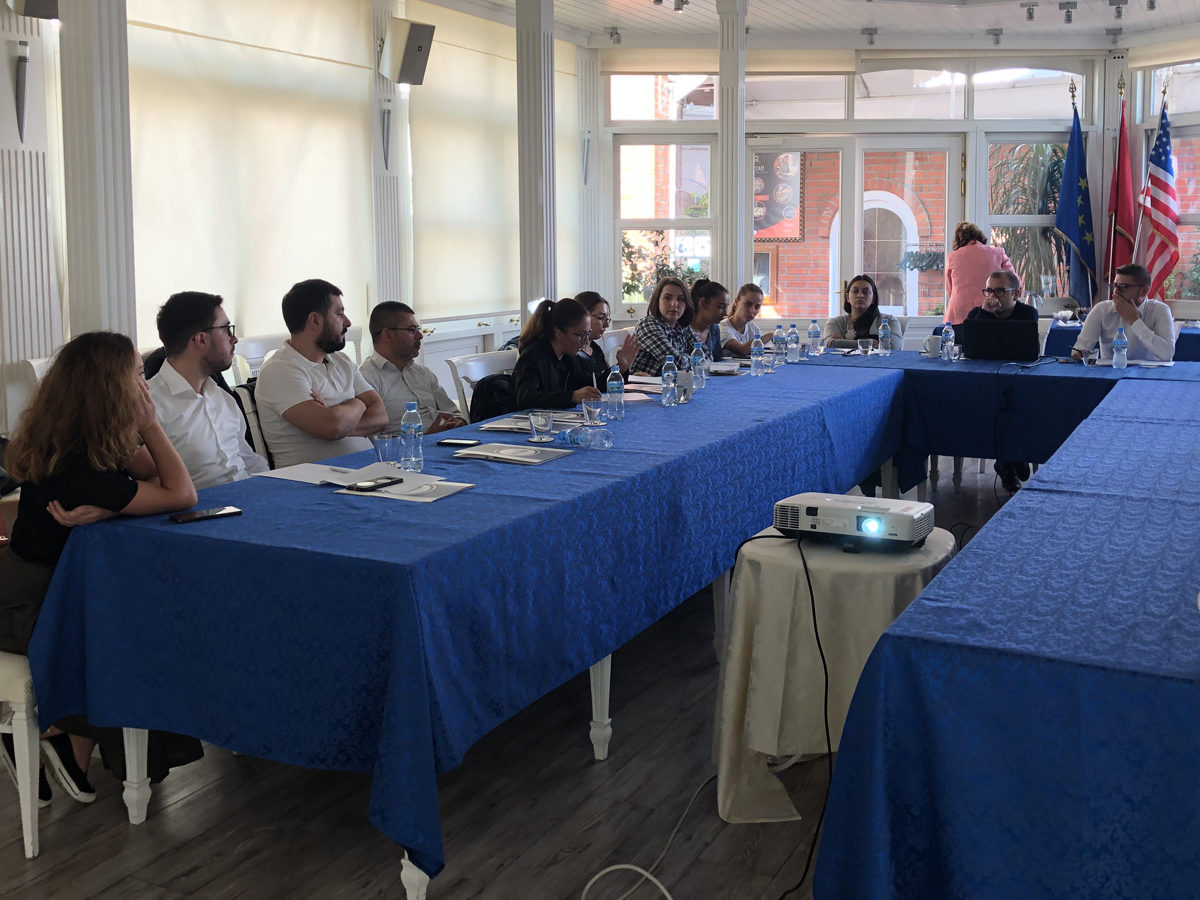
BIRN Albania held a roundtable on October 15, bringing together journalists, civil society representatives and activists working to improve the education system in Albania.

The event was held as part of the project “Raising Awareness about Accountability and Transparency through Investigative Reporting”, financed by the National Endowment for Democracy.

The project aims to boost the fight against the culture of impunity in Albania through investigative journalism, bridging the gap between civil society organisations and journalists, building their capacities and creating common ground for their joint action in exposing corruption cases in the country.

Rigels Xhemollari, the executive director of Civic Resistance, an organisation working to improve the quality of higher education in Albania, moderated the roundtable.

At the roundtable, participants suggested a number of key topics worth investigating.

They ranged from public-private partnerships for the construction of news schools to poor investments made in the infrastructure of university dormitories, the management of university dorms, students IDs and benefits, the quality of higher educational publications, elections to student councils, the education budget, the curricula for pre-college education, teacher recruitment, segregated schools, the quality of schools texts, school infrastructure, teacher transportation and other topics.

The goal of the roundtable was to draw attention to an upcoming call for grant proposals to fund investigative reporting on education.

BIRN Albania will make the call in the near future. Three journalists will be selected by an independent jury and then mentored by BIRN editors for three months, as they produce hard-hitting investigative reports on this important topic.

Free Flow Wins Best Documentary Award

BIRN Albania’s documentary ‘Free Flow’ has been recognized with the’ Fatos Baxhaku Prize’ as best documentary in the Balkan Film Food Festival, which is held annually in the lakeside city of Pogradec.

The documentary was recognized by the jury ‘for its realistic point of view on the research and confronting the truth.”

The award for best documentary is named this year after late Albanian journalist, editor and famed reportage writer Fatos Baxhaku, who passed away this August.

The documentary ‘Free Flow’ follows Albania villagers, activists, scientists and artists as they try to draw attention to the threat posed to the environment and the local ecotourism industry by power plant projects.

Free Flow’ was directed by film-maker Elton Baxhaku (no relation to the journalist) and focuses on three areas, the Shebenik Jabllanica National Park, the Vjosa River and the Valbona National Park, and the struggle of local communities to voice their concerns over hydropower plant projects, their fight to challenge concession contracts in court and protest in the streets to encourage support for their cause.

Elton Baxhaku is an acclaimed Albanian film-maker, best known for his 2014 documentary ‘Skandal’ and the 2016 documentary ‘Selita’, which was co-directed by Eriona Cami.

Earlier the documentary Free Flow has been screened in Tirana, Sarajevo, in communities affected by power plant projects in Albania  and during a conference on hydropower in the European Parliament. Free Flow was also part of the official selection in 2018 at Dokufest – the international film and documentary festival held in Prizren, Kosovo.

BIRN Trains Journalists in Transitional Justice Reporting

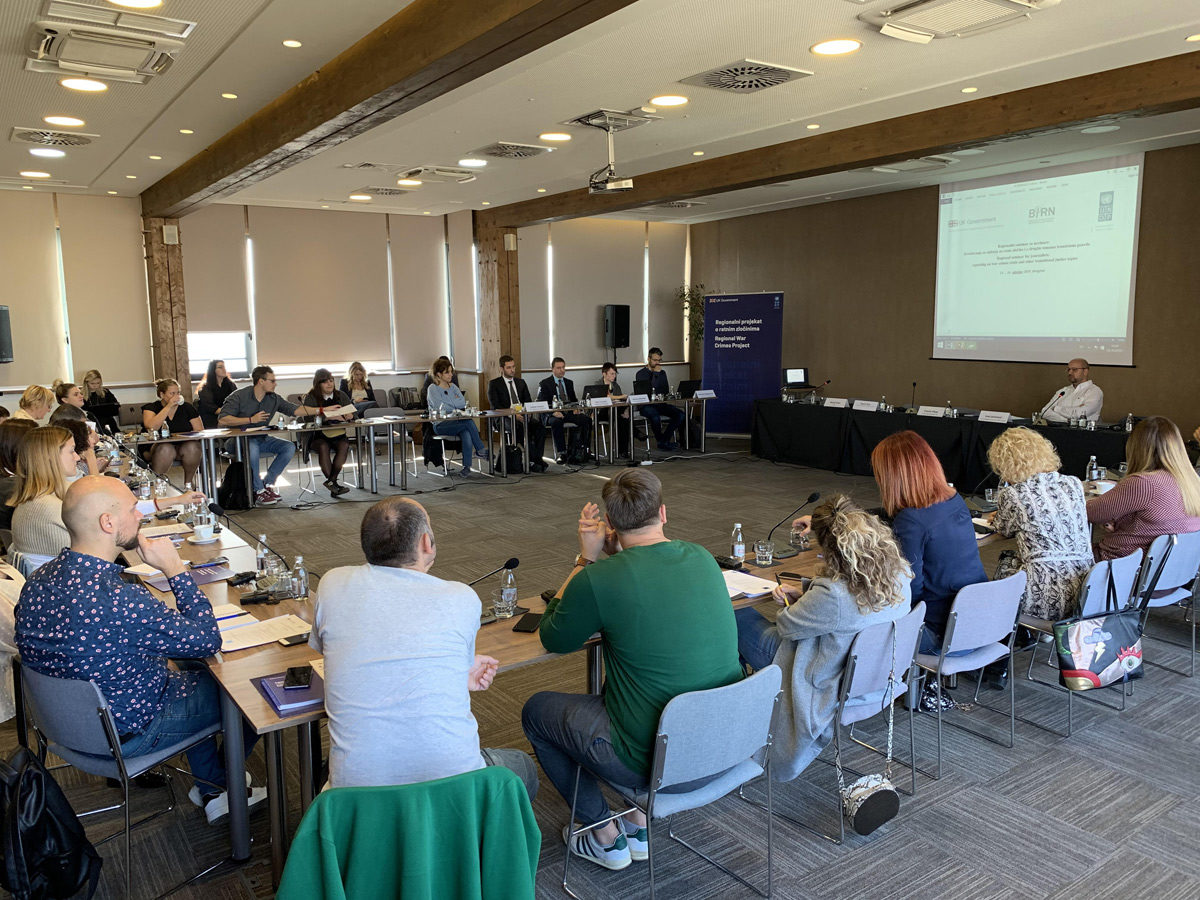
The Balkan Investigative Reporting Network began a three-day course in Belgrade to train journalists from across the former Yugoslavia in reporting on war crimes trials and other transitional justice topics.

The three-day training course on transitional justice reporting, organised by BIRN in cooperation with the United Nations Development Programme, UNDP, started in the Serbian capital Belgrade on Monday.

A total of 25 reporters from various countries across the former Yugoslavia are being trained by journalists with substantial experience in covering war crimes trials and transitional justice topics, and hearing from experts who are directly involved in legal processes, such as prosecutors and court officials.

The participants were addressed at the start of the course by Francine Pickup, the UNDP resident representative in Serbia, who pointed out that there are still hundreds of war crimes cases to be prosecuted in the region and said that the training could help journalists address challenges they might face while reporting on the proceedings.

“We hope that this training will help you in your reporting and that it will give you some advice on how to strengthen your relationships with relevant institutions,” Pickup said.

As well as looking at the essentials of criminal procedures, best practices for reporting on cases and sources of information for journalists, the course also focuses on the role that victims play in war crimes trial processes.

Expert panellists at the course include Ivan Jovanovic from UNDP Regional War Crimes Project, Nemanja Stjepanovic from the International Residual Mechanism for Criminal Tribunals Registry, Bosnia and Herzegovina’s state prosecution spokesperson Boris Grubjesic, Croatian Chief State Attorney’s Office spokesperson Martina Mihordin, and Vasilije Saratlic, deputy war crimes prosecutor and spokesperson at Serbia’s War Crimes Prosecutor’s Office.

BIRN’s Regional Director Marija Ristic said that the idea of the training course was to look beyond the proceedings in war crime trials and use the archives that courts have built up and the legacy of their judgments as story material.

“This job is very rewarding because we are giving a voice to the victims and sometimes, if it was not for us, their stories would never be told,” Ristic said.

After the course, the participants will be required to pitch an in-depth story about transitional justice issues in the Balkans.

From the pitches and general assessments of the participants during the course, BIRN will select ten journalists to participate in a study visit to The Hague that will be held in November.

The journalists who propose the best stories will receive a grant of 1,000 euros from BIRN to further develop their work in cooperation with BIRN’s experienced pool of editors.

The project is being supported by the United Kingdom’s embassy in Belgrade and the European Commission.

UK embassy first secretary Chantel Care said that it is important for journalists to strengthen their networks and partnerships, and told the participants that “you have the opportunity to do that here”.

« of 5 »

Annual and Audit Reports – BIRN Hub

The Annual Reports provide an overview of BIRN Hub’s activities throughout the given year.
The Audit Reports contain data on BIRN’s finances during a year as audited by an external certified auditor.

2023

Audit Report

2022

Audit Report

2021

Audit Report

2020

Annual Report | Audit Report

2019

Annual Report | Audit Report

2018

Annual Report | Audit Report

2017

Annual Report | Audit Report

2016

Annual Report |Audit Report

2015

Audit Report

2014

Audit Report

2013

Audit Report

2012

Audit Report

2011

Audit Report

2010

Audit Report

2009

Audit Report

2007

Audit Report

BIRN Hosts Kosovo Prime Ministerial Debates

BIRN Kosovo hosted a series of debates ahead of Kosovo’s upcoming parliamentary elections, with the candidates for prime minister invited to present their plans for governing to a team of civil society experts.

Over four consecutive nights, from September 26-29, in the buildup to Kosovo’s parliamentary elections on October 6, BIRN Kosovo invited all the candidates for prime minister to appear in a televised debate anchored by the organisation’s director, Jeta Xharra.

Flanked by a team of ten MP candidates from their respective parties and coalitions, each prime ministerial hopeful unveiled their plans for governing in front of a team of 24 experts invited by BIRN, who provided further questions and scrutiny.

The candidates were probed about their plans for domestic issues in particular, especially on economic development, education, the environment, social welfare and the rule of law.

Albin Kurti of Vetevendosje, Ramush Haradinaj from the coalition between the Alliance for the Future of Kosovo (AAK) and the Social Democratic Party (PSD), Vjosa Osmani of the Democratic League of Kosovo (LDK), and Fatmir Limaj from the coalition between NISMA, the New Kosovo Alliance (AKR) and the Justice Party (PD) all appeared in the debates. Kadri Veseli, the prime ministerial candidate for the Democratic Party of Kosovo, PDK, also agreed to present his plans but later cancelled his appearance.

The debates were broadcast on RTV21 and streamed through the Facebook page for BIRN Kosovo’s anti-corruption platform, Kallxo.com. Online streams reached close to one million people. 

BIRN Kosovo’s election coverage will now continue with debates featuring specialists from each party on specific fields, including health, education and sustainable development.

The first was held on September 30 and focused on economic development and featured representatives from all five of the major political forces seeking representation in the Kosovo Assembly.

BIRN Partners with Prague Media Point Conference

BIRN Serbia is a partner in this year’s Prague Media Point conference, an international journalism conference for media professionals, journalists, academics, policy-makers and activists which will be held in the Czech capital from December 5-7.

At the event, BIRN will present its Reporting Democracy programme, as part of a session entitled ‘Leading and impactful investigative journalism in the V4 and Western Balkan countries’.

The principal objective of the Visegrad Fund-supported project is to showcase examples of investigative journalism projects that have overcome challenges posed by globalisation, digitalisation and populism, resulting in shrinking revenue streams and low audience trust.

The goals of the project are to level the playing field for media experts and investigative journalists from the V4 region and the Western Balkans with those in the rest of Europe and around the world in terms of access to relevant information, skill-building and networking.

The project is a collaboration between KEYNOTE (Czechia), Transitions (Czechia), ResPublica (Poland), Denník N/N Press (Slovakia), School of Communications and Media (Slovakia), BIRN Serbia, and the Albanian Media Institute (Albania).

Court Monitoring Report 2018

A new report by the Balkan Investigative Reporting Network monitored courts and prosecutors in Kosovo and found they are still failing to get adequate results in the fight against corruption.

The report, based on BIRN Kosovo’s monitoring of 520 court hearings, found that there was a fall last year in the number of resolved cases, in verdicts that imposed effective prison sentences, and in verdicts that imposed fines or parole sentences. On the other hand, there was a drastic increase in acquittals and cases that were dropped.

All the result show that there is a deterioration in the fight against corruption in terms of the number of accused persons as well as in the number of punishable verdicts.

Download full report.

BIRN Kosovo Holds Debate on Audit Report in Rahovec

The first in a series of debates discussing the findings of BIRN Kosovo’s audit report monitoring project, which analyses reports from Kosovo’s National Audit Office on the progress of auditing processes by Kosovo municipalities, was held on Friday, September 20, in the Municipality of Rahovec.

Results from BIRN’s monitoring and analysis were published and discussed in an open debate with more than thirty participants from the municipality, the National Audit Office and civil society representatives, which was streamed live on BIRN’s anti-corruption platform KALLXO.com.

The debate was organized within the framework of the project ‘Support civil society to increase public oversight and accountability of Kosovo public institutions,’ funded by the British Embassy in Prishtina. This activity is organized  to monitor the compliance of targeted public institutions with recommendations of the Auditor General Reports published by the National Audit Office.

Visar Prebreza, BIRN Kosovo’s Managing Director, gave a brief presentation on the project and the findings. According to Prebreza, out of the thirteen recommendations given to municipality officials by the National Audit Office during BIRN’s continuous monitoring process, only four have been implemented by the Municipality of Rahovec.

“In the area of procurement, there have been continuous findings, either at the beginning of procurement procedures or in the implementation of contracts. These problems are not only in Rahovec, we have trouble everywhere,” said Prebreza.

During the debate, the mayor of the Municipality of Rahovec, Smajl Latifi, said that he is aware of several procedural problems and omissions in the implementation of public procurement projects, but praised the execution of the paperless online procurement system that has been put in place.

“I think the electronic platform has contributed to increased transparency. Procedures and the evaluation of bids are both a goal and a challenge, but we believe there has been an improvement in terms of procedural omissions,” said Latifi. “We are also striving to improve the quality of our cooperation with the Public Procurement Regulatory Committee, and we are trying to be fair in our implementation of the Public Procurement Law.”

The representative from the National Audit Office, Ilir  Salihu, discussed the achievements of and barriers to the auditing process in the Municipality of Rahovec, explaining that his office is charged with providing recommendations and support to Kosovo municipalities in the auditing process. “We are an institution assisting the management of public institutions, we should not be seen as controllers and inspectors, because we do not have that role, but we are here to identify the issues,” said Salihu.

Through these debates, BIRN journalists intend to record and disseminate the promises made by officials of both the National Audit Office and the Municipality of Rahovec, to be followed up and fact-checked in the future on Kallxo.com’s online fact-checking platform, Kryptometer.

Similar debates will be held in other municipalities across Kosovo, with the aim of presenting BIRN Kosovo’s analysis of the implementation of audit recommendations made to each municipality. Each debate will be held in the municipal assemblies of the municipalities in question, and will be live streamed by BIRN Kosovo.

Share Your Views: Democracy Today in Europe’s Ex-Communist Bloc

Thirty years after the fall of the Berlin Wall, what does the state of democracy look like in the former communist states of Central and Southeastern Europe? We want to hear your views.

The fall of the Berlin Wall marked one of the greatest turning points in world history, seen by many as a bright new dawn for Europe and its path towards freedom and unification.

But three decades on from the event that set off the continent’s path to the end of communism, nations are re-erecting metaphorical and literal walls, sowing division again.

Illiberal forces have arisen, populism has spread and nationalism has moved from the fringes to more mainstream political discourse. Brexit, the migrant crisis and the eurozone crisis have all helped propel the wave of radical and populist politics that has found footing in countries across Europe and beyond.

To mark 30 years since the Berlin Wall was torn down on November 9, 1989, we want to hear from those born during that historic year as to how the state of democracy now looks in Europe’s former communist bloc.

Are you from Central or Southeastern Europe? Were you born in or around the year that the Berlin Wall fell?

We’re looking for people who are willing to share their views on camera, to present a picture of the current state of democracy for those raised in the aftermath of the Cold War, and who experienced the sweeping transformations that are still playing out today.

The key things we want to know are:

  • How does democracy look in your country today?
  • Do you think democracy is improving or collapsing in your country?
  • What freedoms do you value in your country today and what liberties do you think are still missing?
  • Are you happy with the state of democracy in your country?

Things to note:

The specific countries to be included are: Poland, Hungary, Slovakia, Czech Republic, Moldova, Romania, Bulgaria, Albania and the former Yugoslav states.

Those selected to take part will be featured in a video package which will be published on BIRN’s online channels, including Balkan Insight.

Participants will need to be available for an on-camera interview that will be scheduled with one of our local journalists between October 15-22, 2019.

How to take part?

To submit your interest in taking part, all you need to do it fill out this form.

We’ll need to receive your application by October 10, 2019.