BIRN hosts Green Energy Days high-level conference

BIRN Kosovo hosted a high-level conference in Pristina on Thursday (May 19) as part of its second edition of Green Energy Days.

Featuring three discussion panels, the conference brought together senior leaders and decision makers from around Kosovo and the region to discuss the Western Balkans’ green energy future as well as the challenges of decarbonisation.

BIRN also used the event at Kino Armata to launch a new position paper on Kosovo’s National Energy and Climate Plan (NECP) that included 32 concrete recommendations on how to move the country towards an energy efficient and 100 per cent renewable economy.

Western Balkan countries, including Kosovo, have agreed to produce NECPs to help plan their energy futures in an integrated way that is in line with the European Union’s Energy Union policy. As part of the Sofia Declaration on the Green Agenda signed in 2020, they have also committed to ending the use of all fossil fuels by 2050 and reducing greenhouse gas emissions by 2030.

While specific energy targets for 2030 have yet to be finalised, the position paper lays out clear proposals for decarbonisation, based on close market integration, flexible electricity generation, and electrification of Kosovo’s transport and heating sectors.

BIRN Kosovo’s executive director, Jeta Xharra, introduced the conference by questioning whether the long established concept in the region of development being characterised by smoke, coal and quarries could be challenged through education. She said that a mindset shift is required so that citizens who are known for being proud of the cleanliness of their homes treat shared public spaces with the same respect.

“As Albanians, we are rare in having an eagle on our flag, but we are not leaving any room for eagles to fly freely or to have somewhere to land”, she said.

President of Kosovo Vjosa Osmani gave the day’s opening address and started by thanking activists and civil society members who had helped to bring environmental issues to the fore. She said that the green agenda has today transcended the energy and environment sector and has become part of every discussion and intersectoral policy.

The president also asserted that it was imperative Kosovo diversifies its energy supply, as demonstrated by the shortages over the winter and the need to import energy at high prices, as well as the critical situation in global energy markets caused by Russia’s invasion of Ukraine.

“Although the present may seem very challenging, our future must be clear. The future is green and sustainable. In this regard, we need to find good and quick solutions, courageous solutions, smart and affordable solutions”, she said.

Following President Osmani, the deputy head of the European Union Office in Kosovo, AnnaCarin Platon, spoke about the EU’s environmental priorities. She explained that the EU is the leading donor in supporting Kosovo’s environmental sector, having contributed more than 100 million euros since 2015.

“It is important to also highlight the costs of not transitioning, not only on health and the effects on climate change, but also the pure economic losses that come from lost investments and job creation. It is important to emphasise that there is no future for coal”, she said.

The first panel discussion put the spotlight on green cities and featured the mayor of Pristina, Përparim Rama, and the mayor of Tirana, Albania, Erion Veliaj.

Rama said that the cities of the future must work as systems, rather than focussing on one element and leaving others aside. He said that his vision for Pristina was to develop a “7-minute city”, where citizens can meet all of their needs within 7 minutes of their homes, and where walking, cycling, e-scooters and public transport are prioritised as the primary modes of travel.

“We have a city centre that must be redefined, meaning we have to figure out how to use the city centre. In our programme, we focus on the citizen, public transport and the alternatives, and vehicles would be the tertiary mode of transport. Then we will be thinking how to link the suburbs to provide easy access to people coming to the city centre, and how we provide access to the city centre from other towns and cities, knowing that Pristina is the capital city”, Rama said.

Talking about his experience of leading Tirana for the past seven years, Veliaj said that the most important issue is changing the mindset of citizens. He said that for a long time, the vehicle has been treated as a status symbol in Albania, but through bold interventions his administration has helped to transform Tirana’s city centre.

“It used to be a city of 200,000 inhabitants, now we have 1.2 million inhabitants with 200,000 vehicles, meaning we had to make a decision: Is the city going to be a car park for 200,000 vehicles or do we make it for the people? If it’s for the people then we have to plan a functioning city, so Skanderbeg Square was returned to citizens — because previously, 100,000 vehicles were travelling around it per day”, he said.

To conclude the opening panel, a video message was played from Benjamina Karić, mayor of Sarajevo, Bosnia and Herzegovina.

Karić said that there is a vision for Sarajevo to become a city of clean air and clean rivers, with sophisticated and practical options for urban mobility. She also explained how Sarajevo had been chosen as one of 100 European cities to become climate neutral by 2030 as part of a new EU initiative.

“It will be a great challenge … We are aware that the climate emergency must be tackled within cities, and by engaging citizens who are not only political actors in a governance structure, but also everyday users, producers, consumers and owners”, she said.

In the second panel, ministers from Kosovo and Albania discussed how to fight climate change in the region.

Liburn Aliu, Kosovo’s minister of environment, spatial planning and infrastructure, asserted that we must see economic development as connected to sustainability, as we cannot talk about development if there is devastation of the environment.

“When we talk about climate change and the reduction of environmental impacts, in terms of reducing CO2 emissions, this implies talking about transport, energy efficiency, waste management, reforestation and forest preservation. So, these are sectors under the responsibility of various ministries. And that’s why we must have an integrated approach”, he said.

Albania’s minister of tourism and environment, Mirela Kumbaro, joined via video link and talked about her country’s initiative to ban plastic bags. From June 1, the sale, import and production of single-use plastic bans will be banned across Albania, following a similar initiative that has already been introduced in Tirana.

However Kumbaro said that of all the policies that could be introduced, the most important thing was to try and change the way in which people think about the environment and public space.

“We know that whatever we throw on the ground — be it in the coastal areas of Albania or Montenegro, or in North Macedonia — it all goes into the rivers. And all of our rivers are common ones; whether a river starts in Kosovo or North Macedonia or Albania, they all end up in the Adriatic or in the Ionian Sea”, she said.

Kosovo’s minister of economy, Artane Rizvanolli, talked about the country’s energy system, explaining that a much more flexible system must be created and the use of lignite replaced. This transition should take place in an integrated fashion, she said, not only through investments in the grid and storage capacity, but also by ensuring that immediate steps are taken to ensure that there are enough people with appropriate labour skills in the renewables sector.

Rizvanolli also gave timescales for replacing the inadequate filters on the Kosova B power plant, stating that the filters in one unit would be replaced by 2024 and those on the second unit by 2025. She added that the government had analysed different options for refurbishing some of Kosova A’s units to keep the plant operational at full capacity until 2028, after which it would be maintained as a strategic reserve for winter and times of energy shortages.

KALLXO.com’s Visar Prepreza was also part of the panel to talk about some of the key recommendations from BIRN Kosovo’s NECP position paper. He said that Kosovo’s rejection of gas was a good one, both economically and environmentally, but also politically given how so many other countries are now attempting to rapidly reduce their reliance on gas from Russia.

Prepreza also said that it’s not possible to plan energy consumption without also planning how to save energy by cutting consumption. “We know that thermal insulation is not good in our houses, most apartments use pumps that are very inefficient. And the recommendation is for the government to think about subsidising energy-efficient pumps, which consume four times less energy”, he said.

Minister Rizvanolli said that the government aimed to start subsidising efficient heating methods such as thermal pumps and potentially pellet heating later this year.

The day’s final panel focused on some of Kosovo’s major municipalities.

Mayor of Prizren Shaqir Totaj said that one of the big environmental issues in his city was noise pollution, with bars and cafes frequently playing loud music, particularly in the summer months. He said that his new administration is working on producing a regulation that would introduce noise limits in Prizren with a maximum decibel level.

“In order for a successful therapy, you need an appropriate diagnosis. In this instance, that diagnosis is application of the law”, he said.

The recently elected mayor of Gjilan, Alban Hyseni, said that Gjilan has amongst the least amount of green space per capita in Kosovo, and that his city has had a big issue with wastewater. Part of his plans, he said, is to create a public square in Gjilan that functions as a green boulevard, while his administration plans to introduce green, electric transport and incentivise citizens to use it.

“It is our aspiration to make Gjilan the most green, ecological and sustainable city in Kosovo”, he said.

Mayor of Drenas Ramiz Lladrovci said that his municipality is one of the most polluted in Kosovo, but that they are developing a sustainable energy and climate action plan that will be completed by the end of the year. Lladrovci said he receives a lot of criticism for pollution that he cannot control and talked about the Feronikeli metal extracting company, which is located in his municipality.

“I’m certain that Feronikeli respects environmental standards and protects the environment. People think that I have interests there — of course I do, because 1,400 people in my municipality work there”, he said.

Mayor of Obiliq Xhafer Gashi said that his municipality — which contains the Kosova A and Kosova B power plants — is not only the most polluted municipality in Kosovo but possibly in the whole of Europe.

“We have 64 hectares of contaminated land that we need to address. One of the bigger issues in our area is also the slag landfill, which we are looking to rehabilitate together with the ministry”, he said.

The high-level conference is one of several activities held by BIRN Kosovo and its partners within the auspices of Green Energy Days, part of the “Europeanisation of Kosovo’s Environmental Agenda” project that is supported by the European Union Office in Kosovo and implemented by BIRN Kosovo, Bankwatch, ERA Group and TV Mreža.

This publication was produced with the financial support of the European Union. Its contents are the sole responsibility of BIRN and do not necessarily reflect the views of the European Union.

BIRN Kicks off Green Energy Days With the Documentary ‘Poison in the Water, Poison in the Air’

On Monday, BIRN launched the Green Energy Days with the release of “Helm n’ujë, Helm n’ajër” (Poison in the Water, Poison in the Air], a documentary produced by Ikonë Studio and Pixels Production.

This documentary reveals some of the main environmental issues in Kosovo and aims to raise public awareness of these problems.

“Green Energy Days” is a series of activities that BIRN Kosovo and its partners are organising for the second time within the “Europeanization of Kosovo’s Environmental Agenda” project, which is supported by the European Union Office in Kosovo and implemented by BIRN Kosovo, Bankwatch, ERA Group and TV Mreža.

The documentary is the first event of this campaign and is being organised in cooperation with the European Union Office in Kosovo and Europe House within its “Green Future” campaign.

Deputy Head of the European Union Office in Kosovo AnnaCarin Platon said that the EU supports many projects related to environmental protection in Kosovo.

According to Platon, through this project, BIRN has taken on the very important task of transmitting environmental problems to citizens.

“Kosovo is one of the most polluted countries in Europe, and we all know that Kosovo faces a number of challenges related to the environment, air pollution, water pollution, waste mismanagement, to name a few of the environmental problems. You have made a very important commitment, and we as the EU are very interested to see where you see the main challenges, what in your view would be the best way to convey this message,” said Platon in her speech.

She also said that the documentary “Helm n’ujë, Helm n’ajr” has a comprehensive message that will reach a wider audience through the ongoing campaign.

Valon Bajgora from the Ikonë Studio and Pixels Production consortium explained the pathway to the finalisation of the documentary.

“I would like to thank BIRN for the opportunity to prepare the documentary, especially for the work of the researchers, the information and also for the feedback at every step of the way while making the documentary. I hope that this documentary will spark discussions and raise awareness within the society in which we will raise our children”, Bajgora said.

Flutura Zymi, executive director of the Active Citizens NGO, was also invited to speak at the event. She explained the path her organisation has followed in opposing the “Adventure Park” project that is intended to be built in Pristina’s Gërmia Park.

The Supreme Court has recently upheld a decision to suspend the “Adventure Park” project, pending a final decision in the case.

In 2021, the Basic Court in Pristina approved a request by the Group for Legal and Political Studies (GLPS) and Active Citizens to postpone execution of the Municipality of Pristina’s decision to develop an “Adventure Park” in Gërmia, pending a merit-based review of the case. The Supreme Court found that the lower instance courts had acted properly in approving the request to suspend execution of the municipality’s decision.

Mustafa Skenderi from TV Mreža said that communication with institutions about environmental problems should continue, and he demanded that the media report on environmental issues in every language.

“In this project, we have been given the opportunity to shift environmental problems to the local level. Regarding the documentary, I can say that a great job was done, that the story contains many facts and data as well as expert opinions”, Skenderi said.

This publication was produced with the financial support of the European Union. Its contents are the sole responsibility of BIRN and do not necessarily reflect the views of the European Union


2022 ‘Green Energy Days’ to Take Place Between May 16 and May 22

The 2022 Green Energy Days initiative, under the Europeanisation of Kosovo’s Environmental Agenda action — funded by the European Union Office in Kosovo and implemented by BIRN Kosovo, CEE Bankwatch, ERA Group, and TV Mreža — is scheduled to take place between May 16 and May 22, 2022.

The Europeanisation of Kosovo’s Environmental Agenda action supports the proactive participation of Kosovo civil society, media and environmental activists in policy reform and decision making on energy, the environment and public health.

The aim of the project is to help Kosovo bring its environmental policies closer to EU legislation and to foster dialogue between civil society organisations, the media, activists and the public sector.

The Green Energy Days consist of a series of activities and are being hosted by BIRN and its partners for the second time. The purpose of the multiday activity is to provide a necessary spotlight on the importance of energy efficiency, environmental protection and public health, especially to relevant officials.

In 2021, the Green Energy Days activity was without doubt one of the most powerful and significant project activities within the Europeanisation of Kosovo’s Environmental Agenda action. Over a period of 10 days, BIRN Kosovo and its partners hosted a local conference, a regional conference and a high-level international conference on various important topics related to Kosovo’s energy efficiency and green energy future. The 2021 edition also saw two dialogue-style meetings with young people from Peja/Peć and Gjakova/Đakovica, and a bicycle tour in Peja/Peć, an activity geared towards clean air awareness and cycling trail maintenance.

This year, the Green Energy Days will host numerous activities that will contribute to best green energy practices in Kosovo.

On May 16, 2022, there will be a screening of the documentary “Helm n’ajër, Helm n’ujë” (Poisoned Air, Poisoned Water), which aims to highlight the importance of energy efficiency and environmental protection to the general public — as well as some hard truths. The screening of the documentary will take place at Europe House in Prishtina/Priština, starting at 16:30.

On May 17 and May 20, the project partners will host two dialogue-style meetings with young people from the municipalities of Peja/Peć and Gjakova/Đakovica. The purpose of the dialogue meetings will be to promote best practices in energy efficiency and environmental protection.

On May 18, BIRN will publish a long feature on the environment in Kosovo, as well as a number of short features.

There will also be televised debates throughout the Green Energy Days, including short informative videos.

On May 19, BIRN will host a high-level conference, during which it will launch a position paper on Kosovo’s National Energy and Climate Plan (NECP). This position paper elaborates upon the five mutually supportive dimensions of the European Union Energy Policy: energy security, solidarity and trust; a fully integrated energy market; energy efficiency; decarbonisation of the economy; and innovation. In line with these dimensions, the position paper considers Kosovo’s challenges and its needs for a safer path towards achieving decarbonisation by 2050. The position paper also provides recommendations to the Government of Kosovo on achieving the targets for decarbonising the economy by 2050 that are set out in national plans.

Finally, on May 22, 2022, the project partners will host a youth mobilisation activity, in which young people will plant trees in damaged urban areas without green spaces in the city of Pejë/Peć.

This publication was produced with the financial support of the European Union. Its contents are the sole responsibility of BIRN and do not necessarily reflect the views of the European Union.


BIRN Dhe Partnerët i Kushtojnë Një Javë Energjisë së Gjelbër Përmes Disa Aktiviteteve

Rrjeti Ballkanik për Gazetari Hulumtuese (BIRN) në Kosovë në bashkëpunim me CEE Bankwatch, ERA Group dhe TV Mreza do të organizojnë nga 16 deri më 22 maj “Ditët e energjisë së gjelbër 2022”, një iniciativë që është pjesë e projektit “Evropianizimi i agjendës mjedisore të Kosovës”, i financuar nga Zyra e Bashkimit Evropian në Kosovë.

Projekti “Evropianizimi i agjendës mjedisore të Kosovës” mbështet pjesëmarrjen proaktive të shoqërisë civile në Kosovë, mediave dhe aktivistëve mjedisorë në reformën e politikave dhe vendimmarrjen në lidhje me energjinë, mjedisin dhe shëndetin publik.

Qëllimi i projektit është të ndihmojë Kosovën për t’i sjellë politikat mjedisore më afër legjislacionit të BE-së dhe për të forcuar dialogun midis organizatave të shoqërisë civile, mediave, aktivistëve dhe sektorit publik.

Ditët e Energjisë së Gjelbër janë një seri aktivitetesh që BIRN Kosova dhe partnerët e tij organizojnë për herë të dytë, në kuadër të projektit “Evropianizimi i Agjendës Mjedisore të Kosovës”. Qëllimi i aktivitetit disaditor  është që audiencës së gjerë dhe veçanërisht zyrtarëve të rëndësishëm t’i ofrojë rëndësinë dhe vëmendjen e nevojshme për efiçencën e energjisë, mbrojtjes së mjedisit dhe shëndetit publik.

Në vitin 2021, “Ditët e energjisë së gjelbër” ishte një nga aktivitetet më të forta dhe më të rëndësishme të projektit. Në një hark kohor prej 10 ditësh, BIRN Kosova dhe partnerët e tij organizuan një konferencë lokale, një konferencë rajonale dhe një konferencë të nivelit të lartë ndërkombëtar mbi tema të ndryshme të rëndësishme që kanë të bëjnë me efikasitetin energjetik të Kosovës dhe të ardhmen e energjisë së gjelbër. Gjithashtu ishin organizuar dy takime dialogu me të rinj nga Peja dhe Gjakova dhe një turne me biçikleta në Pejë si aktivitet vetëdijesimi për ajrin e pastër dhe mirëmbajtjen e shtigjeve të çiklizmit.

Këtë vit, në “Ditët e energjisë së gjelbër” do të organizohen aktivitete të shumta që do të kontribuojnë në praktika më të mira të energjisë së gjelbër në Kosovë.

Më 16 maj, në “Ditët e energjisë së gjelbër 2021” do të publikohet dokumentari “Helm n’ajër, helm n’ujë” që synon të shohë në pah rëndësinë dhe të vërtetën që është e nevojshme për efiçiencën e energjisë, mbrojtjen e mjedisit dhe publikut. Shfaqja e dokumentarit do të bëhet më 16 maj 2022, në Shtëpinë e Evropës në Prishtinë, duke nisur në 16:30.

Më 17 maj dhe 20 maj, partnerët e projektit do të organizojnë dy takime dialoguese me të rinjtë nga komuna e Pejës dhe Gjakovës. Qëllimi i takimeve dialoguese do të jetë promovimi i praktikave më të mira në efiçencën e energjisë dhe mbrojtjen e mjedisit.

Me 18 maj, BIRN Kosova do të publikojë analizë mbi ambientin në Kosovë por gjithashtu do të publikohen edhe artikuj tjerë si dhe debate televizive gjatë ditëve të energjisë së gjelbër si dhe video të shkurtra informuese.

Më 19 maj, BIRN do të organizojë një konferencë të nivelit të lartë të diskutimit brenda “Ditët e energjisë së gjelbër 2022”.

Në këtë konferencë, BIRN Kosova do të lansojë një letër pozicioni të titulluar “Plani Kombëtar i Kosovës për Energjinë dhe Klimën (PKEK)”. Kjo letër pozicioni kalon nëpër pesë shtyllat kryesore të Politikës së Energjisë së Bashkimit Evropian. Këto shtylla përfshijnë sigurinë dhe besimin në energji, tregun plotësisht të integruar të energjisë, efiçiencën e energjisë, dekarbonizimin e ekonomisë, dhe inovacionin. Në përputhje me këto shtylla, dokumenti i pozicionit përfshin sfidat dhe nevojat e Kosovës për të adresuar këto sfera për një rrugë më të sigurt drejt arritjes së dekarbonizimit deri në vitin 2050. Letra e pozicionit gjithashtu ofron edhe rekomandime për Qeverinë e Kosovës drejt arritjes së objektivave të dekarbonizimit të ekonomisë deri në vitin 2050 sipas planeve kombëtare.

Në fund, më 22 maj, partnerët e projektit do të organizojnë një aktivitet për mobilizimin e të rinjve me mbjelljen e fidanëve në hapësira urbane të dëmtuara dhe pa gjelbrim në Pejë.

 Ky publikim është botuar me mbështetjen financiare të Bashkimit Evropian. Përmbajtja e këtij publikimi është përgjegjësi e vetme e BIRN Kosova dhe në asnjë mënyrë nuk mund të paraqes pikëpamjet e Bashkimit Evropian.


Od 16. Do 22. Maja Organizuju se „Dani Zelene Energije 2022″

Od 16. do 22. maja biće organizovani „Dani zelene energije 2022“, inicijativa koja je deo projekta „Evropeizacija kosovske agende za zaštitu životne sredine“, koji finansira Kancelarija Evropske unije na Kosovu, a realizuju BIRN Kosovo, CEE Bankwatch, ERA Grupa i TV Mreža.

Projekat „Evropeizacija kosovske agende za zaštitu životne sredine“ podržava proaktivno učešće kosovskog civilnog društva, medija i ekoloških aktivista u reformi politike i donošenju odluka u vezi sa energijom, životnom sredinom i javnim zdravljem.

Cilj projekta je da pomogne Kosovu da ekološke politike približi propisima EU i da ojača dijalog između organizacija civilnog društva, medija, aktivista i javnog sektora.

Dani zelene energije predstavljaju niz aktivnosti koje BIRN i njegovi partneri organizuju po drugi put za redom, kao deo projekta „Evropeizacija kosovske agende za zaštitu životne sredine“. Svrha višednevne aktivnosti DZE-a je da široj publici, a posebno važnim zvaničnicima, ukaže na značaj i dužnu pažnju koju treba pokloniti pitanju energetske efikasnosti, zaštite životne sredine i javnog zdravlja.

U 2021. godini DZE je svakako bila jedna od najjačih i najvažnijih projektnih aktivnosti. U rasponu od 10 dana, BIRN Kosovo i njegovi partneri organizovali su jednu lokalnu konferenciju, jednu regionalnu konferenciju i jednu međunarodnu konferenciju na visokom nivou o različitim važnim temama vezanim za energetsku efikasnost Kosova i budućnost zelene energije. Kao deo DZE 2021, organizovana su i dva dijaloga sa mladima iz Peći i Đakovice i biciklistička tura u Peći, kao aktivnost za podizanje svesti o čistom vazduhu i održavanju biciklističkih staza.

Ove godine, u sklopu DZE organizovaće se brojne aktivnosti koje će doprineti najboljim praksama zelene energije na Kosovu.

  1. maja u okviru „Dana zelene energije 2021“ biće objavljen dokumentarni film „Helm n’ajër, Helm n’ujë” (Otrov u vazduhu, otrov u vodi), koji ima za cilj da ukaže na značaj i istinu koja je neophodna za energetsku efikasnost, zaštitu životne sredine i javnosti. Projekcija dokumentarnog filma održaće se 16. maja 2022. godine u Evropskoj kući u Prištini sa početkom u 16.30 časova.
  2. i 20. maja, partneri na projektu organizovaće dva dijaloga sa mladima iz opština Peć i Đakovica. Svrha sastanaka za dijalog biće promocija najboljih praksi na polju energetske efikasnosti i zaštite životne sredine.

BIRN će 18. maja objaviti duži članak o životnoj sredini na Kosovu, ali će takođe objaviti i kratke članke i televizijske debate tokom Dana zelene energije, kao i kratke informativne video zapise.

BIRN će 19. maja organizovati konferenciju na visokom nivou u okviru „Dana zelene energije 2022“.

Na ovoj konferenciji, BIRN Kosovo će predstaviti pozicioni dokument pod nazivom „Nacionalni energetski i klimatski plan Kosova (NEKP)“. Ovaj pozicioni dokument prolazi kroz pet glavnih stubova energetske politike Evropske unije. Ovi stubovi uključuju energetsku sigurnost i poverenje, potpuno integrisano energetsko tržište, energetsku efikasnost, dekarbonizaciju privrede i inovacije. Na osnovu ovih stubova, pozicioni dokument predstavlja izazove i potrebe Kosova, da se pozabavi ovim oblastima na putu ka postizanju dekarbonizacije do 2050. godine. Pozicioni dokument takođe upućuje preporuke Vladi Kosova za postizanje ciljeva dekarbonizacije privrede do 2050. godine, shodno nacionalnim planovima.

Na samom kraju, 22. maja 2022. godine, partneri na projektu će organizovati jednu aktivnost za animiranje mladih. U gradu Peći, mladi će zasaditi drveće u narušenim urbanim sredinama, bez zelenila.

Ovaj tekst je objavljen uz podršku Evropske unije na Kosovu. Sadržaj teksta je isključiva odgovornost BIRN Kosovo i ne predstavlja nužno stavove Evropske unije na Kosovu.


KALLXO.com Journalists Awarded for Public Procurement Reporting

BIRN Kosovo’s KALLXO.com journalists Egzon Dahsyla and Valon Fana have been awarded by the FOL Movement for their reporting on public procurement.

Valon Fana was awarded first prize in the “SPEAK for Public Procurement” journalistic award for his investigation titled, “The Car Under the Ownership of Board Chairperson Purchased by Trafiku Urban Enterprise”. The investigation unveiled how the car belonging to the former chair of Trafiku Urban was purchased by the public enterprise through an open tender at a price two times higher than the market price. The investigation also exposed how the purchase of the car violated public procurement laws and regulations after the tender process was opened two months later than the purchase date.

Egzon Dahsyla was awarded third prize for the investigation “€460,000 was not enough for the Municipality of Gjakova to clean a landfill”. The investigation exposed how despite more than €460,000 being spent to clean, treat, and regenerate a legal landfill site in the Municipality of Gjakova, the landfill still exists, and promises were not fulfilled. The investigation also exposed how the company contracted for this service, Korben, was the only company in the competition and offers were not requested from any other companies.


Protecting and Promoting Labour Rights of Vulnerable Groups in the Labour Market

BIRN Kosovo

This project aims to improve the working conditions for vulnerable categories of employees, notably within the private sector, including workplace health and safety for women and men, through the promotion of social dialogue between workers and duty bearers. This will be achieved through activities such as the development of a special section platform to report the violations of labour rights, monitoring and reporting the employment cases where the employees were victims of work injuries, capacity building and training of the duty bearers, capacity building training of the CSOs, journalists and human rights activists, raising public awareness on the Labour Law, the establishment of the consortium of CSOs to advocate for changes in the Labour law, sub-granting awards for CSOs, lawyers, and other registered entities to promote labour rights. These activities will ensure the effective implementation, quality of legal services, and creation of sustainable structures for future work in promoting labour rights.

Summary:

Effective implementation of the Labour Law in Kosovo, which was adopted on November 2, 2010, remains a challenge for private sector employers and public institutions in Kosovo. Workers’ rights are subject to grave violations in both sectors, thereby breaching important international labour standards and agreements. A large proportion of private sector employees are working within the informal economy and are thereby negatively affected by fiscal evasion. Most private sector employees work without contracts and insurance, meaning they endure long working hours, have no guaranteed leave days and are forced to cover all potential work-related injury costs from their own pockets.

International reports further attest to the insufficient implementation of the Labour law in Kosovo. The 2020 Commission Staff Working Document for Kosovo raises a number of concerns related to social policy and employment. The document reports non-compliance with occupational health and safety regulations, despite Kosovo having aligned its regulations with the EU directives on occupational health and safety at work in 2019. Of particular concern was the construction sector. Although the reported number of work-related incidents resulting in was lower in 2020 than in 2019, the numbers remain worrying.

Gender-based discrimination is omnipresent in the Kosovo labour market, and affects most areas covered within the Labour law, including, inter alia, the recruitment process, promotion, salary, and maternity leave. The 2020 Labour Force Survey notes significant gender differences in the Kosovo labour market, with only one in five (20.3%) of working-age women actively participating in the labour market, compared to three-fifths of working-age men. The survey reports higher rates of unemployment for women and, among the working population, a 0.4% salary difference in favour of men. Of notable concern is the inadequate implementation of the law regulating maternity leave.

The COVID-19 pandemic has aggravated the situation in the labour market. Measures adopted by the Government to curb the spread of the virus had a damaging effect on businesses and employees, with many businesses forced to reduce staff numbers and thus terminate employment contracts, with some completely closing down. The private sector has been hit the hardest. Many employees working for private businesses have reportedly been forced to take unpaid leave, had their salaries halved or had their employment contracts terminated.

The project comprises of direct work with employees, future potential employees, key stakeholders, private companies, citizens, and CSOs who play a central role in advocating and protecting the human rights of the most vulnerable groups of employees.

 Donor:

European Union Office in Kosovo

Main Objective:

The overall objective of this project is to improve the working conditions for vulnerable categories of employees, notably within the private sector, including workplace health and safety for women and men, through the promotion of social dialogue between workers and duty bearers.

Specific Objectives:

Specific Objective 1: to strengthen compliance with labour laws through direct monitoring and reporting of labour rights abuse cases;

Specific Objective 2: to strengthen the capacities of duty bearers and CSOs to work on labour rights;

Specific Objective 3: to raise public awareness on labour law.

Main Activities:

  1. Development of a special section of the KALLXO.com platform to report “Violations of Labour Rights”;
  2. Organising joint inspections with the Tax Administration of Kosovo (TAK) and the Labour Inspectorate;
  3. Monitoring citizens’ reports of labour rights violations in relevant institutions;
  4. Organising a three-day workshop on labour rights in Kosovo;
  5. Training for 20 duty bearers to strengthen their capacities on working with labour rights violation cases;
  6. Training for journalists on reporting on labour rights and violations;
  7. Interviewing 50 businesses, 20 employees (people with disabilities, ethnic minorities, women, youth) and analyse the level of implementation of the law;
  8. Carrying out a social media campaign;
  9. Establishing a Consortium of CSOs to advocate for changes in the Labour law;
  10. Organising information sessions on labour law in Kosovo municipalities;
  11. Launching a sub-granting scheme awarding up to 20 awards, amounting between EUR 5,000 and EUR 10,000 for unions, CSOs, lawyer groups and other registered groups (entities) to promote labour rights, report violations, conduct research, and engage in social dialogue with public authorities.

Target Groups:

  • Workers;
  • Employers;
  • Justice Institutions (the Court, State Prosecutor, Police, Ombudsperson);
  • Labour Inspectorate;
  • Tax Administration of Kosovo;
  • Media in Kosovo;
  • Social-Economic Council;
  • Local CSOs;
  • Non-formal groups;
  • Human rights activists;
  • Potential future employees.

Main Implementer:

 Advocacy Training and Resource Center – ATRC

Partners:

BIRN Kosovo


BIRN Kosovo Trains Journalists on Reporting Crisis Situations

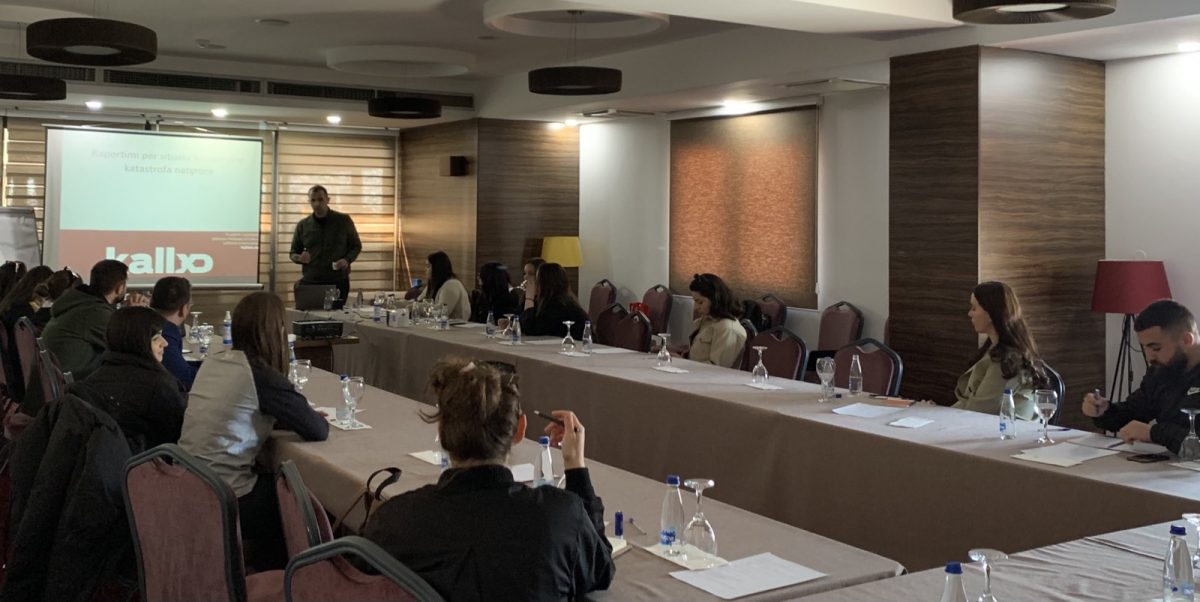
To improve the way journalists report from emergency crisis situations, BIRN Kosovo held a training for journalists and students of journalism, designed to equip them with appropriate knowledge and practices on reporting from protests, with a special focus on violent ones, which was held on March 25.

The training consisted of two sessions. The first was delivered by Amir Gërguri, Commander of specialized units in the Kosovo Police. He elaborated on communications with security institutions in emergency crisis situations. The second session was delivered by Kreshnik Gashi, editor-in-chief of KALLXO.com, who reflected upon safe and ethical reporting of emergency crisis situations.

Participants were given examples to further understand the applicability of the theoretical framework of the training sessions. They were also given the opportunity to ask insightful questions on reporting from emergency crisis situations, as well as share their own experiences.

The training was organized as part of the project “Ensure a safe space for journalists during protest reporting.”, a project funded by the European Commission.

In total, 18 journalists and students of journalism participated in this training.

BIRN Kosovo aims to support the democratic transition in Kosovo and the implementation of human rights and media freedom by holding regular training sessions and workshops.

During this part of 2022 alone, BIRN Kosovo, as part of the project “Resilient Community Program”, held three community gatherings in the municipalities of Prishtina, Gjilan and Obiliq.

The gatherings consisted of a lecture by Kreshnik Gashi, editor in chief at KALLXO.com, and brought together psychologists and directors of schools.

The guests shared their experiences with people, more specifically students, whose families have returned from the conflict zones in Syria and Iraq, and the process of reintegration and re-socialization to which they have been subjected. In total, 16 participants have been part of the gatherings held thus far.

Training on fact-finding

As part of the project “Promoting fact-checking to combat false news and misinformation in Kosovo”, which is supported by the US embassy in Kosovo, BIRN Kosovo also held three trainings on fact-checking methodologies with a total of 50 journalists, in the municipalities of Prishtina, Prizren and Gjilan.

The trainings were made up of three parts. The first covered standards, the basics of fact-checking, and the differences between misinformation, fake news, deep fakes, and other fake news production formats.

The second was dedicated to identifying fake news and harmful narratives in the media and building debunking mechanisms within newsrooms. The third part gave participants the opportunity to practice together with the trainers to identify fake news.

Workshop trainers included Kreshnik Gashi and Visar Prebreza, managing editor of Research and Krypometer articles at KALLXO.com.

As part of the project “Data 4 Fighting Harmful Narratives in the Judiciary”, which is funded by the Millennium Foundation Kosovo, MFK, and the Millennium Challenge Corporation, MCC, BIRN Kosovo held training sessions on using judicial data with a total of 77 Faculty of Law students from the University of Pristina and the University of Prizren.

On March 10 and 11, as part of the project “Confidence Building Project”, which is supported by UNMIK, BIRN Kosovo held a training session with a journalists in the municipality of Gjilan on the bases of investigation and fact-checking principles.

On the first day, KALLXO.com’s Kreshnik Gashi, spoke about the bases of reporting, the public profile that journalists should keep, how to develop contacts with sources of information, protection of sources and how to build trust.

Visar Prebreza meanwhile spoke on how to initiate research and secure information from open data platforms. He also talked about investigations into public procurement and techniques for detecting stories in this field. Finally, on day one,

Valdet Salihu, a producer at the TV programme KALLXO Pernime, gave insight into different production techniques, photographs and video footage.

The second day of the training involved activities in which the participants practiced use of techniques for fact-checking and detecting fake news, with scenarios sourced from statements and footage of public officials.

A total of 16 journalists participated in the course, including three from the Serb and Roma, Ashkali and Egyptian minority communities.

Additionally, as part of the project “Ensure a safe space for journalists during protest reporting”, a project funded by the European Commission”, BIRN Kosovo held a training for 18 journalists and students of journalism, which aims to equip them with appropriate knowledge and practices on reporting from protests, with a special focus on violent ones.

*This publication was produced with the financial support of the European Union. Its contents are the sole responsibility of Balkan Investigative Reporting Network and do not necessarily reflect the views of the European Union.


BIRN Kosovo Holds Workshops on Reintegration of Returnees from Conflict Zones, Fact-Checking and Reporting Protests

BIRN Kosovo held a regional workshop on March 28 on reinforcing the role of Centers for Social Welfare and strengthening the process of reintegration and resocialization for returnees from Middle eastern conflict zones, in order to prevent violent extremism and terrorism in Kosovo.

The workshop consisted of three sessions. The first, delivered by Kreshnik Gashi, editor-in-chief at KALLXO.com, focused on the state vision of preventing the radicalism and the violent extremism that leads to terrorism, and reflecting this vision to the wider public.

The second, delivered by Vehbi Mujku, director of the Center for Social Welfare in Pristina, focused on the role of the Centers in the early identification process of radical behaviours, and in the treatment of people affected by violent extremism.

The third session, delivered by Luljeta Berisha, psychologist at the Kosovo Rehabilitation Center for Rehabilitation of Torture Victims, focused on the early identification of radical behaviours in children and treatment of trauma in them.

In total, 18 representatives from the Centers for Social Welfare and members from other municipal institutions participated in the workshop, organized as part of the “Resilient Community Program”, which is funded by the Global Community Engagement and Resilience Fund, GCERF.

BIRN Kosovo aims to support the democratic transition in Kosovo and the implementation of human rights and media freedom by holding regular training sessions and workshops.

During this part of 2022 alone, BIRN Kosovo, as part of the project “Resilient Community Program”, held three community gatherings in the municipalities of Prishtina, Gjilan and Obiliq.

The gatherings consisted of a lecture by Kreshnik Gashi, editor in chief at KALLXO.com, and brought together psychologists and directors of schools.

The guests shared their experiences with people, more specifically students, whose families have returned from the conflict zones in Syria and Iraq, and the process of reintegration and re-socialization to which they have been subjected. In total, 16 participants have been part of the gatherings held thus far.

Training on fact-finding

As part of the project “Promoting fact-checking to combat false news and misinformation in Kosovo”, which is supported by the US embassy in Kosovo, BIRN Kosovo also held three trainings on fact-checking methodologies with a total of 50 journalists, in the municipalities of Prishtina, Prizren and Gjilan.

The trainings were made up of three parts. The first covered standards, the basics of fact-checking, and the differences between misinformation, fake news, deep fakes, and other fake news production formats.

The second was dedicated to identifying fake news and harmful narratives in the media and building debunking mechanisms within newsrooms. The third part gave participants the opportunity to practice together with the trainers to identify fake news.

Workshop trainers included Kreshnik Gashi and Visar Prebreza, managing editor of Research and Krypometer articles at KALLXO.com.

As part of the project “Data 4 Fighting Harmful Narratives in the Judiciary”, which is funded by the Millennium Foundation Kosovo, MFK, and the Millennium Challenge Corporation, MCC, BIRN Kosovo held training sessions on using judicial data with a total of 77 Faculty of Law students from the University of Pristina and the University of Prizren.

On March 10 and 11, as part of the project “Confidence Building Project”, which is supported by UNMIK, BIRN Kosovo held a training session with a journalists in the municipality of Gjilan on the bases of investigation and fact-checking principles.

On the first day, KALLXO.com’s Kreshnik Gashi, spoke about the bases of reporting, the public profile that journalists should keep, how to develop contacts with sources of information, protection of sources and how to build trust.

Visar Prebreza meanwhile spoke on how to initiate research and secure information from open data platforms. He also talked about investigations into public procurement and techniques for detecting stories in this field. Finally, on day one,

Valdet Salihu, a producer at the TV programme KALLXO Pernime, gave insight into different production techniques, photographs and video footage.

The second day of the training involved activities in which the participants practiced use of techniques for fact-checking and detecting fake news, with scenarios sourced from statements and footage of public officials.

A total of 16 journalists participated in the course, including three from the Serb and Roma, Ashkali and Egyptian minority communities.

Additionally, as part of the project ““Providing a safe environment for journalists during protests”, a project funded by the European Union Office in Kosovo”, BIRN Kosovo held a training for 18 journalists and students of journalism, which aims to equip them with appropriate knowledge and practices on reporting from protests, with a special focus on violent ones.

BIRN Hosts International Fact-checking Conference

BIRN Kosovo, in partnership with Internews Kosova and FindBug and supported by the US Embassy in Prishtina, observed International Fact-Checking Day with an in-person and webinar conference to discuss the risks of malign foreign influences and ways to counter them.

Held on Monday, April 4-th 2022, the afternoon of activities brought together journalists, media professionals, media regulators and technology experts to share their experience in robust fact-checking practices from around Kosovo, the region and the world.

More than 60 participants attended the event at Prishtina’s Kino Armata in person, with a similar number tuning in online via Zoom.

The conference was opened by BIRN Kosovo’s executive director Jeta Xharra, who highlighted the particular risks of misinformation, disinformation and fake news stemming from Russia, China and Turkey. She also paid tribute to all the journalists who are risking their lives to report from the ongoing war in Ukraine. “Eight journalists, mostly Ukrainians, but also internationals have died during the Russian invasion of Ukraine,” she said. “They have paid with their lives to bring us the truth”.

In the first of three panel discussions, Xharra was joined by representatives from leading global publications and institutions — Enock Nyariki from the International Fact-Checking Network (IFCN), Jasna Jelisić from the European External Action Service, Rainer Schüller from Der Standard in Austria, Ed Vulliamy from The Guardian/Observer in the UK, and Svitlana Slipchenko from VoxCheck at VOX Ukraine.

There was also a brief contribution from Maksym Skubenko, head of VOX Ukraine who is now a conscript of the Ukrainian army defending his country against Russia. Speaking from the frontline of the war, Skubenko highlighted the paramount importance of reporting accurate information and powerfully appealed for everyone present to ensure that the world doesn’t forget Russia’s actions in Ukraine and to make sure the world does not fall prey to Russian disinformation.

Other panelists highlighted the importance of fact-checkers working together as allies to share best practices, tools and reliable platforms that help combat the sheer volume of fake news in the current context.

“All the disinformation coming from the Russian side is hard to handle”, said Schüller. “I think the only way to debunk the disinformation is to have an experienced editorial staff and to find allies in the fight for the truth”.

Slipchenko added that the challenge as fact-based journalists is to counter malign narratives stemming from Russia with other, accurate narratives. “The latest example we had to deal with was the Russian narrative that there was no attack on the maternity hospital in Mariupol, when we clearly know what happened there”, she said.

Speaking from Kenya, Nyariki explained how fact-checkers globally had come together to create the public #UkraineFacts database, which includes verified reports about the war. “We knew that disinformation and misinformation would get out of control and spread throughout the world,” he said.

Jelisić pointed out how the battle against disinformation is a global one, and that the Western Balkans is not spared. “The Western Balkans, in comparison to the EU member states, is maybe more vulnerable to disinformation because the level of media literacy is lower, there is lower trust in institutions in general [and] the space for the functioning of independent professional media has been shrinking for a very long time”, she said. “So, when the same trend is hitting the region, the capacity of the Western Balkans to deal with it, to build resilience to it, is limited in comparison to the EU member states”.

Asked whether one should take comfort in the fact that we live in a day and age when everybody is able to debunk information by virtue of the vast availability of information and the widespread use of smartphones, Ed Vulliamy from the Guardian/Observer replied “There is indeed an avalanche of information, but it has no depth, it’s all surface.”

The second panel, “Lessons From the Region”, was moderated by Kosovo 2.0’s executive director, Besa Luci, who was joined by experts from around the Western Balkans — Tijana Cvjetićanin from Raskrivanje.ba who is also an IFCN board member; Ivan Angelovski, a regional investigative editor from BIRN and an associate producer with CBC Canada; Filip Stojanovski from Metamorphosis in North Macedonia; and Kreshnik Gashi from BIRN Kosovo’s Krypometër.

Participants focused on combating the challenges that face media and fact-checking outlets in the region in the context of the specific political and economic conditions within which they operate. They shared examples of how to boost media literacy and productive critical thinking within countries where education systems are lacking such fundamental teaching and discussed what the relationship should be between fact-checking experts and public policy makers.

Pointing to the dangerous false narratives that have emerged during the COVID-19 pandemic and the war in Ukraine, Stojanovski asserted that fact-checking is a matter of life and death. “This topic should be advanced and a solution found in the field of disinformation”, he said. “The Internet was created at an academic level to spread knowledge, and now it is used for purposes that go against freedom of expression — we are dealing with hate speech”.

Angelovski echoed similar sentiments. “Misinformation must be fought at every level and in the most accurate and professional way by presenting the facts”, he said.

The day’s third and final panel was led by BIRN Kosovo’s Kreshnik Gashi, an IFCN certified fact-checker, and included guests from various Kosovo media outlets — Flaka Surroi from Koha Ditore, Afërdita Saraçini from RTV 21, Shkumbin Ahmetxhekaj from RTK, Tatjana Lazarević from KOSSEV, and Gentian Lluka from Telegrafi.

Panellists particularly highlighted the importance of well-trained and experienced editors within newsrooms to ensure that information being published is properly verified and therefore accurate. They also answered questions from journalists and students in the audience on editorial and fact-checking processes, as well as the availability of fact-checking training in Kosovo.

Saraçini noted that in the past, governing regimes distributed fake news to the masses through a single medium and people believed whatever they were told but that today things are different. “There are multiple sources where citizens can get their information, which in and of itself is both a good thing and a bad thing”, she said. “While citizens have more sources of information, they are also more prone to falling prey to fake news and disinformation”.

Gashi highlighted that in Kosovo, there is outside influence on information, especially from sources financed by Russia, that aim to create insecurity and create panic, while there is also great effort focused on changing the historical narrative. “The other element is the internal influence supported by political parties and businesses in our country”, he said. “In Kosovo, the fact that there has been a tendency for political parties to produce false news about their opponents in order to take power should not be left unattended”.

Surroi suggested that credible local media that have been operating in Kosovo for a long time don’t allow themselves to be taken in by fake news because before publishing anything they verify their sources and ascertain whether what is being said is true or not. “With regard to fake news coming from abroad, we are trying to channel the type of information sources coming to us from abroad and of course we are heavily reliant on news agencies and international news companies that are known to be credible”, she said.

Acting director of RTK Ahmetxhekaj focused on recent changes at Kosovo’s public broadcaster and ways in which they are striving to improve the quality of their journalism output. “We are focused on having our own news produced by RTK, and less on getting news from other agencies and media”, he said.

Asked about the institutional response to the global spread of false narratives, Lazarević said that she was frustrated by censorship of information and misinformation and that this was not the solution to fighting disinformation and malign forces. “I am very radical in the sense that there should be no censorship in informing the public”, she said.

International Fact-Checking Day, led by Poynter’s IFCN, was established in 2017 and is marked by various media organizations in the world as a day to celebrate the truth. Deliberately set on April 2, the day after April Fools’ Day, International Fact-Checking Day clearly accentuates the binary of ‘fool versus fact’ in an era when facts are more important than ever.


BIRN Conference Discusses Ways to Counter Fake News

On Monday, BIRN and Internews Kosova organised a conference on how to counter the malign foreign influences spreading disinformation in Western Balkans.

A BIRN-organised conference on “Dealing in facts: How to counter malign foreign influences”, held in Pristina on Monday, concluded that there is a growing need for robust fact-checking and a fight against disinformation in the Western Balkans.

Balkan Investigative Reporting Network, BIRN, in Kosovo, in partnership with Internews Kosova and FindBug marked International Fact-Checking Day on April 2 with an in-person and webinar conference that brought together journalists, media professionals, media regulators and self-regulators, as well as media and technology experts, to discuss the risks of malign influences, particularly those coming from powerful countries such as China, Russia and Turkey.

Ivan Angelovski, BIRN Regional Investigative Editor and CBC Canada Associate Producer, said disinformation should be fought every day and at every level.

“There is a big responsibility from traditional media. Fake news is an extremely complex topic and the only way to fight it is doing your job and report on these groups which use fake news for their own purposes,” Angelovski said.

Jasna Jelisić, head of the Western Balkans Task Force in the EEAS Strategic Communication and Information Analysis Division, said that although it is ever present, the capacity of Western Balkans to deal with disinformation is more limited than in the European Union.

“The problem with disinformation is global and the Western Balkans is not spared disinformation. Media literacy in the region is lower and there is no trust in the media,” Jelisić said.

Kreshnik Gashi, editor of BIRN’s fact-checking platform in Kosovo, Krypometer, said disinformation in Kosovo comes from both inside and outside the country.

“Disinformation that comes from countries like Russia aims at creating a sense of insecurity among citizens,” Gashi said.

“From within Kosovo, we have had tendencies from political parties to produce fake news against rivals, but public companies have also sponsored news portals that produce fake news. It means that huge amount of public money has gone into fake news,” Gashi said.


Call for Applications for a Fellowship Programme for Writing Stories Based on Judicial Data

BIRN Kosovo has opened the call for applications for writing in-depth journalistic stories as part of the project “Data 4 fighting harmful narratives on the judiciary” funded by the Millennium Foundation Kosovo (MFK) and Millennium Challenge Corporation (MCC) as part of the #DigDataKosovo Challenge for Open Data.

As part of the project, BIRN in partnership with Internews Kosova, FindBug, and D4D is developing a smart solution that will help the interested parties and the overall public with the judicial cases, procedures, and regulations by an easy access to cases, the upcoming hearings, and time needed for solving a case based on searches on internet and social media.

BIRN’s intervention with the Judicial Dig Data Challenge consists of synthesizing the available judicial data on gender-based violence, attacks on journalists and the LGBTQI+ persons, corruption, resolution of civil cases, human resource management in justice institutions, effectiveness of the LAA, the Supreme Court and the Special Prosecution, among others, by linking multiple datasets from the Kosovo Judicial Council (KJC), the Kosovo Prosecutorial Council (KPC) and the Legal Aid Agency (LAA).

Our intervention also aims to extend the category of people utilizing the available judicial data. This will be achieved by engaging other actors, such as journalists, in the process of data analysis and in proposing means in addressing data-driven needs.

In this regard, BIRN invites all interested young, aspiring and mid-career journalists to apply for the three-month fellowship, provided by MFK.

Five (5) ambitious and daring journalists will be selected by a team of professional editors to become part of this program. Each fellow will be granted EUR 400.00 fellowship bursary for an in-depth research story based on judicial data. The analytical articles should be derived from the datasets of the Kosovo Judicial Council (KJC), the Kosovo Prosecutorial Council (KPC) and the Legal Aid Agency (LAA) as stated above, however journalists can also use other credible sources for their articles.

Moreover, the selected journalists will receive hands-on mentorship by a team of highly-skilled BIRN Kosovo editors and legal advisors, who have extensive experience in court monitoring, judicial data, and producing and editing high quality reporting in Kosovo regarding the judicial system.

At the end of the programme, fellows are expected to have produced an original research/investigative in-depth investigative story with a limit of 800 – 1,000 words.

How to apply?

Those interested should submit their proposals/pitches with the topics they want to write about,  which should be summarized in a maximum of 300 words. Ideas should be clear and contain details on the topic to be addressed, how it will be addressed, sources to be contacted, etc.

The story proposal should be developed based on the below listed criteria:

– Use of datasets of KJC, KPC, and LAA

– Impact of the story on the public

– Special addressing of the issue

– Inclusiveness

Please submit your proposal on a PDF document including the links of previous work, and your CV by midnight on April 30th, 2022, to [email protected], with the subject: Application for the Judicial Dig Data Challenge Fellowship.

Any questions regarding this programme or the application can be addressed to [email protected], by April 10, 2022 at the latest.

Women and members of non-majority communities are strongly encouraged to apply.


“Thirrje për Aplikime për ‘Fellowship Program’ për Shkrimin e Storieve bazuar në të Dhënat Gjyqësore”

BIRN Kosova ka hapur konkursin për aplikime për shkrimin e storieve analitike gazetareske si pjesë e projektit “Të dhëna për luftimin e narrativave të dëmshme mbi gjyqësorin” financuar nga Fondacioni i Mijëvjeçarit në Kosovë (MFK) dhe Korporata e Sfidave të Mijëvjeçarit (MCC) si pjesë e projektit #DigDataKosovo, Sfida për të dhëna të hapura’.

BIRN në partneritet me Internews Kosova, FindBug dhe D4D po zhvillon një zgjidhje inteligjente që do t’u ndihmojë palëve të interesuara dhe publikut të përgjithshëm me çështjet gjyqësore, procedurat dhe rregulloret, me një qasje të lehtë në rastet në të ardhmën, në seanca dëgjimore dhe kohën e nevojshme për zgjidhjen e një rasti bazuar në kërkimet/hulumtimet në internet dhe në mediat sociale.

Përfshrija e BIRN përmes Judicial Dig Data Challenge konsiston në sintetizimin e të dhënave të disponueshme gjyqësore lidhur me dhunën me bazë gjinore, sulmet ndaj gazetarëve dhe personave të komunitetit LGBTQI+, korrupsionin, zgjidhjen e çështjeve civile, menaxhimin e burimeve njerëzore në institucionet e drejtësisë, efektivitetin e Agjencisë për Ndihmë Juridike, Gjykatës Supreme dhe Prokurorisë Speciale, ndër të tjera, duke ndërlidhur të dhëna të shumta nga Këshilli Gjyqësor i Kosovës (KGJK), Këshilli Prokurorial i Kosovës (KPK) dhe Agjencia për Ndihmë Juridike (ANJ).

Përfshirja jonë synon gjithashtu ta zgjerojë kategorinë e personave të cilët i përdorin të dhënat e disponueshme gjyqësore. Kjo do të arrihet duke angazhuar akterë të tjerë, të tillë si gazetarët, në procesin e analizës së të dhënave dhe në propozimin e mjeteve për adresimin e nevojave të orientuara nga të dhënat.

Si rrjedhojë, BIRN fton të gjithë gazetarët e rinj, aspirantë dhe të interesuarit me karrierë të mesme profesionale që të aplikojnë për bursën tre mujore të ofruar nga MFK.

5 gazetarë ambiciozë dhe të guximshëm do të zgjidhen nga një ekip redaktorësh profesional për t’u bërë pjesë e këtij programi. Secili anëtar do të përfitojë bursë prej 400.00 Euro për një storie analitike bazuar në të dhëna gjyqësore. Shkrimet analitike duhet të rrjedhin nga grupet e të dhënave të Këshillit Gjyqësor të Kosovës (KGJK), Këshillit Prokurorial të Kosovës (KPK) dhe Agjencisë për Ndihmë Juridike (ANJ), ashtu siç u tha më lart, megjithatë, gazetarët mund t’i përdorin edhe burime të tjera të besueshme për shkrimet e tyre.

Përveç kësaj, gazetarët e përzgjedhur do të përfitojnë mentorim nga një ekip redaktorësh dhe zyrtare ligjor të kualifikuar të BIRN Kosova, të cilët kanë përvojë të gjerë në monitorim të gjykatave, të dhëna gjyqësore, dhe në prodhimin dhe redaktimin e raportimit të cilësisë së lartë në Kosovë dhe në rajon.

Në fund të programit, bursistët pritet të kenë prodhuar një storie origjinale hulumtuese/kërkimore me një limit prej 800 – 1,000 fjalësh.

Si të aplikoni?

Të interesuarit duhet t’i paraqesin propozimet/pikat e tyre me temat për të cilat duan të shkruajnë, të cilat duhet të përmblidhen në maksimum 300 fjalë. Idetë duhet të jenë të qarta dhe të përmbajnë detaje mbi temën që do të trajtohet, si do të trajtohet, burimet që do të kontaktohen, etj.

Propozimi i stories duhet të zhvillohet bazuar në kriteret e poshtëlistuara:

– Përdorimi i grupeve të të dhënave të KGJK-së, KPK-së dhe ANJ-së

– Ndikimi i stories në opinionin publik

– Trajtim i veçantë i stories në fjalë

– Gjithëpërfshirje

Ju lutemi dorëzojeni propozimin tuaj në një dokument PDF duke përfshirë vegzat e punës së mëparshme dhe CV-në tuaj deri në mesnatën e datës 30 Prill 2022, në adresën [email protected], me temë: Aplikimi për Bursën Judicial Dig Data Challenge.

Çdo pyetje në lidhje me këtë program ose aplikacion mund të drejtohet tek [email protected], jo më vonë se deri më 10 prill 2022.

Gratë dhe pjesëtarët e komuniteteve pakicë inkurajohen fuqishëm që të aplikojnë.


Poziv za podnošenje prijava za pisanje priča na osnovu pravosudnih podataka”

BIRN Kosovo je, nakon uspeha i iskustava prethodnih dodela stipendija novinarima za pokrivanje različitih oblasti, otvorio poziv za podnošenje prijava za pisanje detaljnih novinarskih priča u okviru projekta „Podaci za borbu protiv štetnih narativa o pravosuđu“ koji finansiraju Milenijumska Fondacija Kosovo (MFK) i MCC.

Uprkos obećavajućih poboljšanja u radu kosovskog pravosudnog sistema, i dalje zemlja se suočava sa hitnim izazovima u ovoj oblasti, uključujući odgovornost, nepristrasnost, upravljanje, efikasnost i kvalitet pravde.

Odugovlačeni sudski postupci, nestručne sudije i tužioci, stalna borba sa nerešenim predmetima, čine neefikasan pravosudni sistem koji ne ispunjava potrebe građana. Mali značajni napreci su se dogodili u pogledu rada sudova i efikasnosti pravosuđa u rešavanju predmeta. Organi za sprovođenje zakona i dalje ne reaguju na potrebe ranjivih delova društva kao što su žrtve rodno zasnovanog nasilja, etničke manjine i seksualne manjine.

Štaviše, lažne vesti i orkestrirane dezinformacione kampanje su imale geopolitički uticaj koji je imao značaja na sve oblasti u uspostavljenim i demokratijama u nastajanju, i podrivao odgovor na globalne izazove.

U okviru projekta, BIRN u partnerstvu sa Internews Kosova, FindBug-om i D4D-om razvija pametno rešenje koje će pomoći zainteresovanim stranama i celokupnoj javnosti u sudskim predmetima, procedurama i propisima lakim pristupom predmetima, predstojećim saslušanjima i potrebnog vremena za rešavanje predmeta na osnovu pretraga na internetu i društvenim mrežama.

Intervencija BIRN-a na izazovu Judicial Dig Data Challenge sastoji se od sinteze dostupnih pravosudnih podataka o rodno zasnovanom nasilju, napadima na novinare i LGBTQI+ osobe, korupciji, rešavanju građanskih sporova, upravljanju ljudskim resursima u pravosudnim institucijama, efikasnosti APP-a, Vrhovnog suda i Specijalnog tužilaštva, između ostalog, povezivanjem više skupova podataka iz Sudskog saveta Kosova (SSK), Tužilačkog saveta Kosova (TSK) i Agencije za pravnu pomoć (APP).

Takođe, naša intervencija ima za cilj da proširi kategoriju ljudi koji koriste dostupne sudske podatke. Ovo će se postići angažovanjem drugih aktera, kao što su studenti i novinari, u procesu analize podataka i predlaganjem sredstava za adresiranje potreba zasnovanim na podacima.

U tom pogledu, BIRN poziva sve zainteresovane mlade, perspektivne novinare i novinare srednje karijere da se prijave za tromesečnu stipendiju koju obezbeđuje MFK.

Pet (5) ambicioznih i smelih novinara će izabrati tim profesionalnih urednika kako bi postali deo ovog programa. Svaki stipendista će dobiti stipendiju od 400,00 evra za detaljnu istraživačku priču zasnovanu na pravosudnim podacima.

Osim toga, odabrani novinari će dobiti mentorstvo tima visokokvalifikovanih urednika BIRN Kosovo i pravnih savetnika, koji imaju veliko iskustvo u praćenju sudova, pravosudnih podataka i produkciji i uređivanju visokokvalitetnog izveštavanja na Kosovu u vezi sa pravosudnim sistemom.

Na kraju programa, očekuje se da stipendisti proizvedu originalnu ispitivačku/istraživačku detaljnu priču sa ograničenjem od 1.000 – 1.500 reči.

Da li ste zainteresovani da postanete deo ovog programa?


Popunite obrazac prijave i pošaljite vašu prijavu do ponoći 30. aprila 2022. godine, na [email protected], sa naslovom: Prijava za Dig Data Challenge Fellowship.

Sva pitanja u vezi ovog programa ili prijave mogu se poslati na [email protected], najkasnije do 25. maja.

Žene i pripadnici nevećinskih zajednica se snažno ohrabruju da se prijave.