Journalists meet to discuss cross border investigations

Journalists received bespoke investigative training as they prepared major cross-border stories into crime and corruption in the Balkans.

As a part of the project “Paper trail to better government”, BIRN assembled reporters, trainers and technical experts to discuss the investigations which will be published during the next 30 months.

The meeting took place last weekend in Belgrade and gathered reporters from Albania, Kosovo, Bosnia and Herzegovina, Macedonia and Montenegro.

The programme will engage journalists from the region to investigate five important topics relevant to the Balkans and internationally. 

The project is being carried out in cooperation with the Austrian Development Agency.

Romanian Superscrieri 2013 Awards Two Fellows

Romania’s national journalistic competition Superscrieri has given awards to Elena Stancu and Vlad Odobescu, both fellows this year of the Balkan Fellowship for Journalistic Excellence.

In a tough competition involving 222 entries, seven prizewinners were selected.

Stancu won the Special Prize for Coverage of Domestic Violence for an article published in Marie Claire Romania, about a young woman whose mother was a victim of domestic violence.  

Odobescu won third place in the Portrait Category with his article The Return of Marius, a feature report about the reintegration of a former prison convict.

Earlier this year, Stancu was awarded another journalistic grant. She is one of the recipients of the 2013-2014 Rosalynn Carter Fellowships for Mental Health Journalism.

Through this she will receive intensive training from leading mental health and journalism experts and a stipend to report on a mental health topic of her choice.

http://www.cartercenter.org/news/pr/mhj-fellows-2013-2014.html   

She and the Romanian photographer Cosmin Bumbut will work on a multimedia project about the post-traumatic stress disorder in children exposed to family violence. For one year the team will examine the culture of education by violence in the Romanian families and society.

Balkan Fellowship for Journalistic Excellence awards ceremony to be held in Zagreb

Participants in this year’s Balkan Fellowship for Journalistic Excellence will meet for their final seminar and awards ceremony in Zagreb, Croatia from December 11-14.

Ten journalists from across the region have spent the past few months investigating stories within the overall annual theme ‘Integrity’, tackling issues of corruption, media, politics and the legacy of war.

The Zagreb event represents the culmination of the journalists’ participation in the programme, when they will have the chance to present their work to the selection committee members who will vote for the top three stories.

The winners will be announced at the awards ceremony on December 13, which will be attended by the Fellowship programme’s partners, selection committee members and Croatian media.

The winner will be awarded a cash prize of 4,000 euro, with the second and third place runners up receiving 3,000 euro and 1,000 euro respectively.

The final event in Zagreb will also feature meetings with important figures in Croatian media and politics, as well as a cultural programme.

This year’s Fellowship programme began in May in Vienna, where the fellows took part in career development training and fellowship orientation programmes. Each fellow was awarded a 2,000 euro bursary and a further 2,000 euro travel allowance.

As well as travelling to neighbouring Balkan states, thefellows also visited other EU member states including Greece, Czech Republic, Ireland, Britain, France, Germany and Belgium.

The fellowship programme aims to develop and support Balkan journalists reporting on complex reform issues. It was established by the Robert Bosch Stiftung and ERSTE Foundation in cooperation with the Balkan Investigative Reporting Network.

EU to Judge Serbia on War Crimes Prosecutions

During its EU membership negotiations, Serbia will be assessed on how well it has dealt with war crimes cases, European Commission official Pierre Mirel told a BIRN conference.

BTJ conference Belgrade

“The prosecution of war crimes before national courts was part of negotiations with Croatia, and it is now with Montenegro, and it will be for Serbia as well,” Mirel, the director for the western Balkans in the European Commission Directorate General for Enlargement, told the BIRN conference in Belgrade on Thursday.

“But we should note that transitional justice is more than just war crimes trials and it goes beyond courtrooms. Here I would stress the issue of missing persons. How can reconciliation take place if thousands are missing?” he asked.

Mirel told the conference, which focused on transitional justice in the context of Belgrade’s EU ambitions, that Serbia still needed to do more to address the legacy of the 1990s wars.

“One of the problems is that trials in The Hague didn’t lead to a wider debate in the society. And some political leaders participated in the glorification of [Hague] indictees as heroes,” Mirel said.

Transitional justice will not be a specific part of the talks about the rule of law and human rights reforms that Serbia has to make to win membership from Brussels, but some elements like war crimes prosecution will be discussed in negotiations about chapters 23 and 24 in the EU body of legislation, which deal with the rule of law and human rights.

“A number of areas which deal with transitional justice will be touched upon directly through these chapters,” Serbian deputy justice minister Cedomir Backovic told the conference.

Serbian chief war crimes prosecutor Vladimir Vukcevic pointed out the importance of working with other ex-Yugoslav states to bring suspects to justice.

“Without regional cooperation, our work in prosecuting war criminals would be impossible. But it is important to say that we don’t have the support of [Serbian] institutions and media, unlike our colleagues who prosecute organised crime,” Vukcevic said.

“I am referring to the problems we have with units for witness protection and the police who investigate war crimes,” he added.

The witness protection unit, part of the Serbian police, has been criticised for allegedly intimidating witnesses instead of shielding them.

Speaking about common problems that the region is facing when it comes to prosecuting war criminals, Ivan Jovanovic from the OSCE Mission to Serbia outlined three main problems.

“First is the time that passed from the conflict, second is access to public documents and third is witness protection,” Jovanovic said.

In the part of the conference dedicated to the role of civil society in the upcoming EU negotiations, Jelko Kacin, the European Parliament’s rapporteur for Serbia, stressed the importance of civil society being part of the negotiations.

“The European Union is asking Serbia to enroll civil society as part of the negotiations with the EU, especially when it comes to the chapters 23 and 24, which will be opened first and closed last,” Kacin said.

Jelena Djokic Jovic from Zagreb-based civil rights organisation Documenta he conference also heard how a Croatian campaign group called Platform 112 managed to convince the government to include some transitional justice issues in Croatia’s EU membership negotiations.

“Here I am mainly referring to a new network of courts – four specialised courts which are now prosecuting war crimes,” Jovic said.

BIRN Debates Role of Transitional Justice in Serbia’s EU Talks

As part of its Balkan Transitional Justice project, BIRN is holding a one-day conference on November 14 in Belgrade to examine what part the issue of transitional justice will play in Serbia’s forthcoming membership negotiations with the European Union.

Belgrade parlament

The first panel will examine two topics, ‘EU efforts and the Institutional Framework for Achieving Transitional Justice in Serbia’ and ‘Achievements and Obstacles in Transitional Justice in the Region’.

The panel will consist of Pierre Mirel, director for the western Balkans at the European Commission Directorate for Western Balkans, Cedomir Backovic from the Serbian justice ministry, Vladimir Vukcevic, Serbia’s chief war crimes prosecutor, Ivan Jovanovic from OSCE Serbia, Marijana Toma from the Humanitarian Law Centre, Jelena Jovic from Documenta, Maja Micic from the Youth Initiative for Human Rights and Erna Mackic from BIRN Bosnia.

The second panel will also tackle two topics, ‘The Role of Civil Society in Serbia’s Negotiations with the EU in the Field of Transitional Justice’ and  ‘Monitoring of War Crime Trials’, and will include Ivana Cirkovic from the Serbian government’s Office for Cooperation with Civil Society alongside representatives of civil society and media.

The conference, entitled ‘Achievements and Position of Transitional Justice in Talks Between Serbia and the EU’, will be opened by BIRN’s regional director Gordana Igric.

The conference is part of BIRN’s Balkan Transitional Justice project, which aims to improve public understanding of transitional justice issues in Bosnia and Herzegovina, Croatia, Kosovo, Macedonia, Montenegro and Serbia.

The full agenda can be downloaded here.

Belgraders pack cinema to see BIRN documentary

About 200 people attended the screening on October 31 of BIRN’s Balkan road-movie documentary ‘The Majority Starts Here’ in Belgrade.

The Dom Omladine cinema was packed for the screening  and warm applause greeted the end of the film documentary about young people and the legacy of war in the former Yugoslavia.

‘The Majority Starts Here’ follows six young people from the former Yugoslavia who make a journey through the region, examining how the conflicts of the past, which they were too young to understand fully at the time, have influenced both their present and their prospects for the future.

Along the way, they come face-to-face with some of the ghosts of the past in the shape of impoverished wartime refugees, military veterans and unrepentant nationalists.

They also see how nationalist ideas which led to war have been reflected in the region’s economy, culture and even architecture, as they muse on how genuine tolerance and reconciliation can develop in places which have endured such divisive violence.

The film was premiered in Skopje on September 26, and then screened in Belgrade, Zagreb, Pristina, Sarajevo, Novi Sad, Podgorica and Tuzla.

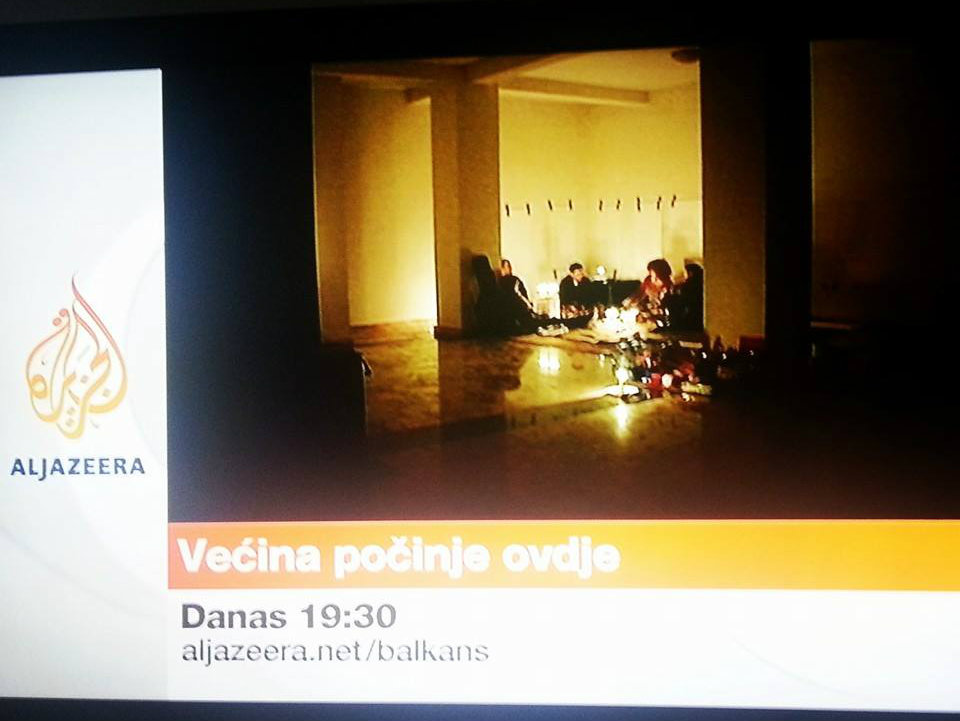
A three-episode version of the documentary has been shown on television stations across the region including Macedonian cable TV station 24 VESTI, Sarajevo-based Al Jazeera Balkans and Montenegrin TV channel Vijesti.

‘The Majority Starts Here’ was produced by BIRN and directed by award-winning film-maker Lode Desmet. In 2006, Desmet and BIRN also produced the film ‘Does Anyone Have a Plan?’, about the future status of Kosovo.

The documentary is part of BIRN’s Balkan Transitional Justice project, which aims to improve public understanding of transitional justice issues in Bosnia and Herzegovina, Croatia, Kosovo, Macedonia, Montenegro and Serbia.

Novi Sad students quiz BIRN on transitional justice

Petar Subotin of the Balkan Investigative Reporting Network gave a lecture on journalism and transitional justice at the Jovan Jovanovic Zmaj high school in Novi Sad on Monday to coincide with the first screening of BIRN’s documentary The Majority Starts Here in the northern Serbian city that evening.  

More than 30 students attended the one-hour lecture and afterwards posed questions about topics like investigative journalism and news writing procedures, but also about transitional justice and reconciliation processes in the Balkans.

Picking up on the topic of BIRN’s film, they were eager to find out if people of their generation in Bosnia and Herzegovina, Croatia, Macedonia, Montenegro and Kosovo knew about the crimes that happened in each country in the region during the 1990s wars.

They were also interested in how the six young people featured in the documentary reacted when faced with difficult situations and tough stories from the conflicts. 

When asked if they would agree to participate in such a project, many said that they would, mostly because they felt that they would not experience any difficulties when sitting at the same table with youngsters from neighbouring countries.

Questions were also asked about studying journalism, whether it was hard to become a good journalist and whether it was difficult to find a proper job outside tabloid newspapers.

The lecture was one of the first steps in a new BIRN initiative to bring transitional justice issues closer to young people.

BIRN Documentary Airs on Al Jazeera Balkans and TV Vijesti

The first episode of BIRN’s documentary series The Majority Starts Here was screened on Al Jazeera Balkans on Sunday evening.

This was followed on Monday evening by a screening on Montenegrin TV channel Vijesti as part of the show ‘Bez Granica’, along with an interview with BIRN regional director Gordana Igric.

BIRN launched its promotion of the documentary last month with a premiere of the full film in Skopje, Macedonia, followed by inaugural screenings in Belgrade, Zagreb, Pristina, Sarajevo and Novi Sad. The film’s premiere in Tuzla is scheduled for Friday, while screenings in Podgorica, Kraljevo and Subotica will follow.

“The film documents the journey of six young people through the region and their encounter with nationalism, ethnic tensions, prejudice – key ingredients in the bloody menu of the Balkan wars,” the head of BIRN Macedonia, Ana Petruseva, told the audience of journalists, diplomatic and NGO representatives before the Skopje premiere.

A three-episode version and six-episode version of the documentary is being aired on TV channels across the Balkans.

In the film, the six young people from six Balkan countries examine how the conflicts of the past have influenced both their present and their prospects for the future.

Along the way, they come face-to-face with some of the ghosts of the past in the shape of impoverished refugees, military veterans and unrepentant nationalists.

They also see how the nationalist ideas that led to war have been reflected in the region’s economy, culture and even architecture, as they muse on how genuine tolerance and reconciliation can develop in places that have endured such divisive violence.

The Majority Starts Here was produced by BIRN and directed by award-winning film-maker Lode Desmet. In 2006, Desmet and BIRN also produced the film Does Anyone Have a Plan?, about the future status of Kosovo.

The documentary is part of BIRN’s Balkan Transitional Justice project, which aims to improve public understanding of transitional justice issues in Bosnia and Herzegovina, Croatia, Kosovo, Macedonia, Montenegro and Serbia.

Find out more at: http://www.balkaninsight.com/en/page/balkan-transitional-justice-movie-home

BIRN Screens Youth and War Film in Novi Sad

After premieres in Skopje, Belgrade, Sarajevo, Zagreb and Pristina, BIRN’s new road-movie documentary The Majority Starts Here was screened in the Serbian city of Novi Sad.

The Balkan Investigative Reporting Network’s new documentary, which follows six young people from six Balkan countries as they travel across the region examining how the conflicts of the past have affected their lives, was screened on Monday in Novi Sad.

BIRN’s regional director Gordana Igric said that the film showed that young people from former Yugoslav countries could still establish friendly relations.

“We were surprised how these young people were not burdened by the war and how they managed to overcome the ethnic differences.  They even played paintball in Kosovo, without any resemblance to the war in the 1990s,” Igric said.

The event was attended by 120 people from including journalists, civil society representatives, students from the media studies department of Novi Sad philosophy faculty and general public.

The film was first shown in Skopje in late September, then in Sarajevo and Belgrade, followed by screenings in Zagreb and Pristina.

A three-episode version of the documentary will also be aired on TV channels across the Balkans.

The documentary is part of BIRN’s Balkan Transitional Justice project, which aims to improve public understanding of transitional justice issues in Bosnia and Herzegovina, Croatia, Kosovo, Macedonia, Montenegro and Serbia.

Travel and Tolerance in Focus at BIRN Zagreb Premiere

Young people who appeared in BIRN’s new documentary The Majority Starts Here spoke at its Croatian premiere about what they learned about the 1990s conflicts on their cross-Balkan journey.

The Balkan Investigative Reporting Network’s new road-movie documentary, which follows six young people from six countries as they travel across the former Yugoslavia examining how the conflicts of the past have affected their lives, had its first Croatian screening in Zagreb on Thursday – the latest in a series of cross-regional premieres.

The screening at the Gric art cinema was followed by a discussion with film’s participants, who during their journey across the region met war veterans, refugees, unrepentant nationalists and people who advocate reconciliation.

Zvonimir Zvonar, the participant from Croatia, said that it was very important for young people to face up to what happened in the recent past.

“I have never before had the opportunity to meet people from other former republics at one place, let alone spend almost a month with them. Besides making new friends, I improved my knowledge of history and learned many new things which I did not even think about before. This documentary allowed me to have an invaluable life experience,” he said.

Simona Milanovic, the participant from Serbia, said that working on the film changed her perception of what was happening in the 1990s in the Balkans.

“I admit I knew very little about the conflicts of the 1990s and I am glad I was able to hear stories firsthand about what really happened,” she said.

“I met people who, unfortunately, had to experience war personally, but what was most important to me is that during the shooting I made friends for life,” she added.

Meanwhile Bardh Skhreli, the participant from Kosovo, said that in order for young people from the Balkans to understand each other and the region in which they live, they need to get to know each other.

“Every young person living in the Balkans should find a little money and time to visit neighbouring countries and experience all the wonderful things the region has to offer,” he said.

“It is important that we meet people, hang around with them and develop friendships. Instead of Brussels, London or some other European city, visit the Balkans and meet people who live around you,” he urged.

Besides Zagreb, the film has also been shown in Belgrade, Sarajevo, Skopje and Pristina, with a further screening in Novi Sad on Monday.

A three-episode version of the documentary will also be aired on TV channels across the Balkans.

The documentary is part of BIRN’s Balkan Transitional Justice project, which aims to improve public understanding of transitional justice issues in Bosnia and Herzegovina, Croatia, Kosovo, Macedonia, Montenegro and Serbia.