BIRN’s ‘Majority Starts Here’ Greeted in Kosovo

BIRN’s new Balkan road-movie documentary, The Majority Starts Here, received a warm welcome at its premiere in Kosovo on Wednesday.

Representatives of local and international institutions, civil society groups and artists applauded the premiere in Kosovo of the film screened at the Faculty of Architecture in Pristina.

Jeta Xharra and Gordana Igric/ Photo: Agim Balaj

“The message of the film is that people still have different perceptions of the conflict and disagree, but can sit together and talk, without using guns to sort out differences,” Gordana Igric, BIRN Regional Director, said, delivering a short introduction to the movie with Jeta Xhara, BIRN Kosovo Director.

“It was quite an achievement to be able to tell the history of recent wars in six different countries in the Balkans in one hour through the eyes of 20-year-old characters,” Xharra said, adding that the film should be shown in schools throughout the region, “so that young people don’t grow up with partial knowledge of what happened in the 1990s.”

The screening met laughter, murmurs and moments of silence as six youngsters described their wartime experiences during the Balkan wars.

During their journey across the region, the six young participants from Bosnia, Croatia, Kosovo, Macedonia, Montenegro and Serbia met war veterans, refugees, unrepentant nationalists and people who advocate reconciliation in an attempt to discover how the Balkan wars had affected their own generation.

The film was first shown in Skopje in Wednesday and on Thursday in Sarajevo and Belgrade, while screenings are set for Zagreb on October 3 and Novi Sad on October 7.

A three-episode version of the documentary will also be aired on TV channels across the Balkans.

The documentary is part of BIRN’s Balkan Transitional Justice project, which aims to improve public understanding of transitional justice issues in Bosnia and Herzegovina, Croatia, Kosovo, Macedonia, Montenegro and Serbia.

BIRN Series Airs on TV in Macedonia

BIRN’s new documentary about young people and the legacy of war, ‘The Majority Starts Here’, premiered on Wednesday on TV in Macedonia.

The first episode of the documentary was aired on Macedonian cable TV station 24 VESTI on Wednesday afternoon, the second and third episodes follow on Thursday and Friday, while the whole movie will air on Saturday.

The Balkan Investigative Reporting Network launched its promotion of the documentary last week with a premiere in Skopje, Macedonia, followed by premieres in Belgrade, Zagreb, Pristina, Sarajevo and Novi Sad.

“The film documents the journey of six young people through the region and their encounter with nationalism, ethnic tensions, prejudice – key ingredients in the bloody menu of the Balkan wars,” the head of BIRN Macedonia, Ana Petruseva, told the audience of journalists, diplomatic and NGO representatives before the Skopje premiere.

A three-episode version of the documentary is being aired on TV channels across the Balkans.

In the film, six young people from six Balkan countries travel through the region, examining how the conflicts of the past have influenced both their present and their prospects for the future.

Along the way, they come face-to-face with some of the ghosts of the past in the shape of impoverished refugees, military veterans and unrepentant nationalists.

They also see how the nationalist ideas that led to war have been reflected in the region’s economy, culture and even architecture, as they muse on how genuine tolerance and reconciliation can develop in places that have endured such divisive violence.

The Majority Starts Here was produced by BIRN and directed by award-winning film-maker Lode Desmet. In 2006, Desmet and BIRN also produced the film Does Anyone Have a Plan?, about the future status of Kosovo.

The documentary is part of BIRN’s Balkan Transitional Justice project, which aims to improve public understanding of transitional justice issues in Bosnia and Herzegovina, Croatia, Kosovo, Macedonia, Montenegro and Serbia.

BIRN Launches Balkan Road-Movie Documentary

BIRN’s new road-movie documentary about young people and the legacy of war, The Majority Starts Here, was screened in the Serbian capital for the first time.

Premiere screenings of BIRN’s new documentary, which follows six young people from six Balkan countries as they travel across the region examining how the conflicts of the past have affected their lives, were held on Thursday evening in Belgrade.

During their journey, the six young participants from Bosnia and Herzegovina, Croatia, Kosovo, Macedonia, Montenegro and Serbia meet war veterans, refugees, unrepentant nationalists and people who advocate reconciliation.

The screening in Belgrade on Wednesday evening was followed by a debate about the legacy of the conflicts for the younger generation.

Maja Micic, from the Youth Initiative for Human Rights, said that the next step for the region was to have politicians who genuinely face the past.

“This is the moment when the state needs to show with its actions that it is aware of the horrific war that took place and needs to show understanding for the victims,” Micic said.

Dejan Remetic from the youth wing of the governing Progressive Party, said that ordinary people also had to get involved and not rely completely on politicians.

“The government has that responsibility, but it also important to have youth, some new generation, like we saw in this movie, that will bring about change,” Remetic said.

Biljana Cincarevic, a Serbian painter, said that the media as well as the state has a crucial role in informing the younger generation about what happened during the wars.

“It is important to speak about this and say that nationalism is very dangerous. That is what the state needs to say to its youth through education and the media,” Cincarevic said.

Two of the six participants in the film, Simona Milanovic from Serbia and Zvonimir Zvonar from Croatia, also spoke at the post-screening discussion.

Milanovic said that during the cross-Balkan road trip that formed the basis for the film, “I expected I would have problems, because I come from Serbia, which is always perceived as the aggressor”.

“Luckily, this was just a prejudice,” she said.

Zvonar said that although he was already informed about the conflicts which have taken place in the Balkans over the past few decades, it was a powerful experience to meet some of the people who had been directly involved.

“You hear and know about Chetniks, but it is very different when you meet all that face to face,” he said.

The film was first shown in Skopje in Wednesday and also on Thursday in Sarajevo, while further screenings are set for Pristina on October 2, Zagreb on October 3 and Novi Sad on October 7.

A three-episode version of the documentary will also be aired on TV channels across the Balkans.

The documentary is part of BIRN’s Balkan Transitional Justice project, which aims to improve public understanding of transitional justice issues in Bosnia and Herzegovina, Croatia, Kosovo, Macedonia, Montenegro and Serbia.

BIRN Premieres Film on Youth and War

Premieres begin this week of BIRN’s documentary film about six young people who make a journey of discovery across ex-Yugoslavia to see how conflict has shaped their generation.

BIRN’s new documentary, The Majority Starts Here, is launched across the region this week, starting on Wednesday with premieres in Skopje, with further premiere screenings to follow in Sarajevo and Belgrade on Thursday, Pristina on October 2, Zagreb on October 3 and Novi Sad on October 7.

In the film, six young people from ex-Yugoslavia make a journey through the region, examining how the conflicts of the past, which they were too young to understand fully at the time, have influenced both their present and their prospects for the future.

Along the way, they come face-to-face with some of the ghosts of the past in the shape of impoverished wartime refugees, military veterans and unrepentant nationalists.

They also see how nationalist ideas which led to war have been reflected in the region’s economy, culture and even architecture, as they muse on how genuine tolerance and reconciliation can develop in places which have endured such divisive violence.

BIRN director Gordana Igric said that the idea behind the film was to find out how much the younger generation knew about the recent past, and whether they believed that these conflicts should be discussed or set aside for the sake of looking to the future.

Despite some disturbing encounters during their journey however, there was a positive message: “They learned that divisions are still strong between people, but they don’t take up guns to solve the problem,” Igric said.

The Majority Starts Here was produced by BIRN and directed by award-winning film-maker Lode Desmet. In 2006, Desmet and BIRN also produced the film Does Anyone Have a Plan?, about the future status of Kosovo.

The documentary is part of BIRN’s Balkan Transitional Justice project, which aims to improve public understanding of transitional justice issues in Bosnia and Herzegovina, Croatia, Kosovo, Macedonia, Montenegro and Serbia.
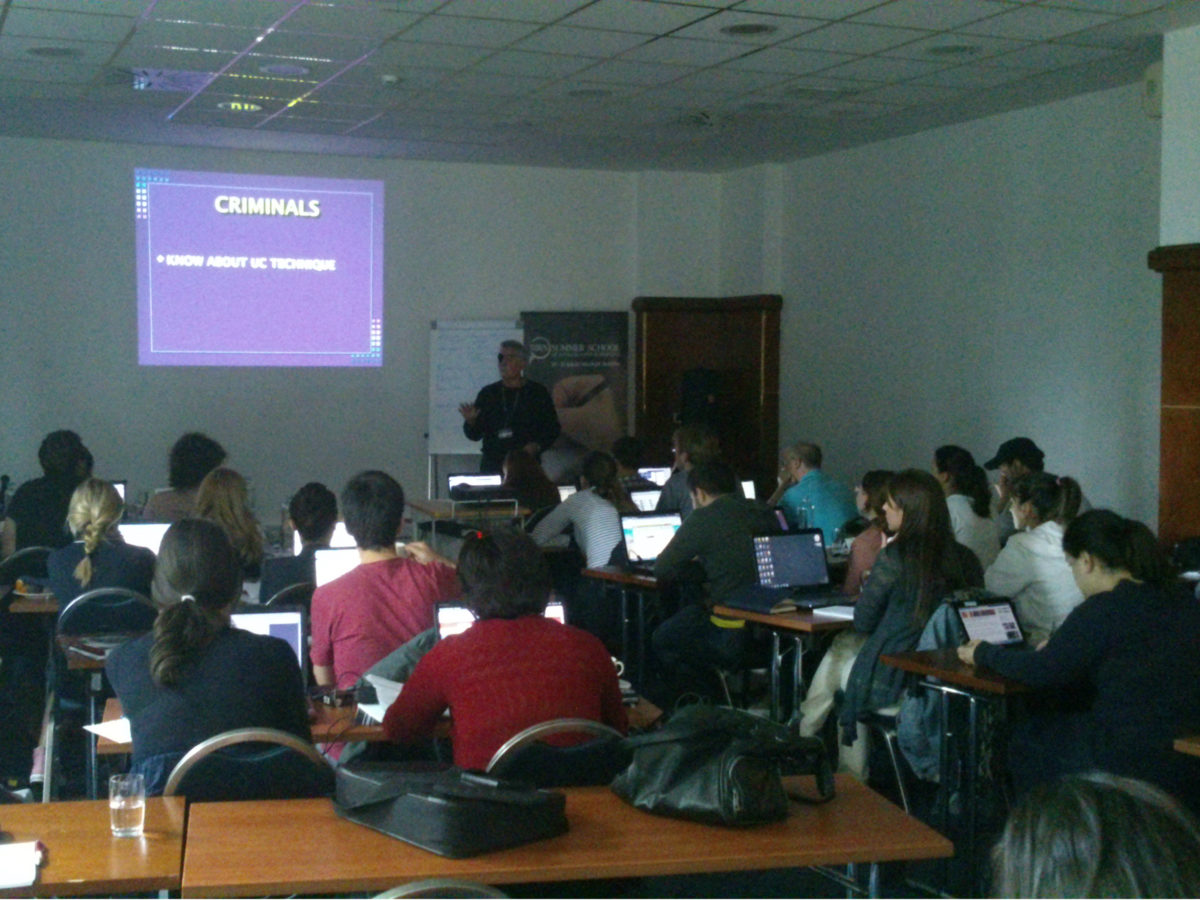
BIRN Summer School Chooses Investigative Story Winners

After five days of intensive training at the fourth annual BIRN Summer School, four groups of reporters whose investigations will be funded were announced at the closing ceremony.

The Summer School jury, composed of lead trainer David Leigh, BIRN regional director Gordana Igric, director of the Konrad-Adenauer-Stiftung Media Programme South East Europe Christian Spahr and former BIRN editor Lawrence Marzouk, chose the teams from a total of ten.

The teams’ investigations will be financed from a total fund of 6,000 euro and the resulting stories will be published on the Balkan Insight website.

The participants making up the chosen teams were: Kristina Ozimec, Gabriela Delova, Vlado Apostolov and Sashka Cvetkovska from Macedonia; Alisa Mysliu from Albania; Milena Perovic Korac and Milica Marinovic from Montenegro; Magda Munteanu from Romania; Semir Mujkic from Bosnia and Herzegovina; Flutura Kusari, Arta Avdiu and Una Hajdari from Kosovo, and Charly Loufrani  from France.

For five days last week, participants at the Summer School from Albania, Kosovo, Macedonia, Montenegro, Bosnia, Bulgaria, Romania, Croatia, Serbia, Slovenia, France, Austria and Estonia learned how to use freedom of information laws, conduct investigative interviews, make the most of computer-assisted reporting, start investigations and put stories together, and more.

This year’s Summer School also had two special guest lecturers, the chief officer of Bari police, Luigi Rinella, and former FBI undercover agent Stephen Salmieri. While Rinella explained how the Italian part of the international investigation into suspected Balkan drugs criminal Darko Saric operated, Salmieri presented necessary skills for undercover work.

This year’s BIRN Summer School was held at Bled Lake in Slovenia.

The BIRN Summer School of Investigative Reporting 2013 was organised in cooperation with the Media Program South East Europe of the Konrad-Adenauer-Stiftung and with the support of the King Baudouin Foundation, the Belgian National Lottery, the OSCE Mission in Kosovo, the OSCE Mission to Serbia and USAID in Macedonia.

Developing Undercover Work at BIRN Summer School

The fourth day of the Balkan Investigative Reporting Network Summer School programme continued with lectures on undercover operations and research, as well as tips for following paper trails in stories.

Former FBI undercover operative Stephen Salmieri told the journalists participating in the Summer School that undercover investigative work is extremely dangerous, which is why it should be used as sparingly and requires a lot of preparation.

In order to minimise security risks, Salmieri said that journalists working undercover should not change their personality. He also said that journalists should know their targets and research their sources, as well as keep in constant contact with their parent organisation.

“When doing investigations, know everything you can know your enemy. Let go of your ego and reduce tensions. If you come across as aggressive, the situation will quickly escalate,” said Salmieri.

A perfect undercover agent, according to Salmieri, is a smart and aware person who listens carefully.

Two times Pulitzer Prize winner Eric Nalder gave the participants of the Summer School tips on how to gather material evidence and documents from companies and organisations. He emphasised the importance of physically going to organisations, carefully interviewing workers and using psychological tricks to control the communication with them.

Nalder also said that after gathering documents, journalists should organise them carefully.

“Always be organised. Use Excel or other spreadsheets to organise your documents, otherwise you might get lost in them,” said Nalder.

British journalist David Leigh also discussed the need to collect documents, but also highlighted that while writing the story, journalists should make sure to provide readers with several points of access.

“Provide photos, interviews, galleries and short clips. Presentation is key. Your story is useless if it does not reach the public,” said Leigh.

The BIRN Summer School is taking place this week in Slovenia with 30 journalists from Serbia, Slovenia, Kosovo, Croatia, Bosnia and Herzegovina, Montenegro, Albania, Bulgaria, Austria, Estonia, France and Romania participating. It will finish on Friday.

The BIRN Summer School of Investigative Reporting 2013 is organised in cooperation with the Media Program South East Europe of the Konrad-Adenauer-Stiftung and with the support of the King Baudouin Foundation, the Belgian National Lottery, the OSCE Mission in Kosovo, the OSCE Mission to Serbia and USAID in Macedonia.

BIRN’s Summer School Hears Tips For Developing Investigations

The second day of the Balkan Investigative Reporting Network’s annual summer school for investigative journalism continued with lectures and workshops on how to develop story ideas and gather information.

Renowned British journalist David Leigh started the day by speaking about possibilities for developing stories which have emerged from major data leaks, such as the material released by WikiLeaks.

“Your aim should be to use WikiLeaks to build your investigations by using the information as actual leads to uncover new things,” said Leigh.

Another way to collect valuable information when building investigations is filing official requests for information to governments, said Helen Derbishire, from the NGO Access Info Europe.

“The requests themselves can help your stories in many ways. For one, you can actually get the information you wanted. Never assume you would not get something. Even if you are rejected, you can appeal, but also you can publish the rejection, which is a story in itself,” she said.

German journalist Marcus Lindemann also revealed ways through which researchers can use Google and social networks to find personal data on individuals of interest.

The executive director of the Organised Crime and Corruption Reporting Project, Paul Radu, said that investigations are about creativity and connecting the dots.

“Today we have a lot of access to a variety of information. The more data we have, allows us to discover bigger schemes… This is fun! It’s just great to ruin the plans of criminals and to get to the bottom of a story,” said Radu.

He used examples of several investigations he worked on to explain the ways in which journalists can gather information about money laundering, offshore companies and proxy companies.

Researcher Laura Ranca highlighted the importance of data visualisation in investigations, explaining that the collected information is only as good as it is presented to the readers.

The BIRN Summer School opened on Monday in Bled, Slovenia with 30 journalists from Serbia, Slovenia, Kosovo, Croatia, Bosnia and Herzegovina, Montenegro, Albania, Bulgaria, Austria, Estonia, France and Romania participating. The lectures will continue on Wednesday.

BIRN Summer School of Investigative Reporting 2013 is organized in cooperation with the Media Program South East Europe of the Konrad-Adenauer-Stiftung and with support of King Baudouin Foundation and Belgium National Lottery and OSCE Mission in Kosovo, OSCE Mission to Serbia and USAID in Macedonia.

BIRN’s Journalism Summer School Opens in Slovenia

The Balkan Investigative Reporting Network’s annual summer school for investigative journalism has begun at Lake Bled with 30 young journalists participating.

The journalists – from Serbia, Slovenia, Kosovo, Croatia, Bosnia and Herzegovina, Montenegro, Albania, Bulgaria, Austria, Estonia, France and Romania – heard on the first day about investigative stories, methods of online research and the challenges of reporting on human trafficking.

Renowned British journalist David Leigh explained that working on investigative stories is a dangerous game. “In essence, you’re blundering along blind, because you don’t know what you’re looking for, but despite this, it is your job to collect the evidence and proof,” said Leigh.

He added that the longstanding principles of Britain’s Guardian newspaper – honesty, integrity, courage, fairness and a sense of duty – are applicable to modern investigative journalism.

Leigh told the participants about a seven-year-long investigation that he was part of, which uncovered bribery in arms dealings in Britain, highlighted the need for patience and hard, written evidence for investigative stories.

“Comment is free, but facts are sacred. This is why it is the job of journalists to get the facts right,” said Leigh.

German executive producer and journalist Marcus Lindemann discussed various online research possibilities. He revealed effective ways in which journalists can get information online about companies, individuals and issues.  

The summer school’s first working day ended with a discussion about the challenges of investigative reporting about human trafficking. Independent consultant and adviser Ruth Rosenberg spoke about the need for journalists to be highly sensitive to victims’ needs when reporting about trafficking.

“We must take care of the privacy, confidentiality and security of victims when reporting on human trafficking stories. You, as journalists, must bear in mind that your stories can have extreme consequences for the people you interview,” said Rosenberg.

Slovenian state prosecutor Savica Pureber and Katjusa Popovic from the NGO Kljuc talked about how the state and non-governmental sector work together to deal with human trafficking issues, highlighting the need for media to cover these stories, but in a sensitive and professional manner.

Meanwhile, Marija Andjelkovic from the NGO ASTRA in Serbia told the journalists about her organisation which runs a trafficking hotline which has received thousands of calls.

“The trends of trafficking in Serbia are changing. Ten years ago we had mostly victims of trafficking from Moldova, Russia, but today 99 per cent of victims are from Serbia. We are also seeing a rise in under-age victims,” said Andjelkovic.

Katrin Adams, who works on the prevention of human trafficking for Germany’s Gesellschaft für Internationale Zusammenarbeit, said that because these issues have been in the public eye for a while, the situation in the region has improved compared to 15 to 20 years ago.

“Prosecutors and judges have been sensitised. We have NGOs and they cooperate very well, but we have problems with sustainable and coherent ideas to improve the social welfare system. We need sustainable prevention,” said Adams.

BIRN Summer School of Investigative Reporting 2013 is organized in cooperation with the Media Program South East Europe of the Konrad-Adenauer-Stiftung and with support of King Baudouin Foundation and Belgium National Lottery and OSCE Mission in Kosovo, OSCE Mission to Serbia and USAID in Macedonia.

BIRN Summer School Scholarships Open Until August 5

Balkan-based journalists can apply for scholarships at the BIRN Summer School of Investigative Reporting 2013 until August 5.

This year’s BIRN Summer School will be held at Bled Lake in Slovenia from August 25-31.

All those interested should apply online by following this link:  http://www.balkaninsight.com/en/birn-summer-school/birn-summer-school-2013-enrolment.

Experienced journalists from Albania, Bosnia and Herzegovina, Bulgaria, Croatia, Kosovo, Macedonia, Montenegro, Romania and Serbia can apply for full scholarships that will cover full-board accommodation, a travel fee up to 100 euros and BIRN’s published textbook  “Digging Deeper: A Guide for Investigative Journalists in the Balkans”.

Application for international participants is open until August 20.

BIRN Summer School of Investigative Reporting 2013 is organized in cooperation with the Media Program South East Europe of the Konrad-Adenauer-Stiftung and with support of King Baudouin Foundation and Belgium National Lottery and OSCE Mission in Kosovo, OSCE Mission to Serbia and USAID Macedonia.

BIRN’s ‘Digging Deeper’ Published in Macedonian

BIRN’s investigative journalism guide “Digging Deeper”, written by Sheila Coronel, director of the Stabile Center for Investigative Journalism and professor at Columbia University, New York, has been published in Macedonian.


The guide for the investigative journalists in Macedonian, entitled “Pod povrshinata”, will be distributed to universities and libraries across Macedonia but also to journalists involved in different projects implemented by BIRN Macedonia. The handbook’s translation and print was funded by the Foundation Open Society Institute Macedonia.

Digging Deeper” is a product of BIRN’s Investigative Reporting Initiative, an educational programme that includes cooperation with international universities and local partners with the aim of putting the guide into commercial use as a curriculum for investigative reporting.

In the guide, journalists’ articles, coupled with interesting advice, skills, investigative stories, databases, case studies, exercises and tips and techniques inspire readers to take up the challenge of a career in investigative journalism.

BIRN’s “Digging Deeper” is part of the curriculum of the BIRN Summer School of Investigative Reporting LINK. BIRN has published two editions of the book in English, which has been translated into Serbian and Albanian as well as Macedonian.

All who are interested in obtaining free copy of this valuable guide for investigative journalists should contact BIRN Macedonia office at this email address: [email protected].

See the full text in Macedonian here.