BIRN BiH at Civil Rights Defenders’ Days in Stockholm

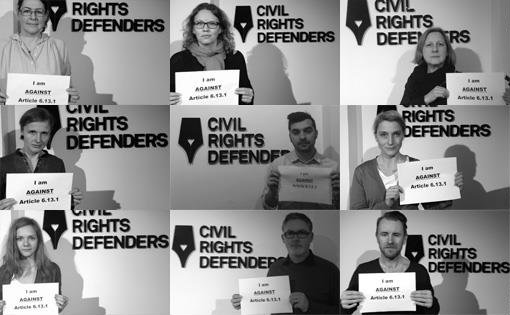
BIRN BiH’s Operations Manager Amila Nezirovic participated in the Civil Rights Defenders’ Days conference in Stockholm from April 2-5, an event held under the banner ‘Empowering Human Rights Defenders at Risk’. 

Civil Right Defendors logo

Three hundred and eighty experts in media, security and human rights from more than 32 countries gathered at the event to discuss the latest developments from some of the world’s most repressive regions.  

Nezirovic took an active part in workshops called ‘Getting Your Message Through’, led by Ruben Brunsveld, and ‘Technology for Human Rights Documentation and Reporting’, led by Dmitri Vitaliev.

Among the guest lecturers were Shin Donghyuk, a defector from North Korea who recounted a moving story about his escape from the Camp 14 detention centre.

“The panel discussions and presentations were very inspirational and useful for many of us who are dealing with different aspects of human rights protection at work and in daily life. I am sure that networking with different participants will be of great support to BIRN’s further work in this field,” said Nezirovic.

At the event, Civil Rights Defenders issued the first batch of GPS bracelets intended to protect activists from kidnapping by alerting CRD headquarters, nearby activists and social media. The initiative was named the ‘Natalia Project’, after the tragic death of Russian human rights defender Nataliya Estemirova in 2009.

At the same event, Natasa Kandic, founder of Humanitarian Law Centre in Serbia, was awarded the Civil Rights Defender of the Year Award for her persistent work on documenting war crimes and serious human rights abuses in the former Yugoslavia. 

More information about the event is available at www.civilrightsdefenders.org.

BIRN Journalist Comments on Vlahovic Verdict on BHT 1

BIRN Bosnia and Herzegovina journalist Mirna Buljugic featured on BHT1’s main news programme on March 29, 2013, speaking about last month’s conviction of paramilitary Veselin ‘Batko’ Vlahovic, who was given Bosnia’s longest ever war crimes sentence.

Mirna Buljugic RTV BiH dnevnik

Buljugic said that the trial had been completed relatively quickly considering the fact that it was a major case and more than 100 witnesses had testified, some of them offering highly moving testimony before the Sarajevo court.

“Emotions are important for us journalists. I therefore emphasise the moving testimonies, but neither the law nor courts recognise emotions. The trial chamber assessed all pieces of evidence, both the common and individual ones, before it rendered its verdict, pronouncing Vlahovic guilty, beyond reasonable doubt, of 60 out of 66 counts against him,” said the BIRN journalist, who has followed the trial since its beginning. 

During the course of the trial, the prosecution presented a BIRN BiH article entitled ‘Synonym for Fear’, written by Merima Husejnovic, as evidence. Vlahovic’s lawyers meanwhile used other BIRN BiH articles containing all testimonies as a resource for preparing his defence.

In his closing arguments, defence attorney Radivoje Lazarevic acknowledged BIRN BiH’s expertise and objectivity in reporting on the Vlahovic trial, as distinct from other media outlets reporting on the court case. 

Under the first instance verdict, Vlahovic, also known as Batko, was sentenced to 45 years in prison for wartime crimes against civilians in the Grbavica, Vraca and Kovacici neighbourhoods of Sarajevo in 1992, including murders, rapes, enslavement, physical and mental abuse, unlawful detention and robbery. 

The entire show is available to watch here: Dnevnik 2 – 29.3.2013

Harvard Students Visit BIRN Sarajevo Office

A group of students from the Harvard Law School International Human Rights Clinic visited the offices of BIRN Bosnia and Herzegovina to learn about war crimes prosecutions in the country.

BIRN BIH Harvard visit

The editor-in-chief of BIRN Bosnia and Herzegovina Erna Mackic and deputy editor Denis Dzidic met the students, who are conducting research about war crimes against civilians and prisoners of war, on March 18.

The group wanted to learn from BIRN BiH about how the Bosnian state court differentiated between civilians and combatants in war crimes cases. 

Mackic and Dzidic provided the students with examples from the six-year history of the court and also gave them information about the case of Alija Osmic, who was found guilty of crimes against prisoners of war despite originally being charged with crimes against civilians in Bugojno in 1993.

The students also wanted to find out about the concepts of command responsibility, civilian support for army units and the role of civilian defence forces during the early 1990s Bosnian conflict.

BIRN BiH Director Interviewed in Bosnia’s Dani Magazine

Anisa Suceska-Vekic, director of BIRN in Bosnia and Herzegovina, gave an interview to weekly magazine Dani, which was published on February 22. In the interview, Suceska-Vekic speaks about BIRN BiH and its work, as well as her family, as she is the mother of three small children.

“What is characteristic of our team is that, despite the fact that we deal with serious issues, we perform our job happily and invest maximum efforts [in it]. The atmosphere in the office (or on Skype, as we are often at different locations) and between the team members is always positive,” Suceska-Vekic said.

“My working day in the BIRN office is never a typical one and it never ends after nine working hours. Most of my days are marked by stress, but at the end of each day I am pleased with what has been done,” she said.

Besides being a director of BIRN in Bosnia and Herzegovina, which follows the processing of war crimes and other activities related to ensuring the transparency of court processes, as well as investigative reporting in the field of coming to terms with the past, Suceska-Vekic is a mother of three children, one of whom was born recently.  

“Our small family consists of six members, with equally numbered male and female squads: Zaria (five years), Pegy (bearded collie, two years) and my humble self are in the female team. Our most important guys are Dan (three), Lun (two months) and dad Dejan,” she told the magazine.

In the interview, Suceska-Vekic also speaks about the rights of women in Bosnian society, as well as the possibilities for balancing private life and work.

Download the full inteview as a PDF file in BCS language

BIRN BiH Editor Featured in Bosnian TV Show

BIRN BiH editor Erna Mackic featured this week on the Federal TV political magazine show ‘Posteno’ (‘Honestly’), discussing false testimonies at war crimes trials and the way that the media in Bosnia and Herzegovina and the region reports about them.  

Mackic spoke about journalistic standards and ethics, saying that no one should be ‘convicted’ in the media before a verdict is announced because the press can’t do a court’s work.

The televised interview was sparked by a recent statement by Goran Golub, a witness at a trial for war crimes committed in the Silos detention camp, who accused famous singer Hanka Paldum of coming to the camp and abusing him while he was imprisoned.

Golub’s lawyer then told the media that he would sue Paldum for alleged physical and sexual abuse and mental suffering. 

Mackic said that the media, particularly in Serbia, had reported about this case as if a second instance verdict had already been given.

She said that attorneys had to be more careful when providing journalists with unchecked and sensationalist information.

Courtroom slander could be prevented by prosecuting offenders, Mackic suggested, noting that the Hague Tribunal has sentenced several people for lying on the stand. 

Besides Mackic, other guests on the show included Paldum and another singer, Ljubica Berak, who visited the frontline and sang for Bosnian Army troops during the war, as well as two influential attorneys, Vlado Adamovic and Josip Muselimovic.

The show can be viewed at: http://www.federalna.ba/bhs/vijest/55725/posteno-s-duskom-jurisic

BIRN BiH Editors Give Expert Interviews to Media

Over the past week, the chief and deputy editor of the Bosnian BIRN offices have appeared on several radio and television shows to discuss the work of the state prosecutor’s office.

BIRN BiH editor-in-chief Erna Mackic was a guest on a special show broadcast by the federal radio station about the pace of war crimes prosecutions in the country on January 24.

Mackic discussed the work of the Bosnian state prosecution, the institute for missing persons and the newly-published “Bosnian Book of the Dead”, a research project by a local NGO containing the names of all the victims of the early 1990s conflict.

Deputy editor Denis Dzidic was also a guest on Bosnian state television’s main news show on January 29. He commented on the inauguration of the newly-inaugurated Bosnian chief prosecutor Goran Salihovic and stressed the upcoming challenges that the state prosecution will face as it tries to finish some 600 pending war crimes investigations.

A day later, Dzidic also spoke on a programme on Bosnia and Herzegovina’s Radio 1, in a special show about the upcoming signing of a protocol on cooperation in war crimes cases between Serbia and Bosnia and Herzegovina.

Dzidic expressed the hope that the protocol would significantly improve the pace of war crimes prosecution and enhance regional cooperation, but stressed that there were a lot of objections from victims to the transfer of cases between the two countries.   

You can watch the entire news programme by following this link:
http://www.bhrt.ba/video/?id=777777973&v=dnevniktv29012013.flv


BIRN BiH on Bosnian state television

BIRN BiH deputy editor Denis Dzidic was a guest speaker on Tuesday on Bosnian state television’s evening news show, discussing the pace of war crimes prosecutions in the country.

Dzidic talked about the Bosnian state prosecutor’s recent decision to halt an investigation into more than 400 people suspected of crimes against Bosnian Serbs in the neighbourhoods of Hadzici, Igman and Hrasnica around the capital Sarajevo during the 1990s conflict.

He also highlighted how many war crimes investigations are still being conducted by the state, and spoke about the challenges that newly-appointed chief prosecutor Goran Salihovic is facing in order to prioritise work on war crimes cases.

During the show, there was also a discussion about the reasons why war crimes prosecutions in Bosnia and Herzegovina last for several years.

You can watch the entire news programme by following this link: http://www.bhrt.ba/video/?id=777777918&v=dnevnikdva22012013.flv

AIS: Contribute to Solving the Anonymization Problem

This year’s meeting of the Association of Court Reporters, AIS, which was attended by members from various communities from Bosnia and Herzegovina, concludes that additional efforts are needed in order to solve problems related to the anonymisation of court documents.

During this year AIS members have implemented an extensive advocacy campaign with the aim of drawing the general public’s attention to the dangers arising from the anonymisation of court documents.

“Fighting against anonymisation will be the key task of AIS in the year ahead. We must continue fighting for a solution to the anonymisation problem. One of the ways to do it is to inform the general public about the consequences of anonymidation,” said Erna Mackic, Editor-in-Chief of BIRN in Bosnia and Herzegovina.

According to Mackic, there are indications that the High Judicial and Prosecutorial Council, HJPC and Court of Bosnia and Herzegovina might reconsider the current anonymisation practices. Therefore, it is important to continue actively implementing the advocacy campaign in order to solve this problem completely.

Mirela Hukovic-Hodzic, BH Radio 1 journalist, pointed out that refusing to disclose names of persons, who have been sentenced under second instance verdicts for war crimes, through the anonymisation process represented a type of “a crime against humanity”, adding that all media had a responsibility to report about this problem.

AIS members agreed that they would try to strengthen the media campaign by preparing frequent reports about the anonymisation problems in local communities in the coming period. It was agreed that AIS journalists would write reports for their employers about concrete examples of the consequences of anonymization.

Also, during the AIS meeting BIRN BiH representatives said, in addition to writing articles about anonymisation, that they would try to find a solution through advocacy and legal means.

The participants in this year’s AIS meeting summarised the results of workshops for representatives of judiciary and the media in Brcko, Doboj, Orasje, Tuzla, Trebinje and Easter Sarajevo with the aim of improving their collaboration.

Those meetings concluded that, in most local communities the media and judiciary share similar problems and that journalists were not sufficiently trained on reporting from courtrooms, while prosecutions and courts lack knowledge on what type of information can be offered to the public and how it can be done.

The meeting participants concluded that AIS would continue visiting local communities in the coming year and that five meetings of the media and judicial institutions would be held in 2013 with the aim of increasing the transparency and responsibility of the media. 

Journalists Arnes Grbesic from Doboj, Goran Obradovic from Banja Luka and Mirsad Arnautovic from Brcko District pointed out that the fact that they could not obtain audio or video materials from verdict pronouncements or plea hearings represented a big problem.

“I do not understand why they cannot give us an audio recording of a person saying ‘Honourable Court, I plead not guilty’ or allow us to record it ourselves. The best solution would be for AIS to submit letters to all courts with the aim of increasing their responsibility,” said Arnautovic.

Journalist Grbesic reminded the meeting’s participants of practices applied by judicial institutions in the Republic of Croatia, adding that the media could record the entire course of trials in that country.

AIS members agreed that in the year ahead they would try to organise lectures for journalism students at various universities in Bosnia and Herzegovina in order to explain the importance of court reporting to them. 
BIRN Offices Hold Joint Meeting On Regional Investigations

BIRN HUB and BIRN Bosnia and Herzegovina held a joint meeting in Sarajevo on Wednesday to discuss a series of upcoming regional investigations.  

The two offices of the Balkan Investigative Reporting Network discussed topics for regional investigations related to transitional justice.

“Our future investigations need to tackle issues of transitional justice that will prompt debate in our societies,” said Gordana Igric, regional director of BIRN.

Igric added that a regional approach to these issues is crucial, as almost every story related to the conflict in the 1990s affects at least two countries in the former Yugoslavia.

The meeting was attended by: Marija Ristic, BTJ Serbian correspondent, Elvira Jukic, journalist, Erna Mackic, Editor in Chief BIRN BiH, Marija Tausan, BIRN Justice Report journalist and Editor, Albina Sorguc, Journalist, Amer Jahic, Journalist, Mirna Buljugic, BIRN Justice Report journalist, Dragana Erjavec, TV Justice journalist and Editor, Selma Ucanbarlic, Journalist/Court reporter, Melisa Bilalovic, Radio Justice Editor and Boris Pavelic, Balkan Transitional Justice Croatia Correspondent.

The investigations are part of BIRN’s Regional Reporting on Transitional Justice Issues programme. Over the next two years, the organisation’s network of journalists will produce four investigations on transitional justice issues in the region.

The topics for investigations will be finalised in January in Belgrade at a joint editorial meeting.

Spotlight on Mladic: Villian or Celebrity?

The publication brings an overview of the coverage of the arrest and the beginning of the trial of Ratko Mladic, who is charged with genocide and other crimes in Bosnia and Herzegovina, in the Balkan media.

The monitoring and analysis encompassed the highest-circulation dailies and weeklies in Bosnia and Herzegovina, Serbia and Croatia.

Languages: Bosnian/Croatian/Serbian (BCS) and English