Winners of EU Awards in Albania Announced

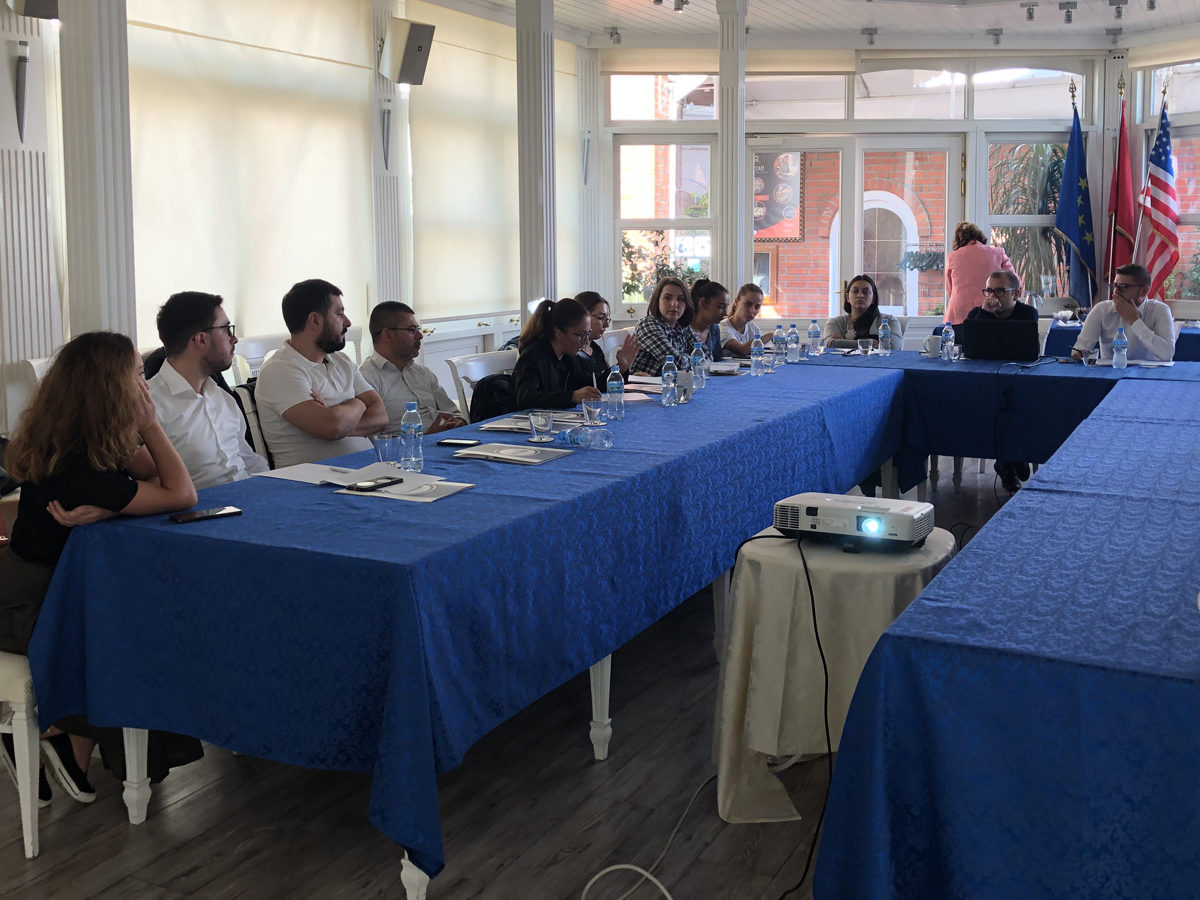
The three winners of the EU investigative journalism prize in Albania were announced on Monday at the EU Info Center in Tirana.

First prize in this year’s EU awards for investigative journalism in Albania went to Esmeralda Keta and Elisa Gjerani for their investigation into one of the country’s most important topics, the poor condition of hospitals and medical care in Albania, entitled “Premature Baby Deaths Rise in Albania’s Cash-starved Hospitals”.

Second prize went to Endrit Habila for his piece, “The Destruction of Valbona”. Third prize went to Ola Mitre for her investigation, “The Hidden Costs of Free Cardio Surgeries in Private Hospitals”.

The jury comprising Mark Marku, head of the jury, and Petrit Collaku, and Samir Kajosevic said they had a hard task evaluating the shortlisted applications.

Luigi Soreca, Head of the EU Delegation to Albania, said investigative journalism was more important than ever in a political climate where democracy was on the defensive.

“Freedom of speech is declining globally, and support for it is weakening, even in mature democracies,” he said.

“Disinformation clearly undermines quality journalism. Investigative journalist are vital in their contribution towards a free and yet accountable society,” he underlined.

The EU awards have the overall goal of celebrating and promoting outstanding investigative journalists in the Western Balkans and Turkey, as well as improving visibility of quality investigative journalism in these countries among the public.

The prize for investigative journalism is awarded through the EU-funded project, “Strengthening Quality News and Independent Journalism in the Western Balkans and Turkey” and applies to the EU candidate and potential candidate countries of Albania, Bosnia and Herzegovina, Kosovo, Montenegro, North Macedonia, Serbia and Turkey. It is for investigative stories published between 2018 and 2020. In total, 63 awards will be given.

The award in Albania is coordinated by the BIRN Albania while the regional consortium is led by Balkan Investigative Regional Reporting Network, BIRN Hub.

Edmond Hoxhaj

Since 2001 working as journalist and correspondent in many newspapers and media in Albania and from September 2018 started working for BIRN Albania covering mostly the justice reform and organised crime issues.

Designing and illustrating a variety of content, ranging from logos to articles, brochures and books.

She is a winner of the first prize of Zooppa project 2016 (USA).

Jurgena Tahiri

She is working as a freelance graphic designer since 2010 and from November 2015 working for BIRN Albania.

Designing and illustrating a variety of content, ranging from logos to articles, brochures and books.

She is a winner of the first prize of Zooppa project 2016 (USA).

Vladimir Karaj

Vladimir has been an editor at the BIRN Albania (Court and Crime
Reporting) since June 2017.

A journalist since 2002, he has worked for various media outlets as a journalist and an editor, he also had a stint as the editor in chief of a small newspaper.  He mainly writes reportages and in-depth stories, predominantly concerning crime and politics.

BIRN Albania Opens Call for Investigations on Labour Rights

BIRN Albania launched a call for investigative stories on labour rights on July 19.

BIRN is offering grants for three journalists to cover labour rights stories, with mentoring by experienced editors.

The call is held as part of the project ‘Strengthening Media’s Role in the Fight against Corruption’, supported by the Open Society Foundation in Albania.

The project aims to strengthen reporting on corruption in the country through cooperation with civil society, in order to help create a more informed citizenry that is engaged in the democratic process.

Three journalists will be awarded grants to cover their expenses while conducting investigations and writing their stories on labour rights.

The journalists will have around three months to dig deeper and research their ideas, and will also have the opportunity to work with experienced editors as mentors to guide them through the process of writing in accordance with BIRN standards.

The call only applies to journalists from Albania and closes on August 25, 2019.

Click here for more information (in Albanian) about the application procedure.

Click here to download the application form (in Albanian).

Albania Anti-Defamation Laws Condemned as ‘Censorship Package’

Ten Albanian human rights organisations on Friday denounced a government proposal to ‘regulate’ the online media as a ‘censorship package’ without precedent in a democratic country.

Ten human rights organisations in Albania on Friday denounced the Prime Minister’s initiative to “regulate the online media”, calling it “a censorship package”.

The Albanian Center for Quality Journalism, MediaLook, the Albanian Institute of Science, the Albanian Media Council, the Albanian Media Institute, the Association of Professional Journalists of Albania, BIRN Albania, Civil Rights Defenders, Res Publica and the Union Of Albanian Journalists urged the Socialist Party-led government to withdraw the proposal, arguing that current laws on defamation are sufficient.

“We encourage the government of Albania to withdraw these two bills and call on parliament not to approve them,” the statement reads.

“These drafts laws risk the increase of censorship and self-censorship in the local media and could contribute to further setbacks on media freedom and freedom of expression in Albania, which, based on the June 2019 assessment of seven international organizations, is ‘deteriorating,’” the statement adds.

The government of Prime Minister Edi Rama claims the country needs “to discipline” the online media in order “to improve the quality of the information and public discourse”.

This draft law gives the Complaints Council the power to oblige electronic publications service providers to publish an apology, remove content or insert a pop-up notice if they are found to have violated provisions on dignity and privacy.

This council has the power to fine media up to 8,300 euros for such violations. A second law subjects online media to the Telecommunication and Postal Authority, AKEP, which will have the power to insert pop-ups on websites if they have been found in breach of the law by the Complaints Council. Failure to comply with AKEP would result in fines up to 830,000 euros.

“These draft laws, in an unprecedented way in democratic countries, seek to impose a regime of administrative control on the online media,” the rights organizations say.

Link: Statement in English

BIRN Albania Holds Roundtable on Labour Rights

The Balkan Investigative Reporting Network in Albania held a roundtable in Tirana on Monday, July 15th, bringing together journalists and non-governmental organizations to discuss labour rights.

The event was held as part of the project ‘Strengthening Media’s Role in the Fight Against Corruption,’ financed by the Open Society Foundation in Albania.  The project aims to strengthen reporting on corruption in the country through cooperation with civil society, in order to help create a more informed citizenry that is engaged in the democratic process.

The roundtable was moderated by Vasilika Laci from Civil Rights Defenders and saw contributions from a variety of activists, journalists and labour rights groups in Albania.

During the roundtable, the participants suggested a series of key topics to be investigated, including problems with the management of properties of unions, abuse of collective contracts in public companies, the cost of illegal dismissals of public servants, women’s unpaid work in Albania, abuse of labour subsidies, minimum wage and living income and many other topics.

The goal of the roundtable was to draw attention to an upcoming call for grant proposals to fund investigative reporting on the topic of labour rights. The call will be launched in the coming days by BIRN Albania.

Three journalists will be selected by an independent jury and will be mentored by BIRN editors for a period of three months as they produce hard-hitting investigative reports on the topic.

Calls Open for EU Investigative Journalism Award

Applications are now open for submission of investigative articles from the Western Balkans and Turkey for the annual EU Investigative Journalism Award.

Investigative stories published from January 1 to December 31, 2018, and related to freedom of expression, rule of law, transparency, abuse of power and fundamental rights, corruption and organised crime are welcome to apply.

The award fund in each country in 2019 (for achievements in 2018) is 10,000 EUR. The first prize will be 5,000 EUR, the second 3,000 EUR, and the third will be 2,000 EUR.

Individuals or groups of journalists are eligible to apply in all journalism forms (print, online, radio and TV) published or broadcast in the media in each country in official, minority or international languages.

Articles eligible for submission must appear in print, online, radio and TV media outlets during the 2018 calendar year.

EU Investigative Journalism Awards in the Western Balkans and Turkey aim to celebrate and promote the outstanding achievements of investigative journalists as well as improve the visibility of quality journalism in the Western Balkans and Turkey.

The awards are a continuation of the ongoing regional EU Investigative Journalism Award in the Western Balkans and Turkey and part of the ongoing project ‘Strengthening Quality News and Independent Journalism in the Western Balkans and Turkey’.

The project partners involved all have extensive expertise in the field of media freedom and have been recognised locally and internationally as strong independent media organisations.

The jury for the EU Award comprises media experts, some of them from the project consortia. Others are drawn from the extensive network projects that the consortium members have, such as editors, members of academia and journalists with merits.

Deadline for the submission of application is July 17th, 2019.

The awards will be given annually in all six Western Balkan countries and Turkey.

For more details, contact [email protected]


To download all necessary documents in English click here

To download all necessary documents for Serbia click here

To download all necessary documents for Kosovo click here

To download all necessary documents for Bosnia and Herzegovina click here

To download all necessary documents for Montenegro click here

To download all necessary documents for Macedonia click here

To download all necessary documents for Albania click here

To download all necessary documents for Turkey click here

BIRN Wins Appeal to Declassify Albanian Secret Police Files

After a legal challenge by BIRN, an appeals court ordered the declassification of reports and statistics from Albania’s much-feared Communist-era secret service, the Sigurimi, which the country’s present-day intelligence agency wanted to keep restricted.

The landmark ruling by the Administrative Court of Appeals in Tirana on Wednesday paved the way for the declassification and publication of written reports and statistical data produced by Albania’s Sigurimi security service.

After almost three years of legal efforts by BIRN Albania, the court dismissed arguments from the country’s current secret service that such information should be kept secret in perpetuity.

The ruling, which cannot be appealed, upheld a first-instance court decision from 2016.

BIRN first made a legal request for the declassification of Communist-era files back in March 2016, demanding yearly reports by the Sigurimi for the period from 1980 to 1989, as well as statistical information on the number of Albanians under active surveillance by the Sigurimi during that period.

The current State Information Service, SHISH, which has controlled a large part of the Sigurimi archive since the fall of Communism, first refused the request, claiming it didn’t have the authority to handle it.

Albania’s Freedom of Information Commissioner ordered SHISH to open the files and to reevaluate their status as secret, based on a 2014 law on freedom of information.

However, SHISH then insisted in September 2016 that the information sought by BIRN should remain a state secret.

BIRN challenged the decision in an administrative court, and won in the first instance in November 2016.

However, the Administrative Court of Appeals has a backlog of some 20,000 cases and the appeal decision only came almost three years after BIRN’s first freedom of information request.

During the hearing, SHISH emphasised that in its opinion, the files and statistics should remain “secrets in perpetuity”, and said that it has “an exclusive right” to decide whether to declassify them or not.

A number of other state institutions in Albania also keep classified information that was labelled as secret during the Communist period.

It is hoped that Wednesday’s court ruling will provide a guidance them on how to handle and publish the information.

For example, an Albanian parliamentary has access to the Sigurimi files, but only provides information from them to people prosecuted under Communism.

Theodoros Alexandritis, a human rights lawyer, told BIRN that the appeals court’s decision was “a brave step” in the right direction.

“The reluctance of the secret service to disclose any info and hold it under wraps forever shows that a culture of secrecy is still prevalent in that institution and that successive governments have not done anything to counter it,” Alexandritis said.

“In terms of the importance, the decision is clearly a brave step by the Albanian courts to bring their approach on this sensitive issue in line with international law standards and the European Court of Human Rights’ jurisprudence,” he added.

Report on Local Mayors’ Assets

The Balkan Investigative Reporting Network in Albania has published a report entitled ‘Analysis of the System of Asset Declarations of Mayors in Albania’, which evaluates the wealth of the heads of local government units in the country as well as the integrity of the asset declaration system.

The asset declarations of serving mayors were analysed with the help of three financial experts, who recorded and categorised in a database all the data declared by heads of municipalities in their annual asset disclosures.

Read more.

To download a copy of the report in Albanian, click here.