BIRN Albania’s Local Government Transparency Monitoring Report

The Balkan Investigative Reporting Network in Albania on April 25 published a national report entitled ‘Local Government Under the Lens of Freedom of Information: A Comparative Monitoring of Transparency Indicators Online and On the Ground’, covering all 61 municipalities in the country from 2017 to 2019.

The report contains assessments of the transparency of the 61 local government units in Albania, based on 55 indicators, evaluated in both 2017 and 2019, tracing the progress made by local municipalities in the implementation of freedom of information and public consultation laws.

Read more.

For a copy of the report in Albanian click here.

For a copy of the report in English click here.

BIRN Albania Issues Local Government Transparency Monitoring Report

The Balkan Investigative Reporting Network in Albania on April 25 published a national report entitled ‘Local Government Under the Lens of Freedom of Information: A Comparative Monitoring of Transparency Indicators Online and On the Ground’, covering all 61 municipalities in the country from 2017 to 2019.

The report contains assessments of the transparency of the 61 local government units in Albania, based on 55 indicators, evaluated in both 2017 and 2019, tracing the progress made by local municipalities in the implementation of freedom of information and public consultation laws.

According to the monitoring data, the indicators were reached by 41 per cent of local municipalities in 2019, with the majority of the municipalities failing to reach half of the monitored target indicators. Compared with 2017, the average level of transparency of local municipalities dropped by five percentage points.

The monitoring of municipalities for the report was carried out in February 2019 by a network of local journalists across Albania. The publication of the report was funded by the Rockefeller Brothers Fund and the Balkan Trust for Democracy.

For a copy of the report in Albanian click here.

For a copy of the report in English click here.

BIRN Albania Publishes Report on Local Mayors’ Assets

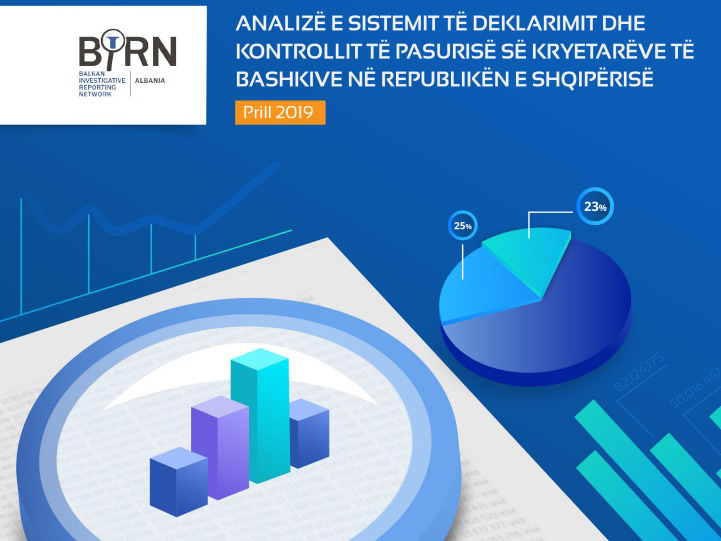
The Balkan Investigative Reporting Network in Albania has published a report entitled ‘Analysis of the System of Asset Declarations of Mayors in Albania’, which evaluates the wealth of the heads of local government units in the country as well as the integrity of the asset declaration system.

The asset declarations of serving mayors were analysed with the help of three financial experts, who recorded and categorised in a database all the data declared by heads of municipalities in their annual asset disclosures.

The experts analysed the information using a plausibility check, a method of scrutiny used by Albania’s High Inspectorate of Declaration and Audit of Assets and Conflicts of Interest, HIDAACI, to investigate the wealth of public officials.

The goal of the report is to identify key trends contributing to the enrichment of the 61 heads of local municipalities in Albania.

The study sheds light not only on how mayors in Albania have accumulated wealth but also on key practices which obscure the origins of their money.

These include dividends from businesses, debts owed by family members, real estate transactions and cash kept outside the banking system.

To download a copy of the report in Albanian, click here.

BIRN Albania Wins Award for Investigative Journalism

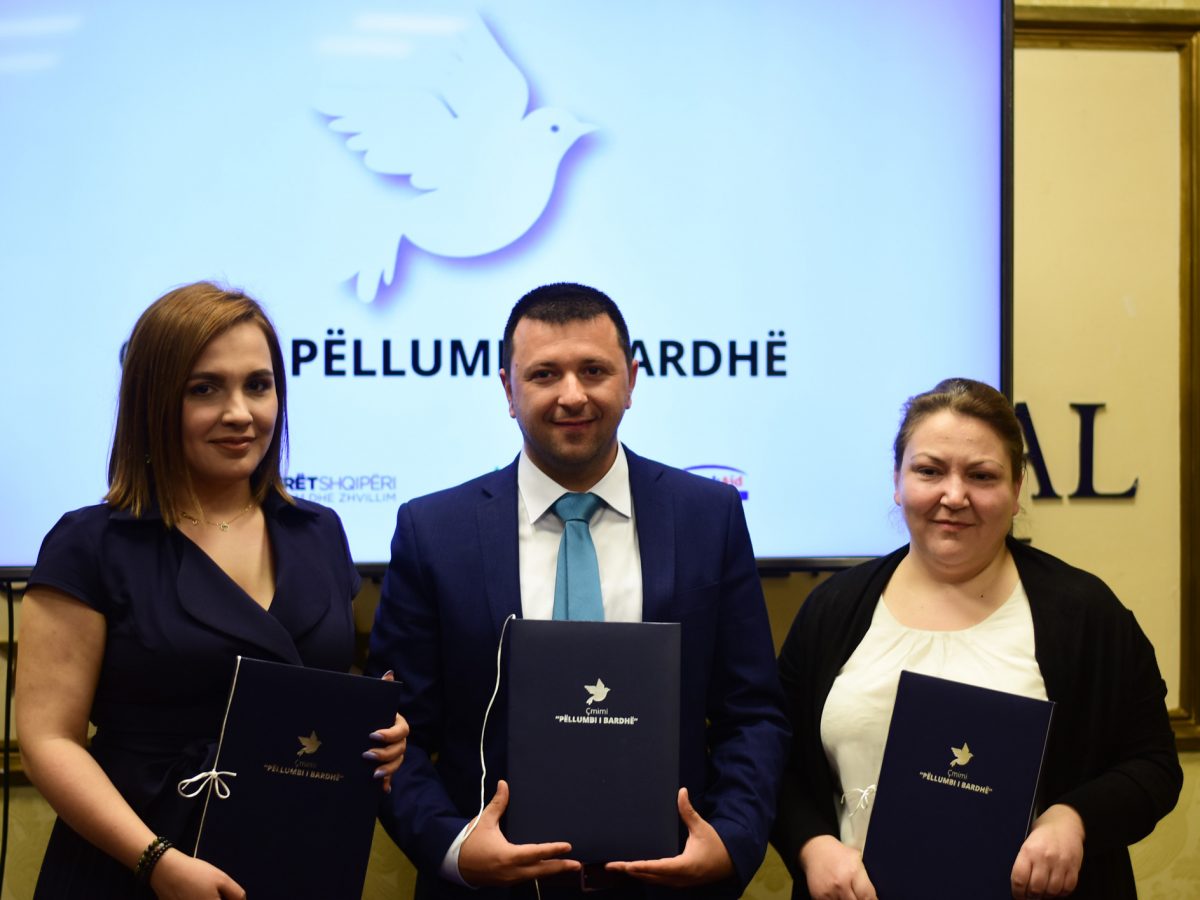
The Balkan Investigative Reporting Network in Albania was given the White Dove award by Partners Albania for Change and Development for its investigative reporting.

The award was presented to BIRN Albania at a ceremony on April 2 by Partners Albania for Change and Development, a domestic organisation focused on strengthening democracy and democratic development.

Partners Albania gave BIRN the award “for the civil courage, professionalism and objectivity shown with investigative reports with a wide public impact”.

At the award ceremony, BIRN Albania executive director, Kristina Voko, thanked Partners Albania for the award, which she dedicated to BIRN’s staff and the many journalists with which the organisation works.

“This award would not be possible without the tireless work of our staff journalists and local reporters and the close cooperation between journalists and civil society,” Voko said.

Apart from BIRN, the Albanian Institute of Science, AIS, and the environmental organization Eco Albania were also recognised for their positive impact on democracy and transparency in the country.

BIRN-Supported Journalist Wins Whistleblower Award

Investigative journalist Klodiana Lala was given the Free Speech Award by the South East Europe Coalition of Whistleblower Protection on March 22 for a story she produced using a BIRN reporting grant.

“Klodiana Lala revealed in January that a political party has manipulated the 2017 parliamentary elections in cooperation with organized crime groups, threatening voters and promising illegal gains,” said Mark Worth, executive director of the European Center for the Rights of Whistleblowers, while presenting the prize.

“Her investigations for BIRN have revealed wiretaps of high level officials and former MPs involved in vote buying, corruption and criminal activities,” Worth added.

A journalist for Albania’s News 24, Lala was the recipient of a grant and mentorship from BIRN Albania editors, as part of an open call for stories on organised crime. She was part of a group of more than 30 journalists supported by BIRN Albania in 2018 with reporting grants.

As part of the call, Lala produced an investigation on the nexus between organised crime, local politicians and election fraud, published by BIRN Albania’s online publication reporter.al with a TV version broadcast VOA Albanian language.

Lala has reported on organised crime and justice for more than a decade. In August 2018, the home of her parents in Tirana was sprayed with bullets by an unidentified assailant. The attack was condemned by human rights organisations and politicians, but the culprits have yet to be identified.

BIRN Albania Documentary Screened at European Parliament

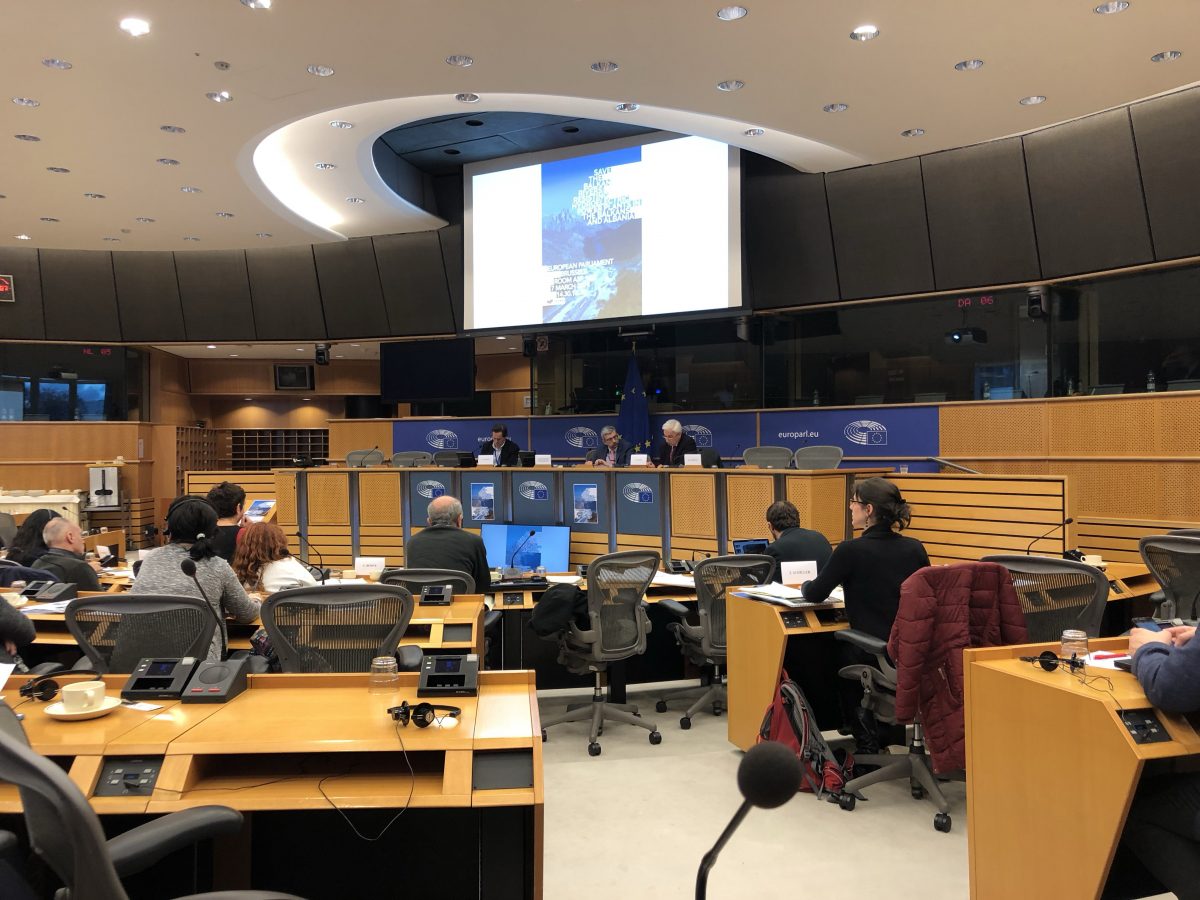
A feature-length documentary produced by BIRN Albania, ‘Free Flow’, was screened on March 7 at the European Parliament in Brussels as part of a conference entitled ‘Save the Balkan Rivers: Resisting the Hydroelectric Power Plants (HPPs) in the Balkans and Albania’.

The conference was organised by the European United Left/Nordic Green Left (GUE/NGL) parliamentary group to highlight the threat posed to biodiversity in the Balkans by thousands of planned hydropower plant projects.

Directed by film-maker Elton Baxhaku, the documentary ‘Free Flow’ follows Albania villagers, activists, scientists and artists as they try to draw attention – in court and on the streets – to the threat posed to the environment and the local ecotourism industry by power plant projects.

Present in a panel in the conference in Brussels, along with MEPs Stelios Kouloglou, GUE/NGL and Thomas Waitz, The Greens, BIRN Albania editor Besar Likmeta, highlighted the motivation that pushed BIRN to produce the documentary, underlining that the fight against power plant developers in the region was not only important for safeguarding the environment but was also about the struggle for democracy and the right of local communities to have a voice in the usage and the future of their resources.

The conference included also video spots from MEPs Knut Fleckenstein and Eduard Kukan, and was attended by activist and civil society representatives from Albania, the wider Balkans and EU countries.

Report on Assets of Administrative Court Judges

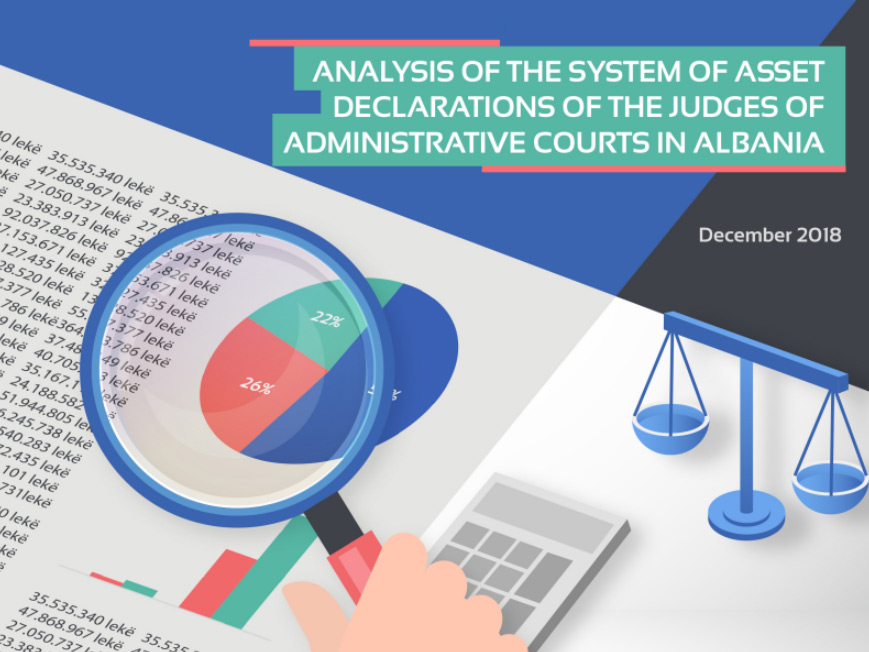
Analysis of the System of Asset Declarations of Administrative Court Judges in Albania, is a study published by the Balkan Investigative Reporting Network in Albania, which evaluates that structure of the wealth of the Administrative Court judges in Albania as well as the integrity of the asset declaration system.

The goal of this report is to identify key trends towards the enrichment of the 48 judges of the administrative courts in Albania. The study sheds light not only on how administrative court judges in Albania have accumulated wealth but also on key practices, recognized as “red flags”, which obscure the origin of this wealth. These include dividends from businesses, debts owed by family members, real estate transactions and cash kept outside the banking system.

To download a copy of the report in English, click here.

To download a copy of the report in Albanian, click here.

BIRN Albania Opens Call for Investigations on Housing and Property Rights

BIRN Albania launched a call for investigative stories on property rights and housing on February 18th.

BIRN is offering grants for three journalists to cover property rights and housing stories, as well as mentoring by experienced editors.

The call is held as part of the project ‘Exposing Corruption through Investigative Reporting’, financed by the National Endowment for Democracy.

The project’s aim is to strengthen journalistic reporting on corruption in the country through cooperation with civil society, in order to contribute to a more informed citizenry that is engaged in the democratic process.

Three journalists will be awarded grants to cover their expenses while conducting investigations and writing their stories on housing and property rights.

The journalists will have around three months to dig deeper and research their ideas, and will also have the opportunity to work with experienced editors as mentors to guide them through the process of writing in accordance with BIRN standards.

The call only applies to journalists from Albania and closes on March 10th.

Click here for more information (in Albanian) about the application procedure.

Click here to download the application (in Albanian).

BIRN Albania Holds Discussion on Property Rights and Housing

The Balkan Investigative Reporting Network in Albania held a roundtable discussion for civil society activists and journalists on the topic of property rights and housing.

Around 20 journalists, experts and civil society representatives gathered in Tirana on February 13 to discuss strategies that investigative reporters can use in order to better report on property rights problems and housing.

The event was held as part of the project ‘Exposing Corruption Through Investigative Reporting’, financed by the National Endowment for Democracy.  The project’s aim is to strengthen journalistic reporting on corruption in the country through cooperation with civil society, in order to contribute to a more informed citizenry that is engaged in the democratic process.

The roundtable was moderated by Gentian Serani, an activist from the Youth Movement for Roma and Egyptian Rights, and BIRN Albania editor Besar Likmeta.

During the roundtable, the participants suggested a series of key topics to be investigated, including problems with the management of public properties, discrimination against minorities in the rental market, as well as gender discrimination in property inheritance. Problems with property legalisation and the registration process, as well as the award of building permits, were also highlighted.

The goal of the roundtable was to draw attention to an upcoming call for investigative reporting grants on the topic of property rights and housing, which will be launched in the coming week by BIRN Albania.

Three journalists will be selected by an independent jury and will be mentored by BIRN editors for a period of three months to produce hard-hitting investigative reports on the topic.

Documentary ‘Free Flow’

Documentary, which was directed by film-maker Elton Baxhaku and premiered in 2018, covers the decade-long grassroots struggle by local communities, activists and civil society organisations against hydropower plant projects that threaten the environment, the water supplies of local communities and their livelihoods that are based on sustainable tourism.

In the past two decades, the Albanian government has approved over 500 hydropower plant projects on its rivers and streams, which environmentalists say threaten some of the last unspoiled river systems in Europe.

The documentary focuses on three areas, the Shebenik Jabllanica National Park, the Vjosa River and the Valbona National Park – following local villagers, community rights activists, scientists and artists as they struggle to voice their concerns over hydropower plant projects, challenge concession contracts in court and protest in the streets to encourage support for their cause.