Thirrje për artikuj investigativë në fushën e institucioneve financiare

Thirrja organizohet nga Rrjeti Ballkanik për Gazetarinë Investigative në Shqipëri (BIRN Albania), si pjesë e projektit të saj “Zbardhja e korrupsionit në Shqipëri”, të mbështetur nga Open Society Foundation in Albania dhe National Endowment for Democracy.

Nëpërmjet këtij konkursi tre (3) gazetarë investigativë do të përzgjidhen për të prodhuar artikuj investigativë në fushën e industrisisë dhe institucioneve financiare, në bashkëpunim me shoqërinë civile. Fituesit do të përzgjidhen nga një juri e pavarur e përbërë nga gazetarë me eksperiencë dhe ekspertë në fushën e financave. Këto grante investigative do të mbështeten nga National Endowment for Democracy.

Aplikantët e përzgjedhur, të cilët do marrin një bursë prej 1,200 USD (minus taksën të ardhurave personale), do kenë në dispozicion një periudhë tre mujore për të përfunduar investigimin e tyre dhe përgatitjen e artikullit për publikim.

Kandidatët fitues pritet që të angazhohen dhe të përmbushin të gjitha detyrimet në lidhje me investigimin, siç janë: takimet e shpeshta me redaktorin, publikimin e tekstit në faqen e BIRN Albania www.Reporter.al, si dhe respektimin e standardeve të gazetarisë investigative dhe etikës profesionale.

Kandidatët duhet të formulojnë një propozim të detajuar për konkursin. Propozimet duhet të kenë për qëllim ekspozimin e rasteve konkrete të korrupsionit, pandëshkueshmërisë dhe mungesës së zbatimit të ligjit në sektorin financiar.

Prioritet në përzgjedhje do i kushtohet propozimeve të cilat përfshijnë një nga temat e mëposhtme, të sygjeruara si prioritare gjatë një tryeze të rrumbullakët midis gazetarëve dhe përfaqësuesve të shoqërisë civile të organizuar nga BIRN Albania:

  • Raste korrupsioni ose mashtrimi në sistemin bankar;
  • Transparenca e fondeve të investimeve;
  • Rreziqet e lidhura me kompanitë e investimeve online;
  • Mbikëqyrja dhe transparenca e sektorit financiar nga institucionet shtetërore;
  • Abuzime me klientët në sistemin bankar dhe shoqëritë e kursim kreditit;
  • Abuzime me kreditë nga bankat, kompanitë apo individët;
  • Korrupsion nga punonjësit e sistemit bankar apo ata të institucioneve mbikëqyrëse 

Aplikantët mund të dërgojnë më shumë se një aplikim, por vetëm një propozim për kandidat do të përzgjidhet.

Të drejtën për të aplikuar e kanë të gjithë gazetarët në Shqipëri, të punësuar pranë mediave të tjera apo në profesion të lirë.

Kandidatëve u kërkohet të dërgojnë propozimet e tyre në formularin e aplikimeve (Kliko këtu për formularin), një CV dhe tre shembuj të punës së tyre me email në:

[email protected]

Afati i Aplikimit: 28 Shkurt, 2017

Kandidatët e përzgjedhur do të njoftohen deri më datë: 5 Mars, 2017

BIRN Staff Trained in Project Cycle Management

Twenty BIRN Programme and Project Managers have been trained to build their capacities in the field of project cycle management.

The training sessions from January 31 to February 3 in Vrsac had the overall aim to improve BIRB staff’s effectiveness in the preparation and implementation of projects and programmes.

The College of Europe from Bruges designed and implemented the training programme and participants from Romania, Macedonia, Kosovo, Albania, Bosnia and Herzegovina and Serbia took part.

Project cycle management (PCM) is the process of planning, organizing, coordinating, and controlling a project effectively and efficiently throughout its phases, from planning through execution then completion and review, in order to achieve pre-defined objectives or satisfy the project stakeholders by producing the right deliverables at the right time, cost and quality.

BIRN Macedonia Launches Foreign Investments Database

BIRN Macedonia has launched a new database called ‘Foreign Investments Uncovered’ which indicates that the amount of these investments is seven times lower than announced by government.

The ‘Foreign Investments Uncovered’ database, launched by BIRN Macedonia  on January 23, also indicates that the number of workers employed as a result of these investments is three times fewer than announced by government spokespeople.

The database contains details of 138 investments that have been announced or promoted between 2007 and 2016 by government officials.

It shows that 43, roughly one third, of the announced investments have not been completed or have failed.

It also shows that 25 foreign companies have been subsidised by the government to invest or work in the country, but the amount that has been given to the companies as subsidies remains unknown.

According to the database, only four companies have invested the amount that has been announced, or slightly more.

The others have invested significantly less than announced by the government, or have not invested at all.

Foreign Investments Uncovered’ provides a resource for future investigations into this topic. The database is accessible at the following link: investicii.prizma.mk.  

This database is scalable and will be updated in the future when new information is available.

This database was published within the Project for Investigative Journalism and Cooperation between the Media and Civil Society, part of the USAID Program for Strengthening the Independent Media in Macedonia. 

New Investigative Journalism Project Launched

The Balkan Investigative Reporting Network, BIRN, is carrying out a three-year investigative journalism programme thanks to support from the Austrian Development Agency, ADA. BIRN Kosovo director Jeta Xharra and Gunther Zimmer, ADA’s Kosovo director, signed an agreement in Pristina this week, marking the start of the project.

The programme is a continuation of BIRN’s award-winning “Paper Trail to Better Governance”, which produced a series of innovative and hard-hitting investigations between October 2013 andJuly 2016.

Journalists from Albania, Bosnia and Herzegovina, Kosovo, Macedonia, Moldova, Montenegro and Serbia worked together to produce more than 30 pieces of watchdog journalism,www.balkaninsight.com/en/page/paper-trail, with many of the stories published alongside major international outlets such as The Guardian.

Reporters were provided with training in investigative journalism and given subject-specific briefings related to their stories.  

The investigations used public documents, often obtained through Freedom of Information laws, to shine a light on corruption in the private and public sector. The findings have sparked a number of official investigations which are ongoing.

The new, three-year programme will continue to use public documents and FOI laws to uncover wrongdoing, while integrating new, computer-assisted techniques.

Xharra said: “We’re pleased that ADA continues to support BIRN’s work building a cohort of talented investigative journalist who have the skills, means and passion to hold the powerful to account. “

BIRN Journalists Won 13 Awards in 2016

Journalists from the BIRN Network won prestigious national awards in their respective countries and a number of international awards in 2016. 

BIRN journalists in various countries won a total of 13 awards in 2016:

An alumna of BIRN’s Balkan Fellowship for Journalistic Excellence programme received a commendation from the United Nations Entity for Gender Equality and the Empowerment of Women in Albania, UN Women, for the “creation of a professional model of investigative journalism for the reporting on trafficking of women and girls”.

BIRN Macedonia journalists won the prestigious Nikola Mladenov award for investigative reporting for the Skopje 2014 Uncovered database and a series of investigative reports about the grand revamp of the capital.

A BIRN Serbia journalist scooped first prize for the best investigative journalism story in Serbia’s print media. The award was given by the Independent Journalists Association of Serbia, NUNS, and the US Embassy in Belgrade.

The documentary film ‘The Unidentified’ – produced as part of BIRN’s Balkan Transitional Justice programme – won the best short documentary award at the South East European Film Festival in Los Angeles. The film investigated the commanders responsible for brutal attacks during the Kosovo war.

An investigation into judges’ assets by BIRN Albania won first prize in the EU Investigative Journalism Award 2015 for Albania.

A BIRN Serbia journalist won first prize in the EU awards for investigative journalism in Serbia for a report on a controversial government tender to clear the flood-hit mine, while third prize went to a joint BIRN Hub and BIRN Kosovo story revealing how a multi-million-dollar road construction contract was quietly handed to a consortium with little highway-building experience linked to a controversial Serbian businessman.

BIRN Macedonia won the first and second prizes in the EU awards for investigative journalism for Macedonia for a series of articles related to the Telecom dossier and for Skopje 2014 Uncovered respectively.

The second prize in the EU awards for investigative journalism for Kosovo was awarded for the story published in BIRN Kosovo’s Gazeta Jeta ne Kosove.

BIRN Serbia’s documentary ‘Flatland without Birds?’, about illegal hunting in Serbia, was named in November the best Serbian film at the Belgrade International Green Culture Festival, Green Fest.

BIRN Albania journalist Lindita Cela won a prestigious prize for ‘hard-hitting investigations’ into organised crime and corruption in Albania. The Central European Initiative and the South East Europe Media Organisation, in special partnership with the Media Program South East Europe of the Konrad Adenauer Stiftung awarded the prize.

BIRN Kosovo won an award for the Best Television Story on Transparency and Anti-Corruption at the Anti-Corruption Journalism Awards, chosen by the Association of Journalists in Kosovo in cooperation with United Nations Development Programme and the Kosovo Anti-Corruption Agency.

BIRN’s Social Media Pages Grow in Popularity

BIRN’s social media pages have increased their numbers of followers significantly, boosting the reach of the stories that BIRN is publishing and heightening public engagement.

The Facebook page of Balkan Insight, BIRN’s regional publication, had five times more followers in January 2017 than in November 2014, when the latest grant from the Norwegian Ministry of Foreign Affairs supporting this digital outlet began.

Balkan Insight’s Twitter page currently has 23,441 followers, while in November 2014 it had a total of 7,556 – an increase of 330 per cent.

Balkan Transitional Justice (BTJ), another BIRN regional programme, has also recorded an important increase in its social media following.

Its Facebook page counts 20,611 followers in total, while at beginning of that period it had 13,000 – an increase of 159 per cent.

BTJ’s followers on Twitter also increased by 314 per cent, from an initial 1,250 to a current total of 3,926 from November 2014.

Balkan Insight’s social media followers come from around the region and from further afield – mostly the United States and Britain.

Emma Krstic, BIRN’s social media editor, said the organisation had been working to develop and deepen its engagement on social networks.

“In the past 12 months we have introduced more live coverage of events, namely elections and protests, which we covered on social media and through live blogs, and started to produce more video content,” said Krstic.

“Additionally, over the past year, numerous milestones and historic events across the region such as the war crimes verdict against former Bosnian Serb political leader Radovan Karadzic and Kosovo winning its first-ever Olympic gold medal and its first-ever Oscar nomination for a foreign film, have helped us to grow our audience organically,” she added.

“Our content inspires a steady stream of comment and debate, which at times becomes quite heated among our social media community. We aim to facilitate interesting and healthy debate, but covering a region with such a turbulent recent history can evoke a very passionate reaction from our followers on social media which requires a lot of moderation,” she said.

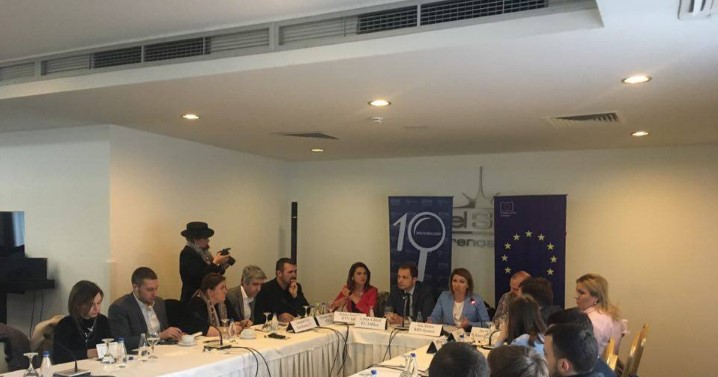
BIRN Albania Holds Roundtable on Financial Industry

The Balkan Investigative Reporting Network in Albania held a roundtable on the financial industry, bringing together journalists, civil society organizations and experts. 

BIRN Albania’s roundtable on the financial industry held on February 1st  in Tirana was part of a programme called “Exposing Corruption in Albania”, which is financed by the National Endowment for Democracy, NED.

The project aims to expose corruption in the financial industry by bridging the gap between civil society and investigative journalists, in order to uncover abuses of power, abuse of client trust and abuse of regulations.

About 20 representatives of non-governmental organisations and journalists discussed the topics to be investigated, which ranged from transparency of the financial sector, investment funds’ disclosures with clients and the ability of regulatory institutions to monitor their activities.

Participants at the roundtable also listed questionable loan practices from banks and debt collection services as topics of concern.

The topics highlighted by the NGOs will be listed in BIRN Albania’s upcoming call for investigative stories in the field of financial industry. 

BIRN Film Shows Problems Between Media and Police

The difficult relationships between journalists and the police forces in various countries in the Western Balkans are highlighted in the BIRN Serbia documentary ‘Police and Media’.

The BIRN Serbia documentary ‘Police and Media’ was broadcast on January 23 by the regional television network N1 as part of the Western Balkans Pulse for Police Integrity and Trust project.

The depoliticisation of the police and media is a prerequisite for the solution of this problem, journalists and media experts from Serbia, Bosnia and Herzegovina, Montenegro and Kosovo agreed in the film.

But unlike journalists, representatives of the Montenegrin, Bosnian and Kosovo police believe that police and media enjoy good cooperation. Serbian police did not respond when asked for an interview for the film, however.

Most of BIRN’s interviewees in Serbia said that a selective approach to media, information leaks from investigations and their politicisation, and stigmatisation of certain journalists represents the biggest problems in the relationship between media and police.

Information is leaked to certain media for political purposes, they argued.

The relationship between media and police in Montenegro is similar to Serbia, interviewees said.

Journalists from Podgorica said that there have been some improvements in formal communications between police and media, but certain media are still prioritised.

Journalists from Sarajevo identified information leaks as a problems, but said it is was a lot less widespread than in Serbia.

They said that there are no ‘privileged’ media in Bosnia, and that all of them have same problems, because the information coming from official police channels is the minimum required according to the public’s legal right to information.

In Kosovo, the police force is the youngest state institution is trying to create an image of transparency. Journalists from Kosovo said they do face certain pressures, but they are much less severe than those faced by their counterparts in Serbia and in other countries in the region.

Internet Offers Income Perspectives, BIRN Serbia Debate Hears

People in Serbia are willing to pay for good content on the Internet but there are major issues with clickbait articles, badly-produced news and commercially-led content, a BIRN Serbia debate heard.

A BIRN Serbia debate about the future of media financing entitled ‘How Much Money, So Much Information’ was held on December 22 at the Startit Center in Novi Sad.

Public broadcasting shouldn’t be market-oriented, because that reduces its objectivity, Tatjana Vehovec, executive director of the Center for New Media LIBER, told the debate.

“We need to have services like media research centres. Mass media content begins with headlines like ‘You will not believe what happened’, and a lot of them are clickbait, while BIRN will not achieve anything if it becomes like that,” Vehovec pointed out.

Srdja Andjelic, the creator of the radio programme ‘Mjehur na mrezi’, expressed concern that a lot of people feel they don’t need to get correct information and said that few of them are interested in what will happen to the media.

He also said that people who try to improve the content that Serbian media provides often run into trouble.

“A few of us have always had a problem when we tried to change it,” he explained.

Dasko Milinovic, one of the creators of the online radio show ‘Dasko i Mladja’, said however that the internet offers new possibilities for content creators.

“People are running away from traditional media to the Internet and there is room for everyone,” Milinovic said.

“Mladja and I decided that, since we didn’t have anywhere to broadcast our programme, the best thing was to do something for ourselves. Our goal is to have as many people as possible who will pay to listen to us, so that individual payments don’t have to be huge,” he added.

“We were surprised when we were able to buy equipment and start work using the first payments. We should be thankful for the Internet which provides us with all that space,” said Mladen Urdarevic, the other member of the duo.

Jelena Vasic of the Crime and Corruption Reporting Network (KRIK) said that her outlet gets most of its donations from the diaspora, but a lot of people from Serbia are ready to pay for its content.

“We have a fully developed system of communication with our readers, and from the very beginning, our idea was that if we work for the citizens, then they should be our donors,” said Vasic.


Robert Bierman Becomes New BIRN Board Member

Robert Bierman, a senior executive with blue-chip New York media companies, joined BIRN this month as a new member of its board.

Bierman, who joined the board in January, has expertise in launch, transition, turnaround and growth strategies and has been, amongst other things, the General Manager of Washington Post Live, the Founder/Head of Bloomberg Link, and the Vice President of Live Media at the Fortune|Money Group.

“It was very important, and very difficult, for us to find a person that has strong understanding of both media and business, since it is strategic goal of BIRN to work on strengthening financial sustainability in the coming years,” said BIRN’s regional director, Gordana Igric.

“We are confident that with Robert Bierman as a member of our board, we will find innovative and efficient ways to achieve that,” she added.

Bierman said he was looking forward to helping BIRN to develop its work.

“During its 12-year history, BIRN has championed quality journalism, freedom of expression and public discourse in the Balkan region, under very challenging circumstances. I’m honored to join the board as we look toward the future, extending and sustaining the Network’s important work,” he said.

The other members of the BIRN board are Tim Judah, Per Byman, Wolfgang Petritsch, Steve Crawshaw, Stefan Lehne and Ana Petruseva.