BIRN Serbia Wins Investigative Reporting Award

BIRN Serbia journalist Jelena Veljkovic was awarded a prize at a ceremony on Tuesday for the best investigative journalism story in Serbian online media.

The award was given by the Independent Journalists Association of Serbia, IJAS, and the US embassy in Belgrade.

Veljkovic was awarded for a series of research articles (1), (2),(3), (4), (5) about illegal construction work on Mount Golija.

The reports named Zarko Veselinovic – brother of a controversial businessman from northern Kosovo, Zvonko Veselinovic – as the man behind the construction project.

This is the sixth time BIRN Serbia has scooped the award for best investigation, and this year BIRN was also shortlisted for another story.

BIRN Serbia journalist Ana Curic was among the finalists for a series of articles on the illegal engagement of Serbian Progressive Party officials at the Medical School in Cuprija.

In the online media category, the Crime and Corruption Reporting Network and the Juzne vesti website were also on the shortlist.

Serbian Nationalists Target BIRN Staffer for Defending Baker

After BIRN project coordinator Sofija Todorovic live tweeted from a nationalist demonstration in Belgrade against an ethnic Albanian baker, the hate-speech mongers turned their attention to her.

Serbian right-wingers have begun a concerted campaign against BIRN project coordinator Sofija Todorovic since she defended the rights of an ethnic Albanian baker in her hometown of Borca – himself the subject of nationalist attacks – sharing hate speech, insults and threats to her on social media and attempting to hack her account on Twitter.

“I have received lots of threats on my social networks and, sadly, I do not feel comfortable or safe enough in the place where I was born and where I currently live,” Todorovic told BIRN.

“But for me the option was not remain silent while all aspects of a life of an innocent man are threatened with this shameful and dangerous campaign,” Todorovic added – explaining her public advocacy of an Albanian baker who has been subject to nationalist intimidation in Borca.

Todorovic has a long history of work in human rights activism. Before joining BIRN, she worked with the Youth Initiative for Human Rights.

Following everything that has happened to her lately, she has said she will file an official complaint with the Serbian police.

Serbian ultra-nationalists recently started to target the Albanian baker in the Belgrade suburb of Borca, which is also Todorovic’s hometown.

Mon Gjuraj became a target of nationalist fury after right wingers on Facebook re-posted a two-year-old picture of his cousin posing with a hand gesture in the shape of a double-headed eagle – the national symbol of Albanians.

On April 27, nationalists gathered in front of the bakery, shouted nationalistic slogans, played Serbian patriotic songs, put stickers reading “Kosovo is Serbia” on the windows, and threw pig’s heads at the bakery – a reference to his being a Muslim. A similar event was organized again on May 4.

During the April 27 event, Todorovic was live tweeting and posting videos of the incidents.

Since then, she has received online threats. Right-wingers have made videos about her, calling her insulting names, mentioning her family and re-posting old pictures that are no longer public.

Her Twitter account has been placed under “temporarily restriction” since April 28 and she cannot access it.

Andrej Petrovski, from the Serbian SHARE Foundation, an NGO dedicated to protecting people’s digital rights, told BIRN that Todorovic’s account had been subjected to attack.

“Someone tried to hack her and her account was then temporarily blocked. Then she unlocked it with a new login. The attacker eventually managed to access her account, but Twitter locked the account again because it recognized unusual activity,” Petrovski explained.

He added that, when Twitter asked for verification by the number of her phone, the hacker used Todorovic’s old number, because of which the account has stayed locked.

“We are trying to communicate with Twitter on this case so it can provide her with the possibility to add her current phone number,” Petrovski said.

BIRN has also sent questions to Twitter about this matter but received no answer by the time of publication.

BIRN Kosovo Publishes Monitoring of Municipal Expenses

BIRN Kosovo has published findings from its municipal expenses monitoring project entitled ‘How Much Does the Boss Eat?’

The project, supported by Kosovo Foundation for Open Society, KFOS, was presented at a roundtable discussion on April 26, where the expenses incurred by municipal employees for official meetings, lunches, and dinners were reviewed on a national level.

In 2012, BIRN Kosovo filed legal proceedings against the Office of the Prime Minister of the Republic of Kosovo because it failed to disclose the receipts of expenses of the prime minister and his officials. After a lengthy judicial process, Pristina Basic Court ruled that every expense paid out of public funds must be transparent and open to the public.

As a result, BIRN decided to extend the monitoring of the expenses of governmental officials to the local level, based on the ruling laid down in the Pristina Basic Court case. Since December 2018, BIRN has sent legal requests to all 38 municipalities in Kosovo, requesting the disclosure of their expenses for lunches, dinners, and events for the period of December 2017 to August 2018.

As of January 2019, BIRN Kosovo has published 78 reports at BIRN’s KALLXO.com site. Kreshnik Gashi, the managing editor of the site, presented the findings.

“Besides testing transparency, the project aimed to analyse the true nature of publicly-funded expenses,” said Gashi.

Out of 38 municipalities, 24 provided receipts for the requested period, which resulted in the processing and analysis of over 1,200 receipts.

The findings presented at the roundtable discussion, which was attended by financial officers from many municipalities in Kosovo, as well as civil society representatives, showed that municipalities have accepted expenses claims for which the receipts gave no information on the nature of the expenses being claimed.

Furthermore, the findings show that a considerable amount of expenses were made for alcohol, as well as other items like cigarettes and chewing gum.

Rozafa Ukimeraj, the General Secretary of the Ministry of Local Government Administration (MLGA), presented the outcomes and challenges regarding municipal budget processes, as well as the financial sustainability aspects of municipalities and the steps taken by the MLGA to improve the policy and legislation framework in order to increase transparency and accountability in the management of public funds.

The General Auditor, Besnik Osmani, presented findings about financial checks on municipalities and about the management of and accountability in the process of the spending of public money.

Among a number of recommendations, BIRN suggested to MLGA that within the performance evaluation of municipalities in Kosovo, a transparency mechanism should be included regarding the expenses of municipal officials for lunches, dinners and other general expenses.

BIRN Albania Issues Local Government Transparency Monitoring Report

The Balkan Investigative Reporting Network in Albania on April 25 published a national report entitled ‘Local Government Under the Lens of Freedom of Information: A Comparative Monitoring of Transparency Indicators Online and On the Ground’, covering all 61 municipalities in the country from 2017 to 2019.

The report contains assessments of the transparency of the 61 local government units in Albania, based on 55 indicators, evaluated in both 2017 and 2019, tracing the progress made by local municipalities in the implementation of freedom of information and public consultation laws.

According to the monitoring data, the indicators were reached by 41 per cent of local municipalities in 2019, with the majority of the municipalities failing to reach half of the monitored target indicators. Compared with 2017, the average level of transparency of local municipalities dropped by five percentage points.

The monitoring of municipalities for the report was carried out in February 2019 by a network of local journalists across Albania. The publication of the report was funded by the Rockefeller Brothers Fund and the Balkan Trust for Democracy.

For a copy of the report in Albanian click here.

For a copy of the report in English click here.

BIRN Albania Publishes Report on Local Mayors’ Assets

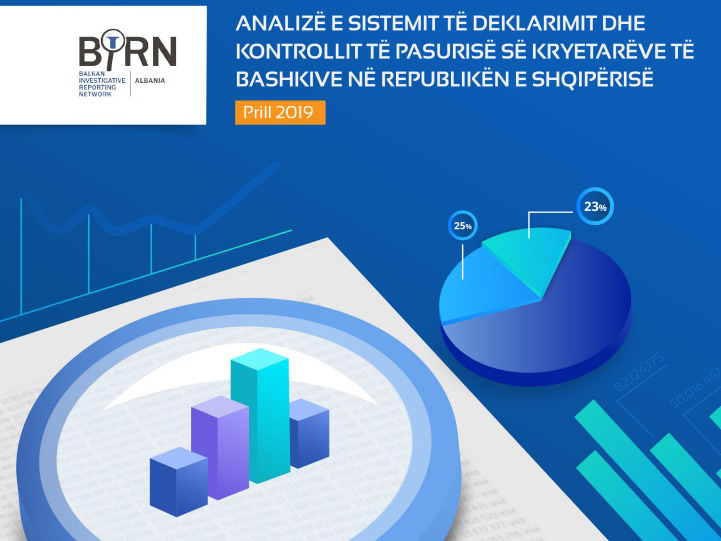
The Balkan Investigative Reporting Network in Albania has published a report entitled ‘Analysis of the System of Asset Declarations of Mayors in Albania’, which evaluates the wealth of the heads of local government units in the country as well as the integrity of the asset declaration system.

The asset declarations of serving mayors were analysed with the help of three financial experts, who recorded and categorised in a database all the data declared by heads of municipalities in their annual asset disclosures.

The experts analysed the information using a plausibility check, a method of scrutiny used by Albania’s High Inspectorate of Declaration and Audit of Assets and Conflicts of Interest, HIDAACI, to investigate the wealth of public officials.

The goal of the report is to identify key trends contributing to the enrichment of the 61 heads of local municipalities in Albania.

The study sheds light not only on how mayors in Albania have accumulated wealth but also on key practices which obscure the origins of their money.

These include dividends from businesses, debts owed by family members, real estate transactions and cash kept outside the banking system.

To download a copy of the report in Albanian, click here.

BIRN and SHARE Launch Project on Digital Freedom Violations

BIRN Hub in partnership with SHARE Foundation, supported by Civitates, have launched a project called ‘Mapping Digital Freedom Violations’ which will run from June 2019 until November 2020 and monitor digital threats and trends in their occurrence, raise awareness about violations of digital freedom, and issue policy recommendations.

The main goal of the project is to determine who are the main players involved in disinformation and propaganda in the south-east and central Europe (Bosnia and Herzegovina, Croatia, Hungary, Macedonia, Romania and Serbia) through establishment of the Digital Monitoring database, continuous monitoring of digital threats, and reporting on digital freedom violations.

The project entails training for digital monitors, the design and launch of the Digital Monitoring database using the already existing experience of SHARE Foundation, the publishing of a cross-regional report and five regional investigations, plus stakeholder meetings and a final conference to promote the cross-regional report.

The project will set guidelines for carrying out the monitoring of digital rights and freedoms.

These standardised rules for categorising cases of violations of digital rights and freedoms can be adapted and applied to any country and used to emphasise the importance of the use of technology to highlight social issues, especially in countries and regions without good human rights records.

Previous monitoring has shown that the primary problems are technical attacks on online content, disabling access to content and the endangerment of information security.

Report on Public Institutions’ Recruitment Process Problems

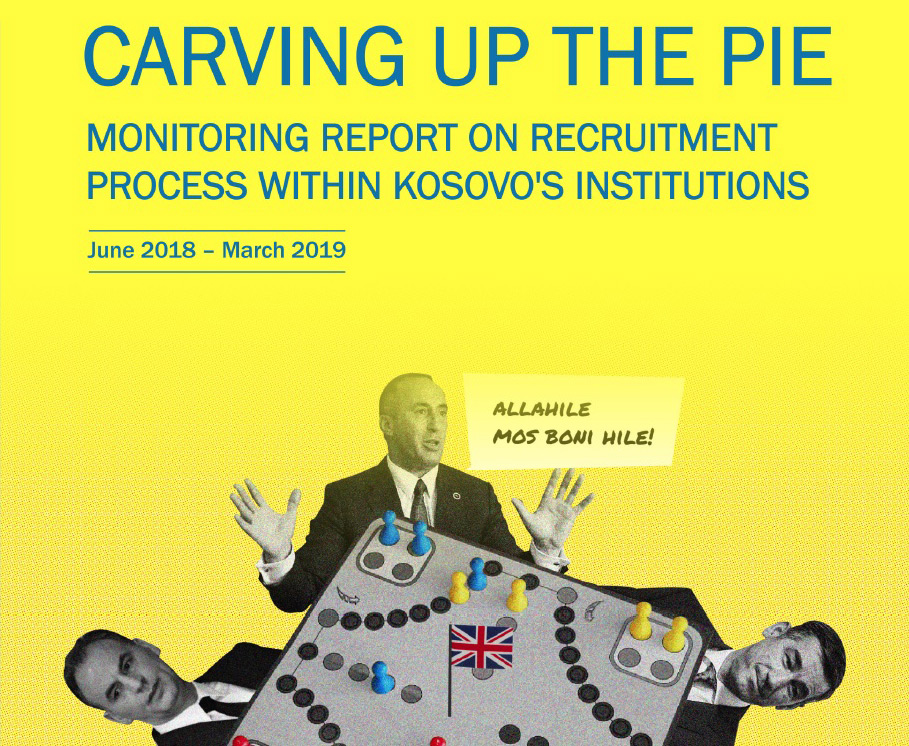
Monitoring report entitled ‘Carving up the Pie’ has been produced as a part of the Monitoring of Recruitment Processes of Senior Managing Positions project that BIRN is implementing in cooperation with the British Embassy in Kosovo.

The report finds that Kosovo institutions have failed in implementing an agreement signed with the British Embassy by appointing people to senior positions who did not meet criteria set by an assessment by British experts.

The purpose was to support joint efforts to ensure independence, meritocracy and professionalism in the process of recruitment for senior management positions in the civil service and on the boards of public enterprises.

Read more

Report in English
Report in Albanian
Report in Serbian

Municipal Procurement Report

The publication analyses procurement procedures involving key actors from Kosovo institutions including government officials, Kosovo Assembly members and non-governmental organisations.

BIRN discovered that only a limited number of complaints about procurements were resolved in favour of businesses that appealed, with most decisions going in favour of the municipalities. Municipalities did not change their decisions despite demands from businesses to review their decisions, the report found.

Read more

Read report in English

Monitoring Report on the Integrity of Kosovo’s Tax Administration

Monitoring Report on the Integrity of Kosovo’s Tax Administration (TAK) covers the period September 2018-February 2019. The monitoring was launched as a result of the reported low level of confidence that citizens have in TAK, and their perceptions about the level of corruption in the institution.

The aim of the report was to identify the ‘black holes’ in the process and raise red flags about the need for improvements in the standards, procedures and legal bases which enable and improve integrity within TAK.

The report concluded that TAK must seriously engage in improving the overall situation at the institution. Among the 15 recommendations made, BIRN and D+, partner on the project, suggested improvements to the Disciplinary Commission of TAK, the efficiency of its staff and resources, and for tax inspectors to be included among the public officials required to declare their assets.

Read more

Report in English

BIRN: Stop Targeting Slobodan Georgiev

BIRN calls on all relevant institutions, especially the Serbian Interior Ministry and the Prosecutor’s Office, to react urgently to the latest attacks on our editor Slobodan Georgiev.

A day after BIRN published photographs pointing to a connection between Andrej Vucic, the brother of the Serbian President, and Zvonko Veselinovic, a notorious businessman from Kosovo, a campaign started on social networks, attacking and threatening both Georgiev and the investigative portals BIRN, CINS and KRIK.

A video recording, available on Twitter from last night, describes Georgiev as a “foreign mercenary”, a “traitor” and as an associate of Albanian and Kosovo politicians.

The footage uses cover pages of the pro-government tabloid Informer, which refer to the “lucrative jobs” BIRN has done for foreign donors. Such slurs have been disproven in court. The same clip also targets CINS and KRIK media outlets.

The background tone of the recording is the alarm siren used during the NATO bombing of Serbia in 1999.

The release of the video has attracted numerous comments that contained insults and threats, some of which have been removed in the meantime.

As has happened before, instead of the dealing with the results and evidence presented by investigative media centres, raising awareness about threats to the rule of law, the fight against the corruption and the work of institutions, attention is being directed to editors and journalists who then become targets of attacks.

This spread of lies and misinformation is creating additional pressure on all journalists who want to work independently and professionally and critically report on the activities of the authorities. It is making them targets.

BIRN would remind the public and the relevant institutions that its editorial team has been almost constantly targeted by pro-regime media and ruling party bots on social networks since 2014.

We point out also that the attacks on Georgiev and BIRN have been reported to the authorities many times – without any concrete action being taken.