BIRN Wins Legal Case Against Kosovo PM’s Office

A Pristina court rules the prime minister’s office must make travel expense documents public after three-year legal battle for access.

The Balkan Investigative Reporting Network, BIRN, has been awarded a legal victory over the Kosovo Prime Minister’s office by a court in Pristina, following a three-year battle to gain access to government travel expense documents.

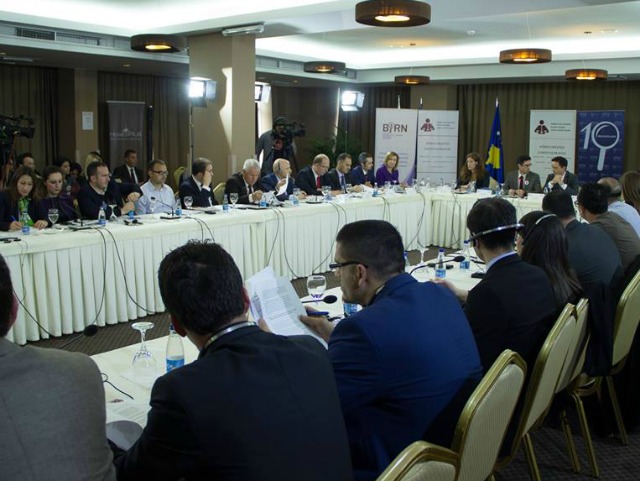
The court victory was announced on Thursday during a conference on public transparency and access to official documents, organised by the Justice and Citizens Campaign and BIRN.

Jeta Xharra, executive director of BIRN in Kosovo, noted that the process of reaching a conclusion to the case was a lengthy one but, in the end, the court established an important precedent for future requests of a similarkind.

“I want to encourage every citizen of Kosovo to knock on the doors of public institutions and demand accountability on the way their taxes are spent and use this court decision as an argument that the authorities must open this data,” Xharra said.

BIRN had requested access to documented foreign travel expenses of the former Kosovo PM Hashim Thaci, who now serves as vice-prime minister and foreign affairs minister, and the same information from the current Isa Mustafa government.

BIRN also requested the same information from six deputy prime ministers of the Thaci government and four deputy ministers of the current Mustafa government.

The PM’s office had denied access to such information, arguing that it could infringe the privacy rights of public officials because invoices for food and drinks could reveal religious and dietary information about individuals.

BIRN argued this line of defence was not relevant and could not be used to circumvent legal obligations to grant access to official documents, and the court decided in BIRN’s favour.

The court considered the PM’s office claim to be unfounded because public officials’ expenses, especially those of senior officials of state, are funded with money collected from taxes and fees paid by the citizens of the Republic of Kosovo.

Therefore, the court ruled that citizens have a reasonable interest in being directly informed about every penny spent and in knowing how entrusted public officials are spending public money, so that officials may be held accountable for their expenses.

The PM’s office failed to follow all procedures in appealing the case, and therefore the original verdict became conclusive.

At the same venue and hall where BIRN shared its legal victories, the PM’s office had scheduled a conference on transparency and access to official documents.

The government’s conference, which took place immediately after BIRN’s, was organised in cooperation with the Kosovo National Agency for Personal Data Protection.


“Filmi” Trevjeçar për Menynë e Kryeministrit dhe Zëvendësve të…

Padia e BIRN-it kundër Zyrës së Kryeministrit të Kosovës për shpenzimet e Kryeministrit dhe Zëvendës Kryeministrave në dreka e darka zyrtare jashtë shtetit tashmë ka marrë fund me një vendim të gjykatës se publiku ka të drejtë t’i ketë në dorë këto dokumente

Posted by Gazeta Jeta në Kosovë on Friday, October 30, 2015


BIRN Conference Sparks Widespread Media Interest

Several Bosnian TV stations, including the region’s CNN affiliate N1 and over 30 online media outlets, reported on BIRN’s conference on media freedom challenges in the Balkans held last week.

The BIRN network directors were featured on ‘Reflex’, a talk show hosted by Mimo Sahinpasic on TV OBN in Bosnia and Herzegovina. They discussed the various issues media professionals are faced with in the region today.

Commenting on the situation in Macedonia, BIRN’s director Ana Petruseva highlighted the power the government has over media in the country. “The prime minister’s cabinet decides on everything, from topics to be covered to potential interviewees,” Petruseva said.

BIRN regional network director Gordana Igric told FACE TV meanwhile that the media and civil society in the Balkans should not wait for Brussels’ help but act to ensure their own freedom and avoid becoming victims of political games.

Mirna Buljugic, BIRN BiH’s acting director, gave an interview for N1 in which she raised concerns about the deteriorating situation in the media sector, increasing political pressures as well as physical attacks on journalists in the country.

The cost of ethical and professional media is always high as room for critical opinion is constantly shrinking, concluded Jeta Xharra and Dragana Zivkovic Obradovic, BIRN directors from Kosovo and Serbia for Hayat TV.

In addition, EU enlargement commissioner Johannes Hahn’s video message to the conference about the disturbing media situation in the Balkans was featured on Radio Free Europe, Banja Luka-based portal Buka, klix.ba, news agencies Tanjug and Fena as well as kurir.rs, vesti.rs, beta.informer.rs, bljeask.info, dnevnik.ba and video news site source.ba.

BIRN Marks its Tenth Birthday in Bosnia

The BIRN network celebrated its 10th anniversary from June 12th to 14th with a regional media conference in the Bosnian capital, Sarajevo, followed by series of team building events, meetings and workshops on Mt Vlasic, some two hours’ drive away.

More than a hundred employees of the organisation from Albania, Bosnia and Herzegovina, Croatia, Kosovo, Macedonia, Romania and Serbia participated in two days of events at a hotel on Mt Vlasic.

Programme managers, project coordinators and administrative staff discussed rules, guidelines and a new information management strategy in two sessions led by Dusica Cook, BIRN Regional Operations Manager.

Jeta Xharra, BIRN’s Kosovo Director, used the opportunity to brief the management on the monitoring of elections, courts, procurement, the Kosovo-Serbia agreement, and municipalities.

BIRN journalists attended training sessions on journalistic standards led by Andrew Gray, Balkan Fellowship for Journalistic Excellence Editor, and on investigative journalism, led by Lawrence Marzouk, BIRN editor.

Valon Canhasi, BIRN Kosovo’s Social Media Editor, guided journalists on the importance of having a presence on social media and on the latest trends in users’ habits.
Balkan Insight and Balkan Transitional Justice staff held editorial and commissioning meetings, while Ana Petruseva, Balkan Insight’s Managing Editor and Milos Milosavljevic, BIRN’s Chief Digital Officer, held a technical training session for journalists.

Finally, BIRN journalists and management had two sessions – one on databases in the Network and their further development and possible integration, and the other focusing on BIRN’s web strategy.

BIRN Assembly members and Gordana Igric, BIRN’s Regional Network Director, convened for their regular annual meeting where they discussed BIRN’s new five-year strategy.

The BIRN team celebrated the fact that the Balkan Investigative Reporting Regional Network was established in July 2005, ten years ago, since when it has grown significantly, winning numerous national and international awards and merits and becoming one of the most trusted media organisations in the Balkan and Southeast Europe region.

The next meeting of the BIRN network, scheduled for 2017, will see a new round of team building activities, workshops and a checkpoint review of the five-year strategy.

BIRN Kosovo Presented the Report on Implementation of Kosovo-Serbia Dialogue

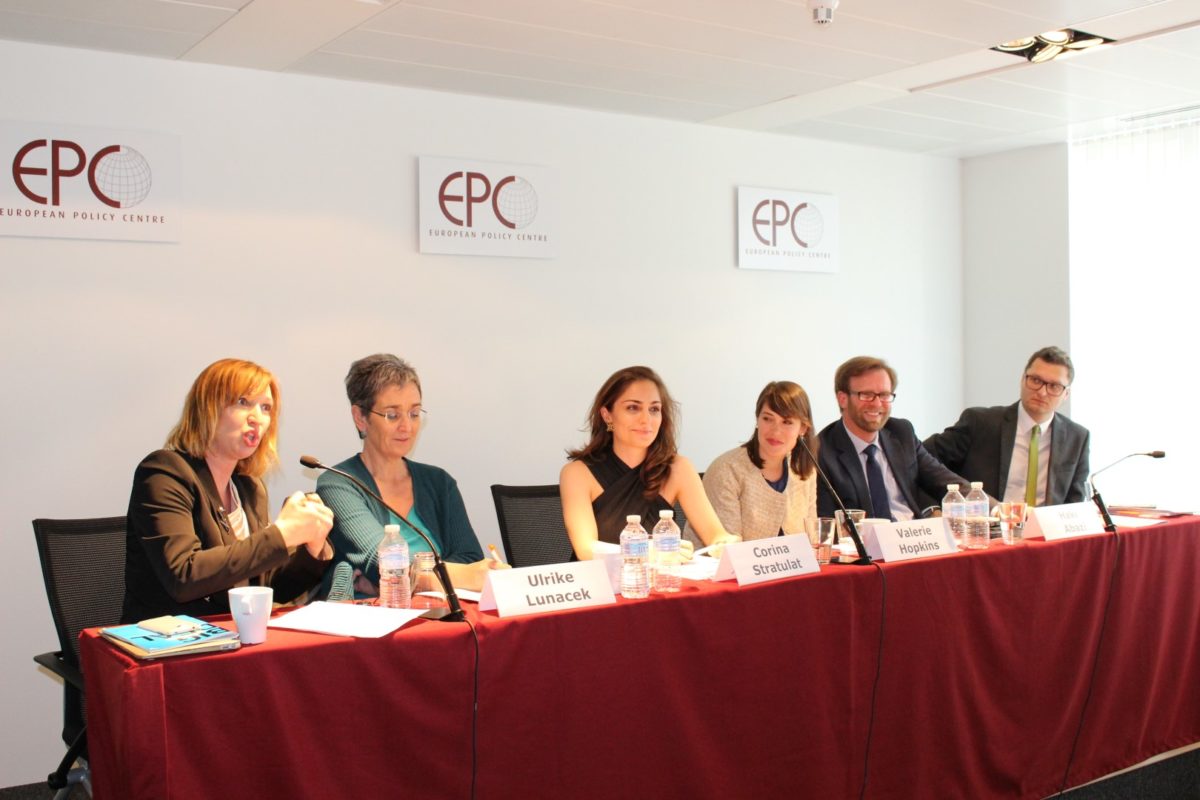
The European Policy Center (EPC) gathered authors of the “Big Deal” report, which exclusively talks about implementation of Kosovo-Serbia dialogue.

EPC Senior policy analyst, Corina Stratulat gave a few introductory remarks regarding to the report. She pointed out that Serbia’s relationship with Kosovo is central to the country’s EU accession talks, and that following the 2014 elections, both Belgrade and Prishtina agreed to integrate Kosovo’s police and judiciary.

BIRN Kosovo Executive Director Jeta Xharra, explained the methodology of the Big Deal report, its outline and some other key findings, including problems with the implementation of key agreements for the lives of citizens, like car insurance.

Ulrike Lunacek, Vice President of the European Parliament and member of the delegation for relations with Bosnia-Herzegovina and Kosovo noted that the BIG DEAL report was key to her understanding of the level of implementation of the agreements and said it was a valuable tool for her and other MEPs.

BIG DEAL report author Valerie Hopkins highlighted the difficulty in bringing the four northern Kosovo provinces under the control of Prishtina, with delays in unifying the judiciary, adopting municipal budgets and incorporating members of the Civil Protection Corps into Kosovo institutions. One success has been the integration of former Serbian police officials into the Kosovo police, and one complete failure has been mutual acceptance of diplomas.

The discussion involved also Rasa Nedeljkov, Programme Manager at the Center for Research, Transparency and Accountability (CRTA), based in Belgrade, who spoke about the value of creating one account of the implementation process for both Kosovo and Serbia.

Haki Abazi, Programme Director for the Western Balkans at the Rockefeller Brothers Fund, reminded attendees that neglecting Kosovo from an international perspective could have dangerous consequences, citing the ongoing political turmoil in Macedonia.

Click for more information about this report.   

BIRN’s Kosovo War Crimes Film Screened in Pristina

BIRN’s new documentary, which investigates the Serbian commanders responsible for some of the worst attacks of the Kosovo war, was screened for the first time in Pristina.

The new documentary, The Unidentified, which names the Serbian officers who ordered attacks on Kosovo villages around the town of Pec/Peja in 1999 and those involved in the cover-up operation to hide the victims’ bodies, was screened for the first time in Kosovo on Thursday evening at the Architecture Faculty in Pristina.

Marija Ristic, the director of the documentary, which was the result of a two-year investigation, told the Pristina audience that the hardest moments during the making of the documentary were when she was trying to secure interviews with Serbian police officers.

“They started to inform each other. They were trying to prevent other people from speaking out. At one point, we were afraid that we would not manage to prove anything because we could not get police officers to speak about this,” Ristic said.

Kosovo’s Ombudsman, Sami Kurteshi, said he was touched by the story in the documentary, in which both victims and perpetrators are interviewed, but said that for him, it was just one small part of the war.

Kurteshi said that despite the fact that there is little political will to tackle war crimes, such efforts should continue.

“The strengthening of justice is very important. Justice should not be dependent on political will,” he said.

Chief prosecutor at Kosovo’s Special Prosecution, Sevdije Morina, praised the documentary for getting both victims and perpetrators to talk about the crimes.

Morina also said that the Kosovo’s prosecutors are ready to take over war crime cases after the mandate of the EU rule-of-law mission, EULEX, was changed.

“Local prosecutors will soon take over the big cases, like the big massacre at Meja, from the EULEX prosecutor that was responsible until now for the war crimes [cases],” said Morina.

‘The Unidentified’ takes viewers back to 1999, to the villages of Ljubenic, Cuska, Pavljan and Zahac near Pec/Peja in Kosovo, where Serbian fighters killed more than 118 Albanian civilians. Their bodies were either burned or removed, and some of them were later found in mass graves at the Batajnica police training centre near Belgrade in 2001.

The trial of 11 fighters alleged to have been involved in the killings – 10 of them accused of being direct perpetrators – is still ongoing in Belgrade, but the police and army generals who gave the orders have never been prosecuted in Serbia.

Deniz Sllovinja

Deniz is a cameraman and video editor for Kallxo.com and the BIRN TV programmes Life in Kosovo and Justice in Kosovo.

Deniz has been working in media production since his youth. Before joining BIRN in 2013, Deniz worked for Foto Canon and Top Kosova TV as a video editor.

Deniz is currently studying communications and production at AAB-RIINVEST University.

Behar Mustafa

Behar Mustafa is a court monitor and researcher working in the Mitrovica region and contributes as a journalist to the TV programme Justice in Kosovo.

Before joining BIRN in 2014, he worked in various NGOs and media outlets, including the daily newspaper Koha Ditore, where he served as Vushtrri correspondent, and Kosova Channel in Mitrovica.

Behar has a BA degree in law and is currently pursuing his Master’s degree.

Durim Shala

Durim Shala is an Assistant Producer / Cameraman and Editor for Life in Kosovo and Justice in Kosovo.

Durim’s main responsibilities are recording and editing videos for Life in Kosovo and Justice in Kosovo TV programmes. Additionally,
Durim records Kosovo Police operations that are shown on the “Police” segment of Justice in Kosovo.

Durim joined BIRN in 2013. He is pursuing his BA degree in Marketing from University of Prishtina.


Rrahman Ramaj

Rrahman Ramaj is a financial analyst for BIRN Kosovo.

He monitors public spending by analysing procurement contracts and audit reports of municipalities across Kosovo , and monitoring of procurement offices.

Rrahman, who joined BIRN in 2014, is the co-author of a report on public procurement, titled, ,Hidden Tenders”, published in February 2015.

Rrahman holds a BA in Finance and Accounting from the University of Prishtina, where he is currently pursuing his master’s degree in Management and IT.

Perparim Isufi

Perparim Isufi joined BIRN Kosovo in May 2014 and currently serves as the managing editor of KALLXO.com.

He edits and writes news, analyses and investigations for KALLXO.com and Gazeta Jeta në Kosovvë.

Isufi has been working in journalism for 12 years at several outlets in Kosovo. He also spent more than three years as a Press Assistant at the OSCE Mission in Kosovo, where he maintained contacts with Kosovo media.

He studied political science at the University of Prishtina.