The Second Phase of the “Kosovo Fellowship for Journalistic Excellence” Programme Launched Today

Following a success during the first phase of the program, BIRN Kosovo in cooperation with AJK, as part of the project funded by the EU, has opened the call for applications for the second phase of the “Kosovo Fellowship for Journalistic Excellence” program for the year 2019.

The programme will begin in June and is based on the Balkan Fellowship for Journalistic Excellence, which has been running since 2007.

Balkan Investigative Reporting Network – BIRN Kosovo and Association of Journalists of Kosovo – AJK invite all interested journalists to apply to the 6 months fellowship, provided by the European Union in Kosovo.

10 ambitious and daring journalists will be selected by a team of local and regional professionals to become part of this dynamic and enriching experience. Each fellow will be granted a 2,000 euro fellowship bursary for an in-depth research story covering issues such as public spending, local governance, public procurement, environment, energy, healthcare, culture, education, media financing, human rights, inter-ethnic cooperation, etc.

In addition, the selected journalists will receive mentorship by a team of highly-skilled BIRN Kosovo editors, who have extensive experience in producing and editing high quality reporting in Kosovo and the region.

At the end of the programme, fellows are expected to have produced an original research/investigative story with a limit of 1,500 – 3,000 words. The format may vary from written articles, to TV reportages or content presented in a multimedia format. Stories of the selected fellows will be published in Albanian, Serbian and English. BIRN will ensure republication of fellowship articles in other local media in order to increase the outreach of the stories produced.

Are you interested in becoming part of this prestigious program?

Fill in the Application Form and submit your application by midnight on May 31, to [email protected], with the subject “Kosovo Fellowship for Journalistic Excellence” – Phase II”

Any questions regarding this programme or the application can be addressed to [email protected], by May 25that the latest.

The proposals can be submitted in either Albanian, Serbian or English, the three working languages to be used during the fellowship.

Women and members of non-majority communities are strongly encouraged to apply.


Lansohet faza e dytë e programit të Bursës së Kosovës për Ekselencë në Gazetari

Pas një suksesi gjatë pjesës së parë të programit, BIRN Kosovo në bashkëpunim me AGK, në bazë të projektit të finanucar nga BE, ka hapur procesin e thirrjes për aplikim për fazën e dytë të Programit “Bursa e Kosovës për Ekselencë në Gazetari” për vitin 2019.

Programi do të fillojë në qershor 2019 dhe është i bazuar sipas Bursës Ballkanike për Ekselencë në Gazetari, që ka filluar qysh në vitin 2007.

Rrjeti Ballkanik i Gazetarisë Hulumtuese – BIRN Kosovo dhe Asociacioni i Gazetarëve të Kosovës – AGK ftojnë të gjithë gazetarët e interesuar që të aplikojnë për këtë bursë 6-mujore, të ofruar nga Bashkimi Europian në Kosovë.

10 gazetarë ambiciozë dhe të guximshëm do të zgjidhen nga një ekip profesionistësh lokalë dhe rajonalë për t’u bërë pjesë e kësaj përvoje dinamike dhe të pasur. Secili anëtar do të përfitojë bursë prej 2,000 Euro për një storie të thellë hulumtuese që mbulon çështjet si shpenzimet publike, qeverisja lokale, prokurimi publik, mjedisi, energjia, shëndetësia, kultura, arsimi, financimi i mediave, të drejtat e njeriut, bashkëpunimi ndëretnik etj.

Përveç kësaj, gazetarët e përzgjedhur do të përfitojnë mentorim nga një ekip redaktorësh të kualifikuar të BIRN Kosova, të cilët kanë përvojë të gjerë në prodhimin dhe redaktimin e raportimit të cilësisë së lartë në Kosovë dhe në rajon.

Në fund të programit, bursistët pritet të kenë prodhuar një storie origjinale hulumtuese/kërkimore me një limit prej 1,500 – 3,000 fjalësh. Formati mund të ndryshojë, nga storie të shkruara, në reportazhe televizive ose përmbajtje të paraqitura në format multimedial. Storiet e bursistëve të përzgjedhur do të publikohen në shqip, anglisht dhe serbisht. BIRN do të sigurojë ripublikimin e storieve të bursistëve në mediat e tjera lokale në mënyrë që të rrisë shtrirjen e storieve të prodhuara.

A jeni të interesuar të jeni pjesë e këtij programi prestigjioz?

Plotësoni formularin e aplikimit dhe dorëzoni aplikacionin tuaj deri në mesnatë më 31 maj 2019, tek [email protected] me temën: “Bursa e Kosovës për Ekselencë në Gazetari – Faza II”.

Çdo pyetje në lidhje me këtë program ose aplikacion mund të drejtohet tek [email protected], jo më vonë se deri më 25 maj 2019.

Propozimet mund të dorëzohen në shqip, anglisht ose serbisht, që janë tri gjuhët e punës të cilat do të përdoren gjatë kohëzgjatjes së programit.

Gratë dhe pjesëtarët e komuniteteve pakicë inkurajohen fuqishëm që të aplikojnë.


Danas je lansirana druga faza programa Stipendija za novinarsku izuzetnost Na Kosovu

Nakon uspeha u prvoj fazi programa, BIRN Kosovo je u saradnji sa AGK, u okviru projekta koji finansira EU, otvorio poziv za podnošenje prijava za drugu fazu programa „Stipendija za novinarsku izuzetnost na Kosovu“ za 2019.

Program počinje u junu 2019. i zasnovan je na modelu Stipendije za novinarsku izuzetnost na Balkanu.

Balkanska Istraživačka Regionalna Mreža – BIRN Kosovo i Udruženje Novinara Kosova (AGK), pozivaju sve zainteresovane novinare da se prijave za šestomesečnu stipendiju, koju obezbeđuje Evropska unija na Kosovu.

10 ambicioznih i smelih novinara će izabrati tim lokalnih i regionalnih profesionalaca kako bi postali deo ovog dinamičnog i obogaćujućeg iskustva. Svaki stipendista će dobiti stipendiju od 2.000 evra za detaljnu istraživačku priču koja pokriva pitanja kao što su javna potrošnja, lokalna uprava, javne nabavke, životna sredina, energetika, zdravstvena zaštita, kultura, obrazovanje, finansiranje medija, ljudska prava, međuetnička saradnja, itd.

Osim toga, odabrani novinari će dobiti mentorstvo tima visokokvalifikovanih urednika BIRN Kosovo, koji imaju veliko iskustvo u produkciji i uređivanju visokokvalitetnog izveštavanja na Kosovu i u regionu.

Na kraju programa, očekuje se da stipendisti izrade originalnu ispitivačku/istraživačku priču, limitiranu na 1,500 do 3,000 reči. Format se može razlikovati: od pisanih članaka do TV reportaža ili sadržaja u multimedijalnom formatu. Priče izabranih stipendista biće objavljene na albanskom, engleskom i srpskom jeziku. BIRN će obezbediti ponovno objavljivanje članaka stipendista u drugim lokalnim medijima kako bi se povećalo pokriće izrađenih priča.

Da li ste zainteresovani da postanete deo ovog prestižnog programa?

Popunite obrazac prijave i pošaljite vašu prijavu do ponoći  31. maja 2019. na [email protected], pod naslovom “Stipendija za novinarsku izuzetnost na Kosovu – Faza II”

Sva pitanja u vezi ovog programa ili prijave mogu se poslati na [email protected], najkasnije do 25. maja 2019.

Predlozi mogu biti podneti na albanskom, srpskom ili engleskom jeziku – jezicima koji će biti korišćeni tokom stipendije.

Žene i pripadnici manjinskih zajednica se snažno ohrabruju da se prijave.

BIRN Kosovo Publishes Monitoring of Municipal Expenses

BIRN Kosovo has published findings from its municipal expenses monitoring project entitled ‘How Much Does the Boss Eat?’

The project, supported by Kosovo Foundation for Open Society, KFOS, was presented at a roundtable discussion on April 26, where the expenses incurred by municipal employees for official meetings, lunches, and dinners were reviewed on a national level.

In 2012, BIRN Kosovo filed legal proceedings against the Office of the Prime Minister of the Republic of Kosovo because it failed to disclose the receipts of expenses of the prime minister and his officials. After a lengthy judicial process, Pristina Basic Court ruled that every expense paid out of public funds must be transparent and open to the public.

As a result, BIRN decided to extend the monitoring of the expenses of governmental officials to the local level, based on the ruling laid down in the Pristina Basic Court case. Since December 2018, BIRN has sent legal requests to all 38 municipalities in Kosovo, requesting the disclosure of their expenses for lunches, dinners, and events for the period of December 2017 to August 2018.

As of January 2019, BIRN Kosovo has published 78 reports at BIRN’s KALLXO.com site. Kreshnik Gashi, the managing editor of the site, presented the findings.

“Besides testing transparency, the project aimed to analyse the true nature of publicly-funded expenses,” said Gashi.

Out of 38 municipalities, 24 provided receipts for the requested period, which resulted in the processing and analysis of over 1,200 receipts.

The findings presented at the roundtable discussion, which was attended by financial officers from many municipalities in Kosovo, as well as civil society representatives, showed that municipalities have accepted expenses claims for which the receipts gave no information on the nature of the expenses being claimed.

Furthermore, the findings show that a considerable amount of expenses were made for alcohol, as well as other items like cigarettes and chewing gum.

Rozafa Ukimeraj, the General Secretary of the Ministry of Local Government Administration (MLGA), presented the outcomes and challenges regarding municipal budget processes, as well as the financial sustainability aspects of municipalities and the steps taken by the MLGA to improve the policy and legislation framework in order to increase transparency and accountability in the management of public funds.

The General Auditor, Besnik Osmani, presented findings about financial checks on municipalities and about the management of and accountability in the process of the spending of public money.

Among a number of recommendations, BIRN suggested to MLGA that within the performance evaluation of municipalities in Kosovo, a transparency mechanism should be included regarding the expenses of municipal officials for lunches, dinners and other general expenses.

Report on Public Institutions’ Recruitment Process Problems

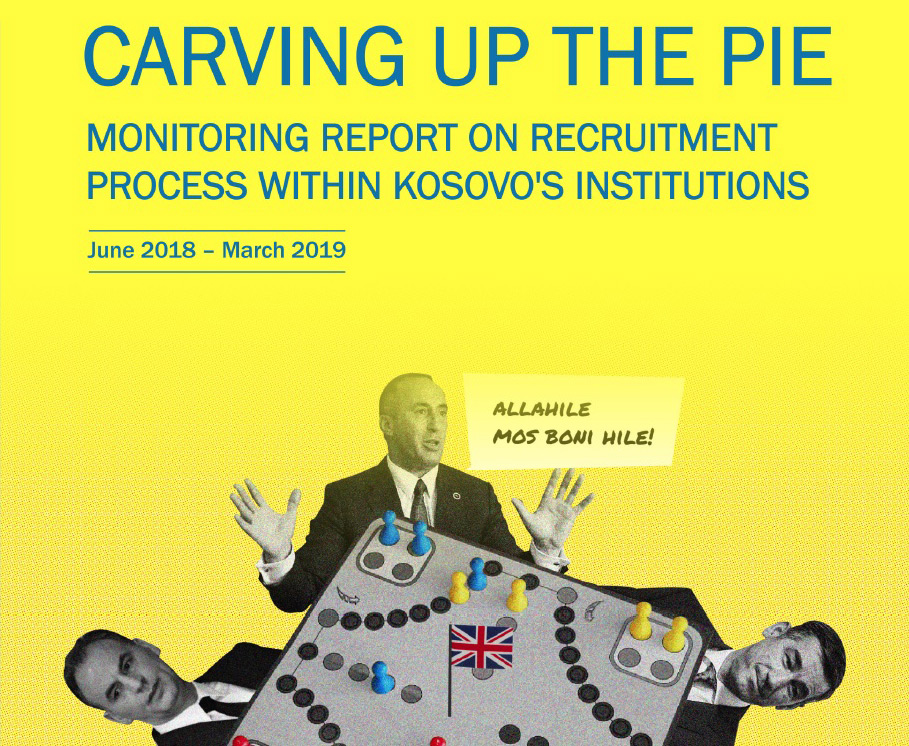
Monitoring report entitled ‘Carving up the Pie’ has been produced as a part of the Monitoring of Recruitment Processes of Senior Managing Positions project that BIRN is implementing in cooperation with the British Embassy in Kosovo.

The report finds that Kosovo institutions have failed in implementing an agreement signed with the British Embassy by appointing people to senior positions who did not meet criteria set by an assessment by British experts.

The purpose was to support joint efforts to ensure independence, meritocracy and professionalism in the process of recruitment for senior management positions in the civil service and on the boards of public enterprises.

Read more

Report in English
Report in Albanian
Report in Serbian

Municipal Procurement Report

The publication analyses procurement procedures involving key actors from Kosovo institutions including government officials, Kosovo Assembly members and non-governmental organisations.

BIRN discovered that only a limited number of complaints about procurements were resolved in favour of businesses that appealed, with most decisions going in favour of the municipalities. Municipalities did not change their decisions despite demands from businesses to review their decisions, the report found.

Read more

Read report in English

Monitoring Report on the Integrity of Kosovo’s Tax Administration

Monitoring Report on the Integrity of Kosovo’s Tax Administration (TAK) covers the period September 2018-February 2019. The monitoring was launched as a result of the reported low level of confidence that citizens have in TAK, and their perceptions about the level of corruption in the institution.

The aim of the report was to identify the ‘black holes’ in the process and raise red flags about the need for improvements in the standards, procedures and legal bases which enable and improve integrity within TAK.

The report concluded that TAK must seriously engage in improving the overall situation at the institution. Among the 15 recommendations made, BIRN and D+, partner on the project, suggested improvements to the Disciplinary Commission of TAK, the efficiency of its staff and resources, and for tax inspectors to be included among the public officials required to declare their assets.

Read more

Report in English

BIRN Kosovo Reports on Public Institutions’ Recruitment Process Problems

BIRN Kosovo has published a monitoring report entitled ‘Carving up the Pie’, produced as a part of the Monitoring of Recruitment Processes of Senior Managing Positions project that BIRN is implementing in cooperation with the British Embassy in Kosovo.

The report finds that Kosovo institutions have failed in implementing an agreement signed with the British Embassy by appointing people to senior positions who did not meet criteria set by an assessment by British experts.

Last year, Kosovo Prime Minister Ramush Haradinaj and parliament speaker Kadri Veseli signed a number of memoranda of cooperation with the British Embassy in Pristina on the provision of assistance to institutions in recruitments for senior management positions.

The purpose was to support joint efforts to ensure independence, meritocracy and professionalism in the process of recruitment for senior management positions in the civil service and on the boards of public enterprises.

BIRN Kosovo’s monitoring report contains details of specific vacancies, indicating violations and interference that took place to appoint people who did not meet the criteria.

In some cases, BIRN was not allowed to monitor important vacancies for positions in Kosovo institutions. The government did not allow BIRN to monitor vacancies for positions on the boards of 14 public enterprises.

Report in English
Report in Albanian
Report in Serbian

Royal Norwegian Embassy

DONOR
The objective of the Norwegian support to the Western Balkans is to promote development stability and democracy.

Norway supports many initiatives in Kosovo as well as the region to encourage regional cooperation, good governance through the development of rule of law, civil society, and the media, socio-economic development as well as reconciliation and implementation of transitional justice.

Web: www.norway.no/en/kosovo

BIRN and D+ Publish Report on Kosovo Tax Administration

BIRN Kosovo and Democracy Plus, D+, with the support of the British Embassy, organised a roundtable discussion on March 11 to talk about their newly-published Monitoring Report on the Integrity of Kosovo’s Tax Administration, TAK.

At the discussion, findings from work carried out between September 2018 to February 2019 were published – a seven-month period of direct monitoring. This is among the first reports of its kind to be produced and published by local NGOs.

Download report in PDF

The monitoring was launched as a result of the reported low level of confidence that citizens have in TAK, and their perceptions about the level of corruption in the institution.

The aim of the report was to identify the ‘black holes’ in the process and raise red flags about the need for improvements in the standards, procedures and legal bases which enable and improve integrity within TAK.

Kreshnik Gashi, managing editor at BIRN’s Kallxo.com site, and Visar Rushiti, Policy Analyst at Democracy Plus, presented the findings of the monitoring report.

“This is one of the first reports produced by civil society on this topic and which looks into what is happening in TAK in depth,” said Gashi.

Thomas Adams, the deputy head of the British Embassy in Kosovo, said that the United Kingdom would support the findings and the recommendations of the report published by BIRN and D+.

The report concluded that TAK must seriously engage in improving the overall situation at the institution. Among the 15 recommendations made, BIRN and D+ suggested improvements to the Disciplinary Commission of TAK, the efficiency of its staff and resources, and for tax inspectors to be included among the public officials required to declare their assets.

The director of the Kosovo Tax Administration, Ilir Murtezaj, said that the institution will try to make changes according to the issues raised in the monitoring report.

“We will try to address the findings and recommendations of the report and implement them to the fullest possible level. We have implemented some of the findings that are in the report, such as the creation of a Disciplinary Commission,” said Murtezaj.

The discussion was attended by Kosovo Finance Minister Bedri Hamza and  Afrim Atashi, the director of the Corruption Prevention Department at the Anti-Corruption Agency, as well as representatives of NGOs and relevant institutions.

Download report in PDF

Egypt to Probe Fake ‘Cleopatras’ After BIRN/ARIJ Revelations

After BIRN/ARIJ reports lifted the lid on the way millions of fake ‘Cleopatra’ cigarettes were being smuggled into North Africa from the Balkans, Egypt’s parliament has demanded an official probe.

The Egyptian parliament’s Industry Committee has urged the country’s state prosecutor to start a criminal investigation into cigarette smuggling – after a series of in-depth investigative reports published by BIRN/ARIJ revealed that the country’s most popular brand was being mass-produced and smuggled in from the Balkans.

The committee said prosecutors needed to look into whether Eastern Company managers had neglected to stop the flow of counterfeit cigarettes from Montenegro and Albania into the country.

“The defaulters [must be held] accountable for what they did due to inaction and not guarding public money, and so the subject should be referred to the General Prosecutor to investigate it and find out the truth,” the committee said in the official report obtained by BIRN, issued in February.

A series of BIRN/ARIJ reports in December 2018 detailed how both state-owned and private factories in Albania, Bosnia, Kosovo, Montenegro and Greece were involved in a contraband business that has netted vast profits and cost a number of countries significant losses in tax revenues.

Egypt’s No 1 brand cigarette, Cleopatra, was born in 1961 when then ruler Gamal Abdel Nasser asked for a local version of the smuggled American Kent brand that he liked to smoke. Created by the Eastern Company, Cleopatra is now one of the most widely smoked cigarettes in North Africa and a top seller globally.

The BIRN/ARIJ investigations noted that Egypt, the UK and the EU’s anti-fraud office, OLAF, had considered the flow of cigarettes coming out of Montenegro’s Duvanski Kombinat Podgorica, DKP, “counterfeit”, suspecting they were being channeled to Libyan smugglers who distributed them illegally across North Africa.

Egypt asked repeatedly through diplomatic channels for Montenegro to shut the operation down.

Production did stop finally in 2016, but only after the factory was privatised and came under new ownership.

But the offshore firm that contracted the factory to produce the cigarettes has not given up, according to the BIRN/ARIJ investigations; it set up new production lines in Kosovo and invested 1 million euros in a new operation in Montenegro.

Muhammad Faud, a member of the Egyptian parliament, told the hearing that Eastern’s management had not protected the local Cleopatra brand, which had led its products being counterfeited in Albania and Montenegro.

This had “led to a waste the public money” he said, and to “falsified Cleopatra products that were not manufactured by the Eastern Company taking about 30 per cent of the market”.

Eastern’s parent company, Chemical Industries Holding, has insisted it has done its best to protect the brand. It said registering as many as 548 special trademarks around the world would have cost billions.

It also said that it had a complete dossier of exchanged communications between it and the Foreign Ministry, the Ministry of Trade and Industry, and the Egyptian embassy concerning measures taken to stop violations of its trademark and the manufacture of fake Cleopatra cigarettes.

“As a result of the efforts made, the factory producing forged products in Albania was stopped in 2015 for one year, but later started functioning again,” the company said.

The BIRN/ARIJ reports said the counterfeit cigarettes would have been virtually indistinguishable from the originals produced by Eastern Company in Cairo.

The labels bear the words “Made in Egypt”, as well as Egyptian health warnings and a claim to be produced by “Eastern Company”.

The BIRN ARIJ reports said increased taxes on cigarettes in Egypt from the 2010s onward had created a booming black market for the product.

Meanwhile, lawlessness in neighbouring Libya since the 2011 overthrow of dictator Muammar Gaddafi has turned the country into a smuggler’s paradise.

Source: Balkan Insight