Ten years of BIRN

The Balkan Fellowship for Journalistic Excellence is an editor’s dream. You get to spend a year working with the brightest reporters in the region. You get to step outside the breaking-news cycle and do some truly meaningful journalism. And above all, you get BIRN, making it all possible.

The Fellowship is only slightly younger than BIRN – its first decade is still a year away. It is very much a child of BIRN, a reflection of what makes the organisation itself so special.

I spent two years as an editor for the Fellowship, from 2012-13. The annual process – from commissioning stories to publication – drove home the depth of BIRN’s expertise.

Our reporters drew upon the guidance of BIRN’s network of editors across the region as they researched their stories. At the climax of the process, as the deadlines closed in, the organisation also seemed to draw closer. Drafts were continually critiqued and refined, problems were identified, ledes were sharpened.

It was damned hard work – but Dragana, Goca and Ana made sure that it was never lonely work. As the saying goes, they led from the front.

The final stories were very well received. They were widely re-published, often provoking debate, some even picking up prizes. Each and every story bore the fingerprints of a remarkable organisation.

As BIRN celebrates its first decade, many will marvel at how long this media start-up has survived in the harsh Balkan climate. But for me, the real surprise is that BIRN is only ten years old. With all that it has done, it feels as if it has been around for a lot longer. The start-up has become an institution.

Neil Arun was the Editor of the Balkan Fellowship for Journalistic Excellence
Any views or opinions presented in this text are solely those of the author and do not necessarily represent any organisation.
We chose to be watchdogs, not lapdogs

With five women and one man sitting around a table a decade ago, a decision was reached in the spur of a moment without any concrete plan for the future. Balkan Investigative Reporting Network, BIRN was born. It was a sound of fury and exasperation – a stark reminder that endless negotiations on the future of IWPR’s Balkans programme had come to a fruitless end. That end was our chance for a new beginning.

As a favor to us, a graphic designer friend went ahead and created the BIRN logo with a magnifying glass spotlight on investigative journalism. The idea of naming our newsletter Balkan Insight Report was unanimously accepted and off we went. Our funds and ambitions at the time certainly did not match up.

One of the first concrete things we did was to produce a film on the future of Kosovo: “Does Anyone Have a Plan?” We encountered numerous obstacles. Tempers were rising high as we found ourselves often having to deal with comic situations laced with flaring egos and unrealistic demands. The film that we produced almost ten years ago was a huge success. The title as well as some of the content are still relevant.

It was just the first step of many more to be taken. We learned to work together and more importantly to understand that the interconnectedness of the issues in the Balkans creates a puzzle. Like almost everything in this region, the full picture of social, economic or political themes is revealed only when you look at it from various local angles.

This approach is reflected in the very structure of BIRN, a major regional network in the Balkans, where each office follows its own unique projects with possibilities of pulling together resources and skills for cross-border investigations into issues like organised crime and corruption. At the same time, we were made painfully aware that the “Brotherhood and unity” we were so indoctrinated about in former Yugoslavia was now fully operational and flourishing only in the criminal world.

At the beginning, we spent a lot of time thinking about the kind of reporting that we should be aspiring to. We asked ourselves many questions: if politicsis imagined as a football match, are we journalists just spectators, referees or fans of a particular club? Are we as human beings ever fully objective or do our own perceptions and views inevitably find their way into our writing?

“Write what you can prove” was the mantra we decided to follow from the beginning. In the ongoing journalistic battle of facts vs opinions, whilst reporting we strove to stick to the facts.

This is the core of inquisitive journalism that is focused on public interest. This is also the core misunderstanding between the political establishment and journalism in the Balkans, where politicians traditionally treat the press as a transmission channel that exists for the sole purpose of conveying their messages to the people, unchallenged, it goes without saying.

However, journalists should be watchdogs not lapdogs. It is the facts and public interest that they are after. BIRN’s noble principles in publishing, media training and promoting public debate are quality, reliability and impartiality.

This commitment has never wavered in the past decade as a dedicated and close-knit team of journalists across the Balkans continues to probe and analyse key transitional issues while providing objective, balanced and comprehensive reporting.

There is a price to pay for such an approach. Some of the recent attacks on the organisation as a direct consequences of its reporting are evident, from the murky decisions to ban the distribution of Belgrade Insight newspaper to articles alleging various conspiracy theories, written on the orders of those who would rather shut BIRN down than face the truth.

BIRN is a network comprising of individual member organisations, registered in Bosnia-Herzegovina, Bulgaria, Kosovo, Macedonia, Romania, Albania, Serbia, Montenegro and Croatia.

Each office engages in relevant local media development projects. In Bosnia, for example, the focus is on war crimes reporting, whilst Serbia concentrates on public expenditure themes and Kosovo produces TV debates on current affairs.

The regional activities of the Network, such as editorial, operational and development work, are coordinated through the BIRN Hub registered in Sarajevo. The Hub coordinates projects such as Balkan Transitional Justice and Culture Watch, numerous cross-border investigations and regional trainings.

Can this kind of journalism be fully sustainable in non-existing media markets in the Balkans?

This is a question for policy makers. Media reforms are under way everywhere in the region and liberal media legislation is in place. The right to freedom of expression is enshrined in all constitutions. However, pressure on the media is becoming more sophisticated and more difficult to spot. To influence the media’s output, interested parties have to control their sources of income.

These financial rugs are routinely pulled from under the feet of the press by withdrawing advertising contracts or banning their distribution. Popular current affairs programmes are taken off air to punish critical reporting. This happens on a regular basis and in a blink of a powerful eye.

One thing is certain: there is no independent editorial policy without an independent source of income. And there is no democracy without a free press, just as there is no pluralism of political choices in a society where the media output is rigorously controlled.

Aware of this situation, BIRN established a company, BIRN LTD as far back as in 2007 with the intention to develop commercial products designed to feed its non-for-profits services. Though the income generated from this is steadily rising, it is still not sufficient to sustain this large network.

Here is food for thought for those supporting this and other similar journalistic enterprises around the world: the most groundbreaking and most important media investigative output often is simply not sustainable.

It is difficult to imagine a Coca Cola advert popping up whilst reading an on-line investigative piece about the unwanted children of rape victims during the Bosnian war. Similarly, it is just as difficult to evaluate the impact upon the spirit of reconciliation in the region created by a documentary, produced by Serbian journalist, which names Serbian officers who ordered attacks on Kosovo Albanian villages in 1999.

So, congratulations BIRN! A decade later you are maturing and growing. Some new talents are taking over, to the delight of the old guard. I am proud I once was part of you.

Dragana Nikolic Solomon is a co-founder of BIRN and the former director of BIRN Serbia. Any views or opinions presented in this text are solely those of the author and do not necessarily represent any organisation.

BIRN Kosovo Presented the Report on Implementation of Kosovo-Serbia Dialogue

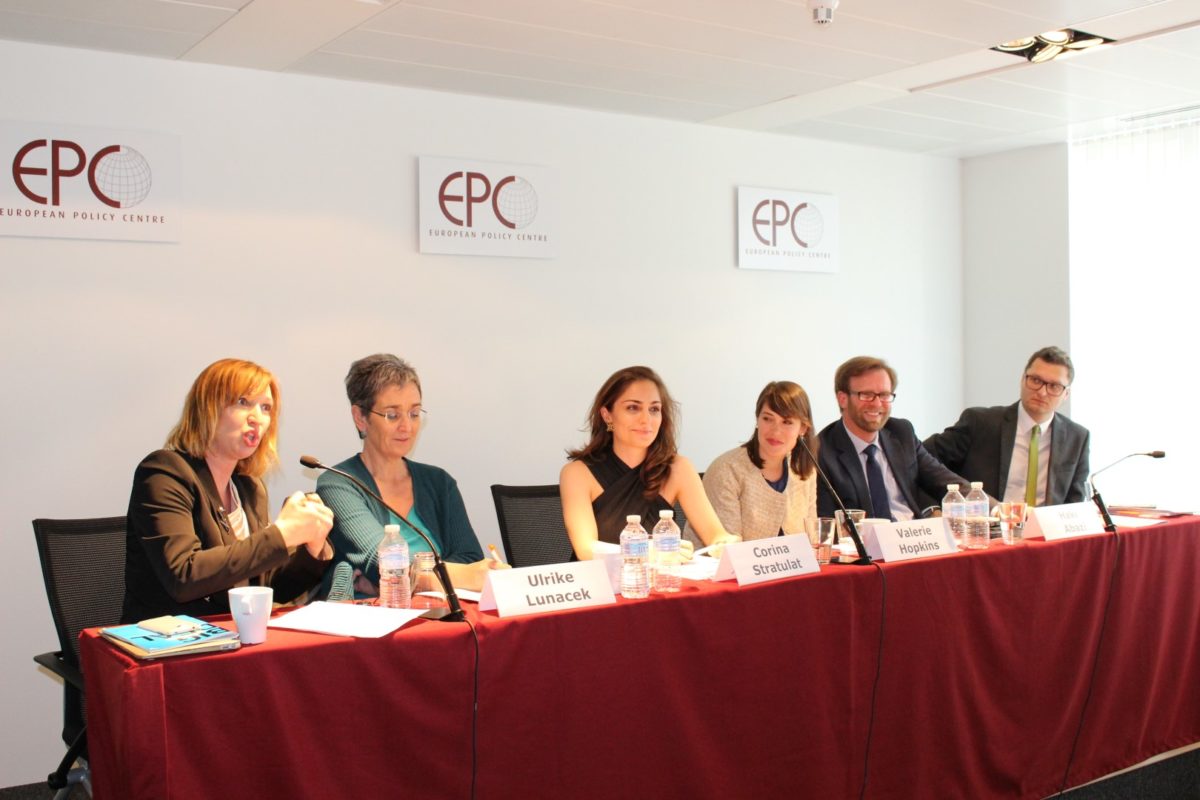
The European Policy Center (EPC) gathered authors of the “Big Deal” report, which exclusively talks about implementation of Kosovo-Serbia dialogue.

EPC Senior policy analyst, Corina Stratulat gave a few introductory remarks regarding to the report. She pointed out that Serbia’s relationship with Kosovo is central to the country’s EU accession talks, and that following the 2014 elections, both Belgrade and Prishtina agreed to integrate Kosovo’s police and judiciary.

BIRN Kosovo Executive Director Jeta Xharra, explained the methodology of the Big Deal report, its outline and some other key findings, including problems with the implementation of key agreements for the lives of citizens, like car insurance.

Ulrike Lunacek, Vice President of the European Parliament and member of the delegation for relations with Bosnia-Herzegovina and Kosovo noted that the BIG DEAL report was key to her understanding of the level of implementation of the agreements and said it was a valuable tool for her and other MEPs.

BIG DEAL report author Valerie Hopkins highlighted the difficulty in bringing the four northern Kosovo provinces under the control of Prishtina, with delays in unifying the judiciary, adopting municipal budgets and incorporating members of the Civil Protection Corps into Kosovo institutions. One success has been the integration of former Serbian police officials into the Kosovo police, and one complete failure has been mutual acceptance of diplomas.

The discussion involved also Rasa Nedeljkov, Programme Manager at the Center for Research, Transparency and Accountability (CRTA), based in Belgrade, who spoke about the value of creating one account of the implementation process for both Kosovo and Serbia.

Haki Abazi, Programme Director for the Western Balkans at the Rockefeller Brothers Fund, reminded attendees that neglecting Kosovo from an international perspective could have dangerous consequences, citing the ongoing political turmoil in Macedonia.

Click for more information about this report.   

BIRN Macedonia Launches Eight Call for Investigative Reports

BIRN Macedonia, together with Centre for Investigative journalism – SCOOP Macedonia and the Centre for Civil Communications launched the seventh call for investigative stories on June 1st.

The call is part of the ‘Project for Investigative Journalism and Cooperation Between Media and Civil Society’, part of a USAID programme for strengthening independent media in Macedonia.

In this call that closes on June 16, at least five journalists will be awarded a grant to cover their expenses while doing the investigation and writing the story.

Journalists will have about three months to dig deeper and research their ideas, but also will have the opportunity to work with experienced editors as their mentors to guide them through the process of writing to BIRN standards.

Topics for investigations include: health; cultural policy; education and youth; human rights; EU integration; good governance; inter-ethnic relations; environment issues; marginalised groups; quality of life.

The call only applies to journalists from Macedonia. More calls for investigative grants will follow.

Click for more information about the application procedure, with details in Macedonian.

BIRN Albania Launches Call for Investigative Reports on Healthcare

The Balkan Investigative Reporting Network in Albania launched a call for investigative stories on May 20th.

The call is part of the program ‘Exposing Corruption in Albania,’ supported by the Open Society Foundation in Albania (OSFA).

In this call that closes on June 7, three journalists will be awarded a grant to cover their expenses while doing the investigation and writing the story on corruption and impunity related to healthcare.

Journalists will have about three months to dig deeper and research their ideas, but also will have the opportunity to work with experienced editors as their mentors to guide them through the process of writing to BIRN standards.

Until December 2016, other three more calls for investigations will be launched, covering topics on Organized Crime, Local Government and Public Administration.  

The call only applies to journalists from Albania.

Click for more information about the application procedure, with details in Albanian.

Programi: Zbardhja e korrupsionit në Shqipëri

Lënda: Thirrje për artikuj investigativë në fushën e shëndetësisë

Thirrja organizohet nga Rrjeti Ballkanik për Gazetarinë Investigative në Shqipëri (BIRN Albania), me mbështetjen e Fondacionit Shoqëria e Hapur për Shqipërinë, Soros.

Nëpërmjet këtij konkursi tre (3) gazetarë investigativë do të përzgjidhen për të prodhuar artikuj investigativë në fushën e shëndetësisë, në bashkpunim me shoqërinë civile. Fituesit do të përzgjidhen nga një juri e pavarur e përbërë nga gazetarë me eksperiencë dhe ekspertë në fushën e shëndetësisë.

Aplikantët e përzgjedhur, të cilët do marrin një bursë prej 1,200 USD ($1,020 + $180 taksë të ardhurash personale), do kenë në dispozicion një periudhë tre mujore për të përfunduar investigimin e tyre dhe përgatitjen e artikullit për publikim.

Kandidatët fitues pritet që të angazhohen dhe të përmbushin të gjitha detyrimet në lidhje me investigimin, siç janë: takimet e shpeshta (javore) me redaktorin, publikimin e tekstit në faqen e BIRN Albania dhe gjithashtu në Balkan Insight, si dhe respektimin e standardeve të gazetarisë investigative dhe etikës profesionale.

Kandidatët duhet të formulojnë një propozim të detajuar për konkursin. Propozimet duhet të kenë për qëllim ekspozimin e korrupsionit, abuzimit me pushtetin, pandëshkueshmërisë dhe mungesës së zbatimit të ligjit në këtë fushë.

Prioritet në përzgjedhje do i kushtohet propozimeve të cilat përfshijnë një nga temat e mëposhtme, të sygjeruara si prioritare gjatë një tryeze të rrumbullakët midis gazetarëve dhe përfaqësuesve të shoqërisë civile në fushën e shëndetësisë të organizuar nga BIRN Albania:

  • Korrupsioni dhe shpërdorimi i detyrës në sektorin e shëndetësisë;
  • Importi, kontrolli dhe monitorimi i barnave;
  • Menaxhimi i mbetjeve spitalore dhe asgjesimi i barnave të dala jashtë përdorimi;
  • Keqmenaxhimi i fondeve në sektorin e shëndetësisë nga institucionet lokale dhe ato qendrore;
  • Mosfunksionimi i mekanizmave publik të monitorimit dhe kontrollit të cilësisë së shërbimeve  shëndetësore në nivele të ndryshme të tij;
  • Problematike e burimeve njerëzore në sektorin e shëndetësisë (specializimet dhe edukimi në vazhdim i personelit shëndetësor, shpërndarja gjeografike dhe mënyra e përzgjedhjes);
  • Mosbarazia në akses/cilësi në marrjen e shërbimeve për grupe të ndryshme vulnerabël (aftësi e kufizuar, komuniteti rom, familje në nevojë);
  • Keqmenaxhimi i buxhetit në shërbime shëndetësore për infrastrukturë, materiale mjekësore dhe barna.

Aplikantët mund të dërgojnë më shumë se një aplikim, por vetëm një propozim për kandidat do të përzgjidhet.

Të drejtën për të aplikuar e kanë të gjithë gazetarët në Shqipëri, të punësuar apo në profesion të lirë.

Kandidatëve i kërkohet që bashkë me formularin e plotësuar të aplikimit të dërgojnë një CV, dhe tre shembuj të punës së tyre me email në: [email protected] 

Afati i Aplikimit: 7 Qershor 2015

Kandidatët e përzgjedhur do të njoftohen deri më datë: 15 Qershor, 2015

BIRN Albania Launches Web Page on Elections and Territorial Reform

The Balkan Investigative Reporting Network in Albania on May 18 launched a special webpage zgjedhje2015.report.al on its Albanian language portal Reporter.al, with in-depth information on the country’s territorial reform and the June 21 local elections.

The page contains an interactive map of the new territorial division, which reduced the number of municipalities from 381 to 61, a profile of the each of the 61 new municipalities that emerged from the reform, six in depth analysis on the impact of the reform, and the CVs of election candidates running in the polls.

By June 5, the page will be enriched with interviews with mayoral candidates running in the 61 municipalities, which were based on a set of questions generated from interviews and roundtables with civil society activists, organizations and community leaders.

The questions were generated by in-depth interviews with more than 250 community leaders that BIRN Albania conducted in the above mentioned municipalities over the last two months, in order to identify citizens’ concerns about the problems and challenges their area faces.

The roundtables were held in Kukes, Shkodra, Burrel, Elbasan, Berat, Fier, Vlora, Gjirokastra, Korca and Tirana, and more than 150 representatives of civil society organisations, minorities and grassroots groups participated.

The focus web page is part of the project on ‘Accountability in Local Governance through Citizen Participation and Civic Journalism’, supported by the US Embassy in Albania Democracy Small Grants Program, the Balkan Trust for Democracy (BTD) and the Swedish International Development Cooperation Agency (SIDA)

This project aims to bridge the gap between local voters and mayoral candidates ahead of the 2015 local elections, by strengthening the capacities of CSOs, grassroots organisations, activists and the media in order to identify and stimulate public debate on the key issues facing local communities.

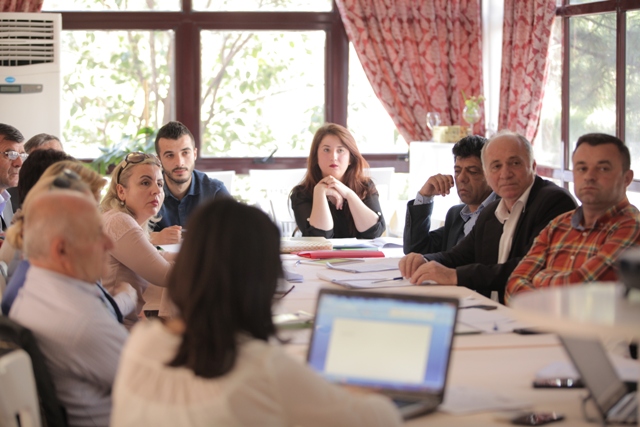
BIRN Albania Holds Ten Roundtables on Elections

In April, the Balkan Investigative Reporting Network in Albania held ten regional roundtable discussions across the country at which the priorities for local candidates for the June 21st local elections in 61 municipalities were discussed.

The roundtables were held in the cities of Kukes, Shkodra, Burrel, Elbasan, Berat, Fier, Vlora, Gjirokastra, Korca and Tirana, where more than 150 representatives of civil society organisations, minorities and grassroots groups shared their opinions about a list of questions to be posed to local mayoral candidates ahead of the polls.

The questions were generated by in-depth interviews with more 250 community leaders that BIRN Albania conducted in the above mentioned municipalities over the last two months, in order to identify citizens’ concerns about the problems and challenges their area faces.

A shortlisted number of questions will be used to conduct interviews with mayoral candidates ahead of the polls. The interviews will be published on a special page of BIRN Albania’s online publication zgjedhje2015.reporter.al.

The roundtables are part of the project on ‘Accountability in Local Governance through Citizen Participation and Civic Journalism’, supported by the US Embassy in Albania Democracy Small Grants Program.

This project aims to bridge the gap between local voters and mayoral candidates ahead of the 2015 local elections, by strengthening the capacities of CSOs, grassroots organisations, activists and the media in order to identify and stimulate public debate on the key issues facing local communities.

BIRN’s Kosovo War Crimes Film Screened in Pristina

BIRN’s new documentary, which investigates the Serbian commanders responsible for some of the worst attacks of the Kosovo war, was screened for the first time in Pristina.

The new documentary, The Unidentified, which names the Serbian officers who ordered attacks on Kosovo villages around the town of Pec/Peja in 1999 and those involved in the cover-up operation to hide the victims’ bodies, was screened for the first time in Kosovo on Thursday evening at the Architecture Faculty in Pristina.

Marija Ristic, the director of the documentary, which was the result of a two-year investigation, told the Pristina audience that the hardest moments during the making of the documentary were when she was trying to secure interviews with Serbian police officers.

“They started to inform each other. They were trying to prevent other people from speaking out. At one point, we were afraid that we would not manage to prove anything because we could not get police officers to speak about this,” Ristic said.

Kosovo’s Ombudsman, Sami Kurteshi, said he was touched by the story in the documentary, in which both victims and perpetrators are interviewed, but said that for him, it was just one small part of the war.

Kurteshi said that despite the fact that there is little political will to tackle war crimes, such efforts should continue.

“The strengthening of justice is very important. Justice should not be dependent on political will,” he said.

Chief prosecutor at Kosovo’s Special Prosecution, Sevdije Morina, praised the documentary for getting both victims and perpetrators to talk about the crimes.

Morina also said that the Kosovo’s prosecutors are ready to take over war crime cases after the mandate of the EU rule-of-law mission, EULEX, was changed.

“Local prosecutors will soon take over the big cases, like the big massacre at Meja, from the EULEX prosecutor that was responsible until now for the war crimes [cases],” said Morina.

‘The Unidentified’ takes viewers back to 1999, to the villages of Ljubenic, Cuska, Pavljan and Zahac near Pec/Peja in Kosovo, where Serbian fighters killed more than 118 Albanian civilians. Their bodies were either burned or removed, and some of them were later found in mass graves at the Batajnica police training centre near Belgrade in 2001.

The trial of 11 fighters alleged to have been involved in the killings – 10 of them accused of being direct perpetrators – is still ongoing in Belgrade, but the police and army generals who gave the orders have never been prosecuted in Serbia.

BIRN Albania Holds Public Procurement Training Session

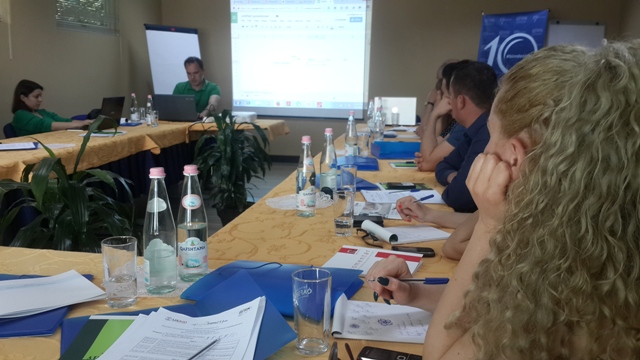
The Balkan Investigative Reporting Network in Albania held a two-day training session for journalists in Tirana on May 8-9, focusing on Albania’s public procurement system and the ways reporters can dig up stories on conflicts of interest, abuse of office, corruption and procurement fraud.

Around 15 journalists and editors from local and national media in Albania participated in the training, part of the project ‘Fostering Democracy Through Investigative Reporting’, which is supported by USAID through Assist Impact. 

The two-day training session served as a guide to reporters on the basic methods and techniques of investigative journalism as well as an overview of public procurement procedures in Albania.

The training was aimed at strengthening the skills of journalists to help them to look closely at systemic issues of conflict of interest, to uncover facts and produce compelling journalism by carrying out data gathering, analysis and document mining.

The journalists who took part in the training will participate in a competition, from which BIRN Albania, through an independent jury, will select six story ideas for investigations on public procurement that will be funded and published with the help of BIRN editors in BIRN’s online publications BalkanInsight.com and Reporter.al.