Requests to Remove Online Content ‘Mustn’t Fuel Censorship’, Debate Told

A debate about online freedom of expression entitled ‘New Trends or a Method of Suppressing Independent Journalism?’ was held in Sarajevo on November 12 by the Center for Investigative Journalism and BIRN Bosnia and Herzegovina.

Participants at the debate argued that requests for removal of online content about perpetrators of criminal offences can amount to pressure on the media.

Due to insufficiently defined or selectively interpreted laws, the right to reply to or request the removal of an article can limit freedom of expression and serve as a tool of censorship, participants said.

Participants also argued that the publication of responses by people accused in media articles of wrongdoing should not provide a platform for their personal opinions.

Journalists and editors from media outlets in Bosnia and Herzegovina, journalism professors, legal experts and representatives of international organisations and embassies took part in the discussion.

The round-table discussion’s panellists included Nedim Ademovic, a lawyer and constitutional law expert, and Lejla Turcilo, a professor at the Faculty of Political Sciences in Sarajevo.

Turcilo pointed out that media are obliged to publish someone’s reply to an article if it corrects an error and contributes to impartiality. The decision is up to editorial teams, while the individuals submitting responses have the right to address a court if it has not been published.

Professional and responsible media outlets will not refuse to publish these responses if they correct an error, because this will provide the public with better quality information, she said.

However, polemics about a published article that insult or threaten a journalist or the media outlet shouldn’t be published as responses, Turcilo said.

She argued that this often represents an attempt to censor media content and threatens the freedom of journalists to report “about everyone and everything”.

Ademovic said that nobody has the right to ask media to publish their personal stance on a certain topic in the form of a response, but they have the right to correct an error, particularly if the journalist did not contact that person when preparing the article.

“One has the right to mitigate the damage through a denial correcting the key false allegations,” Ademovic said.

In some cases in Bosnia, people have the right to ask for specific verdicts to be deleted from their criminal records. The individual concerned then often ask media to articles mentioning their verdicts because they believe that such information, which can easily be found through a simple search on the internet, damages their reputation.

The panellists and discussion participants agreed that such requests do not have a legal basis and that media have no obligation to comply, particularly when it comes to checked and correct information.

“So these requests for the removal of articles about perpetrators of criminal offences following their removal from the criminal records actually represent a type of belated censorship or pressure on the media,” Turcilo said.

She said that those who have had falsehoods published about them should use defamation legislation.

Ademovic explained that there is no statutory right to request the removal of published articles. “The removal and elimination of the legal consequences of someone’s criminal status doesn’t imply the right to delete that something happened,” he said.

The panel’s participants agreed a court decision to remove someone from the criminal records doesn’t imply an obligation to remove media content about the criminal offence.


BIRN Co-Published Investigation into Seasonal Workers Wins Irish Award

Investigation into low pay, long hours and poor working conditions of Eastern European workers in Ireland, on which BIRN collaborated with Irish investigative platform Noteworthy, wins award.

A four-month investigation by BIRN and Noteworthy, into the working conditions of the migrant workers that big Irish producers depend on at a harvest time,  won the Investigative Writing Award at the first-ever Irish Food Writing Award.

The winners were announced during the event in Dublin on November 10. The founder of the Irish Food Writing Awards, journalist Suzanne Campbell said the organisers had been overwhelmed with entries: over 200 were submitted for 16 categories, from throughout Ireland.

“It has been a tough 18 months for the food sector and for journalists, so this is a lovely way to acknowledge the hard work of writers and food media,” Campbell said at the ceremony.

In a series of articles published last December, BIRN and Noteworthy spoke to a number of seasonal workers from Eastern Europe and labour rights experts who were concerned that not enough is being done to address the long working hours and low pay for those working in the industry.

Workers, who spoke under the condition of anonymity, recalled the hardships they were going through, such as overcrowded cabins provided for them to take breaks in and long working days lasting up to 14 hours.

The investigation also revealed:

  • Concerns about labour practices in the mushroom industry in the border area, according to findings shared with BIRN and Noteworthy by a two-year cross-border project, members of which spoke to BIRN and Noteworthy about their findings.
  • A 2018 survey by Teagasc, the Irish Agriculture and Food Development Authority, and released to BIRN and Noteworthy through a Freedom of Information, FOI, request indicates the horticulture industry has difficulty retaining staff due in part to low wages, poor working conditions, lack of suitable accommodation and poor recruitment skills.
  • An analysis of Workplace Relations Commission data released through an FOI request shows that it uncovered almost 185,000 euros in unpaid wages since 2017, affecting over 3,300 employees in the soft fruit and mushroom sectors.


BIRN and n-ost Hold Cross-border Journalism Workshop in Nis

BIRN Hub and its partner organisation n-ost held a workshop on cross-border cooperation in journalism for nine local media outlets from Bosnia and Herzegovina, Montenegro and Serbia, from November 2 to November 5 in Nis, Serbia, which included a “journalism slam” event in the city.

Over four days, participants learned about all the steps needed to write a cross-border story – from finding the team and topic to work on to potential conflict solving within the team.

Trainers Milorad Ivanovic and Jelena Prtoric introduced the participants to different tools that can help them in the process of writing a story as well as successful examples of local media initiatives that resulted from cross-border investigations. Finally, participants had the chance to brainstorm ideas for their own cross-border stories.

Guest speaker at the workshop Max Donheiser, from CORRECTIV.Lokal, talked about their models of connecting reporters and the biggest challenges facing local journalists in using those models, as well as the most important topics they had investigated in the previous period.

On the last night of the workshop, a “journalism slam” was livestreamed online at City Smart Radio in Nis. During the event, journalists from Bosnia, Montenegro and Serbia talked about the importance of local journalism, the conditions they work in and some of their most inspiring stories. Speakers at the event were chief editor of City Smart Radio Ivana Petrovic, executive director of PV Portal Milo Dzaković, founder of UPS Media Dragana Jovanovic, and journalist at Juzne vesti, Tamara Radovanovic.

This was the third workshop organised as part of the project entitled Local Journalism – European Perspectives, after the first one in Tuzla and the second in Herceg Novi.

Since reuniting with the local media outlets after two months, their progress with the assignments after the first two workshops was also discussed.

The project Local journalism – European perspectives project is financed by Germany’s Federal Ministry of Economic Cooperation and Development.

Assignment Editor

Balkan Investigative Regional Reporting Network, BIRN, is looking for an assignment editor with a strong understanding of the current affairs in Southeast and Central Europe, whose main tasks will be to coordinate investigative journalists working on country-based and cross-border investigations.

Job Description

 BIRN’s Investigative Reporting Initiative programme is seeking a dedicated editor who will work closely with BIRN’s editorial team to ensure the quality of BIRN’s investigative work. This remote position is open for any experienced interested editor from anywhere in the world.

Skills

  • Relevant experience in producing and/or editing high quality journalism.
  • A strong understanding of the current affairs in Southeast and Central Europe, as well as politics, legal systems, and critical issues.
  • Ability to meet tight deadlines.
  • Ability to work with and manage cross-border teams consisting of different nationalities and different profiles of journalists.
  • Efficient in managing and sub-editing copy.
  • Excellent knowledge of spoken and written English.
  • Good writing skills.
  • A highly developed and authoritative judgement of news and current affairs.
  • Understanding of law and ethics in relation to publishing and broadcasting in Southeast and Central Europe.

Responsibilities

Working alongside the lead investigations’ editor on the programme, the chosen associate editor will be in charge of:

  • selecting journalists for cross-border teams when necessary;
  • coordinating the work of investigative journalists and providing them with editorial and mentoring support;
  • on the job training of interns (through online training sessions and concrete journalistic assignments);
  • pitching new investigative stories, as well as commissioning cross-border and country-based investigations;
  • editorial involvement in ongoing projects, such as working on various databases and freedom of information reports;
  • arranging the re-publication of the programme’s investigations in regional and international media outlets;
  • reviewing pitches and applications that are part of the programme, such as for BIRN’s flagship Summer School of Investigative Reporting;
  • contributing to/writing actual investigative reports, alone or in conjunction with other editors/investigative journalists;
  • regular (weekly, monthly and ad hoc) meetings with: journalists, other editors and BIRN project/programme teams;
  • conducting, developing and guiding journalistic research;
  • communicating with lawyers and arranging legal checks of investigations when necessary.
  • writing project reports and coordinating other project outputs when needed.

Other duties and responsibilities

  • Maintaining appropriate contacts with BIRN country offices and/or personnel, necessary to ensure the proper execution of the abovementioned duties.
  • Carrying out any other duties that may reasonably or exceptionally be required to ensure the smooth operation of BIRN’s work, such as substituting for absent colleagues, etc.
  • Preparing contracts for journalists/hired agencies such as development agencies and submitting payment requests to BIRN’s financial department.
  • Keeping track of programme-related activities that are needed for internal/external verification (such as email correspondence, evaluation forms, photos/screenshots, agendas etc).

Why you should join our team

We said a lot about what we are looking for, but here is what we offer our future colleague:

  • A proactive and dynamic working environment;
  • Opportunities for professional growth;
  • To be part of the award-winning team of journalists and editors
  • Travel and participation in BIRN-organised workshops and trainings;
  • Empowering experience of working as a part of a large regional organisation with more than 200 employees around the region;
  • An opportunity to collaborate with the most prominent investigative outlets in Europe;
  • Support for developing and implementing your own ideas.

Who can apply?

BIRN welcomes applications from anywhere in the world. BIRN encourages applicants no matter their gender and offers an equal chance to all interested persons without any prejudice based on any grounds.

How to apply?

To apply for this position, please use the online form from this link.

The call for applications will be active until November 14, 2021. Only shortlisted candidates will be called for an interview. All candidates will receive information on the status of their application.

About BIRN

Balkan Investigative Reporting Network is a network of non-governmental organisations promoting freedom of speech, human rights and democratic values in Southern and Eastern Europe. BIRN Hub is a non-governmental organisation, a part of the Regional BIRN Network, working in the field of media development, promoting freedom of speech, human rights and democratic values in Southern and Eastern Europe. BIRN has local organisations in Albania, Bosnia and Herzegovina, Kosovo, North Macedonia, Romania and Serbia, while the Network is editorially also present in Greece, Bulgaria, Croatia, Moldova, Montenegro, Ukraine, the Czech Republic, Poland, Slovakia, Hungary and Slovenia. BIRN strives to empower people to access their rights, by providing accurate and relevant information and by creating opportunities for them to participate in democratic processes.

Investigative Reporting Initiative is one of our core programmes dedicated to exposing wrongdoings of powerful individuals and private and public organisations linked to people in power through investigative work. A large part of our work is devoted to training new generations of journalists – especially those interested in investigative journalism – in the Balkans and beyond. We are also focused on freedom of information and transparency in the Balkans, which is why we track these important spheres in our annual reports and work with relevant regional and international stakeholders. Besides, we at BIRN are also working hard to advance the position, power and knowledge of journalists through various online platforms where they can easily communicate, access databases free of charge, find much-needed information, as well as to break the gap between their work and ever-changing technological aspects of today’s world. In that regard, BIRN hosts BIRD Community platform, part of which is BIRD Source, a comprehensive database consisting of more than 3 million documents BIRN decided to share with the general public.


BIRN Launches COVID Crisis Tech Response Livefeed Page

COVID Crisis Tech Response Livefeed, a new focus page on BIRN’s flagship Balkan Insight website, will deliver regular updates on digital and tech solutions that are being introduced during the coronavirus pandemic.

While monitoring pandemic-related incidents and activities in the digital environment, BIRN noticed the increased use of technology and digital solutions, both positive and negative, that were being offered to people in Central and South-East Europe by states and companies.

BIRN’s monitoring also showed that ordinary citizens have been the main victims of digital abuses and information warfare, while states, major companies and online platforms have neglected their responsibilities to protect people.

The COVID Crisis Tech Response Livefeed page aims to update readers on a wide range of technological innovations and solutions that have been developed as part of the response to the pandemic in the Central and South-East Europe region.

“From the beginning of the pandemic, we’ve been using all kinds of tech and digital solutions to keep our lives going. With this page, BIRN is mapping all the solutions that are being used in order to examine all the aspects of the various uses of technology that have been presented as the best and fastest solution to every problem during the pandemic,” said Sofija Todorovic, BIRN Project Manager.

The goal is to highlight trends and connections that would otherwise remain hidden in order to help civil society organisations and media respond more quickly and efficiently to future crises, but also to reveal misuses of tech solutions.

“We know that fast technology solutions can’t solve complex issues for society and it’s crucial to know what is happening with our data,” said Todorovic.

Digital and tech solutions being offered by private companies will be covered as well as state-designed tools.

Among the main issues that will be followed on the new page will be the introduction of apps for digital contact tracing, the implementation of online platforms and remote applications to map the spread of COVID-19, and the increasing use of online education.

The page will also examine how tech solutions have caused a rise in cases of unauthorised access to online platforms, sensitive data violations and banking scams, as well as the boom in disinformation and misrepresentation by scam websites.


New Job Opportunity: External Evaluator

Balkan Investigative Reporting Regional Network, BIRN Hub is looking for an external evaluator (company, individual, team), to carry out evaluation of our 3-year project, Balkan Transitional Justice Initiative, funded by the European Commission. 

The purpose of this evaluation is to undertake a comprehensive overall assessment of the achieved results of the support and to provide recommendations for possible continuation and scaling of the project. The evaluation will focus on Albania, Bosnia and Herzegovina, Kosovo, North Macedonia and Serbia and provide findings, conclusions and recommendations and identify good practices that could be possibly scaled up or replicated in future programmes and projects. Finally, the evaluation should provide evidence on the potential for future continuation and/or up-scaling of the initiative.

The conclusions and recommendations generated by this evaluation will be addressed to its main users: organizational management and the donor.

 Deadline for applications is 12 November 2021.

 Please find the full Terms of Reference from this link.

CEI SEEMO Investigative Awards Judges Praise BIRN Journalist

Nermina Kuloglija, a BIRN journalist from Bosnia and Herzegovina, was given a special mention by the judges of the CEI SEEMO journalism awards for outstanding merits in investigative journalism.

The judges at the CEI SEEMO journalism awards ceremony in Belgrade on Wednesday praised BIRN’s Nermina Kuloglija for her dedicated work on monitoring public procurement during the coronavirus pandemic.

From March 2020 until the end of the year, Kuloglija followed all public expenditures in Bosnia and Herzegovina that were part of the authorities’ counter-pandemic efforts through a special database. She registered the expenditures totalling more than 30 million euros and published several stories about the issue.

“Nermina was praised for the database she produced during the pandemic that collated public procurements across the country related to medical equipment, which also allowed her to reveal some notable corruption stories,” a member of this year’s jury, Sasa Lekovic, said while presenting the award.

The jury also gave a special mention to Vlad Odobescu, a freelance journalist who works for the Romanian Investigative Journalism Centre.

The award for outstanding investigative journalism was given to Sadeta Bajrovic, a journalist with the Centre for Investigative Journalism in Sarajevo, in the ‘professional journalists’ category. The jury has praised her stories focusing on vulnerable and ordinary people during the pandemic.

The award for ‘young journalist’ was given to Milica Vujanovic, a journalist who works for the Organised Crime and Corruption Reporting Project and KRIK investigative media outlet in Serbia, for her stories about organised crime.

The CEI SEEMO awards aim to honour the work carried out by investigative journalists and their contribution to investigative reporting despite the difficult conditions under which they have to operate. Thay are organised by the Central European Initiative, CEI, in cooperation with the South East Europe Media Organisation, SEEMO.

The 2021 awards were intended to bring public attention to journalists who reported on the social and economic influence of the pandemic on people’s lives, investigating stories focusing on gender, youth, minorities and people with disabilities.

BIRN Bosnia and Herzegovina Journalist Shortlisted for International Award

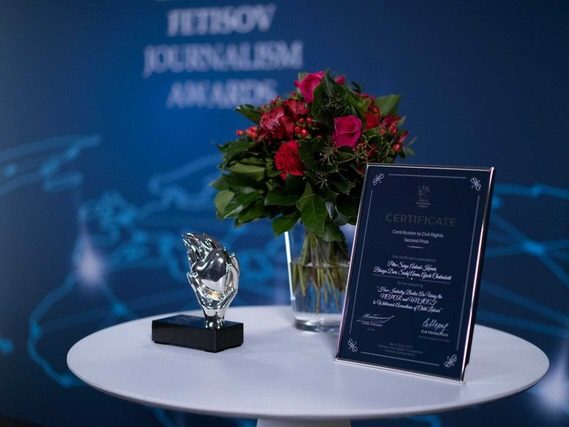
Haris Rovcanin, a journalist with BIRN Bosnia and Herzegovina, has been shortlisted for the Fetisov Journalism Awards in the ‘Outstanding Contribution to Peace’ category.

Four articles written by Haris Rovcanin for BIRN Bosnia and Herzegovina, two of which were co-written by Albina Sorguc, have been shortlisted in the ‘Outstanding Contribution to Peace’ category of this year’s Fetisov Journalism Awards.

The articles include two investigative pieces, Bosnian Serb Military Police Chiefs Never Charged with Srebrenica Killings and Serb Chetniks’ Links to War Criminals and Extremists Uncovered.

They also include a feature, 28 Years on, Families still Searching for Missing Bosnian Soldiers and an analysis piece, BIRN Fact Check: Is the Bosnian Serb Report on the Sarajevo Siege Accurate?

The annual Fetisov Journalism Awards aim to promote “universal human values such as honesty, justice, courage and nobility through the example of outstanding journalists from all over the world”.

Other nominees in the same category as Rovcanin include Swedish-Syrian duo Ali Al Ibrahim and Khalifa Al Khuder’s story ‘Syria’s Sinister Yet Lucrative Trade in Dead Bodies’, Nigerian journalist Kalopo Olapojua’s series of stories ‘Conflict in a Pandemic’, Spanish journalist Marga Zambrana’s article ‘Uyghur Refugees Speak Out Against Genocide and Crimes Against Humanity’ and Olatunji Ololade from Nigeria for the piece ‘The Boys Who Swapped Football for Bullets’.

The ‘Outstanding Contribution to Peace’ category recognises publications on anti-war topics that have made an important contribution to peace-making.

The three other categories in the awards are ‘Contribution to Civil Rights’, ‘Outstanding Investigative Reporting’ and ‘Excellence in Environmental Journalism’. This year, just under 400 entries from 80 countries were submitted.

Three winners will be announced in each of the categories in February, while the awards ceremony will take place in Switzerland in April

Former BIRN Bosnia and Herzegovina journalist Sorguc was also shortlisted alongside Emina Dizdarevic for the Fetisov awards in 2019 in the ‘Outstanding Contribution to Peace category with a series of articles on war crimes and transitional justice.


Call for Registration: Online Training on Gender-Sensitive Reporting

Belgrade-based NGO Atina, together with the Balkan Investigative Reporting Network, is launching a series of online training courses focusing on gender-sensitive reporting on human trafficking and violence against women.

Journalists and writers from Albania, Bosnia and Herzegovina, Kosovo, Montenegro, North Macedonia and Serbia are invited to register for a two-day online training course on practicing gender-responsive reporting on human trafficking and violence against women.

The main idea behind the training is to examine and expose worrying and increasing trends in the incidence and prevalence of gender-based violence, both in the offline and online sphere in the Balkan region, particularly during the COVID-19 pandemic.

The training will be led by experienced activists from NGO ATINA, an organisation that has been running a direct support programme for trafficking and gender-based survivors in Serbia for 18 years now.

Designed to offer a deep insight into ways to avoid the most common mistakes in reporting on human trafficking and violence against women, the training will also offer participants a chance to practice methods of communication with survivors of violence. They should also encourage journalists and writers to apply the methods and lessons learned in their everyday work, raising the quality of their journalism.

There are two available slots for this online training:

  • December 8th – 9th
  • December 22nd – 23rd

Applicants must register for one of these three slots only. The number of participants per training day is limited, so time slots should be booked as soon as possible. Scroll down for registration.

The training will be held in the English language, from 10am to 2pm. Each training day will consist of two 1.5-hour-long sessions that will encompass interactive exercises, facilitated discussions, with an evidence-based approach to group work in practicing gender-responsive reporting on human trafficking and violence against women. At the beginning and at the end of the training course, there will be a questionnaire, and participants will be invited to keep a journalistic diary.

Agenda

Day I

10:00 – 10:30  Introduction of participants, topic and activities

10:30 – 12:00  Not victimhood reporting, but promotion of the agency of women

  • Proactive role of journalists in understanding the context of human trafficking and violence against women (meaning of the phenomenon, why it happens, who are the perpetrators and who are the victims, what are the main trends and statistics, involvement of journalists in the process of identification, referral, assistance and court proceedings)

12:00 – 12:30  Break

12:30 – 14:00  How to avoid the most common mistakes while reporting on human trafficking and violence against women

  • Deconstruction of stereotypes and prejudices

Day II

10:00 – 10:30  Warm-up and recapitulation of the previous day

10:30 – 12:00 Why wording matters

  • Communication with survivors and practicing preferred terminology for reporting

12:00 – 12:30  Break

12:30 – 14:00  Reporting on specific types of violence against women

  • Understanding of violence and abuse in the digital sphere

For more information, contact: Jelena Hrnjak ([email protected]).

Please register here and select a preferred slot. Upon registration, you will receive an email confirmation, and a Zoom link will be sent to all participants a few days before the training course.

The training is being organised with support from the Balkan Trust for Democracy, a project of the German Marshall Fund of the United States and the Royal Norwegian Embassy in Belgrade.

Meet the People Behind BIRN: Lamija Grebo

Each month, BIRN introduces you to a different member of its staff. For October, meet Lamija Grebo, a journalist at BIRN Bosnia and Herzegovina.

Lamija Grebo, 38, comes from Bosnia and Herzegovina and started working for BIRN as an intern in 2014, before becoming part of the editorial team in Sarajevo.

Last year, she was involved in a project by BIRN and the Srebrenica Memorial Centre to film 100 testimonies of surviving witnesses of the 1995 genocide in order to create an oral history which will become part of a permanent exhibition. The project, entitled ‘The Lives Behind the Fields of Death’, was launched in July 2021, and is aimed at combatting genocide denial.

For its groundbreaking work in covering transitional justice topics, BIRN Bosnia and Herzegovina was given the European Press Prize Special Award for 2020.

“I will not be modest and say that we are strangers to awards, but this one really feels special as it was given for years of reporting on war crimes trials, transitional justice issues and the problems faced by victims of the 1990s conflict. Countless trials, analyses, episodes of ‘TV Justice’ and stories that we reported were recognised with such important prize as the European Press Prize,” said Grebo.

“We take special pride in all our stories and they are rewards in themselves, but it is always good to be recognised by our colleagues and it justifies all the trust we are given when we report on such important matters,” she added.

BIRN was given the European Press Prize for its collaborative work. “Working as a team has its advantages and disadvantages, however in BIRN Bosnia and Herzegovina, teamwork might be the key to our good quality stories and investigations,” said Grebo.

“Personally I find it easy to work with my co-workers as there is always some space to learn something more and it results in producing a better story. As a team, you just have more brain to pick and can easier overcome some obstacles in your work,” she added.

She said that BIRN Bosnia and Herzegovina wants to continue investigating and discover new and important stories. “We are looking forward to continuing to do our work in the best way, not for the sake of reward, but for the sake of our profession and society,” she said.