BIRN Albania Presents Its Social Media Research Findings

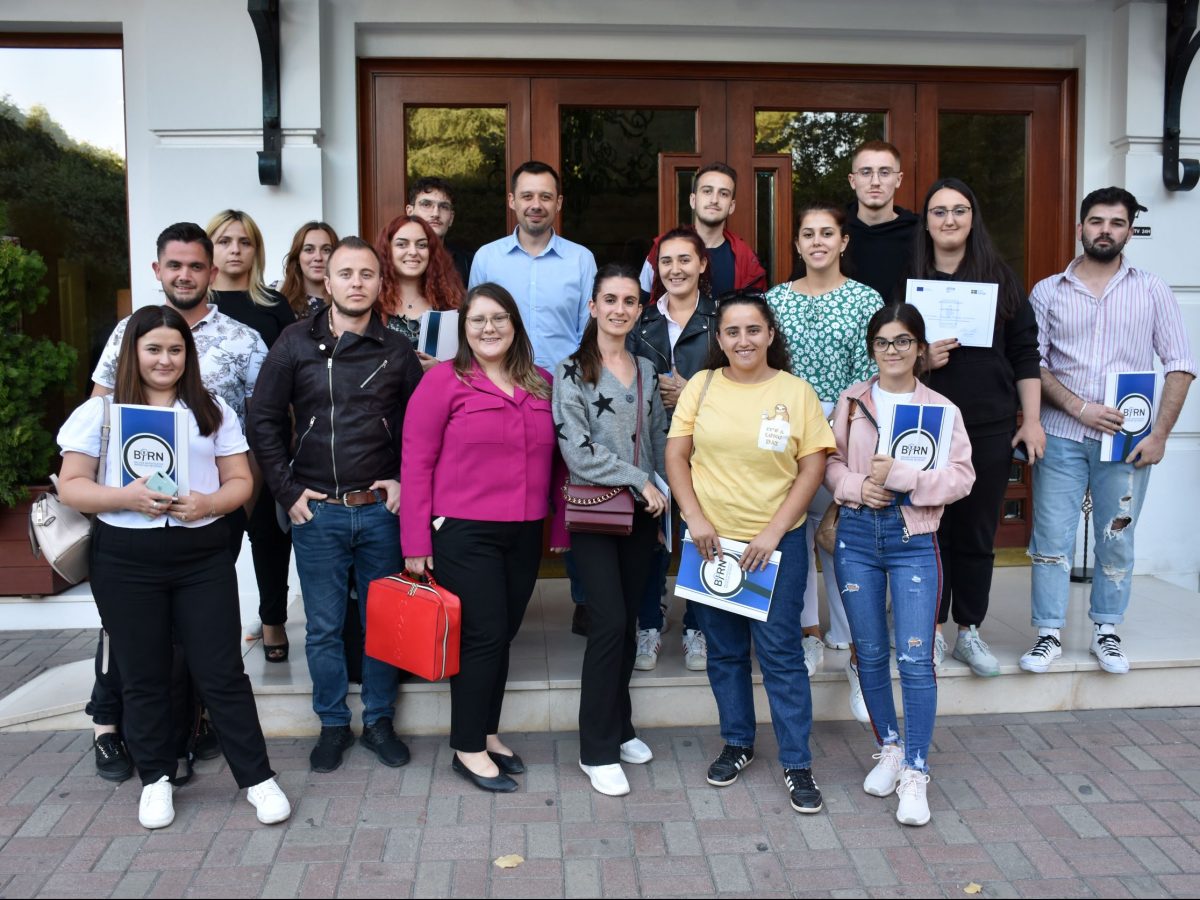
On July 27th, BIRN Albania held a consultation session with civil society organisations in Tirana, to present the findings of its research on the use of social media by political actors and entities during the campaign for the April 25th parliamentary elections.

The session was attended by two dozen civil society representatives from organisations that monitored the work of Albanian institutions and political parties in the elections.

This was the second presentation session held by BIRN Albania. At an earlier meeting, the findings were shared with experts and officials from Albania’s Central Electoral Commission, CEC.

The event was held as part of the project “Monitoring political discourse in social media during the 2021 parliamentary elections in Albania”, which was supported by the National Democratic Institute.

This project aims to contribute towards a more transparent social media space, so that citizens have increased access to a range of views and opinions during elections campaigns in order for them to make informed decisions.

To achieve this, based on the results on the monitoring of social media networks during the election, in cooperation with civil society and experts, BIRN Albania is identifying a number of recommendations that it believes the CEC should address ahead of the next election.

The findings of the monitoring report were presented by BIRN Albania’s Executive Director, Kristina Voko. They were followed by a discussion and recommendations by civil society representatives present.


BIRN Albania Holds Regional Info Sessions with Civil Society, Journalists

The Balkan Investigative Reporting Network in Albania over the last three weeks held three regional information sessions for civil society activists and journalists on its EU-funded project, “Using Big Data and Multimedia to Boost Quality and Independent Journalism in Albania”, which is co-financed by the European Union and the Swedish government and implemented by BIRN Albania.

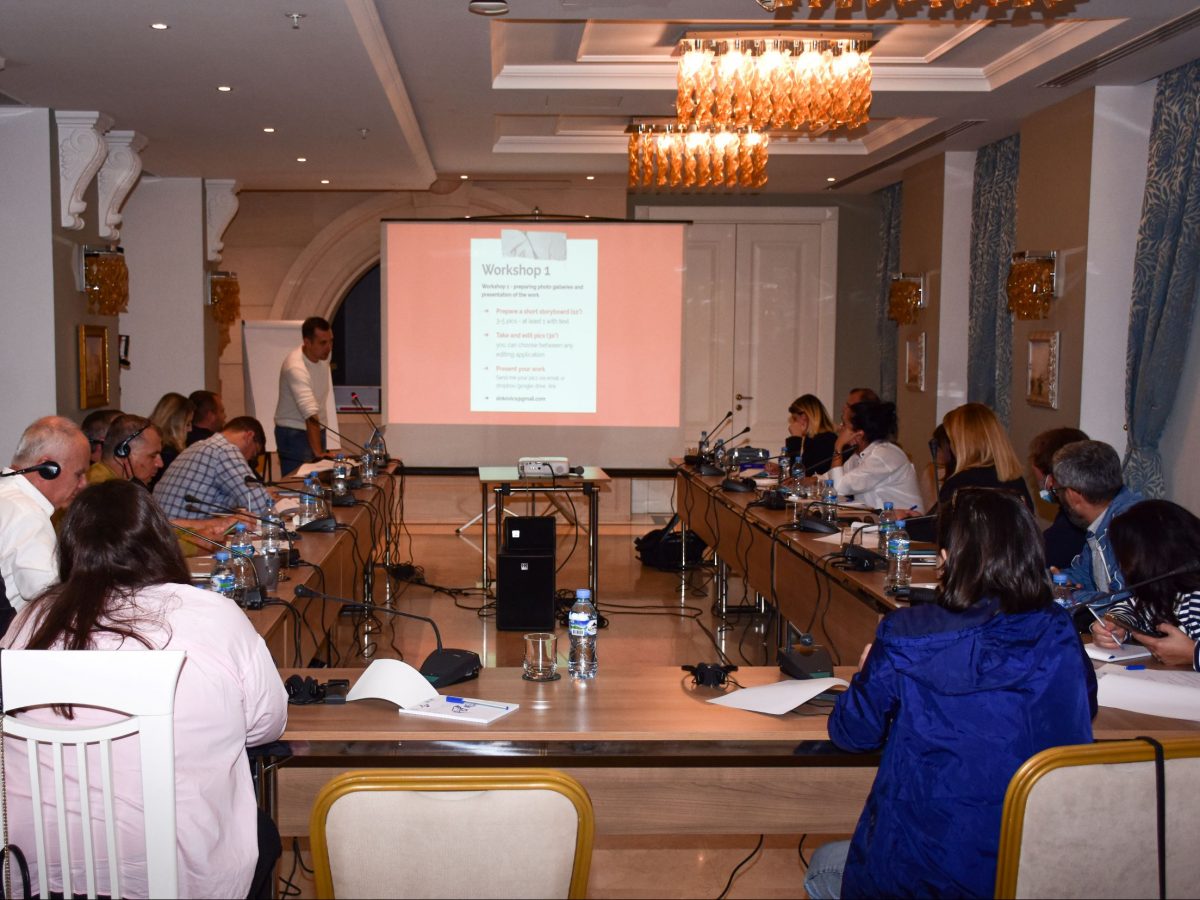
Three information sessions were held, on July 22nd, July 28th and July 30th, in Elbasan, Shkodra and Vlora. The sessions, which 50 civil society activists and journalists attended, aimed to introduce local actors to BIRN Albania’s project, which supports journalists to report on the work of public inspectorates.

This project aims to create an enabling environment for Albanian journalists to produce independent content through training, mentoring, technical and financial support, and through close cooperation with civil society, so improving freedom of expression and strengthening media pluralism in Albania.

During the information sessions, BIRN Albania’s editor-in-chief, Besar Likmeta, gave a short overview of the project, while inviting participants to debate possible topics for in-depth data-driven stories, which cover the work of public inspectorates, ranging from environmental crime to fisheries, workers’ safety, mining accidents, consumer rights and public administration reform.

The activists and civil society representatives present at the meetings proposed important topics that journalists could investigate, while also calling for more coverage of their causes and activities from the media.

While underlining the importance of close cooperation between civil society and media, journalists explained that the basic tenets of news value and editorial considerations often conditioned their coverage, while calling on civil society experts to speak with a stronger voice on issues that are critical to the community.

Both parties recognised that, despite the challenges, their professional cooperation was important to address issues to a wider audience that are key to the rights of local communities, marginalized groups and individuals.

BIRN Holds ‘Youth Memory Transfer’ Workshop in Tuzla and Srebrenica

Ten participants from Albania, Bosnia, Montenegro, North Macedonia and Serbia attended BIRN’s three-day workshop on producing high-quality stories about the past that centre on war crime victims’ experiences.

The “Youth Memory Transfer” workshop held in Tuzla, Bosnia, from July 25-29 provided ten young people from Albania, Bosnia and Herzegovina, Montenegro, North Macedonia and Serbia with comprehensive training on fact checking, storytelling and transitional justice reporting.

The workshop started with talks given by Marija Ristic, BIRN’s Regional Director, and Lamija Grebo, BIRN journalist, who told the participants how to tell a story in compelling way while at the same time introducing them to the journalistic ethics and standards related to the reporting of war crimes, the culture of remembrance and other sensitive matters.

“Our focus was always to ensure impartial reporting about the past through professional journalism. With this programme, we want young people to hear firsthand experiences about the war past and learn different ways of storytelling with the aim of creating compelling content,” Ristic said.

“Through fact-based reporting and truth-seeking techniques, we are equipping young people with the skills to fight growing disinformation and revisionism in the region,” Ristic added.

On the first day, by applying what they had learned in the previous sessions, participants prepared their questions for interviews with war victims scheduled for the end of the workshop.

The day ended with a “memory walk” led by BIRN’s Programme Manager, Sofija Todorovic, which introduced participants to the facts about the Tuzlanska Kapija crime of May 25, 1995. Youth Memory Transfer participants visited the cemetery of the victims and the memorial site in the city centre of Tuzla, where the massacre took place.

On the second day of the workshop, participants worked with Ristic on ways to make their stories bulletproof. They also attended the screening of BIRN’s documentary The Unidentified.

Participants also visited the Srebrenica Memorial Center and the victims’ cemetery in Potocari. At the Memorial Center, they had a guided tour though the exhibitions and learned more about the 1995 Srebrenica genocide and its consequences.

The last day of the workshop was dedicated to interviews with the victims and survivors of the 1992-1995 war in Bosnia and Herzegovina. After two days of preparations, group assignments and lessons, the participants interviewed ten people who had survived wartime atrocities from the Tuzla and Podrinje area.

In the second phase of the “Youth Memory Transfer” Programme, participants will work on the production of video materials and, using the skills they have gained, will interview direct or indirect victims of the conflicts that followed the dissolution of Yugoslavia in the 1990s.

This workshop is part of the Balkan Transitional Justice programme that aims to broaden public understanding of transitional justice issues in the former Yugoslavia.

The workshop was held in line with the current coronavirus health regulations. BIRN and its partner(s) are supported by RYCO within the 4th Open Call for Project Proposals co-financed by the European Union.


BIRN Kosovo Listed by US State Department as a Resource of Reporting Corruption for the Second Year in a Row

In its 2021 Investment Climate report on Kosovo, the US State Department has listed BIRN and its executive director Jeta Xharra as a useful resource for reporting corruption for the second time in a row.

The US State Department has listed BIRN Kosovo and its director Jeta Xharra as a resource for reporting corruption in a report on the global investment climate in 2021. In 2012, BIRN and Internews Kosova established the KALLXO.com  platform for reporting corruption and other irregularities in the provision of public services.

The report states that despite Kosovo Government’s efforts to combat the widespread corruption in Kosovo, it has resulted in unsuccessful attempts to properly investigate, imprison and punish the corrupted individuals in Kosovo.

The US State Department lists the Anti-Corruption Agency and the Office of the Auditor General as government agencies mandated to fight corruption. Other resources for reporting corruption listed by the State Department for 2021 are Shaip Havolli, the director of the Kosovo Anti-Corruption Agency, the Ombudsperson Naim Qelaj and Ismet Kryeziu, the director of the Kosovo Democratic Institute/Transparency International.


Meet the People Behind BIRN: Sofija Todorovic

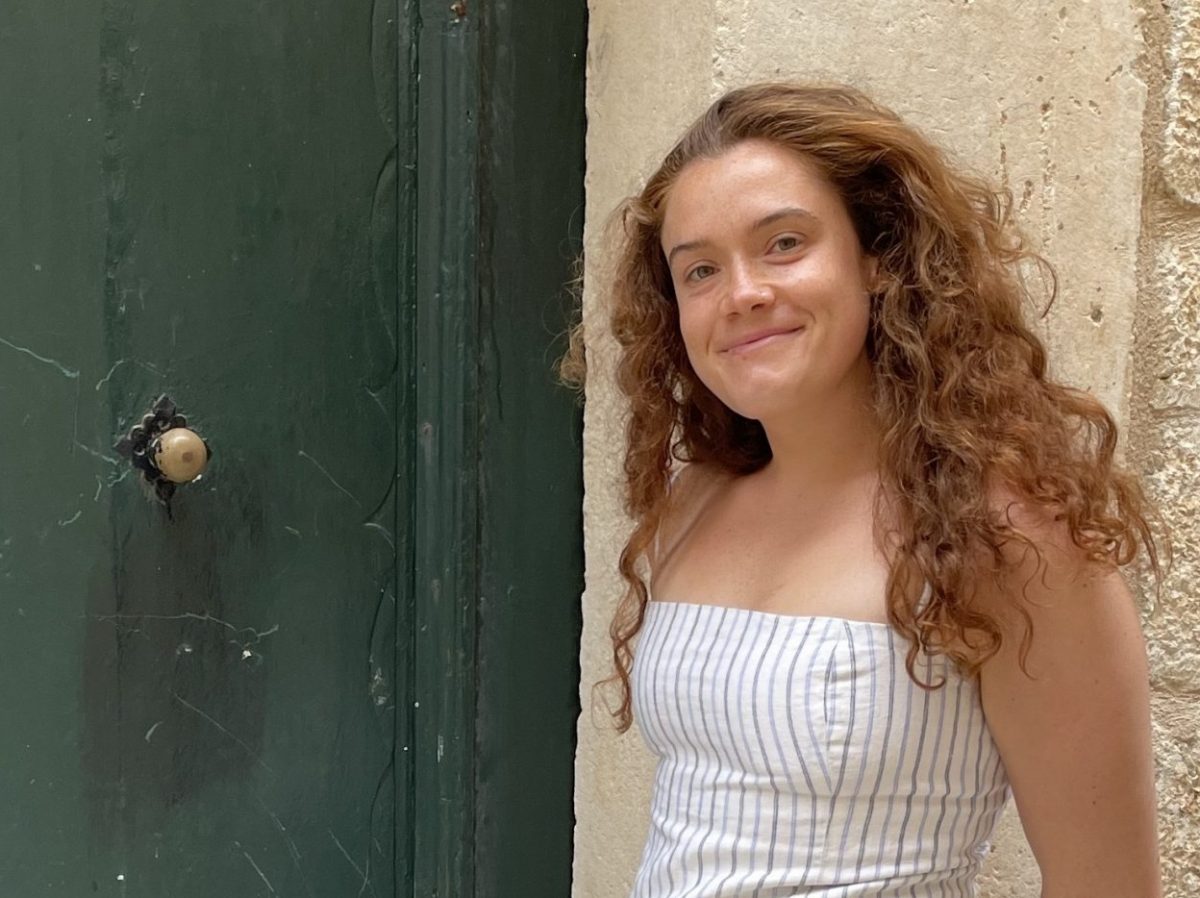
Each month, BIRN introduces you to its people. For July, meet Sofija Todorovic, Project Manager.

Sofija, 29, is responsible for BIRN’s projects that deal with monitoring human rights. Today, she introduces us to BIRN’s new programme: Reporting on gender-based violence in the Balkans.

Due to the COVID-19 pandemic, incidents of domestic violence and online abuses have risen more than ever in the region. At the same time, the voices of the victims of gender-based violence are beginning to resonate within societies.

This summer, with the support of The Balkan Trust for Democracy, a Project of the German Marshall Fund, BIRN took the initiative and partnered up with ATINA NGO and launched a new specialized programme for journalists and writers to counter the trend of violence based on victims’ gender.

Why now? Sofija explains that through its ongoing monitoring process, BIRN has mapped numerous cases of digital rights violations directly linked to gender-based violence.

“Particularly during the COVID-19 pandemic, women were exposed to increased violence both offline and online. Based on the evidence, BIRN reported that the rates of domestic abuse went up, since states in the Balkans began imposing strict limitations on movement in the fight against COVID-19,” Sofija says.

The collaboration with ATINA NGO came about as a result of the creation of BIRN’s SEE Digital Rights Network, a network of 19 organisations across the Balkans that aim to advance the protection of digital rights and address the growing challenges posed by the widespread use of advanced technologies in society.

“With ATINA NGO, we realized that there are so many practices we can exchange in order to improve the quality of reporting about gender-based violence in the region,” says Sofija.

“Moreover, victims of gender-based violence rarely trust journalists due to the mainstream media landscape, where media disregard the trauma of the victim in the search for sensationalistic coverage. In addition, the societal stigma that haunts the victims is very powerful in the Balkans, so we aim to contribute to building a more sensitised public space for the survivors and victims,” she adds.

Journalists, writers and reporters from Albania, Bosnia and Herzegovina, Kosovo, Montenegro, North Macedonia and Serbia are invited to apply for this unique opportunity to examine and expose different aspects of the trend towards offline and online gender-based violence in the region. Applications close on August 21.

“People working in the media usually lack resources to work on substantial topics that require time and patience. With this programme, we aim to give them a chance to report on a burning issue in the region, by providing them with editorial support, funds, contacts and new set of skills,” Sofija concludes.

Read more about the programme here.


BIRN BiH Leads Petition for More Transparency in Bosnia’s Judiciary

Through a campaign to collect citizens’ signatures, the Balkan Investigative Reporting Network Bosnia and Herzegovina, BIRN BiH, wants to draw public attention to the problem of inaccessible corruption indictments and verdicts, asking judicial institutions to increase the transparency of their work.

BIRN BiH will hand over the signatures alongside an analysis on the (non)transparency of the judiciary and recommendations for improvements to the High Judicial and Prosecutorial Council of Bosnia and Herzegovina, HJPC, demanding a revision of recommendations for publication of prosecutorial acts, in particular the public availability of corruption indictments.

Through its project, “Transparency against Corruption in Judiciary,” BIRN BiH wants to encourage citizens to take a proactive role and seek necessary changes in the judiciary, as well as raise awareness on the need to standardize document publication practices with the focus on corruption indictments and point to bad practices in the Bosnian judiciary in terms of transparency.

This campaign is being carried out as part of the “Transparency against Corruption in Judiciary” project with financial support from the US Agency for International Development, USAID.

It forms part of a broader project, “Assistance to Citizens in the Fight against Corruption,” which is being implemented by the Centers for Civic Initiatives as the leading partner.

Petition can be signed here

Video for the campaign https://www.youtube.com/watch?v=HsrLO30-3DU

BIRN Trains New Cohort on Basics of Journalism

Over July, BIRN editor Matt Robinson trained 12 aspiring journalists from the Western Balkans who are part of BIRN’s Traineeship programme for young journalists on the basics of journalism.

From July 7th to July 21st, a new group of trainees from the six countries of the Western Balkans – Albania, Bosnia and Herzegovina, Kosovo, Montenegro, North Macedonia and Serbia – had an opportunity to learn the basics of journalism, propose topics for their feature stories and work on their stories with BIRN editor and trainer Matt Robinson.

Marija Pešić from Montenegro said she hoped the training would lead to opening some journalistic doors in Europe. “I expect that the training will teach me standards of reporting and journalism and prepare me for working in relevant media outlets in my country and the region,” she said.

During the four training sessions, Robinson and the participants discussed the similarities and differences between news stories, features and analyses.

The group were trained on writing structure, how to conduct an interview and on the use of quotes and sources when writing features and investigations. Finally, they discussed journalistic ethics, balance and fairness.

Fatima Memić, from Bosnia and Herzegovina, said she expected the Traineeship programme to prepare her for a career in journalism. “Matt through his training is doing just that – teaching the basics of journalism but also motivating us to think out of the box and show all our potential,” she said.

After finishing the training with Robinson, the participants will spend the next couple of months working in professional newsrooms in the region as part of their Traineeship programme.

They will have the chance to become full-time members of the newsroom, attend editorial meetings, learn how to pitch ideas and choose relevant angles for a story, learn how to cover daily events and perform different kinds of interviews, work in the field, do a live broadcast, write analyses, feature stories and fact-checks, and much more.

The second round of the Traineeship programme was launched after the first cycle from November 2020 until February 2021 was completed, where 12 aspiring, young journalists spent four months working in professional newsrooms in the region, producing over 300 different news pieces.

Some examples of their work may be seen here, here, here and here. The programme saw great results, as a number of the participants were offered roles or temporary positions at different media outlets after completing their traineeship.

The Traineeship programme for young journalists is part of the “Media for all” programme funded by the British government and implemented by the British Council in partnership with the Balkan Investigative Reporting Network, BIRN), Thomson Foundation and INTRAC, The International NGO Training and Research Centre.


Open call: Reporting on Gender-Based Violence in the Balkans

Journalists and writers from Albania, Bosnia and Herzegovina, Kosovo, Montenegro, North Macedonia and Serbia are invited to apply for a specialised programme that aims to examine and expose different aspects of the trend of offline and online gender-based violence in the region.


BIRN has partnered with ATINA NGO to counter the growing trend of violence based on the victims’ gender by increasing the capacity of journalists to understand the complexity of gender-based violence and exploitation and empowering them to engage in covering gender-related issues. Through its programme, BIRN is looking for journalists and writers interested in revealing the scale of gender-based violence in the region.

We are offering a specialised, eight-month programme that includes: on-the-job mentoring and editorial sessions to produce high-quality journalism; educational sessions focused on gender-based violence; financial support and assistance.

We are particularly interested in stories that cover under-reported topics of violence against women in the region. The applications will be evaluated based on the following: relevance of the presented story, feasibility, originality of the piece, professional qualifications of the applicants, motivation expressed in the application and journalistic approach

Each selected candidate/team will receive a bursary of 1,000 euros to support their reporting. If the story covers more than one of the targeted countries, this will be seen as an advantage.

To apply for the programme, use the application form attached below to send us your story proposal.

This call is open until August 21, 2021.

Why?

Through its current ongoing monitoring process, BIRN has mapped numerous cases of digital rights violations directly linked to gender-based violence.

Particularly during the COVID-19 pandemic, women were exposed to increased violence both offline and online. Based on the evidence, BIRN reported that the rates of domestic abuse went up since states in the Balkans began imposing strict limitations on movement in the fight against COVID-19.

Gender-based violence is prohibited under numerous international conventions, as well as under national laws in many countries. But the legal framework is often hazy when it comes to online gender-based violence, even though the consequences can be equally as destructive. Online perpetrators frequently go unidentified.

While both women and men report exposure to such violence, the data indicate that women and girls are the most common victims of online violence. They suffer the most drastic forms of violence and are most affected by the consequences of this type of violence. The need for more thorough research on violence against women and girls is indicated by the fact that 9 million girls in Europe say they experienced some form of digital violence by the age of 15, that one in five teenagers in Europe report becoming victims of cyberbullying, that girls are at higher risk, and that in 2014, 87 per cent of reported photos of child sexual abuse were photographs of girls.

BIRN’s investigation from the previous year on attacks on female journalists in the Balkans has shown that they face online abuse on a daily basis and many have said they were left to suffer alone.

Who can apply?

The programme is open to all journalists and writers who believe they have a good story on an under-reported topic concerning gender-based violence in the Balkans. We also welcome applications from staff reporters from local and national media who wish to co-publish the story with us.

Story requirements

  • The story must deal with the gender-based violence (online and offline) in the targeted region (Albania, Bosnia and Herzegovina, Kosovo, Montenegro, North Macedonia and Serbia).
  • The story must be relevant to the Balkan region.
  • We are looking for in-depth, investigative stories that provide new information or have a unique angle on the issue.
  • The story should be around 1,500 words long.
  • Each selected story must be published within six months of receipt of the first installment of the bursary.

How to apply?

Send us your story proposal using the story grant form, downloadable here.

Download the Story Grant Form

Download the Declaration

Please send the completed form together with a signed declaration and your CV to [email protected]  no later than August 21, 2021.

EU Awards for Investigative Journalism Announced in Kosovo

The three best investigative stories in Kosovo published in 2020 were awarded in Pristina on Thursday, July 15, 2021.

Six journalists who received the awards exposed important information about illegal gambling, violation of anti-monopoly rules and fraud with college accreditations and degrees.

The awards were presented by the EU Special Representative to Kosovo, Ambassador Tomas Szuyong who noted that a free media and independent journalism is essential for any democratic society, and by Xhelal Neziri, the Head of Jury who made a summary of the jury decision and commented on the relevance of all awarded stories, noting how “investigative journalists have been a great contribution to the democracy of this country, because transparency is the foundation of a functioning democratic state”.

This year’s jury consisted of Neziri, as Head of Jury and jury members Edis Agani and Mustafa Canka.

Jeta Xharra and Visar Prebreza came in first place for the best investigative story, “Unclean energy: A Kosovar who owned the sun”, about a Kosovo businessman who stands behind six companies registered in Malta, reaping millions of euros from the sale of solar energy – in violation of anti-monopoly rules.

The BIRN investigation found out that Blerim Devolli receives incentives to produce more than half of the total solar energy used in Kosovo. The six-month investigation uncovered hidden companies, owned by a single person, through which solar energy is produced, and resulted in the country’s Anti-Corruption Agency opening an investigation based on BIRN’s inquiries.

Xharra, in her acceptance speech, emphasized the importance of those in government as well as citizens with integrity being willing to fight corruption and wrongdoing.

The second award, for a story of exceptional quality, went to Besa Kalaja and Besnik Boletini whose article “Victims of private colleges” addressed the manipulation that has been done for years and is still being done by private colleges in Kosovo.

Their research found that thousands of students have completed their studies and graduated from private colleges, but have not legally graduated because the colleges did not obtain all the right accreditation or get registered at the Ministry of Education. Due to this, many students lost their right to scholarships abroad.

Finally, a story about illegal gambling in a village of Karaçeva by Kreshnik Gashi and Adelina Ahmeti won third prize as a story of exceptional quality.

After the adoption of a law that made gambling illegal in Kosovo, KALLXO.com received information that gambling was being conducted illegally in different locations. This information revealed that a neighbourhood had been set up in the village of Karaçeva where facilities functioned as casinos.

In cooperation with the KALLXO.com team, prosecutor Rozelida Manastiri started an investigation which lasted about 14 months. The series, “Crime in Karaçeva 1&2”, involved several months of investigation resulting in the capture and arrest of more than 50 people in connection with the Karaçeva case.

The EU Award for Investigative Journalism is presented annually in six Western Balkan countries and Turkey for exceptional investigations published in the previous year.

EU Special Representative to Kosovo/ Ambassador Tomáš Szunyog
Head of Jury: Xhelal Neziri
1st place winners: Jeta Xharra and Visar Prebreza
2nd place winners: Besa Kalaja and Besnik Boletini
3rd place winners: Adelina Ahmeti and Kreshnik Gashi

Freedom of Information in Balkans: ‘No Will, No Optimism’

Regional public institutions still have a way to go to improve their records on freedom of information and be more transparent and accountable to citizens, a BIRN panel discussion heard.

The region needs more proactive transparency, open contracting and political will to deal with freedom of information, FOI, speakers from the region and internationally told BIRN’s panel discussion Platform B: Freedom of Information in the Balkans, held on Thursday.

Countries are still struggling with the slow implementation of FOI laws, political pressures and institutions’ unresponsiveness, while the first year of the global pandemic also saw excessive delays in responding to FOI requests, speakers at the event, at which BIRN’s annual freedom of information report was officially launched, agreed.

Ivana Jeremic, editor at Balkan Insight from Serbia, told the panel discussion that 2020 was “extremely hard” in terms of getting any information from institutions in Serbia, making it difficult for journalists to do their job.

“I don’t know what to expect in future, but the trend is not optimistic, there is no will from institutions to implement our law, which is actually among the best laws in the world, but on paper.

“Besides, people who are in charge [of FOI requests] at institutions are not educated enough on how to respond to those requests and there is also lots of pressure on them about which information should be made public and which not,” Jeremic said.

Kreshnik Gashi, managing editor of KALLXO.com and Author of the TV show Justice in Kosovo, told the debate that journalists and the general public face many problems when it comes to freedom of information in Kosovo.

“The law on the classification of official documents in Kosovo is not implemented by all institutions and as a result we have problems when documents are requested by various parties. One of the problems is whether or not the official is allowed to provide the document to the journalist or the party, as it is not clear whether that document is public or not,” he said.

“In consequence, all the required documents have to go through this process always, because there is no clarity on what is confidential and what isn’t”, he added.

However, there are signs that things might be changing for the better.

“I should mention as a very good model and practice that Kosovo has decided to open all contracts in public procurement, an action that has helped our work a lot and makes monitoring and reporting on public contracts management possible,” Gashi said.

Sandra Pernar, Senior Regional Coordinator – Europe, at Open Government Partnership, OGP, told the discussion that there are many similarities between the regional countries that are part of the initiative – implementation being one of them.

“In general for the region, I can say that the conclusion is very much the same as the one many [speakers] said several times today, and that is: there is not so much of a problem with bad regulation, it is really about the implementation. This is something that should be addressed,” Pernar said, adding that the region should pay more attention to proactive transparency, “which is obviously not there yet”.

The report’s findings were further discussed with other BIRN journalists, civil society members and public institutions’ representatives, which was followed by a Q&A session.

The report, Freedom of Information in the Western Balkans in 2020: Classified. Rejected. Delayed, which covers 2020, is part of BIRN’s ongoing project, A Paper Trail to Better Governance, with the main aim of exposing wrongdoing in government and public and private companies and among powerful individuals through country-based and cross-border investigations.

 Besides analysing a total of 358 FOI requests submitted by BIRN journalists, the report also examines legislation, governments’ partnerships and progress in international organisations in dealing with transparency and open data, the work of regional public information officers as well as regional governments’ treatment of freedom of information during the pandemic.

The report in Albanian.

The report in BCHS.

The report in Macedonian.