BIRN Albania Opens Call for Investigations on Public Finances

The Balkan Investigative Reporting Network in Albania launched a call for investigative stories on November 30, offering grants for three journalists to produce articles on topics related to public finances.

The call is part of the project “Exposing Corruption Through Investigative Journalism,” which is financially supported by the National Endowment for Democracy, NED.

The call is based on topics suggested by two dozen civil society activists and journalists during a joint roundtable held on November 25 in which they concluded that topics related to public finances should be investigated.

Those suggested in the roundtable included:

  • Arrears from public contracting for works and services
  • Lack of competition and corruption in public procurement
  • The use of secret contracts in the security sector to hide corruption,
  • Corruption and mismanagement of public companies
  • Nepotism and undue influence in selection of members of regulatory bodies and boards,
  • Use of public resources for political propaganda
  • Mismanagement in Albania’s oil sector, and state capture.
  • The problems with the delivery of services by local government entities
  • The lack of transparency of political party finances

The journalists will have around three months to dig deeper and research their ideas, and will also have the opportunity to work with experienced editors as mentors to guide them through the process of writing in accordance with BIRN standards.

The call only applies to journalists from Albania and closes on December 25.

Click here for more information (in Albanian) about the application procedure.

Click here to download the application form (in Albanian).


Meet the People Behind BIRN: Matteo Mastracci

Each month, BIRN introduces you to members of its team. For November, meet Matteo Mastracci, our new Digital Rights Researcher.

Matteo, 35, is from Italy and studied International Law and Human Rights. He joined BIRN’s multinational team in October.

“One great thing to be a researcher at BIRN is working in a big and multi-skilled team, and this means there is always a lot to learn from everyone,” says Matteo.

In November, BIRN introduced its new focus page, COVID-19 Crisis Tech Response Livefeed, a unique tool to track and map the use of technology and digital solutions (both good and bad) in Central and South-East Europe amid the ongoing health crisis. “Our goal is to keep revealing wrongdoings, trends and connections that would otherwise remain hidden in order to help civil society organisations and media respond more quickly and efficiently to future crises,” says Matteo.

We live in an era in which digital rights matter more than ever, he explains. “We are now living much more online than before. In a way, our protection and presence on the net is guaranteed by digital rights,” adds Matteo.

He says that BIRN wants to continue to expose the effects of digital violations. “Our programme will also have a special focus on gender-based violence occurring in the digital environment. We will also publish a new report on digital rights which will cover violations recorded from August 2020 to August 2021,” he says.

BIRN’s monitoring platform, BIRD, already covers six countries in Southern and Eastern Europe, and will soon expand to include cases from other two countries, Montenegro and Kosovo, he adds.

“Finally, we have also launched a biweekly review on Balkan Insight – Ongoing Tensions in Fragile Environments is the newest one – in which we update readers on the latest digital rights violations recorded in the region,” Matteo says.


BIRN Kosovo Holds Training with High School Students in Gjakova

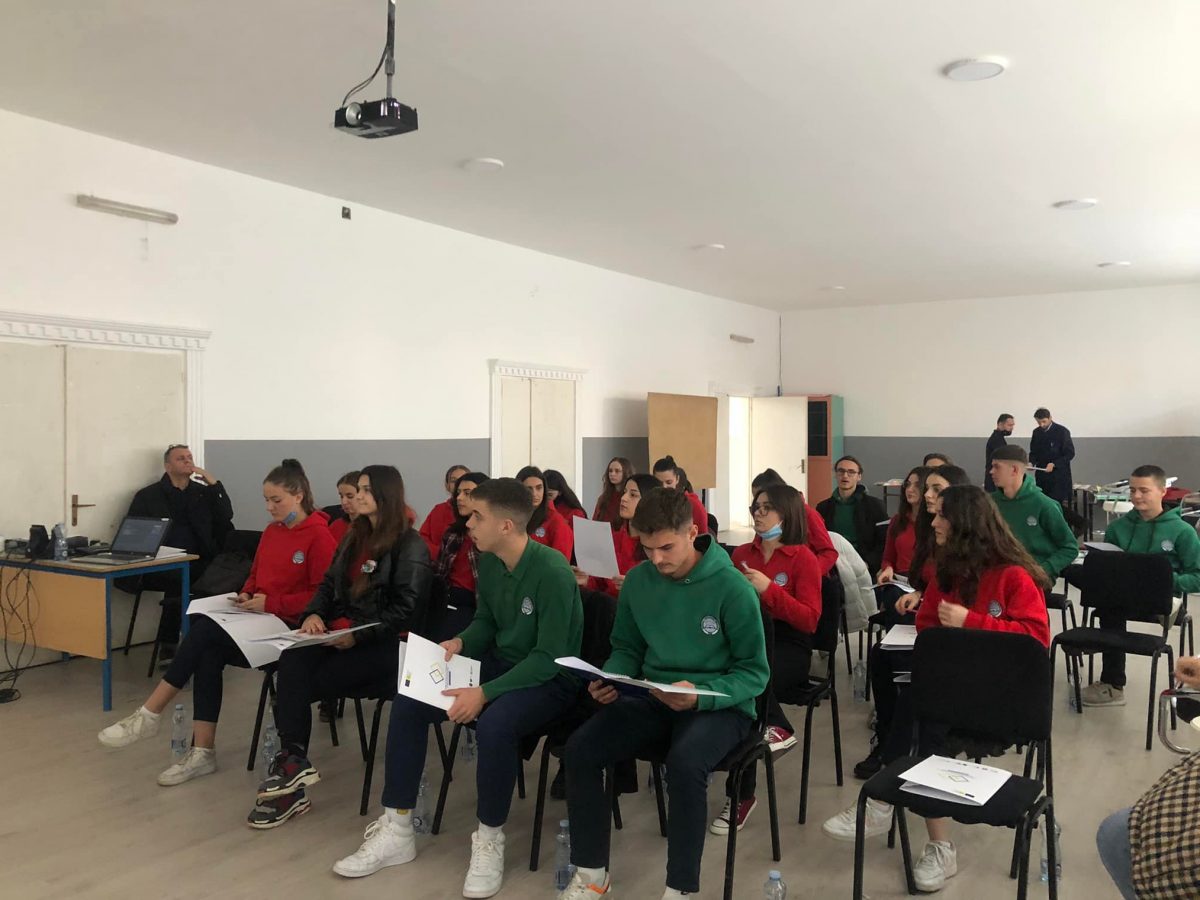
On November 26, BIRN Kosovo held the fifth training session with students of the “Hajdar Dushi” high school in the municipality of Gjakova as part of the EU funded project “Solidifying the Resilience of Kosovo’s Current and Future Journalists”.

The training was aimed at students of Kosovo’s state-run high schools that are interested in undergoing training in media production, media literacy and tackling fake news.

The program aims to nurture young talent by mentoring students in the production of videos, photos and articles in order to achieve the main goal of the activity: to create a path for increased independence, transparency, accountability and civic engagement.

A total of 33 students from the social sciences department of the “Hajdar Dushi” high school participated, 29 of whom were women.

At the end of the training session, youngsters pitched their journalistic ideas, which the BIRN team will collect and thoroughly analyse before selecting the articles and other materials that will be published on the online platform KallxoRinia (Kallxo Youth). The production of all of these articles will be overseen by a team of BIRN Kosovo editors.


BIRN Kosovo Holds Fourth Training with High School Students in South Mitrovica

On November 25, BIRN Kosovo held the fourth training session with students of the “Frang Bardhi” high school in the municipality of South Mitrovica as part of the EU funded project “Solidifying the Resilience of Kosovo’s Current and Future Journalists”.

The training was aimed at students of Kosovo’s state-run high schools that are interested in undergoing training in media production, media literacy and tackling fake news.

The program aims to nurture young talent by mentoring students in the production of videos, photos and articles in order to achieve the main goal of the activity: to create a path for increased independence, transparency, accountability and civic engagement.

A total of 27 students from the social sciences department of the “Frang Bardhi” high school participated, 20 of whom were women.

At the end of the training session, youngsters pitched their journalistic ideas, which the BIRN team will collect and thoroughly analyse before selecting the articles and other materials that will be published on the online platform KallxoRinia (Kallxo Youth). The production of all of these articles will be overseen by a team of BIRN Kosovo editors.


BIRN Kosovo Holds Third Training with High School Students in Prishtina

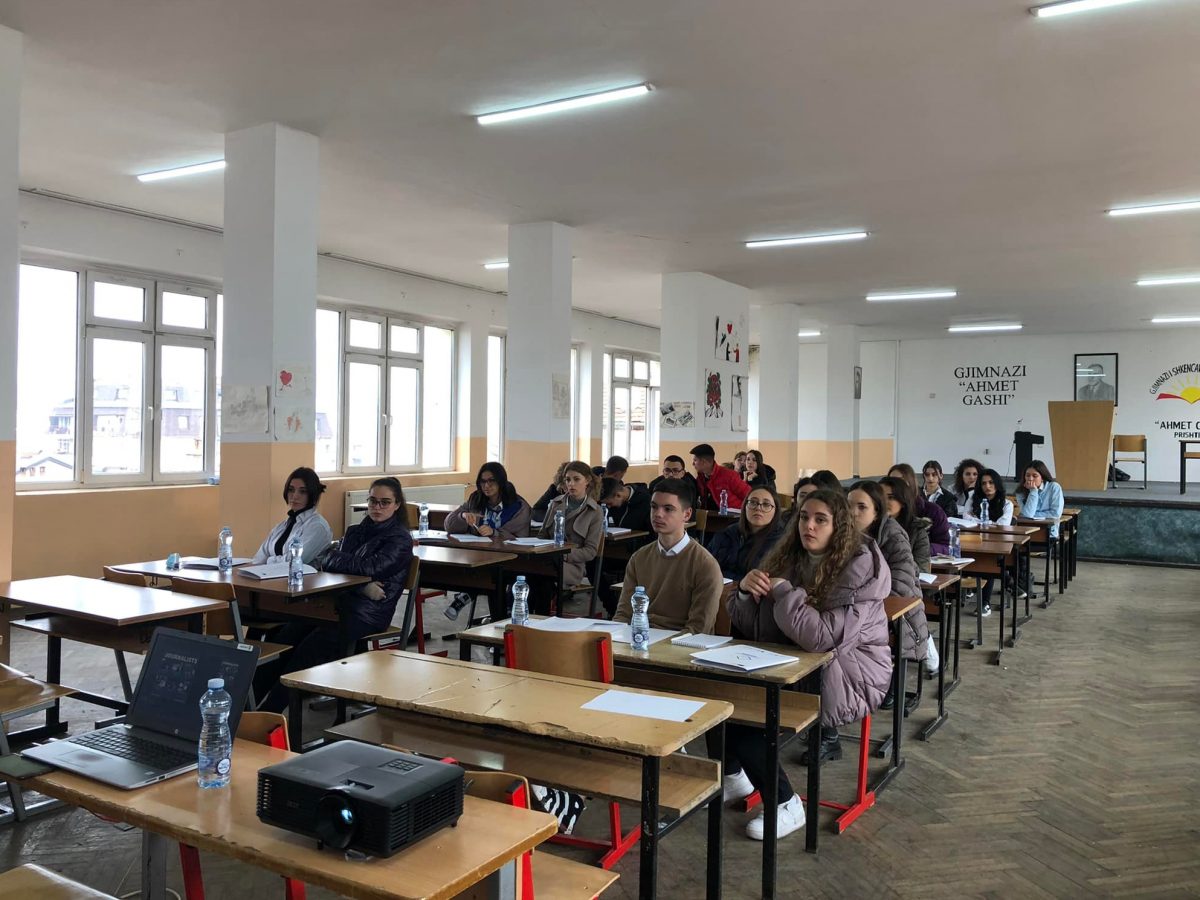
On November 25, BIRN Kosovo held a third training session with students of the “Ahmet Gashi” high school in the municipality of Prishtina as part of the EU funded project “Solidifying the Resilience of Kosovo’s Current and Future Journalists”.

The training was aimed at students of Kosovo’s state-run high schools that are interested in undergoing training in media production, media literacy and tackling fake news.

The program aims to nurture young talent by mentoring students in the production of videos, photos and articles in order to achieve the main goal of the activity: to create a path for increased independence, transparency, accountability and civic engagement.

A total of 25 students from the social sciences department of the “Ahmet Gashi” high school participated, 17 of whom were women.

At the end of the training session, youngsters pitched their journalistic ideas, which the BIRN team will collect and thoroughly analyse before selecting the articles and other materials that will be published on the online platform KallxoRinia (Kallxo Youth). The production of all of these articles will be overseen by a team of BIRN Kosovo editors.

BIRN will hold a total of 10 training sessions at the Social Studies department of high schools from across Kosovo with a total of 200 students, as part of the project.


BIRN Albania Holds Workshop on Media Monitoring in Elections

The Balkan Investigative Reporting Network in Albania held a workshop for experts and civil society on November 9 in Tirana on media and social media monitoring during the elections.

The workshop was greeted by the British Ambassador in Tirana, Alastair King-Smith and the State Commissioner for Elections, Ilirjan Celibashi.

During the last election campaign in April, BIRN Albania piloted new social listening technologies and sound quantitative and qualitative methodologies to monitor for the first time the political discourse in the online and social media.

The findings of the monitoring were shared with experts from Central Electoral Commission, the Audiovisual Media Authority and civil society experts.

The objective of the workshop was to discuss methodologies used and findings of mainstream and alternative media monitoring, but, most importantly, to focus on lessons learned from these pilot studies and recommendations drafted for future legislative and procedural improvements related to the monitoring of media and political party finances.


BIRN Albania Holds Roundtable on Public Finances

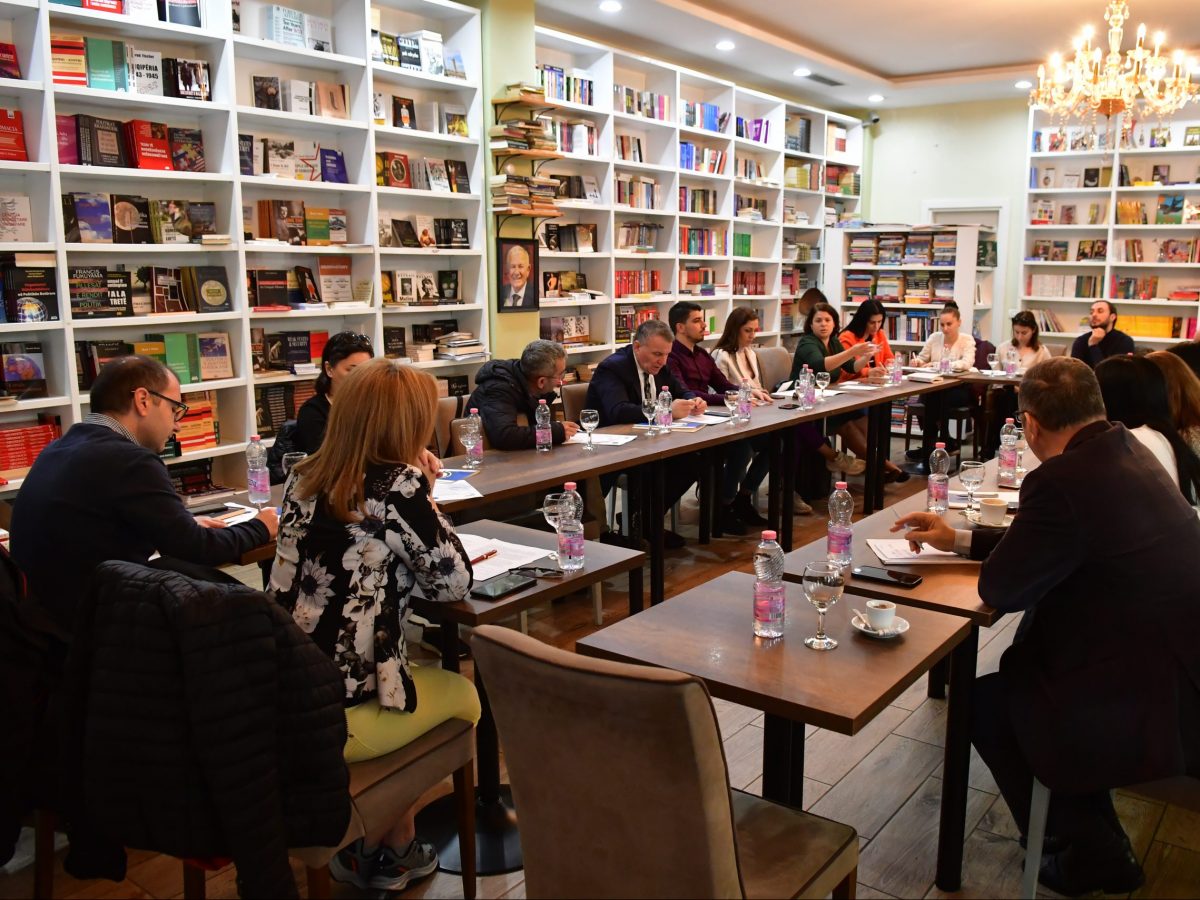
The Balkan Investigative Reporting Network in Albania held a roundtable on public finances on Wednesday November 24 in Tirana.

A total of 23 journalists, experts and civil society representatives attended the roundtable, in order to identify and discuss topics that journalists could investigate.

The roundtable was moderated by the business journalist and anchor for Albania’s Scan TV, Dafina Hysa. The event also aimed to build cooperation between civil society representatives and reporters covering an array of topics linked to public finances.

The roundtable was part of the project “Exposing Corruption Through Investigative Journalism,” supported financially by the National Endowment for Democracy, NED.

Experts called on journalists to dig deeper in to the ways public finances in Albania are mismanaged – both on a central and local government level, suggesting a number of topic that should be investigated. They included arrears from public contracting for works and services, lack of competition and corruption in public procurement, the use of secret contracts in the security sector to hide corruption, corruption and mismanagement of public companies, nepotism and undue influence in selection of members of regulatory bodies and boards, use of public resources for political propaganda, mismanagement in Albania’s oil sector, and state capture.

The participants from civil society organisations also urged reporters to investigate the delivery of services by local government entities and political party finances, while offering their expertise and resources for reporters that wish to engage in these stories.

The topics discussed at the roundtable will inform BIRN Albania’s upcoming open call for investigative stories on public finances.


Workshop in Bosnia on Humanitarian Approaches to Reporting on Missing Persons

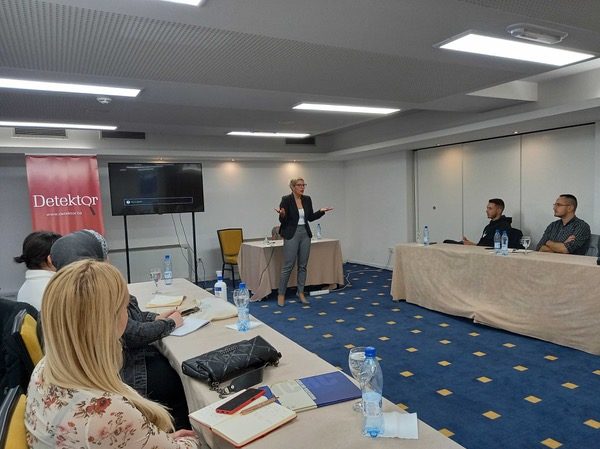
With the aim of improving media reporting on missing persons with a focus on a humanitarian approach, as well as on war crimes and transitional justice, a six-day training for journalists and journalism students from all parts of Bosnia and Herzegovina was held in Sarajevo from Friday 12 November till Wednesday 17 November 2021.

Balkan Investigative Reporting Network in Bosnia and Herzegovina, BIRN BiH, in cooperation with the International Committee of the Red Cross, ICRC, and the UN Development Programme, UNDP, held the training for 15 journalists and journalism students.

During the first part, editors and journalists from BIRN BiH,  and ICRC representatives discussed with participants taking a humanitarian approach to reporting on missing persons, as well as on how to interview families of the missing and report on the subject in a professional and ethical manner.

Representatives of the ICRC, the Missing Persons Institute of BiH and International Commission on Missing Persons familiarized the participants with the work of those institutions, providing insight into information and ways of collaboration with a view to achieving a better quality of investigations into the missing.

Journalists were informed about BIRN standards in reporting on the missing persons, and on experiences and challenges in the field, with a special emphasis on the way the COVID pandemic has further delayed the finding of missing persons.

The participants also talked to some families of missing persons, learn how to report on war crimes from courtrooms and what topics they could cover during their work.

Representatives of the Prosecution of Bosnia and Herzegovina, as well as attorneys representing war crime defendants before state and local courts, spoke about the role of parties to the proceedings and the right to defence.Research on “How the Media in BiH Report on Missing Persons” was also presented.

As part of the training, the journalists also visited the state court to follow war crime trials and apply in practice what they had learnt during the workshop.

The first part of the workshop covering reporting on missing persons with a special focus on a humanitarian approach was organised with the help of the ICRC while UNDP helped organize the training on war-crimes reporting.


EU Investigative Awards for 2021 Announced in Serbia

Stories on air pollution, cronyism in business and manipulation of the COVID death toll received the top prizes at an awards ceremony on November 16.

Dina Djordjevic, Sasa Dragojlo, Dragana Peco and Natalija Jovanovic were announced as the winners of this year’s EU Awards for Investigative Journalism, for stories published in 2020 in Serbia, on Tuesday November 16 at the EU info centre.

First prize for best investigative story published in 2020 in Serbia went to Dina Djordjevic for a series of articles on air pollution published by Centre for Investigative Journalism CINS.

A series of texts reveal that a Chinese company, Zidjin, which took over the former Mining and Smelting Basin in Bor, RTB, in 2018, made numerous omissions in its work due to which the lives of local people were endangered.

Dangerous substances were leaked into the air, pollution increased, and official measurements did not give a true picture of the situation for years, as institutions shifted responsibility from one to another.

“The special value of this story is the abundance of relevant sources. Through the testimonies of citizens, activists and experts, obtaining official documents, information and explanations from several sides, staying in Bor and its surroundings, the journalist certainly and skillfully presented the truth and facts,” the jury stated in its explanation.

“I hope that because of this award, we will be reminded of all topics, because many of them are still problems today,” Djordjevic emphasized in her response.

Sasa Dragojlo of BIRN and Dragana Peco of KRIK were awarded second place for Folic’s New Business with Old AcquaintancesThe jury explained that the authors had “brought a detailed breakdown of the work of a high public official”, Milutin Folic, “who has started a private business in the meantime but is inseparably linked to his previous position.

“Through a comprehensive analysis of the links between the most influential political party, senior government officials and private firms, the causes and consequences of such deals, the authors offer an illustration of ‘revolving door’ and ‘crony business,’” the jury recalled.

Dragojlo said that government officials say that the construction sector is a “development sector” but that the story of former chief urbanist of Belgrade Milutin Folic shows that not all citizens benefit from that sector, but only those people who are close to the authorities or in power.

BIRN journalist Natalija Jovanovic won third place for, Serbia Under-Reported COVID-19 Deaths and Infections, Data Showswhich revealed the manipulation of the death toll from the coronavirus during 2020.

The jury states in its explanation that, “the research on which the article is based reveals the government manipulation of one of the key issues of public interest during the pandemic – the number of deaths from COVID-19.

It added: “This very widely read article on an extremely important topic did not force the responsible authorities to offer an explanation of the difference between the official numbers and those reached by the author. That speaks of the state of democracy in Serbia.”

Jovanovic said the award was a good reminder that a year-and-a-half after its publication, Serbia still does not know who deceived the public about the number of COVID deaths, or why, adding that she would continue her search for the truth.

Paul-Henri Prese, Head of Information, Communication and Media of the EU Delegation in Serbia, said that the EU sees the role of the media as fundamental for the promotion and maintenance of democracy, and to maintaining the rule of law.

In addition to the awarded stories, the jury praised the value of the journalistic work on collecting and documenting information through the creation of databases: Koliko košta poslanik, published by CINS and Prosudi ko sudi, published by KRIK.

This year 28 applications were submitted to the competition, 26 of which fulfilled the conditions. Evaluation of the nominated stories was conducted in two phases. In the first, a jury consisting of Aleksandra Krstić, professor at the Faculty of Political Sciences, and Momir Turudić, editor of the weekly Vreme, selected 13 shortlisted stories.

These were then evaluated by a jury consisting of Tatjana Lazarevic, editor-in-chief of KosSev, Predrag Blagojevic, founder and former editor-in-chief at Juzne Vesti and Tihomir Loza, executive director of SEENPM network.

The EU Awards for Investigative Journalism in Serbia are part of an ongoing EU-funded project, entitled Strengthening Quality News and Independent Journalism in the Western Balkans and Turkey, implemented by BIRN Hub in partnership with Thomson Media, the International Federation of Journalists, IFJ, the European Broadcasting Union, Central European University, the Media Association of South-East Europe, MASE, the Centre for Investigative Journalism of Montenegro, CIN CG, the Independent Trade Union of Journalists and Media Workers (SSNM), BIRN Albania and BIRN Serbia.

The aim is to empower and support independent journalism and investigative journalists.

BIRN Serbia, as part of the consortium, provides technical support to the project but is not involved in the selection of awarded articles.Dragana Peco, Sasa Dragojlo, Dina Djordjevic and Natalija Jovanovic

Sarajevo Exhibition Documents Perils of Wartime ‘Sniper Alley’

Photographer Paul Lowe is presenting a BIRN-backed multimedia exhibition entitled ‘Watch Out, Sniper’, documenting the experiences of people who endured the dangers of Sarajevo’s so-called Sniper Alley during the 1992-95 siege.

‘Watch Out, Sniper’, a multimedia exhibition documenting the wartime siege of the Bosnian capital through photographs, research into Hague Tribunal archive material, witness testimonies and 3D modelling, opens at the Historical Museum of Bosnia and Herzegovina in Sarajevo on Thursday evening.

The exhibition is based on research carried out by Paul Lowe, an award-winning Sarajevo-based photographer who reported the Bosnian war and whose work has been published by Time, Newsweek, Life and The Sunday Times Magazine, among others.

The exhibition historically and geographically reconstructs the area in Sarajevo known during the 1992-95 siege as Sniper Alley – the informal name for Zmaja od Bosne Street and Mesa Selimovic Boulevard, the main boulevard in Sarajevo, which during the Bosnian war was lined with snipers’ posts, making it dangerous for civilians to traverse.

The mountains surrounding the city were also used for sniper positions by the Bosnian Serb Army.

“Paul Lowe photographed the Yugoslav wars from the beginning, he was here in Sarajevo during the siege and saw first-hand what was happening, not just in Sniper Alley, but in Bosnia and Herzegovina in general. He stayed on afterwards and saw the consequences of the war too,” said BIRN’s regional director, Marija Ristic.

The exhibition will not only feature Lowe’s work, but also images by other photographers such as Ron Haviv, Enric Marti, Rikard Larma and Gervasio Sanchez.

“Lowe has used his photography and pictures by others, but also documents, artistic installations and technology to create a compelling narrative of events. Through this combination of journalism, court findings, witness testimonies, 3D modelling and art we hope to bring new techniques of storytelling to the public, not just in Sarajevo, but elsewhere in the region too,” Ristic said.

The exhibition is opening on November 18 to commemorate the anniversary of the death of Nermin Divic, a boy killed by a sniper on the same day in 1994.

It is being organised as part of BIRN’s Balkan Transitional Justice granting scheme, which aims to encourage professionals in various fields to explore the archives of courts that dealt with war crime trials in the Balkans.

It is also supported by the Photography and the Archive Research Centre, University of the Arts London and Foundation VII.

‘Watch Out, Sniper’ will be on display at the Historical Museum of Bosnia and Herzegovina in Sarajevo until spring next year.