BIRN Albania Holds Training in Data Journalism

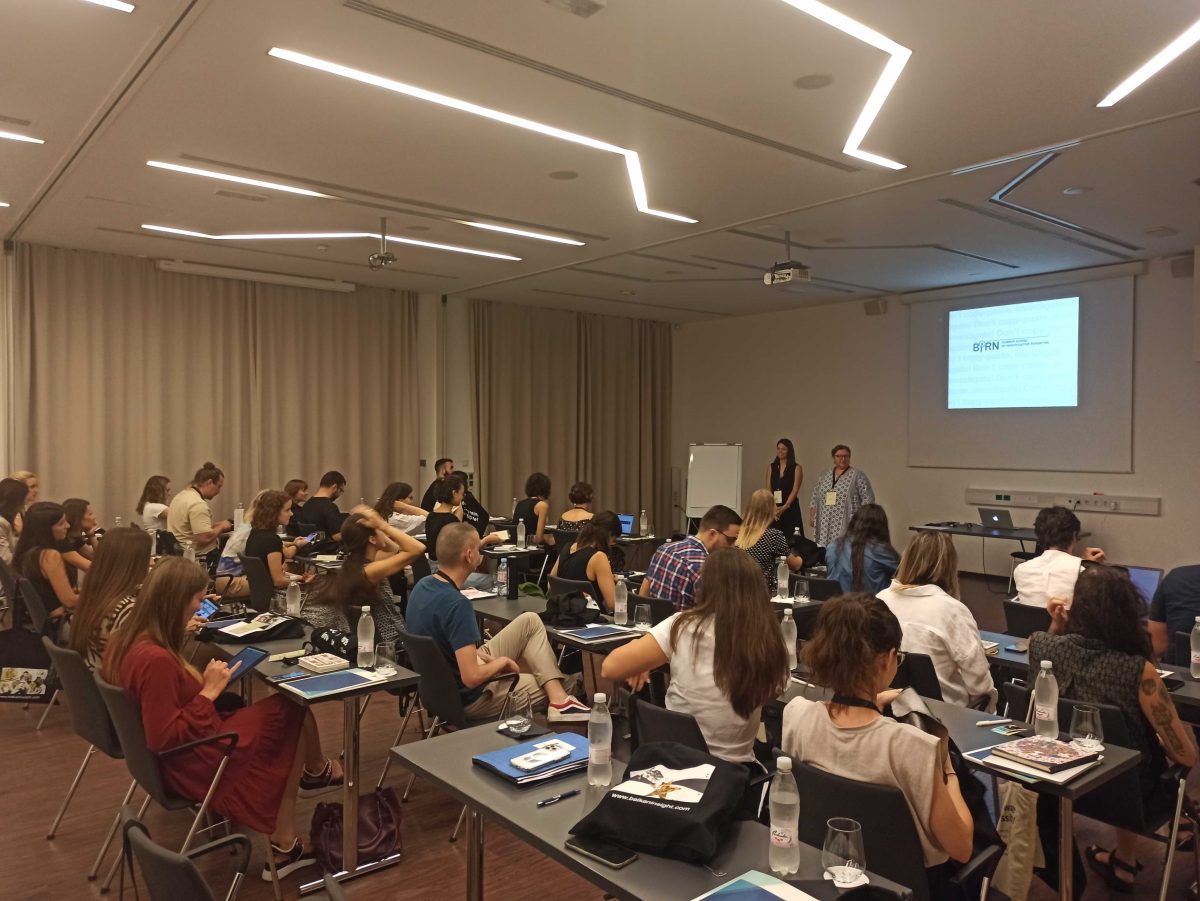
Balkan Investigative Reporting Network in Albania on July 4-5 held a two-day training in data journalism strengthening the capacities of local journalists to think critically.

Nineteen journalists and editors from the 12 regions of Albania participated in the BIRN training session held in Tirana.

The training was offered by British investigative editor Lawrence Marzouk and data journalist Crina Boros, co-authors of BIRN Albania’s guide Getting Started in Data Journalism.

The training strengthened the capacities of local journalists to think critically and provided them with skills in collecting and curating data in journalism.

The training also focused on familiarization with data visualization software as well as the adoption of basic skills in mapping, network analysis, and text analysis for visualizing their stories.

The training was held as part of the project “Using Big Data and Multimedia to Boost Quality and Independent Journalism in Albania”, a project supported by the European Union.

The goal of the project is to create an enabling environment for Albanian journalists to produce independent content through training, mentoring, technical and financial support, and close cooperation with civil society, so improving freedom of expression and strengthening media pluralism in Albania.


Meet the People Behind BIRN: Tommaso Siviero, Jovan Ilić, and Emilija Petreska

Each month, BIRN introduces you to a different member of its team. For July, meet BIRN’s social media holy trinity, Tommaso Siviero, Jovan Ilić, and Emilija Petreska.

Emilija, 28, is from North Macedonia. She studied journalism and public relations. She joined BIRN Hub in 2022 as a social media coordinator and is based in Skopje.

Jovan, 27, is based in Serbia. He studied audio engineering. He started working for BIRN in 2021 and is responsible for the production of BIRN’s digital and social media content, developing new digital products.

Based in Sarajevo, Tommaso, 25 joined BIRN in 2022. He is from Como, Italy. He studied Political Science and has been working as a journalist for the last five years. He is BIRN’s social media manager.

Tommaso, Jovan and Emilija are the people behind BIRN’s social. With their witty texts and creative visuals and strategic ideas, they have managed to engage readers even with the most complex stories published on BIRN’s flagship English-language website, Balkan Insight.

What are your favourite and most challenging parts of your job?

Emilija: Learning your audience is the hardest part, especially when you are new to the team. It can be a challenge since one size doesn’t fit all. For example, if your audience on Instagram wants more feature stories and explanatory content, your Twitter audience might want totally different things, let’s say breaking news and short news, or op-eds and analysis. But I would say that the fun part is experimenting, trying out digital tools and discovering new creative ways to present the content.

Which is your favourite social media platform while working in Balkan Insight? Why have you selected it? 

Jovan: Instagram. It changes so much all the time (can be good and bad) so you always have to learn something new.

Balkan Insight mostly publishes hard-read stories about human rights, crimes, corruption, etc. How easy or difficult is it to promote these stories on social media and ‘involve’ readers?

Tommaso: It can be difficult sometimes, and it would surely be easier to grow our numbers if we were publishing cute videos about cats, but also way more boring: in this way, we really need to crack our heads in experimenting different ways and strategies to better spread our articles and contents. It’s challenging. When looking at social media, there is always this huge concern and focus about quantities in terms of like, reach, growth. Don’t get me wrong, it’s crucial to reach a large number of people, especially if we are talking about good quality journalism. But on the other side, I think people are way too focused on how many people they are reaching and not who those people are. There are a lot of interests around the Balkans and our audience proves it. We need to reach more of that kind of niche and from there we can think about ways to win over those who don’t care about the region.

Surveys have shown that top newspapers use social media to spread news rather than engage audiences. What is the most effective social media communication model for you?

 Emilija: This is a tricky question to answer. I would say the coin has two sides. That said, it’s always nice to have an active social media presence where you can get attention for breaking news and updates. But that is more on a quantitative level.

If we really want to bring up the qualitative value of the social media platforms, it’s not just posting the link at the right time and place. It means we should strive to provoke meaningful discussion and teach your audience that they should keep you and other media outlets accountable for the information you spread, and the institutions for the issues you are writing about.

Would you like to share one of your job secrets?

 Jovan: Combining different apps in order to create a work environment that can be used in any location. Work smart.


BIRN Introduces Project to Fight Disinformation in Central Europe Region

Mapping Digital Rights Violations and Fighting Disinformation in Central Europe is an ambitious initiative to fight disinformation and propaganda by creating a unique regional Digital Monitoring database

Launched on July 1, 2022, Mapping Digital Rights Violations and Fighting Disinformation in Central Europe Region is a two-year programme led by the Balkan Investigative Reporting Network, BIRN, with the support of the United Nations Democracy Fund, UNDEF.

The project will determine the main patterns related to disinformation and propaganda through the creation of a unique regional Digital Monitoring database and the establishment of two new databases that will map and track digital rights violations.

In already fragile and in some cases illiberal democracies, growing limitations on human rights are also visible in the digital environment, in the form of threats. Lack of awareness of these issues within society further undermines democracy, not only in times of crisis. Elections in the Western Balkan region show that pressures on the media are not decreasing.

Online independent media platforms in the region are often subjected to online smear campaigns, hacker and DDOS attacks. At the same time, other online media are frequently the source of fake, unverified or malicious content. There is no systematic mapping of the use of technology in the monitored states.

BIRN was the only organization that has kept track of, and extensively reported about, digital rights violations and the use of technology during the COVID-19 pandemic.

BIRN’s experienced monitors will keep track of digital rights violations in Bosnia and Herzegovina, Montenegro, North Macedonia, Serbia, and Kosovo, that will be compiled in a comprehensive digital rights report. BIRN will meanwhile give 10 journalists from the region the opportunity to apply for training in editorial and financial reporting, and mentoring, to produce in-depth digital rights stories.

BIRN will use the capacities of a newly established SEE Digital Rights Network to ensure the engagement of the Network’s member organizations from the region (national and regional meetings) and to streamline advocacy efforts to increase the impact of the action. At the end of the programme, stakeholder meetings and a final conference will be held.

The aim of the project is to improve the understanding of existing online threats among general populations and governments in the region and initiate necessary policy changes. Only citizens able to critically think can make informed choices and fulfill their watchdog role.

The project is made possible through support from the United Nations Democracy Fund, UNDEF.

Applications Open for BIRN Summer School 2022 in Slovenia

Portoroz and its stunning coastline will be the setting for the BIRN’s Summer School for Investigative Reporting this August.

The 12th edition of the BIRN summer school will take place from August 22 to 28 in Portoroz and will gather top journalists and editors from Southeast and Central Europe and across the world to train reporters.

As part of the school, you will learn how to conduct open-source research, dig for big data, read complicated financial reports, convince difficult sources to talk and conduct cross-border investigations.

The training will provide a wealth of knowledge for both inexperienced and experienced investigative journalists. After training in the morning for all participants, break-out sessions in the afternoon will give you the choice to focus on more niche subjects – from illicit finance tracking to far-right groups and digital rights, among others.

Journalists will also receive training on digital security.

We are providing 30 full scholarships for selected participants. This will cover accommodation, meals as well as transportation expenses of up to 150 euros. Apart from the training, editorial support and mentorship, through our Investigative Initiative Story Fund, BIRN will provide participants with money to support story development and production.

Scholarships are offered to journalists from the following countries: Albania, Bosnia and Herzegovina, Bulgaria, Croatia, Czech Republic, Greece, Hungary, Kosovo, Moldova, Montenegro, North Macedonia, Ukraine, Poland, Romania, Serbia, Slovakia and Turkey.

Limited spots are also available for international participants who need to cover a fee of 700 euros. This includes the training curriculum and full board at the Boutique Hotel Portorose, where the summer school is taking place.

Portoroz belongs to the municipality of Piran in Slovenia, located in the southwest of the Gulf of Trieste between the boundaries of Italy to the north and Croatia to the south.

Applications close on July 31.

Click here to apply!


Call for Applications: BIRN Kosovo’s Anti-Disinformation Summer School 2022

BIRN Kosovo’s first ever Anti-Disinformation Summer School will offer young people from different communities an opportunity to acquire state-of-the-art knowledge and skills on fact-checking journalism – and it’s free.

Are you a student or young journalist eager to learn and grow professionally even when the rest of your peers are off on summer holidays? Are you up for meeting new people with the same interests as you? Do you want to meet renowned journalists and acquire hands-on skills on fact-checking journalism from certified trainers? Then BIRN Kosovo has the right place for you.

From July 25-29, 2022, BIRN Kosovo is hosting the first Anti-Disinformation Summer School, offering young people from different communities in Kosovo an opportunity to acquire state-of-the-art knowledge and skills on fact-checking journalism, all while interacting with young like-minded peers.

With fake news and disinformation being “the sign of the times”, especially with the current situation in Ukraine and the Russian disinformation apparatus surrounding it, training students and young journalists from different communities in Kosovo to identify and debunk fake news and disinformation is crucial to preventing the spread of these phenomena in Kosovo and beyond.

BIRN’s Anti-Disinformation Summer School will be held at Amazona Hotel in Prishtina from July 25-29. In the framework of the Summer School, BIRN Kosovo is teaming up with renowned local and regional journalists who will share their experiences and speak on the importance of fact-checking journalism as a means of countering malign foreign and domestic influences.

BIRN has put together a team of award-winning trainers with extensive experience in fact-checking journalism to deliver a series of training modules covering topics including: the basics of investigative journalism; international fact-checking standards and mechanisms; media ethics and the legal consequences of defamation and libel; fact-checking on a variety of issues relating to economics, rule of law, politics and other current affairs issues; and identification of “deep fake” – to name a few.

The programme will comprise training modules consisting of talks from renowned local and regional guest speakers, Q&As with public officials on the topic of disinformation from an institutional point of view and hands-on training sessions delivered by certified and award-winning trainers.

Guest speakers will share their experience in investigating and reporting on key topics that are of relevance to the local and regional context, including risks of disinformation and fake news stemming external actors, the war in Ukraine and its reverberations in Kosovo.

Participants will have the opportunity to acquire knowledge and hands-on skills to engage in fact-checking journalism through comprehensive and interactive modules put together by BIRN’s professional trainers.

Participants will also have a chance to put their newly acquired knowledge and skills into practice through individual and group work activities, which will take place at the end of each afternoon session.

All activities organized in the framework of the Anti-Disinformation Summer School will be held in parallel in Albanian and Serbian languages, with simultaneous translation provided. Simultaneous English translation will be provided on selected days.

Participation in the Anti-Disinformation Summer School is free. Accommodation, meals and transportation expenses will be covered fully by BIRN Kosovo.

Who can apply?

Eligible participants include students in Kosovo in their final year of studies in journalism, law, political science or social studies as well as young, aspiring, junior journalists in Kosovo. Applicants from marginalized communities in Kosovo that fulfill the afore-mentioned criteria are encouraged to apply.

To apply for the Anti-Disinformation Summer School, click here.

The deadline to apply is July 17, 2022, by 23.59 (local time).


Thirrje për Aplikim: Shkolla Verore për Anti-Dezinformim 2022, organizuar nga BIRN Kosova

 A je student apo gazetar në moshë të re dhe ke etje për të mësuar dhe për t’u zhvilluar profesionalisht përkundër faktit se të gjithë bashkëmoshatarët tu kanë shkuar në pushime verore? A je gati për të takuar njerëz të rinj që kanë të njëjtat interesa si ti? A dëshiron të takosh gazetarë të shquar dhe të fitosh aftësi praktike në gazetarinë e cila merret me verifikimin e fakteve, madje nga trajnerë të certifikuar? Nëse po, atëherë BIRN Kosova ka organizuar diçka fiks për ty. Prej datës 25 deri më 29 korrik 2022, BIRN Kosova do të organizojë shkollën e parë verore për anti-dezinformim, dhe do të ofrojë një mundësi të veçantë ku të rinjtë e komuniteteve të ndryshme të Kosovës do të fitojnë njohuritë dhe shkathtësitë më të fundit të gazetarisë së verifikimit të fakteve, ndërkohë që do të bashkëveprosh me bashkëmoshatarë të rinj që kanë mendime të ngjashme si ti.

Kur lajmet e rreme dhe dezinformatat janë bërë “simbol i kohës aktuale”, veçanërisht kur marrim parasysh situatën aktuale që po zhvillohet në Ukrainë dhe aparatin dezinformues të Rusisë që po i rrethon ato ngjarje, trajnimi i studentëve dhe gazetarëve të rinj nga komunitete të ndryshme të Kosovës lidhur me identifikimin dhe demaskimin e lajmeve të rreme dhe dezinformimit është me rëndësi sipërore në parandalimin e përhapjes së këtyre dukurive në Kosovë dhe përtej saj.

Shkolla Verore për Anti-Dezinformim do të mbahet në Hotel Amazonë në Prishtinë, në datat 25-29 korrik 2022. Në kuadër të kësaj Shkolle Verore, BIRN Kosova ka formuar një ekip të fortë bashkë me gazetarë të njohur vendorë dhe rajonalë, të cilët do të ndajnë përvojën e tyre dhe do të flasin për rëndësinë e angazhimit në gazetarinë e verifikimit të fakteve si mjet i luftimit të ndikimeve keq-dashëse të huaja dhe vendore.

Madje, BIRN ka formuar një ekip trajnerësh të shquar të cilët kanë çmime prestigjioze në gazetari dhe përvojë të gjerë në verifikim të fakteve, dhe të cilët do të ofrojnë një varg modulesh trajnimi të cilat do të mbulojnë një spektër të gjerë temash, duke përfshirë: bazat e gazetarisë hulumtuese, standardet ndërkombëtare dhe mekanizmat ndërkombëtarë në verifikim të fakteve, etika mediale dhe pasojat ligjore të shpifjes dhe përgojimit medial, verifikimi i fakteve tek një sërë çështjesh që lidhen me ekonominë, sundimin e ligjit, politikën, si dhe çështje të tjera aktuale, siç është për shembull, identifikimi i “dip fejk-ut” (“deep fake”, falsifikimi i thellë, vendosja e fytyrës së një personi mbi një person tjetër në video).

Programi i trajnimit do të përfshijë module ditore, të cilat do të përfshijnë biseda me mysafirë të ftuar që janë të njohur në Kosovë dhe rajon, pyetje dhe përgjigje me zyrtarë publikë mbi temën e dezinformimit nga këndvështrimi institucional, si dhe sesione të trajnimit praktik të cilat do të ofrohen nga trajnerë të certifikuar dhe të shpërblyer me çmime të ndryshme.

Mysafirët e ftuar që do të prezantojnë do të ndajnë përvojën e tyre në gazetari raportuese dhe atë hulumtuese të bërë në tema që janë të rëndësishme për kontekstin lokal dhe rajonal, duke përfshirë rreziqet e dezinformimit dhe të lajmeve të rreme që rrjedhin nga palë të jashtme, lufta në Ukrainë dhe jehona e saj në Kosovë.

Përmes moduleve gjithëpërfshirëse dhe ndërvepruese që kanë përgatitur trajnerët profesionistë të BIRN, pjesëmarrësit do të kenë mundësi të fitojnë njohuri dhe aftësi praktike për të bërë gazetari fakt-verifikuese. Pjesëmarrësit do të kenë mundësinë të praktikojnë njohuritë dhe aftësitë e posa-fituara përmes angazhimit në punë individuale dhe punë grupore, të cilat do të zhvillohen në fund të çdo sesioni të pasdites.

Të gjitha aktivitetet që do të organizohen në kuadër të Shkollës Verore për Anti-Dezinformim do të zhvillohen paralelisht në gjuhën shqipe dhe serbe, me përkthim simultan. Gjithashtu, në ditë të caktuara të programit do të ofrohet përkthim simultan edhe në anglisht.

Pjesëmarrja në Shkollën Verore për Anti-Dezinformim është falas. Shpenzimet e qëndrimit, ushqimit dhe transportit do të mbulohen plotësisht nga BIRN Kosova.

Kush mund të aplikojë?

Pjesëmarrës të pranuar mund të jenë studentët e Kosovës të cilët janë në vitin e fundit të studimeve në drejtimet në vijim: gazetari, juridik, shkenca politike apo shkenca sociale, si dhe gazetarët e rinj me ambicie të larta, dhe gazetarët e posa-inkuadruar në fushën e gazetarisë në Kosovë. Inkurajohen të aplikojnë pjesëmarrës nga komunitetet e margjinalizuara në Kosovë të cilët përmbushin kriteret e lartpërmendura.

Për të aplikuar në Shkollën Verore për Anti-Dizinformim, klikoni këtu.

Afati i fundit për të aplikuar në Shkollën Verore për Anti-Dezinformim është 17 korrik 2022, ora 23:59.

Poziv za prijave: Letnja škola BIRN Kosovo protiv dezinformacija 2022.

 Da li ste student ili mladi novinar koji želi da uči i da se profesionalno razvija čak i kada su ostale vaše kolege na letnjem odmoru? Da li ste spremni za upoznavanje novih ljudi sa istim interesovanjima kao i vi? Da li želite da se upoznate sa renomiranim novinarima i steknete praktične veštine o novinarstvu za proveru činjenica od sertifikovanih trenera? Onda BIRN Kosovo ima pravo mesto za vas. U periodu od 25. do 29. jula 2022. BIRN Kosovo će biti domaćin prve letnje škole protiv dezinformacija, koja nudi jedinstvenu priliku mladim ljudima iz različitih zajednica na Kosovu da steknu najsavremenija znanja i veštine o novinarstvu za proveravanje činjenica, a istovremeno u interakciji sa mladim kolegama istomišljenika.

S obzirom da su lažne vesti i dezinformacije „obeležje vremena“, posebno sa trenutnom situacijom u Ukrajini i ruskim dezinformacionim aparatom oko iste, obučavanje studenata i mladih novinara iz različitih zajednica na Kosovu o identifikovanju i raskrinkavanju lažnih vesti i dezinformacija je od suštinskog značaja u sprečavanju širenja ovih pojava na Kosovu, a i šire.

Letnja škola protiv dezinformacija će biti održana u Hotelu Amazona u Prištini, od 25. do 29. jula 2022. U okviru Letnje škole, BIRN Kosovo se udružuje sa renomiranim domaćim i regionalnim novinarima koji će podeliti svoja iskustva i govoriti o značaju bavljenja novinarstvom za proveravanje činjenica kao sredstvom za suzbijanje zloćudnih stranih i domaćih uticaja.

Štaviše, BIRN je okupio tim nagrađivanih trenera sa velikim iskustvom u novinarstvu za proveravanje činjenica, koji će održati niz modula obuke koji pokrivaju širok spektar tema, uključujući, da spomenemo samo neke od njih: osnove istraživačkog novinarstva, međunarodni standardi i mehanizmi za proveravanje činjenica, medijska etika i pravne posledice klevete i opanjkavanja, provera činjenica o raznim pitanjima koja se odnose na ekonomiju, vladavinu prava, politiku i druga tekuća pitanja i identifikaciju dip fejka (dubokog lažiranja).

Program obuke će se sastojati od dnevnih modula obuke, koji će se sastojati od razgovora sa renomiranim lokalnim i regionalnim gostujućim govornicima, pitanja i odgovora sa javnim zvaničnicima na temu dezinformacija sa institucionalne tačke gledišta i praktičnih obuka koje će održati sertifikovani i nagrađivani treneri.

Gostujući govornici će podeliti svoja iskustva u istraživanju i izveštavanju o ključnim temama koje su od značaja za lokalni i regionalni kontekst, uključujući pretnje od dezinformacija i lažnih vesti koje potiču od spoljnih aktera, rat u Ukrajini i odjek na Kosovu.

Učesnici će imati priliku da steknu znanja i praktične veštine za angažovanje u novinarstvu za proveravanje činjenica kroz sveobuhvatne i interaktivne module koje sastavljaju BIRN-ovi profesionalni treneri. Učesnici biti u prilici da uvežbaju novostečena znanja i veštine kroz individualne i aktivnosti rada u grupama, koje će se odvijati na kraju svake popodnevne sesije.

Sve aktivnosti koje se organizuju u okviru Letnje škole protiv dezinformacija održavaće se paralelno na albanskom i srpskom jeziku, a simultani prevod je obezbeđen. Pored toga, biće obezbeđen i simultani prevod na engleski u određenim danima programa.

Učešće na Letnjoj školi protiv dezinformacija je besplatno. Troškove smeštaja, obroka i prevoza će u potpunosti snositi BIRN Kosovo.

Ko se može prijaviti?

Učesnici koji imaju pravo da se prijave uključuju studente na Kosovu koji su trenutno na završnoj godini studija u sledećim disciplinama: novinarstvo, pravo, politička nauke ili društvene nauke, kao i mladi, ambiciozni novinari i mlađi novinari na Kosovu. Podstičemo podnosioce prijava iz marginalizovanih zajednica na Kosovu koji ispunjavaju gore navedene kriterijume da se prijave na ovaj poziv.

Da biste se prijavili za Letnju školu protiv dezinformacija, kliknite ovde.

Krajnji rok za prijavljivanje na Letnju školu protiv dezinformacija je 17. jul 2022. do 23.59 (po lokalnom vremenu).


BIRN Albania Holds Two-Day Training on Organized Crime

The Balkan Investigative Reporting Network in Albania held a two-day training on June 20-21 in Tirana on money laundering and organized crime reporting.

More than 20 crime beat and investigative journalists participated in the training session, which was led by British journalist and editor Lawrence Marzouk, the author of new guide published by BIRN: Investigating Organized Crime and Money Laundering in Albania.

During the training, BIRN Albania editor Besar Likmeta also presented the network’s latest database, which includes a complete catalogue of asset sequestration and confiscation orders issued by local courts in Albania over the past decade.

Meanwhile, legal expert Ardit Hysa gave journalists an overview of the legal framework on organized crime and money laundering in the country, discussing the provisions of the criminal code and the anti-mafia law.

The training was welcomed by the Ambassador of the Netherlands in Albania, Reinout Vos, who underlined the important role of the media in the fight against organized crime and money laundering.

“You have an important role in telling the difficult human stories that are behind the machinery of the criminal world, but also putting authorities up against their responsibility to take action,” Vos told the journalists.

The training is part of the project, Raising Awareness and Accountability on Money-Laundering in Albani’, which is supported by the Netherlands.

The goal of this project is to strengthen the fight against organised crime and money-laundering by raising awareness and strengthening the accountability of the system for the seizure and confiscation of the illegal proceeds of crime.


Culture of Impunity Still Influences Kosovo Courts’ Corruption Sentences – Report

Latest report by BIRN and Internews Kosova says corruption verdicts don’t follow Supreme Court guidelines, and are often too mild.

BIRN and Internews Kosova published their latest court monitoring report on Tuesday, entitled “Impunity to Corruption”.

The report, consisting of findings from analysing 40 corruption case verdicts during 2021, shows that Kosovo courts in these cases did not follow Supreme court guidelines in their punitive verdicts.

The report provides information on the low sentences often imposed in corruption cases and on the circumstances that were considered for the imposition of these lower sentences.

It reveals that there is often no justification for aggravating and mitigating circumstances in court judgments in corruption cases.

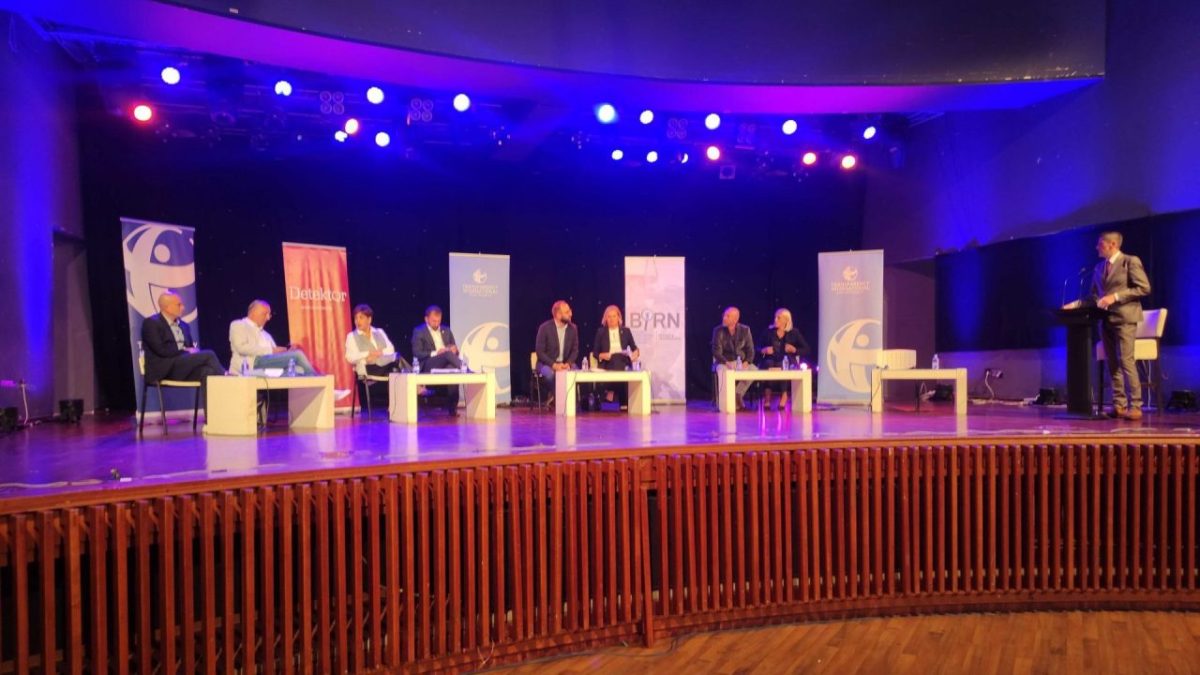
Albulena Haxhiu, Minister of Justice, who was part of the panel at the publication of the report, congratulated BIRN and I/KS for their contribution to Kosovo’s justice system with the monitoring reports.

“This report, and these cases that have been under the magnifying lens of the monitors, should be placed under the magnifying lens of the mechanisms of the Judicial Council on the issue of performance and professionalism of judges or trial panels that have issued such decisions,” Haxhiu said on Facebook.

Enver Peci, President of the Supreme Court, stated that the report and the data it contains are useful to the judicial system. The Supreme Court’s rules on criminal policy must be implemented in the future along with clear procedures, he added, in order to prevent organisations that monitor the legal system from reaching differing conclusions on the same problems.

Albert Zogaj, chairman of the Kosovo Judicial Council, said that in the process of furthering judicial reform, the subject of punitive policy in corruption cases has a specific relevance.

This was the 16th monitoring report of the judicial and prosecutorial system in Kosovo conducted by BIRN and I/KS.

The full report can be found here


BIRN Albania Call for Investigations on Environmental Issues

Balkan Investigative Reporting Network in Albania launched a call for investigative stories on June 15, offering grants for four journalists to produce articles on topics related to environment.

The call is part of the project “Using Big Data and Multimedia to Boost Quality and Independent Journalism in Albania”, supported by the European Union.

The goal of the project is to create an enabling environment for Albanian journalists to produce independent content through training, mentoring, technical and financial support, and close cooperation with civil society, so improving freedom of expression and strengthening media pluralism in Albania.

The call is based on topics suggested by civil society activists and journalists during a joint workshop held on June 10 in Tirana.

The workshop was attended by two dozen civil society activists and journalists, who debated on important topics that should be investigated in the field of the environment as well as on the need to build stronger communication and cooperation between civil society organisations and journalists.

The journalists awarded through this call will have around three months to dig deeper and research their ideas and will also have the opportunity to work with experienced editors as mentors to guide them through the process of writing in accordance with BIRN standards.

The call only applies to journalists from Albania and closes on July 5.

Click here for more information (in Albanian) about the application procedure.

Click here to download the application form (in Albanian).


Call for applications: Final external evaluation of BIRN Kosovo project

BIRN Kosovo is seeking an evaluator/evaluation company to undertake a comprehensive overall evaluation of the results achieved in the project and provide recommendations for possible scaling up of the project.

Assignment reference: Undertake a comprehensive overall evaluation of results achieved in the project and provide recommendations for possible scaling up of the project.

Project reference: “Europeanisation of Kosovo’s Environmental Agenda”, funded by the European Union Office in Kosovo, and implemented by Balkan Investigative Reporting Network (BIRN) Kosovo, CEE Bankwatch, Environmentally Responsible Action (ERA) Group, and Independent TV Network (TV Mreža).

Deadline for applications: 25/06/2022, at 17.00.

Call for applications

This call for applications is being published within the “Europeanisation of Kosovo’s Environmental Agenda” project, funded by the European Union Office in Kosovo, and implemented by BIRN Kosovo, CEE Bankwatch, ERA Group and TV Mreža.

Interested candidates or candidate companies must follow the information and guidelines as set out in the Terms of Reference provided below this call. The deadline for submitting applications is June 25, at 17:00, to [email protected] and [email protected].

Click the link below for Terms of Reference:

Terms of Reference


Meet the People Behind BIRN: Nicholas Watson

Each month, BIRN introduces you to a different member of its team. For June, meet Nicholas Watson, editor of Reporting Democracy.

Nicholas, 55, has been in journalism for more than 30 years. He started his carrier in Japan and continued in New York, London, Rome and Prague, where he has lived for the past 20 years.

As editor of Reporting Democracy, BIRN’s cross-border journalistic platform dedicated to exploring where democracy is headed across large parts of Europe, Nicholas says that journalism still excites him.

He is particularly keen to highlight Reporting Democracy’s new Travel and Reporting Programme for journalists, teams and media organisations from the Czech Republic, Hungary, Poland and Slovakia.

“I hope many aspiring or established journalists will take the opportunity to apply for these grants and, to paraphrase George Orwell, ‘print what someone else does not want printed; everything else is public relations’,” he says.

How did you start your career in journalism? 

I was actually teaching English as a foreign language in Hiroshima, Japan in the early 1990s when I was given a chance to write for a Tokyo-based international travel magazine, covering destinations, culture etc in the Far East. Through this I won the Pacific-Asia Travel Association’s (PATA) Grand Travel Story Award for 1993 for a story I did on Sumo wrestling and have never really looked back. I shifted my focus to hard news with a move to a global newswire a few years later, which took me from Tokyo to New York as a correspondent, then to London and Rome, followed by the Czech Republic about 20 years ago, where I’ve remained ever since.

When did you join BIRN and the Reporting Democracy project?

I joined BIRN in August 2020. I’d actually taken a break from journalism for a couple of years after selling my publication with my business partner at the time. I’d been doing some research and consultancy work in the interim, but it didn’t really excite me in the same way that the news business had, so when I was afforded the opportunity to get back into it with BIRN’s Reporting Democracy it was a great chance. The fact RD promotes freedom of speech, human rights and democratic values through investigations, features, analysis and interviews is what it makes it all the better – I’m honoured that they picked me to lead the network at such a crucial time for the region.

The news business can feel very cyclical, it waxes and wanes. When there’s lots of stories about and everyone is keen to write about them, it fills you with energy and hope. However, inevitably there are ‘down’ times, when there seems a dearth of stories to pursue, the stories don’t flow like they once had, there’s a feeling of discouragement in the air, and it can feel a little demotivating. It’s important to always remember the next big story is just around the corner. It’s important to stay positive, keep talking to people, keep looking into things – the stories are there, perhaps just a bit harder to find at times, and you need to dig a little deeper.

Can you choose one of your favourite reports, analysis pieces or investigations that really made a difference?

I would pick our series of pieces on the right-wing Polish government’s attempt to rally support in the region for replacing the Istanbul Convention (which attempts to combat violence against women) with an alternative treaty that aims to ban abortion and homosexual marriage, as really important. Led by Claudia Ciobanu, RD’s Poland correspondent, our people in the region found that the Polish Justice Ministry

had sent letters to at least four governments in the region (Croatia, Czechia, Slovakia and Slovenia) outlining their alternative treaty, which seemed to be based on an international family rights convention prepared by the Christian conservative Ordo Iuris Institute in cooperation with former Polish MEP Marek Jurek from the Christian Social Congress. This was an underhand, secretive attempt by one government in the region to undermine women’s rights elsewhere in the region that we exposed. Another important cross-border story we pursued included the opposition to the COVID-19 vaccination drives in CEE from a growing anti-vaccination movement that was being backed by the most conservative elements in the churches of the region.

Why did you decide to design and implement this new program? What do you want to achieve with the new Travel and Reporting Programme? 

Problems in countries tend to have their own characteristics but are usually universal: discrimination, oppression, misogyny, corruption, populism. As a journalist, it’s always important not to remain in your silo, but to explore how these problems manifest themselves in other parts of the world. Yet spending time abroad and reporting in-depth takes time and money. So, it is with this aim of fostering journalistic cooperation and exchanges of information between regions, in this case Central and Southeast Europe, that we are making available these travel and reporting grants, regional expertise as well as field support in countries where BIRN has offices (Albania, Bosnia and Herzegovina, Kosovo, North Macedonia, Romania and Serbia).

What are Reporting Democracy’s next plans? 

We have exciting grant stories coming up, investigating the conditions in refugee camps in Poland; systematic reform of enforcement and insolvency legislation in the Czech Republic as many fall further into debt; and the ‘defamation law’ in Poland that threatens freedom of speech, restricts civil liberties and has a freezing effect on the free media. We also began a series of podcasts, VoiCEE, together with our partner Notes From Poland, which you can access here. We will hopefully be looking into doing more of such podcasts.