SEE Digital Rights Network Members Chart Forward Path in Bosnia

Attending organisations agreed to chart a path to advance digital rights advocacy efforts across the network and foster collaboration – focusing on education and promoting advocacy initiatives among Network members.

BIRN assembled key national stakeholders from the SEE Digital Rights Network in Bosnia and Herzegovina to discuss digital rights challenges and opportunities in the Balkans.

Highlights of the national SEE Digital Rights Network meeting in Sarajevo on July 28 included the review of the Network’s successes, presentation of the attending organisations’ upcoming initiatives and plans for BiH Network members’ work in the short term.

With the organisations that participated in the meeting, BIRN BiH representatives shared methods on how the organisation monitors digital rights violations within Bosnia and described their work on developing cybersecurity policy papers and creating educational content to raise awareness about digital rights.

The Citizens’ Association “Zašto ne (Why not)”, well known for its accountability websites, Istinomjer and Raskrinkavanje, continues to enhance transparency and promote responsible digital citizenship in their work. They also expressed interest in developing digital literacy and security initiatives, especially for the elderly.

The Center for Investigative Reporting, CIN, is actively involved in a regional project against hate speech, demonstrating the importance of civil society’s role in digital spaces. With an eye on the future, CIN showed interest in projects related to artificial intelligence and its potential influence on digital rights.

Finally, the Sarajevo Open Centre, SOC, shared news about its work on monitoring EU laws and amendments to the law on freedom of information and personal data protection efforts. SOC is also assessing the impact of artificial intelligence on the LGBT community and women’s rights.

The meeting showcased a shared enthusiasm for collaboration among Network members, especially in education and advocacy for digital rights.

Participants agreed on the need for a concise survey to coordinate and streamline digital rights activities within the Network. They highlighted the benefits of experience sharing, including both successful and challenging practices from EU Network members, for their cooperative and institutional activities. Emphasizing the value of academia, IT, and digital rights experts, the members agreed to engage with these sectors for stronger digital rights advocacy.

In the following months, BIRN will organise regional meetings to facilitate experience sharing among Network members, to affirm the Network’s commitment to strengthening digital rights advocacy in the Balkans.


Turkish Fraudster Seeks to Delete BIRN Investigation Into Citizenship Acquisition

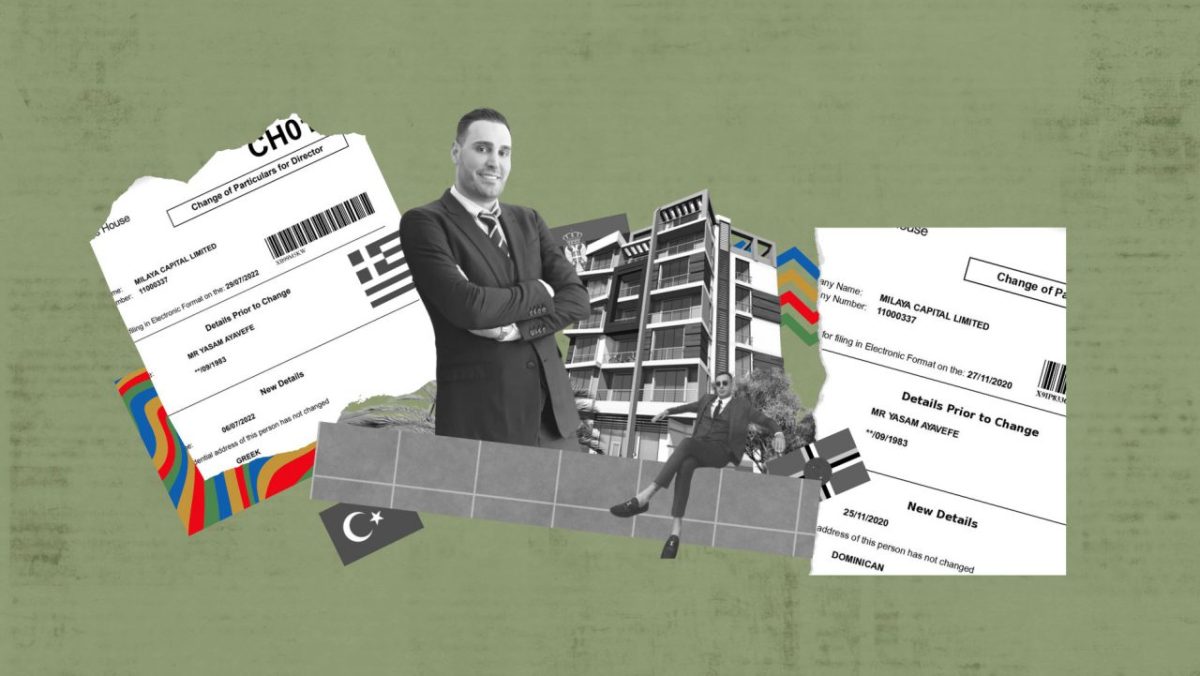
After Turkish courts ordered the removal of website articles about businessman Yasam Ayavefe, his representative called on BIRN to delete its investigation into how the convicted fraudster bought his way to honorary Greek citizenship.

A representative of Turkish businessman Yasam Ayavefe – a convicted fraudster who was revealed in an investigation by BIRN and Greek media partner Solomon to have acquired honorary Greek citizenship via his political ties – has asked BIRN to delete its report.

He also urged BIRN to delete articles about cyberattacks that targeted the Balkan Insight website after the publication of the investigation.

“These kinds of posts affect the business life of my client [Ayavefe]. He has invested in so many countries and posts like this cause my client material and moral damage,” Bener Ljutviovski, who introduced himself as Ayavefe’s representative, told BIRN in an email.

His request for the removal of BIRN’s reports came after Turkish courts, in two separate judgments in Istanbul and Ankara, ruled that Turkish online media articles about based Ayavefe’s activities in gambling, crime and business in Cyprus, Greece and Turkey should be removed.

The Turkish court rulings said that Ayavefe’s rights had been violated by the articles, citing “the presumption of innocence”.

BIRN has confirmed that at least 114 news pieces about Ayavefe have been removed from Turkish websites as a result.

Ljutviovski also said that a case had been launched in Greece to ask websites to remove articles about Ayavefe, but after checking with judicial authorities in Greece, BIRN could not verify this.

Ljutviovski further claimed that Ayavefe won a case in Greece to have arrests removed from his criminal record.

He said that all this proved that Ayavefe “has nothing to do with these accusations” and that he was being accused “without any proof” of being connected to the DDoS attacks on BIRN’s Balkan Insight website and Solomon’s site after the publication of the investigation.

He called on BIRN to take down the articles in line with the Turkish court rulings although one of the judgments clearly stated that domestic courts cannot remove content of “foreign origin”.

“Please help us in this situation and let’s fix this without prolonging… We are open to suggestions from your side,” Ljutviovski wrote.

He appeared to offer BIRN financial incentives in return for compliance: “My client Dr. Yasam Ayavefe has advertising company, if you help us in this case we can provide advertising service to your organisation, so you can grow to bigger organisation. We would love to cooperate with you,” he wrote.

BIRN declined Ljutviovski’s offer and rejected his repeated demands to remove the articles about Ayavefe.

Ljutviovski sent a series of requests to BIRN, initially from an email address under his own name but then from an email address under the name Igor Stefanov.

BIRN and its Greek partner media outlet Solomon’s websites came under DDoS attack by hackers in 2022 following the publication of the investigation into Ayavefe and how he acquired honorary Greek citizenship.

Solomon said on Twitter at the time that honorary citizenship is “a state honour long reserved for those who have significantly promoted Greek culture”, but has been “turned into a golden visa scheme for those with deep pockets”.

The investigative outlet Inside Story first broke the honorary citizenship story in July 2022, triggering a fierce debate over Ayavefe’s suitability for such an honour. Inside Story also came under DDoS attack after publishing its report on Ayavefe.

BIRN Albania and SCiDEV Present Studies on Disinformation, Propaganda and Fake News

Reports on Russian, Chinese and Iranian propaganda welcomed by EU ambassador in Tirana who calls for a renewed emphasis on ethical journalism

The Balkan Investigative Reporting Network in Albania, together with Science and Innovation for Development Center, SCiDEV, on July 14 presented the findings of four reports on information manipulation in Albania and the launch of a new website against disinformation.

The study reports were financed by the European Union and analyze the circulation in Albanian-speaking media in Albania, Kosovo and North Macedonia of fake news on Russia’s war against Ukraine, Russian disinformation narratives, as well as Chinese and Iranian propaganda through state-sponsored media in Albanian language.

The presentation of the reports was greeted by the EU Ambassador in Albania, Christiane Hohmann, who emphasized the need for media owners to put quality journalism at the top of their agenda.

“We have to look into how we can actually improve the situation, fight misinformation and disinformation, while promoting ethical journalism,” said Hohmann.

The reports were presented at Europe House in Tirana by BIRN Albania Editor Besar Likmeta and SCiDEV’s Executive Director Blerjana Bino in the presence of media, journalists, civil society activists and media experts.

The reports are published in the newly launched website: DisInfo.al, which also contains a database on fake news on the war in Ukraine, as well as educational resources against disinformation, fact-checking links, video tutorials, etc.

Download the reports in English and Albanian:

  1. For the report: “False News on Russia’s Invasion of Ukraine in the Albanian-Language Media” click here.
  2. For the report: “Russian State-Sponsored Narratives in Albania” click here.
  3. For the report: “Media Analysis: China’s Public Diplomacy in Albania” click here.
  4. For the report: “Media Analysis: Iran’s Propaganda in Albanian Language” click here.


BIRN Serbia and IJAS Report: Journalists Feel Undefended From Online Attacks

Report says online abuse is becoming so ‘normalised’ that journalists often do not report it – or have any faith in institutional protection.

Online threats against journalists are more intense and common than physical ones, but most newsrooms have not set up safety protocols to help them respond to these attacks, while laws do not provide efficient protection, BIRN and IJAS’s new report reveals.

Working in an environment that is becoming primarily digital has left journalists and media more exposed to online to attacks, insults and threats, but many newsrooms have not established mechanisms to deal with such cases and legislation does not provide adequate protection either.

These are some of the findings from the latest report, “Journalists’ Safety in the Digital Environment”, which BIRN Serbia and the Independent Journalists’ Association of Serbia, IJAS, published on July 18.

Online attacks and threats impact journalists’ mental health and private lives and affect relations in the newsrooms and commitment to professional standards. Online abuse is typically “normalised” and considered as part of the job.

“The most striking finding is that hate speech, threats, insults,
intimidation, pressure and other forms of digital violence against
journalists are so widespread in Serbia that journalists believe that it has become a daily ‘normal’ environment in which they work and that it is the price they pay for their work.

“When faced with digital threats and insults, they generally
do not report them because they know that, at the institutional level of protection, things are rarely undertaken and resolved,” says Aleksandra Krstic, associate professor at the Faculty of Political Sciences of the University of Belgrade, one of the report’s authors.

Endangerment of journalists’ safety may lead to self-censorship and journalists may even abandon stories of public interest. which then lowers the quality of information the public receives and puts at risk media independence and freedom of speech, the report notes.

The report says many journalists rarely report insults and threats, warning that “the lack of trust that journalists have in the institutional protection system, the competent prosecutor’s office or the courts, is alarming”.

Marija Babic, lawyer at IJAS and another author of the report, says it is necessary to harmonise laws with developments in the digital space in order to prosecute attacks.

“Competent authorities should process attacks and threats to journalists as quickly as possible. It is also very important that such attacks are condemned by high-ranking state officials, who should stop pressuring and targeting journalists and the media as this is only making them [journalists and media] targets of very serious attacks,” says Babic.

The report also notes the lack of professional solidarity with attacked journalists and the fact that journalists and editors mainly turn to the public – which is the only thing they still trust – hoping that publicising attacks and threats will save them from potential attackers.

“All these findings should be read in a general, social context that is not conducive to the development of free and independent media. Threats and pressures, intense public campaigns led by representatives of the highest state authorities, a culture of impunity and weak institutions lead to a situation where journalists and the media are legitimate ‘targets’.

“Apart from the need to strengthen the capacities of the newsrooms themselves, we should insist on more effective protection mechanisms through amendments to the laws and a stronger response from institutions,” says Tanja Maksic, program manager and researcher at BIRN and one of the authors of the report.

The full report in Serbian and English is available on BIRN Serbia’s website.


BIRN Albania Holds Roundtable on Human Rights in the Digital Sphere

Balkan Investigative Reporting Network in Albania on June 27 held a virtual roundtable with 30 journalists and representatives of local civil society organisations to discuss human rights in the digital sphere in Albania.

The aim was to introduce journalists, activists and representatives of local civil society organisations to a set of initiatives launched by BIRN Albania in the last month related to human rights in the digital sphere in the country, as well as discuss future steps needed in such regards.

During the event, BIRN presented its two latest awareness campaigns launched in June 2023. The campaigns aim to raise awareness on the spread of hate speech against women and members of LGBTQIA+ community in the digital sphere. The video messages filmed and produced by BIRN Albania have been distributed through its social media channels on Facebook and Instagram.

The first campaign was focused on gender bias in the digital sphere. The campaign titled “Ajonukhesht” (“She won’t be silenced”) includes video messages from activists and civil society leaders working on issue related to gender equality, the fight against gender-0based violence and women’s participation in politics and the public sphere.

They included Mirela Arqimandriti, head of the Gender Alliance for Development, Ines Leskaj, executive director of the Albanian Women’s Empowerment Network, Edlira Cepani, national coordinator of the network “Equality in Decision-making,” Armela Prevazi, from the National Democratic Institute in Albania, and Estela Bulku, program coordinator at UN Women.

The second campaign, titled “#Hapezemrën” (“Open you heart”), includes video messages from activists and civil society leaders fighting discrimination toward the LGBTQIA+ community in Albania. They included Alba Ahmetaj, from Pro LGBT, Arber Kodra, from OMSA, Edlira Mara, from Historia Ime, Xheni Karaj, from Alenca LGBT, as well as messages from participants in the last Pride March organised in Tirana in May 2023.

During the roundtable, BIRN Albania also launched two new publications related to digital rights and internet freedom: a new policy brief on the regulatory framework on privacy and data processing for journalists, and a research report on women’s representation in online and social media during the 2023 local elections in Albania.


NGOs Fear EU Measures Against Kosovo Could Hit Civil Society Funds

Civil society organisations are concerned that the EU’s decision to suspend some funding for Kosovo until it complies with Brussels’ prescriptions for defusing tensions in the Serb-majority north could affect NGOs that depend on international grants.

Civil society organisations in Kosovo have expressed concern that their future sustainability might be affected by Brussels’ decision to temporarily suspend funds provided under the European Commission’s Instrument for Pre-Accession Assistance, IPA until Pristina complies with the EU’s prescriptions for restoring stability in the country’s Serb-majority north.

Taulant Hoxha, executive director of the Kosovar Civil Society Foundation, KCSF NGO, which supports civil society development, told BIRN that such organisations’ funding could be affected “if these [EU] measures continue for months, and especially beyond 2023”.

Hoxha explained that “the natural cycle of IPA funds management is such that at least one to two years pass from programming to the practical implementation of funds”.

He said that the suspension of IPA 2024 funds, which the EU is threatening, would not affect already-funded civil society projects for this year and next year, but could affect NGOs’ work in 2025.

Kosovo has many civil society organisations – parliament’s website lists 84 – and they are highly dependent on EU, US and Swiss funds.

Zana Hoxha, the executive director of Artpolis, a human rights and arts NGO, told BIRN that the suspension of IPA funds by the EU might cause her organisation to reduce jobs or cut salaries by 30 to 40 per cent.

“We have been supported by IPA funds since 2008, for the promotion of women’s rights, youth engagement and art and culture, which is our mission,” she said.

She explained that financial resources for 2023 have been secured but the NGO planned to apply for IPA 2024 and if the funds were not available, it would make the organisation’s future uncertain.

She added that she believes that the suspension of IPA funds will cause “a general weakening of civil society organisations and civic engagement… The consequences will be difficult to repair.”

However, the director of BIRN Kosovo, Jeta Xharra, said she had received assurances on Tuesday that NGOs will not suffer as a result of the EU measures.

“I was in an online meeting today that the EU organised from Brussels on consultations on the IPA 2024 Multi-Country Programming Consultation with Civil Society in the Western Balkans and thankfully I was not the only one raising the concern that precisely because of the current tensions, there need to be more projects that encourage cooperation between Serbia and Kosovo, not less. This proposal came from a civil society activist in Serbia,” Xharra said.

“I also aired my thoughts on the matter, saying that punishing independent media and civil society for the actions of any government seems completely counterproductive as, in Kosovo especially media and civil society provide a regular critical counterpart to the government, scrutinising its actions, so weakening that resilience and criticism that the government faces every day from civil society and media would in fact have an opposite effect, it would make the life of the government much easier,” she added.

Xharra said that she asked if current and future funding for the civil society in Kosovo would be affected by EU measures against the Kosovo government, and was assured by the EU representatives that “no current or future multi-country projects for media and civil society would exclude Kosovo organisations. This is the situation as it stands.”

The EU is imposing measures to encourage Pristina to accept its prescriptions for defusing the tensions that flared up into violence recently in Serb-majority northern Kosovo.

Brussels is asking Pristina to immediately suspend police operations near municipal buildings in the north which have been the focus of unrest after police helped ethnic Albanian mayors elected in polls boycotted by Serbs to take office.

The EU wants the mayors to perform their duties in premises other than the municipal buildings, and for new elections to be held with the full participation of the Serbs.

“We cannot afford instability, tensions and violence. We have condemned the violence and continue calls for immediate de-escalation by both parties [Kosovo and Serbia],” an EU spokesperson told BIRN.

“Kosovo has regrettably not yet taken necessary steps,” the spokesperson said.

The spokesperson said that the Kosovo authorities were informed on June 28 that measures including the suspension of the IPA funds were being imposed until the EU’s requests are fulfilled.

“These measures are temporary and fully reversible depending on the developments on the ground and decisions to de-escalate taken by the Prime Minister [Albin] Kurti,” the spokesperson added.

The EU spokesperson also said that in another measure imposed, proposals for funding submitted by Kosovo under the Western Balkans Investment Framework were not submitted for consideration by the WBIF board at the end of June.

From 2009 to 2021, the WBIF supported 30 infrastructure projects in Kosovo with a total cost of 1.8 billion euros.

Prime Minister Kurti has described the EU measures as “unjust”.

Kurti said that “we hope that these temporary measures will be very short” so that EU financial support can continue “and maybe even increase”.

Call for EU Investigative Journalism Award 2023 is now closed

Journalists from the Western Balkans and Türkiye submitted more than 260 applications to the Call for EU Investigative Journalism Award 2023.

A total of 267 applications have been submitted for the EU Investigative Journalism Award 2023, encompassing both national and regional categories. These applications came from seven different countries. This prestigious award honours exceptional investigative stories published in the preceding calendar year.

From the pool of received applications, the evaluation jury will choose the top three stories from each of the seven countries, resulting in 21 selected stories. This selection process ensures that the most outstanding works from each country are recognized and acknowledged.

This year, the EU Award has introduced an exciting addition in the form of a regional award. This category seeks to recognise the finest stories that transcend national boundaries and address issues of significance to the entire region. By creating this new category, the award aims to inspire journalists to broaden their perspective and tackle matters that have a broader impact.

A separate evaluation jury will be established to evaluate the regional award submissions. This dedicated panel will review all entries and select the three stories that have the most substantial regional impact. This initiative will foster a sense of collaboration among journalists and encourage them to delve into regional matters that affect a wider audience.

The annual award fund for each of the countries is 10,000 euros and the prize fund for regional awards is also 10,000 euros. The three best stories of the year are awarded, and the amount for national and regional prizes is 5,000 euros (first place), 3,000 (second), and 2,000 (third).

In the past four years, 84 investigative stories from the Western Balkans and Türkiye produced by 124 journalists were awarded. These stories contributed to resolving cases of power misuse, corruption, organised crime, pollution of the ecosystem, and other wrongdoings.

The organiser of the award is Thomson Media, an organisation with decades of experience in media development and the promotion of media freedom on a global level.

The EU Award for Investigative Journalism 2023 is part of the project “Strengthening Quality Journalism in Western Balkans and Türkiye II”. This aims to recognise and promote outstanding achievements in investigative journalism as well as improve the visibility of quality journalism in the Western Balkans and Türkiye.

The project is funded by the European Union, and it is implemented by a consortium composed of Balkan Investigative Reporting Network – BIRN Hub, Central European University (CEU) – Hungary, the Association of Journalists (AJ) – Türkiye, Thomson Media (TM) – Germany, University Goce Delcev Stip (UGD) – North Macedonia, The Independent Union of Journalists and Media Workers (SSNM) – North Macedonia, Media Association of South-East Europe (MASE) – Montenegro, and Balkan Investigative Reporting Network Kosovo (BIRN Kosovo).

For more details check here.

CALL EXTENSION: Balkan and Visegrad newsrooms apply for Audience-Engaged Journalism Grants

BIRN is extending its call to July 10 for Balkan and Visegrad newsrooms to apply for Audience-Engaged Journalism Grants to receive funding, training, mentoring and access to an innovative digital tool to engage with audiences.

The Balkan Investigative Reporting Network (BIRN) is pleased to announce the extension of the call for applications for the Audience-Engaged Journalism Grants. This program is designed to support journalists from Visegrad and Balkan newsrooms who aspire to create next-level investigative reports by actively engaging with their audiences through an innovative digital tool.

The Audience-Engaged Journalism Grants provide funding, training, and mentoring opportunities for ten (10) media outlets across the following European countries: Albania, Bosnia and Herzegovina, the Czech Republic, Hungary, Kosovo, Montenegro, North Macedonia, Poland, Serbia, and Slovakia.

These grants are part of the Media Innovation Europe project, led by the Vienna-based International Press Institute (IPI) in collaboration with Thomson Media (TM) in Berlin, the Media Development Foundation (MDF) in Kyiv, and the Balkan Investigative Reporting Network (BIRN) in Sarajevo.

Through this program, BIRN aims to empower media outlets to produce impactful and audience-engaged stories that tackle pressing issues within their communities. Successful applicants will receive the necessary resources to create individual or cross-border audience-engaged stories.

Grant Opportunities:

BIRN will award €4,000 to two (2) successful applicants who are interested in producing individual audience-engaged investigative stories.

BIRN will grant €5,000 to eight (8) successful applicants who are interested in producing a cross-border audience-engaged story. In cases where a media outlet already has a media partner for a cross-border story, they may apply together and be eligible for a grant of €10,000 to cover expenses for both parties.

BIRN encourages participants to collaborate and share knowledge to create compelling stories that are relevant and impactful for their audiences. The Audience-Engaged Journalism Grants foster a collaborative environment in which media outlets can come together to share their proficiency and expertise. By working together, media outlets not only enhance their reporting capabilities but also increase their reach and impact.

Who will be supported?

Audience-Engaged Journalism Grants support media outlets that want to engage their audiences in reporting by providing them with training and mentorship in engagement journalism and usage of the Audience-Engaged Tool developed by BIRN.

The Audience-Engaged Tool is an innovative platform that harnesses the power of crowdsourcing to uncover crucial information and untold stories. The online tool enables the direct engagement of many citizens interested in sharing information and evidence related to issues they are facing.

In a four-day online training course, the participating media outlets will learn: how to use the tool to produce engaging and investigative reports; how to select engaging topics; how to develop a callout; how to analyse crowdsourced data; how to incorporate data into stories; and how to shape their story proposal according to audience-engaged journalism.

All participants will gain access to the tool and have a mentor assigned to lead them through the project.

How to apply?

Send us a story proposal in application form before July 10, 2023, following this link.

Before submitting an application, don’t forget to read important information in the call for applications.

More questions?

Read the FAQ.

Write to the project coordinator at [email protected].

Follow BIRN on Facebook and Twitter.

Co-funded by the European Union. Views and opinions expressed are however those of the author(s) only and do not necessarily reflect those of the European Union or European Commision. Neither the European Union nor the granting authority can be held responsible for them.

BIRN Hosts Internet Freedom Meet in Belgrade, Serbia

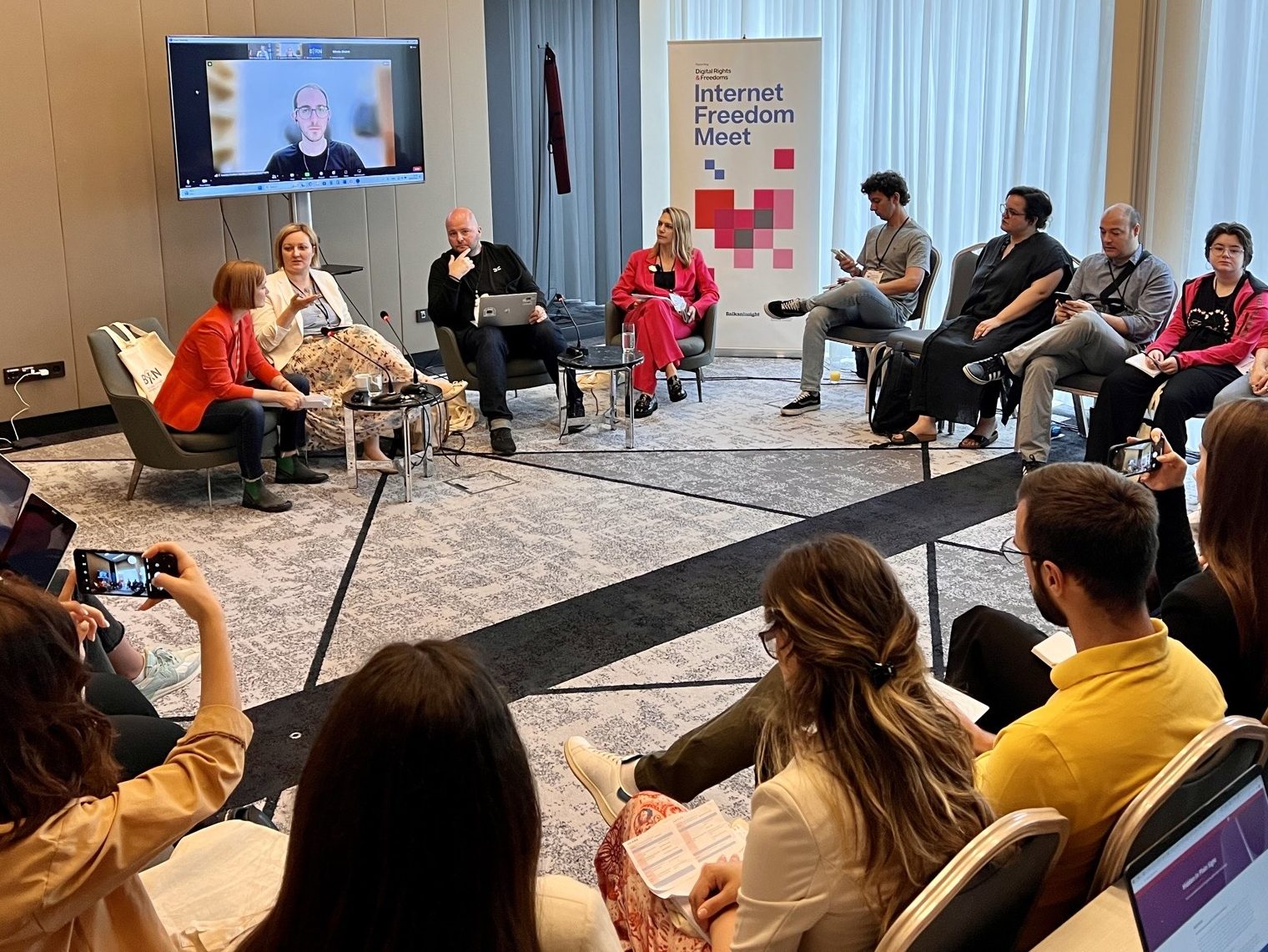
BIRN hosted Internet Freedom Meet, a four-day conference, in Belgrade, Serbia, from June 26 to 29. The gathering brought together 18 speakers and more than 30 participants – journalists, researchers, media freedom and human rights activists, fact-checkers, and tech enthusiasts working in digital rights.

The four-day event started with a keynote address by Caroline Sinders, a machine-learning-design researcher and artist. Sinders, founder of Convocation Design + Research, has developed expertise at the nexus of machine learning, user research, and public good design through collaborations with such esteemed entities as Amnesty International, IBM Watson and the Wikimedia Foundation.

The first day also featured an engaging roundtable discussion, “Enhancing Internet Freedom Through Digital Rights Activism,” moderated by Sinders. Joining the panel was Rima Sghaier, a respected name in digital rights advocacy, Amar Karađuz from the citizens association “Why Not,” and Bojan Perkov, a digital policy coordinator at the SHARE Foundation. They exchanged thoughts and strategies on bolstering internet freedom through digital rights advocacy. To close the day, Sghaier led a hands-on workshop on “Engaging in Digital Rights Activism.”

The second day shed light on the pressing concern of online-to-offline violence. Carlos Guerra, Technical Advisor on Digital Security at Greater Internet Freedom Project, led the day by giving an introductory address and later moderating a discussion featuring Katarina Golubović, from the Lawyers’ Committee for Human Rights (YUCOM), and Hristina Piskulidis, a Communications Officer at ASTRA.

Both women, experienced in human rights advocacy and eradicating human trafficking, respectively, shared perspectives in the roundtable discussion titled “Preventing Violence: Online Extremism and Offline Consequences.”

Guerra’s afternoon workshop on digital safety in the time of remote work was particularly inspiring to participants who learned how to protect themselves in the work-from-home era.

Later in the day, Anđela Milivojević, an investigative reporter, led a thought-provoking workshop addressing cyberbullying and online harassment in investigative journalism based on her investigative article published by BIRN’s Balkan Insight, which prompted a reaction by Telegram, a 700-million user instant messaging app.

Day three showcased BIRN’s regional research report “Hidden in Plain Sight,” which focuses on the accountability of Balkan telecommunication companies, using the Ranking Digital Rights’ methodology. Dragana Žarković Obradović, BIRN Serbia country director, presented the main findings and led the discussion about the report’s results.

L-R: Dragana Zarkovic Obradovic, Tanja Maksic, Bojan Stojkovski, Ana Toskic-Cvetinovic, Leandro Ucciferri (on screen)

The panel included Leandro Ucciferri, global partnerships manager at Ranking Digital Rights, Tanja Maksić, a researcher and project coordinator from BIRN Serbia, Ana Toskić-Cvetinović, executive director of Partners Serbia, and Bojan Stojkovski, who was one of the researchers for the report.

To close the day, Ivana Jeremić, an editor at Balkan Insight, hosted a workshop that looked closer at BIRN’s recent investigation on so-called “free roaming” in the Balkans.

The final day of the Internet Freedom Meet in Belgrade was dominated by discussions on artificial intelligence, AI. Ljubiša Bojić, a senior research fellow at the University of Belgrade’s Institute for Philosophy and Social Theory and a coordinator of Digital Society Lab, gave a thought-provoking keynote address.

A round table discussion on AI accountability, the EU AI Act, and responsible use of AI followed, moderated by Bojić. The discussion was enriched by insights from Deniz Wagner, an adviser to the world’s only intergovernmental media freedom watchdog – OSCE Representative on Freedom of the Media, Predrag Tadić, an assistant professor at the University of Belgrade’s School of Electrical Engineering, and Branka Anđelković, programme director of the Public Policy Research Center.

The last session of BIRN’s Internet Freedom Meet in Belgrade was Wagner’s workshop, which equipped attendees with tools for advocating responsible AI policies.

Speakers and participants agreed that BIRN’s Internet Freedom Meet in Belgrade propelled the dialogue on a variety of critical issues by facilitating the platform for timely and much-needed discussions revolving around internet freedom and digital rights, setting the stage for future discussions and collaborations aimed at safeguarding these integral aspects of our lives in the digital era.

Embark on a Journalistic Journey: BIRN’s Reporting Democracy Launches New Call for Travel and Reporting Programme

BIRN’s Reporting Democracy Travel & Reporting Programme is inviting journalists from the Visegrad region to apply for a grant covering fees and field research expenses. This is a unique opportunity for journalists to report from the Balkans and deepen their understanding of the region.

As part of our unwavering commitment to fostering journalistic cooperation and knowledge exchange between regions, we are thrilled to announce the launch of our Travel & Reporting Grants Program.

This is an exclusive opportunity to embark on a reporting journey, supported by financial assistance, regional expertise and on-the-ground field support in selected countries where BIRN has established offices, including Albania, Bosnia and Herzegovina, Kosovo, North Macedonia, Romania, Serbia, and Montenegro.

We invite journalists interested in the Balkans to participate in this exceptional program, aimed at generating compelling journalistic output for media outlets in your countries, with the added possibility of being showcased on BIRN’s esteemed Reporting Democracy platform and in prominent local media across the Balkan region.

We encourage the submission of projects for the production of relevant and substantive content. We support production of a variety of journalistic forms, including analysis, investigations, features and interviews. We also welcome cross-border stories, serialized articles, as well as accompanying multimedia material such as videos, photos, and radio or podcast productions.

Elevate your journalistic endeavors, expand your reach and contribute to a thriving media landscape. Apply now and let your stories resonate across borders, engaging audiences with compelling narratives that leave a lasting impression.

Who can apply?

Journalists from Poland, Hungary, the Czech Republic, and Slovakia can apply for grants. We welcome applications from a diverse range of applicants, including:

  • Individual journalists, whether operating within newsroom structures or working independently as freelancers
  • Collaborative teams consisting of a dynamic mix of reporters, producers, photographers, and video editors
  • Forward-thinking media organisations eager to pursue international and cross-border stories

In this grant cycle, we have limited opportunities available, with a maximum of 5 grants set to be awarded to the most deserving applicants.

Grant Details

Successful applicants will be awarded a grant of 2,500 euros, providing the necessary resources to undertake in-depth and impactful journalism stories.

Important Dates:

  • Application Deadline: July 31, 2023
  • Grant Completion Deadline: December 31, 2023

Each applicant may submit only one application under this grant scheme.

Application Guidelines

To be considered for this grant, your application should include the following components:

  • Engaging Topics: Clearly articulate the compelling topic(s) you intend to report on, showcasing their relevance and potential to captivate your target audience.
  • Balkan Expedition: Present your well-conceived plans for visiting one or more countries within the Balkan region, supported by a tentative timeline that demonstrates your commitment to thorough research and reporting.
  • Publishing and Dissemination Plan: Outline a robust and strategic plan for effectively sharing your journalistic output with the world. Highlight the platforms and channels you will utilize to maximize the impact of your work.

Eligible Expenses

The grant covers a broad range of essential expenses, including:

  • Professional fees
  • Travel costs
  • Accommodation expenses
  • Subsistence allowances during fieldwork
  • Various production costs, such as translation services, fixers, photographers, etc.

How to apply?

To apply for the Travel & Reporting programme, interested individuals and organizations should utilize the designated application form. Two types of application forms are available: one for individual journalists and teams, and another for media organizations.

Any additional documentation required can be submitted in an online format.

The Application Form must be completed in English.

Please ensure that all provided information is clear and comprehensive, as requests for clarification will only be made when the information provided is insufficient for objective assessment.

The deadline for application submission is 23:59 CET on July 31, 2023. Kindly send your completed application to the following address:

[email protected]

Application for the grant:

For any further inquiries or assistance, do not hesitate to contact us. We are here to support you throughout the application process.

Evaluation and Selection Process:

Step I: Technical Evaluation

On receiving applications, the BIRN staff will conduct a thorough technical evaluation. This evaluation will ensure that applicants have adhered to the application procedures and submitted all the required documents.

Step II: Editorial Board Evaluation

After the technical evaluation, the applications will undergo a comprehensive assessment by our editorial board. The board will evaluate the applicants based on predetermined criteria, including the quality of the proposed idea, feasibility of the plan, and the potential to effectively reach the intended audience.

Step III: Notification of Applicants

Following the evaluation process, all applicants will be promptly notified of the outcomes. Successful applicants will receive notification by August 15, 2023.

We appreciate your patience during the evaluation period and assure you that we will provide timely updates about your application. We value your dedication to journalistic excellence and eagerly anticipate the opportunity to work with the selected individuals and organisations.