BTJ Program Hits Readership Record

BIRN’s transitional justice project has increased its readership in the countries of the Balkan region with more than 90 per cent.

Logos of widget pages

This positive result comes from an introduction of a new promotional tool, a news widget, which has been placed on media portals across the region. 

Balkan Transitional Justice (BTJ) content on the web sites novatv.mk, offnet.mk, time.mk, tportal.hr and e-novine.rs, has increased the visibility of Balkan Insight and Balkan Transitional Justice by 14 per cent since the beginning of March.

In comparison to previous months hits on BTJ web pages in local languages have increased by 220 per cent in Croatia, by 51 per cent in Macedonia and by 33 per cent in Serbia.

In the course of the last two months the new promotional tool brought 15,000 new visitors to Balkan Insight.

ICTJ Praises BIRN’s Work on Al Jazeera

Refik Hodzic, director of the International Center for Transitional Justice ICTJ, recognized the importance on BIRN’s specialized reporting on transitional justice issues on Al Jazeera Balkans’ current affairs TV show, Kontekst, on April 15.

The topic of the show was the importance of the International Criminal Tribunal for former Yugoslavia, ICTY.

Hodzic said the key problem that the Tribunal faced was the political context in which the Tribunal operated. Detailed reporting on ICTY trials conducted by the SENSE Agency and, in recent years, by BIRN – Balkan Insight, with support from civil society, was evolving in a political context that was hostile towards the work of Tribunal. Politicians who influenced public opinion, and the media under their control, were continuously working against the facts established by the Tribunal, he said. 

Other guests on the show were Natasa Kandic, founder of the Humanitarian Law Center and Anto Nobilo, the lawyer.

Kontekst is a daily programme aired by the Balkans branch of the international Al Jazeera news network. It was launched in 2011. The April 15 edition can be seen by following this link: http://balkans.aljazeera.net/video/kontekst-znacaj-tribunala-u-hagu.

Macedonian NGOs and Media Mull Closer Partnership

The Balkan Investigative Reporting Network – Macedonia in partnership with Center for Civic Communications, CCC, organized a debate on April 17 in Skopje entitled “Detecting common issues as a basis for cooperation between journalists and non-governmental organizations”.


It was first in a series of debates in the “Project for investigative journalism and cooperation between media and civil society”, which is part of the USAID Program for strengthening independent media in Macedonia.

About 90 NGO representatives and journalists debated for almost three hours, suggesting different topics of common interest. Energy, corruption, media and freedom of speech, marginalized groups, migrations, cultural policy, customer rights etc. were among the dozens of topics suggested and discussed.

The president of the CCC, German Filkov, who moderated the debate said that it was a good opportunity for NGOs and journalists to establish closer relations in order for their work to be more visible.

“Every day I get calls from journalists who ask for relevant sources. We will create a website designed to provide all information from the NGO sector, so it will be easier for journalists to write their investigative stories but also easier for NGOs to contact journalists”, Filkov said.

The debate concluded that NGO and journalists should work together as much as possible so that their work is credible and to encourage positive changes in society.

Ten priority topics will be identified as the conclusion of all suggestions from this debate. In the next two months smaller debates on these topics will be organized with the participation of journalists and NGO representatives from the given area.

At the same time, a call for 10 grants for journalists for 2013 will be published so they can apply with ideas for investigative stories.

Six Plead Not-Guilty to Threatening BIRN’s Xharra

Six defendants accused of waging a hate campaign in the media against BIRN Kosovo director Jeta Xharra have pleaded not guilty, though Sami Lushtaku did offer a qualified apology.

Lushtaku’s lawyer, Arianit Koci, told the court on Monday that his client “never intended to threaten Jeta Xharra… The indictment is extremely inaccurate”.

“General Lushtaku never intended to threaten Jeta Xharra, that’s why he publicly seeks her forgiveness,” Koci said.

According to the indictment, a campaign against Xharra was launched after Radio Television Kosovo broadcast an edition of BIRN’s TV programme, ‘Jeta ne Kosove’ (‘Life in Kosovo’,) dealing with alleged mismanagement in Skenderaj/Srbica where Lushtaku was mayor at the time.

Lushtaku is charged, along with Infopress’s former owner, Rexhep Hoti, former executive director Arizona Dibra, former editor-in-chief Avni Azemi and former journalists Rizah Hajdari and Qani Mehmeti, with making threats against Xharra and violating her rights in May and June of 2009.

“This had nothing in common with professional let alone ethical journalism but was merely aimed at tarnishing their victims’ reputations through defamation and silencing them through threats against their lives,” a EULEX special prosecutor, Maria Bamieh, said.

“The financial dependency of the newspaper on [the ruling] PDK [party] advertisements, as well as the staffing of Infopress with persons that were close to or direct members of the PDK formed the motive to pervert the right of freedom of the press and corrupt it in the most shameful way, with the intention of putting Jeta Xharra ‘out of business,’” she added.

BIRN Kosovo director Xharra said Infopress “intentionally misinterpreted me and my programme in order to spread hatred,” she told the court on Monday.

In 12 articles published by Infopress, Xharra was called a “Serbian spy”, a “professional bomb”, an “embassy slut” and subjected to other insults, the indictment says.

The defendants all pleaded not guilty.

Hoti, former owner of Infopress, accused the prosecution of “abuse of office”, saying he felt “embarrassed and insulted after the biased presentation [by the prosecution]”.

Dibra, former executive director of the daily, said “she had no clue why she was in court… I never dealt with any editorial politics at Infopress.”

The other defendants also asked the court to dismiss the indictment.

Xharra continued her testimony on Tuesday, commenting on the articles published in Infopress.

Referring to the article “A programme which terrorized Drenica” written by Qani Mehmeti, Xharra said “it was a call for a lynch”.

She also mentioned an interview given to the daily by mayor Lushtaku on June 2 of 2009, entitled: “Lushtaku: Jeta Xharra – servant to the Serbian Police”.

The trial is due to continue on Wednesday.

BIRN Fellowship Participant Wins European Reporting Prize

Sorana Stanescu, one of the alumni from last year’s Balkan Fellowship for Journalistic Excellence programme, has won the 2013 Academic Association for Contemporary European Studies, UACES award for her article ‘Cheap and Far from Free’.

The article was researched and written as a result of the Fellowship programme and was published by the New Statesman news magazine in Britain and by Balkan Insight.   

The UACES Prize honours excellence in reporting on the European Union in the English-speaking media.

Stanescu’s winning story was about the job restrictions that have left migrant construction workers from Romania and Bulgaria underpaid and vulnerable to exploitation in the UK.

The article came as result of four months’ work with the Balkan Fellowship for Journalistic Excellence. Stanescu also won the Fellowship programme’s first prize for the same story. 

The prize ceremony will take place on May 13 at 17.30 at the Smith Square Conference Centre in London. Stanescu and the editor of the Balkan Fellowship programme, Neil Arun, will attend the event.

The fellowship programme aims to develop and support Balkan journalists reporting on complex reform issues. It was established by the Robert Bosch Stiftung and ERSTE Foundation in cooperation with the Balkan Investigative Reporting Network.

Swiss Cultural Programme Portrays the Change

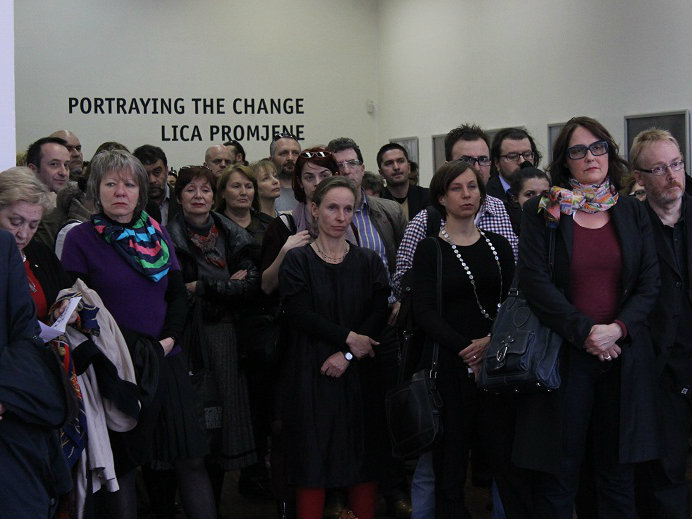
A conference marking the end of the Swiss Cultural Programme in the western Balkans opened in Sarajevo in the presence of more than 100 artists, journalists and representatives of cultural organisations.

Lica promene - Sarajevo ultural conference

The two-day conference opened on April 11 at the crowded BiH Art Gallery with the exhibition ‘Portraying the Change’ which featured the work of professional photographers Dragi Nedelcevski (Macedonia), Jetmir Idrizi (Kosovo), Lazar Pejovic (Montenegro) and Amir Kapetanovic (Bosnia and Herzegovina).

Both the exhibition and the final conference, which was organised to summarise the programme’s projects, was opened by Switzerland’s ambassador to BiH, Andre Schaller, who stressed the importance of cultural cooperation.

“Art is understandable despite differences in languages – it goes directly to our heart. This is the key to success in Switzerland, that we see each other’s cultures as riches,” he said.

The Swiss Culture Programme is run by Pro Helvetia, the Swiss arts council. Over 15 years, Switzerland has invested 22 million Swiss francs into cultural and artistic initiatives in nine countries with the aim of reviving cultural landscapes and supporting overall democratic processes. Hundreds of organisations and thousands of artists have been involved in over 3,000 cultural initiatives and projects in south-east Europe during this period.

BiH’s deputy minister for civil affairs, Denisa Sarajlic-Maglic, thanked the Swiss government for fostering cross-border cultural cooperation.

“The Swiss Cultural Programme helped forge lasting partnerships between cultural institutions, artists and local communities,” she said.

Sarajlic-Maglic added that culture, “as mean of capturing social realities and reacting to social realities, is a much-needed tool, on our way to create a society that will accept the idea of social diversity”.

The assistant director-general of the Swiss Development Cooperation, Kurt Kunz, said that the main indicator of the programme’s success was that the networks and contacts that were established have laid the groundwork for the future.

“We wanted to support innovative artistic creativity, independent production, respect for minorities and freedom of expression. Bridges have been built with several regional networks and regional cooperation projects,” Kunz concluded.

Besides the presentations and debates, the conference incudes two exhibitions by Balkan artists Alban Muja (Kosovo) and Dragi Nedelcevski (Macedonia), as well as other cultural events such as contemporary dance and film screenings.

Among a series of successful cultural initiatives and art projects, the SCP has supported the three-year Balkan Initiative for Cultural Cooperation Exchange and Development, BICCED, which promotes analytical and investigative journalism in the area of culture and the spreading of information about cultural issues across Balkan borders, organised by the Balkan Investigative Reporting Network, BIRN, and SeeCult.org.

Justice Report Editor-in-Chief Speaks at Press Council Seminar

BIRN Justice Report’s editor-in-chief Erna Mackic was one of the speakers at a one-day seminar on April 6 in Teslic organised by the Press Council of Bosnia and Herzegovina, which brought together representatives of the Bosnian judiciary, police and media.

Erna Court and media conf

Mackic spoke on a panel called ‘The Judiciary and the Media Acting in the Public Interest’ about the transparency of the BiH court and the extent to which the Law on personal data protection is applied to official court documents.

“The current practice of protecting data from court proceedings, to the extent of complete anonymisation, hampers professional courtroom reporting. This is especially problematic when war crimes cases are in question. The anonymisation practice does not only influence accuracy, but also contributes to speculative media reporting,” emphasised Mackic.

The panel was moderated by Ljiljana Zurovac, executive director of the Press Council. Other speakers included Borka Rudic, secretary general of the Association of BiH Journalists, and Petar Kovacevic, director of the Personal Data Protection Agency.

Kovacevic said that judges and prosecutors across the country have expressed their readiness to cooperate with the media as long as their reporting is kept professional and does not jeopardise judicial proceedings in any way.

Rudic, however, focused more on lawsuits filed against the media for defamation, and issues surrounding the implementation of the Law on Freedom of Access to Information.

“It is very important to get data on the number of lawsuits filed against the media. This is necessary for us in order to determine the appropriate direction for better education of journalists,” stated Rudic.

The seminar was organised as part of the Council of Europe project Promotion of Professionalism and Tolerance in the BiH Media, funded by the governments of Norway and Ireland.

Photo courtesy of Press Council BiH.

BIRN Macedonia USAID Project Launched

Project aims to bridge divide between media and civil society and stimulate investigative journalism through grants and mentorship.

BIRN Macedonia today promoted its Project for Investigative Journalism and Cooperation between the Media and Civil Society, gathering representatives from different media outlets and CSO representatives engaged in various fields in Skopje.

The project, part of the wider USAID Program for Strengthening the Independent Media in Macedonia, aims to improve cooperation between journalists and civil society through debates and workshops and to contribute towards more independent investigative stories by offering small grants and mentorship to investigative journalists.

Michael Stievater, Director of the USAID Macedonia Office of Democracy and Local Governance, underlined the importance of collaboration between the CSOs and journalists.

“This project will provide journalists with a unique opportunity to gain from their peers’ experiences, identify common issues, investigate and speak out on vital issues,” Stivater said at the promotion.

Ana Petruseva, host and director of BIRN Macedonia, explained that the project intended to help fill a void in the media in Macedonia and provide a platform for investigative journalism.

“I would like to highlight the importance of this project for both civil society organizations and journalists in Macedonia, especially in this turbulent period that the media in Macedonia is in now,” she said.

Sabina Fakic, of the Centre for Civil Communications, a partner organization, said the next project event, on April 17, would be a public debate between NGO and media representatives on issues of common interest.

Zaklina Hadzi-Zafirova, of SCOOP Macedonia, presented the grants for the investigative journalists, while Snezana Lupevska, editor of the KOD investigative TV magazine, spoke of the challenges facing investigative journalism in Macedonia.

More than 70 guests from the media and civil society attended the first event of the project.

Running until July 2015, it will award 40 small grants to journalists writing investigative stories and 10 scholarships for journalists to attend the BIRN School for Investigative Journalism.

More than 100 stories will be published on a new internet media outlet, which will be initiated to promote independent and investigative journalism.

The project will also hold 20 discussion groups and workshops for journalists and civil society organizations on topics of interest.

Final Event Marks Closure of Swiss Cultural Programme

The Swiss Cultural Programme in the western Balkans, which has invested millions in the regional cultural scene, will mark its closure in Sarajevo with discussions, art exhibitions and awards for best practice.

On April 11-12, a final event will be staged in collaboration with the Embassy of Switzerland in Bosnia and Herzogovina and the Swiss Development Cooperation Office.

Among a series of successful cultural initiatives and art projects, SCP has supported the three-year Balkan Initiative for Cultural Cooperation Exchange and Development, BICCED, which promotes analytical and investigative journalism in the area of culture and the spreading of information about cultural issues across Balkan borders, organised by the Balkan Investigative Reporting Network, BIRN, and SeeCult.org.

The final event, which will bring together more than 100 regional and international cultural practitioners, activists, artists, academics and supporters, will be an opportunity to re-emphasise the importance of culture in social developments.

Over the course of 15 years, Switzerland has invested 22 million Swiss francs in cultural and artistic initiatives in nine countries, with the aim of reviving their cultural landscapes and supporting overall democratic processes.

Hundreds of organisations and thousands of artists have been involved in over 3,000 cultural initiatives and projects in south-east Europe over this period. 

As a result of collaborations between cultural practitioners within local, national, and regional initiatives, creative potential has been boosted and platforms supported across the region.

The two-day final programme commences with the opening of a photography exhibition called ‘Portraying the Change’, which documents the work of the Swiss Cultural Programme through individual portraits and testimonies. The exhibition will be opened on April 11, 2013 by HE André Schaller, Switzerland’s ambassador to Sarajevo.

The presentation of the programme’s achievements will be followed by a promotion for the four organisations which received the SCP Award. These organisations have been awarded for best practice development and excellence in their respective fields.

During the second day, participants will discuss priorities and challenges for the independent cultural sector, as well as future international funding opportunities for the region.

The artistic programme accompanying the final event will reflect a range of SCP contributions to different artistic fields (photography, visual arts, theatre, and contemporary dance) as well as offering the Sarajevo audience premieres of productions from countries across the region.

BIRN BiH at Civil Rights Defenders’ Days in Stockholm

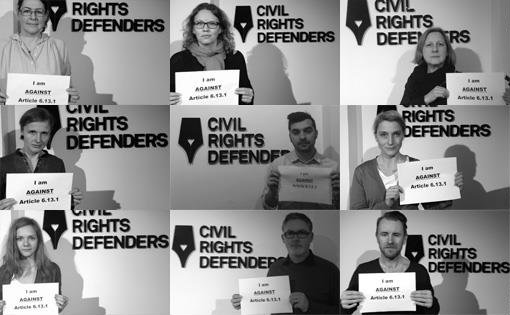
BIRN BiH’s Operations Manager Amila Nezirovic participated in the Civil Rights Defenders’ Days conference in Stockholm from April 2-5, an event held under the banner ‘Empowering Human Rights Defenders at Risk’. 

Civil Right Defendors logo

Three hundred and eighty experts in media, security and human rights from more than 32 countries gathered at the event to discuss the latest developments from some of the world’s most repressive regions.  

Nezirovic took an active part in workshops called ‘Getting Your Message Through’, led by Ruben Brunsveld, and ‘Technology for Human Rights Documentation and Reporting’, led by Dmitri Vitaliev.

Among the guest lecturers were Shin Donghyuk, a defector from North Korea who recounted a moving story about his escape from the Camp 14 detention centre.

“The panel discussions and presentations were very inspirational and useful for many of us who are dealing with different aspects of human rights protection at work and in daily life. I am sure that networking with different participants will be of great support to BIRN’s further work in this field,” said Nezirovic.

At the event, Civil Rights Defenders issued the first batch of GPS bracelets intended to protect activists from kidnapping by alerting CRD headquarters, nearby activists and social media. The initiative was named the ‘Natalia Project’, after the tragic death of Russian human rights defender Nataliya Estemirova in 2009.

At the same event, Natasa Kandic, founder of Humanitarian Law Centre in Serbia, was awarded the Civil Rights Defender of the Year Award for her persistent work on documenting war crimes and serious human rights abuses in the former Yugoslavia. 

More information about the event is available at www.civilrightsdefenders.org.