BIRN Premieres Film on Youth and War

Premieres begin this week of BIRN’s documentary film about six young people who make a journey of discovery across ex-Yugoslavia to see how conflict has shaped their generation.

BIRN’s new documentary, The Majority Starts Here, is launched across the region this week, starting on Wednesday with premieres in Skopje, with further premiere screenings to follow in Sarajevo and Belgrade on Thursday, Pristina on October 2, Zagreb on October 3 and Novi Sad on October 7.

In the film, six young people from ex-Yugoslavia make a journey through the region, examining how the conflicts of the past, which they were too young to understand fully at the time, have influenced both their present and their prospects for the future.

Along the way, they come face-to-face with some of the ghosts of the past in the shape of impoverished wartime refugees, military veterans and unrepentant nationalists.

They also see how nationalist ideas which led to war have been reflected in the region’s economy, culture and even architecture, as they muse on how genuine tolerance and reconciliation can develop in places which have endured such divisive violence.

BIRN director Gordana Igric said that the idea behind the film was to find out how much the younger generation knew about the recent past, and whether they believed that these conflicts should be discussed or set aside for the sake of looking to the future.

Despite some disturbing encounters during their journey however, there was a positive message: “They learned that divisions are still strong between people, but they don’t take up guns to solve the problem,” Igric said.

The Majority Starts Here was produced by BIRN and directed by award-winning film-maker Lode Desmet. In 2006, Desmet and BIRN also produced the film Does Anyone Have a Plan?, about the future status of Kosovo.

The documentary is part of BIRN’s Balkan Transitional Justice project, which aims to improve public understanding of transitional justice issues in Bosnia and Herzegovina, Croatia, Kosovo, Macedonia, Montenegro and Serbia.

GAP and BIRN Publish the Reports about Anamorava region

On September 20, GAP Institute in cooperation with the Balkan Investigative Reporting Network, BIRN, published reports about the region of Anamorava, which includes the municipalities of Gjilan, Viti, Kamenica, Partes, Kllokot, Ranilug and Novoberda.

The reports show real problems facing municipalities that are directly related to the local governments’ actions. Each report provides an overview of trends in the last years’ budget and the estimates for 2014-16.

These reports identify 46 problems in 142 different locations in seven municipalities. They also emphasize areas in which municipalities should focus, such as protection and maintenance. 

“BIRN has created a network of people who investigate on a daily basis and try to identify current problems of the respective municipalities. However, we start with the premise that no one is more familiar than the population with the problems of the municipality,” said Erlina Tafa, an investigative journalist at BIRN. Tafa also suggested that residents report problems at BIRN’s portal kallxo.com, so they can be discussed at municipal debates, which will be aired on “Life in Kosovo” in October.

In the upcoming days, GAP and BIRN will publish similar reports for Prizren, Mitrovica, Peja, Ferizaj and Prishtina. These reports will be delivered personally to all the mayoral candidates in Kosovo.

BIRN BiH Promotes Judiciary-Media Cooperation

BIRN Bosnia and Herzegovina, in cooperation with the Association of Court Reporters (AiS), has organised a series of meetings between local media and representatives of the judiciary in Trebinje, Travnik and Eastern Sarajevo.

The aim of these meetings was to gauge the level of cooperation between members of the Cantonal and District courts and prosecutor’s offices, interior ministries and local media. 

War crime trials reporters raised a number of issues about their cooperation with judicial bodies. They emphasised the lack of spokespersons, press conferences, anonymised court schedules and documents.

Although the High Judicial and Prosecutorial Council in Bosnia and Herzegovina has adopted a decision which should put an end to anonymisation, this practice still represents an obstacle to a more open judicial system.

An issue raised by the members of judiciary was the lack of knowledge among journalists about court procedures which often results in the revelation of the identities of protected witnesses and the misinterpretation of official statements.

The participants concluded that more effort should be invested in developing better cooperation with the authorities and improving communication in order to provide the public with timely and objective information.

By the end of this year, BIRN BiH’s advocacy network, the Association of Court Reporters, will hold three more meetings in Doboj, Brcko and Sarajevo.

BIRN Macedonia Launches Second Call for Investigative Reports

BIRN Macedonia, together with Centre for Investigative journalism – SCOOP Macedonia and the Centre for Civil Communications launched the second call for investigative stories on September 16.

The call is part of the ‘Project for Investigative Journalism and Cooperation Between Media and Civil Society’, part of a USAID programme for strengthening independent media in Macedonia.

In this call that closes on October 4, at least five journalists will be awarded a grant to cover their expenses while doing the investigation and writing the story. More calls for investigative grants will follow, for a total of 40 stories until June 2015.

Journalists will have about three months to dig deeper and research their ideas, but also will have the opportunity to work with experienced editors as their mentors to guide them through the process of writing to BIRN standards.

Topics for investigations include: health; cultural policy; education and youth; human rights; EU integration; good governance; inter-ethnic relations; environment issues; marginalised groups; quality of life.

The call only applies to journalists from Macedonia.

Click for more information about the application procedure, with details in Macedonian.

BIRN BiH at Missing Persons Round-Table

BIRN BiH director Anisa Suceska-Vekic spoke at a round-table discussion entitled ‘Missing Persons from Armed Conflicts and Human Rights Abuses’ on Tuesday in Sarajevo.

It was organised by the International Commission on Missing Persons with the aim of assessing the roles of state, international institutions and civil society in the process of identifying missing persons, building local capacities, and ensuring the rule of law.

Suceska-Vekic spoke about the lessons learned from wartime, emphasising that the experience in the region of accounting for missing persons from the war can be applied in other countries and in other situations such as human trafficking, natural disasters and terrorist attacks.

“Currently there are thousands of people missing all over the world and we as members of civil society should do everything in our power to promote the experience we gained in other countries that are affected by this phenomena,” said Suceska-Vekic.

Over 70 per cent of those who went missing during the war have been accounted for. It is an unprecedented tally and was achieved largely thanks to a rule-of-law-based approach which saw prosecutors and forensic investigators taking the lead in excavating and documenting crimes for criminal trial purposes, said Suceska-Vekic.

The round-table brought together the representatives from the Bosnia and Herzegovina’s human rights and refugees ministry and prosecutor’s office, the Commission on Missing Persons and Humanitarian Law Centre from Serbia, the Croatian family affairs, war veterans and intergenerational solidarity ministry, the Associated Press and BIRN BiH.

Justice Report Editor Urges Better Court Conditions

“The conditions of the Cantonal and District Courts that process war crimes in BiH must be improved to meet the deadline specified by the National Strategy for War Crimes Processing,” Justice Report’s editor-in-chief, Erna Mackic, told Bosnia’s Hayat television.

Speaking about witness protection measures in cases of rape and sexual abuse, she said that victims of such crimes should be able to receive not only physical protection but psychological guidance as well.

On the question whether local courts are sufficiently equipped to process war crimes and protect witnesses, Mackic said the Court of Bosnia and Herzegovina is an exception but many other courts at the local level, such as those in Banja Luka and Gorazde, work with limited resources, sometime with only one judge and/or prosecutor.

Noting that the war-crimes prosecution process is lengthy, Mackic said that precisely because of that reason, the work of local courts was of great importance if Bosnia is to meet the 2023 deadline.

BIRN-i jep Shpërblim për Gazetarë që Punojnë me Dokumente

A keni botuar storie të suksesshme falë materialeve të marra në bazë të Ligjit për Qasje në Dokumente Publike?

BIRN-i dëshiron të shpërblejë materialisht gazetarët që kanë shfrytëzuar dokumente të tilla për përgatitjen e artikujve të tyre.

BIRN-i ofron çmimin kryesor prej 1000 eurosh për shkrimin më të mirë të gazetarisë hulumtuese që është realizuar duke përdorur dokumente publike të nxjerra nga institucionet. Për fituesit e vendit të dytë janë paraparë 700 euro, ndërsa çmimi i tretë ka vlerën e 300 eurove.

Në këtë mënyrë BIRN-i dëshiron t’i përkrahë gazetarët, ngase ata janë në vijën e parë të frontit të luftës për transparencë në institucionet qeveritare. Kjo luftë është e vështirë. Një raport i kohëve të fundit, i publikuar nga BIRN-i, ka zbuluar se kërkesat e parashtruara në bazë të Ligjit për Qasje në Dokumente Publike janë realizuar në vetëm 30 për qind të rasteve.

Andaj, shkrimi i storieve në bazë të dokumenteve publike të nxjerra ligjërisht, kërkon shumë punë dhe shumë kujdes. Madje edhe nëse kërkesat për dokumente publike nuk përmbushen, vetë akti i presionit mbi institucionet për të zbatuar obligimet e tyre ligjore përbën një vegël të rëndësishme në promovimin e kulturës së transparencës.

Nëse mëtohen përmirësime të theksuara në cilësinë e qeverisjes në Kosovë, duke filluar nga shpenzimet më efektive të parasë publike, deri te luftimi më i efektshëm i korrupsionit, është i domosdoshëm vëzhgimi më intensiv, më inteligjent dhe më i gjerë i punës së sektorit publik.

BIRN-i do të shqyrtojë storiet në shtyp, televizion, radio ose internet, të publikuara në mediume kosovare mes datave 1 gusht 2012 dhe 31 korrik 2013.

Storiet mund të jenë të shkruara në shqip, serbisht ose anglisht. Materialet e siguruara në bazë të Ligjit për Qasje në Dokumente Publike duhet të jenë kyçe për hetimet e kryera për nevoja të këtyre storieve.

Konkurruesit duhet të paraqesin edhe një deklaratë të shkurtër, prej jo më shumë se 800 fjalësh, në të cilën në detaje përshkruajnë se si e kanë shfrytëzuar Ligjin për Qasje në Dokumente Publike gjatë përgatitjes së stories dhe se si materialet e siguruara përmes këtij ligji kanë qenë thelbësore për këtë storie.

Çdo material i paraqitur në konkurs do të shqyrtohet nga një panel i gazetarëve me përvojë.

Për të marrë pjesë në këtë konkurs, konkurrentët duhet të dorëzojnë storien origjinale dhe deklaratën me shkrim, jo më vonë se deri më 20 shtator 2013 në [email protected]. Storiet në radio dhe televizion duhet të paraqiten në formën origjinale të emituar dhe të kenë të bashkëngjitur edhe transkriptin e raportit të emituar.

BIRN-i do t’i shpallë fituesit më 28 shtator 2013, në Ditën Ndërkombëtare të së Drejtës për të Ditur.

BIRN Summer School Chooses Investigative Story Winners

After five days of intensive training at the fourth annual BIRN Summer School, four groups of reporters whose investigations will be funded were announced at the closing ceremony.

The Summer School jury, composed of lead trainer David Leigh, BIRN regional director Gordana Igric, director of the Konrad-Adenauer-Stiftung Media Programme South East Europe Christian Spahr and former BIRN editor Lawrence Marzouk, chose the teams from a total of ten.

The teams’ investigations will be financed from a total fund of 6,000 euro and the resulting stories will be published on the Balkan Insight website.

The participants making up the chosen teams were: Kristina Ozimec, Gabriela Delova, Vlado Apostolov and Sashka Cvetkovska from Macedonia; Alisa Mysliu from Albania; Milena Perovic Korac and Milica Marinovic from Montenegro; Magda Munteanu from Romania; Semir Mujkic from Bosnia and Herzegovina; Flutura Kusari, Arta Avdiu and Una Hajdari from Kosovo, and Charly Loufrani  from France.

For five days last week, participants at the Summer School from Albania, Kosovo, Macedonia, Montenegro, Bosnia, Bulgaria, Romania, Croatia, Serbia, Slovenia, France, Austria and Estonia learned how to use freedom of information laws, conduct investigative interviews, make the most of computer-assisted reporting, start investigations and put stories together, and more.

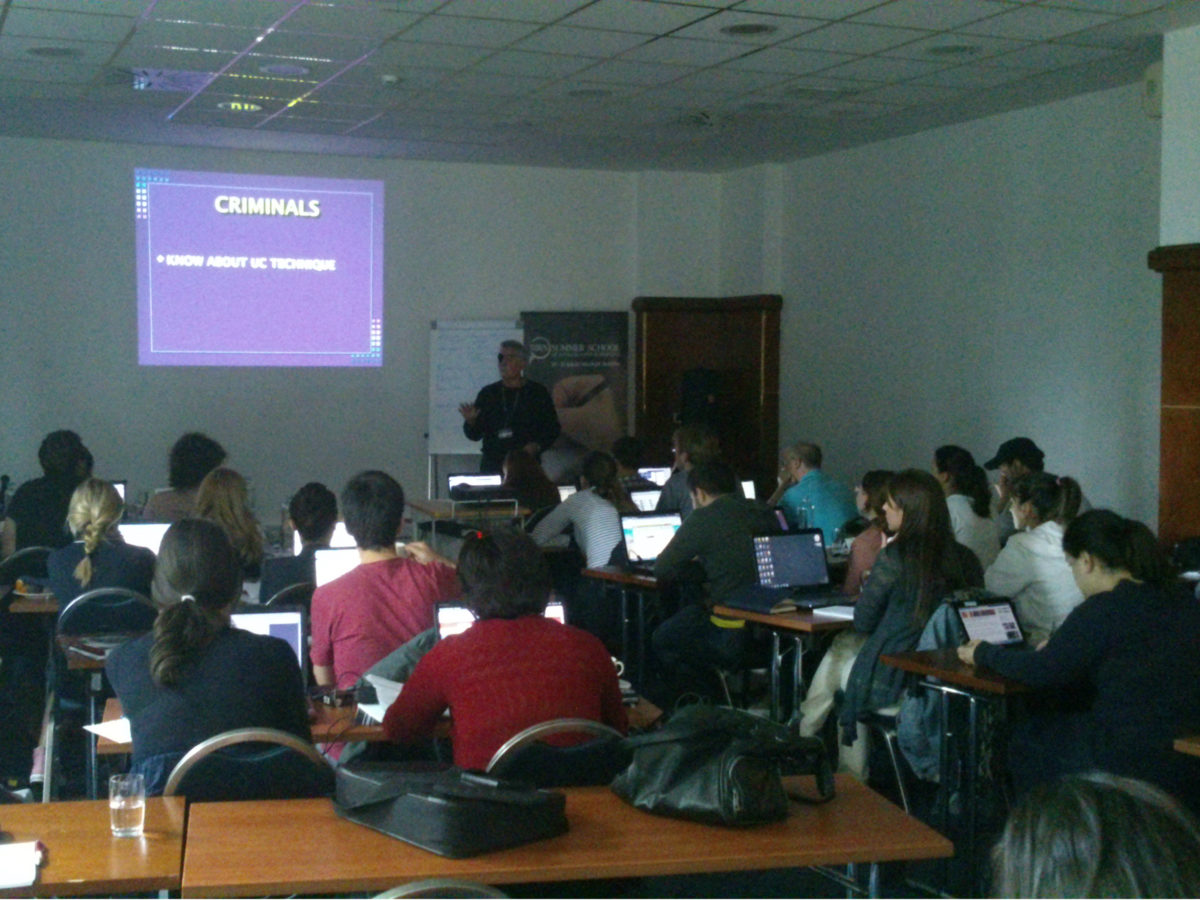
This year’s Summer School also had two special guest lecturers, the chief officer of Bari police, Luigi Rinella, and former FBI undercover agent Stephen Salmieri. While Rinella explained how the Italian part of the international investigation into suspected Balkan drugs criminal Darko Saric operated, Salmieri presented necessary skills for undercover work.

This year’s BIRN Summer School was held at Bled Lake in Slovenia.

The BIRN Summer School of Investigative Reporting 2013 was organised in cooperation with the Media Program South East Europe of the Konrad-Adenauer-Stiftung and with the support of the King Baudouin Foundation, the Belgian National Lottery, the OSCE Mission in Kosovo, the OSCE Mission to Serbia and USAID in Macedonia.

Developing Undercover Work at BIRN Summer School

The fourth day of the Balkan Investigative Reporting Network Summer School programme continued with lectures on undercover operations and research, as well as tips for following paper trails in stories.

Former FBI undercover operative Stephen Salmieri told the journalists participating in the Summer School that undercover investigative work is extremely dangerous, which is why it should be used as sparingly and requires a lot of preparation.

In order to minimise security risks, Salmieri said that journalists working undercover should not change their personality. He also said that journalists should know their targets and research their sources, as well as keep in constant contact with their parent organisation.

“When doing investigations, know everything you can know your enemy. Let go of your ego and reduce tensions. If you come across as aggressive, the situation will quickly escalate,” said Salmieri.

A perfect undercover agent, according to Salmieri, is a smart and aware person who listens carefully.

Two times Pulitzer Prize winner Eric Nalder gave the participants of the Summer School tips on how to gather material evidence and documents from companies and organisations. He emphasised the importance of physically going to organisations, carefully interviewing workers and using psychological tricks to control the communication with them.

Nalder also said that after gathering documents, journalists should organise them carefully.

“Always be organised. Use Excel or other spreadsheets to organise your documents, otherwise you might get lost in them,” said Nalder.

British journalist David Leigh also discussed the need to collect documents, but also highlighted that while writing the story, journalists should make sure to provide readers with several points of access.

“Provide photos, interviews, galleries and short clips. Presentation is key. Your story is useless if it does not reach the public,” said Leigh.

The BIRN Summer School is taking place this week in Slovenia with 30 journalists from Serbia, Slovenia, Kosovo, Croatia, Bosnia and Herzegovina, Montenegro, Albania, Bulgaria, Austria, Estonia, France and Romania participating. It will finish on Friday.

The BIRN Summer School of Investigative Reporting 2013 is organised in cooperation with the Media Program South East Europe of the Konrad-Adenauer-Stiftung and with the support of the King Baudouin Foundation, the Belgian National Lottery, the OSCE Mission in Kosovo, the OSCE Mission to Serbia and USAID in Macedonia.

BIRN’s Summer School Hears Tips For Developing Investigations

The second day of the Balkan Investigative Reporting Network’s annual summer school for investigative journalism continued with lectures and workshops on how to develop story ideas and gather information.

Renowned British journalist David Leigh started the day by speaking about possibilities for developing stories which have emerged from major data leaks, such as the material released by WikiLeaks.

“Your aim should be to use WikiLeaks to build your investigations by using the information as actual leads to uncover new things,” said Leigh.

Another way to collect valuable information when building investigations is filing official requests for information to governments, said Helen Derbishire, from the NGO Access Info Europe.

“The requests themselves can help your stories in many ways. For one, you can actually get the information you wanted. Never assume you would not get something. Even if you are rejected, you can appeal, but also you can publish the rejection, which is a story in itself,” she said.

German journalist Marcus Lindemann also revealed ways through which researchers can use Google and social networks to find personal data on individuals of interest.

The executive director of the Organised Crime and Corruption Reporting Project, Paul Radu, said that investigations are about creativity and connecting the dots.

“Today we have a lot of access to a variety of information. The more data we have, allows us to discover bigger schemes… This is fun! It’s just great to ruin the plans of criminals and to get to the bottom of a story,” said Radu.

He used examples of several investigations he worked on to explain the ways in which journalists can gather information about money laundering, offshore companies and proxy companies.

Researcher Laura Ranca highlighted the importance of data visualisation in investigations, explaining that the collected information is only as good as it is presented to the readers.

The BIRN Summer School opened on Monday in Bled, Slovenia with 30 journalists from Serbia, Slovenia, Kosovo, Croatia, Bosnia and Herzegovina, Montenegro, Albania, Bulgaria, Austria, Estonia, France and Romania participating. The lectures will continue on Wednesday.

BIRN Summer School of Investigative Reporting 2013 is organized in cooperation with the Media Program South East Europe of the Konrad-Adenauer-Stiftung and with support of King Baudouin Foundation and Belgium National Lottery and OSCE Mission in Kosovo, OSCE Mission to Serbia and USAID in Macedonia.