Kosovo Minister Praises BIRN and Internews Court Monitoring

Kosovo’s Justice Minister Albulena Haxhiu welcomed BIRN and Internews Kosova’s report on their monitoring of corruption cases, saying that it highlighted serious problems in the country’s courts.

Justice Minister Albulena Haxhiu has praised the annual court monitoring report by BIRN in collaboration with Internews Kosova, entitled ‘Humouring Corruption’, which was published on Monday.

“This report reflects that in 40 judgments issued by the courts of Kosovo in 2020, the punishment policy in cases of corruption does not meet the requirements of the Criminal Code and the Code of Criminal Procedure, much less the Penal Policy Guide approved by the Supreme Court of Kosovo in 2018,” Haxhiu wrote on Facebook.

The report analyses rulings in 40 corruption cases in 2020 and examines the performance of the judiciary in handling corruption cases.

It highlights the light sentences handed down in corruption cases and the courts’ reasons for these sentences, in particular the large number of mitigating circumstances that are taken into account.

“The report states that sentences have been imposed based on completely unreasonable [mitigating] circumstances, conditional sentences have been imposed unreasonably, and the conversion of prison sentences to fines and so on has been allowed,” Haxhiu said.

“In the face of this situation, the reforms we have launched are necessary and will be implemented,” she added.

She also stressed the importance of monitoring the justice system.

BIRN and Internews Kosova’s report was based on continuous monitoring of corruption cases in Kosovo’s courts in 2020.

Haxhiu attended the presentation of the report at a conference on Monday by the coordinator of BIRN and Internews Kosova’s legal office, Labinot Leposhtica.

Also present at the conference were Chief State Prosecutor Aleksander Lumezi, the chairman of the Prosecution Council of Kosovo, Jetish Maloku, the chairman of the Kosovo Judicial Council, Skender Cocaj, the president of the Supreme Court, Enver Peci, the president of the Court of Appeals, Hasan Shala, and Chief Special Prosecutor Blerim Isufaj.

Leposhtica said that taking mitigating circumstances into account without proper reasons means that sentences are imposed that are much lighter than they should be. He said that a special guide for handling corruption cases is needed to improve sentencing policy.


New generation of Fellows Selected for 2021

Ten journalists have been selected to take part in this year’s Fellowship for Journalistic Excellence. Over the next nine months, they will be working on the reporting projects that secured them a place in this prestigious programme.

The Fellows were chosen from more than 100 applicants from the 14 countries covered by the programme.

“It was a difficult choice,” said jury member Remzi Lani, from the Albanian Media Institute. “The applications gave us a picture of highly engaged journalists in countries that are at a crossroads.”

Jury member Kristof Bender, from the European Stability Initiative, said there was “a great variety of topics” this year. “All have the potential to turn a national or regional investigation into a story of interest for readers across Europe.”

This year we will have three fellows from Poland, two each from Greece and the Czech Republic, and one each from Kosovo, Croatia and Slovakia. These are the 2021 Fellows:

  • Maria Wilczek, Warsaw-based deputy editor of Notes from Poland
  • Mateusz Mazzini, journalist with Polityka weekly and Wolna Sobota, Gazeta Wyborcza’s weekend magazine
  • Mateusz Kowalik, reporter for Krytyka Polityczna in Warsaw
  • Alexia Kalaitzi, a Thessaloniki-based journalist with the Greek public broadcaster
  • Nektaria Stamouli, contributor for Politico Europe with an extensive background in business journalism
  • Anna Koslerova, freelance journalist with bylines for Vice, The Guardian and Al Jazeera
  • Vojtech Berger, an editor with Czech independent outlet, Hlidacipes.org
  • Matea Grgurinovic from Faktograf, a Croatian portal specialized in fact-checking
  • Nghadhnjim Avdyli, a journalist with the independent portal Kosovo2.0
  • Eva Kubaniova, a Slovak journalist with the Investigate.Cz portal

The Fellowship helps journalists produce compelling longform features, analysis and investigations. It highlights strong storytelling and rigorous, on-the-ground reporting – qualities traditionally associated with the best magazine journalism.

Fellows will receive 3000-euro grants, as well as comprehensive editorial support and mentoring. They will be given the opportunity to win further awards for the best three stories, as well as to become a part of BIRN’s alumni group through which they will have access to new opportunities within our growing regional network.

The Fellowship has been running since 2007 in cooperation with the ERSTE Foundation.

If you don’t want to miss our next story, follow us on social media @RDFellowship and @Rept_Democracy and subscribe to our mailing list.


Mirza Mrso

Mirza joined BIRN BiH in March 2021. He has been a cameraman for 15 years in TV companies in Bosnia.

He has experience in making documentaries and feature TV series and in daily monitoring significant events. Before starting at BIRN BiH, Mirza worked for the Federation of BiH’s Public Service Radio and Television.

BIRN Albania Holds Roundtable on Justice Topics to Investigate

On National Justice Day, May 10, the Balkan Investigative Reporting Network, BIRN, in Albania, held a roundtable on Zoom between journalists and civil society organisations

Two dozen journalists and representatives of civil society organisations attended the session where participants brainstormed on the theme of the upcoming call for investigative stories on the justice system that BIRN Albania is launching, sharing insights and building bridges between the reporters and civil society experts.

Discussion focused on fundamental rights and the COVID-19 pandemic, justice reform, the fight against corruption and organised crime and electoral crimes during the campaign for Albania’s April 25 parliamentary elections.

The main aim was to identify the most important issues or problems that civil society believes investigative journalists should explore in greater depth.

The discussion, moderated by TV anchor and lawyer Dafina Hysa, was organised as part of the EU-funded project, “Using Big Data and Multimedia to Boost Quality and Independent Journalism in Albania”.

The project aims to create an enabling environment for Albanian journalists to produce independent content through training, mentoring, technical and financial support, and close cooperation with civil society, so improving freedom of expression and strengthening media pluralism in Albania.

The findings of the roundtable will guide the main topics of the upcoming open call of BIRN Albania to support three local journalists to produce investigative articles.

The selection of the journalists by an independent jury will be conducted based on their proposed topics of investigation as well as partnership with civil society.

During the process of their investigations, the selected journalists will be supervised and mentored on the use of investigative journalism techniques, while establishing closer cooperation with civil society partners in the field of justice.


BIRN Journalist Given Prestigious Serbian Investigative Award

BIRN Serbia journalist Natalija Jovanovic was announced as this year’s winner of the Dejan Anastasijevic Investigative Award in the online media category by the Independent Journalists’ Association of Serbia and the US embassy in Belgrade on Friday.

Jovanovic won the award for her report entitled ‘Serbia Under-Reported COVID-19 Deaths and Infections, Data Shows’.

The winner in the print media category was NIN journalist Sandra Petrusic for her report entitled ‘Republic Public Prosecutor Zagorka Dolovac on the Move – Falsification of Data Essential for Public Health’.

Andjela Milojevic, received an investigative journalism award for her story ‘The Castle: How Serbia’s Rulers Manipulate Minds and the People Pay’ she produced as a fellow of BIRN’s Resonant Voices Fellowship Programme for Journalists.

‘Indictment – Jovanjica’ by Jelena Zoric, a journalist from N1 TV, won the prize in the electronic media category.

The Independent Journalists’ Association of Serbia organizses the awards with the support of the US embassy in Belgrade for outstanding investigative journalism and reporting on issues of public interest.

Two articles produced by BIRN journalists were also nominees this year: ‘Company Linked to Serbian Minister’s Husband Gets State Contracts’ (online media category) by Ivan Angelovski, Marija Ristic, Slobodan Georgiev, Aleksandar Djordjevic and Dzana Brkanic and ‘Son of Fugitive Ex-President Builds Raspberry Fortune in Serbia’ (print media category), published in Vreme magazine, by Sasa Dragojlo, Marko Vesovic, Vladmir Otasevic.

This year the members of the jury were: Jovana Gligorijevic, editor of Vreme, Irena Stevic, a journalist for Insajder, Dinko Gruhonjic, a journalist and Philosophy Faculty professor, and Milorad Ivanovic, BIRN editor-in-chief.


BIRN Environmental Investigation Wins Prize in Montenegro

A report published by BIRN has been awarded the first prize for the best investigative story in Montenegro by the Center for Civic Education, a prominent Montenegrin human rights organisation.

The NGO’s awards were presented last week for the best stories of 2020 that “made a change”.

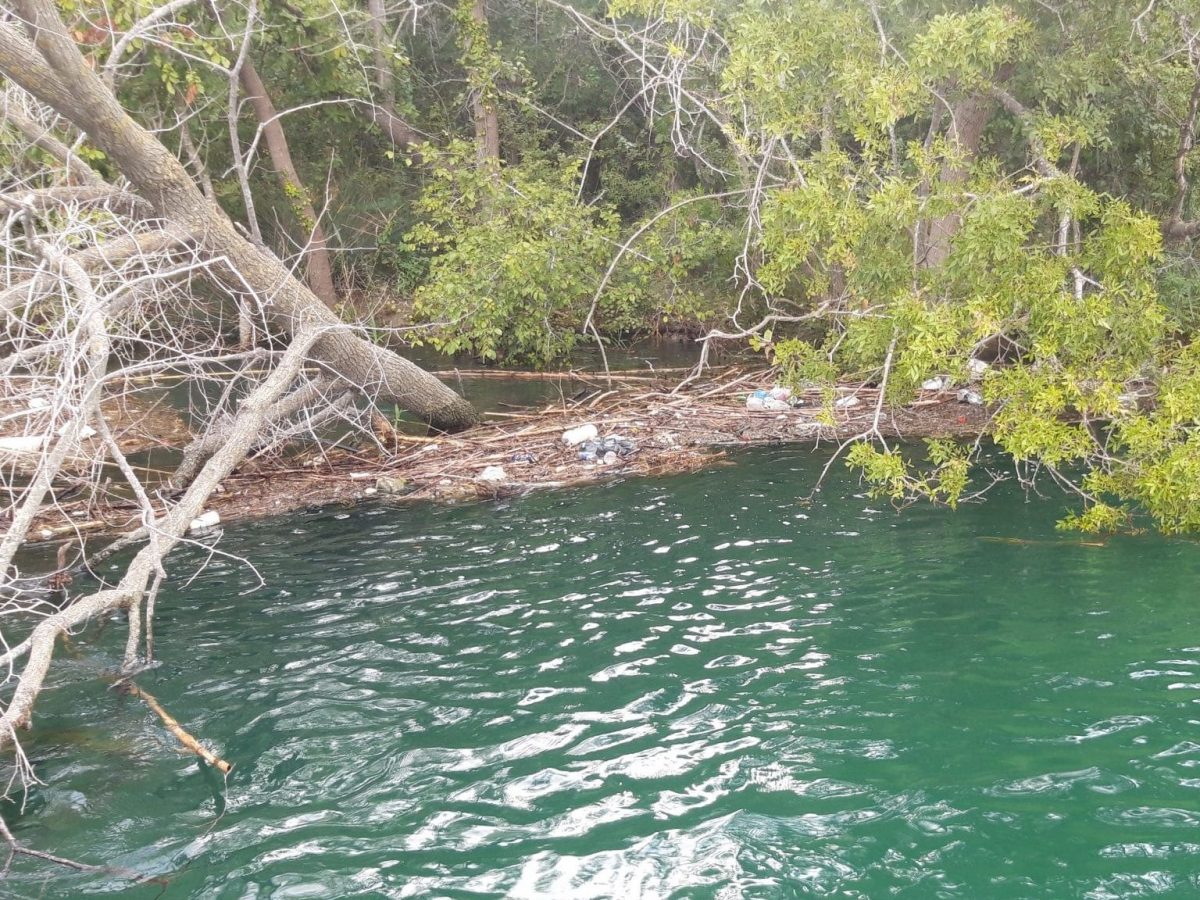
The BIRN report entitled ‘Beneath the Surface: Adriatic Beach Waste Just “Tip of the Iceberg”’, by Mustafa Canka, is about the plastic accumulated on Adriatic seabed, which has devastating consequences for marine life, coastal communities and, longer-term, the economies of Adriatic states such as Montenegro

According to the report, the plastic waste is generated by some four million people who live along the Adriatic coast, and by tourists who increase that number six-fold every summer.

“This award is a pleasant recognition, encouragement for further work but also an increased responsibility,” Canka said.

The investigation, published on BIRN’s Balkan Insight website, was produced as part of the ‘Investigative Journalism on EnvironMEntal Issues, with Citizens’ Engagement’ project.

The two-year project was implemented by BIRN, the Center for Investigative Journalism Montenegro, CIN CG, and weekly news magazine Monitor, supported by the EU Delegation in Podgorica.


BIRN Reports Nominated for Prestigious Serbian Investigative Awards

Investigative reports by nine BIRN journalists exposing alleged corruption and official malpractice have been shortlisted for awards by the Independent Association of Journalists in Serbia.

Investigations produced by nine BIRN journalists exposing alleged corruption, nepotism and malpractice within local government as well as the concealment of data about the COVID-19 death toll in Serbia have been shortlisted for the Dejan Anastasijevic Investigative Journalism Award in the online media and print media categories, the Independent Association of Journalists in Serbia, NUNS, announced on Monday.

Among the four BIRN investigations shortlisted, Son of Fugitive Ex-President Builds Raspberry Fortune in Serbia’ by Sasa Dragojlo, Marko Vesovic and Vladimir Otasevic was nominated in the print media category.

The report reveals how Serbia serves as a ‘safe haven’ for the family of the fugitive Montenegrin former politician Svetozar Marovic. Since fleeing a prison sentence in Montenegro in 2016, Marovic’s son Milos has built up agricultural land holdings in Serbia worth more than a million euros. After the investigation was published, the Montenegrin authorities renewed their call for Svetozar Marozic’s extradition.

Another investigative piece by Dragojlo, ‘There is a Secret Connection’ (‘Ima neka tajna veza’), co-written with Serbian investigative journalist Dragana Peco, was also nominated in the same category. The report revealed the controversial business connections and deals of Belgrade’s former chief architect, Milutin Folic.

In the online media category, two BIRN investigations were nominated. ‘Company Linked to Serbian Minister’s Husband Gets State Contracts’ by Marija Ristic, Ivan Angelovski, Slobodan Georgiev, Aleksandar Djordjevic and Dzana Brkanic, revealed that companies connected to Serbian then justice minister’s husband, who is also the brother of a leading health official and current minister, won 27 public contracts worth around 26.8 million euros, including a three-million-euro bid for a healthcare information system.

Natalija Jovanovic’s investigation ‘Serbia Under-Reported COVID-19 Deaths and Infections, Data Shows’, which was nominated in the same category, revealed that more than twice as many COVID-infected patients had died than the authorities announced, and hundreds more people tested positive for the virus than admitted in the period from March 19 to June 1, 2020.

NUNS organises the awards with the support of the US embassy in Belgrade. As of 2020, the awards have been named after the late Dejan Anastasijevic, a highly respected Serbian journalist who was also a BIRN contributor.

This year, 61 journalists from 22 media outlets applied for the awards, submitting a total of 47 investigative pieces.

The winners will be announced at a ceremony in Belgrade on May 7.


Reporting Democracy Identifies 7 Trends in COVID’s Lingering Effects

Trends Report highlights how symptoms of “Long COVID” in Central and Southeast Europe include assaults on transparency and media freedom, infectious disregard for the rule of law, and ideological entrenchment and polarisation.

Trends Report highlights how symptoms of “Long COVID” in Central and Southeast Europe include assaults on transparency and media freedom, infectious disregard for the rule of law, and ideological entrenchment and polarisation.

Governments in Central and Southeast are taking advantage of the pandemic to continue their assault on democratic values and the still-fragile system of checks and balances, Reporting Democracy, a cross-border journalistic platform run by BIRN, warns in its annual Trends Report published on Wednesday.

“While Long COVID symptoms in people include extreme tiredness, shortness of breath, chest pain, and problems with memory; symptoms for countries in this region include assaults on transparency and media freedom, infectious disregard for the rule of law, ideological entrenchment and polarisation, and problems with memory,” the report, COVID’s Lingering Effects, says.

Marking the second year of the Reporting Democracy initiative, the report highlights the key “signals to watch” and “what to expect in 2021” as the political, economic and social consequences of the coronavirus crisis continue to unfold.

The report seeks to examine the political and social implications of the pandemic that has exacerbated some pre-existing trends, like assaults on media freedom and eroding of the rule of law, that were also covered in the inaugural edition of the Trends Report. It also identifies some new ones, including the vaccine dimension to disinformation, misinformation and propaganda; the return of rising poverty in the region, and the destruction of the cultural economy by COVID-19 and government partiality over the financial aid provided to it.

“The European Commission called the pandemic a ‘real-life stress test’ for our legal and constitutional systems – and in many regards they are failing. The Trends Report is part of our effort to unleash the power of independent journalism to explore the issues, trends and events that are shaping the future of democracy in Central and Southeast Europe,” Reporting Democracy Editor Nicholas Watson said.

The Trends Report streams from the regular coverage of the most important developments in the Visegrad region, provided by the Reporting Democracy correspondents, grants for in-depth features and investigations available to local journalists and the expert commentary from leaders in policy, civil society and academia.


BIRN BiH to Build Database of Judicially Established Facts About Bosnia War

The Balkan Investigative Reporting Network Bosnia and Herzegovina, BIRN BiH, has begun to create an interactive educational database of judicially established facts about the 1992-5 war with the aim of confronting revisionist narratives and war crimes denial.

The Balkan Investigative Reporting Network Bosnia and Herzegovina, BIRN BiH, has begun to create an interactive educational database of judicially established facts about the 1992-5 war with the aim of confronting revisionist narratives and war crimes denial.

The goal of the project, launched in early April this year, is to raise the level of public understanding, ensure support for coming to terms with the past by developing a tool for teaching and learning about the war in Bosnia and Herzegovina, and challenge revisionist narratives.

BIRN BiH executive director Denis Dzidic said the project will present a unique approach to war crime judgments. Instead of focusing on individuals, he said, BIRN BiH will investigate and report judicially established facts about the things that happened in certain areas of the country during the war.

“The idea of the project is to create a source of fact-based data, which can be used for educational and informational purposes and which will contribute to combating disinformation and improving media literacy,” Dzidic said.

As a result of the project activities, BIRN BiH will create a multimedia database enriched with short documentaries, as well as educational tools for teachers that will help them prepare a methodology for teaching and learning about the Bosnian war.

“The database, documentaries and teaching tools will be developed in a unique manner, leaving no space for interpretations and misuse of established facts,” Dzidic said.

The project is supported by the UN Democracy Fund.