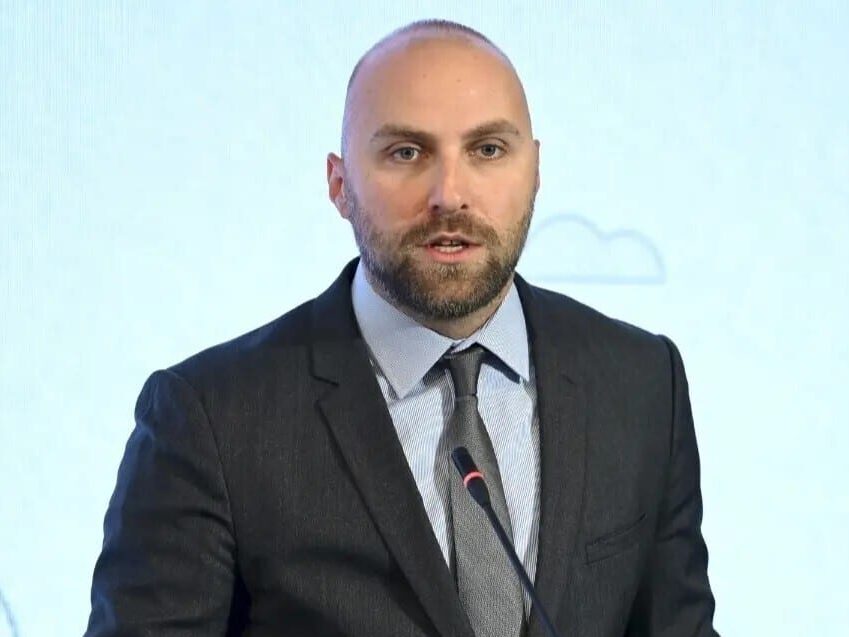
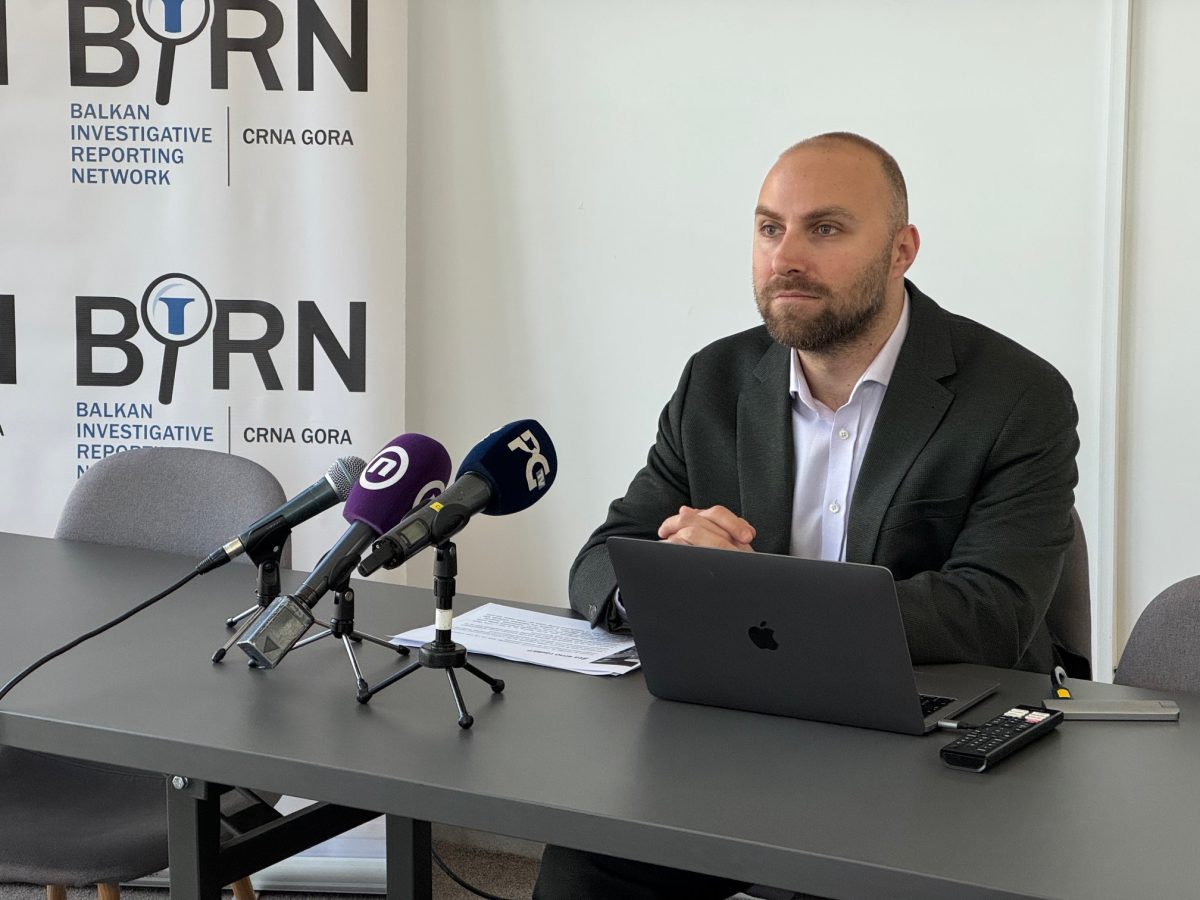
Media organisations urged the Serbian authorities to lift the entry restrictions imposed on BIRN Montenegro’s Vuk Maras and TV journalist Petar Komnenic in retaliation for Montenegro barring a Serbian pro-government editor from entering the country.
The Association of Independent Electronic Media (ANEM), the SafeJournalists Network and the International Press Institute (IPI) have called on the authorities in Belgrade to revoke the decisions barring BIRN Montenegro’s executive director Vuk Maras and TV Vijesti programme host Petar Komnenic from entering Serbia.
The media organisations described the entry bars on professional journalists as unacceptable and contrary to principles of media freedom.
“The Association of Independent Electronic Media (ANEM) condemns any restrictions on the freedom of movement of journalists and citizens in any country, unless based on a final court decision made in accordance with the law and international human rights standards,” ANEM said in a statement [when].
“We call on the European Commission to protect journalists whose freedom of movement is unjustly restricted, preventing them from performing their professional journalistic work, as well as to mediate in establishing conditions that will allow for the unhindered and professional work of journalists in the region,” it added.
The SafeJournalists Network called on the Serbian authorities to “clarify whether similar measures have been imposed on any other journalists or media workers from Montenegro”.
BIRN said that the Serbian authorities’ decision was unacceptable and “represents a blow to media freedom”.
The president of the Media Union of Montenegro, Radomir Krackovic, said that media workers must not be used as “bargaining chips in relations between two states”.
“If the authorities of one country believe that another state has acted improperly towards one of its citizens, the response cannot be to identify a journalist or media worker against whom retaliatory measures will be applied,” Krackovic said.
Maras and Komnenic were barred from entering Serbia as part of Belgrade’s response to the decision of the Montenegrin authorities to bar the owner and editor-in-chief of Serbia’s pro-government Informer TV, Dragan J. Vucicevic, from entering Montenegro.
Vucicevic was barred from entering Montenegro on June 26 after referring to Montenegrin institutions as “anti-Serb” and “Ustasha” (Croatian World War II-era fascists) on Informer TV, accusing them of directly endangering the life of Serbian President Aleksandar Vucic.
Vucic said on July 4 that the Serbian authorities would respond “reciprocally” to the bar on Vucicevic “in accordance with the fact that the state has to react to hostile acts towards its citizens”.
After Komnenic was banned from entering Serbia, Montenegrin Prime Minister Milojko Spajic argued that the measure was not reciprocal because Vucicevic “continually insults Montenegro, its citizens and state officials in his public appearances and with the content he publishes”.
Maras, who was barred from entering Serbia and then deported on Monday, has announced that he will launch a legal challenge.
BIRN Montenegro’s executive director Vuk Maras said he was denied entry to Serbia as a reciprocal measure after Montenegro barred the owner of a Serbian pro-government media outlet.
Maras said that the written decision explained that he was being refused entry in a “protective removal measure, a security measure for expelling a foreigner”.
He said the decision is probably a counter-measure after the Montenegrin authorities’ barred the owner and editor-in-chief of Serbian pro-government Informer television, Dragan J. Vucicevic, from entering Montenegro.
“I believe that this is a continuation of Belgrade’s ‘reciprocal measures’ towards people from the media community in Montenegro, and that I ‘earned’ this ban because of the criticisms about media freedom in Serbia that I made publicly in the media in Montenegro. Of course, I stand behind them 100 per cent,” Maras said.
“The decision of the regime in Serbia to retaliate against those who objectively, professionally and impartially do their job causes even more damage, because it is evident that there is great panic when it comes to anyone who thinks freely,” he added.
BIRN strongly criticised the refusal to grant Maras entry.
“This decision by the Serbian authorities to prevent Vuk Maras from entering the country is unacceptable and represents a blow to media freedom,” BIRN said in a statement.
Maras said was travelling to Rome but decided to enter Serbia in order to visit central Belgrade as he had a long gap between flights. He described his treatment by border police at the airport as “kind and professional”.
He was due to be deported to Montenegro later on Monday. He has announced that he will appeal against the decision in court.
Montenegrin journalist Petar Komnenic, creator of the show ‘Nacisto’ on TV Vijesti, was also barred from entering Serbia last week.
Informer’s editor Dragan J. Vucicevic was barred from entering Montenegro on June 26 after he called Montenegrin state institutions “anti-Serb” and likened them to Croatian World War II-era fascists on Informer TV, accusing them of directly endangering the life of Serbia’s President Aleksandar Vucic.
On June 26, Vucic announced what he described as reciprocal measures against people “who engaged in hybrid warfare against Serbia”.
After Komnenic was banned from entering Serbia, Montenegrin Prime Minister Milojko Spajic said that the journalistic approaches of Komnenic and Vucicevic cannot be compared to each other.
Spajic argued that Vucicevic “continually insults Montenegro, its citizens and state officials in his public appearances and with the content he publishes”.
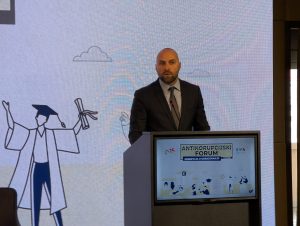
Forum organised by BIRN Montenegro and Civic Alliances says illegal purchase of diplomas and political influence in schools are undermining trust in society.
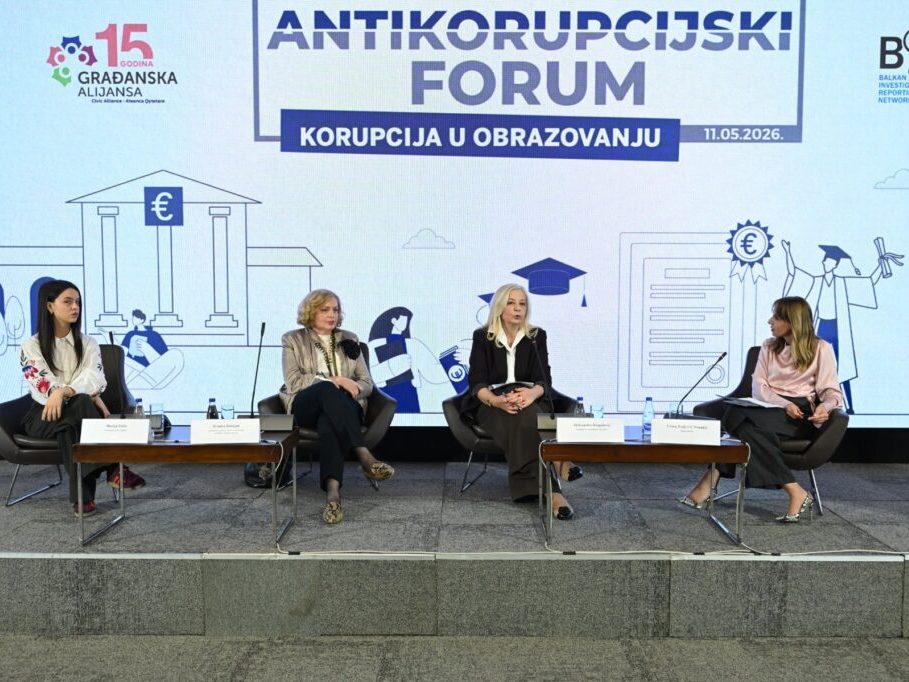
On May 11, the Anti-Corruption Forum “Corruption in Education” organised by BIRN Montenegro and the Civic Alliance, called on authorities to focus on issues such as the purchase of illegal diplomas and political influence within the school system.
Deputy Prime Minister Momo Koprivica said corruption in education is not only a matter of legality but also of trust in a society of equal opportunities.
“The purchase of diplomas and exams is the most common form of corruption and the one most discussed, but the forms of corruption in education are significantly broader and more versatile,” Koprivica said.
“Young people must see that institutions operate according to the law, that knowledge is valued, and that dishonest actions are sanctioned,” he added.
BIRN Montenegro Executive Director Vuk Maras said corruption in education had undermined trust in institutions. He called on state institutions to demonstrate transparency regarding verification of their own diplomas.
“Purchased diplomas are being equated with those earned through hard work and study. This leads to a brain drain and the departure of the best and brightest from the country,” Maras said.
“I call on institutions, decision makers and the academic community to work on creating a system where knowledge and work will be more important than connections and money,” he added.
During the Forum discussions, civic activists, MPs and university representatives warned of insufficient transparency and political influence in the process of selecting school directors. They also urged authorities to fight against corruption in the school and university system.
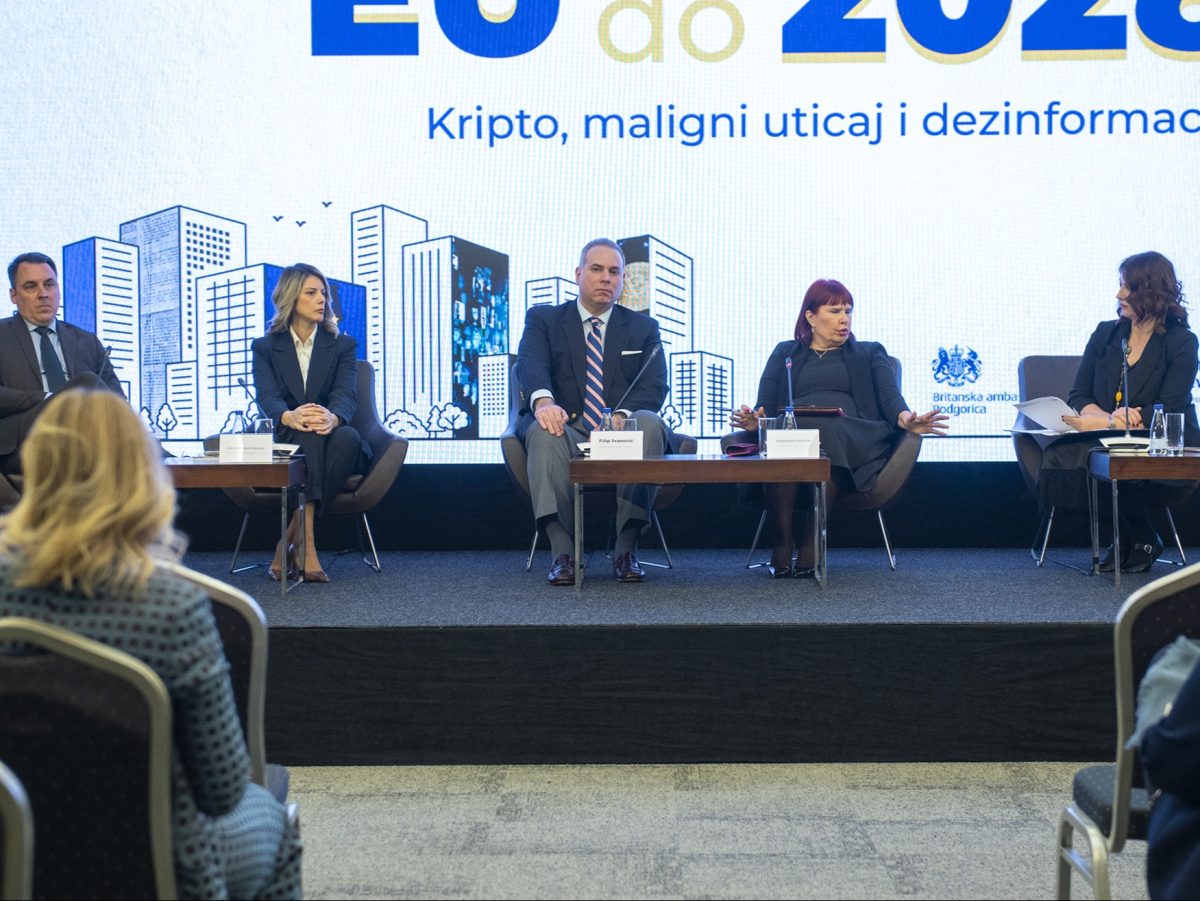
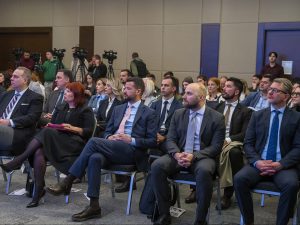
On March 30, the fourth Anti-Corruption Forum, “EU by 2028? Crypto, Malign Influence and Disinformation,” organised by BIRN Montenegro, called on the authorities to focus on substantive reforms, strength independent institutions and combat corruption and hybrid threats in the final phase of the country’s European integration.
Montenegrin President Jakov Milatovic said the country must develop mechanisms to identify hybrid activities and malign influence, warning that disinformation should not be spread by decision-makers.
“Never lose sight of the fact that the ultimate goal of hybrid activity is for citizens to lose trust in institutions. Consequently, this undermines the strategic vision of becoming a full member of the EU,” Milatovic said.
“We should work on strengthening independent institutions and establishing stronger oversight of the crypto market. It is becoming increasingly difficult to track suspicious financial flows in the world of virtual assets, offshore arrangements and complex ownership structures that obscure the identification of beneficial owners,” he added.
BIRN Montenegro Director Vuk Maras said that EU membership represents a historic opportunity for Montenegro, while stressing that the process requires broad cooperation.
“EU accession should not be just a box-ticking exercise but a genuine step towards improving quality of life and the rule of law,” Maras said.
Deputy Prime Minister Filip Ivanovic said the biggest challenge in accession negotiations is securing final court verdicts in organised crime and high-level corruption cases. Supreme Court President Valentina Pavlicic warned that a lack of judicial staff represents a serious obstacle to concluding those cases.
During the forum discussions, civic activists and government and state institutions representatives called for the regulation of cryptocurrencies, warning that legal gaps could be misused in money-laundering schemes.
They also urged strengthening independent regulators in the fight against disinformation and ensuring a systemic and active response to malign influence.
BIRN Montenegro urged the government to introduce criminal liability for unregistered crypto-asset service providers, adopt a dedicated law on digital assets aligned with European rules, and strengthen the supervisory capacities of the Financial Intelligence Unit, FOJ, and the Capital Market Commission.
The analysis also recommends developing crypto-specific guidelines and typologies, as well as introducing blockchain analytics tools.
BIRN Montenegro Executive Director Vuk Maras said that in 2024 the Financial Intelligence Unit handled only five cases related to crypto assets, while BIRN Montenegro’s research indicated the existence of large unregistered and uncontrolled money flows through the crypto market.
“This is a parallel economic flow about which our state knows nothing. Research has shown that cryptocurrency dealers no longer want to work with small amounts but with tens of thousands of euros. This black market is huge and needs to be brought into legal channels,” Maras said.
The analysis noted that Taiwan has introduced serious criminal sanctions for unregistered digital-asset operations, which has led to a doubling in the number of suspicious transactions reported by the crypto sector.
Maras added that after tightening the rules, two-thirds of existing virtual asset service providers, VASPs, in Taiwan lost the right to operate because they failed to meet the new standards.
The analysis was made with the support of the Taipei Representative Office in Hungary.
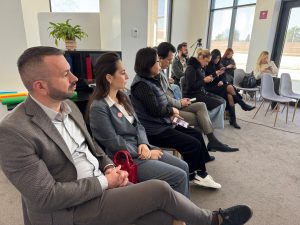
On February 20, BIRN Montenegro concluded a three-day workshop, “Identification and Assessment of Risks in the Field of Crypto Assets and Illicit Financial Flows Through Sophisticated Digital Forms”, for journalists and state institutions representatives.
BIRN Montenegro Executive Director Vuk Maras warned that the cryptocurrency sector in Montenegro is still not legally regulated.
“There was a political and economic idea for Montenegro to become an attractive destination for digital investments. However, the development of the regulatory framework did not keep pace with the speed of market changes,” Maras said.
During the workshop, key risks related to cryptocurrencies were discussed and the need to strengthen oversight of advertising and fraudulent platforms was highlighted.
It was noted that work should be done on developing an automated system for monitoring online fraud and establishing an operational model for the seizure and management of crypto assets.
The workshop was attended by journalists from Montenegrin media, as well as representatives of the Ministry of Justice, Ministry of Economic Development, the Special State Prosecution, the Capital Market Commission, the Tax Administration and the Association of Managers of Montenegro.
The workshop was co-funded by the National Endowment for Democracy, NED, and the European Union through the project “Disinfo Watch: Fact-Checking for Resilient Communities.”
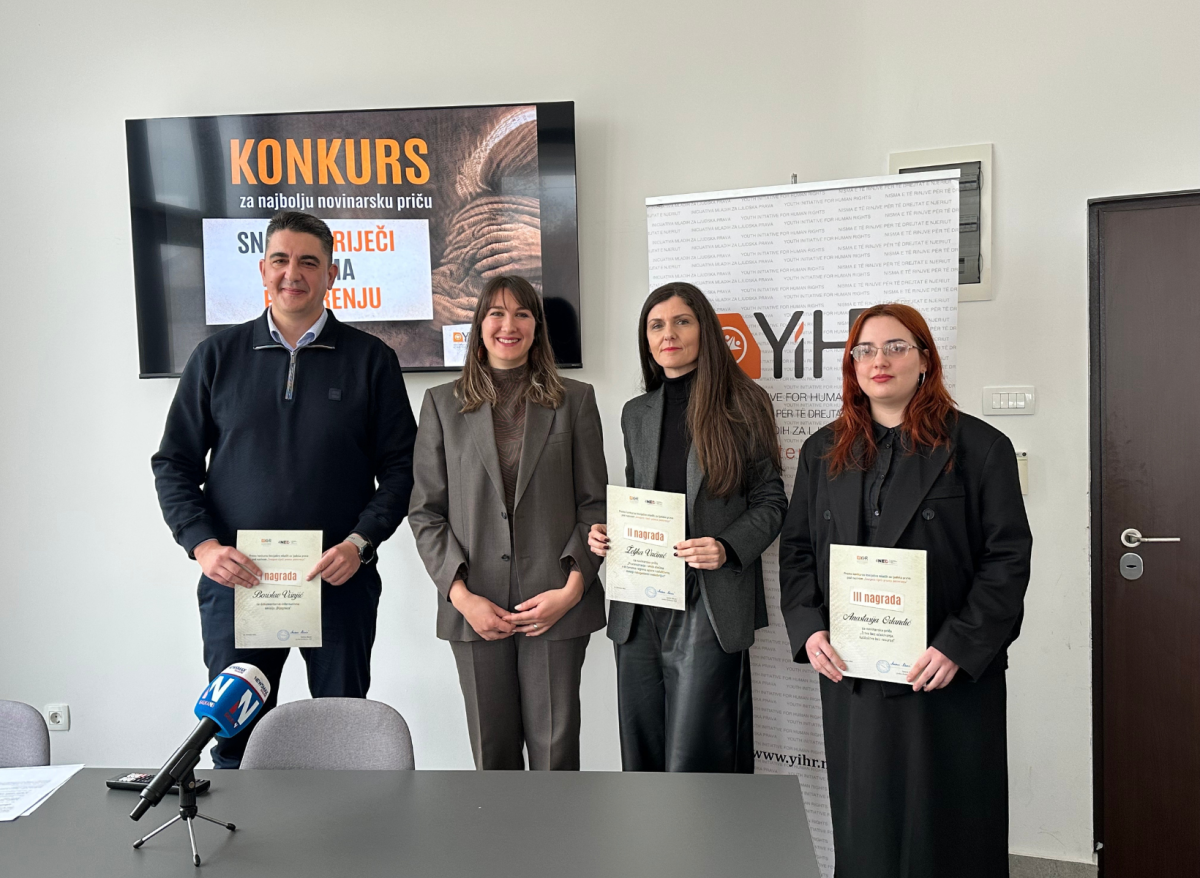
On December 23, BIRN Montenegro journalist Anastasija Orlandic won second prize in the competition “Power of Words for Reconciliation” for her story, “Victims Without Expectations, Prosecution Without Resources.”
Her article analyses the Special State Prosecutor’s Office decision to reopen investigations into old war crimes cases committed in Montenegro, as well as public expectations that these cases will finally be prosecuted.
First prize went to Newsmax Balkans journalist Borislav Visnjic for the television show “Families of Soldiers Killed in the Lora Camp: Institutional Silence Hurts More Than the Crime”, while second prize was awarded also to Vijesti journalist Zeljka Vucinic for the article, “Prosecution of War Crimes in the Region Slow and Selective, Preparators Untouchable.”
The competition for journalistic stories on dealing with the past and with war crimes committed during the 1990s was launched by the Youth Initiative for Human Rights, YIHR, as part of the project “Understanding the Past, Shaping the Future”.
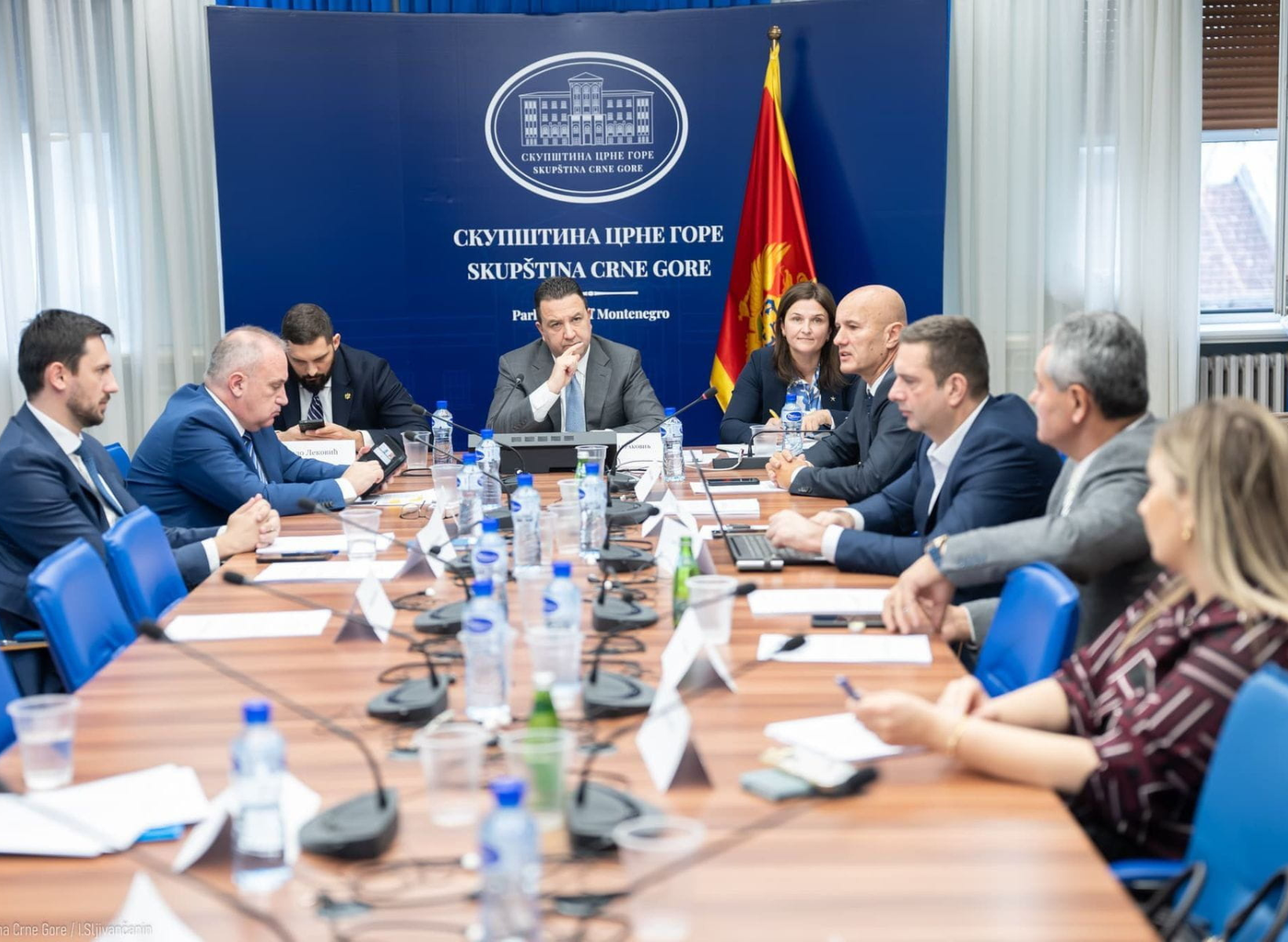
On December 17, the parliamentary Anti-Corruption Committee discussed BIRN Montenegro’s reports on the spending practices of state-owned transport companies and several regulatory and other institutions of special importance.
The Committee called for greater transparency in the operations of state-owned transport companies and regulatory agencies to reduce corruption risks.
BIRN Montenegro programme manager Jelena Mitrovic said the reports showed that most state-owned companies and agencies lack transparency when it comes to the use of public funds.
“Some institutions found it more convenient not to reply to our FOI requests than to provide documentation about their operations. Some formally accepted our requests but never delivered the information, instead referring us to public registries,” Mitrovic said.
Mitrovic noted that the reports revealed abuses in the payment of severance packages and housing loans to managements, adding that such practices should be regulated through amendments to the law. She called for clear rules on the amounts state-owned companies and agencies may allocate for sponsorships and donations.
Minister of Transport Maja Vukicevic said state-owned transport companies are changing their approach to donations.
“Leaders of state-owned companies must act responsibly, and it is not logical for companies operating in the red to distribute donations. Yet we have seen such practices in the past,” Vukicevic said.
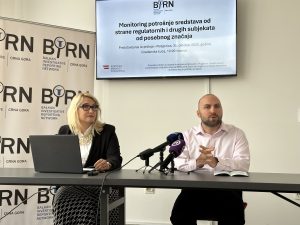
During a four-month monitoring period, BIRN Montenegro tracked the spending of seven regulatory agencies: the Agency for Electronic Communications and Postal Services (EKIP), the Energy and Regulated Utilities Agency (REGAGEN), the Insurance Supervision Agency, the Civil Aviation Agency, the Capital Market Commission, the Institute for Medicines and Medical Devices (CINMED), and the Development Bank of Montenegro.
Over eight months, BIRN Montenegro reviewed the spending practices of eight state-owned transport companies: Airports of Montenegro, national airline ToMontenegro, Monteput, Montecargo, the Port of Bar, the Port of Kotor, Crnogorska Plovidba, and Barska Plovidba.
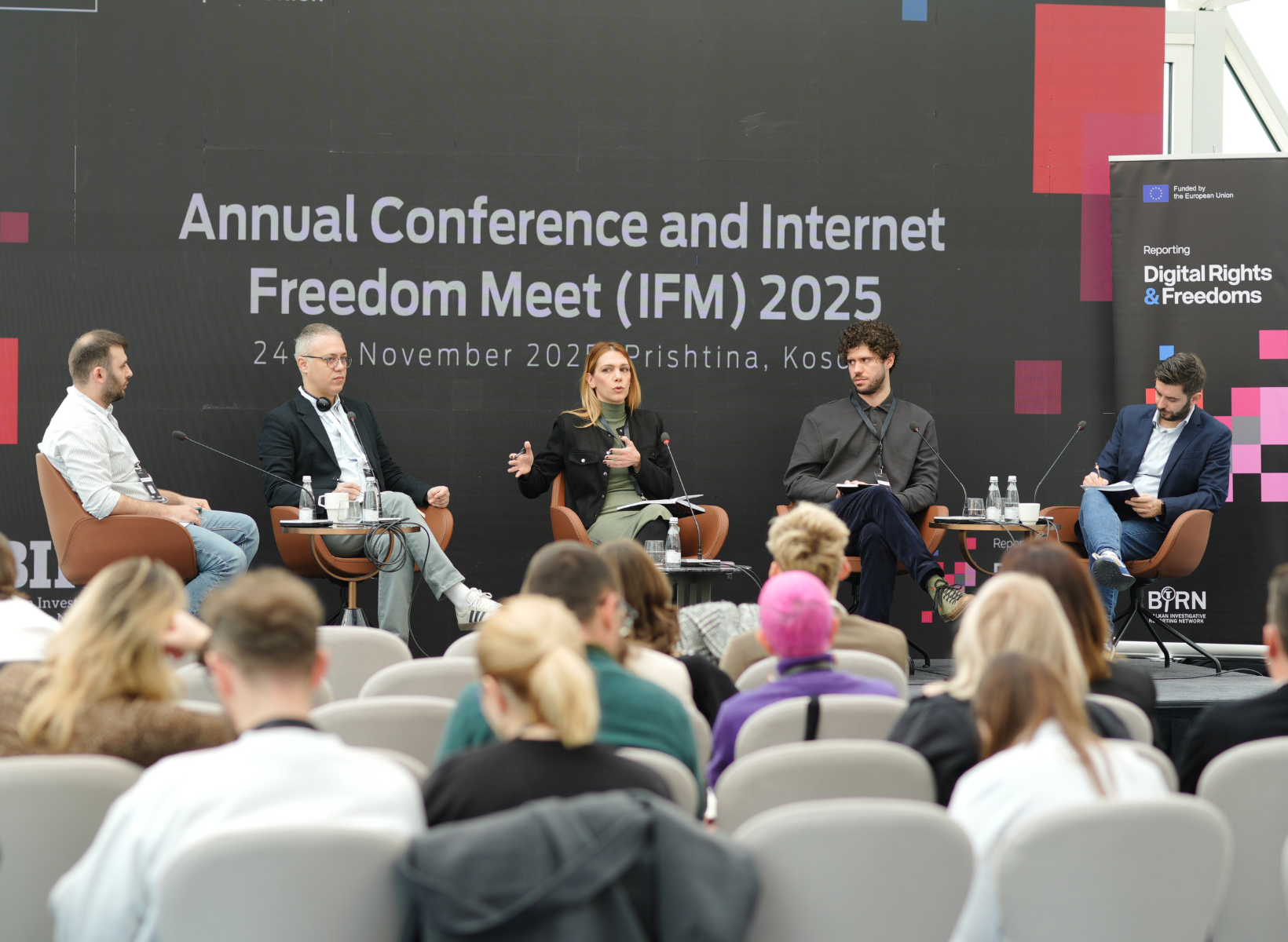
From November 24 to 26, 2025, BIRN welcomed some 120 participants – journalists, civil society activists, tech experts, academia, relevant institutions’ representatives and citizens at large – in Prishtina (Kosovo) for a regional annual conference and the Internet Freedom Meet event on digital rights and freedoms.
What unfolded was more than a presentation of cold statistical data. We witnessed a collective reckoning with how rapidly emerging technologies are advancing, and with how weak oversight and shrinking civic spaces are reshaping – and often endangering – people’s everyday lives across the Western Balkans and beyond.
From Project Roots to Regional Reality
The third and final annual conference is built on BIRN’s three-years project, Reporting Digital Rights and Freedoms, funded by the European Union and implemented by BIRN Kosovo and its regional partners BIRN Hub, BIRN Albania, BIRN Bosnia and Herzegovina, BIRN Macedonia, BIRN Montenegro and BIRN Serbia in the Western Balkans region and Turkey. The project aimed at strengthening media and civil society capacity to document and report digital rights and freedoms violations. Through training, capacity building online and offline events, fellowships, subgranting as well as editorial and other technical support, the project equipped newsrooms and individuals, journalists and activists with tools to first and foremost understand and then monitor and report about issues such as online abuse, to challenge disinformation, and bring somewhat hidden digital violations into public debate and for institutional reaction.
BIRN Kosovo director Jeta Xharra opened the conference and noted that there was very little knowledge about digital rights and that the project has contributed to educating both journalists to report on and the public to understand digital rights.
In a high-level speech, Kosovo’s President, Vjosa Osmani, sent a strong message of support towards the internet as a free space, and on the importance of exposing tech-facilitated abuse, be it online manipulation, promotion of hatred, violence against women or harassment of children.
The Deputy Head of the EU Office in Kosovo, Eva Palatova, emphasised the EU’s commitment to a human-centric digital environment, noting recent key policy instruments, the Digital Services Act, the AI Act and the European Democracy Shield, aimed at protecting users.
The work done throughout the project pointed to the importance of addressing internet governance-related topics systematically. The latest BIRN regional report, launched at the opening of the conference, documented 1,440 violations from September 2024 to August 2025. Over the three years of the project, based on BIRN’s monitoring methodology, we captured over 4,000 cases of digital rights and violations mapped.
From September 2024 to August 2025, the most frequent types of trending violations include misuse of artificial intelligence (AI) to facilitate sexual, gender-based violence and fraud, threats to the freedom and pluralism of information, attacks on digital assets and economic rights and harmful and threatening online behaviour.
The conference was attended by around 120 participants including 30 Internet Freedom Meet fellows from the Western Balkans region selected following a public call for participation.
Throughout the three-day event, the fellows played a dual role. They followed conference panels on the main stage, bringing sharp questions and contextual knowledge; and in parallel, they immersed themselves in dedicated workshops with international trainers, diving deeper into some of the most urgent challenges shaping the digital landscape.
In these workshops, fellows confronted real-world dilemmas: how to investigate online harassment while keeping victims safe; how to trace disinformation networks across borders; how AI-generated deepfakes and algorithmic bias threaten vulnerable groups; and how online/street surveillance erodes civic freedom. Fellows additionally enriched the discussion with local knowledge and lived experiences.
Photo: BIRN Kosovo
Humans Behind the Numbers
The conference focused heavily on the human impact behind the numbers – giving a platform to stories of and about real people – journalists, activists, citizens’ – whose lives were impacted and shaken by digital abuse, such as threats, surveillance or disinformation.
Participants heard worrying testimonies: journalists recounting smear online campaigns after exposing corruption, activists exposed to harassment and doxxing following their online advocacy, and citizens becoming victims of AI-driven scams, identity theft or deepface-based abuse.
Speakers emphasized a critical truth: digital rights violations are rarely isolated incidents. They are more often than not entwined with inequalities – especially in terms of gender, LGBTIQ+ persons, minorities, people with disabilities and other vulnerable groups. As Albanian technology policy expert Alba Brojka noted on the panel about gender-based violence, “It is a mirror of what is happening in the society and is amplified online.”
Photo: BIRN Kosovo
New Technologies, Same and Worse Dangers
Emerging technologies, such as generative Artificial Intelligence, are accelerating threats, while legislation and institutional oversight – and to a valuable extent also the media and civil society pace of understanding technological changes – lag dangerously behind.
Experts on the panels warned of AI-facilitated fraud, voice-cloning scams, deepfakes and more – noting that they are all increasingly used to exploit individuals’ vulnerabilities, especially women, young people and children. We heard how deepfakes have become so realistic that more and more people, especially with the information overload, cannot differentiate between real news, manipulated content or disinformation – which directly leads to undermining public trust and discourse influencing democratic and public informed participation.
Panelists looked into [weak] legal frameworks and selective enforcement, which make digital space a fertile ground for censorship, repression, threats and surveillance. We heard from several speakers sharing stories from Serbia or Turkey of unlawful surveillance, spyware deployment and non-transparent use of digital technologies and tools to intimidate critical voices of activists, journalists or even whistleblowers. While on one side, we see an “implementation gap” of those appropriate laws that exist, on the other side, in many places, we encounter outdated institutional settings, limited resources or political pressure, which stays unbothered while critical voices under attack stay unprotected and often with severe online or offline consequences.
Photo: BIRN Kosovo
Digital Rights are Human Rights – Not Optional Extras
One underlying message seconded by all participants – and participation was truly multistakeholder – is that digital rights are human rights, and are not marginal issues for tech-savvy urbanities but fundamental rights, deeply tied to dignity, security and democratic participation. Beyond the number of captured digital rights violations, those numbers represent people. At least one person per case. At least one more friend or family member was affected by it. And often entire communities.
Numbers cannot tell the whole story. Data reveals patterns to which the BIRN team, together with our partners, fellows, subgrantees, gave context. Living in the online space is not abstract – it shapes people’s safety, identity and freedom. Every violation is a life interrupted, a voice shaken, a right diminished. By documenting abuses, amplifying testimonies and exposing the systems that allow them to keep happening, the project brought human stories back to the centre.
Photo: BIRN Kosovo
From Talk to Action: What Needs to Happen Now
By the end of the conference, participants agreed on several urgent and concrete steps for the region:
Update and enforce legislation regionally, looking into good practice, to keep pace with technological change: laws should address AI-driven abuse, data protection, online harassment and digital surveillance
Support for victims/survivors, ensuring accessible reporting mechanisms, provide legal, psychological and social support, including protecting anonymity whenever needed
Empower independent media and civil society, including sustained grants, training and mentorship, so that civil society and journalists (media) can continue documenting abuses safely and effectively
Promote digital literacy and public awareness, as a necessary continued effort to educate citizens at large about ever-evolving online risks and understanding their rights
Fostering regional cooperation, as digital threats do not respect borders – cooperation among media, civil society, institutions, technical community and academia across countries is essential.
Why This Matters and Appreciation Words
For many years we have lived in a world where technology evolves fast – outpacing our social, legal and institutional capacity to adapt. As the closing conference in Prishtina underscored, these are not abstract policy questions. They are about people’s lives, freedom, trust, safety and dignity. They are about our future.
By bringing together journalists, experts from different fields and policymakers, over the three-year project we jointly took responsibility for protecting digital rights not as a niche project but as a core human-rights obligation that shapes people’s realities in the digital age. The Reporting Digital Rights and Freedoms initiative proved that when knowledge, evidence and human stories are brought together, digital rights can no longer be dismissed as technical issues “in the cloud”. They become what they truly are – essential rights that protect the very fabric of democratic society.
BIRN Kosovo wishes to extend its gratitude to project partners, coordinators, editors, monitors, journalists, researchers and authors, subgrantees, fellows, participants of physical and online training and community meetings, and the colleagues and individuals who contributed to the project’s delivery and success.
The Annual conference and Internet Freedom Meet were organised within the framework of the Reporting Digital Rights and Freedoms project, implemented by BIRN Kosovo and supported by the European Union.
Vuk Maras is the Director of BIRN Montenegro. Although the youngest member of our network, BIRN Montenegro has already been recognised for its investigations, which have led to significant changes in Montenegrin society.
This year marks BIRN’s 20th anniversary. From exposing corruption to promoting human rights, BIRN’s investigative journalists collaborate across borders to find out the facts and tell people’s stories.
It all started in 2005, when five women from countries recovering from brutal wars defied the odds to establish what would become a major independent media organisation, the Balkan Investigative Reporting Network, in the traditionally patriarchal region of the Western Balkans.
Maras recalls how he first heard about BIRN and what his initial impressions of the organisation were at the time.
“I heard about BIRN a long time ago. I was a civil activist and one of the leaders of the most influential anti-corruption NGOs in Montenegro. BIRN was a synonym for investigative journalism and quality reporting in the Balkans and beyond,” says Maras. “At that time, I also met my first BIRN person, Albulena Sadiku from BIRN Kosovo, with whom I partnered on a project.”
However, before becoming the Director of BIRN Montenegro, he worked within the regional office (Hub) . That experience shaped his understanding of BIRN’s mission and way of working.
“Sometimes it is easier to understand BIRN from the outside than when you join the team. At first, the complexity of the structure and procedures was a bit frightening, but it made me realise it is the only way to maintain such a complex yet effective network, which covers so many topics and areas. I could not be more grateful to Regional Director of BIRN Marija Ristic and Managing Editor of Balkan Insight Dusica Tomovic for all their help and assistance to blend in, despite their busy schedule and the amazing job they were doing,” says Maras.
In 2022 the decision was made to open the BIRN Montenegro office.
“When starting BIRN Montenegro, our idea was to create the most influential investigative outlet in the country, which would be able to tackle all the important topics others cannot, or are simply not willing to do, due to the fear of politicians, advertisers, or others. The idea was simple, and so far, nothing has changed that will drive us off that mission,” Maras recalls.
Looking back over the past three years, Maras shares his perception of whether the BIRN Network has changed.
“Like in every big family, there are always challenges that people with goodwill overcome easily. I tend to believe that most of us, if not all, really do our best to make this big family work as well as it can,” says Maras.
He sees BIRN Montenegro’s biggest strengths, but also where it still needs to grow and invest more effort.
“While BIRN Montenegro is the youngest member of the network, I am lucky to have colleagues who are experts in their respective fields and who have a lot of professional experience. Heading such a team makes it way easier to achieve goals we put in front of us. That is to make Montenegro a fairer, freer, and more democratic country, which will serve the needs of its citizens, be a proud member of the EU and NATO, and embrace western standards,” Maras explains.
“Of course, with developments happening in the digital world, IT, including AI, global disinformation campaigns, and other problems we are facing, it has been harder than ever to reach the truth. We have to make sure that more effort, work and expertise is put into each and every assignment we start doing,” says Maras.
And speaking of his team, there are some investigations from BIRN Montenegro that he wants to highlight.
“I am proud to say that despite being a new media outlet and a small team, we were able to cover a number of issues and create positive social change. BIRN journalists have already received several awards and fellowships, which point out how quickly we have become the most credible media outlet in Montenegro.
But, it is essential to emphasise that investigative journalism isn’t the sole activity of BIRN Montenegro.
“BIRN Montenegro has a strong monitoring and analytics component, which allows us to track expenditures in several sectors – energy, transport, and with independent agencies and regulators. Additionally, based on our initiatives, several high-profile events were organised, including parliamentary hearings, meetings with key ministries, the President of Montenegro and national anticorruption forums,” Maras explains.
One of the key aspects of BIRN Montenegro’s work is the Open Data Portal.
“BIRN Montenegro partnered with the Government of Montenegro and the UN’s Development Programme regarding the re-establishment of the Open Data Portal, which should serve as a focal point for citizens, businesses, and organisations in need of access to different data. The portal was launched a year ago, and so far has been updated with different datasets,” adds Maras.
When he thinks about the media landscape in Montenegro, he explains the unique role BIRN Montenegro plays and should continue to play in the years ahead.
“BIRN Montenegro is and will remain free from any political or other influence, and this will allow us to be the only ones responsible for our editorial policy. While I am sure the topics we cover will change over time, depending on needs and priorities, our journalists will be among the very few who are fully free to select and investigate any topic or issue, while caring only about the professional standards. It is what we already do and will be doing in the years ahead,” says Maras.
Speaking of his dream scenario for BIRN in the next 20 years, both as a network and in Montenegro, he knows what he would like it to look like.
“I hope that in 20 years Montenegro will not need the form of BIRN there is now, as the country will become significantly more developed, democratic, and advanced, and that those people working in BIRN Montenegro in 2045 will be happy to investigate and cover some lighter and more joyful topics, but with the same level of professionalism,” concludes Maras.