Meet the People Behind BIRN: Albulena Sadiku

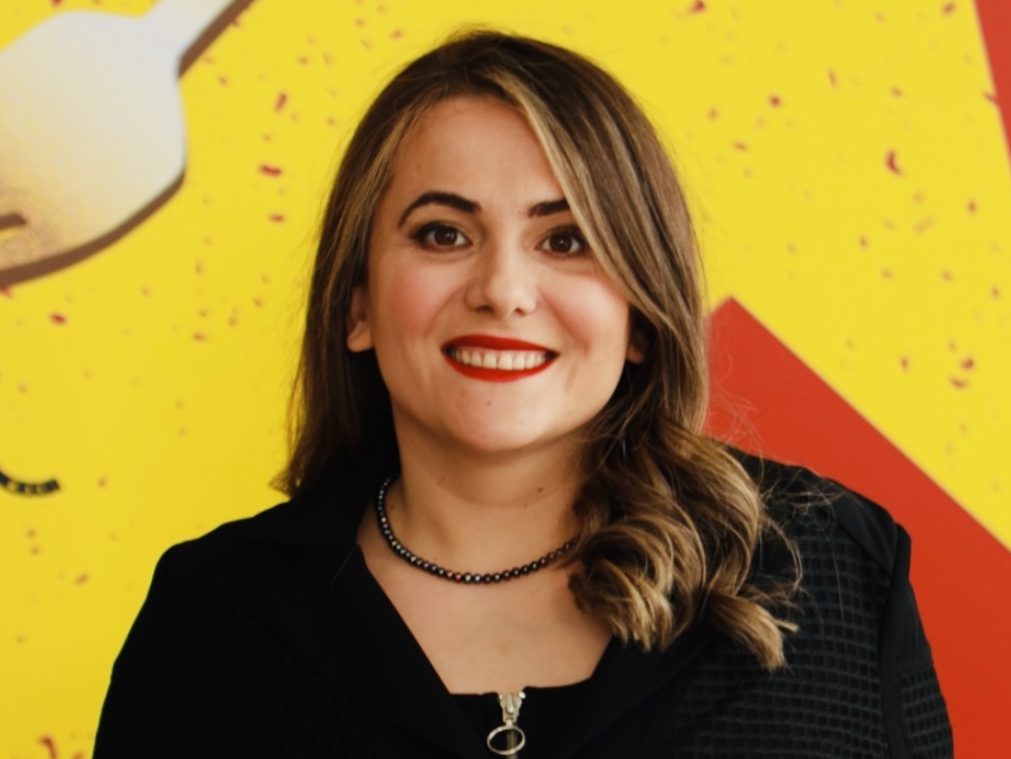
Each month, BIRN introduces you to members of its team. For March, meet, Albulena Sadiku, Deputy Director and Senior Programme Manager at BIRN Kosovo.

Sadiku, 33, is Deputy Director and Senior Programme Manager at BIRN Kosovo. This year, she celebrates her 12th work anniversary at BIRN. BIRN Kosovo is one of the most active partners of the network. Their “small” office has won numerous international prizes and distinctions while promoting democracy and accountability and the fight against corruption.

Sadiku has always been a civil society activist, she says. With her colleagues, they are working together, making a difference and most important, making a mark. Let’s meet her.

  1. When did you start working in BIRN? What do you like most about it?

When I started working with BIRN, the organization was flourishing. People talked about the impact BIRN’s work was having in various spheres, including in the lives of regular Kosovo citizens. Naturally, as a civil society activist with some years of experience in civil society and advocacy, I saw BIRN as an ideal opportunity to maximize my activity and expand the platforms to do so.

This year marks my 12th anniversary since I started working for BIRN. In these 12 years, I have had the pleasure of seeing the organization grow exponentially. I, too, felt I could grow professionally with it and become part of a team whose work is significantly impactful. BIRN has acquired a great level of credibility among Kosovo institutions, prompting the latter to react to BIRN’s findings and act to improve their performance and the lives of regular citizens. The personal satisfaction gained through working with such a great team of people, and witnessing the fruits of our work on the ground, is unparalleled. I am beyond proud to be working with a team of highly professional journalists, who received eight journalism awards in 2021 alone. Our journalists’ work has received recognition from local and international institutions who have awarded them for their stories on public procurement, corruption and the environment. 

  1. When was BIRN Kosovo created? How important is its work in Kosovo?

BIRN Kosovo was established in 2005. Since then, the organization has grown hugely. It now houses a team of over 50 professionals of various backgrounds, including journalists, editors, legal advisers, court monitors, producers, technician operators, finance officers, project managers and coordinators, to name but a few. All these individuals have come together to fulfill BIRN’s mission of ensuring the momentum of democratic transition in Kosovo by promoting accountability, rule of law and political reform. BIRN’s flagship media products, including the online anti-corruption platform KALLXO.com, the television programme KallxoPernime and the fact-checking platform Krypometer/(Truth-o-Meter), enjoy great credibility among the Kosovo public, including public institutions. BIRN’s KALLXO.com was listed as the second most credible source for fighting corruption for over five years in a row, only finishing behind the Police and far ahead of the Prosecution and Anti-Corruption Agency. Furthermore, our team was recognized as a source for reporting corruption by the US State Department 2021 Investment Climate Statement, for the second year in a row.

The results of 16 years of BIRN’s work in advocacy, reporting and watchdog monitoring of public institutions have yielded great and meaningful impacts in Kosovo society.

A total of 1,705 citizens reported on our KALLXO.com anti-corruption platform in 2021 alone. Citizens’ reporting on the injustices they encountered led to the publication of investigations and television programmes that ultimately had an impact in improving the lives of regular citizens. During 2021, BIRN’s work resulted in more than 100 direct short-term and long-term impacts on wider society.

In 2021, BIRN Kosovo’s team of court monitors, legal officers and advisers monitored a total of 388 court hearings and submitted 2,099 legal complaints to relevant public institutions in Kosovo, of which around 970 were requests for access to official documents and requests for access to information. Our legal office also gained – and provided – expertise by participating in more than 45 public discussions, workshops, conferences and meetings.

BIRN Kosovo monitored 14 recruitment processes for senior positions in Kosovo’s public Institutions during 2021, including the Police, Security and the Ministries of Culture and Trade. What is remarkable is the fact that, in the past, BIRN was imposing a process of monitoring recruitment of key management staff on various public institutions in Kosovo; nowadays, it is the institutions themselves that are asking us to monitor their recruitment processes, to ensure that recruitment standards are met and the process is merit-based.

Importantly, during 2021 alone, BIRN delivered over 70 training sessions, workshops and webinars to over 561 participants. They benefited from BIRN’s training expertise on topics such as fake news, fact-checking, the basics of investigative journalism, professional investigative journalism, televised investigations, media ethics, source protection, reporting on terrorism, public speaking, violent extremism and radicalization, environmental issues and effective advocacy.

  1. What has been BIRN Kosovo’s biggest achievement so far and what is its biggest challenge?

BIRN’s impact in improving the lives of thousands of Kosovo citizens through its work in advocating, reporting and watchdog monitoring of public institutions, constitutes its biggest achievement. The wide impact of BIRN’s work would have not have been possible without the initial reports received from citizens through our online anti-corruption platform KALLXO.com.

Due to the type of work we do, our principal challenge is a lack of sustainable funding of our investigative reporting and watchdog monitoring. Furthermore, Kosovo still has weak accountability and reluctantly transparent institutions, and discrimination on the basis of gender, nationality, sex and networks persists. In these circumstances, our biggest practical challenge nowadays is lack of staff to deal with all the citizen reports that we receive. Lastly, we face continuous propaganda whenever our stories expose the powerful elites. This is also a consequence of Kosovo’s media scene being vulnerable to financial influences, as well as to those of other groups, which shrinks the space for independent reporting.

  1. How do you overcome work-related difficulties? What is the secret of BIRN Kosovo’s success? 

The enthusiasm of the people working at BIRN is what keeps the organization going, despite work-related difficulties. Each year we witness a dozen aspiring new journalists starting off their professional journey at BIRN as interns and then steadily growing and establishing their place in our team. It goes without saying that without our families’ support we would not have been able to get this far. This is especially the case for journalists, who are busy reporting from every corner of Kosovo and are often away from their families for long periods. Last but not least, none of the work we do would be possible without our donors, partners, sponsors as well as our supporters, friends and whistleblowers, who have continued to place their trust in us for 16 years.

  1. What are BIRN Kosovo’s next plans and goals?

 BIRN Kosovo will continue to fulfill its mission and uphold the highest journalistic standards in Kosovo. We will keep the public informed through regular and specialized reporting while continuing to exert pressure to increase transparency and accountability in public institutions and advocate for changes to policies and legislation that will better represent citizens’ public interest. Lastly, and this is what I am particularly fond of and excited about, we will continue to deliver training to a wide array of stakeholders, including to local CSOs and media and journalism students, in investigative journalism and fact-checking; we will continue to support journalists through sub-grants, awards and fellowships programmes – and we will keep providing young journalists with  training and internship opportunities at BIRN.


BIRN Holds Training in Digital Security and Surveillance Capitalism

BIRN organized a four-day training in digital rights, “From Personal Security to Surveillance Capitalism”, for journalists, representatives from civil society organizations, CSOs, legal professionals and IT experts, in Herceg Novi, Montenegro.

The comprehensive programme encompassed three modules: personal digital security; reporting on surveillance capitalism; and digital activism with the goal of empowering participants to defend themselves against surveillance capitalism and understand power relations between the public and private sphere.

The first module explained the issues surrounding surveillance capitalism that impact our privacy and security and offered effective ways to combat it.

Domen Savic, from the NGO Državljan D (Citizen D), offered hands-on exercises that the participants can then replicate in their home environment. Participants learned how to harden their personal computers/mobile devices and how to avoid leaving too wide a digital trail online.

The second module focused on developing effective media reporting skills when tackling the issues of surveillance capitalism from a theoretical and practical point of view, focusing on case studies from the region. Participants learned how to investigate surveillance capitalism and worked in groups to decide on the topics they want to cover in their local environment.

During the third module, trainer and participants discussed digital policy development and the role of digital activists and campaigns.

The final sessions encouraged debate and networking, so that participants can develop relationships and ultimately benefit from these synergies to cover surveillance capitalism from a broad perspective.

The training was led by Citizen D, an NGO built whose foundational principle is the inclusive promotion of human and digital rights. Državljan D is highly experienced in providing digital security training for local and regional journalists as well as in giving insights into digital privacy and security issues: from state to corporate surveillance and secure data handling, to app and device usage.


BIRN Presents Database as Tool to Educate and Counter Revisionism

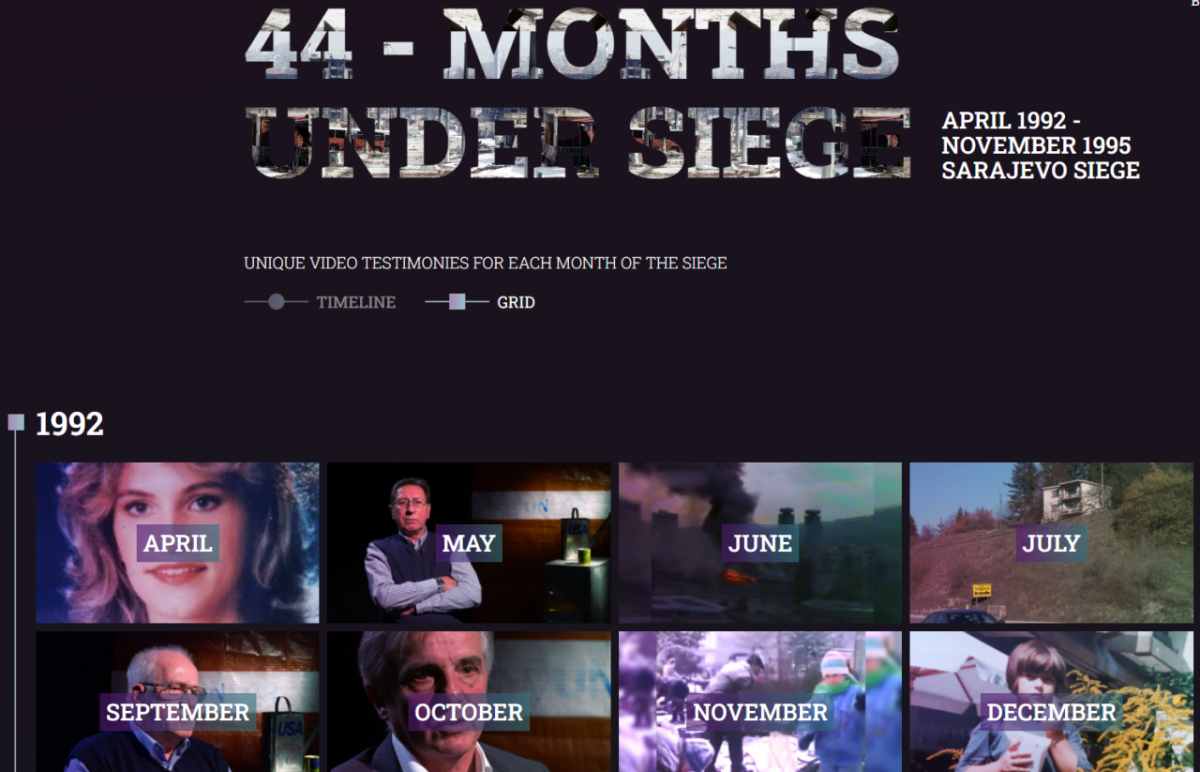
Marking the 30th anniversary of the siege of Sarajevo, a new BIRN online project features the video testimonials of 44 people – one for each month of the military blockade – recalling wartime hardships, atrocities and brief moments of joy.

BIRN presented a panel discussion on the topic, “No Room for Adjudicated Facts in School Curricula”, presenting part of its database of facts related to the 1992-5 siege of Sarajevo that has been established in or by verdicts of the International Criminal Tribunal for the former Yugoslavia, ICTY.

Besides besieged Sarajevo, other parts of the city that were under the control of the Bosnian Serb Army, VRS, including Grbavica, Vraca and Nedzarici, as well as Sarajevo municipalities Ilidza, Hadzici, Vogosca and Ilijas, have also been covered, to include places where civilians were held and killed, demolitions and pillaging of property, and other crimes committed in the areas of Pale and Sokolac.

BIRN journalist Haris Rovcanin, who is working on creating the database, said Sarajevo and its surroundings were the first regions to be presented, symbolically, as that siege began 30 years ago, in April 1992. The term “siege”, he explained, is used in court verdicts and the fact that Sarajevo was under siege during the war represents one of the adjudicated facts.

“We have created a database containing some of the fundamental court conclusions referring to the sniping and deliberate shelling campaigns and unselective and direct attacks targeting the civilian population, as well as the fact that no parts of the city were safe from shelling from positions held by the Sarajevo-Romanija Corps of the Bosnian Serb Army, as determined in verdicts, and that civilians were targeted while fetching water, walking in the city and using public transportation, especially trams,” Rovcanin said.

BIRN’s local director Denis Dzidic said the development of the multimedia database of court-established facts was of extreme importance for learning about the past and as a tool for countering revisionist narratives and denial of genocide and war crimes in Bosnia and Herzegovina.

“We are witnesses to the politicization of history in Bosnia, which has been particularly pronounced in politicians’ public appearances in the pre-election period, but also in school curricula,” he said.

“Through the development of this database, we endeavour to counter-narratives that focus on divisions and denial, and develop a unique multimedia platform which can serve teachers, students and all those interested in adjudicated facts,” Dzidic said.

Sniping and shelling incidents, as they are called in verdicts, for which it was determined with certainty that fire was opened from positions held by the Sarajevo-Romanija Corps, have been singled out and processed for the purpose of the database. So was the shelling with the use of modified air bombs in 1995, which, as Hague tribunal chambers established, were not suitable for hitting concrete targets.

According to Rovcanin, one of the goals of this database is to gather in one place all the crimes established by the Hague tribunal’s verdicts, but not naming concrete perpetrators. This is because in some cases trial chambers determined that crimes were committed at a certain location but lacked evidence to link and sentence the person on trial to those specific crimes.

Besides that, the goal of the database is to help future researchers, students and journalists find the basic information they need for their further work, but also to assist teachers and education ministries by supplying materials for school curricula and methodologies for teaching about the past war.

Historian Melisa Foric who worked on the educational tool in this database as an external contractor of BIRN, said the database of facts will offer an option for a quick search, check and use of facts and historical sources, which are an integral part of the verdicts pronounced by the ICTY.

“The model classes, which will be an integral part of the database, offer a possibility to analyse events in the territory of Bosnia and Herzegovina between 1992 and 1995 on the basis of parts of testimonies by victims described in ICTY verdicts, and encourage students to present their personal conclusions vis-à-vis the content of verdicts,” he said.

“In particular, attention is drawn to the significance of personal testimonials made in the form of short videos to which school-age children are much more receptive in the process of understanding and learning,” Foric added.

According to her, through a multi-perspective approach and original materials, the database should facilitate an easier determination of the chronology of the war, enabling a clearer perception of a causal link between certain events and the responsibility of individuals for those events, as established by ICTY verdicts.

A senior human rights advisor in the Office of Resident Coordinator of the United Nations in Bosnia and Herzegovina, Agnes Picod, said this was very important for remembrance within Bosnia but also outside its borders, adding that education was the backbone of reconciliation.

She said the principle of impartiality had been very important in the work of the ICTY.

According to her, decisions rendered by ICTY and the International Court of Justice are based on evidence and witness testimonies, while convictions pertain to individuals.

“Verdicts establish an individual, not collective, criminal responsibility. They are for convicting individuals. ICTY verdicts contribute to the truth establishing process and have an essential role … [though] 26 years after the end of the war certain individuals continue to deny, minimize and negate the adjudicated facts,” Picod said.

Picod also said that education should be one of the pillars and paths through which reconciliation is spread. In her opinion, school curricula and textbooks lack impartiality, especially as regards conflict.

“When they mention criminal offences, they do not mention them as crimes against humanity or genocide. Schools and educational systems should not be exposed to political agendas,” Picod said.

Although the ICTY archive is available already, the platform of adjudicated facts offers an abbreviated and clear overview of the conclusions of ICTY verdicts to the broader public and teachers, as well as to creators of educational content related to topics about the 1992-95 war, enriched with original content that can be used in teaching, Foric said in conclusion.

Anisa Suceska, of the Mechanism for International Criminal Tribunals, and history professor Zijad Sehic also addressed the panel discussion.

By the end of the project, besides Sarajevo, the database will also contain facts on ten other regions, namely Eastern Herzegovina, Zenica Region, Central Bosnia, Doboj-Posavina Region, and Eastern Bosnia, Srebrenica, Herzegovina Region, Krajina and Bijeljina-Zvornik Region.

The database is implemented with support of the UN Democracy Fund, UNDEF.

Video Testimonials Tell Story of Sarajevo’s 44 Months Under Siege

Marking the 30th anniversary of the siege of Sarajevo, a new BIRN online project features the video testimonials of 44 people – one for each month of the military blockade – recalling wartime hardships, atrocities and brief moments of joy.

BIRN on Wednesday launched the ‘44 Months under Siege’ project, which features video interviews with 44 people who lived through the 1992-95 siege of Sarajevo, speaking about the dangers and deprivations of living under the longest military blockade of a capital city in recent times.

BIRN recorded interviews with journalists, doctors, teachers, artists, musicians, film-makers and other residents of the besieged city speaking about massacres, sniper attacks, shortages of food, water and power and the dangers of venturing out to find supplies, go to school or hold funerals during the sustained shelling of the city from April 1992 to the end of 1995.

“Focussing on individual testimonials is a unique and very striking way of telling a story about a city,” said Denis Dzidic, director of BIRN Bosnia and Herzegovina.

“This is definitely not a story about everything that Sarajevo’s residents experienced during the siege, but it is a portrait of some of the most vicious crimes, as well as the way in which ordinary citizens countered the terror,” he added.

Jasmin Begic, a journalist who worked on the project, said that most of the people who gave interviews had lost loved ones, been injured or survived attacks that have been documented in verdicts at the International Criminal Tribunal for the Former Yugoslavia in The Hague.

“These testimonials show that civilians in Sarajevo, as stated in the verdicts, were targets of unselective attacks while standing in lines to buy bread and food at markets, and fetch water, as well as children who were killed at their school desks,” Begic said.

“The hardest part was talking to parents whose children were killed and who experienced these traumatic events all over again,” he added.

The videos are arranged chronologically on the page, starting from April 1992 to November 1995. The 45th video is about the importance of the end of the war.

The ‘44 Months under Siege’ project, which was created with the support of the Swedish International Development Cooperation Agency, SIDA, can be seen here.


BIRN Kosovo Trains Journalists on Reporting Crisis Situations

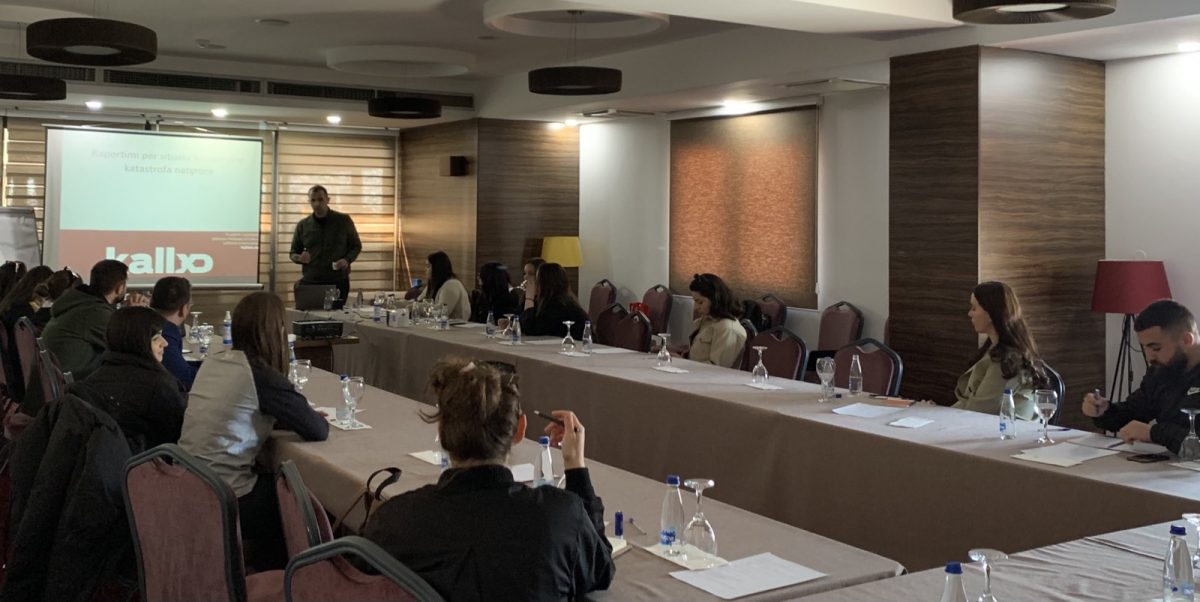
To improve the way journalists report from emergency crisis situations, BIRN Kosovo held a training for journalists and students of journalism, designed to equip them with appropriate knowledge and practices on reporting from protests, with a special focus on violent ones, which was held on March 25.

The training consisted of two sessions. The first was delivered by Amir Gërguri, Commander of specialized units in the Kosovo Police. He elaborated on communications with security institutions in emergency crisis situations. The second session was delivered by Kreshnik Gashi, editor-in-chief of KALLXO.com, who reflected upon safe and ethical reporting of emergency crisis situations.

Participants were given examples to further understand the applicability of the theoretical framework of the training sessions. They were also given the opportunity to ask insightful questions on reporting from emergency crisis situations, as well as share their own experiences.

The training was organized as part of the project “Ensure a safe space for journalists during protest reporting.”, a project funded by the European Commission.

In total, 18 journalists and students of journalism participated in this training.

BIRN Kosovo aims to support the democratic transition in Kosovo and the implementation of human rights and media freedom by holding regular training sessions and workshops.

During this part of 2022 alone, BIRN Kosovo, as part of the project “Resilient Community Program”, held three community gatherings in the municipalities of Prishtina, Gjilan and Obiliq.

The gatherings consisted of a lecture by Kreshnik Gashi, editor in chief at KALLXO.com, and brought together psychologists and directors of schools.

The guests shared their experiences with people, more specifically students, whose families have returned from the conflict zones in Syria and Iraq, and the process of reintegration and re-socialization to which they have been subjected. In total, 16 participants have been part of the gatherings held thus far.

Training on fact-finding

As part of the project “Promoting fact-checking to combat false news and misinformation in Kosovo”, which is supported by the US embassy in Kosovo, BIRN Kosovo also held three trainings on fact-checking methodologies with a total of 50 journalists, in the municipalities of Prishtina, Prizren and Gjilan.

The trainings were made up of three parts. The first covered standards, the basics of fact-checking, and the differences between misinformation, fake news, deep fakes, and other fake news production formats.

The second was dedicated to identifying fake news and harmful narratives in the media and building debunking mechanisms within newsrooms. The third part gave participants the opportunity to practice together with the trainers to identify fake news.

Workshop trainers included Kreshnik Gashi and Visar Prebreza, managing editor of Research and Krypometer articles at KALLXO.com.

As part of the project “Data 4 Fighting Harmful Narratives in the Judiciary”, which is funded by the Millennium Foundation Kosovo, MFK, and the Millennium Challenge Corporation, MCC, BIRN Kosovo held training sessions on using judicial data with a total of 77 Faculty of Law students from the University of Pristina and the University of Prizren.

On March 10 and 11, as part of the project “Confidence Building Project”, which is supported by UNMIK, BIRN Kosovo held a training session with a journalists in the municipality of Gjilan on the bases of investigation and fact-checking principles.

On the first day, KALLXO.com’s Kreshnik Gashi, spoke about the bases of reporting, the public profile that journalists should keep, how to develop contacts with sources of information, protection of sources and how to build trust.

Visar Prebreza meanwhile spoke on how to initiate research and secure information from open data platforms. He also talked about investigations into public procurement and techniques for detecting stories in this field. Finally, on day one,

Valdet Salihu, a producer at the TV programme KALLXO Pernime, gave insight into different production techniques, photographs and video footage.

The second day of the training involved activities in which the participants practiced use of techniques for fact-checking and detecting fake news, with scenarios sourced from statements and footage of public officials.

A total of 16 journalists participated in the course, including three from the Serb and Roma, Ashkali and Egyptian minority communities.

Additionally, as part of the project “Ensure a safe space for journalists during protest reporting”, a project funded by the European Commission”, BIRN Kosovo held a training for 18 journalists and students of journalism, which aims to equip them with appropriate knowledge and practices on reporting from protests, with a special focus on violent ones.

*This publication was produced with the financial support of the European Union. Its contents are the sole responsibility of Balkan Investigative Reporting Network and do not necessarily reflect the views of the European Union.


BIRN Kosovo Holds Workshops on Reintegration of Returnees from Conflict Zones, Fact-Checking and Reporting Protests

BIRN Kosovo held a regional workshop on March 28 on reinforcing the role of Centers for Social Welfare and strengthening the process of reintegration and resocialization for returnees from Middle eastern conflict zones, in order to prevent violent extremism and terrorism in Kosovo.

The workshop consisted of three sessions. The first, delivered by Kreshnik Gashi, editor-in-chief at KALLXO.com, focused on the state vision of preventing the radicalism and the violent extremism that leads to terrorism, and reflecting this vision to the wider public.

The second, delivered by Vehbi Mujku, director of the Center for Social Welfare in Pristina, focused on the role of the Centers in the early identification process of radical behaviours, and in the treatment of people affected by violent extremism.

The third session, delivered by Luljeta Berisha, psychologist at the Kosovo Rehabilitation Center for Rehabilitation of Torture Victims, focused on the early identification of radical behaviours in children and treatment of trauma in them.

In total, 18 representatives from the Centers for Social Welfare and members from other municipal institutions participated in the workshop, organized as part of the “Resilient Community Program”, which is funded by the Global Community Engagement and Resilience Fund, GCERF.

BIRN Kosovo aims to support the democratic transition in Kosovo and the implementation of human rights and media freedom by holding regular training sessions and workshops.

During this part of 2022 alone, BIRN Kosovo, as part of the project “Resilient Community Program”, held three community gatherings in the municipalities of Prishtina, Gjilan and Obiliq.

The gatherings consisted of a lecture by Kreshnik Gashi, editor in chief at KALLXO.com, and brought together psychologists and directors of schools.

The guests shared their experiences with people, more specifically students, whose families have returned from the conflict zones in Syria and Iraq, and the process of reintegration and re-socialization to which they have been subjected. In total, 16 participants have been part of the gatherings held thus far.

Training on fact-finding

As part of the project “Promoting fact-checking to combat false news and misinformation in Kosovo”, which is supported by the US embassy in Kosovo, BIRN Kosovo also held three trainings on fact-checking methodologies with a total of 50 journalists, in the municipalities of Prishtina, Prizren and Gjilan.

The trainings were made up of three parts. The first covered standards, the basics of fact-checking, and the differences between misinformation, fake news, deep fakes, and other fake news production formats.

The second was dedicated to identifying fake news and harmful narratives in the media and building debunking mechanisms within newsrooms. The third part gave participants the opportunity to practice together with the trainers to identify fake news.

Workshop trainers included Kreshnik Gashi and Visar Prebreza, managing editor of Research and Krypometer articles at KALLXO.com.

As part of the project “Data 4 Fighting Harmful Narratives in the Judiciary”, which is funded by the Millennium Foundation Kosovo, MFK, and the Millennium Challenge Corporation, MCC, BIRN Kosovo held training sessions on using judicial data with a total of 77 Faculty of Law students from the University of Pristina and the University of Prizren.

On March 10 and 11, as part of the project “Confidence Building Project”, which is supported by UNMIK, BIRN Kosovo held a training session with a journalists in the municipality of Gjilan on the bases of investigation and fact-checking principles.

On the first day, KALLXO.com’s Kreshnik Gashi, spoke about the bases of reporting, the public profile that journalists should keep, how to develop contacts with sources of information, protection of sources and how to build trust.

Visar Prebreza meanwhile spoke on how to initiate research and secure information from open data platforms. He also talked about investigations into public procurement and techniques for detecting stories in this field. Finally, on day one,

Valdet Salihu, a producer at the TV programme KALLXO Pernime, gave insight into different production techniques, photographs and video footage.

The second day of the training involved activities in which the participants practiced use of techniques for fact-checking and detecting fake news, with scenarios sourced from statements and footage of public officials.

A total of 16 journalists participated in the course, including three from the Serb and Roma, Ashkali and Egyptian minority communities.

Additionally, as part of the project ““Providing a safe environment for journalists during protests”, a project funded by the European Union Office in Kosovo”, BIRN Kosovo held a training for 18 journalists and students of journalism, which aims to equip them with appropriate knowledge and practices on reporting from protests, with a special focus on violent ones.

BIRN Hosts International Fact-checking Conference

BIRN Kosovo, in partnership with Internews Kosova and FindBug and supported by the US Embassy in Prishtina, observed International Fact-Checking Day with an in-person and webinar conference to discuss the risks of malign foreign influences and ways to counter them.

Held on Monday, April 4-th 2022, the afternoon of activities brought together journalists, media professionals, media regulators and technology experts to share their experience in robust fact-checking practices from around Kosovo, the region and the world.

More than 60 participants attended the event at Prishtina’s Kino Armata in person, with a similar number tuning in online via Zoom.

The conference was opened by BIRN Kosovo’s executive director Jeta Xharra, who highlighted the particular risks of misinformation, disinformation and fake news stemming from Russia, China and Turkey. She also paid tribute to all the journalists who are risking their lives to report from the ongoing war in Ukraine. “Eight journalists, mostly Ukrainians, but also internationals have died during the Russian invasion of Ukraine,” she said. “They have paid with their lives to bring us the truth”.

In the first of three panel discussions, Xharra was joined by representatives from leading global publications and institutions — Enock Nyariki from the International Fact-Checking Network (IFCN), Jasna Jelisić from the European External Action Service, Rainer Schüller from Der Standard in Austria, Ed Vulliamy from The Guardian/Observer in the UK, and Svitlana Slipchenko from VoxCheck at VOX Ukraine.

There was also a brief contribution from Maksym Skubenko, head of VOX Ukraine who is now a conscript of the Ukrainian army defending his country against Russia. Speaking from the frontline of the war, Skubenko highlighted the paramount importance of reporting accurate information and powerfully appealed for everyone present to ensure that the world doesn’t forget Russia’s actions in Ukraine and to make sure the world does not fall prey to Russian disinformation.

Other panelists highlighted the importance of fact-checkers working together as allies to share best practices, tools and reliable platforms that help combat the sheer volume of fake news in the current context.

“All the disinformation coming from the Russian side is hard to handle”, said Schüller. “I think the only way to debunk the disinformation is to have an experienced editorial staff and to find allies in the fight for the truth”.

Slipchenko added that the challenge as fact-based journalists is to counter malign narratives stemming from Russia with other, accurate narratives. “The latest example we had to deal with was the Russian narrative that there was no attack on the maternity hospital in Mariupol, when we clearly know what happened there”, she said.

Speaking from Kenya, Nyariki explained how fact-checkers globally had come together to create the public #UkraineFacts database, which includes verified reports about the war. “We knew that disinformation and misinformation would get out of control and spread throughout the world,” he said.

Jelisić pointed out how the battle against disinformation is a global one, and that the Western Balkans is not spared. “The Western Balkans, in comparison to the EU member states, is maybe more vulnerable to disinformation because the level of media literacy is lower, there is lower trust in institutions in general [and] the space for the functioning of independent professional media has been shrinking for a very long time”, she said. “So, when the same trend is hitting the region, the capacity of the Western Balkans to deal with it, to build resilience to it, is limited in comparison to the EU member states”.

Asked whether one should take comfort in the fact that we live in a day and age when everybody is able to debunk information by virtue of the vast availability of information and the widespread use of smartphones, Ed Vulliamy from the Guardian/Observer replied “There is indeed an avalanche of information, but it has no depth, it’s all surface.”

The second panel, “Lessons From the Region”, was moderated by Kosovo 2.0’s executive director, Besa Luci, who was joined by experts from around the Western Balkans — Tijana Cvjetićanin from Raskrivanje.ba who is also an IFCN board member; Ivan Angelovski, a regional investigative editor from BIRN and an associate producer with CBC Canada; Filip Stojanovski from Metamorphosis in North Macedonia; and Kreshnik Gashi from BIRN Kosovo’s Krypometër.

Participants focused on combating the challenges that face media and fact-checking outlets in the region in the context of the specific political and economic conditions within which they operate. They shared examples of how to boost media literacy and productive critical thinking within countries where education systems are lacking such fundamental teaching and discussed what the relationship should be between fact-checking experts and public policy makers.

Pointing to the dangerous false narratives that have emerged during the COVID-19 pandemic and the war in Ukraine, Stojanovski asserted that fact-checking is a matter of life and death. “This topic should be advanced and a solution found in the field of disinformation”, he said. “The Internet was created at an academic level to spread knowledge, and now it is used for purposes that go against freedom of expression — we are dealing with hate speech”.

Angelovski echoed similar sentiments. “Misinformation must be fought at every level and in the most accurate and professional way by presenting the facts”, he said.

The day’s third and final panel was led by BIRN Kosovo’s Kreshnik Gashi, an IFCN certified fact-checker, and included guests from various Kosovo media outlets — Flaka Surroi from Koha Ditore, Afërdita Saraçini from RTV 21, Shkumbin Ahmetxhekaj from RTK, Tatjana Lazarević from KOSSEV, and Gentian Lluka from Telegrafi.

Panellists particularly highlighted the importance of well-trained and experienced editors within newsrooms to ensure that information being published is properly verified and therefore accurate. They also answered questions from journalists and students in the audience on editorial and fact-checking processes, as well as the availability of fact-checking training in Kosovo.

Saraçini noted that in the past, governing regimes distributed fake news to the masses through a single medium and people believed whatever they were told but that today things are different. “There are multiple sources where citizens can get their information, which in and of itself is both a good thing and a bad thing”, she said. “While citizens have more sources of information, they are also more prone to falling prey to fake news and disinformation”.

Gashi highlighted that in Kosovo, there is outside influence on information, especially from sources financed by Russia, that aim to create insecurity and create panic, while there is also great effort focused on changing the historical narrative. “The other element is the internal influence supported by political parties and businesses in our country”, he said. “In Kosovo, the fact that there has been a tendency for political parties to produce false news about their opponents in order to take power should not be left unattended”.

Surroi suggested that credible local media that have been operating in Kosovo for a long time don’t allow themselves to be taken in by fake news because before publishing anything they verify their sources and ascertain whether what is being said is true or not. “With regard to fake news coming from abroad, we are trying to channel the type of information sources coming to us from abroad and of course we are heavily reliant on news agencies and international news companies that are known to be credible”, she said.

Acting director of RTK Ahmetxhekaj focused on recent changes at Kosovo’s public broadcaster and ways in which they are striving to improve the quality of their journalism output. “We are focused on having our own news produced by RTK, and less on getting news from other agencies and media”, he said.

Asked about the institutional response to the global spread of false narratives, Lazarević said that she was frustrated by censorship of information and misinformation and that this was not the solution to fighting disinformation and malign forces. “I am very radical in the sense that there should be no censorship in informing the public”, she said.

International Fact-Checking Day, led by Poynter’s IFCN, was established in 2017 and is marked by various media organizations in the world as a day to celebrate the truth. Deliberately set on April 2, the day after April Fools’ Day, International Fact-Checking Day clearly accentuates the binary of ‘fool versus fact’ in an era when facts are more important than ever.


BIRN Conference Discusses Ways to Counter Fake News

On Monday, BIRN and Internews Kosova organised a conference on how to counter the malign foreign influences spreading disinformation in Western Balkans.

A BIRN-organised conference on “Dealing in facts: How to counter malign foreign influences”, held in Pristina on Monday, concluded that there is a growing need for robust fact-checking and a fight against disinformation in the Western Balkans.

Balkan Investigative Reporting Network, BIRN, in Kosovo, in partnership with Internews Kosova and FindBug marked International Fact-Checking Day on April 2 with an in-person and webinar conference that brought together journalists, media professionals, media regulators and self-regulators, as well as media and technology experts, to discuss the risks of malign influences, particularly those coming from powerful countries such as China, Russia and Turkey.

Ivan Angelovski, BIRN Regional Investigative Editor and CBC Canada Associate Producer, said disinformation should be fought every day and at every level.

“There is a big responsibility from traditional media. Fake news is an extremely complex topic and the only way to fight it is doing your job and report on these groups which use fake news for their own purposes,” Angelovski said.

Jasna Jelisić, head of the Western Balkans Task Force in the EEAS Strategic Communication and Information Analysis Division, said that although it is ever present, the capacity of Western Balkans to deal with disinformation is more limited than in the European Union.

“The problem with disinformation is global and the Western Balkans is not spared disinformation. Media literacy in the region is lower and there is no trust in the media,” Jelisić said.

Kreshnik Gashi, editor of BIRN’s fact-checking platform in Kosovo, Krypometer, said disinformation in Kosovo comes from both inside and outside the country.

“Disinformation that comes from countries like Russia aims at creating a sense of insecurity among citizens,” Gashi said.

“From within Kosovo, we have had tendencies from political parties to produce fake news against rivals, but public companies have also sponsored news portals that produce fake news. It means that huge amount of public money has gone into fake news,” Gashi said.


Call for Applications for a Fellowship Programme for Writing Stories Based on Judicial Data

BIRN Kosovo has opened the call for applications for writing in-depth journalistic stories as part of the project “Data 4 fighting harmful narratives on the judiciary” funded by the Millennium Foundation Kosovo (MFK) and Millennium Challenge Corporation (MCC) as part of the #DigDataKosovo Challenge for Open Data.

As part of the project, BIRN in partnership with Internews Kosova, FindBug, and D4D is developing a smart solution that will help the interested parties and the overall public with the judicial cases, procedures, and regulations by an easy access to cases, the upcoming hearings, and time needed for solving a case based on searches on internet and social media.

BIRN’s intervention with the Judicial Dig Data Challenge consists of synthesizing the available judicial data on gender-based violence, attacks on journalists and the LGBTQI+ persons, corruption, resolution of civil cases, human resource management in justice institutions, effectiveness of the LAA, the Supreme Court and the Special Prosecution, among others, by linking multiple datasets from the Kosovo Judicial Council (KJC), the Kosovo Prosecutorial Council (KPC) and the Legal Aid Agency (LAA).

Our intervention also aims to extend the category of people utilizing the available judicial data. This will be achieved by engaging other actors, such as journalists, in the process of data analysis and in proposing means in addressing data-driven needs.

In this regard, BIRN invites all interested young, aspiring and mid-career journalists to apply for the three-month fellowship, provided by MFK.

Five (5) ambitious and daring journalists will be selected by a team of professional editors to become part of this program. Each fellow will be granted EUR 400.00 fellowship bursary for an in-depth research story based on judicial data. The analytical articles should be derived from the datasets of the Kosovo Judicial Council (KJC), the Kosovo Prosecutorial Council (KPC) and the Legal Aid Agency (LAA) as stated above, however journalists can also use other credible sources for their articles.

Moreover, the selected journalists will receive hands-on mentorship by a team of highly-skilled BIRN Kosovo editors and legal advisors, who have extensive experience in court monitoring, judicial data, and producing and editing high quality reporting in Kosovo regarding the judicial system.

At the end of the programme, fellows are expected to have produced an original research/investigative in-depth investigative story with a limit of 800 – 1,000 words.

How to apply?

Those interested should submit their proposals/pitches with the topics they want to write about,  which should be summarized in a maximum of 300 words. Ideas should be clear and contain details on the topic to be addressed, how it will be addressed, sources to be contacted, etc.

The story proposal should be developed based on the below listed criteria:

– Use of datasets of KJC, KPC, and LAA

– Impact of the story on the public

– Special addressing of the issue

– Inclusiveness

Please submit your proposal on a PDF document including the links of previous work, and your CV by midnight on April 30th, 2022, to [email protected], with the subject: Application for the Judicial Dig Data Challenge Fellowship.

Any questions regarding this programme or the application can be addressed to [email protected], by April 10, 2022 at the latest.

Women and members of non-majority communities are strongly encouraged to apply.


“Thirrje për Aplikime për ‘Fellowship Program’ për Shkrimin e Storieve bazuar në të Dhënat Gjyqësore”

BIRN Kosova ka hapur konkursin për aplikime për shkrimin e storieve analitike gazetareske si pjesë e projektit “Të dhëna për luftimin e narrativave të dëmshme mbi gjyqësorin” financuar nga Fondacioni i Mijëvjeçarit në Kosovë (MFK) dhe Korporata e Sfidave të Mijëvjeçarit (MCC) si pjesë e projektit #DigDataKosovo, Sfida për të dhëna të hapura’.

BIRN në partneritet me Internews Kosova, FindBug dhe D4D po zhvillon një zgjidhje inteligjente që do t’u ndihmojë palëve të interesuara dhe publikut të përgjithshëm me çështjet gjyqësore, procedurat dhe rregulloret, me një qasje të lehtë në rastet në të ardhmën, në seanca dëgjimore dhe kohën e nevojshme për zgjidhjen e një rasti bazuar në kërkimet/hulumtimet në internet dhe në mediat sociale.

Përfshrija e BIRN përmes Judicial Dig Data Challenge konsiston në sintetizimin e të dhënave të disponueshme gjyqësore lidhur me dhunën me bazë gjinore, sulmet ndaj gazetarëve dhe personave të komunitetit LGBTQI+, korrupsionin, zgjidhjen e çështjeve civile, menaxhimin e burimeve njerëzore në institucionet e drejtësisë, efektivitetin e Agjencisë për Ndihmë Juridike, Gjykatës Supreme dhe Prokurorisë Speciale, ndër të tjera, duke ndërlidhur të dhëna të shumta nga Këshilli Gjyqësor i Kosovës (KGJK), Këshilli Prokurorial i Kosovës (KPK) dhe Agjencia për Ndihmë Juridike (ANJ).

Përfshirja jonë synon gjithashtu ta zgjerojë kategorinë e personave të cilët i përdorin të dhënat e disponueshme gjyqësore. Kjo do të arrihet duke angazhuar akterë të tjerë, të tillë si gazetarët, në procesin e analizës së të dhënave dhe në propozimin e mjeteve për adresimin e nevojave të orientuara nga të dhënat.

Si rrjedhojë, BIRN fton të gjithë gazetarët e rinj, aspirantë dhe të interesuarit me karrierë të mesme profesionale që të aplikojnë për bursën tre mujore të ofruar nga MFK.

5 gazetarë ambiciozë dhe të guximshëm do të zgjidhen nga një ekip redaktorësh profesional për t’u bërë pjesë e këtij programi. Secili anëtar do të përfitojë bursë prej 400.00 Euro për një storie analitike bazuar në të dhëna gjyqësore. Shkrimet analitike duhet të rrjedhin nga grupet e të dhënave të Këshillit Gjyqësor të Kosovës (KGJK), Këshillit Prokurorial të Kosovës (KPK) dhe Agjencisë për Ndihmë Juridike (ANJ), ashtu siç u tha më lart, megjithatë, gazetarët mund t’i përdorin edhe burime të tjera të besueshme për shkrimet e tyre.

Përveç kësaj, gazetarët e përzgjedhur do të përfitojnë mentorim nga një ekip redaktorësh dhe zyrtare ligjor të kualifikuar të BIRN Kosova, të cilët kanë përvojë të gjerë në monitorim të gjykatave, të dhëna gjyqësore, dhe në prodhimin dhe redaktimin e raportimit të cilësisë së lartë në Kosovë dhe në rajon.

Në fund të programit, bursistët pritet të kenë prodhuar një storie origjinale hulumtuese/kërkimore me një limit prej 800 – 1,000 fjalësh.

Si të aplikoni?

Të interesuarit duhet t’i paraqesin propozimet/pikat e tyre me temat për të cilat duan të shkruajnë, të cilat duhet të përmblidhen në maksimum 300 fjalë. Idetë duhet të jenë të qarta dhe të përmbajnë detaje mbi temën që do të trajtohet, si do të trajtohet, burimet që do të kontaktohen, etj.

Propozimi i stories duhet të zhvillohet bazuar në kriteret e poshtëlistuara:

– Përdorimi i grupeve të të dhënave të KGJK-së, KPK-së dhe ANJ-së

– Ndikimi i stories në opinionin publik

– Trajtim i veçantë i stories në fjalë

– Gjithëpërfshirje

Ju lutemi dorëzojeni propozimin tuaj në një dokument PDF duke përfshirë vegzat e punës së mëparshme dhe CV-në tuaj deri në mesnatën e datës 30 Prill 2022, në adresën [email protected], me temë: Aplikimi për Bursën Judicial Dig Data Challenge.

Çdo pyetje në lidhje me këtë program ose aplikacion mund të drejtohet tek [email protected], jo më vonë se deri më 10 prill 2022.

Gratë dhe pjesëtarët e komuniteteve pakicë inkurajohen fuqishëm që të aplikojnë.


Poziv za podnošenje prijava za pisanje priča na osnovu pravosudnih podataka”

BIRN Kosovo je, nakon uspeha i iskustava prethodnih dodela stipendija novinarima za pokrivanje različitih oblasti, otvorio poziv za podnošenje prijava za pisanje detaljnih novinarskih priča u okviru projekta „Podaci za borbu protiv štetnih narativa o pravosuđu“ koji finansiraju Milenijumska Fondacija Kosovo (MFK) i MCC.

Uprkos obećavajućih poboljšanja u radu kosovskog pravosudnog sistema, i dalje zemlja se suočava sa hitnim izazovima u ovoj oblasti, uključujući odgovornost, nepristrasnost, upravljanje, efikasnost i kvalitet pravde.

Odugovlačeni sudski postupci, nestručne sudije i tužioci, stalna borba sa nerešenim predmetima, čine neefikasan pravosudni sistem koji ne ispunjava potrebe građana. Mali značajni napreci su se dogodili u pogledu rada sudova i efikasnosti pravosuđa u rešavanju predmeta. Organi za sprovođenje zakona i dalje ne reaguju na potrebe ranjivih delova društva kao što su žrtve rodno zasnovanog nasilja, etničke manjine i seksualne manjine.

Štaviše, lažne vesti i orkestrirane dezinformacione kampanje su imale geopolitički uticaj koji je imao značaja na sve oblasti u uspostavljenim i demokratijama u nastajanju, i podrivao odgovor na globalne izazove.

U okviru projekta, BIRN u partnerstvu sa Internews Kosova, FindBug-om i D4D-om razvija pametno rešenje koje će pomoći zainteresovanim stranama i celokupnoj javnosti u sudskim predmetima, procedurama i propisima lakim pristupom predmetima, predstojećim saslušanjima i potrebnog vremena za rešavanje predmeta na osnovu pretraga na internetu i društvenim mrežama.

Intervencija BIRN-a na izazovu Judicial Dig Data Challenge sastoji se od sinteze dostupnih pravosudnih podataka o rodno zasnovanom nasilju, napadima na novinare i LGBTQI+ osobe, korupciji, rešavanju građanskih sporova, upravljanju ljudskim resursima u pravosudnim institucijama, efikasnosti APP-a, Vrhovnog suda i Specijalnog tužilaštva, između ostalog, povezivanjem više skupova podataka iz Sudskog saveta Kosova (SSK), Tužilačkog saveta Kosova (TSK) i Agencije za pravnu pomoć (APP).

Takođe, naša intervencija ima za cilj da proširi kategoriju ljudi koji koriste dostupne sudske podatke. Ovo će se postići angažovanjem drugih aktera, kao što su studenti i novinari, u procesu analize podataka i predlaganjem sredstava za adresiranje potreba zasnovanim na podacima.

U tom pogledu, BIRN poziva sve zainteresovane mlade, perspektivne novinare i novinare srednje karijere da se prijave za tromesečnu stipendiju koju obezbeđuje MFK.

Pet (5) ambicioznih i smelih novinara će izabrati tim profesionalnih urednika kako bi postali deo ovog programa. Svaki stipendista će dobiti stipendiju od 400,00 evra za detaljnu istraživačku priču zasnovanu na pravosudnim podacima.

Osim toga, odabrani novinari će dobiti mentorstvo tima visokokvalifikovanih urednika BIRN Kosovo i pravnih savetnika, koji imaju veliko iskustvo u praćenju sudova, pravosudnih podataka i produkciji i uređivanju visokokvalitetnog izveštavanja na Kosovu u vezi sa pravosudnim sistemom.

Na kraju programa, očekuje se da stipendisti proizvedu originalnu ispitivačku/istraživačku detaljnu priču sa ograničenjem od 1.000 – 1.500 reči.

Da li ste zainteresovani da postanete deo ovog programa?


Popunite obrazac prijave i pošaljite vašu prijavu do ponoći 30. aprila 2022. godine, na [email protected], sa naslovom: Prijava za Dig Data Challenge Fellowship.

Sva pitanja u vezi ovog programa ili prijave mogu se poslati na [email protected], najkasnije do 25. maja.

Žene i pripadnici nevećinskih zajednica se snažno ohrabruju da se prijave.


Meet our Fellows: Aleksandra Bogdani

Aleksandra Bogdani, 42, works as an editor at BIRN Albania. In the past she has been deputy editor-in-chief at Albanian daily newspapers MAPO and Shekulli. Aleksandra was a participant in BIRN’s Fellowship for Journalistic Excellence programme in 2012. Her investigation, Secrets and Lies: Victims of Albanian Communism Denied Closure, was about former political prisoners whose quest for truth and compensation has become entangled in Albania’s murky politics.

  • What was your fellowship story about? Why did you choose this as a subject for investigation? 

My fellowship story was about the former political prisoners of Albania’s dictatorship and their longtime struggle for truth and justice. I selected this topic because I wanted to tell their story and the consequences of Albania’s failure to deal with its past.

  • Why are long-form investigations important?

With so much news and information we consume at every moment, it is hard to see most of it as having a long-term value or impact. But some journalism really does last and I strongly believe that quality journalism and long-form investigations really matter.

  • Which story from the fellowship do you like best?

 I have read many great stories through the years, but I can now recall The Great Leap Rightward by Kostas Kalergis.

  • Why would you recommend that someone apply for the fellowship? 

The fellowship helped me to better understand what real journalism is and inspired me to pursue it. I would recommend it to my colleagues for the very same reasons.

BIRN and Erste Foundation is offering 10 fellowships for a 10-month professional development programme, culminating in the production of a compelling longform story.

For more details visit the link