Isa Vatovci

Isa Vatovci has been part of the Kallxo.com team since September 2018.

He has a long experience as a journalist and has worked in several media. He graduated in the Faculty of Philology at the Department of Literature and Albanian Language. His specialty is culture, topics around inheritance and social issues.

Emirjeta Vllahiu

Emirjeta Vllahiu joined the Balkan Investigative Reporting Network in July 2018. She was initially engaged as an intern and currently is a junior journalist at KALLXO.com.

She graduated with a degree in Journalism from the University of Pristina, and is now completing a Master of Journalism and Public Relations at the same university. Before joining BIRN, Emirjeta worked as a journalist at the online media organisation AktivPress.

She covers mainly political developments in the country, research on social topics, and daily news.

Emirjeta was awarded the “Annual Child Protection Award 2018” by the Coalition of NGOs for Child Protection (KOMF).

Ivana Jeremic

Based in Belgrade, Ivana is an editor of BIRN’s Digital Rights Programme.

Before assuming the new role, Ivana spent five years as Balkan Insight’s deputy editor. Previously she worked as an investigative reporter/fact-checker at the Center for Investigative Journalism of Serbia during a five-year period between 2012 and 2017 and was Deputy Editor-in-Chief at the same organisation between 2017 and 2018.

As a part of the Center for Investigative Journalism of Serbia team, Ivana is the European Press Prize and Anthony Lewis 2017 laureate. She has also received the Balkan Fact-checking Award 2017, which under the auspices of the International Fact-Checking Network, was established with the aim to encourage citizens and journalists in Serbia, Bosnia and Herzegovina and Croatia to focus on the articles based on fact-checking. Ivana has been fellow and the 2nd place prize winner of BIRN’s 2018 Balkan Fellowship for Journalistic Excellence.

Ivana studied at the the Faculty of Political Sciences in Belgrade.

She speaks Serbian, English, and Spanish.

Report on Assets of Administrative Court Judges

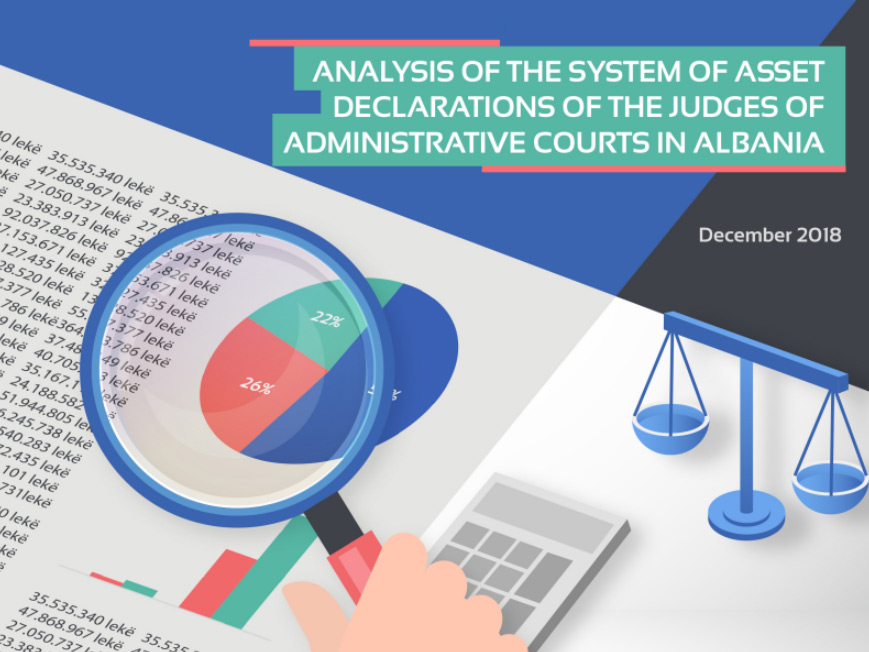
Analysis of the System of Asset Declarations of Administrative Court Judges in Albania, is a study published by the Balkan Investigative Reporting Network in Albania, which evaluates that structure of the wealth of the Administrative Court judges in Albania as well as the integrity of the asset declaration system.

The goal of this report is to identify key trends towards the enrichment of the 48 judges of the administrative courts in Albania. The study sheds light not only on how administrative court judges in Albania have accumulated wealth but also on key practices, recognized as “red flags”, which obscure the origin of this wealth. These include dividends from businesses, debts owed by family members, real estate transactions and cash kept outside the banking system.

To download a copy of the report in English, click here.

To download a copy of the report in Albanian, click here.

BIRN Albania Opens Call for Investigations on Housing and Property Rights

BIRN Albania launched a call for investigative stories on property rights and housing on February 18th.

BIRN is offering grants for three journalists to cover property rights and housing stories, as well as mentoring by experienced editors.

The call is held as part of the project ‘Exposing Corruption through Investigative Reporting’, financed by the National Endowment for Democracy.

The project’s aim is to strengthen journalistic reporting on corruption in the country through cooperation with civil society, in order to contribute to a more informed citizenry that is engaged in the democratic process.

Three journalists will be awarded grants to cover their expenses while conducting investigations and writing their stories on housing and property rights.

The journalists will have around three months to dig deeper and research their ideas, and will also have the opportunity to work with experienced editors as mentors to guide them through the process of writing in accordance with BIRN standards.

The call only applies to journalists from Albania and closes on March 10th.

Click here for more information (in Albanian) about the application procedure.

Click here to download the application (in Albanian).

BIRN Albania Holds Discussion on Property Rights and Housing

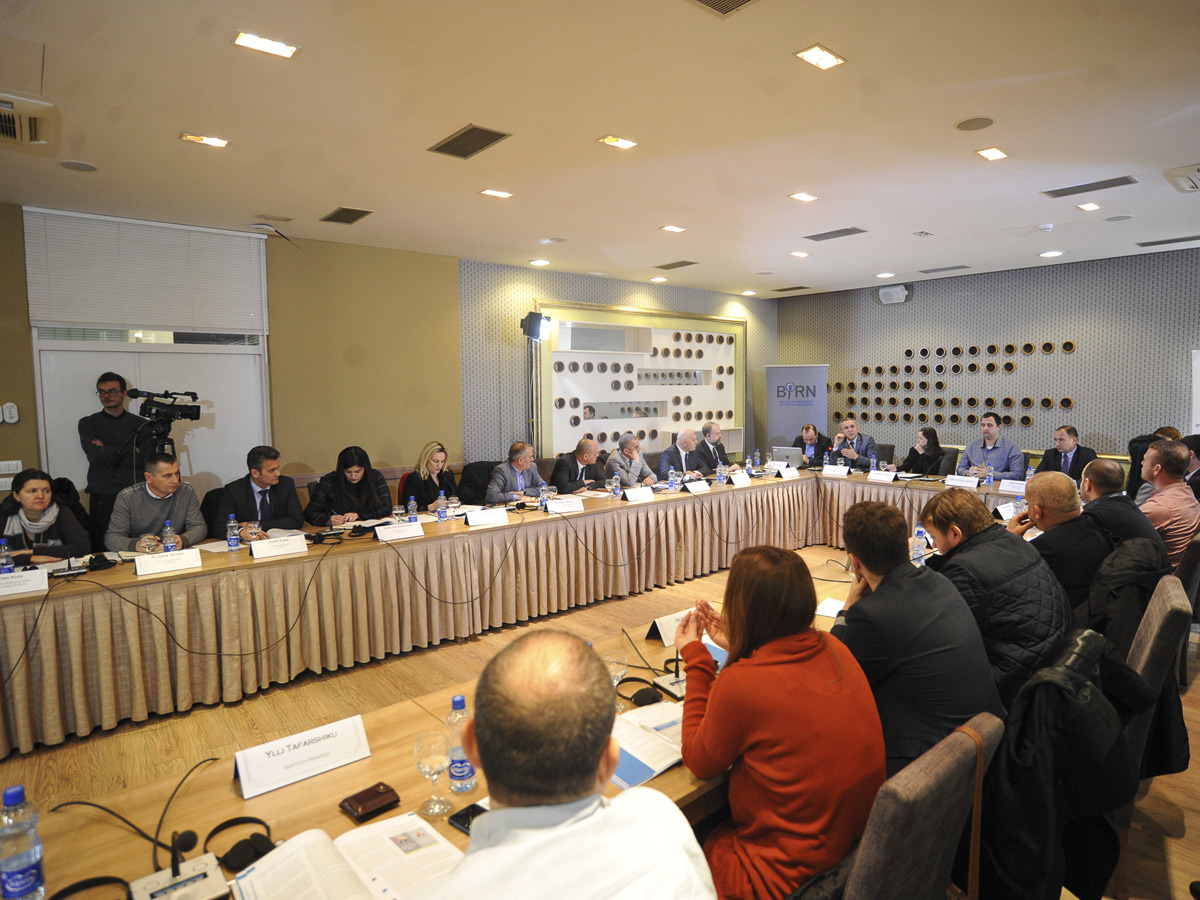
The Balkan Investigative Reporting Network in Albania held a roundtable discussion for civil society activists and journalists on the topic of property rights and housing.

Around 20 journalists, experts and civil society representatives gathered in Tirana on February 13 to discuss strategies that investigative reporters can use in order to better report on property rights problems and housing.

The event was held as part of the project ‘Exposing Corruption Through Investigative Reporting’, financed by the National Endowment for Democracy.  The project’s aim is to strengthen journalistic reporting on corruption in the country through cooperation with civil society, in order to contribute to a more informed citizenry that is engaged in the democratic process.

The roundtable was moderated by Gentian Serani, an activist from the Youth Movement for Roma and Egyptian Rights, and BIRN Albania editor Besar Likmeta.

During the roundtable, the participants suggested a series of key topics to be investigated, including problems with the management of public properties, discrimination against minorities in the rental market, as well as gender discrimination in property inheritance. Problems with property legalisation and the registration process, as well as the award of building permits, were also highlighted.

The goal of the roundtable was to draw attention to an upcoming call for investigative reporting grants on the topic of property rights and housing, which will be launched in the coming week by BIRN Albania.

Three journalists will be selected by an independent jury and will be mentored by BIRN editors for a period of three months to produce hard-hitting investigative reports on the topic.

BIRN Kosovo’s ‘Friday Forums’ Attract Diplomats and Politicians

BIRN Kosovo’s Friday Forums, organised each month since 2015, are events to which public officials and diplomats are invited to have an open, off-the-record conversations with all BIRN’s staff based in municipalities across Kosovo.

Past attendees have included senior officials from Kosovo and international diplomats.

“The point of these briefings is that our staff gets to pose better informed questions when they are covering a topic, and by meeting a lot of officials and diplomats in an off-the-record setting, they will know more about the topic, than from what they are likely to get from formal declarations,” said BIRN Kosovo’s director, Jeta Xharra.

Friday Forums are organised under Chatham House rules – the format used by Britain’s Royal Institute of International Affairs, with the aim of encouraging openness of discussion and facilitating the sharing of information. The format is now used throughout the world as an aid to free discussion of sensitive issues.

On February 1, Rozafa Ukimeraj, secretary of the Ministry of Local Governance, was BIRN Kosovo’s guest, along with Per Strand Sjaastad, the Norwegian ambassador to Kosovo.

Before that, at the end of October 2018, Rashit Qalaj, the director of the Kosovo Police, took part in a fruitful discussion with journalists just a few months after taking office.

On those Fridays when there are no guests, BIRN staff discuss relevant issues.

Friday Forums have in the past hosted: Natalya Apostolova and Samuel Zbogar, heads of the EU office in Kosovo; Christian Heldt and Angelica Viets, German ambassadors to Kosovo; Tracey Jacobson and Greg Delawie, US ambassadors to Kosovo, and Ruairi O’Connell, the UK Ambassador.

They have also hosted: Valdet Gashi, former Kosovo liaison officer to Serbia; Besim Kelmendi, former special prosecutor; Piero Cristoforo Sardi, the Italian Ambassador to Kosovo; Zoran Vodopija and Marija Kapitanovic, Croatian ambassadors to Kosovo; former President of Kosovo Atifete Jahjaga; head of Kosovo delegation, Avni Arifi, and the current President of Kosovo, Hashim Thaci, among others.

BIRN Kosovo Publishes Municipal Procurement Report

BIRN Kosovo, with the support of USAID, published a report on Thursday about procurement procedures in Kosovo’s municipalities from October 2017 to October 2018.

The publication analyses procurement procedures involving key actors from Kosovo institutions including government officials, Kosovo Assembly members and non-governmental organisations.

BIRN discovered that only a limited number of complaints about procurements were resolved in favour of businesses that appealed, with most decisions going in favour of the municipalities. Municipalities did not change their decisions despite demands from businesses to review their decisions, the report found.

Of a total of 272 demands for review, only 15 per cent of the complaints were decided in favour of economic operators – 41 in total – while 85 per cent, or 231 of the reviewed complaints, were decided in favour of the contracting authorities.

Kreshnik Gashi, the managing editor of BIRN Kosovo, said that BIRN has been working for several years to identify problems with public procurement procedures.

“We have monitored what we call the ‘holes in procurement’ which steal from the state’s budget. We have identified many of them and fortunately many of these gaps have been filled,” Gashi said.

The proper functioning of electronic procurement implementation and the publication of related contracts were among the positive developments recorded in 2018, which have helped to increase transparency in institutional procurement procedures.

Christina Davies, the director of USAID for Democracy and Governance, said that Kosovo has tried to improve the situation, but challenges remain.

“Kosovo has made efforts to increase transparency. However, corruption remains an obstacle for the future,” Davies said.

With the new report, BIRN Kosovo concluded its project on procurement and violations in procurement which was supported by USAID.

Applications Open for 2019 Balkan Fellowship for Journalistic Excellence

Do you know of a brilliant story that is begging to be reported? Do you want to take your skills as a journalist to another level, receiving close editorial support and a generous allowance to research a subject in depth?

If the answer to either of those questions is yes, you should consider applying for the Balkan Fellowship for Journalistic Excellence. The Application Form and Guidelines are on the BFJE website.

Each year, 10 journalists are chosen through open competition to receive funding and professional support to conduct in-depth research and write journalistic stories that reveal something new about our world – or that reveal the familiar in a new light.

The theme for this year’s fellowship is FREEDOM. We are open to applications from journalists from Albania, Bosnia and Herzegovina, Bulgaria, Croatia, Kosovo, Republic of Macedonia, Montenegro, Romania, Greece and Serbia. Please make sure you send us your application, including your proposal for a story based on this year’s theme, by March 6.

Applicants selected by an independent committee to take part in the fellowship will receive a €2,000 bursary and up to another €2,000 for travel and research expenses. They will also attend international seminars and receive continuous one-to-one mentoring for their stories.

Stories from the programme will be published by BIRN and by prominent regional and international media outlets. The top three stories, as selected by an independent jury, will also receive cash awards.

The Balkan Fellowship for Journalistic Excellence was launched in 2007 to promote high-quality, cross-border reporting. The programme provides fellows with financial and editorial support, enabling them to travel, report and write their stories and develop their journalistic skills.

Aimed at promoting the development of a robust and responsible press, the Balkan Fellowship for Journalistic Excellence has evolved into a signature programme that has helped shape journalistic standards across the Balkans while boosting the careers of participating reporters.

Corrupting the Birth Rates

BIRN Serbia
A new law on financial support to families with children (which was adopted in 2017 and came into force in 2018) has been creating confusion among citizens of Serbia.

Summary

While the government claims its policies are intended to increase birth rates, pregnant women and new mothers across Serbia are dissatisfied with low incomes during their absence from work. A new way of calculating maternity benefits leaves women confused and with no clear information about how much money they can expect while pregnant or after giving birth.

Donor: Transparency International

Information Sheet

Main Objective

To inform Serbian citizens so they can exercise their rights in relation to maternity leave and state financial aid.

Specific Objectives

To develop a digital tool that calculates maternity and pregnancy leave compensation in order to better inform the Serbian public.

Main Activities

Data collection, monitoring and analysis
Developing digital tools
Publishing analysis

Target Groups

Families with children, general public

Highlights

Analysis, digital tools, date bases

Main implementer

BIRN Serbia