Open Call for Applications for EU Investigative Journalism Award in North Macedonia

Investigative stories published from January 1 to December 31, 2019, and related to freedom of expression, rule of law, transparency, abuse of power and fundamental rights, corruption and organised crime are welcome to apply.

The award fund in each country in 2020 (for achievements in 2019) is 10,000 EUR. The first prize will be 5,000 EUR, the second 3,000 EUR, and the third will be 2,000 EUR.

Individuals or groups of journalists are eligible to apply in all journalism forms (print, online, radio and TV) published or broadcast in the media in each country in official, minority or international languages.

Articles eligible for submission must appear in print, online, radio and TV media outlets during the 2019 calendar year.

EU Investigative Journalism Awards in the Western Balkans and Turkey aim to celebrate and promote the outstanding achievements of investigative journalists as well as improve the visibility of quality journalism in the Western Balkans and Turkey.

The awards are a continuation of the ongoing regional EU Investigative Journalism Award in the Western Balkans and Turkey and part of the ongoing project ‘Strengthening Quality News and Independent Journalism in the Western Balkans and Turkey’, funded by the European Union.

The project partners involved all have extensive expertise in the field of media freedom and have been recognised locally and internationally as strong independent media organisations.

The jury for the EU Award comprises media experts, some of them from the project consortia. Others are drawn from the extensive network projects that the consortium members have, such as editors, members of academia and journalists with merits.

The awards will be given annually in all six Western Balkan countries and Turkey.

For more information, please get in contact by email at [email protected] or +389 2 2671 201. All the details and guidelines for North Macedonia can be found below this article.

The deadline for the applications is July 27, 2020.


To download all necessary documents for North Macedonia in Macedonian click here

To download all necessary documents for North Macedonia in Albanian click here

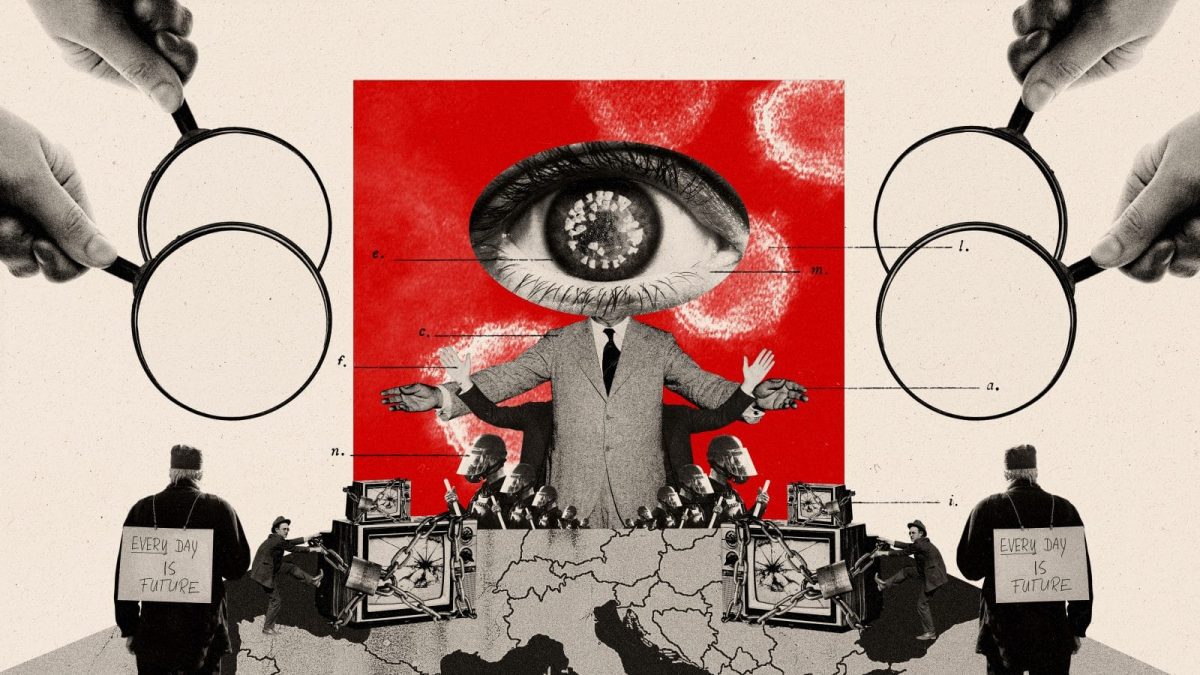
Democracy after Coronavirus

Reporting Democracy’s first annual trends report shows that democracies in Central and Southeast Europe need intensive care to survive an unprecedented time of crisis.

Across Central Europe and the Balkans, democracy is deteriorating. Even before coronavirus, the patient had underlying conditions, including allergies to good governance and a weakened immunity to populist excesses. Now, in some countries at least, the pandemic has turned chronic malaise into a democratic emergency.

To read the full report, click here.

Report: From Cures to Curses, Digital Rights During Pandemic

From January 26 to May 26, 2020, during the coronavirus pandemic in Central and Southeastern Europe, the Balkan Investigative Reporting Network, BIRN, and SHARE Foundation uncovered 163 cases of digital rights breaches in Hungary, Bosnia and Herzegovina, Croatia, Serbia, Romania and North Macedonia, of which 68 were linked to manipulations in the digital environment, while 25 were related to publishing falsehoods and unverified information with the intention to damage the victims’ reputation.

According to these monitoring findings, more than half of the digital rights violations were related to propaganda, disinformation, falsehoods and the publication of unverified information, while citizens were the affected parties in almost 80 per cent of the cases.

To read the full report, click here.

BIRN Journalists Win Serbian Prize for Investigative Journalism

BIRN Serbia  journalists Jelena Veljkovic and Aleksandar Djordjevic have won this year’s Dejan Anastasijevic Investigative Journalism Award in the online media category for a series of articles about the father of the Serbian interior minister’s involvement in arms trading.

The prize was awarded on Thursday by the Independent Association of Journalists in Serbia with the support of the US embassy in Belgrade. This year, the award was renamed after the late Dejan Anastasijevic, a highly respected Serbian journalist.

BIRN’s story investigated how the minister’s father was buying weapons at preferential prices from the weapons manufacturer Krusik and then selling them at drastically higher prices.

In 2018, BIRN published the first article based on the testimony of a whistleblower from Krusik, Aleksandar Obradovic, and continued uncovering new facts through 2019. The story became one of the biggest political scandals in the country in 2019.

Vuk Cvijic, a journalist from weekly news magazine NIN, was given the Dejan Anastasijevic award in the print media category, while Adam Santovac was awarded for a documentary made for N1 TV in the broadcast media category. Masina and Juzne vesti’s newsrooms were awarded for making special contributions to investigative journalism.

This year, BIRN was also nominated for the cross-border investigation Illumination of Serbia, Hungarian Style, and Dragan Gmizic’s documentary ‘Predators’ about fish theft, co-produced by Greenfield Production from Novi Sad and BIRN.

BIRN and Partners Hold Environmental Reporting Course in Montenegro

A training course in investigative journalism for environmental topics was held on June 11-12 in Petrovac in Montenegro, aiming to strengthen the in-depth reporting of Montenegrin journalists on envronmental issues.

The event was also held to select journalists to receive research grants, supervision and mentoring from an editorial team from Montenegro and the wider region.

On the course’s agenda were topics such as online storytelling, work with sources and fact-checking, along with explanations of the Chapter 27 in the EU acquis, which covers environment policy. The course also addressed sustainable development and the challenges it poses for Montenegro.

On the second day, stories that were pitched through a call for proposals were presented and evaluated.

The training was organised by BIRN,CIN-CG and Monitor, as part of a project entitled ’Investigative Journalism on EnvironMEntal Issues, with Citizens’ Engagement’ supported by the EU Delegation in Montenegro.

After the investigations are complete, all stories will be published on the CIN-CG and BIRN websites, as well as in a special bilingual publication and e-book.

BIRN Wins European Press Prize for Justice Reporting

The Balkan Investigative Reporting Network Bosnia and Herzegovina has won the prestigious European Press Prize for its reporting on war crimes trials, transitional justice issues and the problems faced by victims of the 1990s conflict.

BIRN Bosnia and Herzegovina was given the European Press Prize Special Award for 2020 on Thursday for its groundbreaking work in covering transitional justice topics.

“The Balkan Investigative Reporting Network’s work ensures a unique archive of all war crime trials, as well as many personal stories of survivors, documentary films about the victims of sexual violence and families of the missing, and numerous other research and analytical stories,” the European Press Prize judges said in a statement.

The judges noted that BIRN Bosnia and Herzegovina “was founded in 2005 to provide people in Bosnia and Herzegovina with accurate and timely information about the rule of law in the country and wider region”.

The European Press Prize Special Award is given for excellence in European journalism and has previously been won by the editor of The Guardian for the publication of stories based on the Edward Snowden files, and last year by the Forbidden Stories team “for their mission to continue and publish the work of journalists facing threats, prison or murder”, the judges said.

BIRN Bosnia and Herzegovina’s executive director Denis Dzidic said the award is important for journalists in the media outlet’s newsroom, but that it also belongs to the survivors of the Bosnian war.

“This award means an indescribable amount to all of us who have spent days, weeks and months writing about war crimes and reporting daily from courtrooms to record the testimony of every victim who has come to tell their story,” Dzidic said.

“This award also belongs to the victims, because our work would be worthless if it were not for the surviving women and men who gathered the courage to share with us the most horrible things they experienced, showing courage, patience and strength that we cannot comprehend,” he added.

BIRN Bosnia and Herzegovina is part of the BIRN regional network, which uses the same methods of covering war crime trials and transitional justice processes across the whole of the former Yugoslavia.

BIRN’s regional director Marija Ristic said that covering war crime trials and transitional justice issues has been one of the core topics for network’s journalists for 15 years.

“BIRN’s first ever news report in 2005 was from a war crime trial. Years later, we continue with the same passion and dedication to providing accurate and balanced reporting and bringing uncompromising stories from a region that is still battling with revisionism and the denial of war crimes,” Ristic said.

One of the members of the European Press Prize judging panel, Alexandra Föderl-Schmid from Süddeutsche Zeitung, said that “the Balkan Investigative Reporting Network… really supports investigative journalism in Bosnia and that is really a difficult task there”.

The managing editor of BIRN Bosnia and Herzegovina, Semir Mujkic, said that receiving the European Press Prize Special Award is a great honour from the best European journalists.

“The daily commitment of our journalists to writing investigative stories and the perseverance in conveying sensitive and relevant stories has now received recognition and new encouragement,” Mujkic said.

The European Press Prize is one of most prestigious European journalistic awards and is given to journalists and media from 47 Council of Europe countries.

“Never did we have such a diverse list of entrants, nominees and winners,” Thomas van Neerbos, executive director of the European Press Prize, said of the 2020 awards.

“From the newsrooms in Norway to the brave offices of BIRN and DoR [Romanian media outlet Decât o Revistă], from taking on China’s surveillance state, via sexism in sports to a personal account of euthanasia, this is the true scope of European journalism, these are the topics that we ought to debate,” van Neerbos added.

The winner of the 2020 Investigative Reporting Award was ‘Trigger Warning’ by Annemarte Moland, Even Kjølleberg and Ruben Solvang, published by NRK from Norway.

The winner of the Distinguished Reporting Award was ‘The Uyghur Women Fighting China’s Surveillance State’ by Isobel Cockerell, published by Coda Story from Georgia.

The winner of the Opinion Award was ‘How We Stopped Being Comrades’ by Beata Balogová, published by SME in Slovakia.

The winner of the Innovation Award was ‘How DoR Organised an All-Team Pop-Up Newsroom in Transylvania’ by Decât o Revistă from Romania.

Sasa Dragojlo

Sasa joined BIRN in 2020 as a correspondent for Balkan Insight. Previously, he has worked for Balkan Insight from 2015 to 2016.

He has also worked for Insajder, the Serbian investigative media portal and a television show in Belgrade. As a part of Insajder team, he worked on documentaries involving political corruption, financial crime and social and workers’ rights. He is the co-author of the investigational documentary entitled, “State against the Workers”, about financial crime in Gosa, Serbia’s railway line factory, author of the documentary, “Bristolska straza” (Bristol guard), about homeless war veterans, and of the documentary “In a Vicious Circle”, which dealt real estate fraud in the country.

During his journalism career, Sasa has published articles in Serbian and regional media, such as the investigative portal KRIK, weeklies NIN and Vreme, daily Danas, the fact-check portal Istinomer, Vice Serbia, Kosovo 2.0 and others.

Sasa has a bachelor degree in journalism from the Faculty of Political Science in Belgrade and speaks Serbian and English.

‘Lawsuit Filed Against BIRN Serbia’ over Fake Medical Record Story

A law firm from Novi Sad has reportedly filed criminal charges against BIRN Serbia journalists Natalija Jovanovic and Jelena Veljkovic and editor Milorad Ivanovic for allegedly making public confidential business information and recording a conversation with a lawyer from the firm, Nemanja Aleksic, without authorisation.

The reported lawsuit comes in response to an article that BIRN Serbia published about a falsified medical document, based on official documents obtained through procedures set out by the Law on Free Access to Information of Public Importance.

Aleksic has reportedly pressed charges against BIRN and after initially making accusations and voicing insults during a conversation with a BIRN journalist.

On June 5, BIRN Serbia revealed that in December 2011, doctor Zoran Gojkovic, the Provincial Secretary for Healthcare and an orthopaedic specialist at the Clinical Centre of Vojvodina, compiled a medical report on an examination that he did not perform, identifying injuries that were never sustained, from a person who had never been to his office.

According to BIRN’s findings, he also authenticated the report using the official stamp of a fellow orthopaedic specialist, without his knowledge, and forged the colleague’s signature.

Documents obtained by BIRN show that Gojkovic handed over the false medical report to his friend, Novi Sad-based lawyer Nemanja Aleksic, who used it in a civil procedure at the Basic Court in Novi Sad and thus directly influenced the outcome of the legal procedure.

BIRN Serbia has no detailed information about the charge against it, which has reportedly been filed to the Special Prosecution Office for High-Tech Crime.

BIRN Serbia found out about the lawsuit via a report published by news agency Tanjug.

According to Tanjug, lawyer Aleksic stated that BIRN Serbia’s editor and journalists were spreading misinformation and fake news, causing panic among his law office’s employees, associates and clients, and damaging the office’s reputation.

BIRN Serbia regards the lawsuit and the claims in the Tanjug report to be unacceptable pressure on its work and editorial policy.

Reporting Democracy Report Warns of ‘Democratic Emergency’ in Region

Report says democracy in Central and Southeast Europe was being eroded even before COVID-19 erupted, and cautions that the coronavirus pandemic has made a bad situation worse.

Democracy is deteriorating across Central Europe and the Balkans says “Democracy after Coronavirus”, the first annual trends report published on Thursday by Reporting Democracy, a cross-border journalistic platform run by BIRN, a leading regional non-profit media network.

“Even before coronavirus, the patient had underlying conditions, including allergies to good governance and a weakened immunity to populist excesses. Now, in some countries at least, the pandemic has turned chronic malaise into a democratic emergency,” the report says.

Marking the first year of the Reporting Democracy initiative, BIRN’s “Democracy After Coronavirus” report highlights the key “signals to watch” as the political and social consequences of the coronavirus crisis come into view.

They include increasingly autocratic regimes, assaults on transparency and media freedoms, disregard for the rule of law, profound demographic and social changes in the region as well as heightened geopolitical tensions in an increasingly divided Europe.

The report seeks to examine the political implications of the pandemic, but also proposes some key remedies, such as greater support to free media, more parliamentary oversight, judicial independence and respect for the rule of law.

“While democracy’s sickness has an air of inevitability in the midst of the pandemic, it is too early to say if the prognosis is terminal. Many analysts believe the patient can be saved if given the proper intensive care,” the report concludes.

BIRN Serbia Monitoring Examines Media Reporting on Corruption

Organised crime and corruption are regular topics in the Serbian media, but BIRN Serbia’s monitoring, carried out in cooperation with the Centre for Judicial Research (CEPRIS) NGO shows that only a small number of articles reported on the court cases, indicating that the media often do not follow such cases to their judicial conclusion.

Content analysis of media reporting on organised crime and corruption was conducted on a sample of seven media outlets – three daily newspapers, one weekly, two TV stations with national coverage, and one cable TV channel.

The monitoring sample contains 186 pieces – articles and TV reports published or broadcast during 2019. Topics covered include conflict of interest, misuse of public finances, influence peddling, and corruption in certain specific fields, such as the education system.

Analysis shows that the way media report on corruption and organised crime depends on the editorial policy of a particular media outlet – those inclined to the ruling party report in a propagandistic way, praising the state’s fight against corruption, at the same time systematically avoiding reporting on court cases and issues such as conflict of interest, particularly when representatives of the ruling party are involved.

At the opposite end is a critical approach which criticises the judicial system in the country and political pressure on the judiciary.

A genuine public debate at which alternative opinions could be heard, which are supposed to be reported by the media, is missing.

An additional difficulty is the duration of court proceedings – in some cases more than ten years – which makes continuous media coverage of this topic even more difficult.

Tabloid media tend to use a small number of sources of information, and frequently their reports are based only on information from one source or on anonymous sources.

As well as sensationalism and partial reporting, the most frequent ethical problems are the breaching of the presumption of innocence and the spreading of rumours.