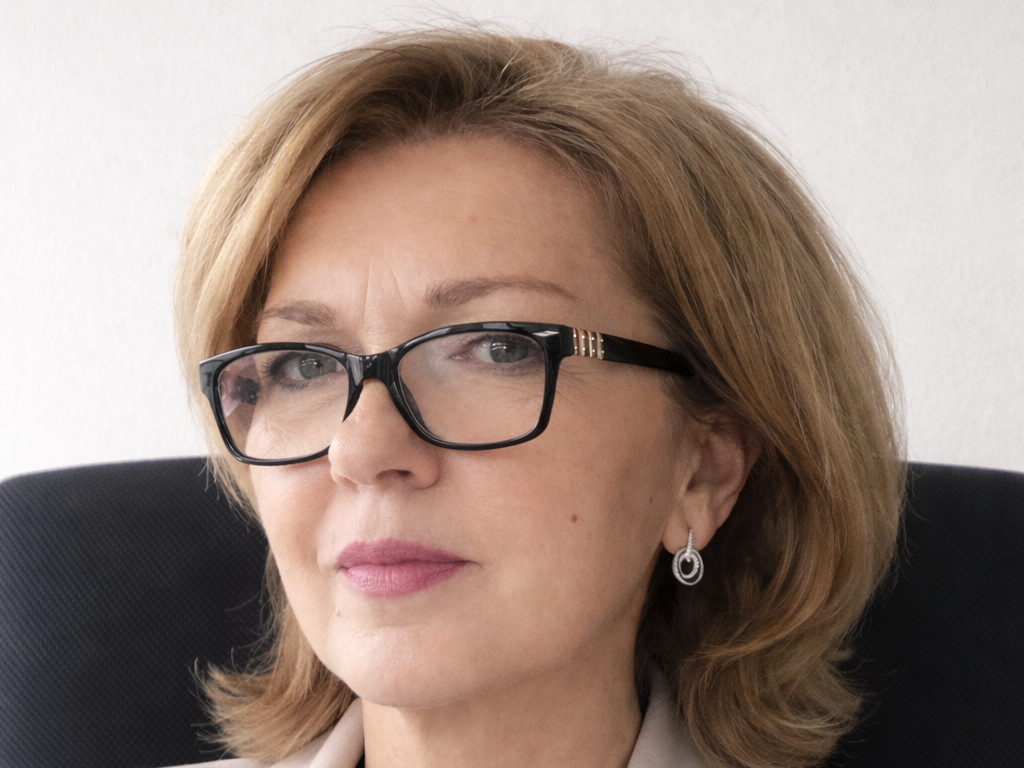
Having fostered a passion for Information Technology since the age of nine, Arian Hyseni is accustomed to putting to use the latest innovations in the field.
Arian joined BIRN in February 2008. He is responsible for maintaining the overall network, ensuring the online presence of BIRN products, as well as managing daily tasks in the office.
In 2009, he received the Cisco Certified Network Associate (CCNA) accreditation. He is currently enrolled at the University for Business and Technology, UBT, reading Management, Business and Economics.
Besar has extensive experience in journalism, having worked in print, television and electronic media in both the US and Albania since 2003.
Besar has been the editor for BIRN Albania since 2007, and serves as the country correspondent for Balkan Insight.
Besar started his career reporting for the Florida Times Union in Jacksonville, Florida. He moved to Albania in 2005 where he worked as a features editor for the Tirana Times, and a world news editor for the 24 hour news channel TV Ora News.
He has also contributed stories to various publications including The Christian Science Monitor, Global Post, Transitions Online, The Diplomatic Courier and World Politics Review.
In 2009 Besar received the CEI/SEEMO Award for Outstanding Merits in Investigative Journalism and in 2010 he was runner up to the Global Shining Light Award, presented at the Global Investigative Journalism Conference in Geneva. Besar studied philosophy at the University of North Florida.
Founder of the Balkan Investigative Reporting Network (BIRN) and Regional Network Director until May 2018.
With her Balkan colleagues Gordana helped establish, manage and develop the Balkan Investigative Reporting Network, BIRN. Through her dedication, engagement and careful planning of network establishment, programme objectives and strategies for further development, the organisation has continued to grow since its inception.
Gordana began her career as a journalist in Belgrade in 1981. She reported from Bosnia and Kosovo during the wars that followed the dissolution of the former Yugoslavia. From 1998 to 1999, she worked in the field of human rights as Director of Research for the Humanitarian Law Centre (Belgrade), and Kosovo Researcher for Human Rights Watch (New York).
She has received several journalism awards, including the 1998 Overseas Press Club (USA) Award for Human Rights Reporting and a Human Rights Watch Hellman Hammet award in the same year for her research into war crimes in Foca, Bosnia & Herzegovina.
Gordana was Balkan project manager at the Institute of War and Peace Reporting, IWPR, from 1999 until August 2005, during which time IWPR’s Balkan reporting received numerous press awards and media citations.
Gordana graduated in 1983 from the University of Belgrade’s School of Political Science, Department of Journalism.
Marija Ristic was the executive director of Balkan Investigative Reporting Network, a network of seven non-governmental organisations promoting freedom of speech, human rights and democratic values in Southeast and Central Europe. Ristic oversaw the activities and communications within the Network and represented it publicly.
As regional director, Ristic also led the BIRN Hub, which coordinates the BIRN network, dealing with editorial, training, operations and development, as well as developing, fundraising for and coordinating core regional projects. She was also the editor-in-chief for the Network.
Ristic started working for BIRN in 2011 as a journalist, contributing to the regional Balkan Transitional Justice programme. Topics related to war crimes, dealing with the past and human rights have been at the core of her professional development.
In 2015, she produced the award-winning documentary ‘The Unidentified’.
Under her leadership, BIRN won numerous awards, including the European Press Prize, while the Network expended its coverage beyond the Balkans – to Central and South Europe. As a director, Ristic in particular focused on development of digital rights and tech programme, empowerment of local media through capacity building and citizens’ engagement and expansion of human rights focused programmes.
In 2019, Ristic won Press Freedom Award from the Reporters Without Borders.
She graduated magna cum laude from the Geneva Academy for International Humanitarian Law and Human Rights, the University of Geneva and the University of Belgrade. She was a fellow at the Free University Berlin and Columbia University New York and received numerous awards and scholarships from the Konrad Adenauer Stiftung, the OSCE, the Zoran Djindjic Foundation and the Research Council of Norway. She speaks Serbo-Croatian, English and German and lives between Sarajevo, Belgrade and Berlin.
Maida joined BIRN Hub in January 2008 as a Financial Officer based in Sarajevo. Maida is responsible for cash flow management, monitoring daily financial operations, reviewing financial data and preparing monthly and annual reports as well as accountancy and auditing and overall communication with other departments and the staff of BIRN.
Her educational background is in economics, and she has worked for two and half decades in international commercial business, finance, accounting and administration. She has attended different trainings related to office management, administration and project related courses.
Maida studied at the University of Economic of Tourism in Sarajevo. She speaks Bosnian and English.
After the election of new Board members in November 2011, BIRN’s new Board and Steering Committee met for the first time in Belgrade from July 6 to July 8.
The new board is composed of Tim Judah, author and Balkan correspondent for the Economist, Wolfgang Petritsch, Austria’s Permanent Representative to the OECD, Steve Crawshaw, international advocacy director at Amnesty International, Stefan Lehne, former Austrian diplomat and visiting scholar at the Carnegie Europe in Brussels, and Per Bymon.
Previously head of Humanitarian Assistance in the Swedish SIDA (Swedish International Development Agency), he is now secretary general of Swedish Radio and Television’s humanitarian foundation, Radiohjälpen.
Ana Petruseva, representative of BIRN members, previously a long-time president of the board, also now joins the board.
The Board was presented with BIRN’s organisational structure, its on-going charitable and commercial programmes, and the organisation’s current success as well as plans for the future.
BIRN’s Statute was put before the members for consideration and, following further input from the team, will be finalised by the end of September.
“It was important for Board members to understand the depth and breadth of what BIRN is, and also to see that each of the local BIRNs can do different things,” Judah, the president of BIRN’s Board, said.
“It was also helpful for people from the local BIRNs to get together and understand what everyone else is doing and share experiences, as well as discuss how to exploit the network’s strength for their mutual benefit,” he added.
BIRN’s staff used the opportunity of the meeting to vote for a new visual identity for the whole organisation, as well as on the new layout of the organisation’s website.
The new visual identity and website will be implemented by the end of the year.
Local BIRN Directors concluded that an internal exchange of personnel should be put into practice, so that BIRN staff members can become better acquainted with their colleagues’ work.
It was also decided that in 2013, the next BIRN annual meeting should be held for the whole organisation.
In only three months, Balkan Transitional Justice (BTJ), a regional initiative of BIRN HUB, has acquired over 6,500 Facebook fans across four different pages.
BTJ aims to inform the public about progress made in overcoming the violent past by addressing topics of regional reconciliation. Balkan Transitional Justice has four fan pages on Facebook – in English (Balkan Insight’s Transitional Justice), BCMS (Balkanska tranziciona pravda), Albanian (Drejtësia Tranzicionale në Ballkan), and Macedonian (Балканска транзициска правда).
The most popular of the four has been the joint Bosnian, Croatian, Montenegrin and Serbian fan page with nearly 2,000 fans.
The Albanian fan page was launched in May and 1,545 people have already “liked” it. Both the English and the Macedonian versions have nearly 1,500 fans.
The publication of daily news and analyses by the regional BTJ team began in March 2012 and is composed of six journalists, three translators, and proofreaders. Since then, the BTJ website has published over 700 original articles in English that were translated into Bosnian, Croatian, Montenegrin, Serbian, Albanian, and Macedonian.
The BTJ archives currently contain over 2,800 news pieces, analyses, interviews, profiles and background stories in English and the languages spoken in the former Yugoslavia, except Slovenian.
The success of the BJT project on Facebook demonstrates that issues of transitional justice are of great concern and interest to the local public.
Paul Lewis runs teams of journalists at the Guardian newspaper working on a range of investigations. He recently led Reading the Riots, a major research project into the causes and consequences of the England riots.
He was named Reporter of the Year at the British Press Awards 2010 and won the 2009 Bevins Prize for outstanding investigative journalism for his stories about the death of Ian Tomlinson during the G20 protests.
In 2012 Paul was nominated for both Reporter of the Year and the Orwell Prize for Journalism.
Paul lectures across Europe about the use of social media in journalism and teaches a masterclass in investigative reporting.
BIRN’s Slobodan Georgiev participates in the 4M Conference in the French town of Montpellier as the only journalist from Serbia.
The 4M (Montpellier, Mediterranean, Media, Mutations) conference, sponsored by the Canal France International, is devoted to new media and journalism, with special emphasis on reporting the elections and revolutions that have shaken the Arab world last summer. Given that 2011 was marked by the Arab Spring, and 2012 by elections that were held or will take place in Russia, USA, France, Tunisia, Egypt and Greece, the theme of the conference in Montpellier is “E- politics: after the Revolutions, the elections.”
Over one hundred bloggers and journalists from online and print press, and audiovisual platforms from around the world will discuss the impact of media on elections and the role of internet in democratic changes. Discussion threads are „Is the internet a new maker of kings?”, “From citizen journalism to professional journalism: the keys of change? “ and «Investigating on the web: an asset or a constraint?”.
As the only journalist from Serbia, Slobodan Georgiev participated on the panel “The Internet is a new kingmaker”, together with colleagues from the United States, Senegal and Egypt.
Slobodan Georgiev is Serbian journalist, coordinator of projects in the Balkan Investigative Reporting Network, BIRN, and administrator of “5 dimes for the media”, a Facebook group which was active in shaping public discussion on internet during the recent elections in Serbia.
Between May 7-9, 2012, Jeta Xharra, BIRN Kosovo Country Director, attended the 2012 Oslo Freedom Forum as one of the speakers.
Xharra was one of 36 speakers at the forum. She gave a presentation entitled “On Air and Under Attack in Kosovo” was about journalism during peacetime and how it can as challenging as journalism during wartime.
She recalled her work during the Kosovo conflict in the late 1990s.
“The media was basically aiding the killings, and de-humanizing the enemy…The war time reporting was worth risking my life and getting occasionally arrested by the Serbian authorities,” Xharra explained.
Xharra’s journalistic career continued following the war.
“I thought things would get boring after the war. It was a time of peace after all…What happened next was that these freedom fighters transformed into politicians, a fascinating transformation to have witnessed as a local journalist.
“In post-war Kosovo, our job as journalists was to make politicians accountable to their public. A piece of cake, I thought. A piece of cake compared to war-zone coverage,” Xharra said.
Xharra described the effects of one of her media products, the current affairs show “Life in Kosovo.”
“It became the first of its kind to broadcast debates, such as those held in every town in Kosovo during the municipal elections. The municipal mayor would declare his promises and a year later the tape would be played back to him.”
“This is when things started to get messy…some of these mayors were former freedom fighters and we challenged them all despite their war credentials. They started using their intimidation tactics by physically threatening me and my team and eventually it led to a 12 day campaign of government tabloids which labelled my team and me as traitors and Serbian spies,” Xharra said.
Xharra defined three lessons that she learned. First, reporting during peacetime can be as difficult as reporting during wartime. Secondly, freedom of speech is not cheap and lastly, form international allies. Xharra concluded her speech by stating that journalists face a never-ending war for the freedom of speech.
The Oslo Freedom Forum is an annual event that started in 2009 to bring humanitarian issues to the top of the global agenda, highlight the stories of human rights advocates an encourage the exchange of ideas.
This year it has brought together and enabled a platform to exchange experiences with some of the most notable and inspiring speakers, including Ahmed Benchemsi, a Moroccan journalist and media entrepreneur, Scott Carpenter, principle at Google Ideas, Nick Cohen, British journalist, author and political commentator, Naomi Natale, installation artist and social activist, Julia Ormond, an Emmy award-winning stage, film and television actress.