Programi: Zbardhja e korrupsionit në Shqipëri

Lënda: Thirrje për artikuj investigativë në fushën e shëndetësisë

Thirrja organizohet nga Rrjeti Ballkanik për Gazetarinë Investigative në Shqipëri (BIRN Albania), me mbështetjen e Fondacionit Shoqëria e Hapur për Shqipërinë, Soros.

Nëpërmjet këtij konkursi tre (3) gazetarë investigativë do të përzgjidhen për të prodhuar artikuj investigativë në fushën e shëndetësisë, në bashkpunim me shoqërinë civile. Fituesit do të përzgjidhen nga një juri e pavarur e përbërë nga gazetarë me eksperiencë dhe ekspertë në fushën e shëndetësisë.

Aplikantët e përzgjedhur, të cilët do marrin një bursë prej 1,200 USD ($1,020 + $180 taksë të ardhurash personale), do kenë në dispozicion një periudhë tre mujore për të përfunduar investigimin e tyre dhe përgatitjen e artikullit për publikim.

Kandidatët fitues pritet që të angazhohen dhe të përmbushin të gjitha detyrimet në lidhje me investigimin, siç janë: takimet e shpeshta (javore) me redaktorin, publikimin e tekstit në faqen e BIRN Albania dhe gjithashtu në Balkan Insight, si dhe respektimin e standardeve të gazetarisë investigative dhe etikës profesionale.

Kandidatët duhet të formulojnë një propozim të detajuar për konkursin. Propozimet duhet të kenë për qëllim ekspozimin e korrupsionit, abuzimit me pushtetin, pandëshkueshmërisë dhe mungesës së zbatimit të ligjit në këtë fushë.

Prioritet në përzgjedhje do i kushtohet propozimeve të cilat përfshijnë një nga temat e mëposhtme, të sygjeruara si prioritare gjatë një tryeze të rrumbullakët midis gazetarëve dhe përfaqësuesve të shoqërisë civile në fushën e shëndetësisë të organizuar nga BIRN Albania:

  • Korrupsioni dhe shpërdorimi i detyrës në sektorin e shëndetësisë;
  • Importi, kontrolli dhe monitorimi i barnave;
  • Menaxhimi i mbetjeve spitalore dhe asgjesimi i barnave të dala jashtë përdorimi;
  • Keqmenaxhimi i fondeve në sektorin e shëndetësisë nga institucionet lokale dhe ato qendrore;
  • Mosfunksionimi i mekanizmave publik të monitorimit dhe kontrollit të cilësisë së shërbimeve  shëndetësore në nivele të ndryshme të tij;
  • Problematike e burimeve njerëzore në sektorin e shëndetësisë (specializimet dhe edukimi në vazhdim i personelit shëndetësor, shpërndarja gjeografike dhe mënyra e përzgjedhjes);
  • Mosbarazia në akses/cilësi në marrjen e shërbimeve për grupe të ndryshme vulnerabël (aftësi e kufizuar, komuniteti rom, familje në nevojë);
  • Keqmenaxhimi i buxhetit në shërbime shëndetësore për infrastrukturë, materiale mjekësore dhe barna.

Aplikantët mund të dërgojnë më shumë se një aplikim, por vetëm një propozim për kandidat do të përzgjidhet.

Të drejtën për të aplikuar e kanë të gjithë gazetarët në Shqipëri, të punësuar apo në profesion të lirë.

Kandidatëve i kërkohet që bashkë me formularin e plotësuar të aplikimit të dërgojnë një CV, dhe tre shembuj të punës së tyre me email në: [email protected] 

Afati i Aplikimit: 7 Qershor 2015

Kandidatët e përzgjedhur do të njoftohen deri më datë: 15 Qershor, 2015

BIRN Albania Holds Roundtable on Healthcare

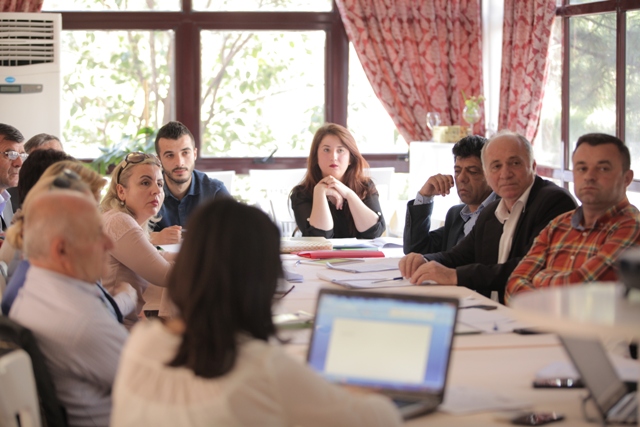
The Balkan Investigative Reporting Network Albania organised a roundtable on May 15 in Tirana, bringing together journalists and civil society organisations working in the field of healthcare.

It was the fourth in a series of seven roundtables, part of a programme called ‘Exposing Corruption in Albania’, which is financed by the Open Society Foundation in Albania (OSFA), and the Swedish International Development Cooperation Agency (SIDA).

The project aims to expose corruption cases in seven different sectors: the environment, the judiciary, education, public administration, local government, organised crime and health, by bridging the gap between journalists and CSOs, and by providing a solid basis for collaboration in exposing abuses of power.

About 19 representatives of non-governmental organisations and eight journalists discussed different topics of concern regarding the healthcare sector in Albania, with a special focus on corruption and impunity in the system.

The representatives of the NGOs listed a number of topics, ranging from bribery, corruption in the procurement of drugs, abuse of patients’ rights, treatment of medical waste and others.

The topics highlighted by the NGOs will be listed in BIRN Albania’s upcoming call for investigative stories in the field of healthcare.

BIRN Albania Launches Web Page on Elections and Territorial Reform

The Balkan Investigative Reporting Network in Albania on May 18 launched a special webpage zgjedhje2015.report.al on its Albanian language portal Reporter.al, with in-depth information on the country’s territorial reform and the June 21 local elections.

The page contains an interactive map of the new territorial division, which reduced the number of municipalities from 381 to 61, a profile of the each of the 61 new municipalities that emerged from the reform, six in depth analysis on the impact of the reform, and the CVs of election candidates running in the polls.

By June 5, the page will be enriched with interviews with mayoral candidates running in the 61 municipalities, which were based on a set of questions generated from interviews and roundtables with civil society activists, organizations and community leaders.

The questions were generated by in-depth interviews with more than 250 community leaders that BIRN Albania conducted in the above mentioned municipalities over the last two months, in order to identify citizens’ concerns about the problems and challenges their area faces.

The roundtables were held in Kukes, Shkodra, Burrel, Elbasan, Berat, Fier, Vlora, Gjirokastra, Korca and Tirana, and more than 150 representatives of civil society organisations, minorities and grassroots groups participated.

The focus web page is part of the project on ‘Accountability in Local Governance through Citizen Participation and Civic Journalism’, supported by the US Embassy in Albania Democracy Small Grants Program, the Balkan Trust for Democracy (BTD) and the Swedish International Development Cooperation Agency (SIDA)

This project aims to bridge the gap between local voters and mayoral candidates ahead of the 2015 local elections, by strengthening the capacities of CSOs, grassroots organisations, activists and the media in order to identify and stimulate public debate on the key issues facing local communities.

Tanja Maksic

Tanja Maksic has been a member of the BIRN Serbia team since 2010. She develops and manages projects in the field of media policy and good governance.

Tanja also conducts research and is responsible for the design, theme definition and methodology of research, for writing policy reports and recommendations, and for advocacy work. Although she studied journalism, Tanja has specialised in media monitoring, especially content analysis of media production and the media economy. She is particularly involved in advocating the transparent financing of the media.

Tanja graduated from the Faculty of Political Sciences in Belgrade, and before BIRN she worked for the Association of Independent Electronic Media (ANEM) and as an associate of the Media Center Belgrade.

Jelena Veljkovic

Jelena Veljkovic has worked as a journalist since 1992, mostly covering topics of politics, public finance, corruption and war crimes.

She started her journalistic career at Belgrade-based Studio B’s morning show, where she later worked as an editor of the channel’s primetime news programme. During her 20-year journalistic career, she has worked for several media outlets, but spent the longest period at Radio and Television B92, where she worked as news editor, the host and the author of the show Truth, Responsibility, Reconciliation and radio show Kaziprst, and an associate of the investigative journalism TV show Insider. She dealt with issues of corruption as an associate of the government’s council for the fight against corruption, where she worked on the development of a number of reports.

She was the winner of an Independent Association of Journalists of Serbia investigative journalism award as a co-author of the series Secret of the Yellow House, in which she investigated war crimes in Kosovo and Albania and the alleged trafficking of human organs.

She has worked for BIRN Serbia since February 2015.

BIRN Albania Holds Ten Roundtables on Elections

In April, the Balkan Investigative Reporting Network in Albania held ten regional roundtable discussions across the country at which the priorities for local candidates for the June 21st local elections in 61 municipalities were discussed.

The roundtables were held in the cities of Kukes, Shkodra, Burrel, Elbasan, Berat, Fier, Vlora, Gjirokastra, Korca and Tirana, where more than 150 representatives of civil society organisations, minorities and grassroots groups shared their opinions about a list of questions to be posed to local mayoral candidates ahead of the polls.

The questions were generated by in-depth interviews with more 250 community leaders that BIRN Albania conducted in the above mentioned municipalities over the last two months, in order to identify citizens’ concerns about the problems and challenges their area faces.

A shortlisted number of questions will be used to conduct interviews with mayoral candidates ahead of the polls. The interviews will be published on a special page of BIRN Albania’s online publication zgjedhje2015.reporter.al.

The roundtables are part of the project on ‘Accountability in Local Governance through Citizen Participation and Civic Journalism’, supported by the US Embassy in Albania Democracy Small Grants Program.

This project aims to bridge the gap between local voters and mayoral candidates ahead of the 2015 local elections, by strengthening the capacities of CSOs, grassroots organisations, activists and the media in order to identify and stimulate public debate on the key issues facing local communities.

BIRN’s Kosovo War Crimes Film Screened in Pristina

BIRN’s new documentary, which investigates the Serbian commanders responsible for some of the worst attacks of the Kosovo war, was screened for the first time in Pristina.

The new documentary, The Unidentified, which names the Serbian officers who ordered attacks on Kosovo villages around the town of Pec/Peja in 1999 and those involved in the cover-up operation to hide the victims’ bodies, was screened for the first time in Kosovo on Thursday evening at the Architecture Faculty in Pristina.

Marija Ristic, the director of the documentary, which was the result of a two-year investigation, told the Pristina audience that the hardest moments during the making of the documentary were when she was trying to secure interviews with Serbian police officers.

“They started to inform each other. They were trying to prevent other people from speaking out. At one point, we were afraid that we would not manage to prove anything because we could not get police officers to speak about this,” Ristic said.

Kosovo’s Ombudsman, Sami Kurteshi, said he was touched by the story in the documentary, in which both victims and perpetrators are interviewed, but said that for him, it was just one small part of the war.

Kurteshi said that despite the fact that there is little political will to tackle war crimes, such efforts should continue.

“The strengthening of justice is very important. Justice should not be dependent on political will,” he said.

Chief prosecutor at Kosovo’s Special Prosecution, Sevdije Morina, praised the documentary for getting both victims and perpetrators to talk about the crimes.

Morina also said that the Kosovo’s prosecutors are ready to take over war crime cases after the mandate of the EU rule-of-law mission, EULEX, was changed.

“Local prosecutors will soon take over the big cases, like the big massacre at Meja, from the EULEX prosecutor that was responsible until now for the war crimes [cases],” said Morina.

‘The Unidentified’ takes viewers back to 1999, to the villages of Ljubenic, Cuska, Pavljan and Zahac near Pec/Peja in Kosovo, where Serbian fighters killed more than 118 Albanian civilians. Their bodies were either burned or removed, and some of them were later found in mass graves at the Batajnica police training centre near Belgrade in 2001.

The trial of 11 fighters alleged to have been involved in the killings – 10 of them accused of being direct perpetrators – is still ongoing in Belgrade, but the police and army generals who gave the orders have never been prosecuted in Serbia.

BIRN Albania Holds Public Procurement Training Session

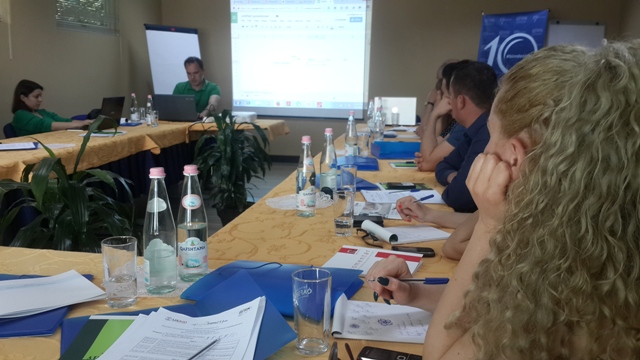
The Balkan Investigative Reporting Network in Albania held a two-day training session for journalists in Tirana on May 8-9, focusing on Albania’s public procurement system and the ways reporters can dig up stories on conflicts of interest, abuse of office, corruption and procurement fraud.

Around 15 journalists and editors from local and national media in Albania participated in the training, part of the project ‘Fostering Democracy Through Investigative Reporting’, which is supported by USAID through Assist Impact. 

The two-day training session served as a guide to reporters on the basic methods and techniques of investigative journalism as well as an overview of public procurement procedures in Albania.

The training was aimed at strengthening the skills of journalists to help them to look closely at systemic issues of conflict of interest, to uncover facts and produce compelling journalism by carrying out data gathering, analysis and document mining.

The journalists who took part in the training will participate in a competition, from which BIRN Albania, through an independent jury, will select six story ideas for investigations on public procurement that will be funded and published with the help of BIRN editors in BIRN’s online publications BalkanInsight.com and Reporter.al.

New BIRN War Crimes Film Premieres in Belgrade

BIRN’s latest feature-length documentary, which investigates the commanders responsible for some of the most brutal attacks of the Kosovo war, was screened for the first time in Belgrade.

The new documentary, The Unidentified, which names the Serbian officers who ordered attacks on Kosovo villages around the town of Pec/Peja in 1999 and those involved in the cover-up operation to hide the victims’ bodies, was premiered at the Centre for Cultural Decontamination in Belgrade on Monday evening.

Marija Ristic, the director of the documentary, said the film was the result of a two-year investigation, during which one of the biggest challenges was to get witnesses to speak out about what they saw.

“War crimes are taboo in Serbia and because of that it was very hard to find everyone involved in these events, and to urge them to appear in the film which includes both victims and perpetrators,” Ristic said after the screening.

‘The Unidentified’ takes viewers back to 1999, to the villages of Ljubenic, Cuska, Pavljan and Zahac near Pec/Peja in Kosovo, where Serbian fighters killed more than 118 Albanian civilians. Their bodies were either burned or removed, and some of them were later found in mass graves at the Batajnica police training centre near Belgrade in 2001.

The trial of 11 fighters alleged to have been involved in the killings – 10 of them accused of being direct perpetrators – is still ongoing in Belgrade, but the police and army generals who gave the orders have never been prosecuted in Serbia.

Ristic, who followed the trial for three years, said she didn’t just want to make a film about the Serbian fighters on trial, but about all those responsible for the attacks and those who ordered the subsequent cover-up attempt.

“We were most interested in the removal of the bodies, because the cover-up is not in the indictment [of the 11 ex-fighters]. And we looked for those who gave the orders,” she said.

Geoffrey Nice, the former prosecutor at the International Criminal Tribunal for the Former Yugoslavia in the case of Slobodan Milosevic, said that both crimes detailed in the film were the state’s responsibility.

One of the key pieces of prosecution evidence at the Milosevic trial was the wartime diary of Obrad Stevanovic, a former assistant interior minister, in which he wrote the words “no body, no crime” in a reference to the cover-up plan.

“Stevanovic’s diary contains a reference to the state office. Through it, [the Serbian prosecution] could trace it to the top. The cover-up was the most powerful evidence of the unlawfulness of what Slobodan Milosevic was doing during the war,” said Nice, who took part in a panel discussion at the Belgrade premiere.

Nice said that the others responsible for the crimes and the cover-up should also be prosecuted in Serbia.

“This is an extremely powerful and important film, and the court should be more open to the evidence presented here,” he said.

Ivan Jovanovic, a transitional justice expert and former head of the OSCE department for war crimes and organised crime in Serbia, said that the biggest problem in war crimes prosecution in Serbia is dealing with the commanders.

“Command responsibility is not easy to prove – it depends on the willingness and courage of the war crimes prosecutors and their persistence in requesting the necessary documents from the archives of Serbian Aamed forces,” Jovanovic said.

Vladimir Vukcevic, Serbia’s chief war crimes prosecutor, said that the prosecution plans to continue investigating the chain of command, referring to the ongoing investigation of General Dragan Zivanovic. Zivanovic is a former commander of the 125th motorised brigade of the Yugoslav Army, and was in charge of 177th intervention squad, whose members are currently on trial for the crimes in the villages around Pec/Peja.

“The War Crimes Prosecution Office is in a very delicate situation as this is an ongoing case. Accusing and proving is not easy,” Vukcevic said at Monday’s debate.

Dragoljub Stankovic, the deputy war crimes prosecutor, argued however that the International Criminal Tribunal for the Former Yugoslavia dealt with the removal of the bodies during the trial of Vlastimir Djordjevic, former Serbian assistant interior minister.

“We [the War Crimes Prosecution Office] cannot find the legal means to prosecute people who ordered and participated in the body removal,” said Stankovic.

He said that these crimes should be dealt with by regular prosecutors and not his office because they were not war crimes.

But Ristic argued that war crimes prosecutors did have legal grounds to get involved.

“The removal of the bodies is not a war crime, but it is a crime against humanity and as such can be tackled by the War Crimes Prosecution Office,” she said.

Faik Ispahiu, head of court monitoring for Internews Kosovo, told the debate that people in Kosovo closely followed war crimes trials in Serbia, but a lot of anger still exists because they do not believe that justice has been served yet.

“Sixteen years after the war, nothing in particular has been done. Those crimes were committed on the orders of state officials and police and army generals, so they were not done individually,” Ispahiu said.

After its Belgrade premiere, ‘The Unidentified’ will be screened next in Pristina on May 7.

BIRN Albania Holds Roundtable on Elections

The Balkan Investigative Reporting Network in Albania held a roundtable in the city of Kukes on Monday April 27th, where the priorities for local candidates for the June 21st local elections in four municipalities were discussed.

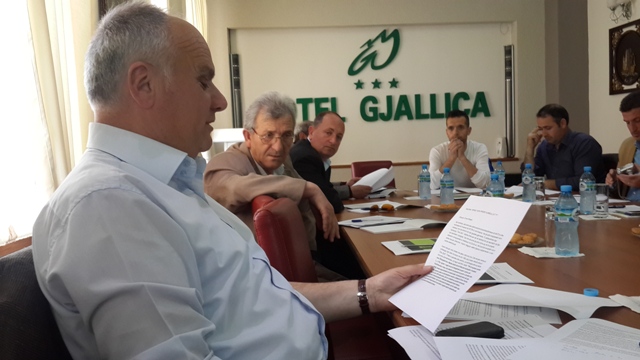
Eleven representatives from civil society organizations, activists and grassroots groups participated in the event, where they were invited to share their opinion on a list of questions to be posed to local mayor candidates in the municipality of Kukes, Tropoja, Has and Mirdita ahead of the polls.

The questions were generated by in-depth interviews BIRN Albania held in the above mentioned municipalities in the last two months, in order to identify citizens’ concerns about the problems and challenges their area faces.

A shortlisted number of questions will be used to conduct interviews with mayor candidates ahead of the polls. The interviews will be published in a special page of BIRN Albania’s online publication Reporter.al

BIRN Albania will hold in total ten regional roundtables during the months of April, covering the 61 municipalities that emerged from the July 2014 administrative reform.     

The roundtables are part of the project on ‘Accountability in Local Governance through Citizen Participation and Civic Journalism,’ supported by the US Embassy in Albania Democracy Small Grants Program.

This project aims to bridge the gap between local voters and mayoral candidates ahead of the 2015 local elections, by strengthening the capacities of CSOs, grassroots organizations, activists and the media in order to identify and stimulate public debate on the key issues facing local communities.