BIRN Kosovo Holds Fact-Checking Journalism Course

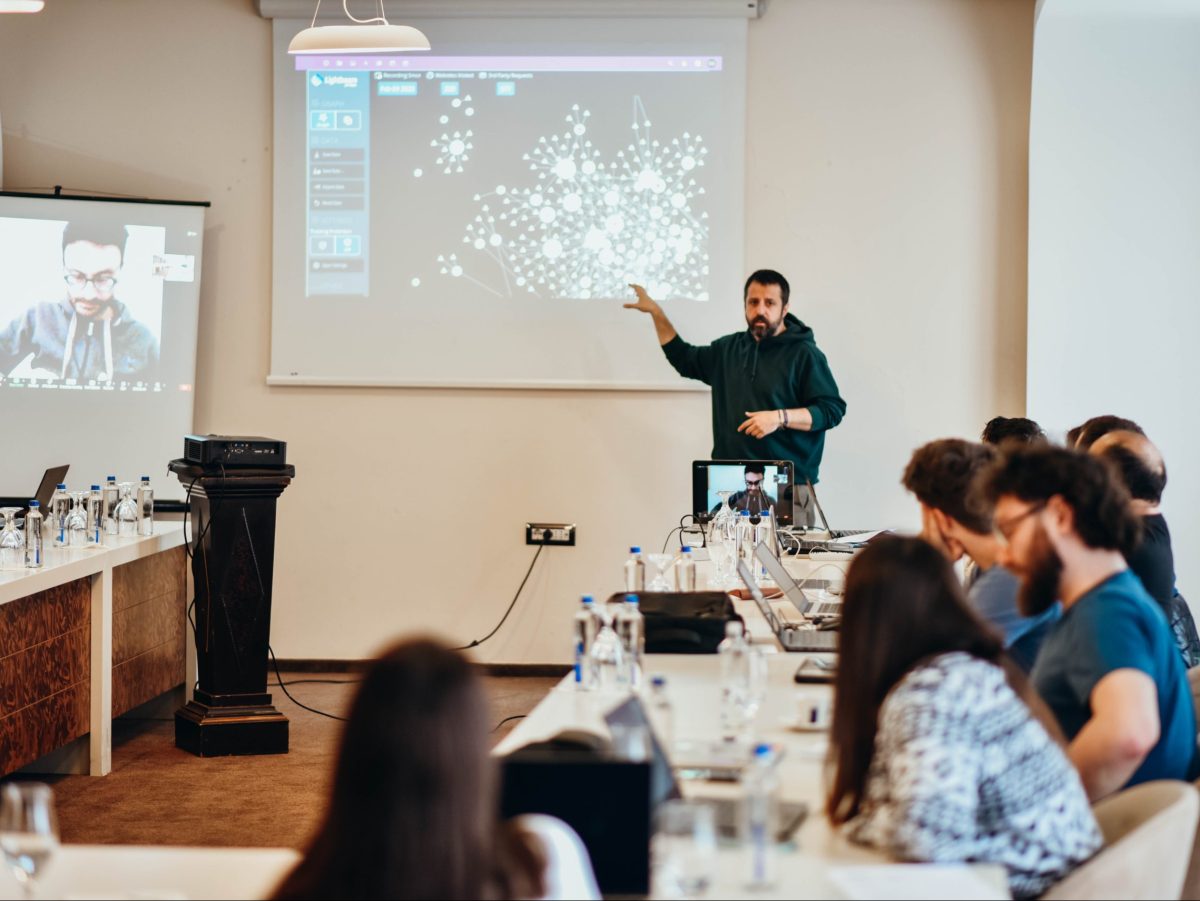
BIRN Kosovo held a one-day training course on fact-checking journalism for young and mid-career journalists in Pristina on February 26, 2024.

The course addressed the importance of fact-checking in daily reporting, reporting on inter-ethnic issues, propaganda, misinformation and the handling of disinformation and fake news on social media.

A total of 13 journalists, 11 of them women, gathered for the training course which started with a keynote speech from BIRN project manager Arita Suhodolli.

The first part of the training was delivered by Kreshnik Gashi, managing editor at KALLXO.com, who used illustrations to explain how information can be altered while spreading across different media.

Gashi also presented the findings from BIRN’s report ‘The Story of Our Lies’, about the influence of China and Russia on disinformation in Kosovo. He discussed with participants the difference between disinformation, fake news, deep fakes and other forms of fake news production.

Gashi closed his part of the course with some practical work on analysing articles by using fact-checking techniques to improve the participants’ critical thinking and taught them various techniques for verifying news.

Dorentina Kastrati, an editor at BIRN, spoke about local initiatives addressing disinformation and misinformation. She started her lecture by presenting BIRN Kosovo’s initiative to create the Coalition Against Disinformation. She also emphasised the importance of inter-ethnic groups of journalists engaging in fact-checking and ended her lecture with a summary of how to write fact-checking activity proposals.

The training concluded with a lecture on handling disinformation and fake news on social media networks by the another guest speaker, Faik Ispahiu, the executive director of Internews Kosova.

Ispahiu talked about how KALLXO.com’s Krypometer (Truth-o-meter) become the first fact-checking tool in Kosovo to be granted a licence by the International Fact-Checking Network. He also explained the mechanisms Facebook and other social media companies use for fact-checking news.

The training course was supported by the United Nations Interim Administration Mission in Kosovo, UNMIK.

BIRN Macedonia Holds Third Training for Young Journalists

The third in a year-long series of training courses for a dozen young journalists took place from February 23-25 in Berovo, North Macedonia.

Building on the previous training sessions, the third course, which took place in Berovo, aimed to help a dozen young journalists begin work on stories that will be published by BIRN Macedonia’s publication, Prizma.

During the three-day course, BIRN journalists explained to the participants where and how to find stories, how big stories can be uncovered from simple checks, how to develop a story idea into a reporting plan, where to look for data and how to identify sources.

In a simulation of a newsroom editorial meeting, trainees pitched stories in teams and were assigned senior journalists as mentors to develop stories. Together with the participants, BIRN’s team discussed the topics, assessed their viability and gave advice about how the stories could be executed. Five topics were chosen as a result of the stories that were pitched.

During the training, the participants were shown how to look for and obtain data in dozen different open-source databases that BIRN’s journalists regularly use in researching and writing their own stories. With the mentors’ guidance, the participants then applied these databases to their chosen topics.

The participants were also given an interview simulation, as well as a presentation on storytelling.

By the end of the training course, each team presented the work they had done on their stories together with their mentors over the course of the weekend and gave an estimated timeline by which they would be finished. The stories should be published in the coming months.

Fellowship 2024: Voices – Call for Applications Open

We are awarding 10 fellowships to journalists from Central and South-Eastern Europe who have an idea for a story that needs dedicated on-the-ground reporting, in-depth research, generous funding and sustained editorial attention to do it justice.

Applications are solicited under this year’s theme, Voices. Successful applicants will be selected by an independent committee to take part in our annual programme for professional development, culminating in the production of a compelling long-form story to be published by BIRN, its media partners and/or the media outlets from the region.

Our output takes the form of features, analysis and investigations, presented in depth for a global audience. We emphasise strong storytelling and rigorous, on-the-ground reporting – qualities traditionally associated with the best magazine journalism.

The Fellowship provides:

  • a bursary of €3,000
  • the chance to improve your reporting skills by working in close collaboration with world-class editors
  • ongoing mentoring and support from BIRN’s leading regional journalistic network, present in 14 countries of the Central and SEE region
  • the opportunity to participate in an introductory seminar in Vienna, May 20th – 24th, focused on reporting and storytelling techniques,
  • the chance to win additional awards worth between 1.000 and 3.000 euros for the best three stories
  • worldwide publication of reports in local languages and English through our network of media partners
  • membership of the Fellowship alumni network, designed to support networking between fellows who have participated in the programme since 2007
  • This year’s call is open until March 25th. Please send us your proposal using the official application form.
  • To maximize your chances of a successful application read more about the programme including the tips from our editors.

Here is what our editor, Neil Arun, has to say about this year’s topic.

Before journalism, the printing press and the first clay tablets where our ancestors practised their writing, there was the spoken word. Every year, the Fellowship asks applicants to consider a theme. This year’s theme, Voices, goes back to the oldest form of communication.

It also appeals to the instinct that, we believe, drives the best long-form journalism: the desire to get away from the desk and hit the road in search of those sources, those voices, that can add something meaningful to a bigger conversation.

On social media today, it can seem as if everyone has a voice. However, not all voices are heard, or worth hearing. What are the voices in your society that have been drowned out by the noise? What do we miss when we don’t listen? Whose are the voices worth seeking out at this moment? How does power speak, and what does it leave unsaid? And how will your Fellowship story send out a signal that can cut through the noise?

Our themes are always broad, because we want to attract the broadest range of applications. If you haven’t got a pitch in mind for the Fellowship, we hope the theme will inspire you. If you already have a story that you would like to report, please take a few minutes to tease out a link with the theme in your application. Don’t worry if the link seems a bit of a stretch – we are looking to gauge your ability to argue, rather than your fidelity to the theme. And we will always prioritise a good pitch that is only loosely linked to the theme over a weak pitch that fits the theme perfectly. Good luck.

About the Fellowship for Journalistic Excellence

The Fellowship has been providing journalists with editorial guidance and funding to pursue agenda-setting stories since 2007. Aimed at promoting the development of a robust and responsible press, the programme has helped shape journalistic standards across the region while boosting the careers of participating reporters.

The Balkan Investigative Reporting Network and Erste Foundation set up the Fellowship with a view to encouraging in-depth cross-border reporting in south-eastern Europe. In 2020, the programme was expanded to include four central European countries: the Czech Republic, Hungary, Poland and Slovakia.

To read our stories and find out more about the Fellowship please visit the Fellowship official page.

Igor Vujcic

Based in Belgrade, Igor started working for BIRN in 2020.

He has a diverse skill set in illustration, graphic design, animation and video production. With a background in design from high school and the Faculty of Applied Arts in Belgrade, Igor has honed his creative abilities to bring ideas to life through visual storytelling.

Balkan Insight’s biggest investigative and long-form stories have his visual signature. His style has formed Balkan Insight’s unique visual identity.

Igor prefers to illustrate investigative stories, as they are more personal and include a human factor, unlike global news stories.

Beyond his professional pursuits, Igor finds joy in family life as a dedicated father and husband. In his free time, he indulges in passions for custom keyboards, Studio Ghibli movies and music, adding depth and inspiration to his creative endeavours. With a blend of artistic talent and personal interests, Igor continues to explore new horizons and share his unique perspective with the world.

Danijela Pejatovic

Danijela joined BIRN Hub in December 2023 as a Social Media Manager.

She is based in BIRN Hub’s Belgrade office and is responsible for developing, quality control, and implementing program-related and overall BIRN visibility actions, using social media channels.

Danijela is an experienced Communications Specialist with a strong background in nonprofit and social organisations and foundations.

With over 14 years of experience, she is skilled in content writing, copywriting, social media management, digital marketing, and event management.

Thanks to various courses and education, along with experience, she has a high level of knowledge and experience of working on different digital tools, platforms and programs.

Previously, she mostly worked in the nonprofit sector in communication and digital marketing, and in social media positions. Some of her favourite experiences were at Foundation SOS Children’s Villages Serbia and Foundation Catalyst Balkans.

Danijela graduated in Journalism and Communications from the Faculty of Political Sciences in Belgrade.

In addition to her formal education, she finished the Alternative Gender Studies Program at the Center for Gender Studies in Belgrade and attended various courses and education related to PR, marketing, communications and digital marketing.

Along with Serbian, she speaks English.

Katarina Baletic

Katarina joined BIRN Hub in December 2023 as a correspondent for Serbia. She is based in Belgrade and is responsible for daily news as well as in-depth stories and analysis.

Previously she worked in media in Serbia and has extensive experience reporting on the economy and politics.

From March 2021 to November 2023 she worked at the monthly magazine and portal Nova Ekonomija (New Economy), primarily reporting on economic topics, healthcare, gender issues and public spending. Before that, from 2016, she was working at Istinomer, a fact-checking media outlet founded by the Center for Research, Transparency and Accountability (CRTA).

She was part of the team the British Council awarded for one of the best article and video features in the regional “Young Journalists Competition”, and also awarded for the best media article “Drugačije od drugih“ (Different from others) by the Conference of Towns and Municipalities, for the best article on female entrepreneurs.

Katarina has a Bachelor’s Degree in Journalism and Communication from the Faculty of Political Sciences in Belgrade and is currently she is at the end of her Gender Master studies at the same faculty.

Along with her native Serbian, she speaks English.

‘New Wave’, BIRN Albania’s Documentary on Migration, Screened in Tirana

New film explores push factors behind latest migration wave from Albania toward the European Union and Britain.

The Balkan Investigative Reporting Network in Albania on February 13 staged the premiere of its documentary New Wave in Tirana. More than 100 people – some of the standing – gathered at the Agimi Art Center for the screening, including members of the diplomatic corps, activists, journalists and filmmakers.

The documentary, produced in cooperation with Barraka Production and directed by award-winning director, Elton Baxhaku, explores the push factors behind Albania’s latest migration wave toward the European Union and the United Kingdom.

It includes interviews with people from different walks of life and different regions of the country, as well as experts and academics that study migration and its impact on individuals, families and society, in an attempt to explain what is pushing so many to migrate and what this means for the Albania and its future.

Elton Baxhaku is an Albanian filmmaker best known for his 2014
documentary Skandal, the 2016 documentary Selita, which was co-directed by Eriona Çami, and Free Flow in 2018.

The documentary was produced as part of the project “Using Big Data and Multimedia to Boost Quality and Independent Journalism in Albania”, which is supported by the European Union and the Swedish government and implemented by BIRN Albania.

The project worked to create an enabling environment for Albanian journalists to produce independent content through training, mentoring, technical and financial support, in close cooperation with civil society, so improving freedom of expression and strengthening media pluralism in Albania.

In the next few months BIRN Albania will take the documentary on the road and hold screenings in several Albanian cities and towns, which are considered as ground zero for the latest migration wave.

Jules Eisenchteter

Based in Prague, Jules has joined BIRN Hub in December 2023 as Reporting Democracy’s Czechia correspondent.

He previously co-founded and worked as editor-in-chief of Kafkadesk, a news and analysis website on Central Europe, and has contributed to various other English and French-language media outlets covering Czech and Slovak affairs.

A former student of Charles University in Prague, Jules is a public affairs and political science graduate from Sciences-Po Paris. Raised in a bicultural French-British family, he also speaks German, Spanish and Czech.

Serbia Buying More Video Surveillance Equipment, BIRN Report Reveals

State institutions and public enterprises are increasingly buying video surveillance systems, including equipment with face recognition and detection features, BIRN Serbia reveals in its new report based on public procurement data analysis.

BIRN Serbia’s analysis of public procurements conducted in 2022 and 2023 found 61 purchases of surveillance equipment and softwares, worth over 17 million euros.

The findings were presented in a new report, “Public Procurements of Surveillance Equipment: The Thin Line between Security and Privacy“.

“Procurements of video surveillance equipment are by far the most numerous. There are 48 such contracts with a total value of over 12.8 million euros. The purchasers of this equipment are local government units (19 procurements), public and public utility companies (22 procurements), hospitals (3), and correctional institutions (2),“ the report states.

A sample revealed 13 public procurements of equipment with the capability of biometric face recognition. Such procurements, emphasized the analysis, not only violate the right to privacy but also contradict Serbia’s laws.

„In addition to local government, some less expected entities have procured face-recognition equipment – elementary and high schools in Požega, a hospital in Sombor, Belgrade markets and the Directorate for Urban Planning and Construction of Belgrade,” the report states.

In addition to video surveillance, institutions also procured cryptographic devices, such as the Office for Information and eGovernment. The analysis of public procurements revealed two procurements for equipment that enabled monitoring and control of employees.

The report states that the Administration for Joint Affairs of Provincial Bodies purchased personnel record software „which includes personal information of employees” and envisages gathering health conditions, chronic illnesses and religious beliefs.

The largest supplier of video surveillance equipment was the company Maccina Security. During the research period, this company concluded 14 contracts for the procurement of video surveillance equipment, totaling almost one billion dinars.

According to the Public Procurement Portal, Maccina Security signed at least 103 contracts with state institutions, local government units and public enterprises from October 2020 to now.

„The analysis also noted several problems in the public procurement procedures, primarily the lack of consistent application of the General Vocabulary of Public Procurement, with public institutions and companies ordering different types of goods or services under the same code. Secondly, the lack of competitiveness, as only one bidder appeared in 75 per cent of the analyzed procurements,“ the report states.

BIRN Albania Wins Landmark FOI Case

Verdict forces Qualification Commission to reveal name of private sponsor who paid for vetting institutions staff’s weekend retreat in luxury resort.

The Balkan Investigative Reporting Network in Albania has won a landmark lawsuit against the Independent Qualification Commission, IQC, over the right to public information.

The IQC is one of three institutions charged with vetting judges and prosecutors in Albania.

The verdict, which was adjudicated by the Appeals Administrative Court in Tirana, forces the IQC to reveal the name of a private sponsor who paid the bill for a weekend retreat in a luxurious resort for the vetting institutions staff.

BIRN sought the records from the IQC in 2022. After the IQC refused, a complaint was filed with the Commissioner on the Right to Information. The Commissioner ruled in BIRN’s favour but the IQC filed a lawsuit against his decision.

In the First Instance Administrative Court in Tirana, BIRN Albania journalist Edmond Hoxhaj joined the case as a third party. When the judge ruled in favour of the IQC, Hoxhaj appealed, and on January 23, the Administrative Court reversed the verdict, upholding the earlier decision of the Commissioner for the Right to Information.