Unveiling Foreign Influences Behind Disinformation in the Western Balkans

BIRN Kosovo

Lead Applicant’s Name:
BIRN Kosovo

Co-applicant:
BIRN HUB

Donor:

CFI – Développement Médias

Short Summary:

The “Unveiling Foreign Influences Behind Disinformation in the Western Balkans” project addresses the growing challenge of fake news and disinformation campaigns threatening geopolitical landscapes, particularly in the Western Balkans. The project produces a documentary revealing the sources and impacts of malign foreign disinformation campaigns and their pervasiveness in the media ecosystems of Kosovo, Bosnia and Herzegovina, and Montenegro.

Long Summary:

The “Unveiling Foreign Influences Behind Disinformation in the Western Balkans” project is led by BIRN Kosovo, in partnership with BIRN HUB and with the support of CFI – Développement Médias. This initiative addresses the growing challenge of fake news and disinformation campaigns that threaten geopolitical landscapes, particularly in the Western Balkans.

In a region vulnerable to Russian interference, disinformation campaigns aim to undermine support for European integration and have been especially active in spreading propaganda on NATO and exploiting divisions regarding accession. The Ukraine conflict has further intensified the spread of misinformation through social networks, inciting separatist influences in the region. Local media in Kosovo, Bosnia and Herzegovina have been particularly active in distorting the EU-led Kosovo-Serbia dialogue.

The project confronts these challenges by producing a documentary that exposes the sources and impacts of disinformation campaigns and their pervasiveness in the media ecosystems of Kosovo, Bosnia and Herzegovina, and Montenegro. Through journalistic investigations in these countries, the project aims to educate and inform the public on this phenomenon, while strengthening local media and journalists’ resilience against misinformation threats.

The project’s ultimate goal is to enhance transparency, encourage critical thinking, and contribute to a more informed and democratic society in the Western Balkans. By highlighting adverse influences, the project aims to bolster the region’s resilience against disinformation, advocate for media freedoms, and promote truth and transparency in public discourse.

Target Group(s):

  • Local Media Outlets
  • Local Journalists
  • Civil Society Organizations
  • Public Institutions
  • Citizens of the Western Balkans

Expected Results:

  • The documentary produced through the collaborative efforts of BIRN Kosovo and BIRN HUB will expose disinformation campaigns in the Western Balkans, bolstering the region’s resilience against malign disinformation efforts.

Main Activities:

Activity 1.1: Research and Interviews

Activity 1.2: Script Writing and Story Development

Activity 1.3: Production and Post-production of the Documentary

Activity 1.4: Translation, Editing, and Subtitling in Three Languages

Activity 1.5: Broadcasting the Documentary
Resilient Community Programme

BIRN Kosovo

BIRN Kosovo through the Resilient Community Programme aims to contribute to enabling the general public to be more informed on the matter of P/VE, R&R, and other forms of violent extremism and also organize different activities for media actors,  for the main level and local level on P/CVE and R&R in the implementation of the National P/CVE Strategy and Action Plan.

Summary
Kosovo’s post-conflict setting is characterized by continued political and social tension and it has been characterized and challenged by various forms of extremism, including ethnonationalism, religious, political, and those driven by extreme right-wing ideologies. Despite political willingness, central and local level institutions have shown a lack of capacity to perform PVE and R&R activities and when it comes to other forms of Violent Extremism there is a lack of knowledge and engagement.

BIRN Kosovo has taken the initiative to organize media campaigns and lobbying actions to promote awareness among the general public regarding P/VE, R&R, and other forms of extremism. As part of this initiative, TV debates will be conducted to disseminate information and provide a platform for discussions on these matters. The aim is to ensure that people are well-informed and equipped to tackle extremism in all its forms.BIRN is committed to providing support to local institutions through expert guidance and training sessions. This project aims to facilitate training programs for municipal assembly members, workshops for municipal staff and multidisciplinary teams, and offer on-ground support to frontline workers. Our efforts at the local level are geared towards strengthening institutions and building capacity, which will ultimately benefit the community at large.

On the national level, part of the implementation of this project is the direct monitoring of the implementation of the National Strategy for Preventing and Countering Terrorism 2023-2028 and its Action Plan which will be achieved by conducting 4 bi-annual analysis. Additionally, a customized curriculum will be designed for training judges and prosecutors on the topics of Prevention of Violent Extremism (PVE) and Rehabilitation and Reintegration (R&R). This training program aims to equip them with the necessary skills and knowledge to effectively handle cases related to these issues. To foster a more informed and nuanced discussion on violent extremism, we will be providing training to media actors and awarding 10 fellowships to journalists. By encouraging more journalists to participate in this discourse, we hope to promote a greater understanding of the complex issues surrounding violent extremism and ultimately contribute to a more peaceful and secure world.

Donors

Global Community Engagement and Resilience Fund (GCERF)

Main objectives:

Objective 1: Strengthening central and local level institutional operational and knowledge capacities

Objective 2: Strengthening operational and knowledge capacities of Local CSO-s and nonstate actors to work on PVE and R&R

Objective 3: Reducing youth vulnerability towards violent extremism by increasing a sense of purpose and social cohesion

Objective 4: Raising community awareness to accept the reintegration of returnees and marginalized groups, by conducting systematic awareness raising.

Main activities:

Activity 1: Direct monitoring of National Strategy for Preventing and Countering Terrorism 2023-2028  and writing of four (4) bi-annual analysis, two per year

Activity 2: Twenty (20) days of support to local institutions to implement their activities as outlined in the strategy/action plan

Activity 3: Twelve (12) TV debates to ensure media advocacy and accountability

Activity 4: Forty-two (42) TV reports,  online reporting, news pieces and PSAs to raise awareness amongst the public on what violent extremism and far-right extremism are, how they manifest themselves public can protect themselves

Activity 5: 2×2 days training for judges and prosecutors (8 days) on the P/VE, R&R, and other forms of extremism which include the prior design of tailored curriculum.

Activity 6: One (1) Follow up workshop for judged and prosecutors after one year of completing trainings on P/VE, R&R, and other forms of extremism

Activity 7: Eleven (11) Trainings for municipal assembly members

Activity 8: Eleven (11) Workshops for municipal staff/multidisciplinary teams and frontline workers

Activity 9: One (1) Intensive 5-day training course for media actors (20 participants) on P/VE, R&R and other forms of extremism
Activity 10: Development of online materials to be embedded in BIRN website

Activity 11: 10 fellowships (at least 5 of which are non-majority) journalists

Target groups:

Government and municipal institutions working on P/VE issues and R&R and other forms of extremism;

Local CSOs and nonstate actors

Majority and non-majority communities and local mechanisms, in particular youth;

General public

Implementer:

BIRN Kosovo

BIRN Journalist Receives Bring the Noize Award for Feminist Reporting

Andjela Milivojevic, a BIRN journalist contributor, won the annual award for 2023 awarded by the feminist BeFem Organisation for her investigation into revenge porn.

Andjela Milivojevic received the Bring the Noize Award on March 7, in Belgrade, for her investigation, “I Was Powerless’: Serbian Women Detail Devastating Impact of Revenge Porn”.

During this investigation, in interviews with BIRN, more than two dozen Serbian women told of the shock, fear and shame that struck them as victims of revenge porn. In Serbia, their legal avenues are limited.

The announcement of the award said: “Through months of dedicated work, journalist Andjela Milivojevic managed in her article to give the victims of revenge pornography back their power and provide a platform to speak loudly and anonymously about their experience. That’s why we’re giving her an award for feminist media reporting.”

“Thank you for the recognition for this research work because, unfortunately, right now, there are five groups on Telegram with over 50,000 members who share private photos of women and girls without their consent and see it as something to which they absolutely have the right. This is not a criminal offence in Serbia. What they do and can do to each of us is not a criminal act; each person can go unpunished,” Milivojevic said.

“Second, this recognition is a kind of incentive for all of us in the media to give a voice to all those girls and women who have gone through trauma. I want to thank, first of all, those women and girls who were so brave. Twenty-eight of them spoke to me for this research. They told me something that changed their lives,” she added.

“This recognition goes to them because they managed to bring this article to what it actually is by being so brave. At the same time, many thanks to BIRN for giving me the opportunity to write it. Thank you to my wonderful friends and family, and finally, thank you to my wonderful husband who was there to keep me sane during the six months I watched these disgusting things,” Milivojevic continued.

Since 2017, on March 8, International Women’s Day, BeFem’s recognition has been awarded to women and initiatives whose acts have marked the past year. While women’s and feminist achievements remain largely invisible in Serbia, the organisation recognises those who make strides for a fairer society.

BeFem’s award is widely recognised as an important feminist recognition.

BIRN Montenegro and Civic Alliance Organize First Anti-Corruption Forum on Environment

Speakers say authorities must cooperate with citizens who report corruption – and courts should impose tougher penalties for violations of environmental laws.

Environmental corruption is one of the biggest challenges in Montenegro, it was said at the Anti-Corruption Forum Dedicated to Environmental Protection, organised by BIRN Montenegro and the Civic Alliance, held on March 6 in Podgorica.

Representatives of the executive and legislative authorities, environmentalists and journalists said all levels of authority should responsibly manage ecological resources in Montenegro, while inspection services must respond more promptly to reports of corruption in the field of the environment and process them indiscriminately.

The first anti-corruption forum in the country dedicated to the environment was held with the support of the US State Department as part of a multi-year initiative dedicated to the fight against corruption at local level.

Participants emphasized that local governments must cooperate with citizens who report corruption, and that the judiciary must be more up-to-date and set higher standards for sanctioning violations of environmental laws.

Deputy Prime Minister for the Political System, Justice and Anti-Corruption and President of the Anti-Corruption Council, Momo Koprivica, said environmental corruption is one of the biggest challenges that Montenegro is facing and that, in partnership with the civil sector, he will strengthen the fight against it.

“All proven forms of corruption will be prosecuted. We will provide full, not only declarative, support to the Special State Prosecutor’s Office. The most important way to fight environmental corruption is to fight against existing set-up regulations,” said Koprivica.

The executive director of BIRN Montenegro, Vuk Maras, said this was the last chance for the state to take the problem of environmental corruption seriously.

“For a year, together with our national partner Civic Alliance and six local partners – Boka News, Ul-Info, PV Portal, Expeditio, Ozon and Dr. Martin Snejder Jakob – we worked on issues of corruption in the field of environmental protection that directly affect citizens and communities in the specific areas,” he said.

“All the problems that were pointed out to us by citizens and communities have one thing in common – institutions that have failed and are not doing their job adequately,” Maras added.

He said that, during the project, 80 initiatives were submitted to inspections and competent authorities and requests for free access to information, as well as initiatives to the Assembly and ministries.

The program director of the Civic Alliance, Milan Radovic, said Montenegro has made some progress in the fight against corruption in the field of ecology, praising the Special State Prosecutor’s Office, which opened several significant proceedings.

“However, the situation is still worrying. All reports indicate that progress in this area is limited and that … received recommendations, especially from our partners from the EU, are mostly not implemented, or not fully implemented,” Radović said.

He said investigations and criminal prosecutions should be improved and final judgments should be reached.

At the panel, “The Role of the Media in the Fight Against Corruption in the Field of Environmental Protection,” interlocutors highlighted the importance of the new spatial plan, whose draft is up for public debate.

A representative of the Ministry of Spatial Planning, Urbanism, and State Property, Milica Abramovic, said that in the planning process, all plans were made available to the public for inspection. He denied that previous plans reflected the interests of investors and officials.

But the president of the Parliamentary Committee for Tourism, Agriculture, Ecology, and Spatial Planning, Dejan Djurovic, said the 2017 amendments to the Law on the Construction of Buildings and Spatial Planning were the worst law parliament ever voted for. Under it, direct assistance to investors is provided, he said.

UL-info journalist Admir Djoni said journalistic research has pointed to the destruction of the environment. “How can we explain that we made underwater containers from the seabed in Ulcinj and so risked the lives of fish and marine organisms, and therefore our lives as well?” Djoni asked.

“How to describe the dumping of waste in the hinterland of Velika Plaža, which is later set on fire, in order not to pay to the local utility company?” he added.

Member of the Parliamentary Anti-corruption Committee and former Prime Minister Dritan Abazovic said some non-governmental organisations were more engaged in environmental protection than state bodies. He emphasized that the government he led had hundreds of complaints against environmental crime, and that the prosecutor’s office did not process a single one.

“When some investor wants to invest money, he has to obtain construction permits from various state institutions, which opens up space for corruption. The moment we have on paper what is an industrial zone, what is a protected zone, and what is a tourist zone, then there will be less room for corruption,” Abazovic maintained.

The Director of the Environmental Protection Agency, Milan Gazdic, said the greatest space for corruption exists in major environmental problems like waste management.

“We cannot base development on a hotel in a national park. That is the wrong way. We have no infrastructure, yet we are building a hotel in a national park that is accessed by a narrow road, which is unacceptable. We have parts of the state and urban areas where development can be based, but not in protected areas,” he added.

At the conference, it was also said that the government and parliament must start determining the responsibility of state bodies and institutions for ignoring environmental problems.

Call for Applications: Financial Support for the Production of Quality, Engaging and Innovative Content for Western Balkans Media Outlets and Journalists

The project Western Balkan Media for Change opens a call for the financial support of individuals, media outlets, associations and other organisations from the Western Balkans through its grants.

The grants are intended to support well-defined innovative projects, actions and initiatives that go beyond regular operations – but not to finance regular operations.

The call aims to support projects focused on quality, engaging and innovative content production, local and regional collaboration, professional development, internships, networking, mobility, and validation of business ideas. Specifically, six priority areas fall into this call:

  1. Validation of a business idea
  2. Content production through learning, mobility or collaboration
  3. Strengthening public broadcasting service content and audience reach
  4. Audience development and engagement
  5. Networking support
  6. Promoting quality professional and ethical journalism

Project activities should be implemented in the Western Balkans: Albania, Bosnia and Herzegovina, Kosovo, Montenegro, North Macedonia and Serbia. Their duration could range from one (1) month up to a maximum of six (6) months.

This call is open until December 31, 2024, at 24.00. Applicants may submit application(s) throughout this period.

The Western Balkans Media for Change project is funded by the UK Government and implemented by the British Council in partnership with the Balkan Investigative Reporting Network (BIRN), Thomson Foundation (TF), and The International NGO Training and Research Centre (INTRAC). It supports the work of media outlets and individual journalists from the Western Balkan countries.

The project aims to help them improve operational capacity, business sustainability and innovation potential, while aiming to equip media professionals to produce more quality diverse, factchecked and gender sensitive content that will reach and engage with wider audiences.

More information about the call and how to apply can be found here.

Neil Arun

Neil joined BIRN in 2019 as an editor.

He edits the Fellowship for Journalistic Excellence, BIRN’s annual bursary for long-form journalism. He previously worked for the BBC News website’s world desk, and for flagship BBC radio and TV programmes.

He also spent two years in Iraq as an editor on media development programmes. His reporting from Iraq, the Balkans and the Caucasus has been published by the Financial Times Magazine, Vanity Fair, Monocle and BBC News. He graduated in English Literature from Cambridge University.

Svetoslav Todorov

Svetoslav Todorov joined BIRN Hub as a Balkan Insight’s Bulgaria correspondent in 2020, right before the onset of the pandemic and the beginning of the anti-government protest wave in Bulgaria.

The increase of disinformation in Bulgaria amid the Russian invasion of Ukraine and recurring ideological clashes in parliament are integral topics to his work. He is based in Sofia.

Todorov’s original background is in arts and culture writing, while also covering topics dealing with history, education and human rights.

In Bulgaria, he wrote and edited for the news website Dnevnik.bg (2010-2014), the business and politics weekly Capital (from 2014 onwards), independent magazine VIJ (from 2016 onwards), and has also contributed to international outlets such as Romanian fact-checking platform Veridica, the German newspaper Die Tageszeitung, and the Bulgarian branches of Granta magazine and Esquire.

Todorov has experience also as an art curator and speaker at events organised by the Sofia International Literature Festival, the Rhodope Documentary Film Festival and Romania’s Alternativa Sociale.

He graduated in Bulgarian Philology and Visual Culture from Sofia University’s Faculty of Slavic Studies. Alongside Bulgarian, he is fluent in English and French.

BIRN Albania Screens Documentary on Sexual Harassment

Premiere of Body of Shame, which challenges the societal norms that blame victims of sexual abuse, kicks off week of Women’s Rights Activism.

On March 4 in Tirana, Balkan Investigative Reporting Network Albania held a screening of its documentary Body of Shame, to launch Women’s Rights Activism Week.

The screening was attended by the British, EU and German ambassadors to Albania as well as women’s rights activists and civil society representatives.

The documentary was produced in collaboration with Barraka Productions and director Elton Baxhaku. In the first two weeks of March it will be screened across Albania, including in Saranda, Shkodra, Peshkopia, Kukes, Vlore, Berat, Durres and Elbasan.

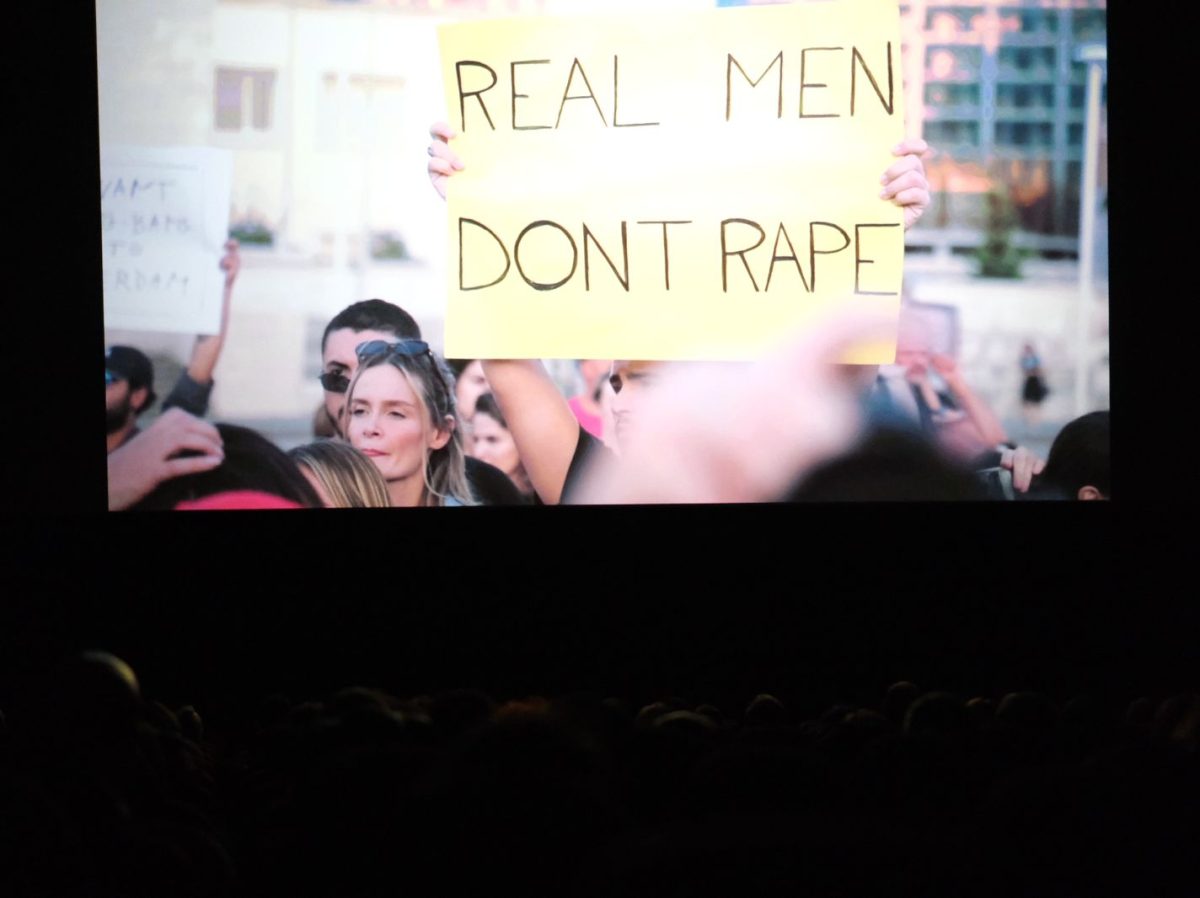
Body of Shame explores sexual abuse and harassment of women in Albania in light of the #metoo movement, exposing the fact that few woman remain unscathed by this phenomenon.

The documentary showcases the stories of brave women who challenge stigmas and share their stories with a determination to shatter society’s wall of silence.

Body of Shame challenges the societal norms that blame victims and turn a blind eye on them, seeking collective change.

Through the powerful narratives of sexual violence survivors, the documentary seeks to promote culture change, sharing the ugly truth of sexual harassment and violence against women.

BIRN Serbia Presents Fresh Media Ownership Database

New data on ownership of 43 media with the largest audience share in Serbia, published by BIRN Serbia and Global Media Registry (GMR) reveals a high risk of ownership and audience concentration and political control.

BIRN Serbia and Global Media Registry (GMR) have presented data on media ownership in Serbia. The database, Media Ownership Monitor Serbia, MOM, offers information on media, their publishers and individual owners in English and Serbian.

Serbia is one of 26 countries included in media ownership monitoring; this was the second time the monitoring was done in the country. This year, MOM databases have been published by BIRN in Albania, Bosnia and Herzegovina, Kosovo, Montenegro, North Macedonia and Serbia.

Nafisa Hasanova, head of research at Global Media Registry, said that the MOM is an excellent diagnostic tool.

“This is an X-ray of a media system. We are not demonising any particular publication but are trying to understand the risks of different media players and their closeness with the state and regulators. This is a good starting point for local actors to introduce or launch changes and see if media have enough resources for media pluralism in a democratic society,” Hasanova said, presenting the database in Belgrade.

The research is based on open-source information and official sources. It shows that, in Serbia, the public broadcaster RTS and the media companies Pink, Kopernikus, United Media and Maksim Media are the source of information for 90 per cent of people, and that many of them have significant roles in different fields – television, radio, print and online.

Presenting the media pluralism indicators, Tanja Maksic, BIRN Serbia’s project manager, said the fact most of them are in red clearly shows that political control over media in Serbia is high.

“The only indicator in green is net neutrality, as we luckily live in a part of the world where there are no internet shut-downs or control,” said Makic.

She added that a new indicator, included into monitoring this year, reveals that less that 30 per cent of managing roles in Serbian media are held by women.

The Media Ownership Monitor, or MOM, has been developed as a mapping tool to create a publicly available, continuously updated database that lists owners of all relevant mass media outlets – press, radio, television sectors and online media.

The MOM sheds light on the risks to media pluralism caused by media ownership concentration.

The MOM was initiated by the German branch of Reporters without Borders with the aim of defending freedom of the media, as well as the right to inform and to be informed everywhere in the world.

In 2019, the project grew into the Global Media Registry, GMR, an independent non-profit organisation registered under German law. In Western Balkan countries, GMR cooperates with BIRN. The project was co-funded by the EU in 2023.

BIRN Kosovo Holds a Workshop for the Referral Mechanism Members of the Municipality of Hani i Elezit

On February 28, 2024, BIRN Kosovo held a workshop on strategic communication during the implementation of the activities of the National Strategy for Preventing and Countering Terrorism. The workshop was organised in Hani i Elezit for the members of the referral mechanism of the local municipality.

The workshop addressed the principles of strategic communication, including media functioning and other platforms of strategic communication thus ensuring that the members of the referral mechanism have a better understanding of the importance of different platforms on the P/VE, R&R, and other forms of extremism.

A total of 11 participants, 5 of them women, gathered at this workshop which started with a presentation of each member of the referral mechanism including an overview of the work of this mechanism.

The trainer for this workshop Kreshnik Gashi – Managing Editor of Kallxo.com, presented and thoroughly explained means of strategic communication regarding their work on P/VE, R&R, and other forms of extremism. With an emphasis on fake news and disinformation, Gashi mentioned that the members must pay attention to the usage of social media, considering the fact of the widespread usage of all social media platforms in Kosovo. Other elements such as direct and indirect forms of propaganda were illustrated with examples, while the members of the mechanism were instructed to be assured of the audience that they address and find correct ways of defining and addressing a specific group.

During the workshop, the attendees were very engaged and expressed an interest in sharing their firsthand experiences as members of the referral mechanism of the Municipality of Hani i Elezit. They were quite forthcoming in sharing their sources of information and providing tangible examples of times when they had fallen prey to fake news and disinformation.

This workshop was part of the ‘Resilient Community Programme’ founded by GCERF.