BIRN Wins Grizelj Award in Serbia

The Independent Association of Journalists of Serbia, NUNS, has announced that BIRN Serbia had received Jug Grizelj Award for investigative journalism for 2014.


The jury, which comprised prominent journalists and editors, unanimously awarded BIRN the prize for the most exciting and investigative work, which provoked the strongest reactions, launched a public debate and asked questions of the authorities.

Since 1991, the family of journalist Jug Grizelj, who died in 1991, has been awarding journalists and media organisations for the highest achievements in investigative journalism, developing friendship among people and removing boundaries between nations with the aim of preserving the memory of Grizelj and encouraging investigative journalism.

With the consent of the family, NUNS has awarded the prize since 2012. Recipients of this award include Lila Radonjic, Predrag Koraksic, Gordana Logar, Bojana Lekic, Svetlana Lukic, Stojan Cerovic, Borba daily paper, Beta news agency, agencija Beta, Teofil Pancic, Omer Karabeg, Antonela Riha, Milos Vasic, Brankica Stankovic, Filip Svarm, Vukasin Obradovic, Olja Beckovic and others.

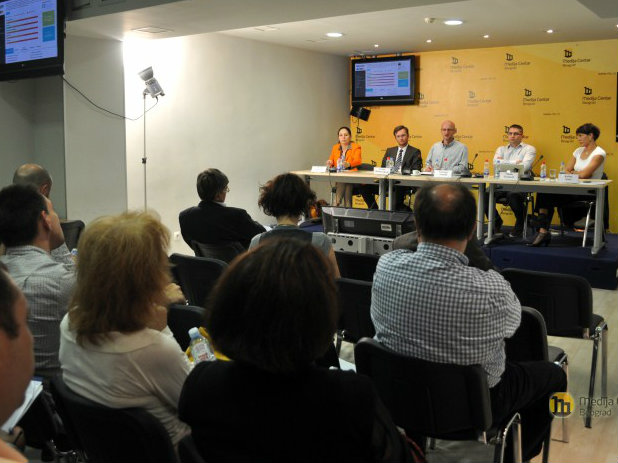
The handover of the award will be held at Belgrade Media Centre on Thursday, February 5, at noon.

In the past month, the Balkan Investigative Reporting Network in Serbia has been a target of an unprecedented attack led by Prime Minister Aleksandar Vucic and pro government media to present the Network as EU mercenaries, spies and liars working against Serbian national interests.

The attack came after January 8, when BIRN published an investigation that posed serious questions of public interest over a tender for de-watering the flooded Tamnava mine.

The following day, Vucic responded angrily by calling BIRN’s journalists liars. All media in the country carried his allegations. Only few media dared to carry the investigation or approach BIRN for response.

A joint statement by 43 NGOs and media organisations calling on the Serbian authorities to protect the public interest and investigate legal concerns raised by BIRN over the mine tender has yielded no result so far.

Belgrade Business School Illegally Organises Classes

Belgrade Business School is illegally organising classes in at least twenty cities and municipalities throughout Serbia, and the state has no means to prevent it, according to a new investigation conducted by BIRN Serbia.

BIRN Serbia’s research shows that Belgrade Business School organises teaching in at least 20 places although it has formally accredited only three branch offices.

A large number of students are registered, which makes more money for the school, but at the expense of the quality of teaching and evaluation.

The school continuously enrolls new students during the year, exceeding the permitted quota for admission.

Belgrade Business School thus provides its professors with additional income and is considered one of the most profitable educational institutions in Serbia.

The complete research in Serbian language can be found at http://javno.rs/istrazivanja/vikend-studiranje-na-poslovnoj-skoli

Serbia’s Business Registers Agency Urged to Protect Media

A BIRN Serbia debate was told that the Business Registers Agency must do more to protect the identities of investigative journalists using its archive to prevent them from being tracked and targeted.

A debate organised by BIRN Serbia on Monday entitled ‘Limitations to Institutional Freedoms: How to Protect the Information of Those Publishing Information’ heard calls for the Business Registers Agency (APR) to revise its internal procedure for registering people using its archives to avoid additionally jeopardizing journalists.

The debate was addressed by Commissioner for Information of Public Importance and Personal Data Protection Rodoljub Šabić, APR Director Zvonko Obradović, Serbian Centre for Investigative Journalism (CINS) editor-in-chief Stevan Dojčinović and BIRN journalist Slobodan Georgijev.

Investigative journalists often base their work on access to information obtained from the APR archives but the newly introduced procedure for obtaining information of public importance from the agency poses a threat to the safety of journalists, the debate heard.

APR director Zvonko Obradović however said that cooperation with journalists was working well and clarified that the new procedure is no different from the old one regarding records of the information requested.

Obradović maintained that the APR is an institution that is exposed to pressure for it to be transparent.

But Šabić responded that still allows for the possibility of information “leaking” from the APR which could result in danger for the journalists.

Several journalists from the audience inquired why the procedure had been changed just after the recent scandal involving Serbian prime minister’s brother, Andrej Vučić, whose identity was reported to have been stolen.

While not answering the question directly, Obradović insisted that, in cooperation with the Office of the Commissioner, he would do all in his power to revise the procedure and make it as safe as possible for those seeking information.

This would mean that, when paying for services at the APR, an applicant is not required to enter the registration number of the company that he or she is investigating as the reference number on the payment slip.

Šabić: poor standards in personal data protection

The debate also examined the overall situation in the field of personal data protection.

Šabić said that the area of video surveillance, security checks and telephone call records is completely unregulated and that Serbia was dramatically lagging behind in the field of basic standards of personal data protection.

Video surveillance is fully unregulated except for police traffic control, yet thousands of cameras have been installed. Security checks should be regulated by the law yet they are not and telephone call records end up in the wrong hands, said Šabić.

He explained that there are people whose personal data is treated, under the law, as particularly sensitive and this usually involves sexual minorities, those with “compromising” illnesses, people of other nationalities, political orientation or religious affiliation.

Such information should be treated and safeguarded in a special way, he said. The law envisages that within six months the government must pass a decree on archiving and safeguarding particularly sensitive data, he continued, but noted that the law was adopted in 2008 but was not followed by the adoption of a decree.

When a backward society in transition decides to adopt personal data protection standards that are applied in societies in which individuals are very highly valued, it is faced with an extremely difficult task, said Šabić.

He argued that the most important thing is to “change the mentality” so people regard themselves as citizens rather than subjects, and will be willing to speak out and ask the question: “Why are you doing this, and with what right?”

He also said that an investigation carried out by his colleagues had established that information “has not leaked” from APR.

Project Financing of Media ‘a Challenge’ – BIRN Debate

Project financing is the way best way to distribute budget funds for the media – but the task will be a tough one, a BIRN conference on the New Media Economy heard in Belgrade on October 31.

The debate, which gathered around 40 participants, including media experts, journalists, professional associations, NGOs and representatives from Serbia’s government, followed BIRN Serbia’s presentation of a report on project financing of the media.

“The best way to distribute budget funds is through project financing – but all these projects should be implemented with greater professional standards,” Tanja Maksic, from BIRN Serbia, told the conference.

Project financing of the media means media outlets receiving state funds only via applications for projects under fair and transparent conditions.

Vukasin Obradovic, head of the Independent Journalists’ Association of Serbia, NUNS, said project financing of the media was “a tough task,” especially for local media outlets.

“Local communities first need to make budgets for project financing of the media, form a specific commission and define what the public interest is,” Obradovic said, adding that this would take time.

Participants in the debate also addressed another important point – the privatization of the media, which should be completed by July 1, 2015.

“If media outlets are not privatised by that date, capital will be distributed free of charge to the employees,” Dusan Sutanovac, from Serbia’s Privatization Agency, told the conference.

According to the BIRN Serbia report, media financing through the state budget has so far been implemented in two ways: most of the funds were distributed directly (through public procurement procedures, directly from the budget or through direct contracting), while smaller amount of funds were distributed through open calls for content production.

The new media regulations, however, prescribe significant changes and introduce new practices in budgetary financing of media content under which open-call procedures are the only legal way of financing.

BIRN Serbia also presented analysis of the current practices of open-call procedures, earmarking potential pitfalls – lack of standards and criteria, lack of programme quality and lack of broadcasting possibilities.

The report has been presented at various regional centres in Serbia.

BIRN Serbia Debates Project Financing

BIRN Serbia held a public debate on the prospects of new models of budgetary financing for the media with NGO and media representatives in Novi Pazar, southwest Serbia.

Guests and panelists of the debate on Friday agreed that the local media face turbulent times next year, when all budgetary supported media will be privatized and local governments will have to get used to allocating budget money exclusively through projects.

Panelists included: Dragan Janjic, NUNS vice-president, Denis Mavric, director of the Regionalna TV Novi Pazar and Tanja Maksic, from BIRN Serbia. The moderator was Slobodan Georgijev, also from BIRN Serbia.

The debate was also a chance for BIRN Serbia to present its report on budgetary financing, looking into practices of 2013. 

The report highlighted several issues that are not in line with good governance principles in terms of allocating budget money.

The main issues are: too much discretionary power is given to local governments to allocate funds; the criteria for grading projects are unclear; project proposals written by media are often substandard; programs produced enjoying budget support, while thematically diverse, routinely lack critical insight into economic, political and social problems.

Panelists at the debate concluded that while the new media laws present a good base for reform of the media sector, closer attention to their execution is needed.

BIRN Serbia holds debate on EU Progress Report

The key conclusion from the debate in Belgrade on Tuesday was that the recently-published EU Progress Report on Serbia was not too hard on the Serbian government, but it does not mention many problems and some of the conclusions and recommendations are identical to the 2013 Progress Report.

In an analysis that was presented at the debate, BIRN Serbia concluded that the report devoted considerable attention to the state of the economy and the rule of law, but topics related to health and education were only sporadically covered.

BIRN Serbia’s analysis pointed out slow and unsufficient reforms in the health and education fields, also highlighting that these sectors will not be too closely monitored by the EU and the majority of decisions will be left in the hands of domestic decision-makers.

The full analysis (in Serbian) is available here http://www.meravlade.rs/wp-content/uploads/2014/10/BIRN-ANALIZA-IZVE%C5%A0TAJA-EK-O-NAPRETKU-SRBIJE-ZA-2014.-GODINU.pdf

Speakers at the event were Goran Radosavljević, professor of public finances at the Faculty of Economy and Finances, Nemanja Nenadić, executive director of Transparency Serbia, Marina Mijatović, director of the NGO Law Scanner and Nikola Jovanović, president of the NGO Habče.

The main message that the European Commission gave the Serbian authorities in the progress report was related to the need for more efforts to ensure fiscal consolidation and acceleration of the necessary structural reforms. The high unemployment rate in Serbia, above 20 per cent, remains one of the crucial problems.

When it comes to corruption, according to the report, “there is a strong political will” to combat graft, but practical measures do not reflect this.

BIRN Serbia holds debates on media financing

The biggest issue local media in Serbia are facing is a lack of knowledge about project financing and lack of budgetary transparency in allocating money to media outlets, two debates held by BIRN Serbia in Nis and Kragujevac heard. Media representatives said they hoped that some of the problems would be resolved by full implementation of new Media and Public Information Law.  

The debates gathered more than 40 participants including representatives of local media, local government, professional associations and experts.

Media financing through the state budget has so far been implemented in two ways: most of the funds were distributed directly (through public procurement procedures, directly from the budget or through direct contracting), while smaller amount of funds were distributed through open calls for content production.

The new media regulations prescribe significant changes and introduce new practices in budgetary financing of media content under which open-call procedures are the only legal way of financing.

BIRN Serbia presented an analysis of the current practices of open-call procedures, clearly earmarking potential pitfalls: lack of standards and criteria, lack of programme quality and lack of broadcasting possibility. The same analysis will be presented later in Novi Sad, Novi Pazar and Belgrade.

The debates are organised within the project ‘Enhancing media independence through development of sustainable and competitive financing model’, supported by the MATRA programme of the embassy of the Kingdom of the Netherlands.  

Serbian Tabloid Targets BIRN after Airline Revelations

The pro-government tabloid ‘Informer’ has published a series of allegations about the Balkan Investigative Reporting Network, following its investigation into a secret government contract with the UAE’s Etihad Airways.

Informer on Wednesday wrote that journalists from the Balkan Investigative Reporting Network, BIRN, and Serbia’s Centre for Investigative Journalism, CINS, had been stalking Serbian Prime Minister Aleksandar Vucic, causing him to cancel his summer holiday – its second highly critical report about BIRN following the high-profile airline contract investigation.

Citing an unnamed government source, the tabloid newspaper claimed that Vucic cancelled his vacation at Serbia’s Lake Bor two weeks ago after learning that “suspicious guys” from BIRN and CINS were staying at the same hotel. “Vucic cancels vacation because of ‘spies’ in hotel,” the headline read.

The allegations follow publication of a BIRN investigation into whether Serbia overpaid for an airline contract with the United Arab Emirates carrier Etihad.

The investigation, published by BIRN and in the weekly Vreme news magazine, revealed that for a 51-per-cent stake in the newly founded company, Air Serbia, Serbia paid several times more than its UAE partner.

The director of BIRN Serbia, Dragana Obradovic, said the tabloid’s allegations were a campaign to discredit the work of BIRN and CINS.

“Nobody was in Bor to spy on the Prime Minister, which is a ridiculous claim, considering that BIRN and CINS are far from paparazzi journalism,” Obradovic said.

Last Saturday, Informer also alleged that the EU was secretly financing BIRN and CINS, which were keeping contracts with the European Commission worth millions of euros.

Obradovic explained that BIRN and CINS won a project through a public call and said that BIRN had not sought to hide the contracts but had directed Informer to the EU mission in Serbia, which has the right to reveal the details.

Informer also insisted that BIRN has denied to respond whether the EU contract imposed what BIRN can and cannot investigate, suggesting the EU has forbidden investigations that involve EU companies.

But Obradovic said that this was also untrue.

“We have explicitly said that the EU does not set the topics we investigate, nor does it forbid certain issues to be looked into as the Informer journalist suggested,” she said.

The day after the BIRN revelations were published last week, Vucic held a press conference at which he insisted that the report was based on an incorrect version of the contract with Etihad. “They must have received some previous drafts,” he said.

He also suggested the investigation was serving the interests of a controversial Serbian tycoon, Miroslav Miskovic, who is awaiting trial for corruption.

Vucic said that Vreme was owned by Miskovic, who has become a symbol of the premier’s anti-corruption drive.

Serbia’s Association of Independent Journalists, NUNS, insisted that BIRN’s and CINS’ revelations about the airline deal were in the public interest.

“In a democratic society it is unacceptable for the PM to discredit media in such a manner in public,” NUNS said last Friday.

At Vucic’s press conference last week he also officially revealed details of the Etihad deal for the first time.

NUNS responded by saying that it was “obvious that the article published in Vreme forced the government and the PM to finally make the Etihad contract public”.

Vreme has meanwhile accused Vucic of “trying to prevent free, objective and independent journalistic work”, comparing his criticism of BIRN and CINS’ probe to his actions as information minister in the government of Slobodan Milosevic in the 1990s.

PM Vows Response After BIRN Serbia Reveals Airline Deal

Prime Minister Aleksandar Vucic promised to publish the text of a previously confidential deal between Serbia and United Arab Emirates airline company Etihad Airways on Friday, a day after BIRN Serbia published an article revealing the content of the agreements that appear unfavourable for the country.

BIRN Serbia revealed that, for a 51 per cent stake in the newly founded company Air Serbia, the country paid several times more than its UAE partner. Details of the contract have remained unknown since it was signed on August 1, 2013. 

The documents published on BIRN’s website provoked widespread debate in the country and reactions from the ruling and opposition parties.

According to the information in the agreements, Serbia had to pay over $90 million in 2013 alone the UAE paid $40 million, in the form of a loan, for a 49% stake in the company.

In addition to this, the state has yet to pay all the debts that the former Serbian state-owned airline Jat Airways built up before it became Air Serbia – estimated at more than $230 million, according to the agreements published by BIRN.

However the government committee responsible for approving such state aid made its decision to supply the funds confidential. This was the first time since the committee was set up in 2010 that it failed to make public such expenditure figures, despite the fact that public money was involved.

The BIRN article is available in Serbian on the javno.rs website.

Serbian Govt Falls Short on Reform Pledges

In its first 100 days, the Serbian government has only fulfilled a handful of the tasks it set itself when taking office, a new report by BIRN shows.

Research conducted by BIRN Serbia shows that out of 29 promises that Serbian government pledged to meet while taking office, only two have been completely fulfilled.

The government adopted a new Labour Law in July and has introduced stricter control over public procurements.

The research monitored the government’s action on the promises made in five areas that citizens perceived as crucial – public finance, the economy, corruption, education and health.

While some progress has been made in fulfilling about half of the promises, in the fields of education and health, nothing has been done, or started, the research says.

“Although there were some reform efforts, mainly regarding legislative changes, matters are far from ideal,” BIRN Serbia report states.

Jelena Bojovic, from the National Alliancefor Local Economic Development, NALED, said the first 100 days of the government had been marked with “great instability”.

“The period was marked by constant changes in regulations, new drafts and new proposals of the laws, new people at the forefront of the ministries. Great instability is a problem for the economy,” Bojovic said on August 5 at a conference organised by BIRN Serbia.

Nemanja Nenadic, programme director at Transparency Serbia, the local branch of international watchdog organisation, said the fight against corruption had not been kept in due focus.

“When it comes to fight against corruption, the period has been marked by lack of transparency regarding government’s deals with investors. This refers not only to deals made by this government, but also to deals made before 2012,” Nenadic said.

He added that a lack of transparency concerning the government’s business operations with foreign partners was worrying as the constitution grants inter-governmental agreements high legal status than local laws.

“The issue is that the constitution does not set boundaries on what can be determined in inter-governmental agreements,” he said.

Nenadic said the government had been using inter-governmental agreements to make deals between Serbian national carrier Jat Airways and Etihad of the United Arab Emirates, for example, as well as for the deal for real estate in the Belgrade Waterfront project.

In this way, the government bypassed Serbian law on Public-Private Partnerships, as well as Privatisation Law and Law on Public Companies.

The full report is available on this link, while follow-ups on the government’s measures are available on the website www.meravlade.rs.