National Budget Forum 2012

BIRN Serbia – past programme

BIRN Serbia’s National Budget Forum aims to increase government transparency and accountability in the sphere of public finances through an annual forum on the country’s budget.

Summary

The 2012 Forum aims to gather relevant stakeholders and launch a discussion on the strategic objectives of the 2013 budget, and inform the public of the budget planning process for the coming year.

The National Budget Forum (NBF) is designed as an annual event, with the goal of establishing a permanent forum for public discussion on public finances/budget policies and priorities in Serbia.

The NBF is designed to increase the inclusiveness of budget planning, development and implementation in Serbia. NBF includes a panel discussion on the design and priorities of the budget for the coming year, two working group discussions and a presentation of conclusions.

The National Budget Forum brings together representatives of the executive and legislative branches, as well as CSOs, budget experts, the private sector, media and interest groups. It targets both the general public and the expert community.

The project is implemented in partnership with ProConcept, and is funded by the British Embassy to Serbia.

Information Sheet

Main Objective:
  • To increase governments transparency and accountability in sphere of public finances

Specific Objectives:

  • To gather relevant stakeholders and launch discussion on strategic objectives of the 2013 budget
  • To inform the public on the budget planning process for the coming year

Main Activities:

  • The National Budget Forum (NBF) is designed as an annual event, with the goal of establishing a permanent forum for public discussion on public finances/budget policies and priorities in Serbia.
  • The NBF is designed so to increase inclusiveness of budget planning, development and implementation in Serbia. NBF is designed in the format of:
    1. panel discussion on design and priorities of the budget for the coming year,
    2. two working group discussions and
    3. presentation of conclusions.

Target Groups:

  • Executive
  • Legislative
  • Civil Society Organisations
  • Expert community
  • Private sector
  • Media
  • Interest groups.

Make Your Own Budget Online Application

BIRN Serbia – past programme

BIRN Serbia is developing and promoting a Make Your Own Budget online application for the Serbian Parliament as part of its Eye on Public Finances programme.

Summary

The project, which runs from January 2012-April 2013, aims to enable public participation in the budget planning process through an online mechanism. The application intends to enhance public knowledge of the budget and transparency in public spending.

As part of the Make Your Own Budget project, the BIRN Serbia team is conducting budget analysis and identifying trends. As the online application is developed, BIRN Serbia is training parliamentary staff on how to maintain the application and how to analyse the data gathered from it.

Project leaders are also promoting the application via the web, public outreach, workshops, debates and open classes in universities, as well as public events and study visits.

Make Your Own Budget aims to reach both the general public in Serbia and the country’s lawmakers, as well as the expert community.

ProConcept is the co-implementer of the project, which is supported by the British Embassy in Serbia and the MATRA programme of the Dutch Ministry of Foreign Affairs.

Information Sheet

Main Objective:
  • To enable public participation in the budget planning process

Specific Objectives:

  • To develop on-line mechanism for public engagement in the budget process in cooperation with the Parliament
  • To enhance public knowledge on the budget and transparency in the public spending

Main Activities:

  • Budget analyses and identification of trends
  • Development of the application
  • Training for the Parliamentary staff on maintaining the application and analysing data gathered through it
  • Promotion of the application including on line promotion, public outreach, workshops throughout Serbia, debates and open classes in Universities
  • Public events and study visits
  • Parliamentary session prior to the budget discussion

Citizen’s Budget

BIRN Serbia – past programme

BIRN Serbia’s Citizen’s Budget initiative aims to produce a guide to the Serbian budget for the country’s citizens. The BIRN team intends to make a link between revenue raised, expenditures, and outcomes in public services as part of an effort to increase efficiency and strengthen the accountability of the Serbian government’s budgeting process.

Summary

This project, which will run from June 2012-February 2013, will take an innovative approach to communicating macroeconomic policy and public financial management to the people of Serbia and various interest groups. It also aims to provide know-how to the Ministry of Finance and set the groundwork for creating a sustainable framework for communicating the budget to the people of Serbia.

As part of the citizen’s budget project, BIRN Serbia will discuss the government’s budgeting and financial management practices at meetings with the Ministry of Finance in an effort to thoroughly understand the budget process and the policy decisions taken by the government. Project participants will also discuss spending strategy with the Finance Ministry to get an understanding of specific spending plans, to make the link from expenditure to public service outcomes and to establish the geographical distribution of spending.

The team will analyse revenue sources to get a sense of the distributional impact of taxation in the Republic of Serbia (eg. proportional impact on families, households, the employed, the unemployed, businesses etc).

As part of the project, BIRN Serbia will group budget allocations to government ministries into meaningful categories of expenditure (eg. health, education, housing, welfare etc) to communicate spending more effectively to the public. The team will also analyse the government’s fiscal position, including the current deficit, debt management framework and reform program and discuss economic growth prospects with the Fiscal Council. In addition, the project will analyse government financial data to enable comparisons to be drawn with EU averages.

The Citizen’s Budget project will organise a series of consultative meetings with experts in different fields for the purpose of data gathering, especially in terms of the impact of budget allocations.

The results of the project will be translated into a prototype Citizen’s Budget which presents information and data in an easy to understand way, making the budget both tangible and meaningful to the citizens of Serbia. A light-touch framework will be created which enables the Citizen’s Budget to be updated with ease at successive fiscal events.

BIRN Serbia will also organise focus-groups with different stakeholders in order to get their feedback on the proposed concept, the information presented, the way in which it is presented and how it relates to their interests.

The team intends to secure a buy-in from the Finance Ministry through consultation and training to continue to follow this good practice.

The final product of this Citizen’s Budget initiative will include the publication of the Citizen’s Budget Guide, and its promotion in the Parliament, followed by a public outreach campaign.

The target audience for the Citizen’s Budget project is both the general public and the Government of Serbia. The project budget stands at 30,000 euros; it is supported by USAID Business Enabling Project.

Information Sheet

Main Objective:
  • To produce a Citizen’s Budget Guide for the Republic of Serbia which aims to make the link between revenue raised, expenditure on and outcomes in public services to both increase efficiency and strengthen accountability of the GoS’s budgeting process.

Specific Objectives:

  • To take an innovative approach to communicating macroeconomic policy and public financial management to the people of Serbia and various interest groups.
  • To provide know-how to the Ministry of Finance and set the ground for creating a sustainable framework for communicating the budget to the people of Serbia.

Main Activities:

  • To discuss the GoS budgeting and financial management practices through meetings with MFIN to thoroughly understand the budget process and the policy decisions taken by the Government.
  • To analyse revenue sources to get a sense of the distributional impact of taxation in the Republic of Serbia (eg. proportional impact on families, households, the employed, the unemployed, businesses etc).
  • To group budget allocations to the government ministries into meaningful categories of expenditure (eg. Health, education, housing, welfare etc) to communicate spending more effectively to the public.
  • To discuss spending strategy with MFIN to get an understanding of specific spending plans, to make the link from expenditure to public service outcomes and to get a sense of the geographical distribution of spending.
  • To analyse the GoS fiscal position, including the current deficit, debt management framework and reform program and to discuss the economic growth prospect with the Fiscal Council.
  • To analyse GoS financial data to enable comparisons to be drawn with EU averages.
  • To organize a series of consultative meetings with experts in different fields for the purpose of data gathering, especially in terms of impact of budget allocations.
  • To translate results into a prototype Citizen’s budget which presents information and data in an easy to understand way making the budget both tangible and meaningful to the citizens of Serbia.
  • Create a light-touch framework which enables the Citizen’s budget to be updated with ease at successive fiscal events.
  • To organize focus-groups with different stakeholders in order to get their feedback on proposed concept, information presented, the way in which it is presented and how it relates to their interests.
  • Secure buy-in from the MFIN through consultation and training to continue to follow this good practice.
  • Editing, design and printing the Citizens Budget Guide.
  • Promote the Citizen’s budget in the Parliament, followed by the public outreach campaign.

Target Groups:

  • Government of Serbia
  • Expert community
  • General public

Media Ownership Monitor (MOM) – third implementation phase

BIRN Serbia

Summary

BIRN Serbia is conducting media ownership monitoring in Serbia in order to reveal relevant trends towards concentration, enabling the public to make more educated choices as media consumers. Ideally, greater awareness will result in regulatory countermeasures in the medium term.

Information Sheet

Main Objective:
The overall objective is to foster freedom of information and media pluralism while defending diversity of opinions.
Specific Objectives:
The Media Ownership Monitor (MOM) is a standardized instrument for research and publication, creating and enhancing transparency of national mass media ownership.Ownership shares of media outlets and the respective market shares of their products can be used as indicators of media pluralism in each target country.
Collecting data and updating and classifying them is critical for raising political awareness of this problem, initiating debates and eventually establishing a legal framework to enhance control of this concentration.
This helps promote an independent, efficient and pluralistic media sector, serving as a basis for the realization of the individual fundamental right to freedom of expression and informational self-determination.
In addition, the results of MOM can help strengthen the media literacy of all citizens; their user behaviour is changed when they know – or at least can know – who is behind a TV or radio station, a newspaper or Internet portal.
Main Activities:
- Conducting media ownership monitoring in Serbia- Public policy analysis
Target Groups:
- Legislature (media and anti-trust law, concentration control);- Professional public (media journalists, media studies and research, trade and professional associations, civil society actors);
- Media owners;
- Any media user, general public
Highlights:
Web site with monitoring results
Public policy analysis
Public conference

Publicly on Public Services – focus on health and education

BIRN Serbia

Summary

BIRN Serbia conducts action which will respond to the lack of information and debate about the level of reforms in areas of health and education on both local and national level.

Information Sheet

Main Objective:
BIRN Serbia envisages a nine-month program aiming to produce in-depth analytical and investigative reports about the results of institutional reforms in the fields of health and education, followed by public debates and policy initiatives, in cooperation with CSOs and think tanks specializing in these issues.
Specific Objectives:
1. Raising the capacity of journalists (including locals) to research and report on health and education2. Creating an informal network with other watchdogs, think tanks and CSOs specializing in these issues
3. Enhancing the public debate on the impact of reforms in the areas of education and health
Main Activities:
A1: Training for journalists will be organized in close collaboration with sectorial organizations specializing in health and education.A2: Through this project BIRN will intensify cooperation with specialist watchdog and think tank organizations
A3: A set of activities that will secure visibility and initiate a public debate, based on four articles and two policy papers produced over the course of the project
Target Groups:
Journalists, civil society organizations, decision-makers in government and parliament, experts, trade unions.

Highlights:
Two policy papers

Public debate

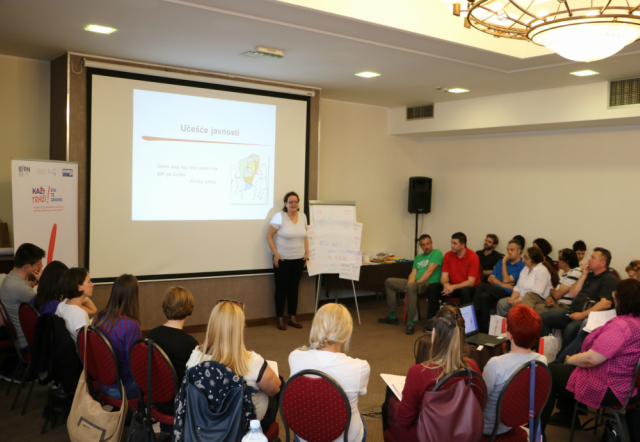
BIRN Holds ‘Public Money for Public Interest’ Workshops

Forty local civil society representatives attended two workshops in Belgrade in May as part of the “Public money for public interest” project, which is being implemented by BIRN Serbia in cooperation with the Independent Association of Journalists of Serbia and Slavko Curuvija Foundation, and financed by the European Union. 

The workshops focused on education in the fields of defining the public interest in the media and monitoring the flows of public money in the local media.

The first workshop from May 15-17 gathered 14 organizations across Serbia that were interested in learning how to include citizens in the process of defining, implementing and monitoring the public interest in the media.

Through practical work, participants had chance to familiarize themselves with conditions and obstacles related to the implementation of participatory projects.

The second workshop, entitled “Research techniques and monitoring public money in the media sector,” ran from May 24-26.

Twenty CSO representatives were introduced to basic models and mechanisms on how public money is spent in the media sector. During the workshop participants acquired skills that will enable them to monitor the effect of spending public money on media content creation.

Both groups of participants will have an opportunity to continue working on the “Public money for public interest” project as researchers or as grantees in further project phases.

BIRN Serbia Film Comes Second in EU Investigative Journalism Awards

The film “Flatland without Birds?”, by journalist Dragan Gmizic, a documentary about illegal bird hunting in Serbia, won second prize for 2016 in the EU Investigative Journalism Awards.

The film, co-produced by BIRN Serbia and Greenfield Productions, examines how the hunting rare turtle doves and quail is organised in Serbia and asks how and whether it can be controlled. The documentary was aired on TV N1, TV CG and Al Jazeera Balkans.

First prize went to Maja Zivanovic, for her series of stories for the Investigative and Analytic Centre of Vojvodina, VOICE. Maja is currently working for BIRN’s regional publication Balkan Insight.

The award for the best young investigative journalist went to Milica Saric, from the Center for Investigative Journalism of Serbia, CINS. 

BIRN Investigative Stories Win Two Awards

Two BIRN stories won this year’s Investigative awards from the Independent Journalistic Association of Serbia in the categories for print and on-line media.

“Secret of Vucic’s tavern” won the award in the print media category. BIRN Serbia journalist Jelena Veljkovic wrote on how Serbia’s Property Directorate claimed not to know that an exclusive restaurant had been opened in a part of the Belgrade Cooperative building, which the directorate had leased to the “Belgrade on water” company, refusing to answer whether it believed this use of public property was in accordance with the law.

A story by a group of journalists from BIRN and OCCRP, “Making a Killing: The 1.2 Billion Euro Arms Pipeline to Middle East”, meanwhile won the award in the online media category, along with a colleague from the Center for Investigative Journalism, CINS, whose story showed that the Governor of the National bank of Serbia plagiarized a significant part of her doctoral thesis.

The BIRN arms investigation revealed how thousands of assault rifles, mortar shells, rocket launchers, anti-tank weapons, and heavy machine guns have poured into the Middle East from Bosnia, Bulgaria, Croatia, the Czech Republic, Montenegro, Romania, Serbia and Slovakia. The same story is also among three finalists for the Czech Journalism Prize, the best-known Czech media award.

This year, 75 journalists applied for the award given by the Independent Association of Journalists of Serbia, NUNS, and the US embassy in Serbia. The jury included Danica Vucenic, journalist from Insajder, Milorad Ivanovic, editor-in-chief of Newsweek Serbia, Predrag Blagojevic, editor-in-chief of online portal Juzne Vesti and Pedja Obradovic, producer at TV N1

Gabrijela Vukicevic

Gabrijela Vukicevic joined BIRN Serbia as finance officer in October 2016.

For 15 years previous to that, she worked as finance/administrative officer at NVO MicroFinS and MicroFinS-DBS. MicroFinS collaborated with the UNHCR (UN refugee agency), SIDA (Swedish International Development Cooperation Agency) and CWS (Church World Service).

Lada Vucenovic

Lada Vucenovic joined the BIRN Serbia team in January 2010.

As project coordinator, she handles all operational and project matters in the field of media policy and good governance, and also works as a researcher.

She graduated from Faculty of Organizational Sciences at the University of Belgrade, where she majored in marketing management and public relations. Before joining BIRN, she volunteered at several different organisations: Executive Group, ABS Holdings and Group for Security (G4S).