Balkan Fellowship for Journalistic Excellence Winners Chosen

Zornitsa Stoilova was awarded first prize for the best story from the 2015 Balkan Fellowship for Journalistic Excellence programme at a closing ceremony in Tirana on Friday.

Zornitsa won the prize of 4,000 euros for her story about support for ISIS among some members of a marginalised Roma community in Bulgaria.

The second prize and 3,000 euros went to Damir Pilic for his article “Red revival: The fall and rise of Karl Marx”.

The third prize and 1,000 euros was awarded to Laura Stefanut for her story about clothing factories industry in Romania and Bulgaria.

Ten talented journalists from Albania, Bulgaria, Croatia, Greece, Kosovo, Romania and Serbia worked for more than six months on in-depth stories and investigations, exploring different aspects of this year’s fellowship theme, ‘Values’.

The Balkan Fellowship for Journalistic Excellence was launched in 2007 to promote high-quality, cross-border reporting. The programme provides fellows with financial and editorial support, allowing them to travel, research and write their stories and develop their journalistic skills. They also have the opportunity to work with colleagues from neighbouring countries to examine how different nations are tackling important social and political topics.

The jury members who selected the winners were Florian Hassel, Balkan correspondent for the German daily newspaper Süddeutsche Zeitung, Remzi Lani, executive director of the Albanian Media Institute, Gerald Knaus, founder and president of the European Stability Initiative, Milorad Ivanovic, executive editor of the Serbian edition of Newsweek, Martin Woker, correspondent of the Swiss daily newspaper Neue Zürcher Zeitung, Gerfried Sperl, columnist for the Austrian daily newspaper Der Standard. Allan Little, the veteran BBC foreign correspondent, was the selection committee’s annual member, serving for a one-year term.

For the first time in the fellowship’s history, the award ceremony was held in Albania, at Tulla Culture Centre in Tirana.

With this year’s programme concluded, fellows are invited to joint the BFJE alumni network, which already consists of more than 70 journalists from 10 Balkan countries who collaborate on stories and promote high professional standards.

The fellowship will issue a call for applications for next year’s programme in January 2016.

Balkan Fellowship for Journalistic Excellence is implemented by the Balkan Investigative Reporting Network, supported by ERSTE Foundation and Open Society Foundations.  
Fellowship Closing Seminar To Be Held in Tirana

Ten talented journalists from across the region will reunite in Tirana after eight months of hard work to discuss their cross-border stories, produced as part of the Balkan Fellowship for Journalistic Excellence.

The fellows taking part in the ninth year of the programme have travelled across the region and far beyond to gather material for in-depth articles based on the theme of ‘Values’. They have also attended editing sessions in Belgrade and Skopje with BFJE editor Andrew Gray to finalise their texts.

On Friday, December 4th, the fellows will present their stories to members of the programme’s selection committee, who will then vote for the three best articles. The winners will be awarded a cash prize of 4,000 euros for first place, 3,000 euros for second place and 1,000 euros for third place.

The winners will be announced at the Balkan Fellowship for Journalistic Excellence closing event and award ceremony in Tirana on the evening of December 4th.

The Fellowship programme is supported by ERSTE Foundation and Open Society Foundations. It was created to enable journalists to work on projects of their own choice with editorial and professional support to produce in-depth, cross-border stories on topics of importance both inside and outside the region.

BIRN Launches Balkan Extremism Reporting Project

BIRN Hub began a new project focused on online reporting on extremism in the Balkans with two days of training for journalists from across the region.

The two-day training session for 11 journalists from Albania, Bosnia and Herzegovina, Kosovo, Macedonia, Montenegro and Serbia was held in Belgrade from November 21-22 as part of Balkan Investigative Reporting Network’s new project, ‘Strengthening Media Reporting and Public Understanding of Extremism in the Western Balkans’.

The journalists heard lectures from Secunder Kermani, a BBC Newsnight reporter and producer, and Shpend Kursani, a researcher at the Kosovo Centre for Security Policy.

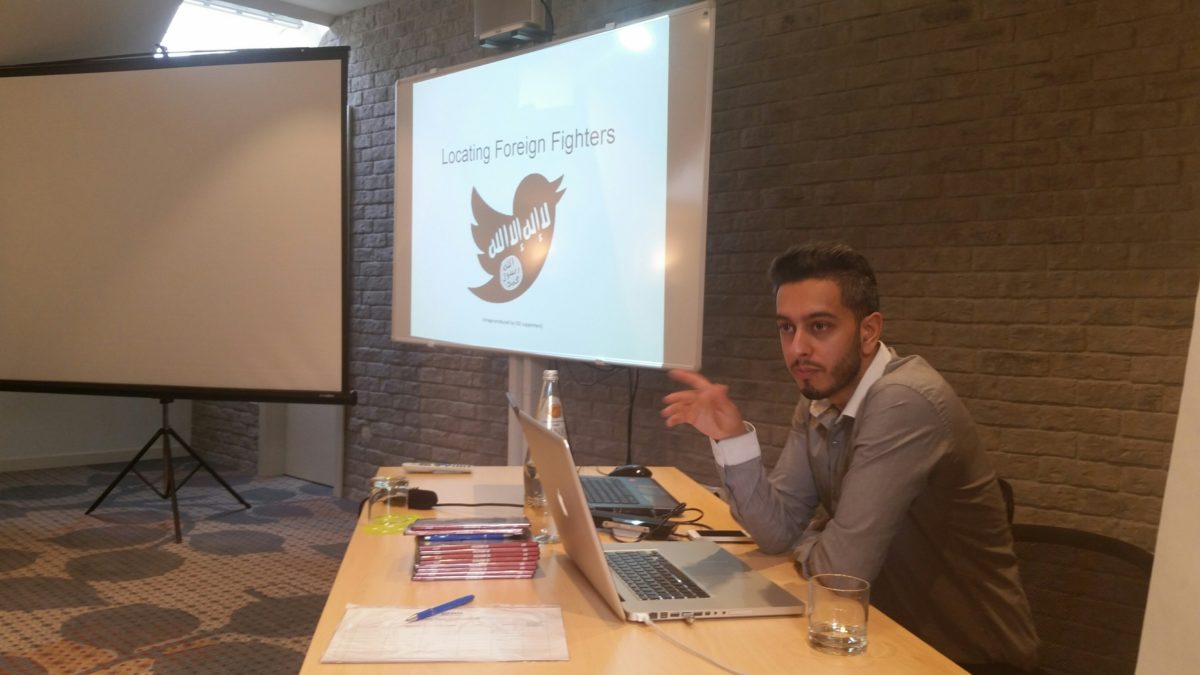
Kermani lectured on various aspects of Islamic theology, and presented an overview of different groups fighting in Syria and Iraq. He also provided journalists with tips on how to avoid the ISIS propaganda machine and how to locate foreign fighters.

Kursani meanwhile presented a report about the causes and consequences of Kosovo citizens’ involvement as foreign fighters in Syria and Iraq.

On the second day, the journalists work on story proposals with head of the project, Marija Ristic, editor Anita Rice and BIRN regional director Gordana Igric.

Besides training, the project involves the continuous production of news, interviews and analysis on a special focus page on the Balkan Insight website entitled ISIS in the Balkans.

The selected 11 journalists will also have continuous on-the-job training and mentoring as a regional journalistic team.

As part of the project, the journalists will produce six in-depth country-based analysis articles and one cross-regional research paper. 

At the end of the project, BIRN will organize a conference with key stakeholders at which they will debate the issue of violent extremism in the Balkans.

Serbian Minister Questions BIRN Credibility Due to Foreign Funding

Serbian interior minister questioned credibility of BIRN as the funding of organization comes only from abroad, after a week of campaign against independent investigative journalism organizations in tabloid media.

In an unprecedented live four hours long program on one of the most popular pro government national TV stations PINK, Balkan Investigative Reporting Network, BIRN, KRIK – Network for Investigating Crime and Corruption, CINS – Serbia’s Centre for Investigative Journalism, were one more time labelled as “foreign mercenaries” who are participating with other actors in what the station called attack on Serbian Prime Minister Aleksansader Vucic.

Serbian interior minister Nebojsa Stefanovic questioned the good intentions of BIRN investigations “as it is strange that all the funding comes from foreign donations” and that no domestic money was ever given to the organisation.

He also argued that investigations done by BIRN and other investigative organisations in Serbia should not be taken for granted.

Dragana Zarkovic, director of BIRN Serbia, says however her organization did reserve funding from Serbian instutitions.

“Office for cooperation with civil sector, which is body of Serbian government , is one of our funders. In 2015 they were supporting our Participative budgeting programme, which enables public consultations in local budgets drafting,” Zarkovic said.

  Owner and editor of pro-government tabloid Informer, Dragan Vucicevic, who was also part of the special program, said that BIRN is “financed to overthrow Vucic’s government, in order to fulfil their campaign to have a Serbia without a Prime Minister”.

“They (BIRN, CINS and KRIK) use lies to destabilize the country, I have proof of everything,” Vucicevic said on Sunday.

He also said that all investigations produced by BIRN and others are “invented affairs”, aimed to cause unrests like in the countries of the region, citing examples of Montenegro, Kosovo and Macedonia.

As a ‘prof’ Vucicevic took out financial records of BIRN, arguing that “direct payoff of the EU came in February”, just after the article BIRN published on alleged corruption in Tamnava mine.

Vucicevic was referring to a grant BIRN got through a fair competition at the EU tender for investigations as part of the program for Serbia, Media Freedom.

Snezana Caricic

She joined the BIRN team in 2014 and is responsible for both finance and administration jobs, producing finance reports, processing invoices and daily track of daily revenue and spending.

In addition, she is managing the daily functioning of BIRN Hub’s Belgrade office.

Snezana has been working in finance administration for almost 20 years. She speaks Serbian and Macedonian.

BIRN Serbia Journalist Joins Newsweek Conference Panel

Slobodan Georgiev, a journalist from BIRN Serbia, was a panel member at the ‘Challenges of Investigative Journalism in the Contemporary World’ discussion on September 3.

The panel was part of a conference on media freedom organized by Newsweek magazine in Belgrade which brought together more than 200 participants including journalists, editors and media experts.

Georgiev pointed out that investigative reporters can face problems if they publish stories that the authorities find uncomfortable.

“The government shaped the media environment in the country and if you do some kind of monitoring or research what the government does and what the people who sit in government do, you find yourself in trouble,” Georgiev told the conference.

He said that after BIRN Serbia published a report on a government contract for pumping flood water from the Serbia’s Tamava mine – which was criticised by the authorities – other media took the government’s line.

“When the Prime Minister had a problem with us, fellow journalists didn’t address the issue about our story, but about who pays us,” he said.

At the conference, BIRN Regional Network Director Gordana Igrić moderated a conversation about crime and organ trafficking in Kosovo with Michael Montgomery from the Center for Investigative Reporting in the United States.

Civil Activists Seek Expanded Role in Balkans’ Future

Civil sector groups from six Western Balkans countres urged their political leaders to secure freedom of expression and media independence, also calling for more of a role in their countries’ EU integration processes.

As leaders from the Western Balkans and the EU gathered in Vienna for the second leg of the Berlin Process, about 200 civil society activists and members of think tanks and the media discussed their proposals and concerns for the region.

In joint recommendations presented by BIRN’s Macedonia Country Director and Balkan Insight’s managing editor, Ana Petruseva, on Thursday, activicts urged the Western Balkan states to continue their modernization process both in their own states and in the wider region.

The recomentations were presented to the Western Balkans leaders and EU officials and tackled three main topics – regional cooperation, freedom of expression and creating jobs and prosperity.

Civil society representatives voiced their concerns and put forward concrete demands, saying that greater civil society involvement could help push forward  EU integration and reforms.

“Governments of Western Balkans should accept the civil society sector as an equal partner in the EU integration process and commit to funding civil society initiatives and networks that delivered tangible results,” the recomendations read. 

Civil society actors say they can contribute toward policies and strategies for enhancing regional cooperation in the area of social development and help improve the institutional and legal environment for civil society regionally.

The recommendations said that improving mutual understanding, exploring and discussing difficult episodes in their common history remain important aspects of regional cooperation in which civil society can and should play an active role.

The recomendations emphasize the role and potential of civil society for EU integration,  regional cooperation and energy or infrastructure projects. 

The recomendations also urge Balkan leaders to secure freedom of expression, the independence of the media and greater legal protection and working conditions for journalists.  

“The  legal protection of journalists needs to be increased as well as their working conditions, improved through the social dialogue with employers, which would overall diminish their precariousness in working relations. Media owners should adhere to existing laws in regard to employment and working conditions”, the documents reads, adding that public broadcasters must be independent and regulatory bodies need to become free from direct or indirect government influence.  

In the third discussed area – job creation and the labour market, civil activists urged the region’s governments to focus on re-starting production, modernising and supporting the agricultural sector and improve consumer protection.

The Civil Society Forum of the Western Balkans Summit Vienna 2015 is a joint initiative of ERSTE Foundation, Friedrich-Ebert-Stiftung, and Karl Renner Institute, in close cooperation with the Austrian Ministry for Europe, Integration and Foreign Affairs.

Sixth BIRN Summer School opens in Albania

BIRN’s summer school for investigative reporting opened in Durres, Albania, with a plea to journalists to channel their curiosity.

Blake Morrison, investigative projects editor at Reuters in New York and the school’s lead trainer, kicked off a packed programme urging journalists to “use our skills of observation, be curious”. 

Morrison detailed how journalist can pinpoint sources and find key information during their investigations.

“People(Sources) will believe you if you really try to understand what the problem is,” he added.

Morrison also explained the importance of careful planning in complex stories.

BIRN journalist and investigations’ editor Lawrence Marzouk presented the school’s investigative fund, which provides grants to promising story ideas.

He said that participants will be split into groups and develop investigative proposals to present to a panel of judges on the final day. Two or three stories will receive funding from a pot of around 6,000 euro so that participants can carry out their investigation.

“I will help you to develop the story,” Lawrence added.

Mar Cabra, who heads ICIJ’s Data & Research Unit, outlined how journalists can find data and the importance of data journalism. She revealed how she had used official statistics to expose the worrying use of psychotropic drugs among children in the US.

“I decided to check how many drugs children in foster care in the state of Texas are prescribed and their use of psychotropic drugs,” Cabra said.

She presented a selection of groundbreaking data stories and emphasized that we need to think about data in every story, because “data is everywhere”.

“Try to do data as much as possible, and not only for clicks, use it for investigation,” she said.

In the afternoon, Philipp Grüll’s documentary “Tito’s Murder Squads – The Killing of Yugoslav Exiles in Germany” was screened.

The first day’s working sessions concluded with a discussion about the use of confidential files with Philipp Grüll, Anuska Delic, investigative and data journalist from Slovenian daily newspaper Delo, Besar Likmeta, BIRN Albanian editor, and Marija Ristic, Balkan Transitional Justice assistant editor.

The sixth BIRN Summer School brings together young journalists from Serbia, Croatia, Bosnia and Herzegovina, Albania, Macedonia, Bulgaria, Austria, Kosovo, Palestine, Germany and Georgia to learn from leading media experts how to use social media to uncover crimes, skills for cracking open offshore companies and how to make reluctant sources talk.

The Summer School of Investigative Reporting 2015 is organised by the Balkan Investigative Reporting Network, BIRN, in cooperation with the Media Program South East Europe of the Konrad-Adenauer-Stiftung  and with support of the Austrian Development Agency (ADA), Open Society Foundations and USAID Macedonia.

Marcus Tanner

Marcus Tanner is Editor at Balkan Insight

Marcus studied theology at Cambridge before becoming the Balkans correspondent for The Independent from 1988 to 1994.

He returned to London to become the Assistant Foreign Editor of The Independent from 1996 to 2000 before leaving to write books on Ireland and on the Celts and to work briefly in Kyrgyzstan.

He has worked full time for Balkan Insight since 2006, while continuing to write leader-page articles twice a month for The Independent.

His published books are: “Ticket to Latvia”, Dent & Weidenfeld, “Croatia, a Nation Forged in War”, “Ireland’s Holy Wars”, “The Last of the Celts” and “The Raven King, Matthias Corvinus and the Fate of His Lost Library”, all published by Yale University Press.

He edited Marija Mestrovic’s “Ivan Mestrovic, The making of a Master”, published by Stacey International. He lives in London.

BIRN Conference Sparks Widespread Media Interest

Several Bosnian TV stations, including the region’s CNN affiliate N1 and over 30 online media outlets, reported on BIRN’s conference on media freedom challenges in the Balkans held last week.

The BIRN network directors were featured on ‘Reflex’, a talk show hosted by Mimo Sahinpasic on TV OBN in Bosnia and Herzegovina. They discussed the various issues media professionals are faced with in the region today.

Commenting on the situation in Macedonia, BIRN’s director Ana Petruseva highlighted the power the government has over media in the country. “The prime minister’s cabinet decides on everything, from topics to be covered to potential interviewees,” Petruseva said.

BIRN regional network director Gordana Igric told FACE TV meanwhile that the media and civil society in the Balkans should not wait for Brussels’ help but act to ensure their own freedom and avoid becoming victims of political games.

Mirna Buljugic, BIRN BiH’s acting director, gave an interview for N1 in which she raised concerns about the deteriorating situation in the media sector, increasing political pressures as well as physical attacks on journalists in the country.

The cost of ethical and professional media is always high as room for critical opinion is constantly shrinking, concluded Jeta Xharra and Dragana Zivkovic Obradovic, BIRN directors from Kosovo and Serbia for Hayat TV.

In addition, EU enlargement commissioner Johannes Hahn’s video message to the conference about the disturbing media situation in the Balkans was featured on Radio Free Europe, Banja Luka-based portal Buka, klix.ba, news agencies Tanjug and Fena as well as kurir.rs, vesti.rs, beta.informer.rs, bljeask.info, dnevnik.ba and video news site source.ba.