BIRN Journalists Trained in Mobile Video Journalism

BIRN journalists from Macedonia, Bosnia and Herzegovina and BIRN Hub attended a training course on mobile video production from August 19 to 21 in Skopje.

The three-day training course was conducted by a Voice of America (VOA) Broadcasting Board of Governors trainer.

A group of around ten journalists and editors from Bosnia and Herzegovina and Macedonia were introduced to new mobile apps for filming and editing video content on mobile platforms.

They were also taught new approaches and developed skills in video reporting using new technologies that will be in use in everyday reporting and delivering content, especially for social media.

The training was intended to improve focused video content relevant to web and social media audiences and enhance journalists’ ability to tell stories that engage users through text, pictures, videos and livestreaming.

The training continued the cooperation between BIRN Bosnia and Herzegovina and VOA, which started at the beginning of 2017.

Danas

PARTNER
Newspaper Danas is a privately owned media outlet with pro-democratic editorial orientation and high appreciation for professional journalistic standards.

Danas has a long list of international awards, including International Press Institute Media Freedom Award (2002) and the most recently an award of the Austrian Foreign Ministry for Inter-culturalism and tolerance (2015), and is often regarded as the only independent national daily.

Web: danas.rs

BIRN Summer School Puts Focus on ‘Art of Interviews’

On the third day of the BIRN Summer School in Romania, journalists learned about interviewing techniques, how to use the Paradise Papers in investigations, verifying videos and uses of podcasts.

As BIRN’s summer school continued on Wednesday, lead trainer and Reuters investigative projects editor Blake Morrison held a session on the “art of interviewing” and on how to convince difficult sources to talk, describing interviews as a crucial component of the journalistic job.

“Think of any story as a blind date,” he told participants.

Morrison stressed the need for preparation and gave insight into why some people agree to give an interview – vanity, the need to be understood, self-interest, desperation, guilt and curiosity.

Susanne Reber, co-founder of Reveal podcast and Podcasting Executive Producer for E.W. Scripps National, introduced participants to the art of podcasting and of making stories heard.

BIRN investigations editor Lawrence Marzouk spoke of how to research the arms trade, using open source data.

The financial investigations workshop continued with OCCRP’s Miranda Patrucic explaining the Paradise Papers and how investigative journalists can find leads and data in the leaks.

The geolocation and digital investigations workshop also continued on Wednesday, with Bellingcat’s Christiaan Triebert’s lecturing on how to verify if a photo or a video was taken in a certain location at a given time.

Lead trainer Morrison held a second practical individual session with journalists.

The ninth BIRN Summer School has brought together young journalists from Albania, Bosnia and Herzegovina, Bulgaria, Croatia, Greece, Kosovo, Macedonia, Moldova, Romania, Serbia, Ukraine, the UK, and the United States. For the first time, the Summer School has welcomed journalists from Moldova and Ukraine.

The Summer School is organised in cooperation with the Media Program South East Europe of the Konrad Adenauer- Stiftung, Open Society Foundations, the Austrian Development Agency (ADA), the operational unit of Austrian Development Cooperation, with support from the European Union.

BIRN Summer School Day 2: Fact-Checking, Financial Reports and Metadata analysis

BIRN’s Summer School continued on Tuesday in Poiana Brasov, Romania, with sessions exploring fact-checking strategies, how to mine financial reports and using metadata for investigative stories.

Blake Morrison, investigative projects editor at Reuters, introduced participants at the BIRN Summer School of Investigative Reporting to fact-checking strategies and conducted a hands-on exercise exploring the differences between supposition and proof.

Miranda Patrucic, editor with the Organized Crime and Corruption Reporting Project, explained how to interpret and get the most from financial reports and documents.

In the afternoon, New York Times senior video editor Christoph Koettl looked at how to analyse content and metadata in photos and videos.

Bellingcat’s Christiaan Triebert introduced participants to open-source investigation and verification looking at how the organisation investigated the downing of the passenger plane MH17 over Ukraine and the 2016 failed coup in Turkey.

The ninth BIRN Summer School has brought together young journalists from Albania, Bosnia and Herzegovina, Bulgaria, Croatia, Greece, Kosovo, Macedonia, Moldova, Romania, Serbia, Ukraine, the UK, and the United States.

For the first time, the Summer School has welcomed journalists from Moldova and Ukraine.

The Summer School is organised in cooperation with the Media Program South East Europe of the Konrad Adenauer- Stiftung, Open Society Foundations, the Austrian Development Agency (ADA), the operational unit of Austrian Development Cooperation, with support from the European Union.

Ninth BIRN Summer School Begins in Romania

This year’s Summer School started on Monday in Poiana Brasov, Romania, with lectures and interactive sessions on using satellite imagery and digital research in investigative reporting and on how to push for accountability.

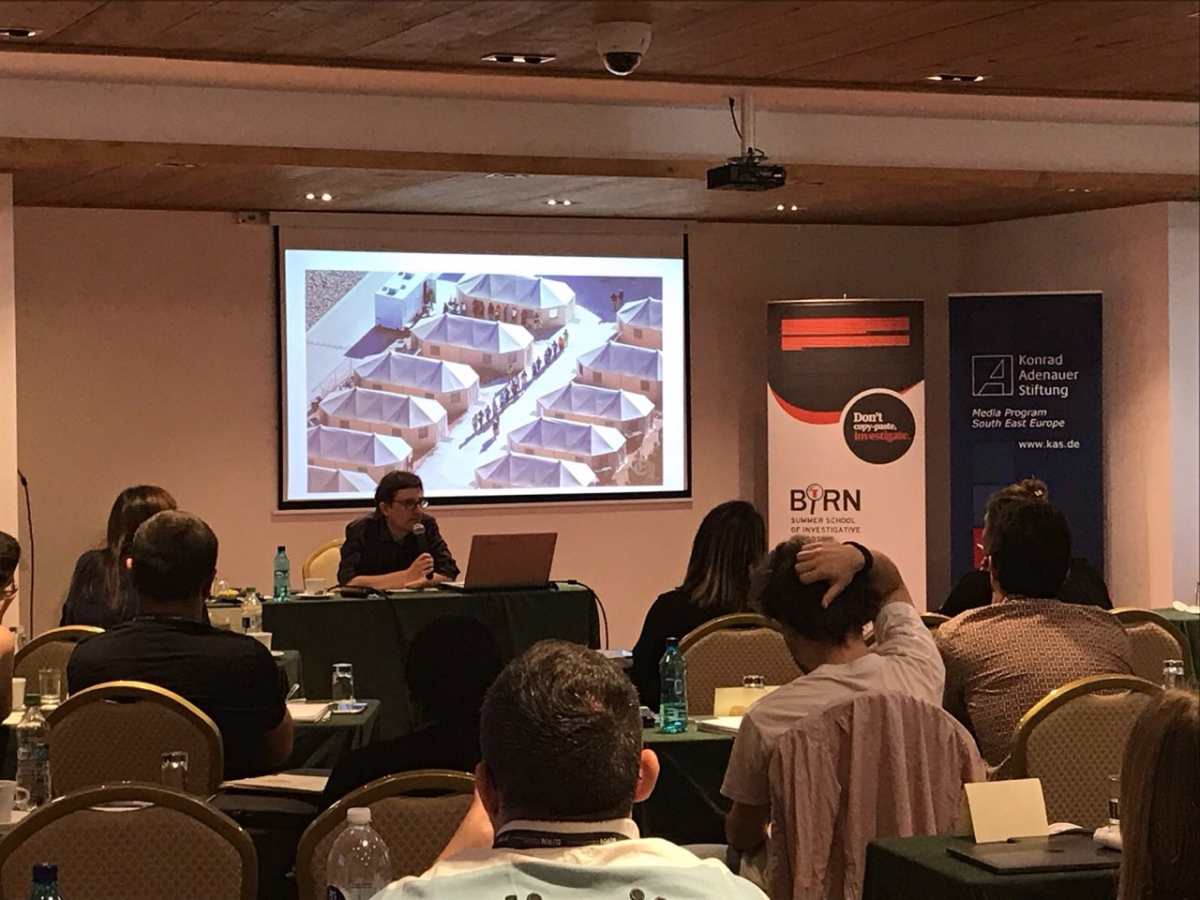
Reporters from the Balkan region and across the world gathered on Monday in the mountain resort of Poiana Brasov, Romania, for the ninth BIRN Summer School of Investigative Reporting.

After greeting participants, Blake Morrison, the school’s lead trainer and investigative projects editor at Reuters, held a lecture and discussion about how to imagine a complex investigative story, as well as how to push for accountability.

Christoph Koettl, senior video journalist at The New York Times, specializing in geospatial and open-source research, also held an introductory session on using digital research and verification in investigative research.

He continued with a lecture on geospatial and satellite imagery used in investigative journalism, followed by an interactive exercise.

In the afternoon, the participants discussed story ideas and were divided up into smaller groups for in-depth sessions with Reuters’ editor Morrison.

The ninth BIRN Summer School has brought together young journalists from Albania, Bosnia and Herzegovina, Bulgaria, Croatia, Greece, Kosovo, Macedonia, Moldova, Romania, Serbia, Ukraine, the UK, and the United States.

For the first time, the Summer School welcomed journalists from Moldova and Ukraine.

The Summer School is organized in cooperation with the Media Program South East Europe of the Konrad Adenauer- Stiftung, Open Society Foundations, the Austrian Development Agency (ADA), the operational unit of Austrian Development Cooperation, with support from the European Union.

Media Investigations: Stop to READ (Regional Environmental Acts of Devastation)

BIRN Hub

The project aims to strengthen investigative reporting in Montenegro, which is being implemented by BIRN, CIN Montenegro and Monitor magazine. The project was funded by the EU Delegation in Podgorica.

Summary

Through intensive training, international mentoring and an investigative approach, the project has a goal to increase the capacities of CIN Montenegro, Monitor, and other media outlets whose journalists are taking part.

Within the project, the call for investigative stories with an environmental angle was launched in March 2018.

BIRN, CIN Montenegro and Monitor magazine held a training course in Podgorica in April  2018 for journalists, teaching the investigative skills needed to produce stories covering environmental issues. Topics covered by the course included investigative journalism techniques, online storytelling, multimedia training, video and photo editing, as well as information on domestic and EU politics in the sphere of environmental protection.

Three journalists have been awarded grants to cover their expenses while carrying out investigations and writing stories on the environment and related to Chapter 27 within the EU accession process.

BIRN Recognised for Investigative Reporting in Montenegro

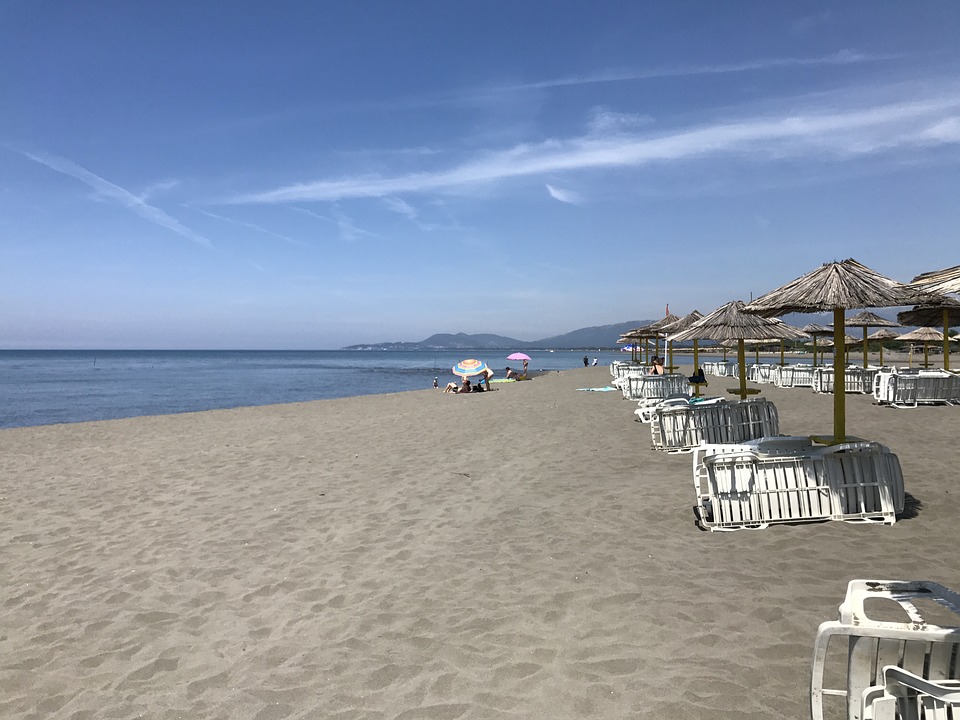
A prominent Montenegrin anti-corruption watchdog has named a BIRN investigation into financial abuses by local chiefs in the Montenegrin town of Ulcinj the best story using freedom of information requests in 2018.

The winner was announced on July 24 in Podgorica by The Network for Affirmation of the NGO Sector, MANS.

The award aims to highlight the achievements of investigative journalists and support and promote quality investigative journalism in Montenegro.

The article – Local Chiefs’ Financial Abuses Blight Montenegrin Costal Town – written by Sanja Rasovic and published in November 2017 on BIRN’s regional publication Balkan Insight, was part of the ‘Investigate for ME and EU project, which is being implemented by the Center for Investigative Journalism of Montenegro (CIN-CG) and BIRN.

Strengthening investigative reporting and the capacities of investigative journalists in Montenegro, as well as the quality of media coverage of EU negotiation chapters, are the focus of this EU-supported project that began in February 2017.

Film about Wives of Syrian Fighters to Screen at DokuFest

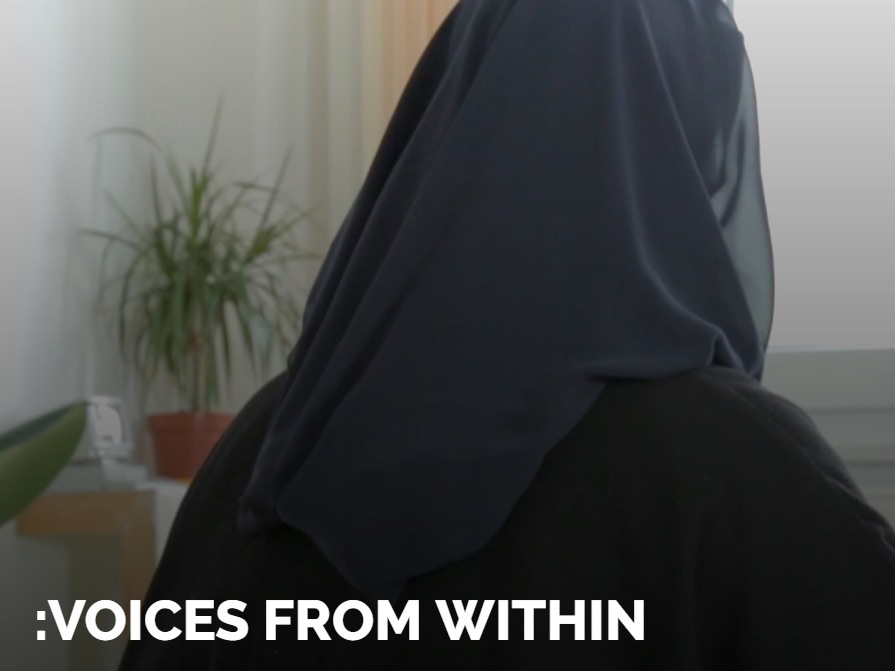
The film ‘Voices from Within’, produced under the Resonant Voices granting scheme, which aims to challenge polarising, inflammatory and radicalising narratives in the Balkans, will be screened at the upcoming DokuFest film festival, which is being held from August 3-11 in Prizren, Kosovo.

The short film presents the stories of two Kosovo women whose husbands went to fight in Syria, and who are now the sole providers for their families.

The film-maker is Lum Çitaku, a creative director, editor and producer in Pristina, Kosovo.

Voices from Within’ was made as part of the Pristina-based project Women of Resilience – an initiative aiming to change the balance in public discourse and policy discussions about foreign fighters, which is currently dominated by male voices and experiences.

It will be screened within DokuFest’s ‘Radical Reflections’ strand, which offers a selection of films looking at some of the most pressing issues of today, from the rise of right-wing populism to religious extremism.

Resonant Voices Initiative is a joint programme run by CIJA US, BIRN and the Propulsion Fund to challenge extremist narratives in public discourse throughout the Western Balkans – in particular those disseminated online.

BIRN Coverage of Srebrenica Anniversary Widely Quoted

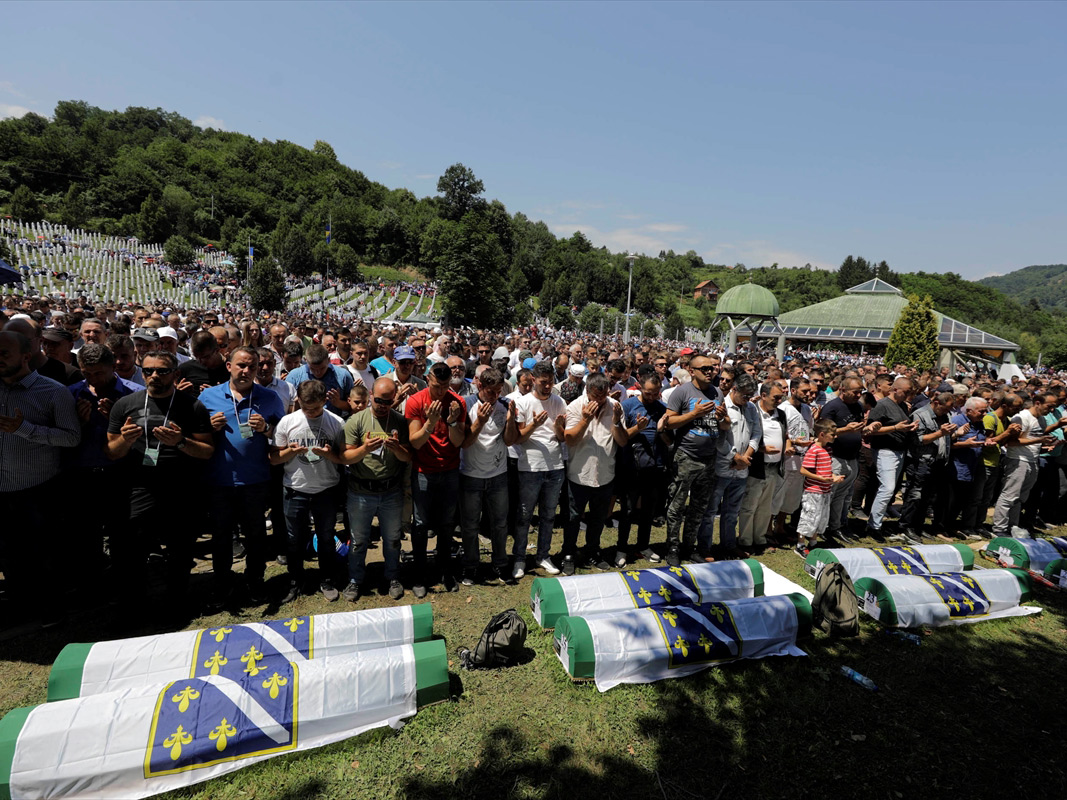
The coverage of this year’s 23rd anniversary of the genocide in Srebrenica by BIRN Bosnia and Herzegovina and BIRN’s regional programme Balkan Transitional Justice was widely republished and quoted by other media.

The coverage included text and video stories such as Females Were ‘Youngest and Oldest Victims’ of SrebrenicaSrebrenica: How Bosnians Reported Their Most Traumatic Story, Srebrenica Suspects Find Safe Haven in Serbia and a comment article by Dunja Mijatovic, the Council of Europe’s Commissioner for Human Rights, Why We Must Not Forget Srebrenica.

BIRN’s stories were quoted or republished more than 100 times in Bosnia and Herzegovina and the region. Publications from Slovenia, Austria, Romania, Germany, Algeria, Australia, Croatia, the Czech Republic and Italy also quoted Balkan Insight articles on the topic.

BIRN Bosnia and Herzegovina editor Denis Dzidic said that for more than a decade, BIRN Bosnia has been monitoring all the war crime trials in the country, “and as such is recognised by experts, media and the general public as the best source of information regarding genocide and war crimes”.

“Our Srebrenica coverage every year looks to implement several aspects – primarily we educate and remind readers about the various verdicts handed down by international and domestic courts. This is vital, because of the campaign of denial which exists in parts of Bosnia and Herzegovina and the region regarding the events in Srebrenica,” Dzidic said.

“Secondly, we look to have personal stories which describe the horrific events of July 1995 and its importance for Bosnian society today, which has still not faced up to the horrific crimes of the early 1990s conflict,” he added.

Balkan Public Service Media Assistance Project Starts

Six national public service broadcasters from the Western Balkans signed a memorandum of understanding in Tirana on June 27, officially marking the start of the project ‘Technical Assistance to Public Service Media in the Western Balkans’, funded by the EU to the sum of 1.5 million euros.

The aim of the project, which will run for the next two years, is to strengthen the independence, accountability and programming output of public service broadcasters RTVSH (Albania), BHRT (Bosnia and Herzegovina), RTK (Kosovo), MKRTV (Macedonia), RTCG (Montenegro) and RTS (Serbia).

The project is a collaboration between the International Federation of Journalists (IFJ), the European Federation of Journalists (EFJ), the European Broadcasting Union (EBU), the Austrian public broadcaster (ORF), the Office of the Eurovision News Exchange for South-East Europe (ERNO) and the Balkan Investigative Reporting Network (BIRN).

The project will deal with three core objectives – promoting European standards and best practices across the Western Balkans, generating synergies between public service media and regional exchanges on policies and practices for a new phase in the media reform process, and expanding and supporting cooperation on investigative journalism, youth programs and regional exchange of digitised archive materials.

BIRN will be the lead partner in building the capacities necessary to produce in-depth investigative reports. Making qualitative and trustworthy investigative journalism available to citizens is one of the key objectives of the project. During the project, BIRN will be offering local journalists from public service media the chance to work under the mentorship of world-renowned experts.

Over 60 representatives of public service media, international organisations, politicians and regulators discussed at the meeting in Tirana the best ways to help and support public service media in the Western Balkans. The meeting follows six months of intensive work to outline the scope of the project and the areas for cooperation and focus.

Launching the project, EBU director General Noel Curran said: “It is more important than ever to protect the editorial and institutional independence of public service media. As a community, we can make a positive impact on media and, by association, democracy throughout the Western Balkans.”

Karl Giacinti, programme manager at the European Commission, said that the EU sees reforms in public service broadcasters as an important part of the overall democratisation process toward EU accession and beyond.

“The reforms have been priorities for years and the EC is impatient to see improvements. We want to see reforms moving ahead visibly. For all these reasons, the EC decided to launch this project and will further invest in this sector to support the production of independent qualitative contents. Additional regional funds managed by Brussels and national funds from the EU Delegations will be available for this and similar initiatives,” said Giacinti.

Head of the EU Delegation to Albania, Romana Vlahutin, spoke of the importance of public service broadcasters’ independence.

“The defining feature of public broadcasting is its inclusiveness and independence: it is funded by the public and therefore it should be made for the public, serve the public and be controlled by the public. No other interest but the public interest should be the guiding principle of the work of every public broadcaster,” Vlahutin said.

Besides public service broadcasters as the main beneficiaries, the project will include cooperation with national parliaments, broadcasting regulatory authorities and relevant media NGOs.