Turning data into stories – Digital Rights and Freedoms at the Crossroads in the Western Balkans and Turkey

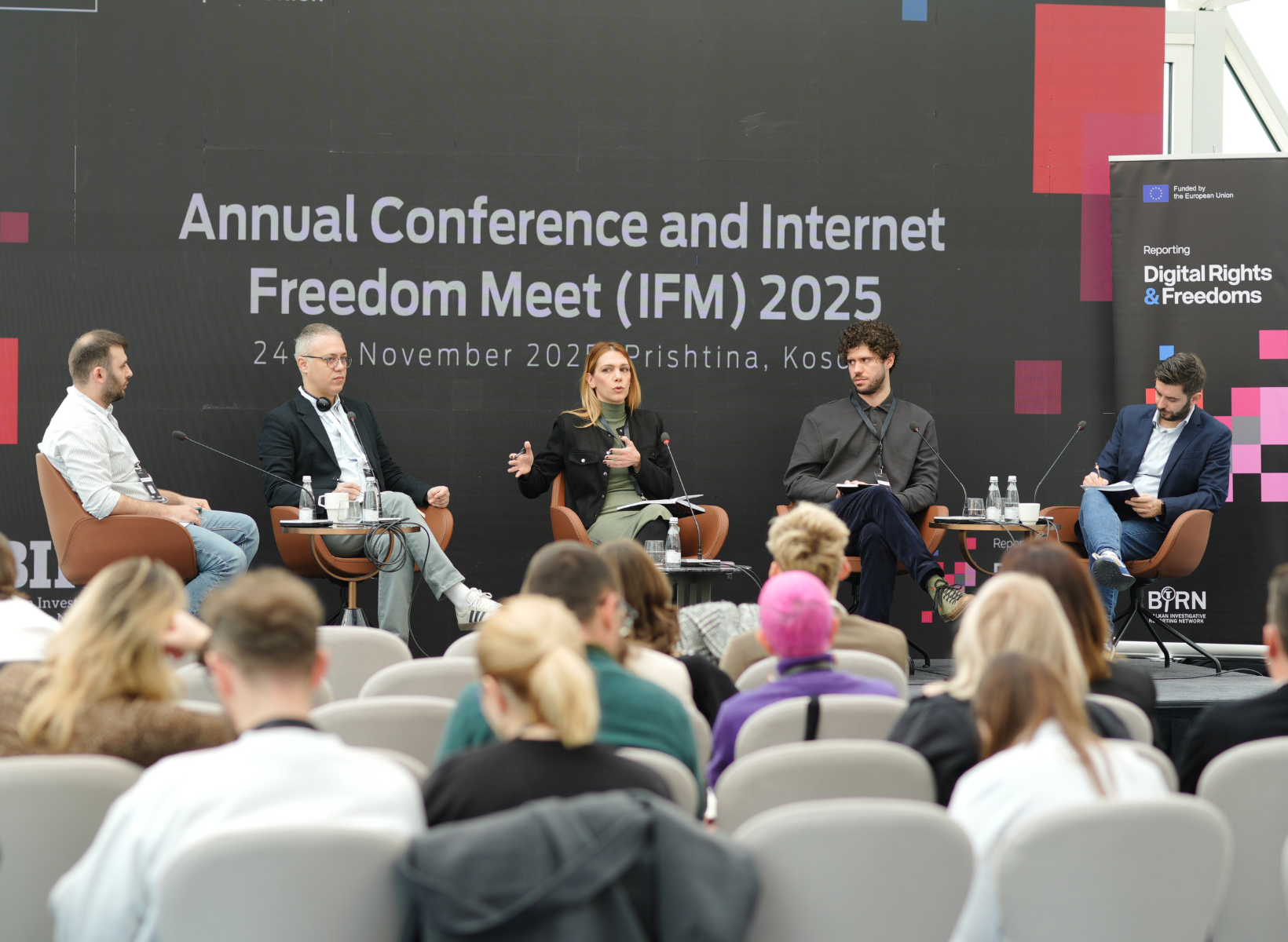
From November 24 to 26, 2025, BIRN welcomed some 120 participants – journalists, civil society activists, tech experts, academia, relevant institutions’ representatives and citizens at large – in Prishtina (Kosovo) for a regional annual conference and the Internet Freedom Meet event on digital rights and freedoms.

What unfolded was more than a presentation of cold statistical data. We witnessed a collective reckoning with how rapidly emerging technologies are advancing, and with how weak oversight and shrinking civic spaces are reshaping – and often endangering – people’s everyday lives across the Western Balkans and beyond.

From Project Roots to Regional Reality

The third and final annual conference is built on BIRN’s three-years project, Reporting Digital Rights and Freedoms, funded by the European Union and implemented by BIRN Kosovo and its regional partners BIRN Hub, BIRN Albania, BIRN Bosnia and Herzegovina, BIRN Macedonia, BIRN Montenegro and BIRN Serbia in the Western Balkans region and Turkey. The project aimed at strengthening media and civil society capacity to document and report digital rights and freedoms violations. Through training, capacity building online and offline events, fellowships, subgranting as well as editorial and other technical support, the project equipped newsrooms and individuals, journalists and activists with tools to first and foremost understand and then monitor and report about issues such as online abuse, to challenge disinformation, and bring somewhat hidden digital violations into public debate and for institutional reaction.

BIRN Kosovo director Jeta Xharra opened the conference and noted that there was very little knowledge about digital rights and that the project has contributed to educating both journalists to report on and the public to understand digital rights.

In a high-level speech, Kosovo’s President, Vjosa Osmani, sent a strong message of support towards the internet as a free space, and on the importance of exposing tech-facilitated abuse, be it online manipulation, promotion of hatred, violence against women or harassment of children.

The Deputy Head of the EU Office in Kosovo, Eva Palatova, emphasised the EU’s commitment to a human-centric digital environment, noting recent key policy instruments, the Digital Services Act, the AI Act and the European Democracy Shield, aimed at protecting users. 

The work done throughout the project pointed to the importance of addressing internet governance-related topics systematically. The latest BIRN regional report, launched at the opening of the conference, documented 1,440 violations from September 2024 to August 2025. Over the three years of the project, based on BIRN’s monitoring methodology, we captured over 4,000 cases of digital rights and violations mapped.

From September 2024 to August 2025, the most frequent types of trending violations include misuse of artificial intelligence (AI) to facilitate sexual, gender-based violence and fraud, threats to the freedom and pluralism of information, attacks on digital assets and economic rights and harmful and threatening online behaviour. 

The conference was attended by around 120 participants including 30 Internet Freedom Meet fellows from the Western Balkans region selected following a public call for participation. 

Throughout the three-day event, the fellows played a dual role. They followed conference panels on the main stage, bringing sharp questions and contextual knowledge; and in parallel, they immersed themselves in dedicated workshops with international trainers, diving deeper into some of the most urgent challenges shaping the digital landscape.

In these workshops, fellows confronted real-world dilemmas: how to investigate online harassment while keeping victims safe; how to trace disinformation networks across borders; how AI-generated deepfakes and algorithmic bias threaten vulnerable groups; and how online/street surveillance erodes civic freedom. Fellows additionally enriched the discussion with local knowledge and lived experiences. 

Pho
Photo: BIRN Kosovo

Humans Behind the Numbers

The conference focused heavily on the human impact behind the numbers – giving a platform to stories of and about real people – journalists, activists, citizens’ – whose lives were impacted and shaken by digital abuse, such as threats, surveillance or disinformation. 

Participants heard worrying testimonies: journalists recounting smear online campaigns after exposing corruption, activists exposed to harassment and doxxing following their online advocacy, and citizens becoming victims of AI-driven scams, identity theft or deepface-based abuse.

Speakers emphasized a critical truth: digital rights violations are rarely isolated incidents. They are more often than not entwined with inequalities – especially in terms of gender, LGBTIQ+ persons, minorities, people with disabilities and other vulnerable groups.  As Albanian technology policy expert Alba Brojka noted on the panel about gender-based violence, “It is a mirror of what is happening in the society and is amplified online.”

Photo: BIRN Kosovo

New Technologies, Same and Worse Dangers

Emerging technologies, such as generative Artificial Intelligence, are accelerating threats, while legislation and institutional oversight – and to a valuable extent also the media and civil society pace of understanding technological changes – lag dangerously behind.

Experts on the panels warned of AI-facilitated fraud, voice-cloning scams, deepfakes and more – noting that they are all increasingly used to exploit individuals’ vulnerabilities, especially women, young people and children. We heard how deepfakes have become so realistic that more and more people, especially with the information overload, cannot differentiate between real news, manipulated content or disinformation – which directly leads to undermining public trust and discourse influencing democratic and public informed participation.

Panelists looked into [weak] legal frameworks and selective enforcement, which make digital space a fertile ground for censorship, repression, threats and surveillance. We heard from several speakers sharing stories from Serbia or Turkey of unlawful surveillance, spyware deployment and non-transparent use of digital technologies and tools to intimidate critical voices of activists, journalists or even whistleblowers. While on one side, we see an “implementation gap” of those appropriate laws that exist, on the other side, in many places, we encounter outdated institutional settings, limited resources or political pressure, which stays unbothered while critical voices under attack stay unprotected and often with severe online or offline consequences.  

Photo: BIRN Kosovo

Digital Rights are Human Rights – Not Optional Extras

One underlying message seconded by all participants – and participation was truly multistakeholder – is that digital rights are human rights, and are not marginal issues for tech-savvy urbanities but fundamental rights, deeply tied to dignity, security and democratic participation. Beyond the number of captured digital rights violations, those numbers represent people. At least one person per case. At least one more friend or family member was affected by it. And often entire communities. 

Numbers cannot tell the whole story. Data reveals patterns to which the BIRN team, together with our partners, fellows, subgrantees, gave context. Living in the online space is not abstract – it shapes people’s safety, identity and freedom. Every violation is a life interrupted, a voice shaken, a right diminished. By documenting abuses, amplifying testimonies and exposing the systems that allow them to keep happening, the project brought human stories back to the centre.

Photo: BIRN Kosovo

From Talk to Action: What Needs to Happen Now

By the end of the conference, participants agreed on several urgent and concrete steps for the region: 

  • Update and enforce legislation regionally, looking into good practice, to keep pace with technological change: laws should address AI-driven abuse, data protection, online harassment and digital surveillance
  • Support for victims/survivors, ensuring accessible reporting mechanisms, provide legal, psychological and social support, including protecting anonymity whenever needed
  • Empower independent media and civil society, including sustained grants, training and mentorship, so that civil society and journalists (media) can continue documenting abuses safely and effectively
  • Promote digital literacy and public awareness, as a necessary continued effort to educate citizens at large about ever-evolving online risks and understanding their rights
  • Fostering regional cooperation, as digital threats do not respect borders – cooperation among media, civil society, institutions, technical community and academia across countries is essential. 

Why This Matters and Appreciation Words 

For many years we have lived in a world where technology evolves fast – outpacing our social, legal and institutional capacity to adapt. As the closing conference in Prishtina underscored, these are not abstract policy questions. They are about people’s lives, freedom, trust, safety and dignity. They are about our future.

By bringing together journalists, experts from different fields and policymakers, over the three-year project we jointly took responsibility for protecting digital rights not as a niche project but as a core human-rights obligation that shapes people’s realities in the digital age. The Reporting Digital Rights and Freedoms initiative proved that when knowledge, evidence and human stories are brought together, digital rights can no longer be dismissed as technical issues “in the cloud”. They become what they truly are – essential rights that protect the very fabric of democratic society.

BIRN Kosovo wishes to extend its gratitude to project partners, coordinators, editors, monitors, journalists, researchers and authors, subgrantees, fellows, participants of physical and online training and community meetings, and the colleagues and individuals who contributed to the project’s delivery and success.

The Annual conference and Internet Freedom Meet were organised within the framework of the Reporting Digital Rights and Freedoms project, implemented by BIRN Kosovo and supported by the European Union.
BIRN and ‘Youth Initiative for Human Rights’ Hold Workshop and Exhibition for Young People from Bosnia and Herzegovina and Serbia

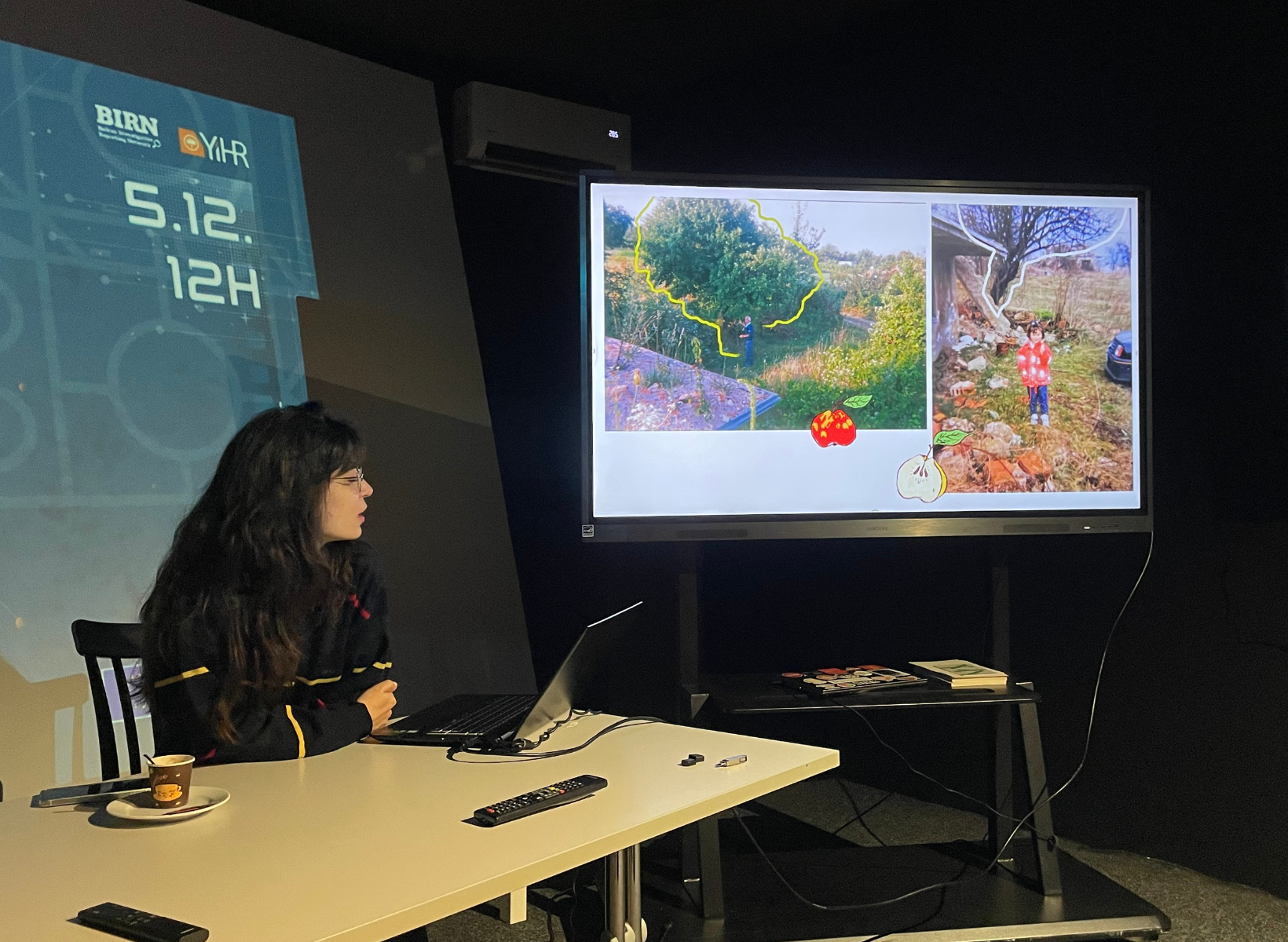
More than 20 young people from Bosnia and Herzegovina and Serbia gathered for a three day regional workshop dedicated to media, art and dealing with the past, organised by BIRN and the Youth Initiative for Human Rights.

Between 2 to 5 December participants explored how journalism, creative practices and digital media can contribute to dialogue and understanding in post-conflict contexts. Through interactive sessions, they gained hands-on experience in intercultural reporting, storytelling and artistic activism (known as ‘artivism’). They learned how creative tools can support processes of remembrance and reconciliation.

As part of the programme, participants worked in small groups to develop their own video installations, addressing themes of memory, dealing with the past and the role of memorials in divided communities. The artworks reflected their perspectives on shared histories and the possibilities for building bridges through creativity.

The workshop concluded with the public opening of an exhibition in the Historical Museum of BiH showcasing participants’ video installations. The event was followed by a panel discussion featuring visual artist Anita Karabašić, who presented her work on artistic commemoration practices, including memorial projects dedicated to children killed in Prijedor and the victims of the Srebrenica genocide.

The initiative aimed to empower young people to engage critically and creatively with the region’s past, while fostering dialogue across borders and communities.

Photo: BIRN

The project REPORTING CULTURE – Connecting Communities for Change is implemented by Balkan Investigative Reporting Network, BIRN Hub and Youth Initiative for Human Rights, in cooperation with the Regional office of the Italian Agency for Development Cooperation in Tirana. It is run within the framework of “Culture and Creativity for the Western Balkans”, a project funded by the European Union that aims to foster dialogue in the Western Balkans by enhancing the cultural and creative sectors for increased socio-economic impact.

Workshop Overview and Participant Breakdown

Dates and place: 2-5 December 2025, Sarajevo

Number of participants per country:

BiH 12

Serbia 16

Netherlands 1

Total number of participants: 29

The full findings and activities are available in the EDS Report, which can be accessed here.

Call for Applications – Training: The Role of Investigative Journalism in Transitional Justice Process

Are you a journalist, researcher or media-practitioner interested in the intersection of investigative journalism and transitional justice? We invite you to apply for a dedicated three-day training that will explore how journalism can contribute to accountability, memory and societal reconciliation after conflict.

Date: 20–22 January

Location: Sarajevo, Bosnia and Herzegovina

Eligible countries: Bosnia and Herzegovina, Kosovo, Montenegro, Serbia

Number of participants: 25

What is this training about?

In post-conflict societies, journalism plays a crucial role in exposing past and ongoing injustices, documenting war crimes, giving voice to survivors, and supporting public debate about accountability and memory. Sessions will include lectures and discussions with media experts from BIRN Bosnia and Herzegovina.

This training aims to equip participants with skills and tools to:

  • Investigate and report on transitional justice issues, including war-crimes trials, missing persons, mass graves, reparations, and memorialisation.
  • Understand legal and ethical challenges in covering sensitive topics.
  • Engage with victims and survivors respectfully and responsibly.
  • Produce in-depth stories that contribute to public awareness.

Who can apply?

  • Journalists, editors, reporters, students, media researchers or independent media workers from BiH, Kosovo, Montenegro and Serbia.
  • Professionals with any level of journalism or media-research experience, including early-career journalists, freelancers or people coming from civil society/NGO backgrounds with relevant interests in transitional justice and human rights reporting.
  • Individuals who are strongly motivated to explore investigative journalism in the context of post-conflict transitional justice.

We particularly encourage applications from diverse backgrounds, including minority communities, underrepresented groups and people committed to human rights, memory and justice.

What we offer

  • Comprehensive three-day training in Sarajevo (20–22 January).
  • Expert-led sessions on investigative journalism, legal frameworks, ethics, victim-centred reporting, research and storytelling for transitional justice contexts.
  • A platform for networking with regional peers, human rights practitioners, researchers and legal experts.

Post-Training Assignment

Participants will be required to apply the knowledge gained during the training immediately upon returning to their institution or workplace. This includes producing a short investigative or analytical output related to transitional justice (such as an article, interview, research brief, lecture or multimedia piece) within a defined period after the training.

To support this process, a modest honorarium will be provided upon successful completion and submission of the assignment.

How to apply

If you are interested, please fill in this application form

Please send your application by 18 December 2025, 17:00 CET. Selected candidates will be notified by 26 December.

Selection

Applications will be evaluated on the basis of:

  • Motivation and commitment to engage in investigative journalism on transitional justice.
  • Relevance of applicant’s background and interest (journalistic, civil society, academic).
  • Potential contribution to the regional public debate on transitional justice and to community-engaged journalism.

Language and Conditions

  • Training language: English
  • Travel costs and accommodation will be covered by BIRN.
  • Info session for all those interested will be held on December 16. Please register here.

If you are passionate about justice, memory, human rights and the power of journalism to contribute to social transformation, this training is for you. We look forward to your applications – and to collaborating on meaningful investigative work.

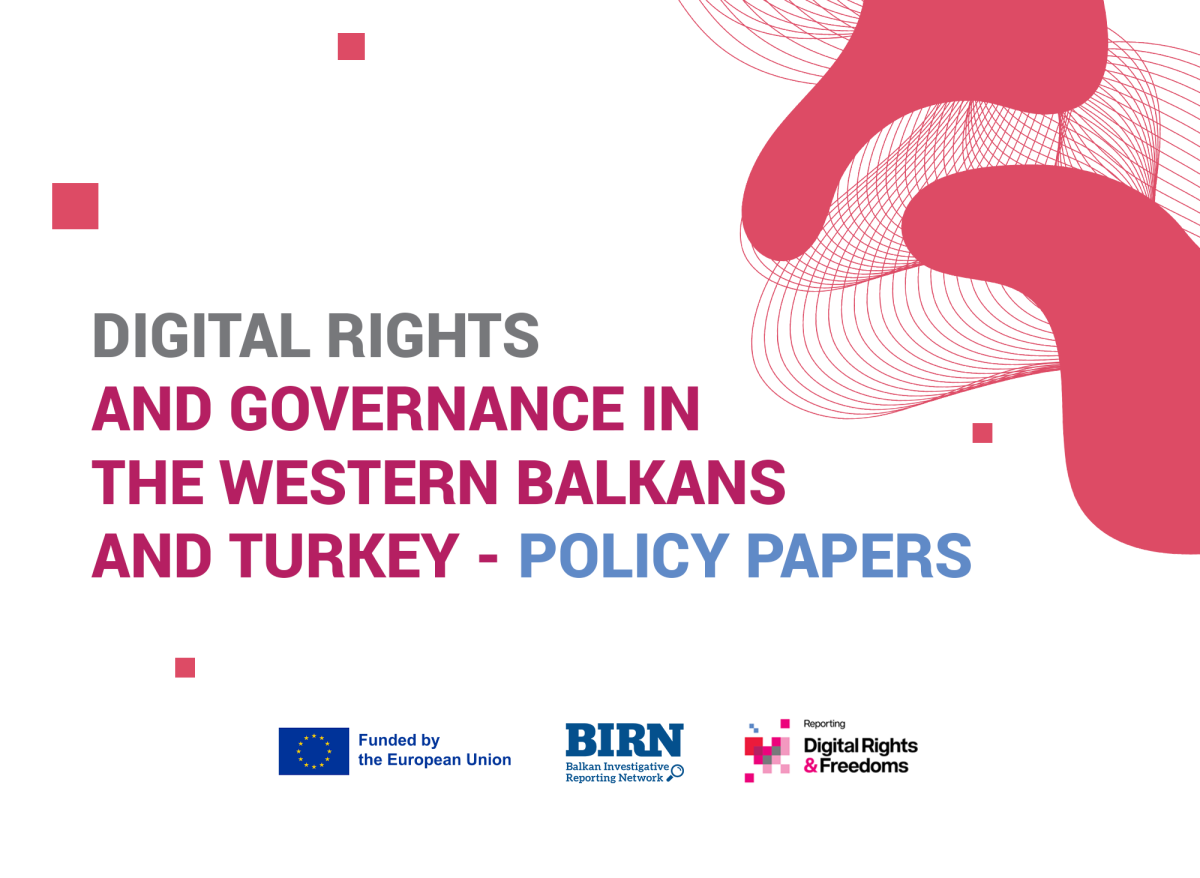
BIRN Launches New Policy Paper Series on Digital Rights and Governance in the Western Balkans and Turkey

New series looks at latest developments in digital landscape – and at best ways to advance digital freedoms in the region.

Across the Western Balkans and Turkey, governments are reshaping the digital landscape, often in ways that test the balance between state power, platform accountability, and fundamental rights. A new series of policy papers by BIRN explores these developments, offering in-depth analysis and recommendations to advance democratic resilience and digital freedoms in the region.

“Digital legislation and policies emerging in the Western Balkans and Turkey are not isolated technical matters. They are deeply political choices that will shape human rights, public discourse, and accountability for years to come,” says Megi Reçi, BIRN’s Digital Rights Lead Researcher and editor of the series.

“We hope this work contributes to the much-needed, evidence-based debate on how the Western Balkans and Turkey can advance toward more open, transparent, and rights-based digital governance, firmly grounded in democratic principles and the rule of law” she adds.

About the policy papers

The first policy paper, “At the crossroads: Data retention policies in the Western Balkans amid shifting EU standards’’, by Ana Toskic, examines data retention in the region in light of evolving European Union standards. While the EU has moved away from indiscriminate data retention following landmark rulings by the Court of Justice of the European Union, CJEU, legal analysis of national legislation reveals that most Western Balkan countries continue to rely on outdated frameworks rooted in the annulled 2006 EU Data Retention Directive, maintaining broad and indiscriminate retention practices.

This divergence creates systemic risks for privacy and democratic accountability across the region, while also undermining progress toward EU legal harmonisation. The paper further highlights how access to retained data remains largely dominated by security and intelligence agencies, characterised by low transparency and limited institutional oversight.

It concludes with targeted recommendations for Western Balkan governments to align their data retention laws with EU standards and fundamental rights protections.

The second paper, “Digital Public Space in Turkey: Platforms and State Power Amid Rule-of-Law Challenges’’, by Gürkan Özturan, examines how Turkey’s digital legislation and policy have moved toward digital repression in step with the country’s broader democratic and rule-of-law erosion. It traces the tightening of state control over online spaces through successive legislative amendments that have expanded government authority over digital platforms, data governance, and online expression.

Beyond the legal framework, the paper analyses platform dynamics and the implementation of regulations, drawing on key case studies of content moderation, algorithmic visibility, and compliance with government takedown and data requests. It explores how these mechanisms shape the digital public sphere, affect the pluralism of online discourse, and constrain democratic dialogue, media freedom, and civic participation.

Recognising that Turkey’s ongoing digital rights crisis is deeply intertwined with its institutional erosion, politicised judiciary, and weak regulatory independence, the paper argues that advancing digital rights will require comprehensive political reform and a renewed commitment to restoring legal safeguards and institutional accountability – an outcome that, for now, remains uncertain.

The third policy paper “User Rights and Platform Governance in Serbia – A Comparative Analysis with the EU Digital Services Act’’ by Milica Tosic, examines the state of user rights and platform accountability mechanisms in Serbia in light of the Digital Services Act , DSA.

The paper compares the DSA’s user-rights and platform-duty provisions with Serbia’s current framework, identifies key legal gaps, and offers targeted recommendations. For example, it examines DSA mechanisms that guarantee users clear explanations for content removals, accessible avenues to challenge moderation decisions, and transparency obligations for platforms.

The paper highlights that Serbian citizens lack the legal protections and procedural safeguards available to users in the EU, leaving them without effective redress and platforms without adequate oversight.

As Serbia drafts a DSA-inspired law, the policy paper argues that this process will determine whether the country genuinely strengthens digital rights, or expands state control over online speech.

Internship Open Call

The internship is designed as a part-time, flexible engagement that can be combined with your studies. Interns are expected to commit about 15–20 hours per week, primarily through online/remote work, with occasional hybrid or in-person activities, depending on project needs.

The internship will last for six months, with exact starting dates agreed with selected candidates. This is a paid internship, so selected candidates will receive a monthly stipend.

The call is open until 15 December 2025

Qualifications & Requirements

General Requirements for All Interns:

Student or recent graduate (not more than six months ago) in a relevant field (Law, Social Sciences, Media, Public Administration, International Relations, European Integration, Political Science, or related areas)

Full working proficiency in English and at least one of the Western Balkans languages

Good working knowledge of computer applications (e.g., MS Office)

Strong ethics, integrity, reliability and confidentiality

Excellent verbal and written communication skills

Good interpersonal and organisational skills

Innovative, team-oriented, and eager to learn

Department-Specific Qualifications:

Editorial Intern:

Relevant fields: Journalism, Media & Communications, Political Science, or related areas

  • Strong research skills, including desk and field research
  • Ability to fact-check, verify information, and support investigative reporting
  • Strong writing, editing and storytelling abilities
  • Analytical skills to develop story ideas and assist with data collection
  • Familiarity with producing long-form or investigative content
  • Good understanding of editorial standards, ethics, and integrity principles

Programmes Intern:

Relevant fields: Law, Public Administration, International Relations, European Integration, Political Science, or related areas

  • Interest in project management, programme coordination, and research
  • Ability to support programme planning, implementation, and reporting
  • Ability to support in event organisation and administrative work
  • Support in grant cycle management
  • Strong analytical and organisational skills

Finance Intern:

  • Relevant fields: Finance, Accounting, Economics, Business Administration, or related areas
  • Basic understanding of financial principles and budgeting
  • Ability to assist with bookkeeping, reporting and financial documentation
  • Attention to detail and numerical accuracy

How to Apply
Please submit your application via email to [email protected] with the subject line: “BIRN Internship Application – [Your Name]”.

In the body of the email, please include:

  1. The department you are applying for: Editorial / Programmes / Finance
  2. The country where you are currently based
  3. When you are available to start your internship
  4. The languages you speak

Please attach your CV and a letter of motivation (up to 300 words) in PDF or Word format. Only shortlisted candidates will be contacted for an interview.

Ahead of BIRN’s Digital Rights Violations Annual Report 2025: Monitoring Methodology

The end of November brings the release of the Digital Rights Violations Annual Report 2025. The report is based on findings gathered through continuous monitoring of digital rights violations. BIRN provides further details about the methodology used in the monitoring process.

In an era where freedoms are shaped and shaken online, BIRN’s Digital Freedoms Monitoring Tool offers systematic tracking and analysis of digital rights violations in Southeast Europe – aiming to safeguard those rights and drive accountability through evidence.

As a living document, the methodology builds on BIRN’s previous monitoring efforts, now upgraded to address emerging digital violations.

It is organised around seven overarching categories:

  1. Freedom of expression and media
  2. Freedom, pluralism of information and protection from manipulation
  3. Personal data protection and security
  4. Digital civic participation and engagement
  5. Technological access and equity
  6. Threatening behaviour and harmful content
  7. Economic rights and digital assets protection

The categories are further broken down into subcategories and types of violations to capture complex and overlapping cases. For each, the methodology outlines affected rights and public interest, targeted groups, perpetrators, and methods of attack.

BIRN’s monitoring across ten countries is grounded in ethical standards, backed by a thorough legal review of national and international frameworks, and informed by diverse sources – including court records, reports of regulators and human rights bodies, media investigations, civil society and academic research and direct citizen reports via BIRN’s Engaged Citizen Reporting tool.

Importantly, BIRN also tracks legal proceedings and policy changes to assess state responses and real-life impact of violations.

Philosophy of Monitoring

The methodology views digital rights as integral to human rights, calling for equal protection online and offline, while also addressing emerging norms like internet access, digital literacy, and inclusion – all aimed at promoting digital equity and fairness.

Its philosophy rejects digital authoritarianism, opposing the surveillance and censorship used by authoritarian regimes to suppress dissent. It seeks transparency and accountability from both public and private actors, and supports a multi-stakeholder, decentralised approach to internet governance. This stance is especially relevant when monitoring countries that continue to grapple with the legacies of past authoritarian rule, conflict, or war – many of which operate nowadays as hybrid regimes.

Embracing intersectionality, the methodology recognises that digital harms disproportionately affect marginalised groups and reflect deeper social inequalities. Whether by documenting violations against women, ethnic or sexual minorities, economically disadvantaged individuals, or groups like journalists and civic actors, the monitoring centres the experiences of those most at risk, aspiring for a digital environment that challenges structural injustices.

Open Data for Advocacy and Accountability

What sets the Digital Freedoms Monitoring Tool apart is its transparency.

Users can access, search and download documented cases by country, facilitating trend tracking for interested stakeholders.

The open-access database, continuously updated by the monitoring team, serves both as a resource and a call to action, supporting advocacy and reinforcing accountability by documenting the actions of governments, tech companies, and other societal actors.

The website was created and maintained with the financial support of the European Union, as part of the Reporting Digital Rights and Freedoms project. Its content is the sole responsibility of BIRN and does not necessarily reflect the views of the EU.

Nejra Mulaomerovic

Nejra is a human rights advocate focused on research, project development and programming, particularly in transitional justice and human rights projects.

With over 10 years of experience, her expertise lies in project development and implementation within the CSO sector in post-conflict societies and transitional justice processes. Based in Sarajevo, Nejra oversees the projects implemented as part of the Balkan Transitional Justice regional programme. Prior to her role at BIRN, she focused on cultural development and programming, particularly within projects related to memorialization, the culture of remembrance and the promotion of human rights. Nejra holds a Master Degree of Advanced Studies in Transitional Justice, Human Rights and Rule of Law from Geneva Academy of International Humanitarian Law and Human Rights and Master´s Degree in Comparative Literature from University of Sarajevo.

She’s fluent in English and Bosnian, and she’s actively learning French and Arabic.

Open Call for Investigative Journalists: Apply Now!

Journalists covering EU member countries and EU aspiring countries are invited to apply for grants to produce investigations shedding light on critical social, political and economic issues.

The Balkan Investigative Reporting Network, BIRN, is calling on journalists who are interested in producing in-depth investigations to apply for grants that will cover the cost of producing investigations but also include mentoring support to develop impactful stories that foster accountability and public awareness.

Who is eligible?

Journalists currently working in or publishing stories covering EU member countries and EU aspiring countries – Albania, Bosnia and Herzegovina, Georgia, Moldova, Montenegro, North Macedonia, Serbia, Turkey, Ukraine and Kosovo – can apply.

Please note: this is not a collaborative grant.  Only individual journalists may apply, and each journalist can propose one investigative story.

What are we offering?

Selected journalists will receive grants of €1,140 for the production of their investigative stories (The grant lasts a minimum of three and a maximum of six months). The selected journalists will receive mentoring support from BIRN editors/mentors to help them produce their stories.

This call is ongoing – what does that mean?

Twenty grants in total are available and the ongoing call for applications will be closed once they are all distributed. The third and final deadline after which applications received so far will be evaluated is February 28th, 2026.

How to apply?

Before applying, click HERE to read the full call for applications. After reviewing the information, follow the link to access the application form. Applicants need to attach two documents in English to the application form: a CV and a signed letter of support from the media outlet where they will publish the story.

About the project

This call for applications is part of the Media Organisations for Stronger Transnational Journalism (MOST) initiative, which aims to enhance the resilience of non-profit media in reporting on European issues and drive innovation in foreign reporting. The initiative supports media organisations in developing new approaches and strengthening capacity, fostering collaboration and sharing best practices across borders.

MOST brings together seven prominent media organisations to establish a community of practice focused on business transformation and editorial cooperation.

The project is implemented by a consortium comprising: 1) Balkan Investigative Reporting Network (BIRN), 2) Centro per la Cooperazione Internazionale (CCI/OBCT); 3) El Orden Mundial – EOM, Spain; 4) European Pravda, Ukraine; 5) Kolegium Europy Wschodniej im Jana Nowaka-Jezioranskiego we Wroclawiu – KeW, Poland (New Eastern Europe); 6) Le Courrier des Balkans – Courriers D’Europe et D’Orient – DcB, France; and 7) Stichting the Tactical Technology Collective – TTC, Netherlands.

For clarifications, contact: [email protected].

Open Call for Applications: Content Production Fund

The project Strengthening Quality News and Independent Journalism in Western Balkans and Türkiye II aims to provide systemic support to improve the quality and professionalism of journalism.

The project includes capacity building for mid-career and young journalists, ensuring quality in journalism study programmes, supporting the production of quality news, TV and cross-border investigation stories, providing investigative resource desk support, and promoting these stories through awards. Additionally, the project aims to ensure that the quality of journalism study programmes is maintained for future generations.

1. SCOPE AND OBJECTIVES

This Content Production Fund aims to support the creation of cross-border journalistic content through providing financial support to media outlets from the Western Balkans. Furthermore, it aims to achieve the following outcomes for the supported media outlets:

  • Production of cross-regional multimedia stories published in English and local languages
  • Improved skills of journalists in the media outlets by on-the-job training and mentoring, as a part of a grant production scheme.

2. TYPE, SIZE AND DURATION OF GRANTS

Through this call, BIRN Hub invites media outlets to apply for grants to produce high-quality, cross-border journalism on local, national, or regional topics, using their own newsroom resources. Stories should be investigative and impactful, with a clear focus on including underrepresented groups such as minorities, youth and women.

Media outlets are expected to begin implementing their project’s activities from 15/01/2026 and can last up to a maximum of two-and-a-half (2.5) months from the date of contract signature. All activities must conclude by no later than 31/03/2026.

3. AVAILABLE FUNDING AND ALLOCATIONS

The overall amount expected to be distributed under this Call for Applications is up to €60,000. The table summarises the grants foreseen to be given.

Type of Grants Maximum Amount per Grant Number of

Grants Foreseen

Estimated Amount
Content Production Fund €5,000 Up to 12 €60,000

BIRN reserves the right to fund any or none of the applications submitted, as well as to discuss with applicants allocating actions as needed within the categories towards achieving the overall goal of the programme.

No co-financing from the applicant’s side is expected or is obligatory within this Call for Applications.

4. APPLICATION

This section includes important information on the rules for application, including eligibility criteria, activities and costs eligibility, and application and evaluation procedures, among others.

5.1 ELIGIBILITY CRITERIA

To apply, applicants must fulfil the following criteria:

  1. Demonstrate a strong commitment to producing high-quality, independent journalism that includes cross-regional, multimedia content with content pieces featuring perspectives or issues from more than one country from the Western Balkans.
  2. Propose an application with an investigative and in-depth angle, with a cross-border aspect and which is impactful for the community
  3. Express a clear intention and means of including underrepresented communities in stories. These may include marginalised groups such as minorities, youth, women and other under-reported communities.
  4. Be a legally registered entity within the country of application on or before 1 January, 2023.
  5. Be able to provide supporting documentation as listed in 5.4.1 Application Form Content.
  6. Must not have an active grant from any other BIRN granting scheme during the proposed period of implementation of the production grant.
  7. Demonstrate a commitment to actively engage in on-the-job mentoring by following the guidance and recommendations provided by assigned mentors.

5.2 ACTIVITIES ELIGIBILITY

The types of activities eligible for support will include but are not necessarily be limited to:

  1. Production of high-quality, independent content pieces that includes a cross-border, multimedia content, with content pieces featuring perspectives or issues from more than one country from the Western Balkans. One example of such content is the following: ‘Lifeless’: Pollution Threatens the Drin and its Tributaries in Three Balkan States | Balkan Insight
  2. Production of one cross- border multimedia content piece with an investigative and in-depth angle that is impactful for the community and includes a cross-border aspect, while clearly demonstrating the intention and approach to include underrepresented communities such as minorities, youth, women, and other often under-reported groups in the storytelling. Grantees will receive appropriate mentoring. Content may comprise news, analysis, investigations, different news formats: audio, text, video or multimedia.
  3. Promoting content through the social media channels of the respective outlets.

Applicants may propose additional activities beyond those listed above, ensuring their alignment with the project’s vision and goal. These activities should complement the existing ones and may include any relevant investigative engagement stories.

5.3 COSTS ELIGIBILITY

This call for content grants will cover only lifeline costs essential for the continuation of content production by the media outlets. While developing the budget for the proposal under this Call for Applications (budget form enclosed in 5.4.1 Application Form Content) the following eligible and ineligible costs should be:

Eligible Costs
Category Explanation
Human Resources Costs Costs of the media outlets’ core staff salaries, freelancers’ fees and experts directly involved in implementing the proposed activities and proportionate to their level of involvement.
Production / Research / Communication Costs Costs related to the production of the stories, including communication with stakeholders, research costs, as well as costs of promotion of the stories on social media.
Travel Costs Any travel costs needed to produce the story, especially if it’s a cross-border story or a story covering citizen’s experiences in some local or more remote areas in the country.
Ineligible Costs                                                                                                                
Include costs of office equipment, construction costs, entertainment and excessive transport, organisation and/or participation in trainings and events.

5.4 APPLICATION SUBMISSION INSTRUCTIONS

To ensure a fair and competitive application process, applicants should complete and submit only one application / proposal under this Call for Applications. Multiple applications by individual media outlets are not eligible.

5.4.1. APPLICATION FORM CONTENT

To apply for this Content Grants, media outlets should:

    • Be completed in the English language. Please use your own words. ChatGPT applications will be downgraded or not considered.
    • Outline general information, current audience data, and a story proposal.
  • Submit the following supporting documents within the embedded application form:
    • Financial Proposal. Download the budget template HERE.
    • Financial Statements for the 2023 and 2024 fiscal years, if applicable.
    • Certificate from relevant tax authority that the media outlet is a regular taxpayer.
    • A Court Certificate that the media outlet does not have ongoing legal proceedings nor is awaiting the final judgment of cases against the organisation. Note: If obtaining a Court Certificate confirming no ongoing legal proceedings is challenging (e.g., due to SLAPP lawsuits), applicants may submit a detailed explanation of their legal status and the nature of such cases. This ensures equal opportunities for all while maintaining transparency and compliance with administrative requirements.
    • Editorial policy, if applicable.
    • Business Registry Certificate or any other document certifying that the applicant is registered as a legal entity in (country) as of January 2023.

5.4.2 APPLICATION DEADLINE

The applicant must submit the application by 08/1/2026, midnight, CET at: [email protected] with the subject:  Application for Content Production Grants_name of your media outlet

Applications submitted after the deadline will not be considered for funding. The deadline applies to all parts of your application, including supporting documentation.

5.4.3. CLARIFICATIONS, QUESTIONS & ANSWERS

Questions about the Call for Application and Application Form may be sent in English to the Programme Coordinator at this email address: [email protected] until the deadline for clarifications has passed.

5.5 EVALUATION AND SELECTION PROCESS

All received proposals will go through the following three steps:

  1. Administrative and eligibility check by BIRN to ensure applicants filled in the Application Form, according to the eligibility criteria and submitted all required documents by the deadline.
  2. Evaluation by the independent jury.
  3. Notification of the application outcome.

STEP 1: BIRN ADMINISTRATIVE AND ELIGIBILITY CHECK

BIRN will undertake administrative checks to ensure the applicants have followed application procedures and submitted all the required documents. If any requested information / document is missing or incorrect, the application may be rejected and will not be evaluated further. Any rejected application will be replaced by the next best-placed application on the reserve list that falls within the available budget for this Call for Applications.

An application that passes the administrative check will be assessed further as part of the evaluation by the independent jury.

STEP 2: EVALUATION BY THE INDEPENDENT JURY

After the call is closed, all applications that meet the administrative requirements and eligibility criteria will be subject to evaluation by an independent jury. A jury consisting of media professionals, acting independently, will assess the proposals based on their Relevance of the Proposed Story, Capacity, Financial Proposal and Potential, including the Social impact.

Please refer to the criteria list for further information on quality assessment.

CRITERIA MAXIMUM SCORE
1. RELEVANCE OF THE APPLICATION

●     The proposed application should feature at least one cross- border multimedia content piece which tackles an issue relevant to local/national / regional communities.

●     The proposed stories should include a cross-border dimension, with content featuring perspectives or issues from more than one country from the Western Balkans.

●     The proposed stories demonstrate investigative and in-depth potential, while also addressing cross-cutting issues such as the promotion of gender equality, respect for human rights and the inclusion of marginalized groups.

●     Must not have active grant from any other BIRN granting scheme during the proposed period of implementation of the production grant.

20 points
2. CAPACITY 

●     Applicant demonstrates available capacity to implement activities.

●     Applicant demonstrates significant reach in its community.

●     Applicant demonstrates previous experience in engaging communities.

●     Risks and challenges are clearly identified and are manageable.

10 points
3. FINANCIAL PROPOSAL

●     Budget demonstrates value for money – the organisation clearly shows it will manage to implement activities according to the proposed amount.

10 points
4. POTENTIAL

●     The application addresses specific problems affecting particular communities.

●     The media outlet demonstrates a clear commitment to producing meaningful, high-quality content through the proposed application.

●     The proposed story strategically aims to engage new audiences, with a focus on underrepresented groups such as women and girls, youth, and ethnic, social, sexual, or other minorities.

10 points
MAXIMUM TOTAL SCORE 50 points

STEP 3: NOTIFICATION OF THE APPLICATION OUTCOME

All applicants will be notified of the outcome of the selection process via email, whether successful or not, and may request clarifications if needed. Upon positive notification, successful applicants will sign the contract with BIRN and become a recipient of the grant.

5. MENTORING

On-the-job training and mentoring will be provided as part of a grant-supported production scheme aimed at strengthening the professional skills and editorial capacities of participating journalists. Following the signing of a contractual agreement by both parties, a dedicated mentor will be assigned to each media outlet.

BIRN will assign mentors to support the implementation of the project’s application in a format of on-the job mentoring.  Media outlets will collaborate with mentors assigned by BIRN to create provisional activity/production plans that will be further confirmed. Throughout the project, BIRN mentors will be available to provide guidance and support to the participating media outlets, while respecting their editorial independence via online/offline meetings and consultation sessions.

6. TIMELINE OF CALL ACTIVITIES

The following is the indicative table of the application, evaluation, notification process and online training:

ACTIVITY DATE
Call for Applications issued 17/11/2025  
Deadline for Submission of Applications 08/01/2026 
Notification to Applicants on the Results of the Qualitative Assessment                        09/01/2026  
Contract Signature 14/01/2026