The documentary showcases how foreign information manipulation, interference and hate speech target Kosovo’s electoral processes. It illustrates the ways in which such campaigns undermine public trust in institutions, intensify polarization, and create additional obstacles for women participating in political life.
The film aims to increase awareness among citizens and within institutions about the scale and consequences of disinformation and to contribute to strengthening society’s resilience to manipulation. It also serves as a source of evidence that can support public dialogue and shape practical solutions.
The screening was followed by a discussion with the British Ambassador to Kosovo, Jonathan Hargreaves, the Director of NDI Kosovo, Ambassador Nancy Soderberg and Jeta Xharra, Executive Director of BIRN Kosovo.
Referring to the documentary’s findings, Ambassador Hargreaves stated that the situation represents a serious warning, emphasizing the importance of exposing this issue. He noted that this challenge is neither unique to Kosovo nor unfamiliar to the United Kingdom.
Ambassador Soderberg said what stood out most to her was the extent to which Russian authorities operate openly in their disinformation campaigns, while stating the importance of media literacy in mitigating the challenges of today’s information space.
This event was organised in partnership with the National Democratic Institute in Kosovo, under the framework of the Information Integrity Conference DISICON.
Photo: BIRN Kosovo
The documentary was produced and published under the “Media Integrity and Disinformation Watch” project, with the support of the British Embassy in Kosovo.
Ada is a reporter with more than a decade of experience covering breaking news and writing long-form stories for outlets including The New York Times, The Guardian, The Boston Globe, and Gazeta Wyborcza. In 2021, she was selected as the IWMF Elizabeth Neuffer Fellow out of over a hundred applicants worldwide. During the fellowship, she reported for The New York Times and The Boston Globe, and carried out independent research on media freedom at MIT. Before that, she worked as a freelance foreign correspondent based in New Delhi and was part of the editorial teams at NewsMavens and Wysokie Obcasy.
Ada, who is based in Warsaw, has wide experience in a variety of journalistic forms, including investigations, analysis, features, documentary photography, and narrative podcast.
“This is a fascinating time to be reporting on Poland, and I’m thrilled to do it with BIRN. What excites me most is the chance to work alongside journalists across the region and dive into the kind of cross-border stories that are uncomfortable in all the right ways”, she said about her new role.
Ada will be part of the Reporting Democracy team. In this position, she succeeds Claudia Ciobanu, BIRN’s longtime correspondent and Fellowship for journalistic excellence alumna, who established our presence in Poland six years ago.
Reporting Democracy is a cross-border journalistic platform dedicated to supporting independent journalism to scrutinise the issues, trends and events shaping the future of democracy in Central, Eastern and Southeast Europe.
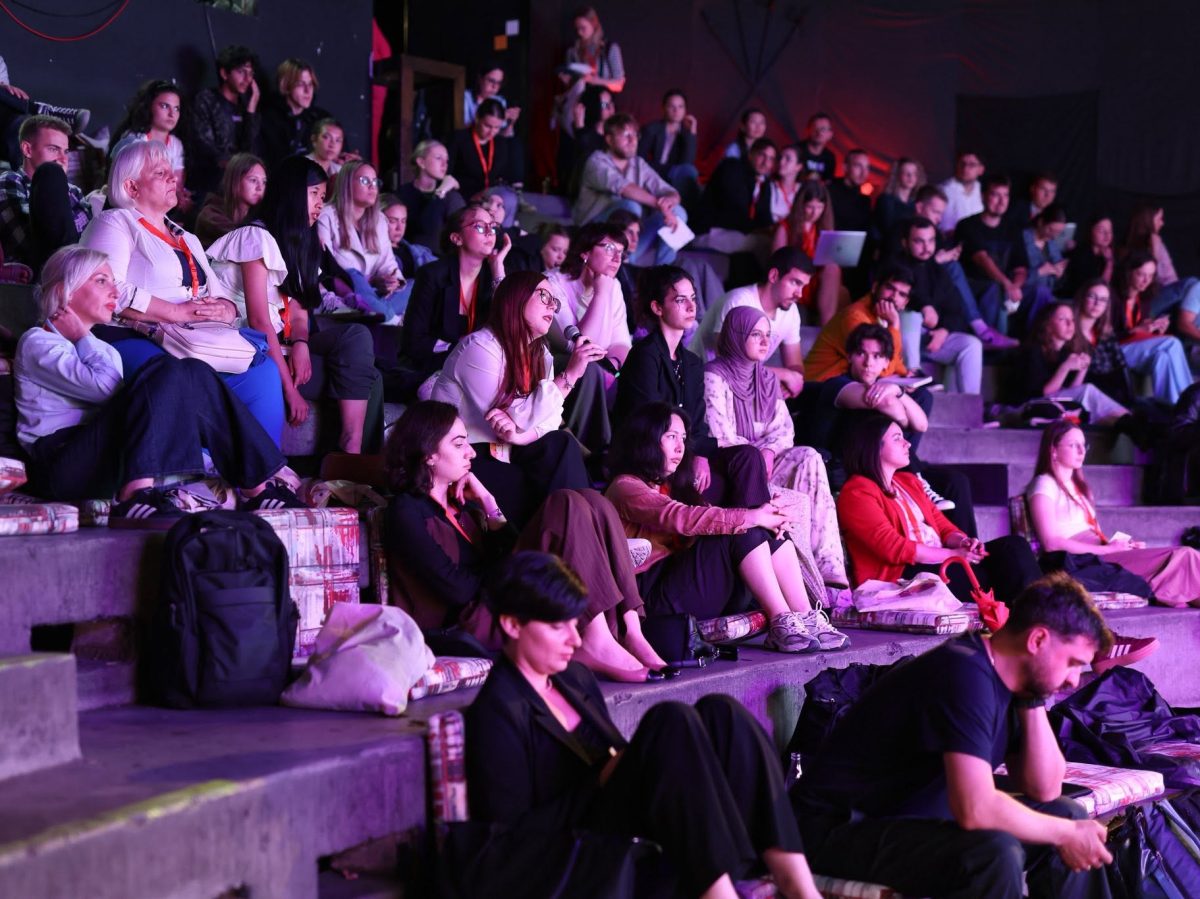
From November 24 to 26, 2025, BIRN welcomed some 120 participants – journalists, civil society activists, tech experts, academia, relevant institutions’ representatives and citizens at large – in Prishtina (Kosovo) for a regional annual conference and the Internet Freedom Meet event on digital rights and freedoms.
What unfolded was more than a presentation of cold statistical data. We witnessed a collective reckoning with how rapidly emerging technologies are advancing, and with how weak oversight and shrinking civic spaces are reshaping – and often endangering – people’s everyday lives across the Western Balkans and beyond.
From Project Roots to Regional Reality
The third and final annual conference is built on BIRN’s three-years project, Reporting Digital Rights and Freedoms, funded by the European Union and implemented by BIRN Kosovo and its regional partners BIRN Hub, BIRN Albania, BIRN Bosnia and Herzegovina, BIRN Macedonia, BIRN Montenegro and BIRN Serbia in the Western Balkans region and Turkey. The project aimed at strengthening media and civil society capacity to document and report digital rights and freedoms violations. Through training, capacity building online and offline events, fellowships, subgranting as well as editorial and other technical support, the project equipped newsrooms and individuals, journalists and activists with tools to first and foremost understand and then monitor and report about issues such as online abuse, to challenge disinformation, and bring somewhat hidden digital violations into public debate and for institutional reaction.
BIRN Kosovo director Jeta Xharra opened the conference and noted that there was very little knowledge about digital rights and that the project has contributed to educating both journalists to report on and the public to understand digital rights.
In a high-level speech, Kosovo’s President, Vjosa Osmani, sent a strong message of support towards the internet as a free space, and on the importance of exposing tech-facilitated abuse, be it online manipulation, promotion of hatred, violence against women or harassment of children.
The Deputy Head of the EU Office in Kosovo, Eva Palatova, emphasised the EU’s commitment to a human-centric digital environment, noting recent key policy instruments, the Digital Services Act, the AI Act and the European Democracy Shield, aimed at protecting users.
The work done throughout the project pointed to the importance of addressing internet governance-related topics systematically. The latest BIRN regional report, launched at the opening of the conference, documented 1,440 violations from September 2024 to August 2025. Over the three years of the project, based on BIRN’s monitoring methodology, we captured over 4,000 cases of digital rights and violations mapped.
From September 2024 to August 2025, the most frequent types of trending violations include misuse of artificial intelligence (AI) to facilitate sexual, gender-based violence and fraud, threats to the freedom and pluralism of information, attacks on digital assets and economic rights and harmful and threatening online behaviour.
The conference was attended by around 120 participants including 30 Internet Freedom Meet fellows from the Western Balkans region selected following a public call for participation.
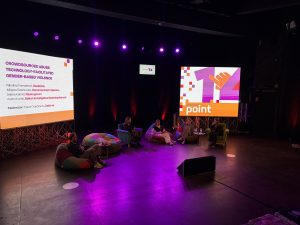
Throughout the three-day event, the fellows played a dual role. They followed conference panels on the main stage, bringing sharp questions and contextual knowledge; and in parallel, they immersed themselves in dedicated workshops with international trainers, diving deeper into some of the most urgent challenges shaping the digital landscape.
In these workshops, fellows confronted real-world dilemmas: how to investigate online harassment while keeping victims safe; how to trace disinformation networks across borders; how AI-generated deepfakes and algorithmic bias threaten vulnerable groups; and how online/street surveillance erodes civic freedom. Fellows additionally enriched the discussion with local knowledge and lived experiences.
Photo: BIRN Kosovo
Humans Behind the Numbers
The conference focused heavily on the human impact behind the numbers – giving a platform to stories of and about real people – journalists, activists, citizens’ – whose lives were impacted and shaken by digital abuse, such as threats, surveillance or disinformation.
Participants heard worrying testimonies: journalists recounting smear online campaigns after exposing corruption, activists exposed to harassment and doxxing following their online advocacy, and citizens becoming victims of AI-driven scams, identity theft or deepface-based abuse.
Speakers emphasized a critical truth: digital rights violations are rarely isolated incidents. They are more often than not entwined with inequalities – especially in terms of gender, LGBTIQ+ persons, minorities, people with disabilities and other vulnerable groups. As Albanian technology policy expert Alba Brojka noted on the panel about gender-based violence, “It is a mirror of what is happening in the society and is amplified online.”
Photo: BIRN Kosovo
New Technologies, Same and Worse Dangers
Emerging technologies, such as generative Artificial Intelligence, are accelerating threats, while legislation and institutional oversight – and to a valuable extent also the media and civil society pace of understanding technological changes – lag dangerously behind.
Experts on the panels warned of AI-facilitated fraud, voice-cloning scams, deepfakes and more – noting that they are all increasingly used to exploit individuals’ vulnerabilities, especially women, young people and children. We heard how deepfakes have become so realistic that more and more people, especially with the information overload, cannot differentiate between real news, manipulated content or disinformation – which directly leads to undermining public trust and discourse influencing democratic and public informed participation.
Panelists looked into [weak] legal frameworks and selective enforcement, which make digital space a fertile ground for censorship, repression, threats and surveillance. We heard from several speakers sharing stories from Serbia or Turkey of unlawful surveillance, spyware deployment and non-transparent use of digital technologies and tools to intimidate critical voices of activists, journalists or even whistleblowers. While on one side, we see an “implementation gap” of those appropriate laws that exist, on the other side, in many places, we encounter outdated institutional settings, limited resources or political pressure, which stays unbothered while critical voices under attack stay unprotected and often with severe online or offline consequences.
Photo: BIRN Kosovo
Digital Rights are Human Rights – Not Optional Extras
One underlying message seconded by all participants – and participation was truly multistakeholder – is that digital rights are human rights, and are not marginal issues for tech-savvy urbanities but fundamental rights, deeply tied to dignity, security and democratic participation. Beyond the number of captured digital rights violations, those numbers represent people. At least one person per case. At least one more friend or family member was affected by it. And often entire communities.
Numbers cannot tell the whole story. Data reveals patterns to which the BIRN team, together with our partners, fellows, subgrantees, gave context. Living in the online space is not abstract – it shapes people’s safety, identity and freedom. Every violation is a life interrupted, a voice shaken, a right diminished. By documenting abuses, amplifying testimonies and exposing the systems that allow them to keep happening, the project brought human stories back to the centre.
Photo: BIRN Kosovo
From Talk to Action: What Needs to Happen Now
By the end of the conference, participants agreed on several urgent and concrete steps for the region:
Update and enforce legislation regionally, looking into good practice, to keep pace with technological change: laws should address AI-driven abuse, data protection, online harassment and digital surveillance
Support for victims/survivors, ensuring accessible reporting mechanisms, provide legal, psychological and social support, including protecting anonymity whenever needed
Empower independent media and civil society, including sustained grants, training and mentorship, so that civil society and journalists (media) can continue documenting abuses safely and effectively
Promote digital literacy and public awareness, as a necessary continued effort to educate citizens at large about ever-evolving online risks and understanding their rights
Fostering regional cooperation, as digital threats do not respect borders – cooperation among media, civil society, institutions, technical community and academia across countries is essential.
Why This Matters and Appreciation Words
For many years we have lived in a world where technology evolves fast – outpacing our social, legal and institutional capacity to adapt. As the closing conference in Prishtina underscored, these are not abstract policy questions. They are about people’s lives, freedom, trust, safety and dignity. They are about our future.
By bringing together journalists, experts from different fields and policymakers, over the three-year project we jointly took responsibility for protecting digital rights not as a niche project but as a core human-rights obligation that shapes people’s realities in the digital age. The Reporting Digital Rights and Freedoms initiative proved that when knowledge, evidence and human stories are brought together, digital rights can no longer be dismissed as technical issues “in the cloud”. They become what they truly are – essential rights that protect the very fabric of democratic society.
BIRN Kosovo wishes to extend its gratitude to project partners, coordinators, editors, monitors, journalists, researchers and authors, subgrantees, fellows, participants of physical and online training and community meetings, and the colleagues and individuals who contributed to the project’s delivery and success.
The Annual conference and Internet Freedom Meet were organised within the framework of the Reporting Digital Rights and Freedoms project, implemented by BIRN Kosovo and supported by the European Union.
More than 20 young people from Bosnia and Herzegovina and Serbia gathered for a three day regional workshop dedicated to media, art and dealing with the past, organised by BIRN and the Youth Initiative for Human Rights.
Between 2 to 5 December participants explored how journalism, creative practices and digital media can contribute to dialogue and understanding in post-conflict contexts. Through interactive sessions, they gained hands-on experience in intercultural reporting, storytelling and artistic activism (known as ‘artivism’). They learned how creative tools can support processes of remembrance and reconciliation.
As part of the programme, participants worked in small groups to develop their own video installations, addressing themes of memory, dealing with the past and the role of memorials in divided communities. The artworks reflected their perspectives on shared histories and the possibilities for building bridges through creativity.
The workshop concluded with the public opening of an exhibition in the Historical Museum of BiH showcasing participants’ video installations. The event was followed by a panel discussion featuring visual artist Anita Karabašić, who presented her work on artistic commemoration practices, including memorial projects dedicated to children killed in Prijedor and the victims of the Srebrenica genocide.
The initiative aimed to empower young people to engage critically and creatively with the region’s past, while fostering dialogue across borders and communities.
Photo: BIRN
The project REPORTING CULTURE – Connecting Communities for Change is implemented by Balkan Investigative Reporting Network, BIRN Hub and Youth Initiative for Human Rights, in cooperation with the Regional office of the Italian Agency for Development Cooperation in Tirana. It is run within the framework of “Culture and Creativity for the Western Balkans”, a project funded by the European Union that aims to foster dialogue in the Western Balkans by enhancing the cultural and creative sectors for increased socio-economic impact.
The Balkan Investigative Reporting Network (BIRN) in Albania held a roundtable on Friday in Tirana to present three monitoring reports on the May 11 parliamentary elections.
During the event, BIRN Albania unveiled its monitoring reports on audiovisual and online media coverage during the electoral period, as well as a report analysing how political parties and candidates used social media platforms throughout the campaign.
The two monitoring reports on audiovisual and online media were produced as part of the project “Evidence-Based Monitoring of Local Public Spending during Electoral Processes,” funded by the European Union and implemented by Qëndresa Qytetare (Civic Resistance) in partnership with BIRN Albania. The initiative aims to strengthen electoral integrity, transparency, and fair competition in Albania’s democratic processes.
The social media monitoring report for the 2025 campaign was published in cooperation with International IDEA and the Rule of Law Centre at the University of Helsinki. The findings emphasise systemic challenges related to transparency, the ethical use of technology, and the growing influence of third-party actors across social media platforms.
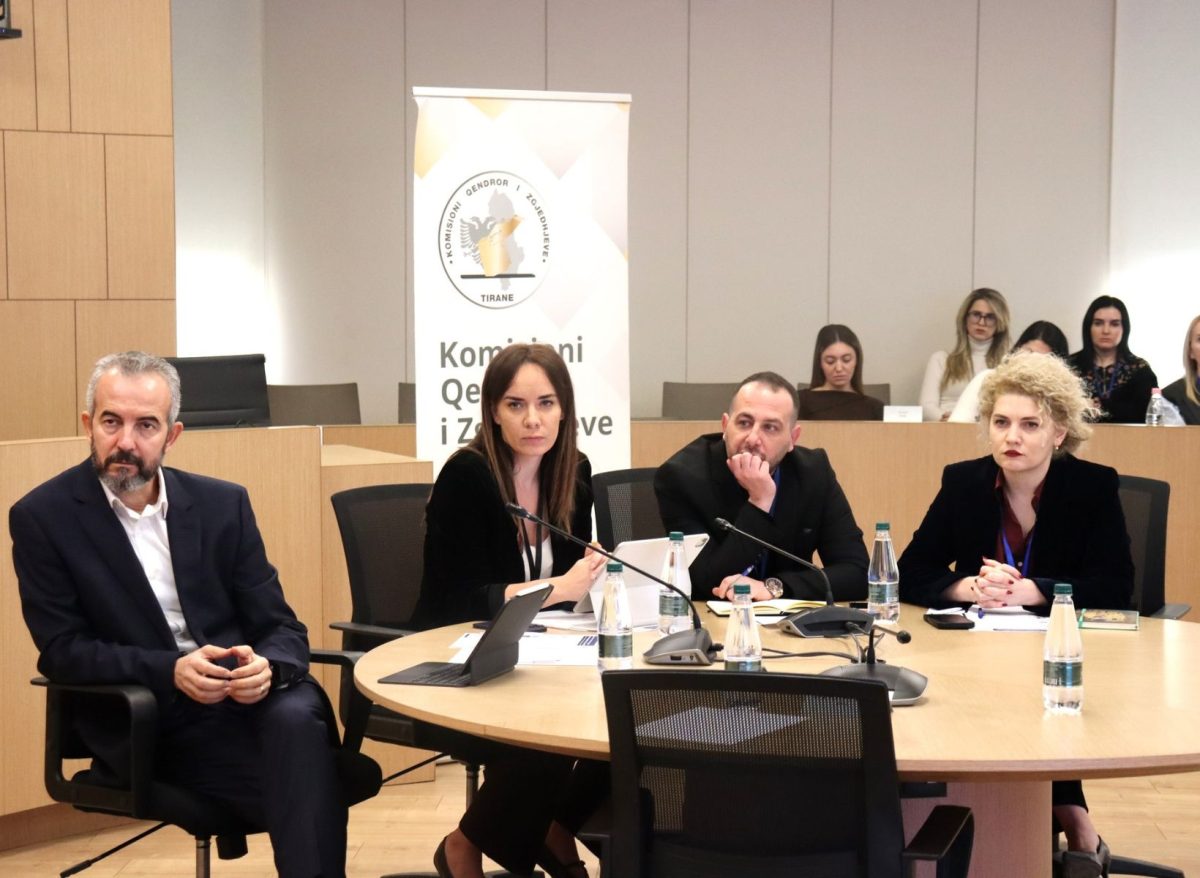
The roundtable gathered 44 stakeholders from a wide range of institutions and backgrounds, including journalists, civil society representatives, and officials from the Central Election Commission (CEC), the Albanian Media Authority (AMA), as well as representatives of international organisations.
Following the presentation of the key findings, a panel discussion was held with contributions from representatives of the CEC, AMA, International IDEA, media organisations, and civil society.
BIRN Albania has released a comprehensive monitoring report examining how Albania’s main television broadcasters covered the 2025 parliamentary election campaign, uncovering persistent media imbalances, limited pluralism, and the dominance of major political actors.
Published in both Albanian and English, the report offers an independent, data-driven analysis of audiovisual content aired between 11 April and 9 May 2025 on the 18 central TV stations with the highest national reach. Drawing from the daily monitoring data produced by the Audiovisual Media Authority (AMA), the assessment focuses on political representation in news bulletins, live coverage of campaign events, and prime-time political talk shows, as well as the use of paid political advertising and documented breaches of the Electoral Code.
Key findings point to the overwhelming visibility of Albania’s two main political forces, the marginalisation of smaller parties, the personalised framing of election coverage, and the absence of direct confrontations between candidates. The report also features qualitative insights from 61 political talk shows and provides targeted recommendations to media regulators, broadcasters, and political actors ahead of future electoral cycles.
This monitoring was conducted as part of the project “Evidence-Based Monitoring of Local Public Spending during Electoral Processes”, funded by the European Union and implemented by Qëndresa Qytetare in partnership with BIRN Albania, aiming to strengthen electoral integrity, transparency, and fair competition in Albania’s democratic processes.
BIRN Albania has published a new in-depth report analysing how Albania’s online media covered the 2025 parliamentary election campaign, revealing persistent imbalances, strong personalisation of political discourse, and limited space for voter-focused or explanatory reporting.
Conducted during the official campaign period (11 April – 10 May 2025), the monitoring assessed 40 of the country’s most influential online outlets — including the websites of national TV stations, daily newspapers, and digital-native portals. The report combines automated analysis with human coding of nearly 6,000 articles to map visibility, tone, and thematic trends in online coverage.
Findings show that political statements and opinion pieces dominated the online sphere, accounting for more than three-quarters of total content. Coverage remained concentrated on the two main electoral subjects and was driven largely by their leaders. Substantive debate on policies was rare, with most reporting focused on confrontation and accusations rather than programmatic issues such as economy, justice, or social welfare.
The analysis also documents how institutional communication, particularly from the Central Election Commission (CEC), shaped public information about diaspora voting and electoral procedures, while paid digital advertising mirrored the same imbalance seen in editorial content — with the two major players accounting for more than 80% of recorded ads.
Published in both Albanian and English, the report provides evidence-based insights and practical recommendations for journalists, media regulators, and political actors to strengthen transparency, editorial independence, and pluralism in Albania’s online information environment.
This monitoring was conducted as part of the project “Evidence-Based Monitoring of Local Public Spending during Electoral Processes”, funded by the European Union and implemented by Qëndresa Qytetare in partnership with BIRN Albania, aiming to enhance electoral integrity, transparency, and fair competition in Albania’s democratic processes.
BIRN Albania, in cooperation with International IDEA and the Rule of Law Centre at the University of Helsinki, has published a new monitoring report analysing digital campaigning during Albania’s 2025 parliamentary elections. The report highlights systemic challenges in transparency, ethical use of technology, and the growing influence of third-party actors on social media platforms.
Conducted from 11 April to 11 May 2025, the monitoring covered the official campaign period, the electoral silence, and the days immediately after the vote. The research assessed the activity of over 500 Facebook and Instagram accounts of parliamentary candidates, third-party pages, and political advertisers across Meta and Google platforms. It relied on a multi-layered methodology combining social media analytics, Meta Ad Library tracking, Google Trends data, and manual review of campaign content.
The findings reveal a highly personalised and male-dominated digital campaign space, widespread infractions of the voluntary Code of Conduct on Digital Campaigns, and increasing use of artificial intelligence (AI), bots, and untraceable ads to shape public narratives. BIRN also documented 349 violations of the Code by registered candidates and identified 58 suspicious third-party pages — many of which used paid advertising and coordinated inauthentic behaviour to boost political messaging.
Published in both Albanian and English, the report offers data-driven insights and targeted recommendations for political actors, electoral authorities, online platforms, and civil society. It calls for stronger oversight mechanisms, improved ad transparency, and clear standards on AI-generated political content to safeguard democratic integrity in the digital age.
This monitoring was conducted as part of the regional project “Integrity and Trust in Albanian and Kosovo Elections: Fostering Political Finance Transparency and the Safe Use of Information and Communication Technologies, Phase II,” implemented by International IDEA and the Rule of Law Centre at the University of Helsinki.
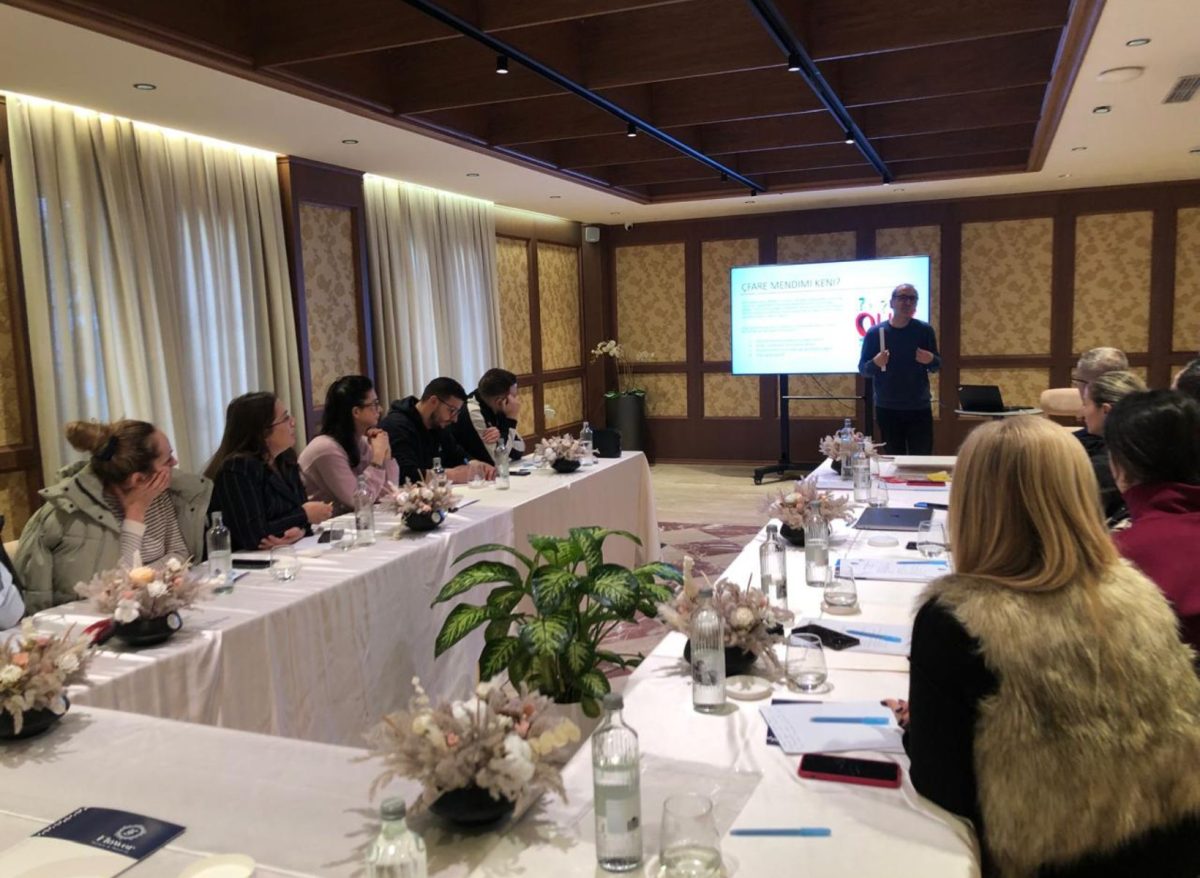
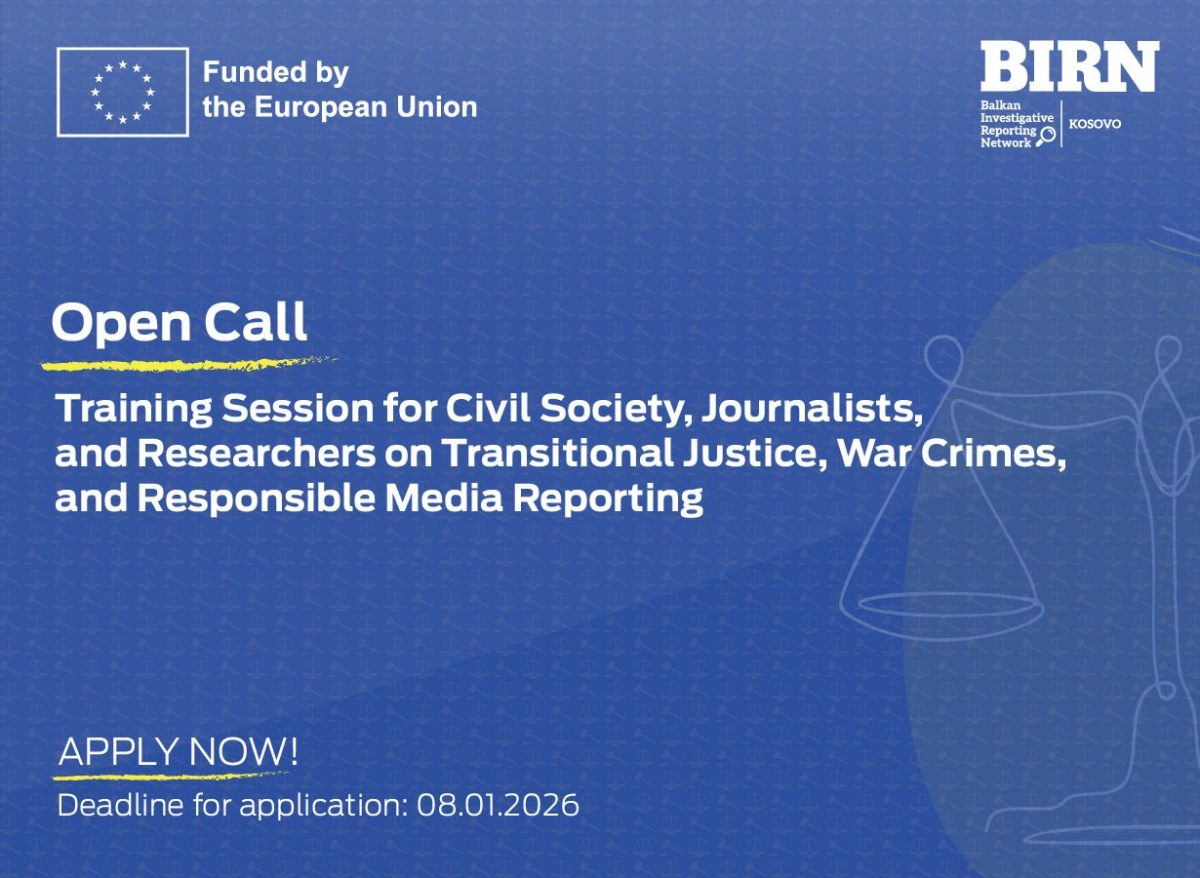
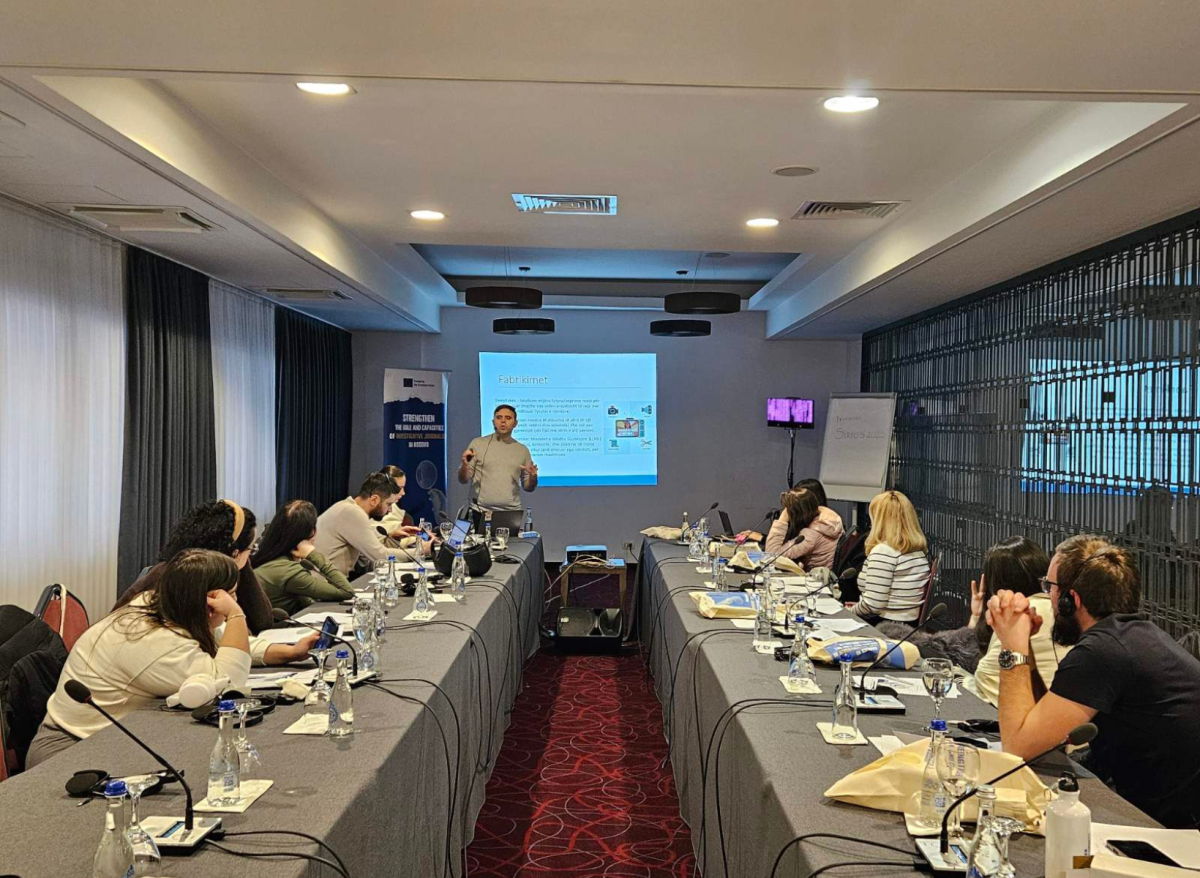
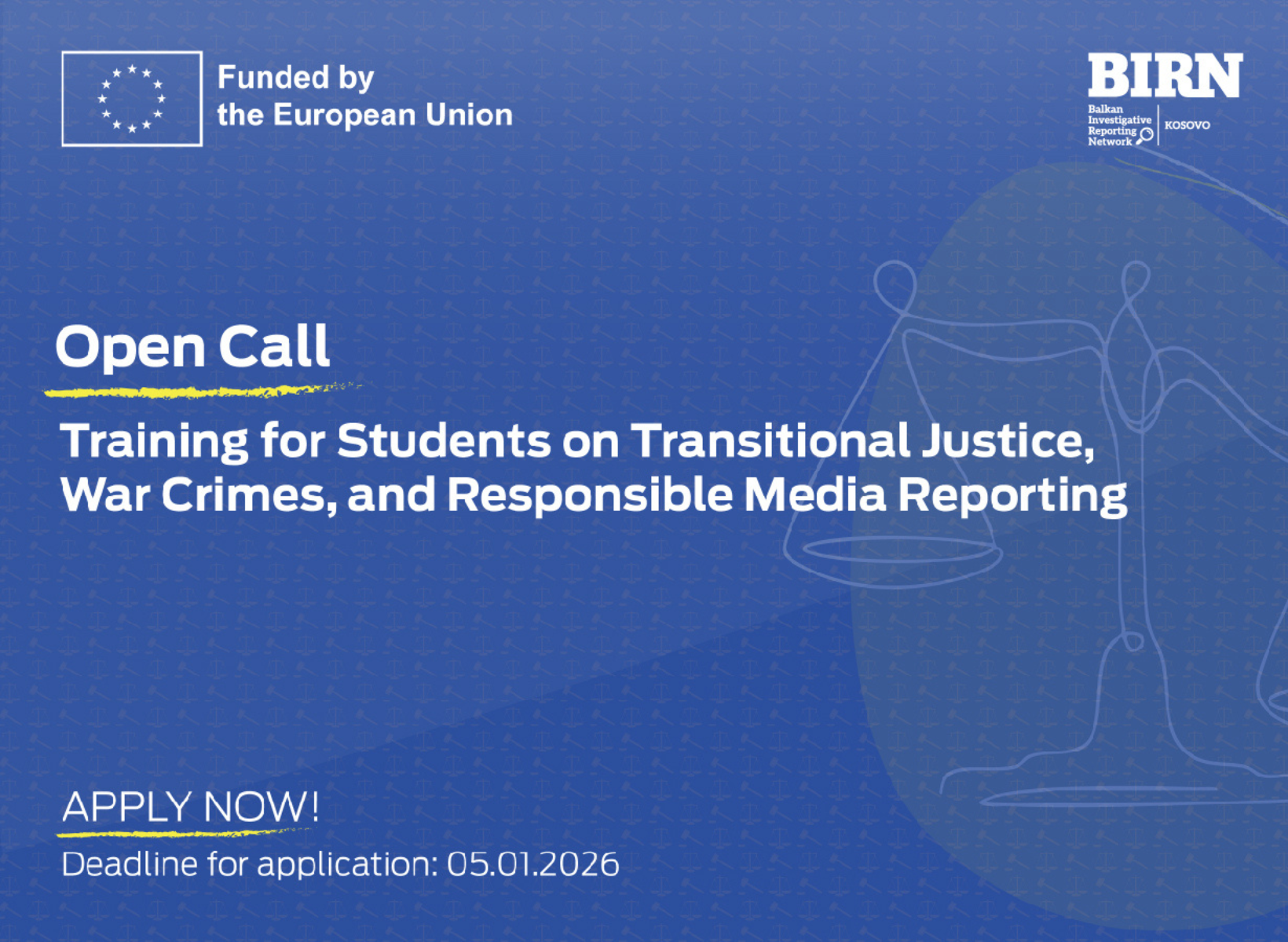
BIRN Kosovo is pleased to announce the call for applications for a specialised training programme on responsible journalism, gender-sensitive reporting, freedom of information, media regulation, journalistic ethics, and safety in the field.
The training is organised within an EU-funded project, ‘Strengthening the role and capacities of investigative journalism in Kosovo’.
This programme aims to equip participants with essential journalistic tools, strengthen their professional knowledge, and enable them to exchange experiences on key issues that affect the media landscape. While media and civil society organisations play a crucial role in monitoring public institutions and societal developments, many journalists still lack the necessary training, practical skills, and resources to effectively use freedom of information mechanisms, conduct in-depth research, and follow public sector developments.
Who can apply?
The call is open to:
Journalism students
Recent graduates
Young journalists
Experienced journalists
Applicants from Serbian, Roma, Ashkali, and Egyptian communities in Kosovo are strongly encouraged to apply. Translation will be provided during the training to ensure equal participation for all selected applicants.
How to Apply?
Applicants must submit their applications no later than December 12, 2025 (midnight, Central European Time) to:
Applicants who have journalistic articles published in different media may submit them together (links of PDF) with their CV and motivation letter. The motivation letter should reflect the applicant’s interest in the topic, relevant experience, and expectations from the programme.
Location
The training will be held in Prishtina. The exact venue, agenda, and logistical details will be shared only with selected participants.
Important dates
Application Deadline: December 12, 2025, at 12:00 CET
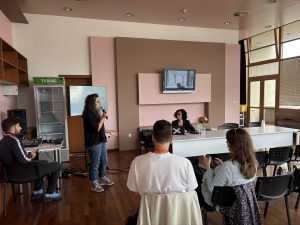
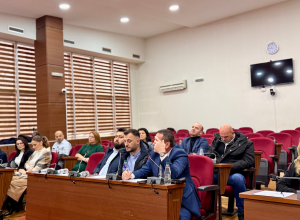
The event brought together representatives from universities in Kosovo, students, journalists and civil society organisations. Its aim was to strengthen people’s capacities to understand digital rights and enhance their skills in identifying and protecting these rights.
The meeting began with a presentation about the Reporting Digital Rights and Freedom project, including its goals, objectives and activities over the past year. The presentation highlighted key findings from BIRN’s Annual Report on Digital Rights Violations, focusing on the cases that have been identified and recorded as digital rights violations within the framework of the project.
During the meeting, Labinot Leposhtica, Coordinator of the Legal and Court Monitoring Office, highlighted the importance of digital rights as an integral part of universal human rights. He said these rights include privacy, freedom of expression and protection against online abuse. Leposhtica discussed the necessary steps and best practices to respect and promote these rights effectively, underlining the role of institutions and citizens in ensuring a safe and fair digital environment.
Following this, Xhorxhina Bami, journalist and editor at BIRN, presented the Engaged Citizens Reporting (ECR) platform, a digital tool launched by BIRN that allows journalists to gather information directly from communities and involve them in the reporting process. Bami explained that the platform enables citizens to report their concerns while maintaining full anonymity.
The meeting was attended by 35 participants, including 30 women. They had the opportunity to engage in discussions and share their experiences regarding digital rights violations in Kosovo, including the misuse of personal data, anonymity on social media and unauthorised dissemination of information.
This meeting was organised within the framework of Reporting Digital Rights and Freedoms, implemented by BIRN Kosovo and supported by the European Union.